BLS vs CPR vs First Aid: Which Certification Do You Need in Austin?

Whether you’re a nursing student at UT Austin, a new coach for a West Lake youth soccer team, or a tech professional in the Silicon Hills wanting to be prepared, you’ve likely realized that “CPR” isn’t just one single class.

When you start looking for training, you’ll see terms like BLS, CPR/AED, and First Aid thrown around. Choosing the wrong one can mean wasted time and a certification your employer won’t accept.

In Austin, where healthcare and education sectors are booming, knowing the difference is vital. This guide will help you navigate the requirements so you can book the right class at CPR Classes Near Me Austin and get certified with confidence.

What is the difference between BLS and CPR?

Many people use the terms BLS and CPR interchangeably, but in the world of professional certification, they are quite different.

CPR (Cardiopulmonary Resuscitation) is the foundational skill. It is designed for the “layperson”—someone who is not a healthcare professional. A standard CPR class focuses on:

  • Recognizing cardiac arrest.
  • Performing high-quality chest compressions.
  • Giving rescue breaths.
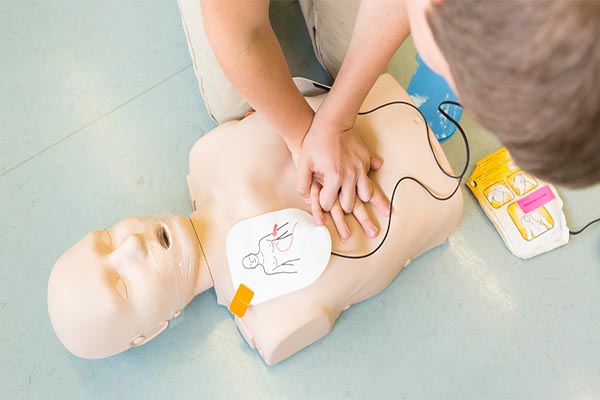
  • Using an Automated External Defibrillator (AED).

BLS (Basic Life Support), on the other hand, is the healthcare-level version of CPR. It includes everything in a standard CPR class but adds advanced techniques required in a clinical or team-based setting.

If you are a nurse, a dental assistant, or an EMT, you almost certainly need BLS. If you are a parent or a fitness instructor, standard CPR is usually the right fit.

Is BLS more advanced than a standard CPR course?

Yes, BLS is considered the “professional grade” version of life-saving training. While the chest compressions are essentially the same, the context of the training changes significantly.

In a BLS course at our Austin location, you will learn:

  1. Multi-Rescuer Coordination: How to work as part of a high-performance team during a resuscitation attempt.
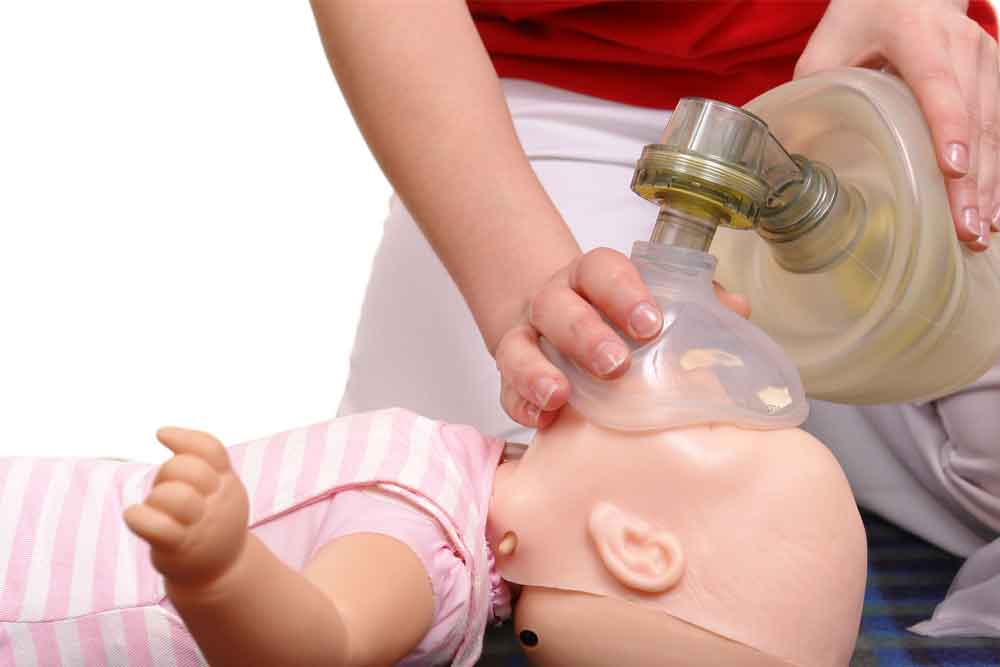
  2. Bag-Mask Ventilation: Using professional medical equipment to provide breaths rather than just mouth-to-mouth.
  3. Pulse Checks: Learning to accurately identify a pulse in adults, children, and infants.
  4. Advanced Airway Management: How to provide care when advanced breathing tubes or equipment are in use.

BLS moves faster and assumes the student may be working in a hospital, clinic, or emergency vehicle where more resources are available.

What does a First Aid certification cover that CPR doesn’t?

It is a common misconception that a CPR card covers all medical emergencies. In reality, CPR is specifically for when someone’s heart has stopped or they are not breathing.

First Aid is the “everything else” certification. It focuses on stabilizing a victim until professional help arrives. At CPR Classes Near Me Austin, our First Aid training covers:

  • Injury Management: Bandaging, splinting, and treating burns or broken bones.
  • Medical Emergencies: Recognizing and responding to strokes, heart attacks, and seizures.
  • Environmental Issues: Treating heatstroke (a big concern in Austin summers!) and hypothermia.
  • Allergic Reactions: Proper use of an epinephrine pen (EpiPen).

If your job involves physical labor or supervising children, you will likely need a certification that combines both CPR and First Aid.

Who is required to get BLS certification in Austin?

Austin is home to a massive medical community, from St. David’s and Ascension Seton to the Dell Medical School. If you work in these environments, BLS is the non-negotiable standard.

Common professions in Austin requiring BLS include:

  • Registered Nurses (RNs) and LVNs.
  • Certified Nursing Assistants (CNAs).
  • Physicians and Medical Students.
  • Dentists and Dental Hygienists.
  • Physical and Occupational Therapists.
  • Paramedics and Firefighters.
  • Pharmacists.

Most of these employers specifically require the American Heart Association (AHA) BLS Provider card, which is exactly what we provide at our Austin training sites.

Which professions in Austin need CPR and First Aid?

If you don’t work in a hospital but your job involves the safety of others, you likely need a combination of CPR, AED, and First Aid. This is often driven by OSHA requirements or state licensing boards.

In Austin, this typically applies to:

  1. Educators and School Staff: Teachers and coaches in AISD and surrounding districts.
  2. Childcare Providers: Daycare workers, nannies, and camp counselors.
  3. Fitness Professionals: Personal trainers and CrossFit coaches.
  4. Construction and Skilled Trades: Electricians and site supervisors often need First Aid for OSHA compliance.
  5. Hospitality and Security: Flight attendants and security guards at Austin-Bergstrom International Airport or major downtown venues.

Can I get my certification card the same day in Austin?

One of the biggest frustrations with some national providers is waiting weeks for a physical card to arrive in the mail. At CPR Classes Near Me Austin, we’ve solved that.

We issue your official American Heart Association (AHA) eCard on the same day you complete your class. This means:

  • You can show it to your employer immediately.
  • You don’t have to worry about losing a paper card.
  • The digital card is easy to verify online by any hiring manager.

Whether you are taking BLS or the CPR/First Aid combo, you walk out of our doors fully certified.

Why should I choose an American Heart Association (AHA) course?

While there are many “off-brand” online courses that claim to offer certification for $20, most Austin employers will not accept them.

The American Heart Association is the industry leader. Their guidelines are based on the latest science in resuscitation. When you hold an AHA card:

  • It is Nationally Recognized: You can take your certification to any state.
  • It is Employer Accepted: Almost all hospitals and school districts in Texas mandate AHA-aligned training.
  • It is OSHA-Compliant: It meets the federal standards for workplace safety.

Don’t risk having to pay for a second class because your first one wasn’t AHA-approved.

How long do these certifications last before they expire?

Both BLS and standard CPR/First Aid certifications are valid for two years from the date of your class.

The renewal process is straightforward:

  • BLS Renewal: You attend a standard BLS class to refresh your skills and get a new two-year card.
  • CPR/First Aid Renewal: A combined class ensures all your skills stay sharp and your credentials remain current.

We recommend booking your renewal at least 30 days before your current card expires to ensure you don’t have a gap in your employment eligibility.

What should I expect during my Austin CPR or BLS class?

We believe that learning life-saving skills shouldn’t be stressful or boring. Our instructors in Austin focus on hands-on practice.

  1. Video Instruction: You’ll watch AHA-authorized videos that demonstrate the correct techniques.
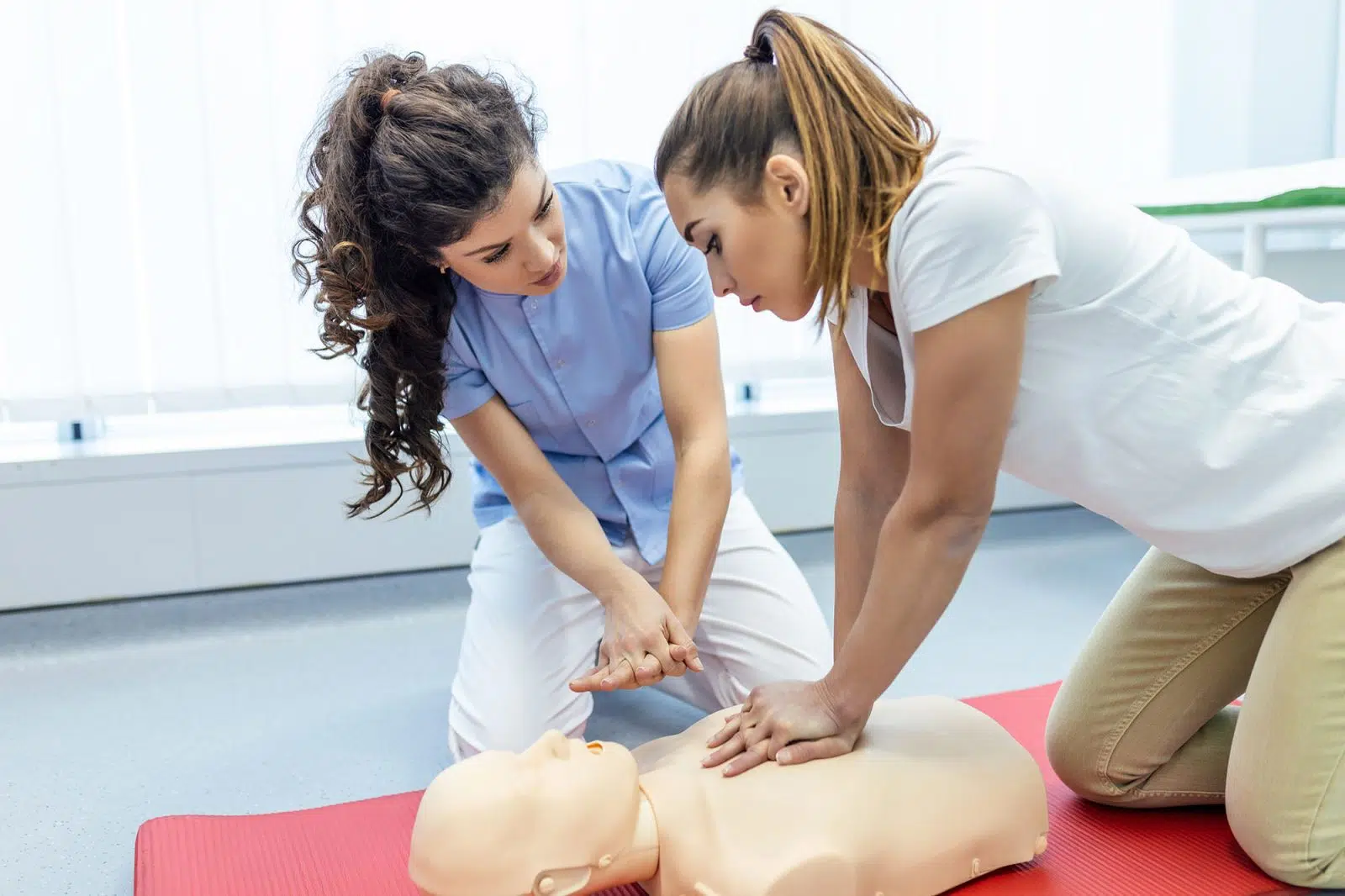
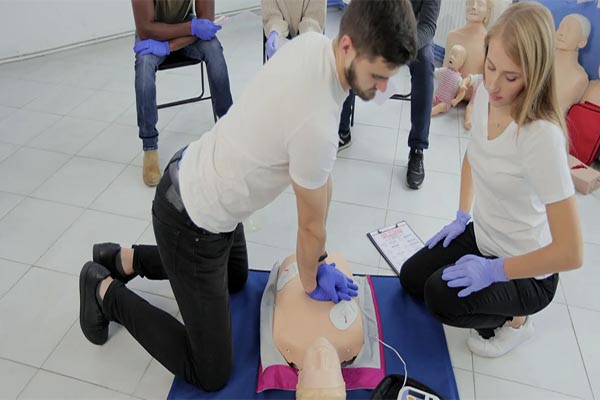
  2. Manikin Practice: You will spend plenty of time practicing chest compressions and rescue breaths on high-quality manikins.
  3. AED Training: You will practice using a trainer AED so you know exactly how the device “talks” to you during an emergency.
  4. Skills Testing: The instructor will observe your techniques to ensure you feel confident and capable.
  5. Final Quiz: A short written or verbal assessment to confirm you’ve understood the key concepts.

How do I know which class is right for me?

If you are still staring at the registration page wondering which button to click, ask yourself these three questions:

  • Does my job require me to work in a clinical setting? If yes, choose BLS.
  • Am I a teacher, parent, or coach? If yes, choose CPR/AED & First Aid.
  • Do I just want to be prepared for family emergencies? Choose CPR/AED.

If you are still unsure, you can always call our Austin office at (512) 831-4243, and we can help you match the class to your specific job description.

Conclusion

Navigating the world of emergency certifications doesn’t have to be complicated. Whether you need the advanced team-dynamics of BLS, the foundational life-saving power of CPR, or the broad medical knowledge of First Aid, getting certified is a vital step in protecting the Austin community.

At CPR Classes Near Me Austin, we provide the highest quality American Heart Association training with the convenience of same-day eCards and expert instructors. Don’t wait until an emergency happens to realize you aren’t prepared.

Ready to get certified? Contact CPR Classes Near Me Austin today to find a class that fits your schedule and career needs!

Frequently Asked Questions (FAQ)

Q: Can I take my CPR or BLS certification entirely online?

A: No. While some “blended” options allow for online book-work, the American Heart Association requires an in-person skills check with a certified instructor. Most Austin employers will not accept 100% online certifications because they lack hands-on verification.

Q: Is there an age requirement for CPR classes in Austin?

A: There is no formal minimum age. As long as a student can physically perform the compressions and pass the skills test, they can be certified. We have successfully trained many teenagers and young adults.

Q: How much do the classes cost?

A: In Austin, our BLS classes are currently discounted to $64.95. The combined CPR, AED, and First Aid class is offered at $84.95. These prices include your same-day AHA eCard.

Q: Does BLS include First Aid?

A: No. BLS is focused strictly on cardiac arrest and respiratory emergencies. If your employer requires both BLS and First Aid, you will need to take a combined course or add a First Aid module to your training.

Q: Where are the classes located?

A: We have training sites serving Austin, North Austin, Pflugerville, Round Rock, and the surrounding areas. We also offer on-site group training for businesses and organizations throughout Central Texas.

In-Person vs. Online CPR Certification in Austin: Making the Right Choice for Your Career

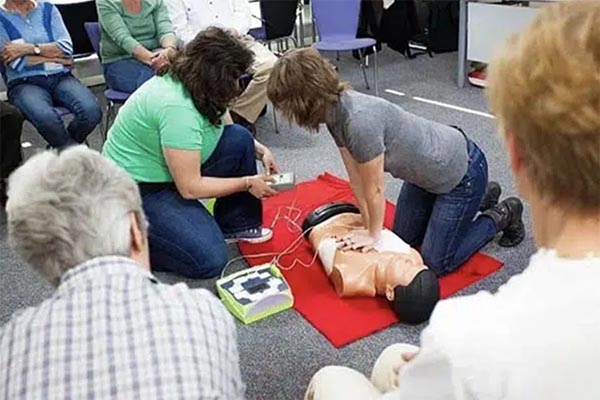
First aid instructor teaching CPR to a group of students using a practice mannequin.

When you’re looking to get CPR certified in Austin, you’re usually faced with two main paths: sitting in a local classroom with an instructor or clicking through a course on your laptop at home.

In a fast-growing city like Austin, where healthcare, tech, and construction industries are booming, having the right “save-a-life” credentials isn’t just a bonus—it’s often a job requirement. But which format actually gives you the skills you need, and more importantly, which one will your boss actually accept?

At CPR Classes Near Me Austin, we see students every day who are confused by the options. This guide breaks down the differences between in-person and online CPR certification to help you make the best choice for your schedule, your wallet, and your peace of mind.

Why is hands-on training the standard in Austin?

When it comes to life-saving skills, there is a massive difference between watching a video of someone performing chest compressions and actually feeling the resistance of a manikin’s chest.

In-person training at our Austin location focuses on “muscle memory.” If you are in a high-pressure situation, you won’t have time to recall a video module; you need your hands to know exactly how deep to press and how fast to go.

  • Real-time correction: Our AHA-certified instructors watch your technique. If your hand placement is off or your compressions are too shallow, we fix it on the spot.
  • Equipment practice: You get to use real AED (Automated External Defibrillator) trainers and bag-mask devices, ensuring you aren’t guessing when a real emergency happens.
  • Peer learning: Working in a classroom allows you to practice team dynamics, which is vital for healthcare providers and first responders.

Is online CPR certification valid for Austin employers?

This is the “million-dollar” question. While online-only courses are often cheaper and more convenient, they come with a major catch: Most Austin employers do not accept 100% online CPR certifications.

Organizations like OSHA (Occupational Safety and Health Administration) and the American Heart Association (AHA) require a hands-on skills assessment for a certification to be considered valid for the workplace. If your job is in healthcare (nurses, dental assistants), education (teachers, coaches), or high-risk labor (construction, electricity), an online-only certificate likely won’t cut it.

By choosing an in-person class, you are guaranteed:

  1. OSHA Compliance: Meeting federal safety requirements.
  2. Universal Acceptance: The AHA BLS eCard is the most widely recognized credential in the country.
  3. Job Security: No risk of having your certification rejected during the hiring process.

How does the cost compare between formats?

It is true that online-only courses can be found for as low as $20 or $30. However, you often get what you pay for. These courses frequently lack the official AHA seal, meaning they hold very little weight in the professional world.

In-person classes in Austin are an investment in a legitimate, two-year certification. At CPR Classes Near Me Austin, our BLS classes start at $64.95, and our combined CPR and First Aid classes are $84.95.

While the upfront cost is higher than a digital PDF, the value includes:

  • Professional instruction from certified experts.
  • Use of high-end medical training equipment.
  • A same-day eCard delivered to your inbox.
  • The peace of mind that your certification is 100% legitimate.

What can you expect during an Austin in-person class?

Many people avoid in-person classes because they think it will take up their entire weekend. That’s a myth! Our classes are streamlined and efficient.

A typical session at our Austin training site takes about 3.5 to 4 hours. During this time, you aren’t just sitting and listening to a lecture. You are active:

  • Adult, Child, & Infant CPR: Learning the nuances of saving lives across all age groups.
  • AED Training: Knowing how to operate the device that restarts a heart.
  • Choking Relief: Hands-on practice for the Heimlich maneuver and back slaps.
  • Testing: A short written exam and a skills check-off.

Because we are an official AHA training site, we provide same-day certification. You walk in as a student and leave as a certified lifesaver.

Can online learning be part of the process?

There is a middle ground known as “Blended Learning.” This involves completing the “lecture” portion of the class online via the AHA website and then coming to our Austin office for a “Skills Session.”

This is a great option for busy professionals who want to reduce their time in the classroom but still need that hands-on validation to meet OSHA standards. However, for most people, the full in-person class is the most straightforward and social way to learn.

Who should choose in-person training in Austin?

While anyone can benefit from a classroom setting, certain groups in Central Texas find it essential:

  1. Healthcare Professionals: Doctors, RNs, CNAs, and physical therapists in the Austin Hospital District.
  2. School Staff: Educators in AISD, Round Rock ISD, and local daycares.
  3. Fitness Experts: Personal trainers and lifeguards at Austin’s many gyms and pools.
  4. Construction Workers: Teams working on the massive infrastructure projects across Travis County.

Why choose CPR Classes Near Me Austin?

We aren’t just a national brand; we are part of the Austin community. We serve everyone from Bastrop to Cedar Park and everywhere in between.

  • Same-Day eCards: No waiting for weeks in the mail.
  • No Minimum Age: We believe anyone capable of the technique should learn.
  • Expert Instructors: Our team makes the classes engaging, fun, and stress-free.
  • Convenient Locations: Easy to find and easy to park.

How do the two formats compare side-by-side?

When choosing between an in-person class and an online-only module, it helps to look at the specific advantages of the classroom environment.

In-Person Training Advantages:

  • Full recognition by the American Heart Association (AHA).
  • Guaranteed acceptance by Austin hospitals and schools.
  • Real-time feedback on compression depth and speed.
  • Experience with physical AED units and life-saving equipment.
  • Certification (eCard) issued on the same day.

Online-Only Course Limitations:

  • Lack of hands-on practice leads to lower skill retention.
  • Most “online-only” cards are not issued by the AHA.
  • High rejection rate from employers and regulatory boards.
  • No ability to ask questions or interact with a professional instructor.
  • Limited to theoretical knowledge rather than practical life-saving ability.

Conclusion

While the convenience of sitting on your couch to get “certified” is tempting, the reality of emergency response requires more. In Austin, employers value the quality of your training. In-person CPR certification ensures that if the time ever comes to save a neighbor, a student, or a coworker, you won’t just have a piece of paper—you’ll have the confidence to act.

Ready to get certified? 

Don’t settle for a “keyboard-only” certificate that might be rejected by your employer. Get the gold standard of training today.

Contact CPR Classes Near Me Austin today to book your seat and earn your AHA BLS certification!

Frequently Asked Questions (FAQ)

Q: Is an online CPR certificate the same as an in-person one?

A: No. While they cover similar information, online-only certificates do not include a hands-on skills assessment. Because of this, they are generally not OSHA-compliant and are not accepted by most healthcare or childcare employers in Austin.

Q: How long does the in-person Austin CPR class take?

A: Most of our American Heart Association BLS classes take approximately 3.5 to 4 hours to complete. This includes the video instruction, hands-on practice, and the final skills check.

Q: Will I get my card the same day?

A: Yes! When you train with CPR Classes Near Me Austin, we issue your official AHA BLS eCard on the same day you finish your class.

Q: What if my certification is about to expire?

A: You can sign up for any of our BLS classes as a renewal. The AHA considers the full course and the renewal course to be the same, ensuring you are up to date with the latest 2024-2025 guidelines.

Q: Do I need to bring anything to class?

A: Just yourself! We provide all the necessary training materials, manikins, and AED trainers. We recommend wearing comfortable clothing since you will be practicing on the floor with the manikins.

CPR Certification in Austin, TX: Classes, Costs, Course Types, and How to Choose

Paramedic performing CPR with defibrillator on cardiac arrest patient

Are you looking to boost your resume or gain the confidence to save a life? Getting your CPR certification in Austin is one of the most impactful steps you can take. Whether you are a nurse at St. David’s, a teacher in AISD, or a local fitness coach, knowing how to react in a cardiac emergency is essential.

At CPR Classes Near Me, we provide top-tier American Heart Association (AHA) training right here in the Heart of Texas. This guide will walk you through everything you need to know about finding the right class, understanding the costs, and ensuring you get a certification that employers actually accept.

Why should you get CPR certified in Austin?

Austin is a fast-growing hub for healthcare, tech, and education. With more people moving to Central Texas every day, the need for trained lifesavers is higher than ever.

  • Be Prepared: Most cardiac arrests happen at home. Certification gives you the skills to protect your family.
  • Career Advancement: Many professions in Texas require OSHA-compliant certification.
  • Community Safety: More trained individuals mean a safer Austin for everyone.

What types of CPR classes are available in Austin?

Not all CPR classes are created equal. Depending on your job or personal goals, you will likely need one of two main course types:

1. Basic Life Support (BLS) for Healthcare Providers

This is the “gold standard” for anyone in the medical field. It covers high-quality CPR for adults, children, and infants, as well as team dynamics and AED usage.

2. CPR, AED, and First Aid

This combined course is perfect for the general public, teachers, and construction workers. It adds a layer of training for handling injuries, burns, and environmental emergencies.

How much does CPR certification cost in Austin?

Pricing can vary, but we believe in transparent, affordable rates that don’t sacrifice quality. In Austin, you can expect the following:

  • BLS CPR & AED Classes: Starting at $59.95. This is currently discounted from the standard $79.95 rate.
  • CPR, AED, & First Aid Classes: Starting at $79.95. This is discounted from the standard $99.95 rate.

When comparing costs, always check if the price includes your official AHA eCard. Some “budget” sites charge extra for the card or offer non-AHA certifications that many employers will reject.

How do you choose the right CPR course?

Choosing the right class depends on your specific needs. Ask yourself these three questions:

  1. Does my employer require the AHA seal? Most healthcare and high-risk industries specifically demand American Heart Association (AHA) certification.
  2. Do I need First Aid? If you work in childcare, coaching, or a trade like electrical or construction, you likely need the combined First Aid course.
  3. Is the card issued the same day? If you are on a deadline for a job application, ensure the provider offers same-day eCards.

Can you get CPR certified online in Austin?

While many websites offer “100% online” CPR, we strongly advise against them. Here is why:

  • Employer Acceptance: Most Austin employers, especially in healthcare, do not accept certifications that lack a hands-on skills assessment.
  • Skill Mastery: You cannot learn the physical depth of chest compressions or the “feel” of a bag-mask device through a computer screen.
  • AHA Standards: The AHA requires in-person skills practice to issue an official BLS card.

What will you learn during the training session?

Our Austin classes are designed to be engaging, efficient, and highly practical. You won’t just sit and watch videos; you will be active.

  • Chest Compressions: Learning the correct depth and rate for adults, children, and infants.
  • Rescue Breathing: Using pocket masks and bag-mask devices.
  • AED Operation: How to safely use an Automated External Defibrillator.
  • Choking Relief: Techniques for clearing airways in responsive and unresponsive victims.
  • Team Dynamics: How to lead or assist in a multi-rescuer resuscitation attempt.

How long does the certification last?

Once you successfully complete your class and skills test, your AHA certification is valid for two years. We recommend marking your calendar for a “CPR renewal” class about 30 days before your card expires to ensure you never have a gap in your credentials.

Who is required to have CPR certification in Austin?

While we believe everyone should know CPR, it is a mandatory requirement for several local professions:

  • Medical Professionals: Nurses (RN, LVN), Doctors, and CNAs.
  • Emergency Responders: Firefighters and EMTs.
  • Educators: Teachers, daycare providers, and school staff.
  • Fitness & Sports: Personal trainers, coaches, and lifeguards.
  • Laborers: Construction workers, electricians, and flight attendants.

Where are the classes located in Austin?

We serve the entire Greater Austin area. Our training sites are conveniently located to serve:

  • Austin (Central, North, and South)
  • Round Rock & Pflugerville
  • Cedar Park & Leander
  • Buda & Kyle
  • Georgetown & Hutto

Why choose CPR Classes Near Me for your Austin certification?

We pride ourselves on being the #1 rated CPR training site in Austin. Here is what sets us apart:

  • Expert Instructors: Our team consists of experienced professionals who make the class fun and stress-free.
  • Same-Day eCards: No waiting by the mailbox. You get your digital card the same day you pass the class.
  • Flexible Scheduling: We offer morning, afternoon, and weekend slots to fit your busy life.
  • Group Training: We can come to your office or facility to certify your entire team at once.

Conclusion

Securing your CPR certification in Austin is a straightforward process when you choose the right partner. By focusing on AHA-approved, hands-on training, you ensure that your skills are sharp and your certification is recognized nationwide. Don’t wait until an emergency happens to wish you knew what to do.

Contact CPR Classes Near Me today to book your session and join the ranks of Austin’s life-savers!

Frequently Asked Questions (FAQ)

How do I get CPR certified in Austin?

To get certified, you simply need to register for an in-person class. You will attend a single session that lasts approximately 3.5 to 4 hours, where you will practice skills on manikins and pass a skills test. Your instructor will then issue your AHA eCard.

How much does training cost?

In Austin, BLS classes start at $59.95, and combined CPR and First Aid classes start at $79.95. These prices include the cost of the training and the official certification card.

How long does the CPR class take?

Most AHA BLS classes take about 3.7 hours to complete. This includes the video instruction, hands-on practice, and the final testing phase.

Is there an age requirement for CPR?

There is no specific minimum age for CPR certification through the AHA. As long as the individual can perform the physical requirements (compressions) and pass the written/skills test, they can be certified.

What is the difference between CPR and BLS?

CPR (Cardiopulmonary Resuscitation) is the general term for the lifesaving technique. BLS (Basic Life Support) is a specific level of CPR training designed for healthcare providers and public safety professionals, involving more advanced techniques like team resuscitation and bag-mask ventilation.

The Importance of First Aid in Austin’s Outdoor Community

Austin, Texas, is synonymous with outdoor adventure. From the limestone cliffs of the Barton Creek Greenbelt to the paddle-board-filled waters of Lady Bird Lake, our city invites us to step outside and explore. However, the very landscapes that make Central Texas beautiful also conceal unique hazards. Whether you are a seasoned trekker tackling the Hill Country or a family enjoying a weekend picnic at Zilker Park, the line between a great day and a medical emergency can be surprisingly thin.

In a city where “going outside” is a way of life, preparedness is not just a recommendation; it is a responsibility. Understanding the importance of first aid in Austin’s outdoor community is about more than just bandages and antiseptic—it is about having the confidence and competence to protect yourself and the people around you.

This guide explores the specific risks associated with our local environment, the life-saving difference training can make, and how CPR Classes Near Me can equip you with the skills you need today.

Why Is Austin’s Landscape Unique for Outdoor Enthusiasts?

Have you ever considered how the specific geography of Austin influences your safety? Unlike flat urban environments, Austin sits on the edge of the Balcones Escarpment, offering a mix of rolling hills, dense woodlands, and rocky riverbeds.

  • Rugged Terrain: The limestone trails of the Hill Country are uneven and often loose. A simple misstep can lead to complex fractures or severe sprains miles from the nearest trailhead.
  • Water Access: With natural springs and lakes integrated into the city, water safety is paramount. The currents in seemingly calm waters can be deceptive, and slippery algae-covered rocks are a common cause of falls.
  • Isolation in the City: It is possible to be physically close to downtown Austin while being operationally remote. If you are deep in the Greenbelt, an ambulance cannot simply drive up to you. Extraction takes time, making your immediate first aid response critical.

What Are the Most Common Outdoor Injuries in Central Texas?

To be prepared, you must know what you are preparing for. The injuries we see in Austin are directly related to our climate and ecosystem.

Heat-Related Illnesses

Texas heat is legendary. During our long summers, temperatures frequently soar above triple digits.

  • Heat Exhaustion: Symptoms include heavy sweating, weakness, and nausea. Without intervention, this can escalate quickly.
  • Heat Stroke: This is a life-threatening emergency where the body loses the ability to cool itself. Swift recognition and cooling protocols learned in first aid training are vital for survival.

Traumatic Injuries

  • Sprains and Fractures: Uneven trails are notorious for causing ankle and knee injuries.
  • Lacerations: Sharp limestone and thorny vegetation (like mesquite and cacti) can cause deep cuts that require immediate bleeding control to prevent infection or significant blood loss.

Environmental Hazards

  • Snake Bites: Central Texas is home to venomous snakes like Rattlesnakes, Copperheads, and Cottonmouths. Knowing the do’s and don’ts of snake bite treatment (e.g., never apply a tourniquet or try to suck out venom) is a key component of wilderness safety.
  • Allergic Reactions: From cedar fever respiratory issues to severe reactions from insect stings (bees, wasps, fire ants), anaphylaxis can happen anywhere.

How Does First Aid Knowledge Change Outcomes in Remote Areas?

When an injury occurs in a controlled environment, like an office or a home, help is usually minutes away. In the outdoors, the “Golden Hour“—the critical window where medical intervention has the highest chance of preventing death—is often consumed by travel time.

Stabilization is Key:

Knowledge of first aid allows you to stabilize a patient before professional help arrives. This includes:

  • Stopping Bleeding: Using direct pressure or a tourniquet effectively.
  • Immobilization: Splinting a broken limb to prevent further damage during transport.
  • Temperature Regulation: actively cooling a heat stroke victim or warming a hypothermia victim (yes, hypothermia can happen here in winter or after water exposure).

Without these immediate interventions, a survivable injury can become fatal before the rescue team even reaches the scene.

Why Is CPR Crucial for Water Activities at Lady Bird Lake and Barton Springs?

Water activities are a staple of Austin life, but they come with the inherent risk of drowning. Drowning is silent and quick. It doesn’t look like it does in the movies; there is often no splashing or screaming.

The Role of CPR:

When a person is pulled from the water unconscious and not breathing, their heart may have stopped, or they may be in respiratory arrest.

  • Immediate Oxygen: CPR provides artificial circulation and ventilation. For a drowning victim, the rescue breaths are particularly crucial to replace oxygen in the blood.
  • Bridge to Life: CPR keeps the brain alive until advanced life support (EMS) arrives with an AED and medication.

If you frequent Austin’s swimming holes, being certified in CPR is one of the most impactful ways you can contribute to community safety.

What Should Be in Your Austin-Specific First Aid Kit?

A generic first aid kit is a good start, but an Austin outdoor kit needs specific additions. When you take a course with CPR Classes Near Me, you learn how to use these tools effectively.

  1. Hydration Salts/Electrolytes: Water isn’t always enough when dealing with severe heat exhaustion.
  2. Fine-Point Tweezers: For removing cactus spines or ticks.
  3. SAM Splint: Lightweight and moldable, perfect for immobilizing limbs on hiking trails.
  4. Antihistamines: Vital for sudden allergic reactions to local flora or fauna.
  5. Blister Care: Moleskin or hydrocolloid bandages are essential for long treks.
  6. Tourniquet: Essential for severe bleeding control, especially for hunters or mountain bikers.

Who Should Take First Aid and CPR Training?

You might think, “I’m not a guide, do I really need this?” The answer is a resounding yes. Accidents rarely happen when it is convenient, and they rarely happen to strangers. You are most likely to perform first aid or CPR on a friend, a family member, or a partner.

  • Parents: Kids are prone to scrapes, falls, and insect bites.
  • Dog Owners: Hiking with pets brings its own risks; knowing how to manage their injuries (and your own while managing them) is helpful.
  • Solo Adventurers: You are your own first responder.
  • Group Leaders: If you organize informal hiking or biking meetups, you have a duty of care to your group.

How Can You Get Certified with CPR Classes Near Me?

Getting certified is easier and more affordable than you might think. CPR Classes Near Me offers top-rated American Heart Association (AHA) BLS, CPR, and First Aid classes right here in Austin.

Why Choose CPR Classes Near Me?

  • Same-Day Certification: We understand you are busy. You will leave our class with your AHA BLS eCard in hand (or in your email) the very same day.
  • Expert Instructors: Our team consists of healthcare professionals and experts who make learning engaging, not boring.
  • Hands-On Training: We believe in muscle memory. You will practice on modern mannequins with feedback devices to ensure your compression technique is perfect.
  • Convenient Locations: We serve the entire Austin area, including Pflugerville, Round Rock, Cedar Park, and Georgetown.

Our Class Options:

  • BLS CPR & AED: Perfect for healthcare providers and general safety. Covers adults, children, and infants.
  • First Aid + CPR/AED: The comprehensive choice for outdoor enthusiasts. Learn to manage medical emergencies, injuries, and environmental hazards alongside CPR.

What Is the “Bystander Effect” and How Do We Combat It?

The “Bystander Effect” occurs when individuals do not offer help to a victim when others are present. The assumption is often, “Someone else will handle it,” or “I don’t know what to do, so I shouldn’t interfere.”

Training Breeds Confidence:

The primary cure for the Bystander Effect is competence. When you know exactly what to do—how to check for a pulse, how to bandage a wound, how to use an AED—you stop hesitating. You become the leader the situation requires. In Austin’s tight-knit outdoor community, we look out for one another. Your certification is a badge of that commitment.

Conclusion

Austin is a playground for nature lovers, but nature demands respect. The rugged beauty of our greenbelts and lakes is best enjoyed with peace of mind. That peace of mind comes from preparation. Knowing you have the skills to handle a snake bite, a heat stroke, or a cardiac emergency allows you to focus on the fun, knowing you can handle the “what ifs.”

Don’t wait for an accident to realize you need training. The skills you learn in a single afternoon can last a lifetime—and save one, too.

Ready to become a lifesaver?

Contact CPR Classes Near Me today to schedule your training.

Get Certified. Be Prepared. Save a Life.

Frequently Asked Questions (FAQ)

1. How long does a CPR and First Aid class take in Austin?

Our American Heart Association BLS CPR classes typically run between 3 to 4 hours. If you add the First Aid module, it provides a comprehensive overview of emergency response in a single session. We value your time, which is why we ensure the training is efficient and you receive your certification card the same day.

2. Is the certification accepted by employers and parks departments?

Yes. We issue American Heart Association (AHA) certifications. The AHA is the gold standard for CPR and First Aid training in the United States. Whether you are a park ranger, a camp counselor, a healthcare worker, or a corporate employee, our certification cards are widely recognized and accepted by employers nationwide, including OSHA.

3. Do I need a medical background to take a First Aid class?

Absolutely not. Our classes are designed for everyone. We teach using simple, actionable steps that anyone can master, regardless of their background. Whether you are a teenager, a parent, or a retiree, you will leave our class feeling confident in your ability to assist in an emergency.

4. How often do I need to renew my CPR certification?

American Heart Association CPR and First Aid certifications are valid for two years. However, if you are frequently outdoors or in high-risk environments, we recommend reviewing your materials often. You can renew your certification by signing up for any of our standard BLS courses; the curriculum covers both initial certification and renewal.

5. What is the difference between CPR and First Aid?

CPR (Cardiopulmonary Resuscitation) is a specific technique used when a person’s heart or breathing has stopped. It involves chest compressions and rescue breaths. First Aid is a broader category that covers the immediate care for a wide range of illnesses and injuries, such as cuts, burns, sprains, heat exhaustion, and allergic reactions. For outdoor safety, we highly recommend taking the combined course.

Online vs. In-Person CPR Training: Which is Right for You?

In today’s digital world, you can learn almost anything online—from cooking to coding. But when it comes to life-saving skills like Cardiopulmonary Resuscitation (CPR), the decision between clicking “play” on a video and stepping into a classroom carries a lot more weight.

Whether you are a nurse renewing your BLS credential, a teacher preparing for the school year, or a parent wanting peace of mind, choosing the right class format is critical. You might be wondering: Is an online certificate actually valid? or Do I really need to spend hours in a classroom?

As a premier provider of CPR Classes Near Me, we understand the confusion. In this guide, we will break down the pros and cons of online versus in-person training so you can choose the path that fits your schedule—and keeps you compliant.

What is In-Person CPR Training?

In-person training is the traditional method of learning CPR. You attend a scheduled class at a local facility, guided by a certified instructor. These sessions are designed to be interactive, physical, and comprehensive.

Why Choose In-Person Training?

The primary advantage of in-person training is the hands-on experience. CPR is a physical skill. Watching a video of someone performing chest compressions is very different from pushing down on a high-fidelity manikin yourself.

  • Muscle Memory: You physically practice the depth and rate of compressions (100-120 per minute), ensuring you “feel” what it takes to circulate blood manually.
  • Immediate Feedback: If your elbows are bending or you aren’t pushing hard enough, an instructor corrects you instantly. This prevents you from developing bad habits that could be fatal in a real emergency.
  • Equipment Familiarity: You get to handle an AED (Automated External Defibrillator), practice applying pads, and listen to the device’s voice prompts in a controlled setting.

Are There Downsides?

The main hurdle for most people is logistics. You have to drive to a location and commit a few hours of your day. However, providers like CPR Classes Near Me optimize these sessions to be efficient, often issuing your American Heart Association (AHA) eCard the very same day.

What is Online CPR Training?

Online CPR training delivers course content via digital modules. You read text, watch instructional videos, and take quizzes on your computer or smartphone.

The Appeal of Online Courses

The biggest selling point is flexibility. You can pause the training to take a call, finish it at 2 AM in your pajamas, or break it up over several days. For those who just want knowledge for personal reasons and don’t need a work-recognized card, this can be a convenient option.

The Hidden Trap: Employer Acceptance

Here is the catch that trips up many professionals: Online-only certifications are rarely accepted by employers in healthcare, childcare, or industrial safety.

Most regulatory bodies, including OSHA and the American Heart Association, require a hands-on skills check for a certification to be valid. If you take a 100% online course that does not require you to touch a manikin, there is a high probability your employer will reject it, forcing you to pay for and attend an in-person class anyway.

Will My Employer Accept an Online Certification?

This is the most common question we hear. If you are taking CPR for a job requirement, the answer is almost always no—unless it includes an in-person skills session.

Who Typically Requires In-Person Training?

  • Healthcare Providers: Nurses, doctors, CNAs, and EMTs generally require AHA Basic Life Support (BLS), which mandates a skills test.
  • Childcare Workers: Daycares and schools usually require state-approved training that includes physical practice.
  • Construction & Safety: OSHA guidelines strongly emphasize the need for physical practice to verify competency.

If you submit an online-only certificate to a hospital or school district, you risk being non-compliant. It is always safer to choose a course that guarantees hands-on verification.

Comparison: Online vs. In-Person at a Glance

Not sure which way to lean? Here is a quick comparison of how the two formats stack up.

  • Convenience: Online wins for scheduling, but In-Person wins for “one-and-done” completion (no need to schedule a separate skills check later).
  • Cost: Online courses often appear cheaper upfront, but hidden fees for “skills sessions” or having to retake a rejected class can make them more expensive in the long run.
  • Confidence: In-Person is superior. Real-life emergencies are stressful; having physical muscle memory helps you act on instinct.
  • Validation: In-Person training is universally accepted. Online-only is frequently rejected for professional use.

Is Blended Learning a Good Compromise?

Blended learning is a hybrid model where you do the “book work” online and then come into a facility for a short skills session. While this offers some flexibility, you still have to travel to a training center to meet with an instructor.

At CPR Classes Near Me, we focus on providing high-quality, efficient in-person classes. We find that completing the theory and the skills together in one cohesive session often leads to better retention and a smoother experience—plus, you walk out with your certification card in hand immediately.

Why “CPR Classes Near Me” is Your Best Option

We know your time is valuable. That’s why we have streamlined the in-person experience to be as painless and professional as possible.

  • AHA Certification: We issue American Heart Association cards, the gold standard in the industry.
  • Same-Day Certification: No waiting by the mailbox. You qualify, you pass, you get your eCard.
  • Expert Instructors: Our team consists of healthcare and safety professionals who make the class engaging, not boring.
  • Locally Owned: We are part of your community, helping Austin stay safe.

When you weigh the risks of an online course being rejected against the confidence and compliance of in-person training, the choice is clear.

Ready to Get Certified?

Don’t risk your compliance or your confidence with a “click-through” course. Get real hands-on training that empowers you to save a life.

Contact CPR Classes Near Me today to check our schedule and book your seat.

FAQs

Q: Can I get CPR certified entirely online?

A: You can find websites that will issue a “certification” online, but it is important to know that these are typically not recognized by employers, OSHA, or hospitals. To be fully certified—especially for a job—you almost always need a hands-on skills evaluation with an instructor.

Q: How long does an in-person CPR class take?

A: Class times vary by provider, but our streamlined BLS and CPR classes are designed to be efficient. You can typically expect to spend a few hours learning and practicing, ensuring you leave confident without taking up your entire day.

Q: Is online CPR training valid for OSHA?

A: generally, no. OSHA standards state that online training alone does not meet the requirements for first aid and CPR training because it lacks the physical skills demonstration. A hands-on component is required.

Q: Do I need a book for the class?

A: For American Heart Association classes, students are usually required to have access to the student manual. Check with your specific class registration details to see if the book is included or needs to be purchased separately.

Q: How often do I need to renew my certification?

A: Most CPR and BLS certifications, including those from the AHA, are valid for two years. You must retake a course before your card expires to remain compliant.

Q: What is the difference between CPR and BLS?

A: CPR (Cardiopulmonary Resuscitation) is a general term for the lifesaving technique. BLS (Basic Life Support) is a higher-level certification specifically for healthcare providers (nurses, doctors, EMTs) that covers team dynamics, advanced airways, and 2-rescuer scenarios.