In-Person vs. Online CPR Certification in Austin: Making the Right Choice for Your Career

First aid instructor teaching CPR to a group of students using a practice mannequin.

When you’re looking to get CPR certified in Austin, you’re usually faced with two main paths: sitting in a local classroom with an instructor or clicking through a course on your laptop at home.

In a fast-growing city like Austin, where healthcare, tech, and construction industries are booming, having the right “save-a-life” credentials isn’t just a bonus—it’s often a job requirement. But which format actually gives you the skills you need, and more importantly, which one will your boss actually accept?

At CPR Classes Near Me Austin, we see students every day who are confused by the options. This guide breaks down the differences between in-person and online CPR certification to help you make the best choice for your schedule, your wallet, and your peace of mind.

Why is hands-on training the standard in Austin?

When it comes to life-saving skills, there is a massive difference between watching a video of someone performing chest compressions and actually feeling the resistance of a manikin’s chest.

In-person training at our Austin location focuses on “muscle memory.” If you are in a high-pressure situation, you won’t have time to recall a video module; you need your hands to know exactly how deep to press and how fast to go.

  • Real-time correction: Our AHA-certified instructors watch your technique. If your hand placement is off or your compressions are too shallow, we fix it on the spot.
  • Equipment practice: You get to use real AED (Automated External Defibrillator) trainers and bag-mask devices, ensuring you aren’t guessing when a real emergency happens.
  • Peer learning: Working in a classroom allows you to practice team dynamics, which is vital for healthcare providers and first responders.

Is online CPR certification valid for Austin employers?

This is the “million-dollar” question. While online-only courses are often cheaper and more convenient, they come with a major catch: Most Austin employers do not accept 100% online CPR certifications.

Organizations like OSHA (Occupational Safety and Health Administration) and the American Heart Association (AHA) require a hands-on skills assessment for a certification to be considered valid for the workplace. If your job is in healthcare (nurses, dental assistants), education (teachers, coaches), or high-risk labor (construction, electricity), an online-only certificate likely won’t cut it.

By choosing an in-person class, you are guaranteed:

  1. OSHA Compliance: Meeting federal safety requirements.
  2. Universal Acceptance: The AHA BLS eCard is the most widely recognized credential in the country.
  3. Job Security: No risk of having your certification rejected during the hiring process.

How does the cost compare between formats?

It is true that online-only courses can be found for as low as $20 or $30. However, you often get what you pay for. These courses frequently lack the official AHA seal, meaning they hold very little weight in the professional world.

In-person classes in Austin are an investment in a legitimate, two-year certification. At CPR Classes Near Me Austin, our BLS classes start at $64.95, and our combined CPR and First Aid classes are $84.95.

While the upfront cost is higher than a digital PDF, the value includes:

  • Professional instruction from certified experts.
  • Use of high-end medical training equipment.
  • A same-day eCard delivered to your inbox.
  • The peace of mind that your certification is 100% legitimate.

What can you expect during an Austin in-person class?

Many people avoid in-person classes because they think it will take up their entire weekend. That’s a myth! Our classes are streamlined and efficient.

A typical session at our Austin training site takes about 3.5 to 4 hours. During this time, you aren’t just sitting and listening to a lecture. You are active:

  • Adult, Child, & Infant CPR: Learning the nuances of saving lives across all age groups.
  • AED Training: Knowing how to operate the device that restarts a heart.
  • Choking Relief: Hands-on practice for the Heimlich maneuver and back slaps.
  • Testing: A short written exam and a skills check-off.

Because we are an official AHA training site, we provide same-day certification. You walk in as a student and leave as a certified lifesaver.

Can online learning be part of the process?

There is a middle ground known as “Blended Learning.” This involves completing the “lecture” portion of the class online via the AHA website and then coming to our Austin office for a “Skills Session.”

This is a great option for busy professionals who want to reduce their time in the classroom but still need that hands-on validation to meet OSHA standards. However, for most people, the full in-person class is the most straightforward and social way to learn.

Who should choose in-person training in Austin?

While anyone can benefit from a classroom setting, certain groups in Central Texas find it essential:

  1. Healthcare Professionals: Doctors, RNs, CNAs, and physical therapists in the Austin Hospital District.
  2. School Staff: Educators in AISD, Round Rock ISD, and local daycares.
  3. Fitness Experts: Personal trainers and lifeguards at Austin’s many gyms and pools.
  4. Construction Workers: Teams working on the massive infrastructure projects across Travis County.

Why choose CPR Classes Near Me Austin?

We aren’t just a national brand; we are part of the Austin community. We serve everyone from Bastrop to Cedar Park and everywhere in between.

  • Same-Day eCards: No waiting for weeks in the mail.
  • No Minimum Age: We believe anyone capable of the technique should learn.
  • Expert Instructors: Our team makes the classes engaging, fun, and stress-free.
  • Convenient Locations: Easy to find and easy to park.

How do the two formats compare side-by-side?

When choosing between an in-person class and an online-only module, it helps to look at the specific advantages of the classroom environment.

In-Person Training Advantages:

  • Full recognition by the American Heart Association (AHA).
  • Guaranteed acceptance by Austin hospitals and schools.
  • Real-time feedback on compression depth and speed.
  • Experience with physical AED units and life-saving equipment.
  • Certification (eCard) issued on the same day.

Online-Only Course Limitations:

  • Lack of hands-on practice leads to lower skill retention.
  • Most “online-only” cards are not issued by the AHA.
  • High rejection rate from employers and regulatory boards.
  • No ability to ask questions or interact with a professional instructor.
  • Limited to theoretical knowledge rather than practical life-saving ability.

Conclusion

While the convenience of sitting on your couch to get “certified” is tempting, the reality of emergency response requires more. In Austin, employers value the quality of your training. In-person CPR certification ensures that if the time ever comes to save a neighbor, a student, or a coworker, you won’t just have a piece of paper—you’ll have the confidence to act.

Ready to get certified? 

Don’t settle for a “keyboard-only” certificate that might be rejected by your employer. Get the gold standard of training today.

Contact CPR Classes Near Me Austin today to book your seat and earn your AHA BLS certification!

Frequently Asked Questions (FAQ)

Q: Is an online CPR certificate the same as an in-person one?

A: No. While they cover similar information, online-only certificates do not include a hands-on skills assessment. Because of this, they are generally not OSHA-compliant and are not accepted by most healthcare or childcare employers in Austin.

Q: How long does the in-person Austin CPR class take?

A: Most of our American Heart Association BLS classes take approximately 3.5 to 4 hours to complete. This includes the video instruction, hands-on practice, and the final skills check.

Q: Will I get my card the same day?

A: Yes! When you train with CPR Classes Near Me Austin, we issue your official AHA BLS eCard on the same day you finish your class.

Q: What if my certification is about to expire?

A: You can sign up for any of our BLS classes as a renewal. The AHA considers the full course and the renewal course to be the same, ensuring you are up to date with the latest 2024-2025 guidelines.

Q: Do I need to bring anything to class?

A: Just yourself! We provide all the necessary training materials, manikins, and AED trainers. We recommend wearing comfortable clothing since you will be practicing on the floor with the manikins.

How Do Employers Verify CPR Certification? A Complete Guide

CPR Certification for Construction Workers

When you hand over your CPR card to a new boss or a HR manager, you might wonder: do they actually check it? The short answer is yes. In industries ranging from healthcare and education to construction and fitness, a valid CPR certification isn’t just a “nice to have”—it is a legal and insurance requirement.

Employers have a professional responsibility to ensure their team is truly prepared for an emergency. Relying on a photoshopped PDF or an expired card could lead to massive liabilities. Because of this, the verification process has become highly streamlined and digital.

In this guide, we will break down exactly how employers verify your CPR credentials, why they care about the specific certifying body, and how you can ensure your card passes the test every time.

Why do employers verify CPR certification?

Employers don’t just check your card to be tedious. In many fields, having a certified staff is a mandate from Occupational Safety and Health Administration (OSHA) or state licensing boards.

  • Risk Management: If an incident occurs and an employee is found to have an invalid or fake certification, the company could face lawsuits.
  • Insurance Compliance: Many business insurance policies require that a certain percentage of staff be CPR/AED certified to maintain coverage.
  • Quality of Care: In healthcare settings, the ability to perform high-quality chest compressions is a matter of life and death. Verification ensures the training was rigorous.

How do employers use digital verification portals?

The days of carrying a soggy paper card in your wallet are largely over. Most major certifying bodies, like the American Heart Association (AHA) and the Red Cross, now issue “eCards” or digital certificates.

These digital records are stored in centralized databases that employers can access in seconds. Here is how that process typically works:

  1. The Unique ID: Every official certificate has a unique alphanumeric code or a QR code printed on it.
  2. Portal Access: The employer visits the official verification site (such as the AHA eCards search page).
  3. Data Entry: They enter your name and the certificate ID.
  4. Instant Result: The system immediately confirms the course type, the date of completion, and the expiration date.

What information is visible to an employer during verification?

When an employer looks up your credentials, they see more than just a “pass/fail” status. The verification portal provides a transparent look at your training history. Typically, an employer will see:

  • Full Legal Name: This must match the name on your government-issued ID.
  • Course Type: They can see if you took “Heartsaver CPR AED” or “Basic Life Support (BLS).”
  • Training Center Info: It will list where you took the class, such as CPR Classes Near Me.
  • Issue and Expiration Dates: They will see exactly when your two-year window began and ends.
  • Status: It will clearly state if the card is “Active,” “Expired,” or “Voided.”

Can employers verify if a class was online-only?

This is a critical point for job seekers. Most employers—especially those in healthcare or high-risk industries—will not accept a CPR certification that was earned 100% online without a hands-on skills session.

Employers can often tell if a class was online-only based on the certificate type or the agency that issued it. Many reputable agencies include a specific notation on the certificate if a hands-on skills assessment was completed. If an employer sees a certificate from a “fly-by-night” online-only website, they may reject it immediately because it does not meet OSHA’s requirement for a hands-on component.

How does the QR code verification process work?

Many modern CPR certificates feature a QR code in the corner. This is the fastest way for an employer to verify your status during an interview or a compliance audit.

  • Scanning: The employer scans the code using a smartphone camera.
  • Redirection: The code links directly to a secure, encrypted URL hosted by the certifying agency.
  • Authentication: Because the URL belongs to the official agency (e.g., heart.org), the employer knows the information hasn’t been tampered with.

What happens if an employer cannot find your certification?

It can be stressful if an employer says they can’t find your record in the system. However, this doesn’t always mean your card is fake. Common reasons for “Not Found” results include:

  • Typos: A simple misspelling of your last name or a mistyped ID number.
  • Unclaimed eCards: With some providers, the student must “claim” the card via email before it becomes active in the public search database.
  • Processing Time: It can take 24 to 48 hours after your class for the Training Center to upload your results to the national database.
  • Name Changes: If you recently got married or changed your name but your certification is under your maiden name, the records won’t match.

Does the certifying agency matter to employers?

Yes, the agency matters immensely. While there are many companies that offer CPR training, most employers specifically look for two main names:

  1. American Heart Association (AHA): Often considered the gold standard for healthcare providers.
  2. American Red Cross: Widely accepted for teachers, coaches, and general workplace safety.

If your certification comes from a brand an employer doesn’t recognize, they may ask for the course syllabus to ensure it meets the same scientific standards as the AHA.

How can you help your employer verify your card?

To make the hiring process as smooth as possible, you should be proactive. Don’t wait for your employer to go hunting for your records.

  • Keep the PDF: Always save the digital PDF of your eCard to your phone or cloud storage.
  • Check the ID: Before handing it over, try entering your own ID into the provider’s lookup tool to make sure it’s active.
  • Share the Link: Many eCard systems allow you to “Email to Employer” directly from the portal. This is the most professional way to provide proof.

What are the consequences of a fake CPR card?

In the age of digital verification, attempting to use a fraudulent CPR card is a massive risk.

  • Immediate Termination: Most employment contracts consider falsifying safety credentials as “cause” for immediate firing.
  • Professional Blacklisting: In fields like nursing or EMS, falsifying records can be reported to the state board, potentially ending your career.
  • Legal Liability: If you attempt to perform CPR on a customer or patient and fail, and it is discovered you faked your training, you (and your employer) could face criminal or civil charges.

How do you ensure your certification is always “Verify-Ready”?

The best way to stay compliant is to choose a reputable training provider that uses official eCard systems. When you train with a professional center, your records are automatically uploaded to the national database, making verification effortless for your boss.

  • Always do the hands-on portion: Never skip the manikin practice.
  • Renew early: Start looking for classes 60 days before your card expires.
  • Use your legal name: Don’t use nicknames like “Bill” if your legal name is “William,” as this causes database mismatches.

Conclusion

Employer verification of CPR certification is a standard, automated process designed to keep workplaces safe. By using unique IDs, QR codes, and centralized databases, companies can ensure that their team members have the life-saving skills they claim to have.

Whether you are a healthcare professional or a workplace safety lead, staying on top of your certification status is your responsibility. Always choose a training provider that issues nationally recognized, verifiable credentials.

Ready to get your verifiable CPR certification? Contact CPR Classes Near Me today to find a class and keep your workplace compliant!

Frequently Asked Questions (FAQ)

Q: How long does it take for my CPR card to show up in the system?

A: Most eCards appear in the official database within 24 to 48 hours after you complete your skills check. If it has been more than a week, contact your training provider.

Q: Can an employer verify my card if I lost the physical copy?

A: Yes. As long as you know the email address you used to register for the class, you can usually look up your certificate ID online and provide that to your employer.

Q: Do all employers check CPR certifications?

A: While not every employer checks every day, most HR departments verify credentials during the hiring process and during annual compliance audits.

Q: Is there a fee for an employer to verify my card?

A: No, verifying a card through the official AHA or Red Cross portals is a free service provided to the public.

Q: What if my name is misspelled on my CPR card?

A: You should contact your training instructor immediately to have the record corrected. A misspelled name can prevent an employer from verifying your status during a background check.

What Happens If Your CPR Certification Expires? Your Guide to Renewal

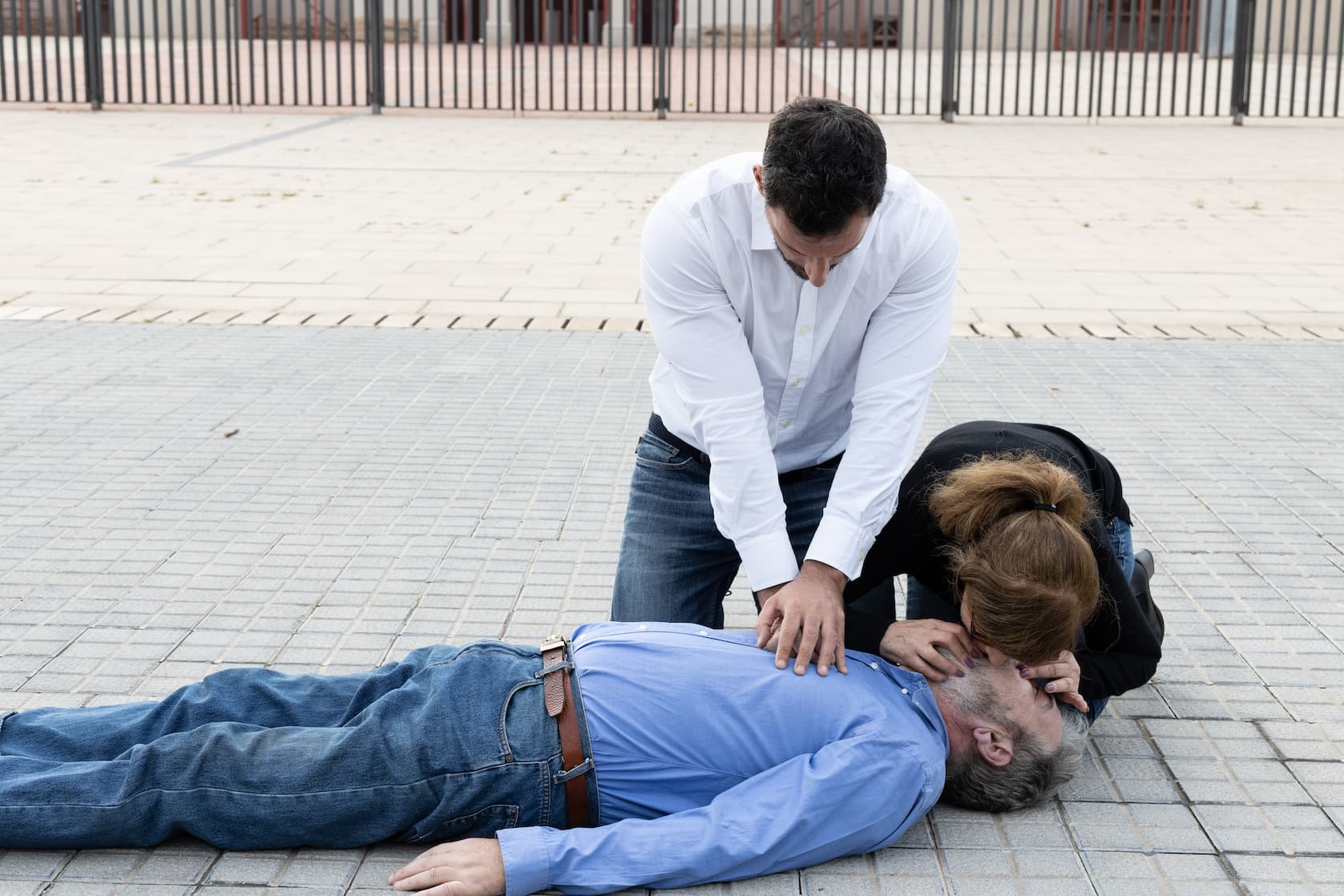
Two bystanders giving CPR and rescue breaths to a man on the ground under Good Samaritan aid

You might wonder why a life-saving skill needs a “best by” date. After all, once you learn how to ride a bike, you don’t usually forget. However, CPR is a high-stakes clinical skill that relies on precision. Organizations like the American Heart Association (AHA) and the American Red Cross set a two-year expiration for several vital reasons.

First, medical science is always evolving. Every few years, the International Liaison Committee on Resuscitation (ILCOR) reviews global cardiac data. They might find that a specific compression depth or a different ratio of breaths-to-compressions saves more lives. If your certification is five years old, you are likely using outdated techniques that are less effective.

Second, “skill decay” is a very real phenomenon. Research shows that most people—including healthcare professionals—begin to lose the physical muscle memory required for high-quality chest compressions within just six months of training. By the two-year mark, your ability to perform effective CPR has significantly diminished. The expiration date acts as a safety “reset” to ensure you remain competent. This is why CPR recertification in Columbus is crucial.

Is there a grace period for expired CPR cards?

A common myth is that there is a 30-day “grace period” after your card expires. In the past, some providers allowed this, but today, most major certifying bodies have eliminated it.

If your card expires on the 31st of the month, you are officially uncertified on the 1st of the next month. This means:

  • You cannot legally claim to be CPR certified.
  • You may be ineligible to enroll in a “Renewal” or “Update” course and may have to take the full “Provider” course again.
  • Your employer may not allow you to remain on the schedule.

While some individual employers might give you a few weeks to get recertified, the certification itself is technically invalid the moment it passes the expiration date printed on the card.

Can you still perform CPR if your certification is expired?

Yes, you can—and should—perform CPR in an emergency even if your card has expired. Life-saving doesn’t require a valid piece of plastic; it requires action. If you witness a cardiac arrest, your primary goal is to keep blood flowing to the brain until paramedics arrive.

From a legal standpoint, most states have “Good Samaritan Laws” that protect laypeople who act in good faith during an emergency. These laws generally do not require you to have an active certification to be protected, as long as you are acting as a reasonable person would in that situation. However, for professionals like nurses, teachers, or lifeguards, the legal landscape is different, as they may be held to a higher standard of care based on their professional obligations.

How does an expired certification affect your job?

For many professions, a valid CPR or Basic Life Support (BLS) card is a non-negotiable requirement of employment. If you are a nurse, dental assistant, daycare provider, or fitness trainer, an expired card is more than a nuisance; it’s a compliance violation.

  • Immediate Suspension: Many healthcare facilities use tracking software that alerts management when a certification lapses. This can result in being “taken off the schedule” immediately until proof of renewal is provided.
  • Loss of Professional Liability Insurance: Some professional insurance policies are contingent upon maintaining all required certifications. If your CPR card expires, you might not be covered in the event of a workplace incident.
  • Career Stagnation: If you are applying for a new job, an expired certification can stall your application. Most employers will not hire a candidate who isn’t fully compliant with safety requirements.

What is the difference between a renewal course and a full course?

When your certification is current, you are eligible for a Renewal Course (sometimes called an “Update” or “Review” course). This is the preferred path for most people because:

  1. It’s Faster: Renewal courses focus on updates and skills testing rather than teaching every concept from scratch.
  2. It’s Cheaper: Because the class time is shorter, the cost is typically lower.
  3. It’s Less Intensive: It assumes you already have a foundation of knowledge and just need to shake off the rust.

If you let your certification expire for a long period (usually more than 30 days, though this varies by provider), you will likely be required to take the Full Provider Course. This means spending 4 to 6 hours in a classroom covering every basic detail, even the parts you still remember. Staying on top of your renewal date saves you both time and money.

How do you find your expiration date?

If you aren’t sure when your card expires, don’t guess. You can verify your status in a few ways:

  • Check the Card: Most digital or physical cards clearly list the “Recommended Renewal Date” or “Expiration Date.”
  • AHA eCard Search: If you were certified through the American Heart Association, you can visit their website and enter your name and email to look up your digital eCard.
  • Red Cross Tool: The Red Cross offers a similar lookup tool where you can scan a QR code or enter your certificate ID.
  • Contact Your Training Center: If you took a class at a local site like CPR Classes Near Me, they keep records of your training and can often send you a copy of your card.

What are the steps to renew an expired certification?

Renewing doesn’t have to be a headache. Follow these steps to get back into compliance:

  1. Identify the Correct Course: Do you need Heartsaver (for the general public) or BLS (for healthcare providers)? Taking the wrong course won’t satisfy your employer.
  2. Choose Your Learning Style: * In-Person: Traditional classroom setting with an instructor.
    • Blended Learning: You complete the “book work” online at your own pace and then visit a center for a quick hands-on skills check.
  3. Schedule the Class: Don’t wait until the last minute. Classes can fill up quickly.
  4. Complete the Skills Test: You must demonstrate high-quality compressions and proper AED use on a manikin to earn your new card.
  5. Submit Proof: Once you receive your digital card, save a copy and email it to your supervisor or HR department immediately.

Why should you choose local training over purely online courses?

You may see ads for “100% Online CPR Certification” that claim you can get certified in 15 minutes. Be careful. OSHA and most employers do not recognize CPR certifications that do not include a hands-on skills assessment.

CPR is a physical skill. You cannot learn the correct depth of a compression or the feel of a chest recoil by clicking a mouse. Choosing a local provider like CPR Classes Near Me ensures that you receive hands-on training from a certified instructor. This not only makes you compliant with workplace rules but also gives you the confidence that you could actually save a life if the moment arrived.

Conclusion

An expired CPR certification is more than just a lapse in paperwork; it’s a lapse in your readiness to help someone in their most desperate moment. Whether you are a healthcare professional keeping your license active or a parent wanting to keep your family safe, staying current with your training is essential. By renewing on time, you avoid the hassle of retaking a full course, stay compliant with your job, and—most importantly—keep your life-saving skills sharp.

Don’t wait until your card is invalid. Check your date today, and if you’re due for a refresh, get back into the classroom.

Ready to renew your life-saving skills? Contact CPR Classes Near Me today to find a convenient local class and get your certification back on track!

Frequently Asked Questions

Does my CPR certification ever truly expire? 

Yes. Almost all reputable CPR certifications from the AHA or Red Cross are valid for exactly two years from the end of the month they were issued. After that date, the card is no longer valid for professional or legal compliance.

Can I renew my certification if it has already expired? 

Yes, you can always get recertified. However, if your card has been expired for more than a few weeks, you will likely have to take a “Full Provider” course rather than a shorter “Renewal” course.

Will my employer pay for my CPR renewal? 

Many employers, especially in healthcare and education, will cover the cost of the course or provide the training in-house. Check with your HR department before paying out of pocket.

What is the “blended learning” option for renewal? 

Blended learning allows you to complete the classroom portion of the training online through a series of videos and quizzes. Afterward, you must meet with an instructor in person for about 30-45 minutes to prove you can physically perform the skills.

Is BLS different from CPR? 

Basic Life Support (BLS) is a higher level of CPR training designed for healthcare professionals (nurses, doctors, EMTs). It includes advanced techniques like bag-valve-mask ventilation and multi-rescuer coordination. If your job requires BLS, a standard Heartsaver CPR card will not be sufficient.