CPR Certification for Teachers in Austin: The Complete Guide to Local AHA Training and State Compliance

As an educator in Central Texas, your classroom is a space for growth, discovery, and mentorship. However, every teacher knows that student safety is the prerequisite for learning. Whether you are leading a kindergarten classroom in Austin ISD, coaching athletics in Eanes ISD, or managing an early childhood daycare center in South Austin, medical emergencies can happen without warning.
When a student or colleague experiences sudden cardiac arrest, severe allergic reactions, or choking, every second counts. Having up-to-date CPR certification for teachers in Austin equips you with the confidence and practical skills required to stabilize a patient until emergency medical personnel arrive.
This comprehensive guide covers everything Texas educators need to know about CPR requirements, classroom emergency preparedness, American Heart Association (AHA) course standards, and how to get your official same-day certification card right here in Austin.
Why Is CPR Certification for Teachers in Austin Mandatory for School Staff?
Texas places a high priority on campus health and emergency preparedness. Under state guidelines and local district policies, educators, coaches, physical education instructors, and school staff members are regularly required to maintain active CPR and AED training.
The primary goal of mandatory training is to build a network of immediate responders across every school campus. Cardiac emergencies are not limited to adults; children and teenagers can also experience sudden cardiac arrest due to underlying congenital heart conditions, respiratory distress, or trauma during school sports.
By completing CPR certification for teachers in Austin, educators ensure that their campus complies with Texas Education Agency standards while protecting the thousands of students who enter Central Texas classrooms each day.
What CPR Requirements Must Texas Educators Meet for School Compliance?
Navigating certification compliance can sometimes feel overwhelming with various course titles and training options available. Fortunately, Texas educational standards dictate clear benchmarks for educator safety training:
- American Heart Association (AHA) Alignment: School districts throughout Austin require CPR cards certified through nationally recognized organizations, with the AHA being the gold standard across Texas public and private schools.
- Multi-Age Resuscitation Skills: Educator CPR training must cover adult, child, and infant resuscitation techniques, as well as foreign-body airway obstruction (choking) management.
- Automated External Defibrillator (AED) Proficiency: Teachers must be trained to locate, turn on, and operate an AED using pads appropriate for both adult and pediatric patients.
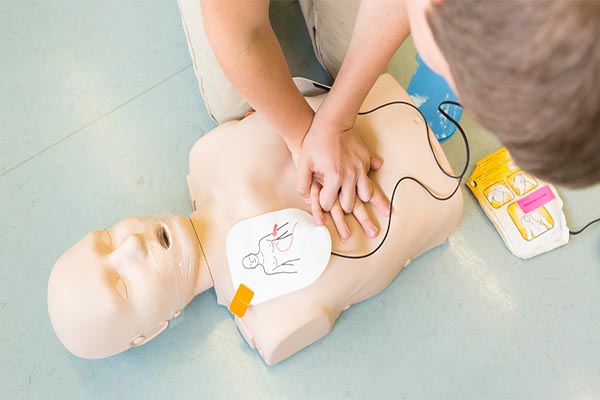
- Hands-On Skills Verification: While theoretical coursework can be completed online, full certification requires in-person demonstration of compression depth, rate, and rescue breathing techniques on training manikins.
Choosing an official AHA training site ensures that your certification card is universally accepted by school district human resources departments without delay.
How Does Pediatric CPR Differ from Adult CPR in a School Setting?
One of the most critical aspects of teacher training is understanding the physiological differences between adult and pediatric cardiac events. Teachers interact with toddlers, young children, and adolescents daily, making age-specific technique mastery essential.
Physiological Differences in Emergency Response
- Root Cause of Cardiac Arrest: In adults, cardiac arrest usually stems from a primary cardiac event such as coronary artery disease. In children and infants, cardiac arrest is most frequently secondary to respiratory failure or hypoxia (choking, asthma attacks, severe allergic reactions, or drowning).
- Compression Depth & Hand Placement:
- Adults: Two hands on the lower half of the breastbone, compressing at least 2 inches deep.
- Children (Age 1 to Puberty): One or two hands on the lower half of the breastbone, compressing approximately 2 inches deep (about one-third the depth of the chest).
- Infants (Under 1 Year Old): Two fingers or a two-thumb encircling technique in the center of the chest, compressing approximately 1.5 inches deep.
- Rescue Breathing Priority: Because pediatric emergencies are primarily respiratory, delivering timely rescue breaths alongside chest compressions is crucial for restoring oxygen levels in young patients.
Hands-on practice during your training session reinforces these motor skills so that you can react instinctively during a high-stress scenario in your classroom or hallway.
What Key Emergency Response Skills Do Teachers Learn in an Austin CPR Class?
A high-quality training session goes beyond basic chest compressions to cover a comprehensive suite of life-saving interventions tailored to school campus safety:
- High-Quality Chest Compressions: Delivering compressions at a rate of 100 to 120 beats per minute with full chest recoil between compressions.
- AED Operation: Step-by-step guidance on placing pads, clearing bystanders, analyzing heart rhythms, and administering shocks safely.
- Relief of Foreign-Body Airway Obstruction: Mastering abdominal thrusts (Heimlich maneuver) for conscious adults and children, as well as back slaps and chest thrusts for infants.
- Barrier Device Usage: Utilizing pocket masks and bag-mask devices to deliver hygienic, effective rescue breaths.
- Team Emergency Response: Coordinating roles among multiple teachers or staff members when responding to a student collapse in a cafeteria, gym, or playground.
What Are the Steps to Complete Your Teacher CPR Certification in Austin?
Balancing lesson planning, grading, and extracurricular duties leaves teachers with limited extra time. That is why the path to earning your certification is streamlined for maximum efficiency:
- Select an AHA-Aligned Course: Register for a course tailored to educators that covers Basic Life Support (BLS) or Heartsaver CPR/AED and First Aid.
- Complete Pre-Course Work (Optional Blended Learning): Review online instructional modules at your own pace to build a solid foundation in resuscitation science and protocols.
- Attend Your In-Person Skills Session: Visit the Austin training center to practice on high-fidelity manikins with guidance from certified instructors.
- Demonstrate Competency: Show mastery in compressions, AED setup, and choking interventions under direct observation.
- Receive Your Same-Day AHA eCard: Get your official digital certification card delivered to your email inbox the very same day for immediate submission to your district HR department.
Why Is In-Person Hands-On Training Necessary for School Staff Safety?
In recent years, several fully online “100% virtual” CPR websites have appeared online offering quick digital certificates without any physical practice. However, Texas school districts and healthcare organizations generally reject these online-only cards.
Resuscitation relies heavily on physical muscle memory. Achieving the proper compression depth (2 inches on an adult or child) requires correct body positioning, shoulder alignment, and physical exertion that cannot be simulated through a keyboard or smartphone screen.
In-person skills checks with certified feedback devices ensure that you are applying the exact pressure and rhythm needed to generate life-saving blood flow to vital organs. When you earn your CPR certification for teachers in Austin with hands-on validation, you gain genuine physical confidence in your ability to perform under real-world pressure.
How Does CPR Certification Prepare Educators for Campus AED Emergencies?
Modern schools across Central Texas are equipped with Automated External Defibrillators in hallways, athletic facilities, and main offices. However, an AED is only as effective as the staff trained to operate it.
During your training, you will work directly with AED training units to practice immediate deployment. You will learn:
- How to rapidly locate and activate the AED on campus.
- Where to apply adult pads versus pediatric attenuation pads.
- How to follow clear voice prompts while continuing chest compressions.
- Safety precautions when working near water, metal surfaces, or patients with chest hair or medication patches.
Pairing immediate CPR with an AED shock within the first 3 to 5 minutes of collapse increases survival rates significantly, turning a potential tragedy into a saved life.
Summary of Key Takeaways for Austin Teachers
- District Compliance: Texas educators require AHA-aligned CPR and AED training covering adult, child, and infant techniques.
- Pediatric Focus: Training emphasizes respiratory response and age-appropriate compression depths crucial for student care.
- Hands-On Skills Matter: School districts require physical hands-on verification to guarantee practical competence.
- Fast Same-Day Cards: Complete your session and receive an official AHA eCard the same day to satisfy HR deadline requirements.
Take Action: Contact CPR Classes Near Me Today
Do not wait until a school emergency occurs or your district compliance deadline approaches. Equip yourself with the vital life-saving skills needed to keep your students and colleagues safe.
At CPR Classes Near Me in Austin, our AHA-certified instructors specialize in clear, engaging, and hands-on CPR training tailored specifically for teachers, daycare providers, and school staff. We offer flexible scheduling, convenient local classes, and instant same-day certification cards recognized across all Texas school districts.
Ready to get certified? Contact CPR Classes Near Me today to reserve your seat or schedule group training for your school’s faculty!
Frequently Asked Questions (FAQ)
Do Texas teachers need CPR certification?
Yes, Texas law and individual school district guidelines require educators, athletic staff, and school personnel to maintain active CPR and AED training. Certification ensures staff members can respond immediately to student or workplace emergencies.
Is online CPR training accepted by Texas school districts?
Texas public school districts and childcare licensing boards typically require hands-on skills verification. Fully online courses without an in-person skill assessment on a physical manikin are generally rejected by school HR departments.
How long does a teacher CPR certification last in Texas?
Official American Heart Association (AHA) CPR certification cards remain valid for two years from the issue date. Educators must complete a recertification or renewal class every two years to stay compliant.
What is the difference between Heartsaver CPR and BLS CPR for teachers?
Heartsaver CPR/AED is designed for school staff, daycare workers, and general employees needing basic emergency training. Basic Life Support (BLS) CPR is a broader medical-grade certification required for school nurses, athletic trainers, and healthcare staff.
How fast will I receive my CPR card after completing the class in Austin?
When you train with CPR Classes Near Me in Austin, you receive your official AHA eCard on the exact same day you complete your in-person training session.
Does teacher CPR training cover infant and child CPR?
Yes, teacher CPR training includes comprehensive instruction on adult, child, and infant CPR techniques, as well as pediatric choking response and AED use.