What Parents Learn in an Infant CPR Class: A Complete Guide to Baby Safety

Bringing a new baby home comes with endless joy, structural changes to your daily routine, and a profound sense of responsibility. While every parent childproofs outlets and installs car seats, the single most powerful step you can take to safeguard your child is learning how to respond during a life-threatening medical emergency.
Enrolling in an infant cpr class equips you with the physical skills, mental clarity, and hands-on confidence required to step in when seconds count. Through certified American Heart Association (AHA) aligned training provided by CPR Classes Near Me, parents transform fear into actionable preparedness.
Below is an in-depth breakdown of the life-saving knowledge, physical techniques, and real-world protocols you will master during an infant CPR and emergency response course.
Why Is Infant CPR Different from Adult CPR?
Infant anatomy is fundamentally distinct from that of an adult or older child. A baby’s body is fragile, their respiratory system is delicate, and the underlying triggers of cardiac events differ completely from adults.
In adult medical emergencies, cardiac arrest usually stems from a sudden primary heart event, such as an arrhythmia or blockage. In infants under one year of age, cardiac arrest is almost always secondary to a respiratory crisis. Common triggers include choking, severe asthma, drowning, or Sudden Infant Death Syndrome (SIDS). Because oxygen deprivation is the leading trigger, infant resuscitation places an immediate emphasis on combining high-quality chest compressions with prompt rescue breathing.
Key anatomical and procedural differences include:
- Primary Cause of Arrest: Infants suffer from respiratory failure and hypoxia, whereas adults typically experience primary cardiac events.
- Pulse Check Site: For infants, you check the brachial artery located on the inner upper arm, rather than the carotid artery in the neck used for adults.
- Compression Depth: Infant compressions require a depth of approximately 1.5 inches, which equals about one-third the depth of the chest. Adult compressions require a depth of at least 2 inches.
- Compression Technique: Infants require two fingers or a two-thumb encircling technique, unlike the two interlocked hands used for adult chest compressions.
- Airway Positioning: An infant’s airway must be opened to a neutral “sniffing” position. Hyper-extending a baby’s neck can collapse their flexible airway, whereas adults require full head-tilt extension.
- Rescue Breath Volume: Infant rescue breaths require only gentle puffs of air from your cheeks, compared to full breaths for adults.
Understanding these anatomical differences ensures that when you render aid, you apply force and volume appropriate for a baby’s body without causing unintentional harm.
What Specific Physical Skills Will You Practice in Class?
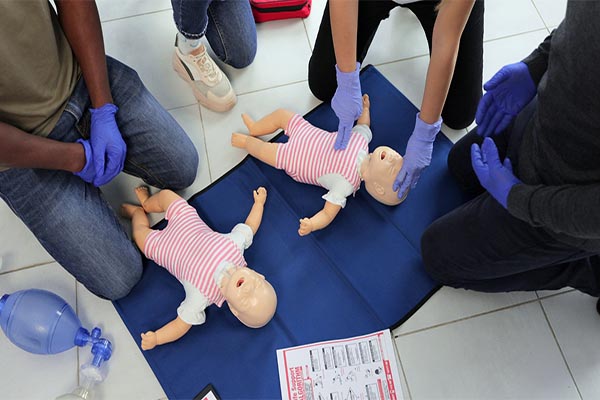
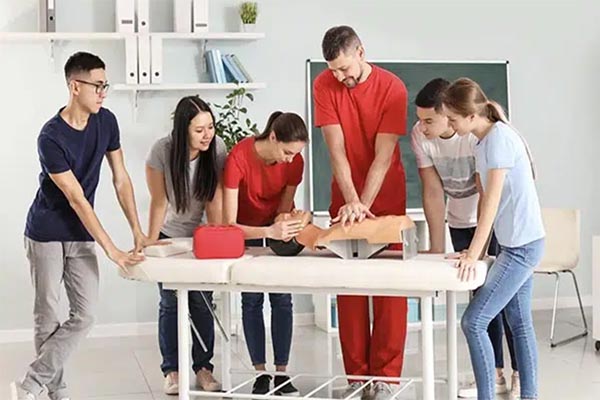
During an infant cpr class, theoretical knowledge is paired with real-world practice on specialized infant manikins. Instructors guide you through muscle-memory drills until every motion becomes second nature.
1. Identifying Emergency Signs Rapidly
Parents learn to recognize the subtle cues of respiratory distress and cardiac arrest in babies:
- Unresponsiveness to foot tapping or shoulder pats.
- Absence of normal breathing, including gasping, blue or pale skin tone, or silent struggling.
- Lack of a pulse at the brachial artery located on the inside of the upper arm.
2. High-Quality Infant Chest Compressions
Because an infant’s sternum and ribcage are flexible, compressions require strict precision:
- Place the baby flat on a firm, level surface rather than a soft mattress or couch.
- Position two fingers in the center of the chest just below the nipple line. Alternatively, wrap your hands around the torso and place both thumbs on the lower half of the breastbone.
- Compress the chest approximately 1.5 inches deep at a tempo of 100 to 120 compressions per minute.
3. Delivering Safe Rescue Breaths
Because baby lungs have a small capacity, over-inflating them can cause tissue damage:
- Open the airway by tilting the head back slightly into a neutral position without forcing the neck back.
- Place your mouth over both the infant’s nose and mouth to create a complete seal.
- Deliver gentle puffs of air using the volume held in your cheeks rather than a full lungful, watching for the chest to visibly rise.
How Do You Clear a Choking Infant’s Airway?
Choking is one of the top concerns for parents introducing solid foods or dealing with small objects. An infant choking emergency requires a completely different approach than the Heimlich maneuver used on adults.
If a baby is coughing loudly or crying, their airway is only partially blocked, so you should allow them to cough naturally. However, if the baby cannot cry, cough, or breathe, or if their skin begins turning blue, you must execute immediate choking intervention techniques:
- Position the Infant: Lay the baby face-down along your forearm, supporting their jaw and head with your hand while keeping their head lower than their chest.
- Deliver 5 Back Slaps: Using the heel of your free hand, deliver five distinct, firm back slaps between the infant’s shoulder blades.
- Turn the Infant: Place your other arm over the baby’s chest, sandwiching them safely between your arms, and flip them face-up with their head lower than their torso.
- Deliver 5 Chest Thrusts: Place two fingers on the center of the chest just below the nipple line and deliver five quick chest thrusts at a depth of 1.5 inches.
- Repeat the Cycle: Continue alternating five back slaps and five chest thrusts until the object is dislodged or the infant becomes unresponsive. If the infant loses consciousness, immediately begin CPR starting with chest compressions.
How Is an Automated External Defibrillator (AED) Used on a Baby?
Many parents are surprised to learn that Automated External Defibrillators (AEDs) can be safely used on infants. AEDs are portable devices that analyze heart rhythms and deliver an electrical shock if necessary to restore normal heart function.
In your infant cpr class, you learn how to seamlessly integrate an AED into resuscitation efforts:
- Use Pediatric Pads: If available, always use pediatric attenuator pads, which reduce the electrical energy to a level safe for a baby’s body.
- Pad Placement: Because an infant’s chest is small, place one pad on the center of the chest and the second pad on the center of the upper back between the shoulder blades to prevent the pads from touching each other.
- Follow Clear Voice Prompts: Modern AEDs provide clear, step-by-step audio instructions. You will practice placing trainer pads on manikins and stopping compressions when the device analyzes the heart rhythm.
What First Aid Essentials Are Covered for Infant Caregivers?
Beyond CPR and choking, comprehensive certification options—such as the American Heart Association First Aid & CPR course available through CPR Classes Near Me—prepare parents for everyday pediatric emergencies.
- Febrile Seizures & High Fevers: Learn how to safely manage sudden spike-in-temperature seizures without restricting the child’s movement.
- Allergic Reactions & Anaphylaxis: Recognize signs of severe allergic responses to food or insect stings, and practice using epinephrine auto-injector trainers.
- Burns, Cuts, & Head Injuries: Master proper wound dressing, burn treatment protocols, and signs of concussion or elevated intracranial pressure after falls.
- Poisoning Response: Understand immediate stabilization steps and how to interface effectively with Poison Control centers.
What Psychological and Practical Benefits Do Parents Gain?
Taking an infant cpr class transforms how parents manage domestic safety:
- Panic Reduction: Practicing physically on manikins builds muscle memory, allowing you to act automatically under extreme stress rather than freezing.
- Home Environment Audits: You will gain a heightened awareness of hazards around your home—from curtain cords and tiny toys to sleeping arrangements and feeding safety.
- Caregiver Coordination: When parents, grandparents, and babysitters take the class together, your entire support network operates under identical emergency protocols.
Protect Your Baby with Confidence—Enroll Today!
Nothing offers peace of mind quite like knowing you are fully prepared to save your child’s life in a medical crisis. Gain hands-on practice, expert instruction, and nationwide-accepted certification in a welcoming, stress-free environment.
Ready to gain life-saving confidence? Contact CPR Classes Near Me today to view upcoming class schedules, find a convenient location near you, and secure your spot in an upcoming CPR and First Aid course.
Frequently Asked Questions
Can I learn infant CPR online, or do I need an in-person class?
While online videos provide helpful visual overviews, effective CPR training requires hands-on practice. In-person classes let you practice chest compression depth, rescue breathing force, and choking techniques on calibrated infant manikins under instructor supervision. Most employers, childcare facilities, and adoption agencies require in-person certification eCards.
At what age is a child considered an infant for CPR protocols?
In CPR and first aid guidelines, an infant is defined as any child from birth up to 12 months of age (1 year old). Once a child reaches their first birthday, caregivers follow pediatric/child CPR protocols, which utilize different hand placements and compression depth standards.
How long does an infant CPR certification remain valid?
Official American Heart Association (AHA) aligned CPR and First Aid certifications are valid for two years from the date of completion. Refresher training every two years ensures your skills stay sharp and aligned with the latest evidence-based resuscitation guidelines.
Will taking an infant CPR class cover child and adult CPR as well?
Yes! Comprehensive courses—such as the AHA Basic Life Support (BLS) and CPR & First Aid courses offered by CPR Classes Near Me—cover CPR, AED use, and choking relief techniques across all age groups: infants, children, and adults.
What should I bring or wear to an infant CPR class?
Wear comfortable, casual clothing that allows you to bend, kneel, and move easily on the floor alongside practice manikins. All training materials, infant manikins, AED trainers, and safety equipment are provided on-site at the training center.
Are same-day CPR certification cards provided after class?
Yes. When you complete your in-person course with CPR Classes Near Me, your official AHA-aligned certification eCard is issued directly to your email on the very same day so you have immediate proof of training.