Do Austin Employers Prefer AHA CPR Certification?

Landing a job or keeping your current role in Austin’s competitive market often comes down to meeting strict safety prerequisites. If your job description requires life-saving credentials, you have likely run into multiple acronyms and training providers. You might wonder if it really matters which organization issues your card, or if a quick digital course will satisfy your human resources manager.

The short answer is yes: local organizations overwhelmingly prefer—and frequently mandate—credentials backed by the American Heart Association. Choosing the wrong program can result in rejected applications, delayed start dates, and wasted registration fees. Understanding why this specific qualification holds so much weight across Central Texas will ensure your career path remains uninterrupted.

In this comprehensive guide, we will unpack the exact standards local industries demand for CPR Certifications. You will discover how different sectors view training credentials, why hands-on evaluation is non-negotiable, and how to secure a guaranteed credential that satisfies your employer.

Why Is AHA the Standard for Austin Job Compliance?

When corporate risk managers and compliance officers write safety policies, they look for gold-standard protocols. The American Heart Association writes the official emergency cardiovascular care guidelines that form the basis of modern lifesaving techniques. Because of this structural authority, local organizations view this specific curriculum as the absolute benchmark for public safety and emergency response.

A major reason for this strict preference comes down to regulatory alignment. Most corporate insurance policies and municipal safety contracts require training that fully complies with the Occupational Safety and Health Administration (OSHA). The curriculum provided by our official training site meets these strict federal standards, protecting businesses from liability while ensuring staff members can execute proper care under pressure.

Furthermore, safety managers know that uniform training prevents errors during emergencies. When an entire team undergoes identical, highly regulated instruction, they operate seamlessly during a crisis. For Austin employers, selecting this specific credential is not about brand loyalty; it is about mitigating risk and protecting human lives with the most trusted training framework available.

Do Healthcare Facilities in Central Texas Require BLS?

If you are pursuing a career in the medical sector, the question of preference turns into an absolute mandate. Healthcare networks throughout Central Texas require Basic Life Support (BLS) credentials explicitly from approved training sites. Major hospital systems, outpatient clinics, and private medical practices will not accept alternative, non-aligned certifications during the onboarding process.

This requirement applies across a broad spectrum of medical and clinical staff roles:

  • Registered Nurses (RNs) and Licensed Vocational Nurses (LVNs)
  • Certified Nursing Assistants (CNAs) and medical assistants
  • Dental hygienists and specialized clinical technicians
  • Physical therapists and occupational rehabilitation specialists

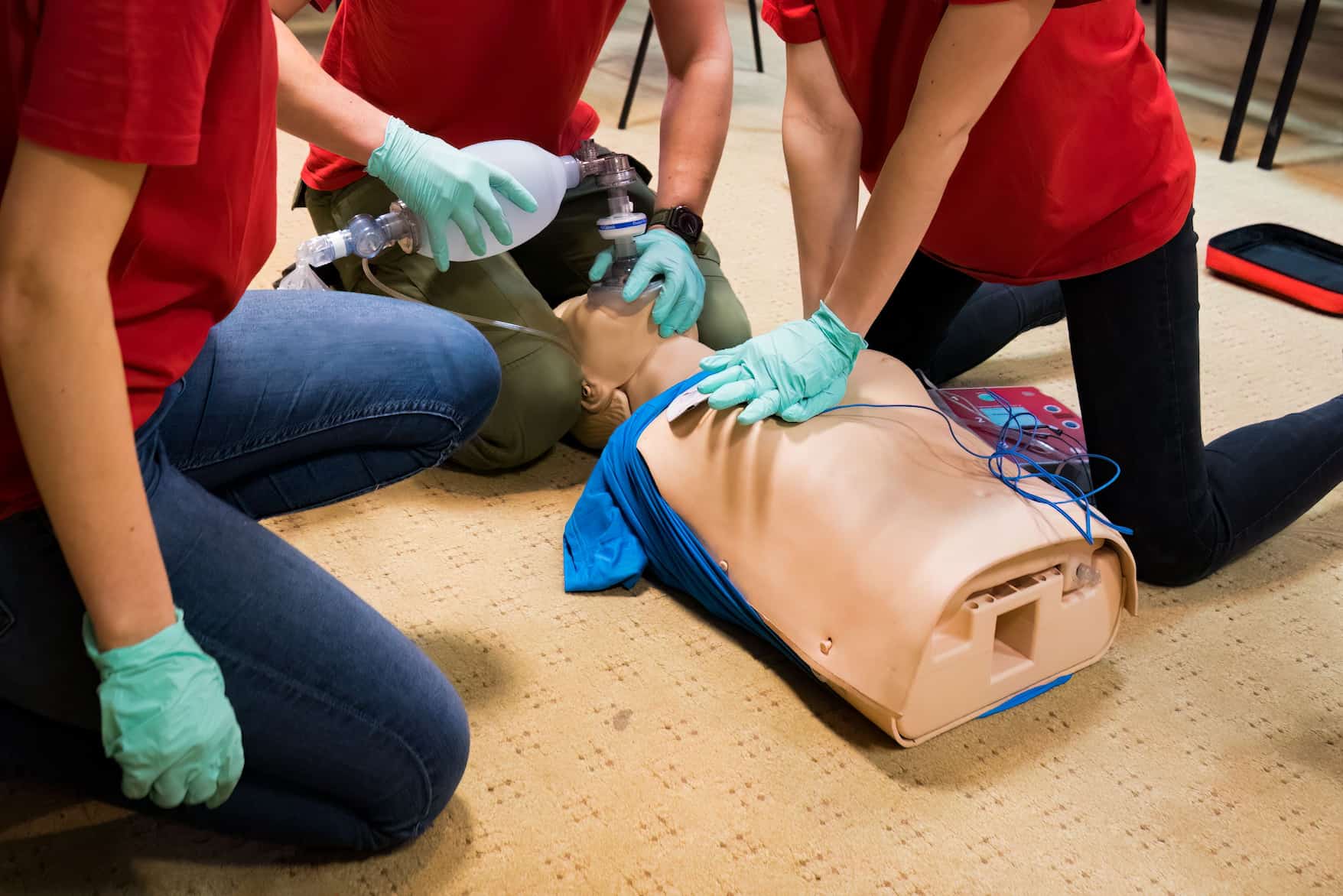
Medical directors recognize that clinical settings demand advanced mastery of chest compressions, bag-mask ventilation, and multi-rescuer team dynamics. A standard, surface-level safety course does not provide the rigorous testing needed to manage a cardiac emergency in a hospital corridor or a clinical suite. For these professions, an official eCard is a mandatory prerequisite for clinical clearance.

What Types of Non-Medical Austin Businesses Mandate This Training?

High-quality life-saving skills are not reserved solely for hospital corridors and emergency rooms. A diverse array of non-medical industries across the local metro area require structured emergency training to protect their patrons, students, and workforce. From construction zones along Interstate 35 to downtown corporate offices, safety compliance is a top priority.

In the education and youth sports sectors, school districts, private academies, and daycare centers require staff to be certified. Teachers, childcare providers, and athletic coaches must be ready to respond immediately to pediatric choking or sudden cardiac events. Having an OSHA-compliant credential ensures these institutions remain fully compliant with Texas state licensing laws.

The fitness and hospitality sectors follow similarly strict guidelines. Local gyms, boutique fitness studios, and country clubs require their personal trainers, swim instructors, and lifeguards to hold verified credentials. Because these professionals monitor individuals undergoing intense physical exertion, their managers insist on the highest level of emergency preparation to protect their members.

Are Online-Only CPR Certifications Accepted by Austin HR Departments?

The convenience of clicking through a digital slideshow at home makes online-only programs look incredibly attractive. However, a major trap awaits job seekers who choose this route. The vast majority of human resource departments in Central Texas completely reject certifications that do not include an in-person, hands-on skills evaluation.

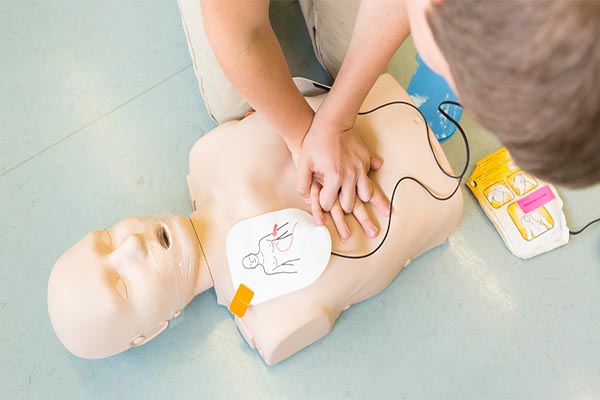
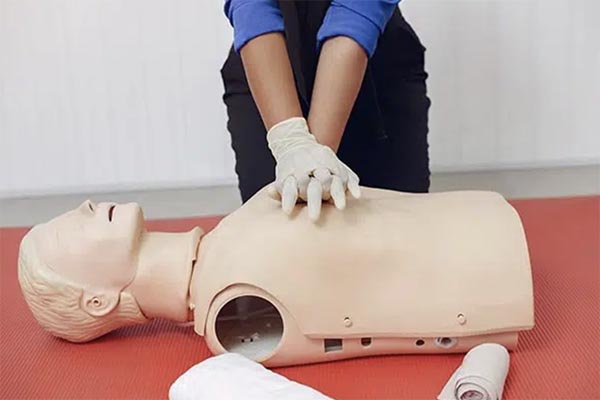
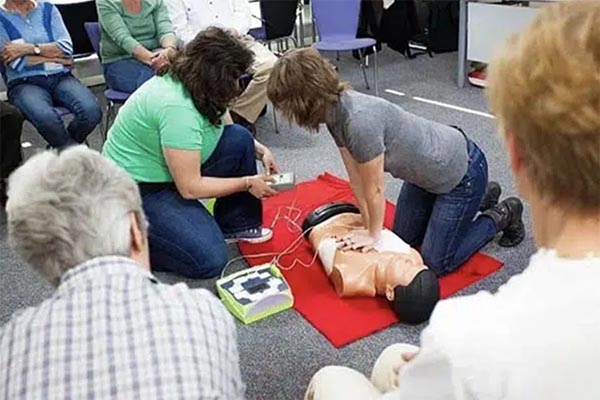
The reason for this widespread rejection is simple: you cannot learn muscle memory from a computer screen. Performing proper chest compressions requires a specific physical depth, speed, and rhythm that can only be mastered by practicing on a specialized medical manikin. If an emergency occurs on a job site, an employer needs to know you can physically perform the technique, not just pass a digital multiple-choice quiz.

When a safety manager audits employee files, an online-only certificate often triggers an immediate compliance violation. Spending money on an unapproved digital course usually means you will have to pay again for an official, in-person class. To keep your employment secure, always ensure your course features live, face-to-face instruction led by an authorized specialist.

How Long Does It Take to Get a Compliant Certificate in Austin?

Time is a critical factor when you are trying to secure a new job or meet a renewal deadline. Fortunately, obtaining an official, fully compliant qualification does not require weeks of classroom study. A comprehensive, authorized session takes approximately 3.7 hours to complete from start to finish.

During this focused, single-session class, you will cover a variety of vital skills:

  1. High-Quality Chest Compressions: Master the precise depth, hand placement, and rate required for adults, children, and infants.
  2. Airway Management & Ventilation: Learn how to deliver effective rescue breaths using protective barrier devices and bag-mask units.
  3. Automated External Defibrillator (AED) Operation: Gain practical experience operating live trainer units safely in various emergency scenarios.
  4. Choking Relief: Practice physical techniques to clear severe airway obstructions for individuals of all age groups.

Because the curriculum is highly structured and efficient, you complete all lectures, practical practice, and physical skills assessments during that single visit. There are no homework assignments or secondary appointments required, making it easy to fit into a busy work week.

Can You Receive Your Certification Card on the Same Day?

When a looming employment deadline puts your job at risk, you cannot afford to wait weeks for a physical certificate to arrive in the mail. Recognizing this urgency, our training site provides same-day certification card delivery for all students who successfully complete their course.

The moment your in-person session concludes and your skills are verified, your instructor issues an official digital eCard directly to your profile. This digital credential contains a unique identification number and a verifiable QR code. This allows your human resources manager or compliance officer to instantly authenticate your training status online.

This rapid turnaround eliminates administrative delays, allowing you to hand over proof of compliance immediately. Whether you are finalizing a new employment contract or answering an urgent compliance audit, same-day delivery keeps your career moving forward without missing a beat.

Conclusion: Take the Next Step Toward Your Career Goals

When looking at your career and professional safety credentials, cutting corners is never worth the risk. Austin employers clearly prefer and widely mandate official AHA CPR certification because it guarantees OSHA compliance, standardized excellence, and genuine emergency readiness. Opting for an unverified or online-only program frequently results in rejected credentials and unnecessary extra costs.

Investing a single afternoon into an authorized, in-person course equips you with authentic life-saving skills that look great on a resume. With affordable local classes starting at just $64.95, gaining a premium, widely accepted credential is easy and accessible for every local professional.

Do not let an expired card or an unapproved certificate stall your professional progress. Contact CPR Classes Near Me today to check schedule availability, explore our convenient group options, and secure your official, same-day credential.

Frequently Asked Questions

How do I get CPR certified in Austin? 

To obtain your official credential, you simply need to register for and attend a single, in-person training session. Your expert instructor will guide you through all lecture videos, practical manikin practice, and skills testing during the class. Once you successfully demonstrate the techniques, your official credential will be issued to you that very same day.

How much does official training cost locally? 

In the Austin metro area, an official Basic Life Support course is discounted to $64.95, which saves you $20 off the standard rate. If your job description requires a combination of life-saving skills and general safety training, the complete CPR and First Aid course is available for $84.95. Always verify that your training provider displays the official American Heart Association seal to ensure your money is spent on a recognized credential.

How long does my safety certification stay valid? 

Once you successfully complete your classroom training, your official certification remains valid for exactly two years from the issue date. To maintain your professional compliance without any gaps, you should schedule a renewal class shortly before your current eCard expires. The renewal course features the same hands-on practice to keep your emergency response skills sharp and current.

Can I complete my safety certification entirely online? 

No, official workplace-compliant certifications cannot be completed entirely online because employers require a live, hands-on skills assessment. Digital-only courses lack the physical manikin practice necessary to build muscle memory for proper compression depth and ventilation techniques. Consequently, the vast majority of local human resource departments will reject certificates that do not include an in-person training component.

Who is eligible to take a local safety class? 

Any individual who can physically perform the required life-saving techniques and understand the safety concepts is eligible to join a class. There is no minimum age requirement to earn your certification through our local training programs. This makes the courses ideal for a wide range of participants, including teenagers looking for lifeguard jobs, healthcare students, and senior corporate safety wardens.

How long does an in-person training class take? 

A complete, official in-person training session takes approximately 3.7 hours to finish. Authorized training centers are required to present the complete instructional curriculum and video modules without skipping content. Because all testing and practical practice are completed within this single block of time, you will walk out of the facility with your same-day card in hand.

What Employers in Columbus Look for in CPR Certification

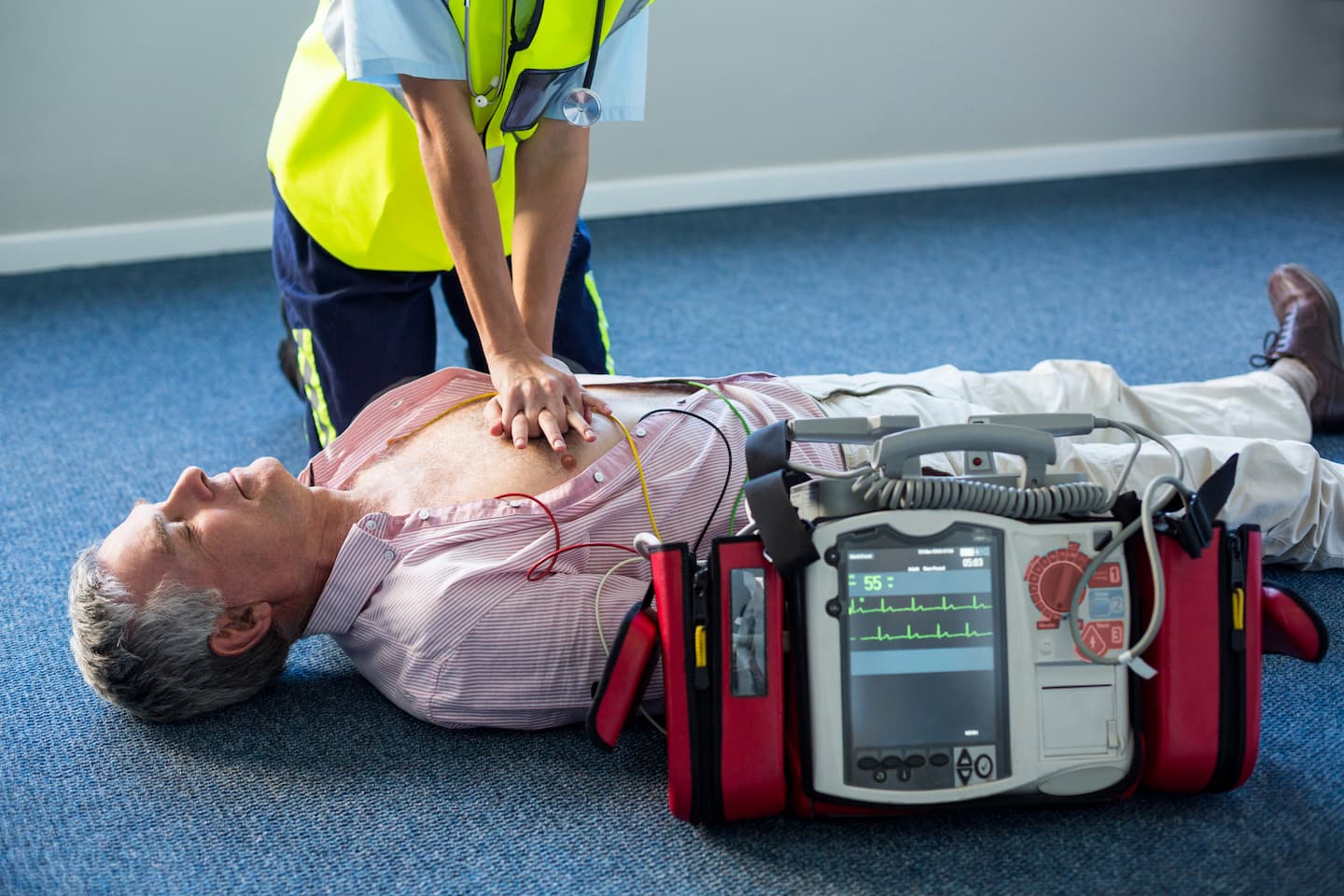
Paramedic performing CPR with defibrillator on cardiac arrest patient

If you are job hunting in the “Arch City,” you already know that Columbus has one of the most competitive and diverse job markets in the Midwest. From the massive healthcare systems like OhioHealth and Nationwide Children’s Hospital to the booming education and construction sectors, safety is a top priority.

For many of these roles, having a CPR certification isn’t just a “plus”—it’s a non-negotiable requirement. However, not all certifications are created equal. If you show up to an interview with a certificate that your employer won’t accept, you could lose out on the position.

In this guide, we will break down exactly what Columbus employers are looking for, which certifications carry the most weight, and how you can get certified fast to land your dream job.

Why is the American Heart Association (AHA) the Gold Standard in Columbus?

When a hiring manager in Columbus looks at your resume, they are specifically looking for the American Heart Association (AHA) heart shield. But why is this specific brand so important?

The AHA is the leader in cardiac science. They set the guidelines that almost every other organization follows. Because their standards are so rigorous, employers trust that an AHA-certified individual actually knows how to handle a high-pressure cardiac emergency.

In Columbus, particularly within the healthcare corridor, the AHA BLS (Basic Life Support) course is the primary requirement. Most clinical environments will not accept “off-brand” or online-only certifications because they lack the AHA’s strict quality control and hands-on testing requirements.

Is an Online-Only CPR Certification Accepted by Employers?

This is perhaps the most common mistake job seekers make. You might find a website offering a “30-minute online CPR course” for $20. While this might seem convenient, it is rarely accepted by Columbus employers.

  • Hands-On Skills Matter: Most professions, especially those regulated by OSHA, require a hands-on skills assessment. You cannot learn the physical depth of a chest compression or the “feel” of an AED by clicking through slides.
  • Verification Issues: Employers need to verify your credentials. AHA eCards come with a unique ID and QR code that employers can instantly verify through the official portal.
  • Reliability: In-person training at a local Columbus site ensures you are being coached by an expert who can correct your form in real-time.

Which Industries in Columbus Require CPR Certification?

Columbus is a hub for several industries that mandate life-saving training. If you are entering any of the following fields, you should secure your AHA BLS certification immediately:

  1. Healthcare and Nursing: RNs, LPNs, CNAs, and dental assistants at facilities like The Ohio State University Wexner Medical Center must have valid BLS credentials.
  2. Education and Childcare: Teachers, daycare providers, and school coaches in the Columbus City School district are often required to be certified in CPR and First Aid.
  3. Fitness and Athletics: Personal trainers at local gyms and swim instructors at community pools must be prepared for cardiac events.
  4. Construction and Skilled Trades: Electricians and site foremen often need CPR training to comply with OSHA safety standards on job sites.
  5. Hospitality and Flight: Flight attendants and hotel safety staff frequently carry these certifications to ensure guest safety.

What Specific Skills Must Your Certification Include?

A Columbus employer wants to know that you are a well-rounded responder. A “basic” CPR card might not be enough. Most employers look for a certification that covers the full spectrum of emergency response:

  • Adult, Child, and Infant CPR: You must be able to adapt your technique based on the size and age of the victim.
  • AED Training: Automated External Defibrillators are everywhere in Columbus—from John Glenn International Airport to the Short North. Employers need to know you can operate one safely.
  • Choking Relief: Knowing how to clear an airway for a conscious or unconscious victim is a vital workplace skill.
  • Rescue Breathing: Proper ventilation techniques are a core component of the BLS curriculum.

How Fast Can You Get Your Certification Card?

In the past, you had to wait weeks for a paper card to arrive in the mail. In today’s fast-paced Columbus economy, employers expect you to be ready to work “yesterday.”

That is why Same-Day eCards are a game changer. When you train with a local provider like CPR Classes Near Me Columbus, your electronic certification is issued the very same day you finish your class. You can download the PDF and email it to your recruiter before you even leave the parking lot.

What is the Difference Between CPR and BLS?

Many applicants are confused by the terminology. Here is a simple breakdown to help you choose the right class:

  • Heartsaver CPR/First Aid: This is generally for “lay rescuers”—people like teachers, coaches, and construction workers. It covers the basics and is perfect for general workplace compliance.
  • BLS (Basic Life Support): This is the higher-level “Healthcare Provider” version. It is faster-paced and includes more advanced techniques like multi-rescuer coordination and bag-mask ventilation.

Pro Tip: If you aren’t sure which one to get, go with BLS. It is the most widely accepted and “backward compatible” credential, meaning it almost always satisfies the requirements for lower-level positions as well.

Why Should You Choose Local Training in Columbus?

Training locally isn’t just about convenience; it’s about community context. Local instructors understand the specific needs of Columbus businesses. Whether you are in Dublin, Westerville, Gahanna, or Grove City, training with a local AHA-aligned site ensures:

  • No Pre-Work Required: You can show up and get everything done in one three-hour session.
  • Expert Instruction: You learn from professionals who understand the local emergency response landscape.
  • Cost-Effectiveness: Local classes are often more affordable than large national seminars. Currently, Columbus BLS classes are available for as low as $59.95.

Conclusion

Landing a job in Columbus requires preparation. By securing an American Heart Association BLS certification, you are telling employers that you are professional, prepared, and capable of saving a life. Don’t let an invalid or online-only certificate stand between you and your next career move.

Ready to get certified? Contact CPR Classes Near Me Columbus today to schedule your class and receive your AHA eCard the same day!

Frequently Asked Questions (FAQ)

Q: How do I know if my employer accepts my CPR card?

A: Most Columbus employers specifically request “AHA” or “American Heart Association” certification. If your card has the AHA heart shield logo on it, it is the most widely accepted credential in the nation.

Q: How long does the CPR certification last in Ohio?

A: Your AHA BLS or Heartsaver certification is valid for two years from the date of issue. After two years, you must take a renewal course to maintain your credentials.

Q: Can I get my First Aid and CPR at the same time?

A: Yes! Many employers in Columbus require both. You can enroll in a combined CPR and First Aid course to get both certifications in a single session, saving you both time and money.

Q: Is there an age requirement for CPR certification?

A: There is no formal minimum age. As long as the individual can perform the physical requirements of chest compressions and pass the skills test, they can become certified.

Q: What if I lost my CPR card?

A: If you were certified through the AHA, your eCard is stored digitally. You can log into the AHA portal or contact your training site to have your eCard resent to your email instantly.

Top 5 Reasons to Get CPR Certified in Austin This Year

Austin is a city that never stops moving. From the bustling crowds on South Congress to the hikers conquering Mount Bonnell and the swimmers cooling off at Barton Springs, our community is vibrant, active, and alive. But with such an active lifestyle comes an increased responsibility to look out for one another. Have you ever wondered what you would do if a medical emergency struck while you were enjoying a day out in the city?

Getting CPR certified isn’t just a box to check for a job application; it is a vital skill that empowers you to protect the people around you. Whether you are a healthcare professional, a concerned parent, or just an Austinite who wants to be prepared, the time to act is now. At CPR Classes Near Me, we believe that everyone should have the confidence to save a life. Here are the top five reasons why you should get CPR certified in Austin this year.

1. Do You Want the Power to Save a Life?

The most compelling reason to learn CPR is arguably the most obvious: it saves lives. Sudden Cardiac Arrest (SCA) does not discriminate. It can happen to anyone, anywhere, at any time—regardless of age or fitness level. According to the American Heart Association, more than 350,000 cardiac arrests occur outside of the hospital each year in the United States.

Why Seconds Matter:

  • Immediate Action: Survival rates drop by 7-10% for every minute that passes without CPR.
  • The Gap: Emergency services in Austin are world-class, but traffic and distance can sometimes delay response times.
  • The Bridge: You act as the bridge between the emergency and the ambulance. By performing chest compressions, you keep oxygenated blood flowing to the brain and other vital organs.

When you take a class with CPR Classes Near Me, you aren’t just memorizing a textbook. You are learning hands-on techniques that turn you from a helpless bystander into a lifesaver.

2. Is Your Career Ready for the Next Step?

Austin’s job market is booming, and competition is fierce. Did you know that CPR certification is a requirement for many of the city’s fastest-growing industries? It is no longer just for doctors and nurses. Employers across the board are looking for candidates who bring extra value and safety to the workplace.

Industries Requiring Certification:

  • Healthcare: RNs, CNAs, and medical office personnel.
  • Education: Teachers, daycare providers, and coaches.
  • Fitness: Personal trainers, yoga instructors, and gym staff.
  • Construction & Trades: Electricians and safety officers.
  • Hospitality: Hotel staff, lifeguards, and event coordinators.

Even if your employer doesn’t explicitly require it, having “AHA BLS Certified” on your resume demonstrates responsibility and a proactive attitude. Our Austin courses are fully accredited by the American Heart Association, ensuring your card is recognized and respected by employers nationwide.

3. Are You Prepared for Austin’s Active Lifestyle?

We live in one of the most active cities in the country. Austinites love their outdoor activities, from kayaking on Lady Bird Lake to attending massive events like ACL and SXSW. While this active culture is great for our health, it also increases the exposure to potential emergencies such as heatstroke, dehydration leading to cardiac events, or drowning accidents.

Common Austin Scenarios:

  • Heat-Related Illness: Texas summers are brutal. Heat exhaustion can escalate quickly.
  • Water Safety: With so many pools, creeks, and lakes, water safety is paramount.
  • Crowd Control: Large festivals can make it difficult for EMS to reach a victim instantly.

By getting certified, you ensure that your fun weekend doesn’t turn into a tragedy. You will be the person in your hiking group or running club who knows exactly what to do when things go wrong.

4. Can You Protect Your Loved Ones at Home?

It is a frightening statistic, but it is one you need to know: nearly 70% of out-of-hospital cardiac arrests happen at home. This means that if you ever have to perform CPR, the person you are saving will likely be a spouse, a parent, a child, or a friend.

The “Home Field” Advantage:

  • Recognition: You will learn to recognize the signs of a stroke or cardiac arrest immediately.
  • Confidence: Panic is the enemy. Training gives you the muscle memory to act without hesitation.
  • Child & Infant Safety: Our classes cover techniques for adults, children, and infants, ensuring you are ready to protect your entire family.

Don’t leave the safety of your family up to chance. Taking a few hours to attend a class at our convenient North Lamar or Pflugerville locations could mean the difference between losing a loved one and celebrating another birthday with them.

5. Do You Want to Build Unshakable Confidence?

Have you ever frozen in a stressful situation? It is a natural human response, but it is one that training can overcome. One of the most underrated benefits of CPR certification is the psychological boost it provides.

From Panic to Power:

  • Overcoming Helplessness: Knowing you have the skills to intervene removes the feeling of helplessness during a crisis.
  • Leadership: In an emergency, people look for a leader. Your training allows you to take command of the scene, delegate tasks (like calling 911), and administer care.
  • Peace of Mind: You walk through the world with a little less anxiety, knowing you can handle the worst-case scenario.

Our instructors at CPR Classes Near Me are experienced professionals who create a low-stress, high-impact learning environment. We use real-world scenarios to ensure you leave the classroom feeling ready, not overwhelmed.

Why Choose CPR Classes Near Me in Austin?

You have options for training, but we pride ourselves on being the premier choice for Austin residents. We understand that your time is valuable and your need for quality is high.

  • Same-Day Certification: We don’t make you wait. You will receive your AHA BLS eCard the very same day you complete the class.
  • Guaranteed Acceptance: Our certifications are American Heart Association aligned, meaning they are accepted by virtually every employer.
  • Convenient Locations: Whether you are in Central Austin (North Lamar Blvd) or further north in Pflugerville (Old Austin Hutto Rd), we have a classroom near you.
  • Affordable Pricing: With classes starting at just $59.95, we make life-saving training accessible to everyone.

Conclusion

The decision to get CPR certified is a decision to value life. Whether motivated by career requirements, family safety, or simply the desire to be a good neighbor in our beautiful city, the benefits are undeniable. Don’t wait for an emergency to wish you were prepared.

Join the thousands of Austinites who have already taken the step to become certified lifesavers. It takes just a few hours of your time, but the impact lasts a lifetime.

Ready to get started? Contact CPR Classes Near Me today to book your spot!

Frequently Asked Questions (FAQ)

How long does the CPR class take in Austin?

Our American Heart Association (AHA) Basic Life Support (BLS) classes typically take about 3.7 to 4 hours. We value your time and ensure the course is efficient while covering all necessary video modules and hands-on skills practice.

Will I get my CPR card the same day?

Yes! At CPR Classes Near Me, we issue your American Heart Association BLS eCard the same day you successfully complete the class. You won’t have to wait days or weeks to provide proof of certification to your employer.

Is this certification accepted by employers in Austin?

Absolutely. We provide American Heart Association (AHA) certification, which is the gold standard in the industry. It is universally accepted by healthcare organizations, hospitals, schools, and construction companies throughout Texas and the United States.

Do I need to bring anything to the class?

You generally do not need to bring any special equipment. We provide all the necessary training materials, including mannequins and AED trainers. We recommend wearing comfortable clothing since you will be practicing hands-on compressions.

Where are your Austin classrooms located?

We have two convenient locations to serve the Austin area. Our central location is at 5540 N Lamar Blvd, Austin, TX 78756. Our North location serves Pflugerville and surrounding areas at 1006 Old Austin Hutto Rd, Pflugerville, TX 78660.

Can I take the class online?

While there are online components available for some courses, the American Heart Association requires an in-person skills session for full certification. Most employers will not accept a certification that was obtained entirely online without a hands-on skills evaluation. Our classes provide the required in-person training.