CPR Certification for CNAs in Austin: How to Get Your AHA BLS Card Fast
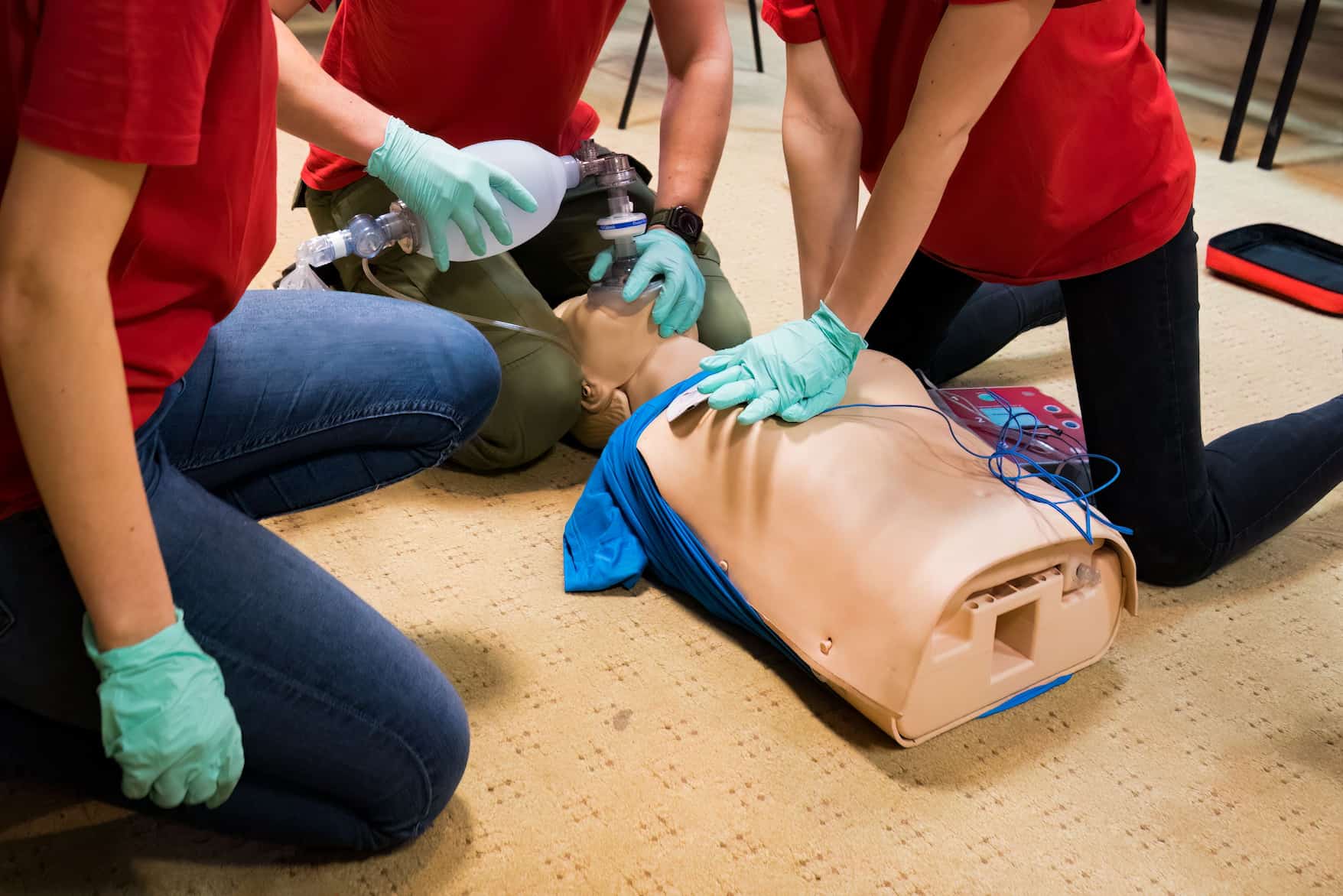
Students performing CPR and ventilation on a training manikin in class

Working as a Certified Nursing Assistant (CNA) in Central Texas is a rewarding but demanding career. As a frontline care provider, you are often the very first person to notice when a resident or patient goes into distress. Because you monitor vital signs and assist with daily living activities, you must be prepared to act instantly when a life-threatening cardiac event happens.

To work in any clinical setting, state regulations and medical employers mandate that you hold a valid, healthcare-grade resuscitation credential. For CNAs, this means securing an official American Heart Association (AHA) Basic Life Support (BLS) certification.

This comprehensive guide covers everything Austin-area nursing assistants need to know about getting certified. You will learn about credential demands, class structures, costs, and how to walk away with a same-day eCard.

Why Is Official BLS Certification Mandatory for Certified Nursing Assistants in Texas?

Texas medical facilities maintain strict safety guidelines to protect vulnerable patients in long-term care and hospital settings. The Texas Department of Health and Human Services requires that nursing assistants demonstrate hands-on competence in lifesaving protocols. General, community-level CPR courses simply do not satisfy these employment mandates.

Clinical employers require the advanced Basic Life Support tier because it focuses on high-quality team dynamics inside medical facilities. When a patient collapses in a nursing home or hospital, multiple professionals respond at once. Your BLS training ensures you can seamlessly blend into a multi-rescuer resuscitation attempt.

Holding an official AHA credential protects your career, your employer, and your registry status. It proves to state inspectors that you have been evaluated by a certified instructor. Without this specific validation, you cannot legally perform clinical duties on a nursing floor in Texas.

What Is the Difference Between General CPR and AHA BLS for Austin Healthcare Workers?

Many students entering the healthcare field mistakenly enroll in basic community CPR courses. While a general CPR and First Aid class is perfect for teachers, fitness trainers, or construction workers, it will not fulfill CNA employment rules. General CPR courses focus on basic, single-rescuer public response.

In contrast, a BLS course is designed specifically for healthcare professionals. It covers advanced techniques like bag-mask ventilation, advanced airway management assistance, and two-rescuer team dynamics. It also trains you to quickly transition between compressions and ventilation while a partner preps a defibrillator.

Furthermore, medical employers across Central Texas almost universally mandate the American Heart Association curriculum. If your credential does not carry the official AHA seal, your human resources department will likely reject it. Checking for this seal before you spend money saves you from having to retake the course.

What Life-Saving Skills Are Taught in a CNA CPR Class?

An authorized BLS training session provides hands-on, practical instruction that builds real confidence. The curriculum focuses on muscle memory so that you can react instantly under intense pressure. Here are the core competencies you will master during your classroom training session:

  • High-Quality Adult, Child, and Infant CPR: You will learn correct hand placement, exact chest compression depth, and the precise rate of 100 to 120 compressions per minute.
  • Automated External Defibrillator (AED) Operation: You will practice unboxing, powering on, and safely applying an AED to deliver a therapeutic shock during sudden cardiac arrest.
  • Effective Bag-Mask Ventilation: Instructors teach you how to achieve a tight seal using a bag-mask device to deliver proper rescue breaths with minimal compression interruptions.
  • Foreign Body Airway Obstruction Relief: You will master the specific techniques required to clear choking blockages in conscious and unconscious patients of all ages.
  • Multi-Rescuer Team Dynamics: The class covers structured communication strategies and clear team roles to ensure highly coordinated resuscitation attempts.

Can I Take My Austin CNA CPR Certification Entirely Online?

The short answer is no. You cannot earn a compliant, employer-accepted CNA CPR certification through a purely online, text-based course. While many websites offer cheap, 100% online certifications, these programs are widely rejected by healthcare employers and state licensing boards.

Resuscitation requires manual dexterity and physical feedback that an online quiz cannot replicate. You must practice pushing to the correct depth on a physical manikin to truly understand the physical effort required. Employers know this, which is why human resources policies explicitly reject certificates that lack an in-person skills evaluation.

To guarantee your credential is valid, you must complete your live-training components in front of a certified instructor. In-person classes ensure your posture, depth, and timing are exactly where they need to be to save a real life.

How Long Does the In-Person BLS Certification Training Class Take?

Time is valuable when you are balancing long shifts at a care facility or completing your clinical hours. Fortunately, earning your professional credential does not require a massive time investment. An authorized American Heart Association BLS class is highly streamlined and efficient.

When you train at a professional local facility, the entire session takes approximately 3.7 hours to complete. Authorized training centers are legally required to show the entire instructional video and complete every practical testing module. The structured pacing keeps the class moving forward without any wasted downtime.

Because all your coursework, practicing, and testing are wrapped up in a single afternoon or morning block, you leave the facility completely finished. There are no take-home essays, additional online steps, or delayed grading windows to worry about.

How Much Does It Cost to Get CPR Certified in Austin?

Staying compliant with your professional certifications should not break your budget. Local training options are priced competitively to ensure healthcare students and working professionals can easily access top-tier education.

An official American Heart Association BLS CPR and AED certification class starts at a discounted rate of $64.95. This fee covers your seat in the class, your direct hands-on practice time with sanitarily maintained manikins, and your live skills assessment.

If your specific medical employer or nursing registry track requires a First Aid certification alongside your CPR credential, you can opt for a combined package. A comprehensive BLS CPR, AED, and First Aid course is available for $84.95. Investing in the official AHA track protects you from wasting money on unapproved, non-compliant courses.

When and How Will I Receive My Official Certification Card?

Waiting weeks for a paper certificate in the mail can delay your employment or put your current nursing shifts at risk. To eliminate this issue, modern certification uses a secure, digital verification system.

When you successfully complete your training with CPR Classes Near Me in Austin, your instructor processes your passing grade immediately. You will receive your official American Heart Association BLS eCard via email on the very same day you finish your class.

This digital card is completely secure, fraud-resistant, and OSHA-compliant. You can easily download a PDF copy for your personal records or forward the digital link directly to your facility’s human resources manager. It provides instant, undeniable proof of your compliance.

How Long Is a CNA BLS Certification Valid in Texas?

Your professional BLS credential remains active for exactly two years from the month it was issued. Once that twenty-four-month window closes, your card expires, and you are no longer legally permitted to work on a clinical floor as a CNA until you renew.

Because emergency medical guidelines change as new clinical data emerges, the AHA updates its training every few years. Keeping your certification cycle on a strict two-year timeline ensures that your clinical skills stay perfectly aligned with modern medical breakthroughs.

To prevent any lapses in your employment eligibility, it is smart to plan your renewal class roughly 30 days before your current card expires. This proactive approach ensures you never miss a shift or face administrative suspension from your nursing supervisor.

How Do I Renew My Expired or Expiring BLS Card in Austin?

If your current certification is nearing its expiration date, the renewal process is straightforward and stress-free. You do not need to hunt for a separate, shortened renewal track.

In the Austin area, the in-person BLS course and the renewal class are the exact same comprehensive session. This unified structure ensures that every returning student receives the exact same high-quality refresh on changing protocols, tool usage, and compression rhythms.

You will sign up for a standard local BLS time slot, practice your skills, complete the practical assessment, and walk away with a fresh two-year eCard on the same day. It is the fastest, most reliable way to extend your employment credentials for another twenty-four months.

Ready to Book Your Class? Secure Your Austin BLS Certification Today!

Don’t let an expired or missing credential hold back your healthcare career. Whether you are starting your very first nursing assistant job in downtown Austin or renewing your long-time credentials in Round Rock, we have you covered with fast, affordable, and fully compliant training.

Our expert instructors provide an engaging, supportive environment where you can build true lifesaving confidence. Best of all, you will walk out the door with your official, employer-accepted AHA eCard in hand on the exact same day.

Take the next step in protecting your patients and securing your clinical career. Contact CPR Classes Near Me today to check local schedules, look up convenient time slots, and lock in your seat for an upcoming certification session!

Frequently Asked Questions

What specific CPR card does a CNA need to work in an Austin hospital?

A Certified Nursing Assistant must hold an official American Heart Association (AHA) Basic Life Support (BLS) Provider card. General community or workplace CPR cards are not accepted in clinical hospital environments.

Can I use a 100% online CPR certificate for my Texas CNA license renewal?

No, Texas clinical facilities and the Nurse Aide Registry do not accept purely online CPR certificates. Your certification must include an in-person, hands-on skills verification conducted by a certified instructor.

What happens if my BLS certification expires while I am actively working as a CNA?

If your certification expires, you are technically out of compliance with state safety mandates. Your employer may legally suspend you from working shifts until you attend a class and earn a valid, active eCard.

Is there a minimum age requirement to take an AHA BLS class in Austin?

There is no formal minimum age restriction to earn an American Heart Association BLS certification. Anyone who can physically perform high-quality compressions and independently pass the skills test can get certified.

How much does a standard BLS class cost through CPR Classes Near Me in Austin?

A standalone, employer-accepted AHA BLS class costs $64.95. If you also need to add professional First Aid training to your credentials, the combined course is offered at a discounted rate of $84.95.
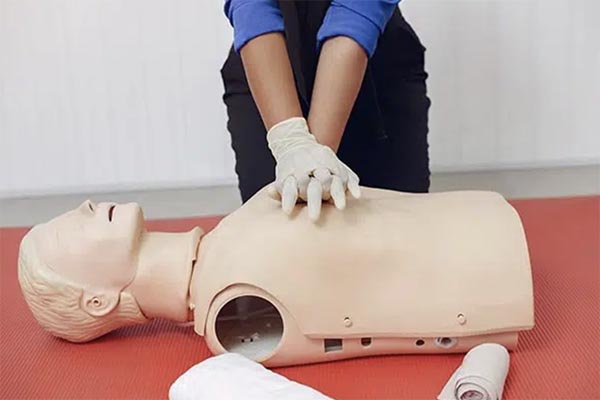
Evening CPR Classes for Busy Professionals in Austin

Balancing a demanding career in the fast-paced Austin business landscape makes managing your professional development a constant puzzle. Whether you are climbing the ladder at a downtown tech firm, managing an early childhood education facility in Pflugerville, or working as a dedicated nurse in the local healthcare system, your daytime hours are fully committed. However, maintaining essential safety compliance should not mean sacrificing your hard-earned vacation days or losing valuable billable hours.

For many professionals throughout Travis County, securing an official life-saving credential is a non-negotiable career requirement. Finding a program that respects your limited time while offering top-tier instruction can be challenging. This guide explains how evening CPR training provides an efficient path to certification, tailored specifically to the needs of the busiest local workers.

By choosing an after-hours program, you can complete your entire training in a single evening session. You will walk away with an official, employer-accepted certification card the very same night. Let’s dive into how these flexible schedules keep your career on track while preparing you to respond confidently in a medical crisis.

Why Should Austin Professionals Choose Evening CPR Classes?

The traditional 9-to-5 workday leaves little room for mandatory professional development courses. For professionals managing tight deadlines, patient care schedules, or classroom responsibilities, taking a half-day off work to get certified is simply impractical. Evening CPR classes solve this scheduling conflict by shifting the instruction hours to the late afternoon and night, allowing you to head straight from the office to the training room.

Austin’s commercial sector moves fast, and safety regulations require continuous compliance without interrupting productivity. After-hours training ensures you do not have to choose between fulfilling your workplace responsibilities and maintaining your professional credentials. It keeps your daytime calendar completely clear for client meetings, project milestones, and daily operational tasks.

Additionally, attending a late-day class allows you to decompress from your primary work duties and focus purely on practical skill acquisition. You can train alongside other like-minded Austin professionals who value efficiency, focused learning, and clear instruction. It transforms a mandatory workplace compliance task into an empowering, convenient, and highly practical networking and educational experience.

What Lifesaving Skills Are Taught in an After-Hours BLS Course?

An official American Heart Association (AHA) Basic Life Support (BLS) course delivers the exact same rigorous curriculum at night as it does during daytime hours. You will receive comprehensive, hands-on instruction covering real-world medical emergencies across various age groups. The course uses a combination of structured educational videos and physical practice to ensure complete skill mastery.

During your evening session, you will master the following essential life-saving techniques:

  • High-Quality Chest Compressions: Learn the precise hand placement, compression depth, and specific compression rates required for adult, child, and infant victims.
  • Automated External Defibrillator (AED) Operation: Understand how to safely deploy, activate, and clear an AED unit during sudden cardiac arrest scenarios.
  • Airway Management and Ventilation: Practice effective rescue breathing using barrier devices and professional bag-mask ventilation systems to minimize compression interruptions.
  • Choking Relief Interventions: Master the exact mechanical steps required to clear foreign-body airway obstructions in conscious and unconscious individuals of all sizes.
  • Coordinated Team Dynamics: Learn how to communicate clearly and share critical roles effectively during multi-rescuer resuscitation efforts.

Who Needs an Official AHA BLS Certification in Travis County?

Many people assume CPR training is only meant for emergency room doctors or paramedics, but a wide range of corporate, educational, and service industries require this exact certification. Employers throughout the region mandate these credentials to ensure workplace safety and comply with state licensing guidelines. If your role involves public safety, healthcare delivery, or direct care, keeping this card active is essential.

Our local training programs routinely certify diverse working professionals, including:

  1. Healthcare Workers: Registered Nurses (RNs), Certified Nursing Assistants (CNAs), medical office receptionists, and physical therapists.
  2. Educators and Childcare Providers: Public school teachers, daycare administrators, private tutors, and youth camp coordinators.
  3. Fitness and Recreation Staff: Personal trainers, youth sports coaches, referees, swim instructors, and lifeguards.
  4. Industrial and Trades Workers: Construction project managers, commercial electrics, on-site safety inspectors, and hospitality team leaders.

How Long Does It Take to Get Certified at a Night Class?

Time efficiency is a major priority for working adults, which is why the evening training structure is optimized for rapid, thorough learning. An authorized AHA training session lasts approximately 3.7 hours from start to finish. This concise timeline ensures you can complete all mandatory video lessons, hands-on practice sessions, and skill evaluations in a single evening.

Because the entire curriculum is consolidated into one continuous block, you will not have to return for multiple sessions or complete tedious homework assignments. The training environment is focused, direct, and structured to respect your personal time. You can arrive after your shift ends and conclude the program with plenty of time left to rest before the next workday.

Can I Earn My Official CPR Certification Card the Same Day?

Yes, one of the primary benefits of training with CPR Classes Near Me in Austin is our instant credential delivery system. The moment you successfully complete your hands-on skill assessments and written evaluation, our certified instructors process your paperwork immediately. Your official American Heart Association BLS eCard is issued on the very same night as your class.

This immediate turnaround is highly valuable if you face an upcoming workplace compliance deadline or need to verify your credentials for a new job offer. You will not have to wait weeks for a physical card to arrive in the mail or check your inbox for days on end. You will leave the facility with a digital, employer-accepted credential that you can instantly forward to your human resources department or licensing board.

Why Are In-Person CPR Classes Preferred Over Online-Only Courses?

The convenience of online learning makes web-only safety certifications look appealing, but they often lead to major professional setbacks. The vast majority of employers, hospital networks, and state regulatory boards across Texas explicitly reject certifications that lack an in-person, hands-on testing component. Online quizzes simply cannot replicate the muscle memory required to compress a chest to the proper depth or operate an AED under pressure.

In-person evening classes give you direct access to real-world medical equipment and experienced, professional instructors. You receive real-time feedback on your compression technique, body positioning, and ventilation timing. This direct oversight ensures you perform the techniques correctly, giving you the genuine confidence required to step in and save a life during a real emergency.

Where Are These Austin Evening CPR Courses Located?

Our local training centers are strategically positioned to serve busy commuters coming from all corners of the Austin metropolitan region. Whether you work in the downtown corporate center, the northern tech corridor, or the surrounding suburban communities, you can easily find a nearby training facility. We offer accessible scheduling choices at both our primary Austin location and our dedicated Austin North training site.

These accessible locations make it simple to plan your commute directly from your workplace to our classrooms. We regularly welcome students from surrounding communities, including:

  • Pflugerville and Round Rock
  • Cedar Park and Leander
  • Georgetown and Hutto
  • West Lake Hills and Lakeway
  • Buda, Kyle, and San Marcos

How Much Does an After-Hours Certification Class Cost?

Maintaining your professional workplace compliance should not put a strain on your personal budget. We keep local training accessible by offering competitive, transparent pricing with no hidden fees or surprise material costs. Our standard Austin evening BLS CPR & AED class is available at a discounted rate of $64.95, which saves you $20 off the standard registration rate.

If your specific career path or employer requires broader safety training, we also offer a comprehensive evening CPR AED & First Aid course for $84.95. This combined option covers foundational first aid protocols alongside your core life-saving resuscitation skills. Investing in an official AHA-backed course ensures your certification is recognized nationwide, protecting you from wasting money on unaccredited online schemes.

Conclusion: Take Action and Secure Your Austin CPR Certification Today

Balancing a demanding work life with safety training requirements does not have to be an overwhelming chore. Choosing evening CPR classes allows you to receive premier, hands-on instruction from certified experts at a time that works best for your schedule. You will gain critical, life-saving skills, fulfill your employer’s compliance demands, and earn your official American Heart Association credential in under four hours.

Do not risk your professional standing by letting your safety credentials lapse or relying on unaccredited online programs. Take control of your career advancement and gain the peace of mind that comes with real, practical preparedness. Contact CPR Classes Near Me today to view our current evening schedules and secure your seat in our next after-hours class!

Frequently Asked Questions

What should I wear to an evening CPR class in Austin?

You should wear comfortable, casual clothing that allows you to move around easily, as you will spend a significant portion of the class practicing techniques on the floor with training manikins. Avoid tight-fitting garments, short skirts, or low-cut tops, and choose flat, closed-toe footwear like sneakers rather than high heels or sandals.

How long does my AHA BLS certification remain valid?

Your official American Heart Association Basic Life Support credential remains valid for exactly two years from the final day of your successful course completion. To prevent any workplace compliance lapses, you should plan to register for a renewal session a few weeks before your current card’s expiration date.

Is the evening CPR renewal class different from the initial certification course?

In the American Heart Association system, the standard in-person BLS course and the renewal class utilize the exact same comprehensive curriculum and hands-on testing format. This unified approach guarantees that all renewing professionals refresh their life-saving skills to the absolute latest emergency cardiovascular care standards.

Are there any minimum age requirements for Austin CPR training?

There is no official minimum age restriction enforced for individuals seeking an American Heart Association certification at our local training facilities. Any individual who can physically comprehend the course material and independently demonstrate proper chest compressions and AED usage on the manikins is welcome to get certified.

What happens if I fail the written exam or hands-on safety test?

Our professional instructors are completely dedicated to your educational success and will provide direct, supportive coaching if you struggle with a specific skill or test question. If you do not pass on your first attempt, our team will work closely with you during the session to review the material and help you confidently re-test.