What BLS Means and Who Needs It in Austin: Your Complete Guide
If you are entering the healthcare field or starting a job at a major hospital in Central Texas, you have likely seen the acronym “BLS” on your new-hire checklist. BLS stands for Basic Life Support.
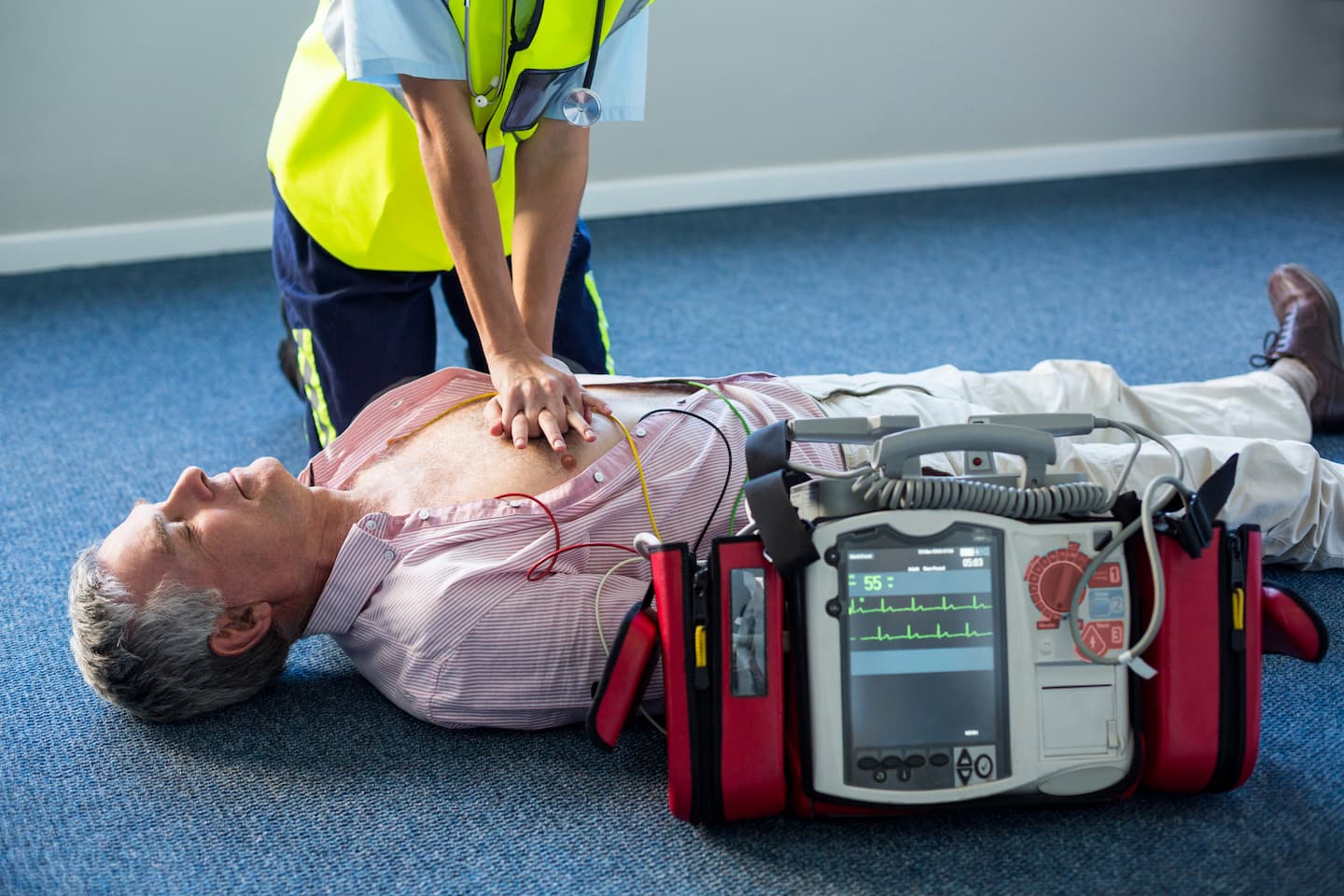
While many people use the terms “CPR” and “BLS” interchangeably, they aren’t exactly the same thing. Think of it this way: CPR is a single life-saving tool, but BLS is the entire professional toolkit. BLS is a specific level of medical care used by healthcare providers and public safety professionals to sustain life in an emergency until “Advanced” care can take over.
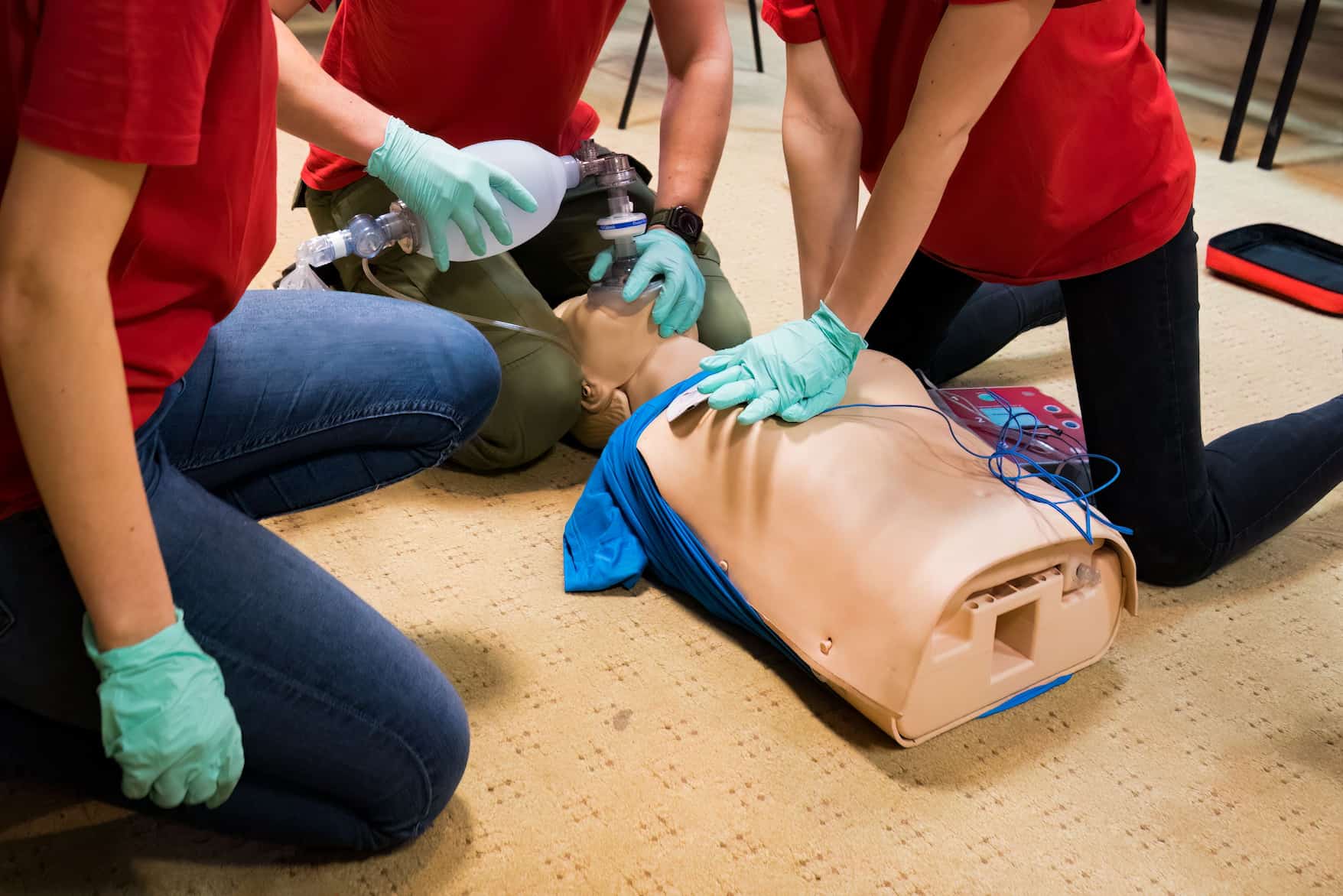
In an American Heart Association (AHA) BLS course, you don’t just learn how to pump a chest; you learn the science of high-quality compressions, how to coordinate a multi-person rescue, and how to use medical-grade equipment like a bag-valve mask (BVM). It is the foundational certification that proves you can keep a patient alive during those first critical minutes of cardiac arrest.
Who is required to have BLS certification in Austin?
Austin is a thriving hub for healthcare, home to massive networks like St. David’s HealthCare, Ascension Seton, and Austin Regional Clinic. These institutions, along with state licensing boards, mandate BLS certification for a wide variety of roles.
In Austin, you generally need BLS if you fall into one of these categories:
- Nursing Professionals: Registered Nurses (RNs), Licensed Vocational Nurses (LVNs), and Certified Nursing Assistants (CNAs) are almost always required to maintain current BLS.
- Dental Offices: Dentists, Dental Hygienists, and Dental Assistants in Texas must have BLS to comply with state board requirements.
- First Responders: Firefighters, Police Officers, and EMTs use BLS skills daily as part of their emergency response duties.
- Therapists and Technicians: Physical Therapists, Occupational Therapists, MRI Technicians, and Respiratory Therapists need BLS to work in clinical or home-health settings.
- Medical Students: If you are enrolled in a nursing or medical program at UT Austin or Austin Community College, you’ll need your BLS card before you can start clinical rotations.
Why is BLS different from a standard CPR class?
You might wonder why a standard “Heartsaver” or community CPR class isn’t enough for your job. The difference lies in the “Professional” focus of the BLS curriculum.
- Pulse Checks: In a standard CPR class, you look for “signs of life.” In BLS, you are trained to perform a professional pulse check.
- Team Resuscitation: Most medical emergencies in a hospital involve more than one person. BLS teaches you how to switch roles seamlessly so the patient never loses blood flow.
- Advanced Equipment: BLS covers the use of bag-mask devices, which are more effective than mouth-to-mouth but require specialized training to use correctly.
- Compression-to-Breath Ratios: While the general public usually learns 30:2, BLS providers learn specific ratios for two-rescuer infant and child rescues (15:2) to ensure the best possible outcomes.
What skills are taught in an Austin BLS course?
When you walk into a classroom at CPR Classes Near Me in Austin, you are there to gain muscle memory, not just watch a video. Our AHA-certified instructors guide you through several core competencies:
- High-Quality Adult CPR: Learning the exact depth (2 to 2.4 inches) and rate (100–120 bpm) needed to keep a heart pumping.
- Pediatric Life Support: Adjusting your technique for infants and children, who have different physiological needs during an arrest.
- AED Operation: Learning how to use an Automated External Defibrillator quickly and safely, which is the only way to “restart” a heart.
- Choking Relief: Mastering the Heimlich maneuver for adults and the back-slap/chest-thrust method for infants.
- Bag-Mask Ventilation: Practicing how to provide high-concentration oxygen using a mask and reservoir bag.
Is an online BLS certification valid for Austin employers?
This is a common trap for many professionals. You might see “100% Online BLS” for $20, but be careful. Almost all major Austin employers—including Baylor Scott & White and the major local hospitals—do not accept certifications that are entirely online.
The reason is simple: you cannot prove you can save a life until you have physically demonstrated your skills on a manikin. The American Heart Association requires a hands-on skills session to issue an official eCard. At CPR Classes Near Me, we provide the full, in-person experience so your card is guaranteed to be accepted by your employer.
How long does the BLS certification last?
Once you complete your training and pass your skills test, your BLS certification is valid for two years.
However, don’t wait until the day your card expires to renew. In the healthcare world, an expired card can mean you are immediately pulled from the schedule. We recommend Austin professionals book their renewal class at least 30 days before their current card expires to ensure there is no gap in their credentials.
Where can I find BLS classes in the Austin area?
Finding a class that fits your schedule shouldn’t be a struggle. CPR Classes Near Me offers convenient locations throughout the Austin metro area, including:
- Austin Proper: Centralized classes for those living near downtown or the UT area.
- Austin North: Convenient for residents of Pflugerville, Round Rock, and Wells Branch.
- Surrounding Cities: We also serve Bastrop, Buda, Georgetown, Hutto, Kyle, Lakeway, Leander, and Cedar Park.
Whether you are an individual needing a card for a new job or a clinic manager needing to certify a whole team, we have options that fit. We even offer on-site training where our instructors come to your Austin business or office!
What should I expect on the day of my BLS class?
We know your time is valuable. Our BLS classes in Austin are designed to be efficient and high-yield.
- Duration: The class typically takes about 3.7 hours.
- Environment: We provide a business-casual, conversational atmosphere where you feel comfortable asking questions.
- Materials: You’ll use high-feedback manikins that tell you exactly if your compressions are deep enough.
- Same-Day Card: You don’t have to wait for the mail. We issue your American Heart Association BLS eCard the very same day you finish the class.
Why choose CPR Classes Near Me Austin?
There are plenty of training sites in Texas, but we pride ourselves on being the #1 choice for Austin’s healthcare community.
- AHA Aligned: We strictly follow the latest American Heart Association guidelines.
- Affordable Pricing: Our BLS classes start at $64.95, which is a $20 discount off the standard rate.
- Proven Success: We have certified thousands of students across the country and maintain a reputation for excellence in the Austin region.
- Guaranteed Acceptance: Our cards are OSHA-compliant and recognized by hospitals, schools, and government agencies nationwide.
Conclusion
Understanding what BLS means and who needs it is the first step toward professional readiness in Austin’s competitive healthcare market. Whether you are a nurse at St. David’s, a dental hygienist in Round Rock, or a student just starting out, having a valid AHA BLS certification is your ticket to employment and your commitment to patient safety.
Don’t leave your certification to chance with an unaccredited online course. Get the hands-on training you need to act with confidence when every second counts.
Ready to get certified?
Contact CPR Classes Near Me today to book your seat or schedule a group training session for your Austin office! Call us at (512) 831-4243 or visit our website to secure your spot.
Frequently Asked Questions (FAQ)
What is the difference between BLS and CPR?
CPR (Cardiopulmonary Resuscitation) is a foundational skill for the general public, focusing on chest compressions and breaths. BLS (Basic Life Support) is the professional version required for healthcare providers. It includes all CPR skills plus advanced techniques like two-rescuer coordination, bag-mask ventilation, and professional-grade pulse checks.
How much does a BLS class cost in Austin?
At CPR Classes Near Me, our Austin BLS classes are currently discounted to $64.95. If you also need First Aid certification, we offer a combined BLS and First Aid class for $84.95.
Can I get my BLS card the same day?
Yes. We issue your official American Heart Association BLS eCard electronically on the same day you successfully complete the course and skills testing.
How long is the BLS certification valid for?
An AHA BLS certification is valid for two years from the date of issue. After two years, you must take a renewal course to maintain your credentials.
Is there an age requirement for BLS in Austin?
The American Heart Association does not have a specific minimum age. As long as a student can physically perform the required skills (such as deep chest compressions) and pass the written exam, they can earn their certification.
Do I need a separate CPR card if I have a BLS card?
No. BLS is a higher-level certification that encompasses all the skills taught in a standard CPR class. If your employer asks for “CPR certification,” a BLS card will almost always satisfy and exceed that requirement.