Heartsaver vs BLS in Austin: Which One Fits Your Job?

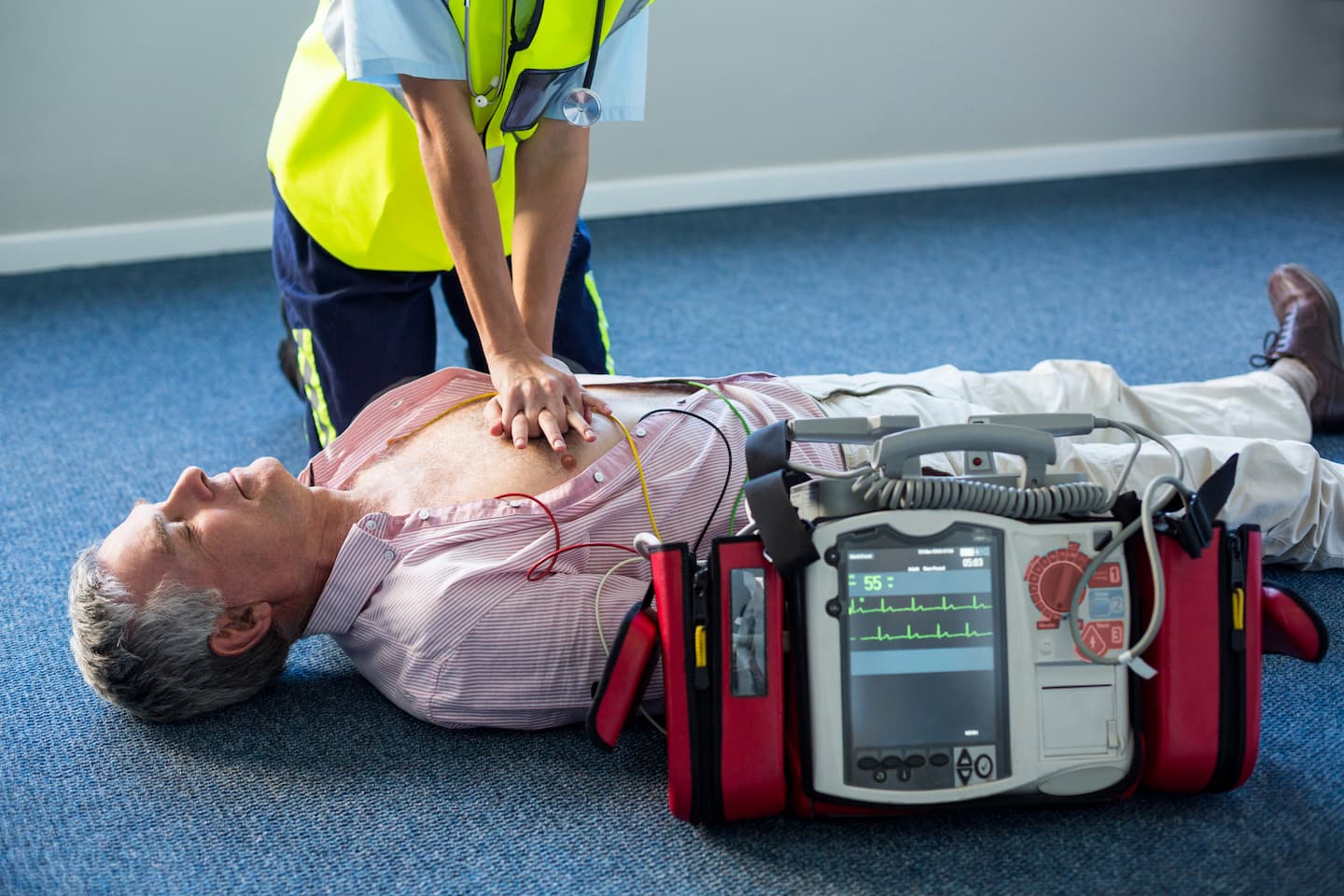
Paramedic performing CPR with defibrillator on cardiac arrest patient

So, you’ve been told you need a CPR certification for your job in Austin. You start searching online and immediately run into a wall of acronyms. Should you take Heartsaver? Or is BLS the right choice?

Choosing the wrong class isn’t just a waste of an afternoon; it can mean your employer won’t accept your card. In the Austin job market, the distinction between these two American Heart Association (AHA) courses is critical.

In this guide, CPR Classes Near Me will break down exactly what makes these courses different. You’ll learn which one aligns with your specific career path and why getting certified in person is the gold standard for Austin professionals.

What is the main difference between Heartsaver and BLS?

The simplest way to look at it is the “Who” and the “How.” Heartsaver is designed for the general public—people who don’t have medical training but want to be ready to help. BLS, which stands for Basic Life Support, is the professional standard for anyone working in a clinical or healthcare environment.

While both courses cover the fundamentals of high-quality CPR and the use of an Automated External Defibrillator (AED), the depth of training differs significantly. Heartsaver focuses on the basics: recognizing an emergency, calling 911, and performing chest compressions until help arrives.

BLS goes much deeper. It teaches you how to work as part of a high-performance rescue team. You’ll learn advanced techniques like using a bag-mask device to provide ventilations and how to pulse-check like a pro. If your job involves a stethoscope or a scrubs-based uniform, BLS is almost certainly what you need.

Who should take the BLS certification in Austin?

If you are a healthcare professional or currently enrolled in a medical program in Central Texas, BLS is your mandatory credential. Austin is a major hub for healthcare, and local hospital systems like St. David’s HealthCare and Ascension Seton require their staff to hold an AHA BLS provider card.

This course is specifically tailored for:

  • Registered Nurses (RNs) and Licensed Vocational Nurses (LVNs)
  • Dental professionals (Dentists and Dental Hygienists)
  • Physical and Occupational Therapists
  • Pharmacists
  • EMTs and Paramedics
  • Medical students and Nursing students

Employers in these fields need to know you can handle complex cardiac arrest scenarios within a clinical setting. At CPR Classes Near Me Austin, our BLS course ensures you can perform rapid assessments and coordinate with other rescuers seamlessly.

Is Heartsaver the right choice for non-healthcare jobs?

For many Austinites, the Heartsaver course is the perfect fit. This certification is intended for “lay rescuers”—people whose primary job is not healthcare but who may be first responders in their workplace. It is OSHA-compliant and meets the regulatory requirements for dozens of industries.

You should opt for Heartsaver (often paired with First Aid) if you work as:

  • A teacher or childcare provider in the Austin Independent School District
  • A personal trainer at a local gym
  • A construction foreman or site safety officer
  • A flight attendant or hospitality manager
  • A coach or camp counselor

Heartsaver training is practical and hands-on. It gives you the confidence to act during those scary moments before the ambulance arrives at your office or school.

Do I need to take First Aid with my CPR class?

This depends entirely on your employer’s specific “on-boarding” checklist. In Austin, many daycare centers and construction firms require a “CPR, AED, and First Aid” combo. However, most clinical healthcare jobs only require the BLS certification without the additional First Aid module.

Our Austin training site offers a combined CPR AED & First Aid class starting at $84.95. This is a popular choice for those who want to be fully prepared for any workplace injury, from minor cuts to cardiac arrest. If you aren’t sure, we always recommend checking your employee handbook first.

Why is an AHA certification better than an online-only course?

It can be tempting to take a $20 “online-only” CPR course you found on a random website. However, many Austin employers—especially those in healthcare—will not accept these certifications. The American Heart Association requires an in-person skills practice and testing component to issue a valid card.

Think about it: could you really learn how to perform life-saving chest compressions just by watching a video? Probably not. At our Austin facility, we use high-fidelity manikins that provide real-time feedback. This ensures you are pushing deep enough and fast enough to actually save a life.

Furthermore, we issue your official AHA eCard on the same day you complete the class. There’s no waiting for the mail; you can show your digital card to your boss before you even leave our parking lot.

What will I actually learn in a BLS class?

When you join us for a BLS session in Austin, you are getting more than just a certificate; you are getting a specialized skill set. The course is approximately 3.7 hours of intensive, hands-on learning.

Key modules include:

  1. High-Quality CPR: Proper hand placement and compression depth for adults, children, and infants.
  2. AED Proficiency: How to safely and quickly use a defibrillator.
  3. Team Dynamics: Learning to lead or support a multi-person rescue attempt.
  4. Ventilation Techniques: Using barrier devices and bag-masks to provide oxygen.
  5. Choking Relief: Real-world techniques for clearing airways for all ages.

Our instructors are certified by the AHA and bring years of real-world experience to the table. We make the environment comfortable so you can ask questions and perfect your technique without stress.

How long does my Austin CPR certification stay valid?

Whether you choose Heartsaver or BLS, your certification is valid for exactly two years from the date of the class. The American Heart Association updates its guidelines frequently based on the latest science, so recertifying every two years ensures your skills are up to date.

In Austin, the process for renewal is simple. You don’t need a special “challenge” course; you simply sign up for the standard BLS or Heartsaver class again. This refreshes your muscle memory and ensures you are ready for any emergency.

Conclusion: Making the Right Move for Your Career

Choosing between Heartsaver and BLS doesn’t have to be a headache. If you work in a hospital or clinic, go with BLS. If you work in a school, gym, or office, Heartsaver is likely your best bet. Both certifications provide the life-saving skills needed to protect the Austin community.

Ready to get your certification? Don’t wait until your current card expires or your HR department sends a reminder.

Contact CPR Classes Near Me today to view our upcoming schedule in Austin and secure your spot!

FAQ Section

1. Can I take BLS if I am not a healthcare professional?

Yes, anyone is welcome to take the BLS course. While it is more technical and designed for healthcare providers, many people choose it because it offers the most comprehensive level of CPR training available.

2. How much do CPR classes cost in Austin?

At CPR Classes Near Me, BLS classes start at $64.95, while the combined CPR and First Aid classes are offered at $84.95. This reflects a significant discount off the standard rate to help keep the Austin community safe.

3. Will I get my card the same day?

Yes! We pride ourselves on efficiency. Once you successfully complete your in-person skills training at our Austin location, our instructors issue your American Heart Association eCard on the same day.

4. Is there an age requirement for CPR classes in Austin?

There is no specific minimum age required by the AHA. As long as the individual can physically perform the compressions and complete the course requirements independently, they can earn their certification.

5. What should I wear to my CPR class?

Since these classes involve hands-on practice on the floor with manikins, we recommend wearing comfortable, casual clothing. Business casual or athletic wear is perfect for moving around during the skills portion.

6. Where is the Austin training center located?

We offer classes at multiple convenient locations, including North Austin and the surrounding regions like Pflugerville and Round Rock. Check our location page for the specific address of your upcoming session.

BLS vs CPR vs First Aid: Which Certification Do You Need in Austin?

Whether you’re a nursing student at UT Austin, a new coach for a West Lake youth soccer team, or a tech professional in the Silicon Hills wanting to be prepared, you’ve likely realized that “CPR” isn’t just one single class.

When you start looking for training, you’ll see terms like BLS, CPR/AED, and First Aid thrown around. Choosing the wrong one can mean wasted time and a certification your employer won’t accept.

In Austin, where healthcare and education sectors are booming, knowing the difference is vital. This guide will help you navigate the requirements so you can book the right class at CPR Classes Near Me Austin and get certified with confidence.

What is the difference between BLS and CPR?

Many people use the terms BLS and CPR interchangeably, but in the world of professional certification, they are quite different.

CPR (Cardiopulmonary Resuscitation) is the foundational skill. It is designed for the “layperson”—someone who is not a healthcare professional. A standard CPR class focuses on:

  • Recognizing cardiac arrest.
  • Performing high-quality chest compressions.
  • Giving rescue breaths.
  • Using an Automated External Defibrillator (AED).

BLS (Basic Life Support), on the other hand, is the healthcare-level version of CPR. It includes everything in a standard CPR class but adds advanced techniques required in a clinical or team-based setting.

If you are a nurse, a dental assistant, or an EMT, you almost certainly need BLS. If you are a parent or a fitness instructor, standard CPR is usually the right fit.

Is BLS more advanced than a standard CPR course?

Yes, BLS is considered the “professional grade” version of life-saving training. While the chest compressions are essentially the same, the context of the training changes significantly.

In a BLS course at our Austin location, you will learn:

  1. Multi-Rescuer Coordination: How to work as part of a high-performance team during a resuscitation attempt.
  2. Bag-Mask Ventilation: Using professional medical equipment to provide breaths rather than just mouth-to-mouth.
  3. Pulse Checks: Learning to accurately identify a pulse in adults, children, and infants.
  4. Advanced Airway Management: How to provide care when advanced breathing tubes or equipment are in use.

BLS moves faster and assumes the student may be working in a hospital, clinic, or emergency vehicle where more resources are available.

What does a First Aid certification cover that CPR doesn’t?

It is a common misconception that a CPR card covers all medical emergencies. In reality, CPR is specifically for when someone’s heart has stopped or they are not breathing.

First Aid is the “everything else” certification. It focuses on stabilizing a victim until professional help arrives. At CPR Classes Near Me Austin, our First Aid training covers:

  • Injury Management: Bandaging, splinting, and treating burns or broken bones.
  • Medical Emergencies: Recognizing and responding to strokes, heart attacks, and seizures.
  • Environmental Issues: Treating heatstroke (a big concern in Austin summers!) and hypothermia.
  • Allergic Reactions: Proper use of an epinephrine pen (EpiPen).

If your job involves physical labor or supervising children, you will likely need a certification that combines both CPR and First Aid.

Who is required to get BLS certification in Austin?

Austin is home to a massive medical community, from St. David’s and Ascension Seton to the Dell Medical School. If you work in these environments, BLS is the non-negotiable standard.

Common professions in Austin requiring BLS include:

  • Registered Nurses (RNs) and LVNs.
  • Certified Nursing Assistants (CNAs).
  • Physicians and Medical Students.
  • Dentists and Dental Hygienists.
  • Physical and Occupational Therapists.
  • Paramedics and Firefighters.
  • Pharmacists.

Most of these employers specifically require the American Heart Association (AHA) BLS Provider card, which is exactly what we provide at our Austin training sites.

Which professions in Austin need CPR and First Aid?

If you don’t work in a hospital but your job involves the safety of others, you likely need a combination of CPR, AED, and First Aid. This is often driven by OSHA requirements or state licensing boards.

In Austin, this typically applies to:

  1. Educators and School Staff: Teachers and coaches in AISD and surrounding districts.
  2. Childcare Providers: Daycare workers, nannies, and camp counselors.
  3. Fitness Professionals: Personal trainers and CrossFit coaches.
  4. Construction and Skilled Trades: Electricians and site supervisors often need First Aid for OSHA compliance.
  5. Hospitality and Security: Flight attendants and security guards at Austin-Bergstrom International Airport or major downtown venues.

Can I get my certification card the same day in Austin?

One of the biggest frustrations with some national providers is waiting weeks for a physical card to arrive in the mail. At CPR Classes Near Me Austin, we’ve solved that.

We issue your official American Heart Association (AHA) eCard on the same day you complete your class. This means:

  • You can show it to your employer immediately.
  • You don’t have to worry about losing a paper card.
  • The digital card is easy to verify online by any hiring manager.

Whether you are taking BLS or the CPR/First Aid combo, you walk out of our doors fully certified.

Why should I choose an American Heart Association (AHA) course?

While there are many “off-brand” online courses that claim to offer certification for $20, most Austin employers will not accept them.

The American Heart Association is the industry leader. Their guidelines are based on the latest science in resuscitation. When you hold an AHA card:

  • It is Nationally Recognized: You can take your certification to any state.
  • It is Employer Accepted: Almost all hospitals and school districts in Texas mandate AHA-aligned training.
  • It is OSHA-Compliant: It meets the federal standards for workplace safety.

Don’t risk having to pay for a second class because your first one wasn’t AHA-approved.

How long do these certifications last before they expire?

Both BLS and standard CPR/First Aid certifications are valid for two years from the date of your class.

The renewal process is straightforward:

  • BLS Renewal: You attend a standard BLS class to refresh your skills and get a new two-year card.
  • CPR/First Aid Renewal: A combined class ensures all your skills stay sharp and your credentials remain current.

We recommend booking your renewal at least 30 days before your current card expires to ensure you don’t have a gap in your employment eligibility.

What should I expect during my Austin CPR or BLS class?

We believe that learning life-saving skills shouldn’t be stressful or boring. Our instructors in Austin focus on hands-on practice.

  1. Video Instruction: You’ll watch AHA-authorized videos that demonstrate the correct techniques.
  2. Manikin Practice: You will spend plenty of time practicing chest compressions and rescue breaths on high-quality manikins.
  3. AED Training: You will practice using a trainer AED so you know exactly how the device “talks” to you during an emergency.
  4. Skills Testing: The instructor will observe your techniques to ensure you feel confident and capable.
  5. Final Quiz: A short written or verbal assessment to confirm you’ve understood the key concepts.

How do I know which class is right for me?

If you are still staring at the registration page wondering which button to click, ask yourself these three questions:

  • Does my job require me to work in a clinical setting? If yes, choose BLS.
  • Am I a teacher, parent, or coach? If yes, choose CPR/AED & First Aid.
  • Do I just want to be prepared for family emergencies? Choose CPR/AED.

If you are still unsure, you can always call our Austin office at (512) 831-4243, and we can help you match the class to your specific job description.

Conclusion

Navigating the world of emergency certifications doesn’t have to be complicated. Whether you need the advanced team-dynamics of BLS, the foundational life-saving power of CPR, or the broad medical knowledge of First Aid, getting certified is a vital step in protecting the Austin community.

At CPR Classes Near Me Austin, we provide the highest quality American Heart Association training with the convenience of same-day eCards and expert instructors. Don’t wait until an emergency happens to realize you aren’t prepared.

Ready to get certified? Contact CPR Classes Near Me Austin today to find a class that fits your schedule and career needs!

Frequently Asked Questions (FAQ)

Q: Can I take my CPR or BLS certification entirely online?

A: No. While some “blended” options allow for online book-work, the American Heart Association requires an in-person skills check with a certified instructor. Most Austin employers will not accept 100% online certifications because they lack hands-on verification.

Q: Is there an age requirement for CPR classes in Austin?

A: There is no formal minimum age. As long as a student can physically perform the compressions and pass the skills test, they can be certified. We have successfully trained many teenagers and young adults.

Q: How much do the classes cost?

A: In Austin, our BLS classes are currently discounted to $64.95. The combined CPR, AED, and First Aid class is offered at $84.95. These prices include your same-day AHA eCard.

Q: Does BLS include First Aid?

A: No. BLS is focused strictly on cardiac arrest and respiratory emergencies. If your employer requires both BLS and First Aid, you will need to take a combined course or add a First Aid module to your training.

Q: Where are the classes located?

A: We have training sites serving Austin, North Austin, Pflugerville, Round Rock, and the surrounding areas. We also offer on-site group training for businesses and organizations throughout Central Texas.

In-Person vs. Online CPR Certification in Austin: Making the Right Choice for Your Career

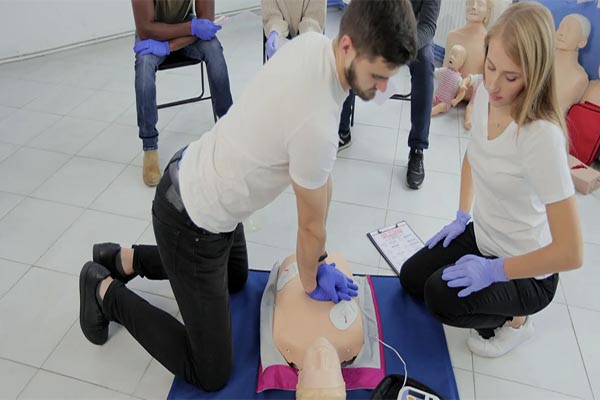
First aid instructor teaching CPR to a group of students using a practice mannequin.

When you’re looking to get CPR certified in Austin, you’re usually faced with two main paths: sitting in a local classroom with an instructor or clicking through a course on your laptop at home.

In a fast-growing city like Austin, where healthcare, tech, and construction industries are booming, having the right “save-a-life” credentials isn’t just a bonus—it’s often a job requirement. But which format actually gives you the skills you need, and more importantly, which one will your boss actually accept?

At CPR Classes Near Me Austin, we see students every day who are confused by the options. This guide breaks down the differences between in-person and online CPR certification to help you make the best choice for your schedule, your wallet, and your peace of mind.

Why is hands-on training the standard in Austin?

When it comes to life-saving skills, there is a massive difference between watching a video of someone performing chest compressions and actually feeling the resistance of a manikin’s chest.

In-person training at our Austin location focuses on “muscle memory.” If you are in a high-pressure situation, you won’t have time to recall a video module; you need your hands to know exactly how deep to press and how fast to go.

  • Real-time correction: Our AHA-certified instructors watch your technique. If your hand placement is off or your compressions are too shallow, we fix it on the spot.
  • Equipment practice: You get to use real AED (Automated External Defibrillator) trainers and bag-mask devices, ensuring you aren’t guessing when a real emergency happens.
  • Peer learning: Working in a classroom allows you to practice team dynamics, which is vital for healthcare providers and first responders.

Is online CPR certification valid for Austin employers?

This is the “million-dollar” question. While online-only courses are often cheaper and more convenient, they come with a major catch: Most Austin employers do not accept 100% online CPR certifications.

Organizations like OSHA (Occupational Safety and Health Administration) and the American Heart Association (AHA) require a hands-on skills assessment for a certification to be considered valid for the workplace. If your job is in healthcare (nurses, dental assistants), education (teachers, coaches), or high-risk labor (construction, electricity), an online-only certificate likely won’t cut it.

By choosing an in-person class, you are guaranteed:

  1. OSHA Compliance: Meeting federal safety requirements.
  2. Universal Acceptance: The AHA BLS eCard is the most widely recognized credential in the country.
  3. Job Security: No risk of having your certification rejected during the hiring process.

How does the cost compare between formats?

It is true that online-only courses can be found for as low as $20 or $30. However, you often get what you pay for. These courses frequently lack the official AHA seal, meaning they hold very little weight in the professional world.

In-person classes in Austin are an investment in a legitimate, two-year certification. At CPR Classes Near Me Austin, our BLS classes start at $64.95, and our combined CPR and First Aid classes are $84.95.

While the upfront cost is higher than a digital PDF, the value includes:

  • Professional instruction from certified experts.
  • Use of high-end medical training equipment.
  • A same-day eCard delivered to your inbox.
  • The peace of mind that your certification is 100% legitimate.

What can you expect during an Austin in-person class?

Many people avoid in-person classes because they think it will take up their entire weekend. That’s a myth! Our classes are streamlined and efficient.

A typical session at our Austin training site takes about 3.5 to 4 hours. During this time, you aren’t just sitting and listening to a lecture. You are active:

  • Adult, Child, & Infant CPR: Learning the nuances of saving lives across all age groups.
  • AED Training: Knowing how to operate the device that restarts a heart.
  • Choking Relief: Hands-on practice for the Heimlich maneuver and back slaps.
  • Testing: A short written exam and a skills check-off.

Because we are an official AHA training site, we provide same-day certification. You walk in as a student and leave as a certified lifesaver.

Can online learning be part of the process?

There is a middle ground known as “Blended Learning.” This involves completing the “lecture” portion of the class online via the AHA website and then coming to our Austin office for a “Skills Session.”

This is a great option for busy professionals who want to reduce their time in the classroom but still need that hands-on validation to meet OSHA standards. However, for most people, the full in-person class is the most straightforward and social way to learn.

Who should choose in-person training in Austin?

While anyone can benefit from a classroom setting, certain groups in Central Texas find it essential:

  1. Healthcare Professionals: Doctors, RNs, CNAs, and physical therapists in the Austin Hospital District.
  2. School Staff: Educators in AISD, Round Rock ISD, and local daycares.
  3. Fitness Experts: Personal trainers and lifeguards at Austin’s many gyms and pools.
  4. Construction Workers: Teams working on the massive infrastructure projects across Travis County.

Why choose CPR Classes Near Me Austin?

We aren’t just a national brand; we are part of the Austin community. We serve everyone from Bastrop to Cedar Park and everywhere in between.

  • Same-Day eCards: No waiting for weeks in the mail.
  • No Minimum Age: We believe anyone capable of the technique should learn.
  • Expert Instructors: Our team makes the classes engaging, fun, and stress-free.
  • Convenient Locations: Easy to find and easy to park.

How do the two formats compare side-by-side?

When choosing between an in-person class and an online-only module, it helps to look at the specific advantages of the classroom environment.

In-Person Training Advantages:

  • Full recognition by the American Heart Association (AHA).
  • Guaranteed acceptance by Austin hospitals and schools.
  • Real-time feedback on compression depth and speed.
  • Experience with physical AED units and life-saving equipment.
  • Certification (eCard) issued on the same day.

Online-Only Course Limitations:

  • Lack of hands-on practice leads to lower skill retention.
  • Most “online-only” cards are not issued by the AHA.
  • High rejection rate from employers and regulatory boards.
  • No ability to ask questions or interact with a professional instructor.
  • Limited to theoretical knowledge rather than practical life-saving ability.

Conclusion

While the convenience of sitting on your couch to get “certified” is tempting, the reality of emergency response requires more. In Austin, employers value the quality of your training. In-person CPR certification ensures that if the time ever comes to save a neighbor, a student, or a coworker, you won’t just have a piece of paper—you’ll have the confidence to act.

Ready to get certified? 

Don’t settle for a “keyboard-only” certificate that might be rejected by your employer. Get the gold standard of training today.

Contact CPR Classes Near Me Austin today to book your seat and earn your AHA BLS certification!

Frequently Asked Questions (FAQ)

Q: Is an online CPR certificate the same as an in-person one?

A: No. While they cover similar information, online-only certificates do not include a hands-on skills assessment. Because of this, they are generally not OSHA-compliant and are not accepted by most healthcare or childcare employers in Austin.

Q: How long does the in-person Austin CPR class take?

A: Most of our American Heart Association BLS classes take approximately 3.5 to 4 hours to complete. This includes the video instruction, hands-on practice, and the final skills check.

Q: Will I get my card the same day?

A: Yes! When you train with CPR Classes Near Me Austin, we issue your official AHA BLS eCard on the same day you finish your class.

Q: What if my certification is about to expire?

A: You can sign up for any of our BLS classes as a renewal. The AHA considers the full course and the renewal course to be the same, ensuring you are up to date with the latest 2024-2025 guidelines.

Q: Do I need to bring anything to class?

A: Just yourself! We provide all the necessary training materials, manikins, and AED trainers. We recommend wearing comfortable clothing since you will be practicing on the floor with the manikins.

Best CPR Certification Options in Austin for First-Time Students

Finding the right emergency training can feel overwhelming when you are starting from scratch. Whether you are a nursing student, a new parent, or a professional looking to meet workplace requirements, choosing a certification that is both respected and easy to understand is vital. In Austin, the options are plentiful, but not all certifications are created equal.

If you are a first-time student, you want a course that balances comprehensive medical knowledge with an approachable, hands-on learning environment. This guide explores the best pathways to becoming CPR certified in the Live Music Capital of the World, specifically focusing on the high-quality programs offered by CPR Classes Near Me.

Why is AHA BLS the best choice for beginners?

For those entering the world of life-saving skills, the American Heart Association (AHA) Basic Life Support (BLS) course is widely considered the gold standard. While other organizations offer CPR training, the AHA curriculum is the most frequently required by employers in the healthcare, education, and construction industries.

As a first-time student, opting for BLS ensures that you won’t have to retake a different class later because your employer didn’t recognize a “cheaper” online-only certificate. The BLS course focuses on high-quality chest compressions, proper use of an Automated External Defibrillator (AED), and effective team dynamics. It provides a solid foundation that builds confidence, ensuring you know exactly what to do when every second counts.

What should you expect in your first CPR class?

The thought of a medical certification class can be intimidating, but the reality is designed to be supportive and engaging. When you walk into a session at CPR Classes Near Me in Austin, you are entering a “no-judgment zone” where the goal is mastery, not perfection.

The class typically lasts about 3.5 to 4 hours and involves:

  • Video-Based Learning: You will watch official AHA modules that demonstrate the correct techniques.
  • Hands-On Practice: You will spend a significant portion of the class practicing on high-fidelity manikins.
  • Instructor Feedback: Certified instructors will watch your technique and provide real-time corrections on your compression depth and rate.
  • Skill Assessment: You will demonstrate your ability to perform CPR and use an AED to ensure you have met the course requirements.

Is it better to take CPR and First Aid together?

If you are already setting aside a morning or afternoon for training, many first-time students find it highly beneficial to combine their CPR/AED training with a First Aid certification.

While CPR focuses on cardiac arrest, First Aid covers a broader range of emergencies including:

  • Severe allergic reactions and Epi-Pen use
  • Controlling heavy bleeding and wound care
  • Managing bone, joint, and muscle injuries
  • Dealing with heat-related illnesses or poisoning

Enrolling in the combined CPR AED & First Aid class is not only more cost-effective but also provides a more complete safety toolkit. Many professions in Austin, such as childcare and fitness coaching, require both certifications, making the combined course a smart time-saver.

How quickly can you get your certification card?

One of the biggest pain points for first-time students is waiting weeks for a physical card to arrive in the mail. In today’s fast-paced job market, you often need proof of certification immediately to start a new position or clinical rotation.

CPR Classes Near Me solves this by providing same-day eCard delivery. Once you successfully pass your skills check and written exam, your American Heart Association eCard is issued digitally. This means you can download, print, or email your credentials to your employer before you even leave the parking lot.

Why is in-person training mandatory for first-timers?

You may see advertisements for “100% Online CPR” that claim to be faster and cheaper. However, for a first-time student, these are often a waste of resources. Most reputable employers in Austin—especially in the medical and education fields—will not accept a certification that does not include an in-person skills evaluation.

CPR is a physical skill. You cannot learn the “feel” of a proper chest compression or the timing of rescue breaths through a computer screen alone. In-person training ensures that you are performing life-saving techniques correctly, giving you the peace of mind that you could actually help someone in a real emergency.

Where are the best locations for training in Austin?

Convenience is key when you are trying to fit a certification into a busy schedule. CPR Classes Near Me offers multiple accessible locations throughout the Austin metro area, including:

  • Central Austin: Ideal for students and professionals working near the downtown core or UT Austin.
  • North Austin/Pflugerville: Convenient for residents in Round Rock, Cedar Park, and Hutto.

Additionally, for Austin-based businesses or large groups, instructors can travel to your location. This mobile training option is perfect for corporate offices, schools, or construction sites that want to certify their entire team at once without the hassle of commuting.

What are the costs involved for new students?

Budget is always a consideration for students. In Austin, CPR Classes Near Me offers competitive pricing that makes high-quality training accessible:

  • BLS CPR & AED Classes: Starting at approximately $59.95 (a significant discount from standard rates).
  • CPR, AED & First Aid Combo: Starting at approximately $79.95.

Investing in an AHA-certified course ensures you are getting the highest level of training for your money, preventing the need for costly “re-dos” with unrecognized providers.

Summary of Benefits for First-Time Students

  • Same-Day Certification: No waiting periods for your credentials.
  • AHA-Certified: Guaranteed acceptance by employers and licensing boards.
  • Expert Instructors: Learn from professionals who make the material easy to digest.
  • Hands-On Practice: Build muscle memory that saves lives.
  • Affordable Pricing: Quality training that doesn’t break the bank.

Conclusion

Becoming CPR certified is one of the most impactful things you can do for your community. For first-time students in Austin, the path is clear: choose a course that offers hands-on experience, the prestige of the American Heart Association, and the convenience of same-day results. By choosing CPR Classes Near Me, you aren’t just getting a card; you are gaining the confidence to act in a crisis.

Don’t wait until an emergency happens to wish you knew what to do. Whether you need it for work or just want to be prepared for your family, now is the time to start.

Contact CPR Classes Near Me today to secure your spot in an upcoming Austin class!

Frequently Asked Questions (FAQ)

Do I need any prior medical knowledge to take a CPR class? 

No. Our classes are designed for everyone, regardless of their background. We teach you everything you need to know from the ground up, using simple language and hands-on demonstrations.

How long does the certification last? 

Your AHA BLS or Heartsaver certification is valid for two years. After two years, you will need to take a renewal course to maintain your credentials.

What should I wear to my CPR class? 

Since you will be practicing on manikins on the floor or at tables, we recommend wearing comfortable, casual clothing that allows for movement.

Is there an age limit for CPR certification in Austin? 

There is no formal minimum age. As long as the student can physically perform the compressions and pass the written exam, they can be certified. We have successfully trained many teenagers and young adults.

What happens if I don’t pass the skills test on the first try? 

Our instructors are committed to your success. If you struggle with a specific skill, they will work with you, provide additional coaching, and allow you to practice until you are confident and competent.

CPR Certification in Austin, TX: Classes, Costs, Course Types, and How to Choose

Paramedic performing CPR with defibrillator on cardiac arrest patient

Are you looking to boost your resume or gain the confidence to save a life? Getting your CPR certification in Austin is one of the most impactful steps you can take. Whether you are a nurse at St. David’s, a teacher in AISD, or a local fitness coach, knowing how to react in a cardiac emergency is essential.

At CPR Classes Near Me, we provide top-tier American Heart Association (AHA) training right here in the Heart of Texas. This guide will walk you through everything you need to know about finding the right class, understanding the costs, and ensuring you get a certification that employers actually accept.

Why should you get CPR certified in Austin?

Austin is a fast-growing hub for healthcare, tech, and education. With more people moving to Central Texas every day, the need for trained lifesavers is higher than ever.

  • Be Prepared: Most cardiac arrests happen at home. Certification gives you the skills to protect your family.
  • Career Advancement: Many professions in Texas require OSHA-compliant certification.
  • Community Safety: More trained individuals mean a safer Austin for everyone.

What types of CPR classes are available in Austin?

Not all CPR classes are created equal. Depending on your job or personal goals, you will likely need one of two main course types:

1. Basic Life Support (BLS) for Healthcare Providers

This is the “gold standard” for anyone in the medical field. It covers high-quality CPR for adults, children, and infants, as well as team dynamics and AED usage.

2. CPR, AED, and First Aid

This combined course is perfect for the general public, teachers, and construction workers. It adds a layer of training for handling injuries, burns, and environmental emergencies.

How much does CPR certification cost in Austin?

Pricing can vary, but we believe in transparent, affordable rates that don’t sacrifice quality. In Austin, you can expect the following:

  • BLS CPR & AED Classes: Starting at $59.95. This is currently discounted from the standard $79.95 rate.
  • CPR, AED, & First Aid Classes: Starting at $79.95. This is discounted from the standard $99.95 rate.

When comparing costs, always check if the price includes your official AHA eCard. Some “budget” sites charge extra for the card or offer non-AHA certifications that many employers will reject.

How do you choose the right CPR course?

Choosing the right class depends on your specific needs. Ask yourself these three questions:

  1. Does my employer require the AHA seal? Most healthcare and high-risk industries specifically demand American Heart Association (AHA) certification.
  2. Do I need First Aid? If you work in childcare, coaching, or a trade like electrical or construction, you likely need the combined First Aid course.
  3. Is the card issued the same day? If you are on a deadline for a job application, ensure the provider offers same-day eCards.

Can you get CPR certified online in Austin?

While many websites offer “100% online” CPR, we strongly advise against them. Here is why:

  • Employer Acceptance: Most Austin employers, especially in healthcare, do not accept certifications that lack a hands-on skills assessment.
  • Skill Mastery: You cannot learn the physical depth of chest compressions or the “feel” of a bag-mask device through a computer screen.
  • AHA Standards: The AHA requires in-person skills practice to issue an official BLS card.

What will you learn during the training session?

Our Austin classes are designed to be engaging, efficient, and highly practical. You won’t just sit and watch videos; you will be active.

  • Chest Compressions: Learning the correct depth and rate for adults, children, and infants.
  • Rescue Breathing: Using pocket masks and bag-mask devices.
  • AED Operation: How to safely use an Automated External Defibrillator.
  • Choking Relief: Techniques for clearing airways in responsive and unresponsive victims.
  • Team Dynamics: How to lead or assist in a multi-rescuer resuscitation attempt.

How long does the certification last?

Once you successfully complete your class and skills test, your AHA certification is valid for two years. We recommend marking your calendar for a “CPR renewal” class about 30 days before your card expires to ensure you never have a gap in your credentials.

Who is required to have CPR certification in Austin?

While we believe everyone should know CPR, it is a mandatory requirement for several local professions:

  • Medical Professionals: Nurses (RN, LVN), Doctors, and CNAs.
  • Emergency Responders: Firefighters and EMTs.
  • Educators: Teachers, daycare providers, and school staff.
  • Fitness & Sports: Personal trainers, coaches, and lifeguards.
  • Laborers: Construction workers, electricians, and flight attendants.

Where are the classes located in Austin?

We serve the entire Greater Austin area. Our training sites are conveniently located to serve:

  • Austin (Central, North, and South)
  • Round Rock & Pflugerville
  • Cedar Park & Leander
  • Buda & Kyle
  • Georgetown & Hutto

Why choose CPR Classes Near Me for your Austin certification?

We pride ourselves on being the #1 rated CPR training site in Austin. Here is what sets us apart:

  • Expert Instructors: Our team consists of experienced professionals who make the class fun and stress-free.
  • Same-Day eCards: No waiting by the mailbox. You get your digital card the same day you pass the class.
  • Flexible Scheduling: We offer morning, afternoon, and weekend slots to fit your busy life.
  • Group Training: We can come to your office or facility to certify your entire team at once.

Conclusion

Securing your CPR certification in Austin is a straightforward process when you choose the right partner. By focusing on AHA-approved, hands-on training, you ensure that your skills are sharp and your certification is recognized nationwide. Don’t wait until an emergency happens to wish you knew what to do.

Contact CPR Classes Near Me today to book your session and join the ranks of Austin’s life-savers!

Frequently Asked Questions (FAQ)

How do I get CPR certified in Austin?

To get certified, you simply need to register for an in-person class. You will attend a single session that lasts approximately 3.5 to 4 hours, where you will practice skills on manikins and pass a skills test. Your instructor will then issue your AHA eCard.

How much does training cost?

In Austin, BLS classes start at $59.95, and combined CPR and First Aid classes start at $79.95. These prices include the cost of the training and the official certification card.

How long does the CPR class take?

Most AHA BLS classes take about 3.7 hours to complete. This includes the video instruction, hands-on practice, and the final testing phase.

Is there an age requirement for CPR?

There is no specific minimum age for CPR certification through the AHA. As long as the individual can perform the physical requirements (compressions) and pass the written/skills test, they can be certified.

What is the difference between CPR and BLS?

CPR (Cardiopulmonary Resuscitation) is the general term for the lifesaving technique. BLS (Basic Life Support) is a specific level of CPR training designed for healthcare providers and public safety professionals, involving more advanced techniques like team resuscitation and bag-mask ventilation.