
In-Person vs. Online CPR Certification in Austin: Making the Right Choice for Your Career
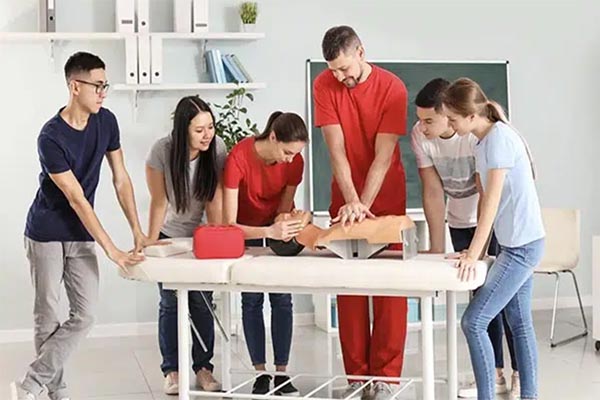
When you’re looking to get CPR certified in Austin, you’re usually faced with two main paths: sitting in a local classroom with an instructor or clicking through a course on your laptop at home.
In a fast-growing city like Austin, where healthcare, tech, and construction industries are booming, having the right “save-a-life” credentials isn’t just a bonus—it’s often a job requirement. But which format actually gives you the skills you need, and more importantly, which one will your boss actually accept?
At CPR Classes Near Me Austin, we see students every day who are confused by the options. This guide breaks down the differences between in-person and online CPR certification to help you make the best choice for your schedule, your wallet, and your peace of mind.
Why is hands-on training the standard in Austin?
When it comes to life-saving skills, there is a massive difference between watching a video of someone performing chest compressions and actually feeling the resistance of a manikin’s chest.
In-person training at our Austin location focuses on “muscle memory.” If you are in a high-pressure situation, you won’t have time to recall a video module; you need your hands to know exactly how deep to press and how fast to go.
- Real-time correction: Our AHA-certified instructors watch your technique. If your hand placement is off or your compressions are too shallow, we fix it on the spot.
- Equipment practice: You get to use real AED (Automated External Defibrillator) trainers and bag-mask devices, ensuring you aren’t guessing when a real emergency happens.
- Peer learning: Working in a classroom allows you to practice team dynamics, which is vital for healthcare providers and first responders.
Is online CPR certification valid for Austin employers?
This is the “million-dollar” question. While online-only courses are often cheaper and more convenient, they come with a major catch: Most Austin employers do not accept 100% online CPR certifications.
Organizations like OSHA (Occupational Safety and Health Administration) and the American Heart Association (AHA) require a hands-on skills assessment for a certification to be considered valid for the workplace. If your job is in healthcare (nurses, dental assistants), education (teachers, coaches), or high-risk labor (construction, electricity), an online-only certificate likely won’t cut it.
By choosing an in-person class, you are guaranteed:
- OSHA Compliance: Meeting federal safety requirements.
- Universal Acceptance: The AHA BLS eCard is the most widely recognized credential in the country.
- Job Security: No risk of having your certification rejected during the hiring process.
How does the cost compare between formats?
It is true that online-only courses can be found for as low as $20 or $30. However, you often get what you pay for. These courses frequently lack the official AHA seal, meaning they hold very little weight in the professional world.
In-person classes in Austin are an investment in a legitimate, two-year certification. At CPR Classes Near Me Austin, our BLS classes start at $64.95, and our combined CPR and First Aid classes are $84.95.
While the upfront cost is higher than a digital PDF, the value includes:
- Professional instruction from certified experts.
- Use of high-end medical training equipment.
- A same-day eCard delivered to your inbox.
- The peace of mind that your certification is 100% legitimate.
What can you expect during an Austin in-person class?
Many people avoid in-person classes because they think it will take up their entire weekend. That’s a myth! Our classes are streamlined and efficient.
A typical session at our Austin training site takes about 3.5 to 4 hours. During this time, you aren’t just sitting and listening to a lecture. You are active:
- Adult, Child, & Infant CPR: Learning the nuances of saving lives across all age groups.
- AED Training: Knowing how to operate the device that restarts a heart.
- Choking Relief: Hands-on practice for the Heimlich maneuver and back slaps.
- Testing: A short written exam and a skills check-off.
Because we are an official AHA training site, we provide same-day certification. You walk in as a student and leave as a certified lifesaver.
Can online learning be part of the process?
There is a middle ground known as “Blended Learning.” This involves completing the “lecture” portion of the class online via the AHA website and then coming to our Austin office for a “Skills Session.”
This is a great option for busy professionals who want to reduce their time in the classroom but still need that hands-on validation to meet OSHA standards. However, for most people, the full in-person class is the most straightforward and social way to learn.
Who should choose in-person training in Austin?
While anyone can benefit from a classroom setting, certain groups in Central Texas find it essential:
- Healthcare Professionals: Doctors, RNs, CNAs, and physical therapists in the Austin Hospital District.
- School Staff: Educators in AISD, Round Rock ISD, and local daycares.
- Fitness Experts: Personal trainers and lifeguards at Austin’s many gyms and pools.
- Construction Workers: Teams working on the massive infrastructure projects across Travis County.
Why choose CPR Classes Near Me Austin?
We aren’t just a national brand; we are part of the Austin community. We serve everyone from Bastrop to Cedar Park and everywhere in between.
- Same-Day eCards: No waiting for weeks in the mail.
- No Minimum Age: We believe anyone capable of the technique should learn.
- Expert Instructors: Our team makes the classes engaging, fun, and stress-free.
- Convenient Locations: Easy to find and easy to park.
How do the two formats compare side-by-side?
When choosing between an in-person class and an online-only module, it helps to look at the specific advantages of the classroom environment.
In-Person Training Advantages:
- Full recognition by the American Heart Association (AHA).
- Guaranteed acceptance by Austin hospitals and schools.
- Real-time feedback on compression depth and speed.
- Experience with physical AED units and life-saving equipment.
- Certification (eCard) issued on the same day.
Online-Only Course Limitations:
- Lack of hands-on practice leads to lower skill retention.
- Most “online-only” cards are not issued by the AHA.
- High rejection rate from employers and regulatory boards.
- No ability to ask questions or interact with a professional instructor.
- Limited to theoretical knowledge rather than practical life-saving ability.
Conclusion
While the convenience of sitting on your couch to get “certified” is tempting, the reality of emergency response requires more. In Austin, employers value the quality of your training. In-person CPR certification ensures that if the time ever comes to save a neighbor, a student, or a coworker, you won’t just have a piece of paper—you’ll have the confidence to act.
Ready to get certified?
Don’t settle for a “keyboard-only” certificate that might be rejected by your employer. Get the gold standard of training today.
Contact CPR Classes Near Me Austin today to book your seat and earn your AHA BLS certification!
Frequently Asked Questions (FAQ)
Q: Is an online CPR certificate the same as an in-person one?
A: No. While they cover similar information, online-only certificates do not include a hands-on skills assessment. Because of this, they are generally not OSHA-compliant and are not accepted by most healthcare or childcare employers in Austin.
Q: How long does the in-person Austin CPR class take?
A: Most of our American Heart Association BLS classes take approximately 3.5 to 4 hours to complete. This includes the video instruction, hands-on practice, and the final skills check.
Q: Will I get my card the same day?
A: Yes! When you train with CPR Classes Near Me Austin, we issue your official AHA BLS eCard on the same day you finish your class.
Q: What if my certification is about to expire?
A: You can sign up for any of our BLS classes as a renewal. The AHA considers the full course and the renewal course to be the same, ensuring you are up to date with the latest 2024-2025 guidelines.
Q: Do I need to bring anything to class?
A: Just yourself! We provide all the necessary training materials, manikins, and AED trainers. We recommend wearing comfortable clothing since you will be practicing on the floor with the manikins.