CPR/AED vs BLS: What Is the Difference? Which One Do You Need?
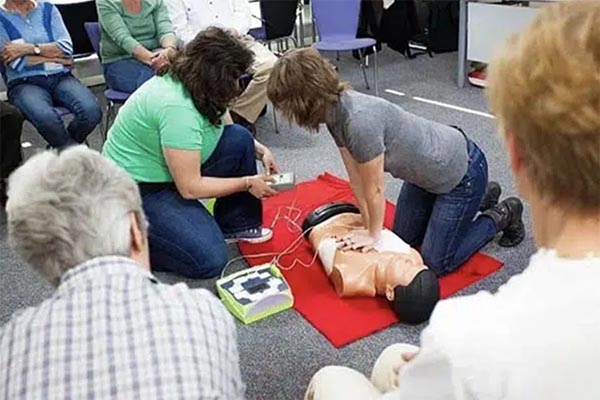
When it’s time to get certified in life-saving skills, you’ll likely run into two main options: CPR/AED and BLS. On the surface, they seem identical. Both involve chest compressions, both teach you how to use a defibrillator, and both save lives.

However, picking the wrong one could mean your employer won’t accept your certificate, or worse, you won’t be trained for the specific environment where you work. Whether you are a fitness instructor in Austin or a nurse at a local hospital, understanding the “why” and “how” behind these certifications is essential for professional compliance and public safety.

What exactly is the difference between CPR/AED and BLS?

The primary difference lies in the target audience and the depth of training.

CPR/AED (Cardiopulmonary Resuscitation & Automated External Defibrillator) is designed for “laypeople”—the general public. It focuses on the basic skills needed to keep someone alive until professional help arrives. It is perfect for people who might encounter an emergency at a grocery store, a gym, or a school.

BLS (Basic Life Support) is a higher-level certification specifically designed for healthcare providers and public safety professionals. It includes everything in a standard CPR course but adds advanced techniques. BLS training assumes you will be working in a team environment (like a hospital or an ambulance) and using professional-grade equipment.

Is BLS more difficult than a standard CPR course?

While “difficult” is subjective, BLS is certainly more comprehensive. In a standard CPR/AED class, you learn how to act as a lone rescuer. In a BLS class, you are trained to work as part of a high-performance team.

Key skill additions in BLS include:

  • Bag-Valve Mask (BVM) Ventilation: Learning to use a manual resuscitator rather than just mouth-to-mouth or a simple pocket mask.
  • Two-Rescuer Scenarios: Coordinating with a partner to switch roles every two minutes to prevent fatigue.
  • Pulse Checks: BLS students are trained to check for a pulse for no more than 10 seconds, a skill not typically emphasized in layperson classes.
  • Advanced Airway Support: How to provide breaths when an advanced airway (like an endotracheal tube) is in place.

Who should choose a CPR/AED certification?

If your job is not in the medical field, CPR/AED is usually the right choice. This certification meets the requirements for OSHA-mandated workplace safety.

You should choose CPR/AED if you are:

  • A Teacher or Coach: Most school districts and athletic departments require this level of training.
  • A Fitness Instructor: Gyms and yoga studios need you to know how to use an AED and perform compressions.
  • A Construction Worker: Many job sites require basic safety certifications.
  • A Parent or Caregiver: If you simply want to be prepared to protect your family, this course provides the essential skills without the medical jargon.
  • A Security Guard: Most security roles only require layperson-level training.

Who is required to have a BLS certification?

If you work in a clinical setting or are a student in a medical program, you almost certainly need BLS. Most healthcare employers will not accept a “Heartsaver” or “CPR/AED” card; they specifically look for “BLS Provider.”

You need BLS if you are:

  • A Nurse or Doctor: Hospitals require BLS as a baseline for all clinical staff.
  • A Dentist or Dental Hygienist: Most state boards require BLS for dental licensure.
  • An EMT or Paramedic: First responders must be experts in team-based resuscitation.
  • A Physical Therapist: Even in outpatient clinics, BLS is the standard.
  • A Medical Student: Most clinical rotations require a current BLS card before you can step onto the floor.

Do the skills taught in CPR/AED and BLS overlap?

Yes, there is significant overlap. Both courses are built on the same American Heart Association (AHA) guidelines. Regardless of which class you take, you will master the “Chain of Survival.”

Common skills in both courses include:

  • Recognizing the signs of cardiac arrest.
  • Performing high-quality chest compressions (depth and rate).
  • Safe and effective use of an AED.
  • Relief of choking (foreign body airway obstruction) for adults and infants.
  • Providing rescue breaths.

The difference isn’t the quality of the compressions; it’s the context in which those compressions are delivered and the equipment used to facilitate breathing.

Which certification does the American Heart Association (AHA) recommend?

The AHA doesn’t necessarily recommend one over the other for everyone; rather, they provide different “tracks” based on your role.

  • The Heartsaver Track: This includes CPR/AED and First Aid. It is written in simple, non-medical language. It is designed to be accessible to anyone regardless of their educational background.
  • The BLS Provider Track: This is written for the medical professional. It uses clinical terminology and focuses on patient outcomes in a professional setting.

In Austin and throughout Texas, most professional organizations follow AHA standards. Ensuring you have an AHA-approved card is often more important than the title of the course itself, as many “online-only” certifications are not recognized by employers or regulatory boards.

How long do these certifications last?

Both CPR/AED and BLS certifications are valid for two years. After 24 months, you must take a renewal or “update” course to maintain your credentials.

Staying current is vital because:

  • Skills Fade: Research shows that CPR skills begin to decline just a few months after training.
  • Updated Guidelines: The AHA updates its science every few years. A renewal class ensures you are using the most effective techniques.
  • Legal Compliance: Most employers require an active card to stay on the schedule.

Can you take a BLS class if you aren’t a healthcare provider?

Absolutely! While BLS is designed for healthcare professionals, anyone can take the course. If you are a “super-user” who wants the most in-depth training available, BLS is a great option. It provides a more technical look at the mechanics of the heart and the science of resuscitation.

However, be prepared for a faster-paced environment and a written exam that assumes a basic understanding of medical concepts. If you aren’t comfortable with technical terminology, the standard CPR/AED class is much more approachable.

How do I find a class near me?

Finding the right class in your local area is easy. You should look for a training center that offers both options so you can be sure you’re getting the right level of training for your career path.

When searching for a class:

  • Check the Provider: Ensure they are an authorized AHA or Red Cross training site.
  • Look for Blended Learning: Many centers offer “HeartCode” or “Simulation Learning,” which allows you to do the book work online and come in person only for the skills check.
  • Verify the Card: Make sure you will receive your eCard the same day so you can provide proof to your employer immediately.

What are the key technical differences in the training?

When you sit down for a BLS class versus a CPR/AED class, you will notice distinct differences in the curriculum.

In a CPR/AED class:

  • You focus on 1-person CPR.
  • You use a simple barrier device for breaths.
  • You are taught to look for “signs of life” or breathing.

In a BLS class:

  • You focus on 1-person and 2-person CPR.
  • You use a Bag-Valve Mask (BVM) which requires two hands to seal correctly.
  • You are taught to check a carotid pulse for at least 5 but no more than 10 seconds.
  • You learn the “team lead” concept to manage a cardiac arrest scene.

Conclusion

Choosing between CPR/AED and BLS doesn’t have to be complicated. If you are a medical professional or student, go with BLS. If you are a teacher, coach, or concerned citizen, CPR/AED is your best bet. Both paths empower you with the confidence to act when a life is on the line.

Regardless of the acronym on your card, the most important thing is that you are trained and ready. Every minute counts in a cardiac emergency, and your training could be the difference between a life lost and a life saved.

Ready to get certified? 

Whether you need a layperson CPR/AED card or a professional BLS Provider certification, we’ve got you covered with expert instructors and flexible schedules. Contact CPR Classes Near Me today to find a session that fits your schedule and career needs!

Frequently Asked Questions (FAQ)

Q: If I have a BLS card, do I also need a CPR/AED card?

No. BLS is a higher level of certification that encompasses all the skills taught in a standard CPR/AED course. If you are BLS certified, you are over-qualified for roles that only require CPR/AED and your card will be accepted.

Q: Does BLS include First Aid?

Not usually. BLS focuses strictly on cardiovascular and respiratory emergencies in a clinical context. Most healthcare providers take First Aid as a separate course if required by their specific job, whereas many “Heartsaver” courses bundle CPR/AED and First Aid together for convenience.

Q: Can I get my BLS certification entirely online?

No. While you can do the “cognitive” (lecture) portion online via an AHA-approved portal, you must attend an in-person skills practice and testing session with a certified instructor to receive a valid BLS Provider card. Employers will generally not accept “online-only” cards without a hands-on component.

Q: What happens if my certification expires?

If your card expires, you are technically no longer certified. Most training centers require you to take the full “Initial” course rather than a shorter “Renewal” course if your card is even one day past its expiration date. It is always better to renew 30 days before the expiration.

Q: Is there an age limit for BLS or CPR classes?

There is no formal age limit set by the American Heart Association. As long as a student can physically perform the compressions to the required depth and pass the skills test, they can be certified. Most instructors find that children around age 10-12 are physically capable of meeting the requirements.
BLS vs CPR vs First Aid: Which Certification Do You Need in Austin?

Whether you’re a nursing student at UT Austin, a new coach for a West Lake youth soccer team, or a tech professional in the Silicon Hills wanting to be prepared, you’ve likely realized that “CPR” isn’t just one single class.

When you start looking for training, you’ll see terms like BLS, CPR/AED, and First Aid thrown around. Choosing the wrong one can mean wasted time and a certification your employer won’t accept.

In Austin, where healthcare and education sectors are booming, knowing the difference is vital. This guide will help you navigate the requirements so you can book the right class at CPR Classes Near Me Austin and get certified with confidence.

What is the difference between BLS and CPR?

Many people use the terms BLS and CPR interchangeably, but in the world of professional certification, they are quite different.

CPR (Cardiopulmonary Resuscitation) is the foundational skill. It is designed for the “layperson”—someone who is not a healthcare professional. A standard CPR class focuses on:

  • Recognizing cardiac arrest.
  • Performing high-quality chest compressions.
  • Giving rescue breaths.
  • Using an Automated External Defibrillator (AED).

BLS (Basic Life Support), on the other hand, is the healthcare-level version of CPR. It includes everything in a standard CPR class but adds advanced techniques required in a clinical or team-based setting.

If you are a nurse, a dental assistant, or an EMT, you almost certainly need BLS. If you are a parent or a fitness instructor, standard CPR is usually the right fit.

Is BLS more advanced than a standard CPR course?

Yes, BLS is considered the “professional grade” version of life-saving training. While the chest compressions are essentially the same, the context of the training changes significantly.

In a BLS course at our Austin location, you will learn:

  1. Multi-Rescuer Coordination: How to work as part of a high-performance team during a resuscitation attempt.
  2. Bag-Mask Ventilation: Using professional medical equipment to provide breaths rather than just mouth-to-mouth.
  3. Pulse Checks: Learning to accurately identify a pulse in adults, children, and infants.
  4. Advanced Airway Management: How to provide care when advanced breathing tubes or equipment are in use.

BLS moves faster and assumes the student may be working in a hospital, clinic, or emergency vehicle where more resources are available.

What does a First Aid certification cover that CPR doesn’t?

It is a common misconception that a CPR card covers all medical emergencies. In reality, CPR is specifically for when someone’s heart has stopped or they are not breathing.

First Aid is the “everything else” certification. It focuses on stabilizing a victim until professional help arrives. At CPR Classes Near Me Austin, our First Aid training covers:

  • Injury Management: Bandaging, splinting, and treating burns or broken bones.
  • Medical Emergencies: Recognizing and responding to strokes, heart attacks, and seizures.
  • Environmental Issues: Treating heatstroke (a big concern in Austin summers!) and hypothermia.
  • Allergic Reactions: Proper use of an epinephrine pen (EpiPen).

If your job involves physical labor or supervising children, you will likely need a certification that combines both CPR and First Aid.

Who is required to get BLS certification in Austin?

Austin is home to a massive medical community, from St. David’s and Ascension Seton to the Dell Medical School. If you work in these environments, BLS is the non-negotiable standard.

Common professions in Austin requiring BLS include:

  • Registered Nurses (RNs) and LVNs.
  • Certified Nursing Assistants (CNAs).
  • Physicians and Medical Students.
  • Dentists and Dental Hygienists.
  • Physical and Occupational Therapists.
  • Paramedics and Firefighters.
  • Pharmacists.

Most of these employers specifically require the American Heart Association (AHA) BLS Provider card, which is exactly what we provide at our Austin training sites.

Which professions in Austin need CPR and First Aid?

If you don’t work in a hospital but your job involves the safety of others, you likely need a combination of CPR, AED, and First Aid. This is often driven by OSHA requirements or state licensing boards.

In Austin, this typically applies to:

  1. Educators and School Staff: Teachers and coaches in AISD and surrounding districts.
  2. Childcare Providers: Daycare workers, nannies, and camp counselors.
  3. Fitness Professionals: Personal trainers and CrossFit coaches.
  4. Construction and Skilled Trades: Electricians and site supervisors often need First Aid for OSHA compliance.
  5. Hospitality and Security: Flight attendants and security guards at Austin-Bergstrom International Airport or major downtown venues.

Can I get my certification card the same day in Austin?

One of the biggest frustrations with some national providers is waiting weeks for a physical card to arrive in the mail. At CPR Classes Near Me Austin, we’ve solved that.

We issue your official American Heart Association (AHA) eCard on the same day you complete your class. This means:

  • You can show it to your employer immediately.
  • You don’t have to worry about losing a paper card.
  • The digital card is easy to verify online by any hiring manager.

Whether you are taking BLS or the CPR/First Aid combo, you walk out of our doors fully certified.

Why should I choose an American Heart Association (AHA) course?

While there are many “off-brand” online courses that claim to offer certification for $20, most Austin employers will not accept them.

The American Heart Association is the industry leader. Their guidelines are based on the latest science in resuscitation. When you hold an AHA card:

  • It is Nationally Recognized: You can take your certification to any state.
  • It is Employer Accepted: Almost all hospitals and school districts in Texas mandate AHA-aligned training.
  • It is OSHA-Compliant: It meets the federal standards for workplace safety.

Don’t risk having to pay for a second class because your first one wasn’t AHA-approved.

How long do these certifications last before they expire?

Both BLS and standard CPR/First Aid certifications are valid for two years from the date of your class.

The renewal process is straightforward:

  • BLS Renewal: You attend a standard BLS class to refresh your skills and get a new two-year card.
  • CPR/First Aid Renewal: A combined class ensures all your skills stay sharp and your credentials remain current.

We recommend booking your renewal at least 30 days before your current card expires to ensure you don’t have a gap in your employment eligibility.

What should I expect during my Austin CPR or BLS class?

We believe that learning life-saving skills shouldn’t be stressful or boring. Our instructors in Austin focus on hands-on practice.

  1. Video Instruction: You’ll watch AHA-authorized videos that demonstrate the correct techniques.
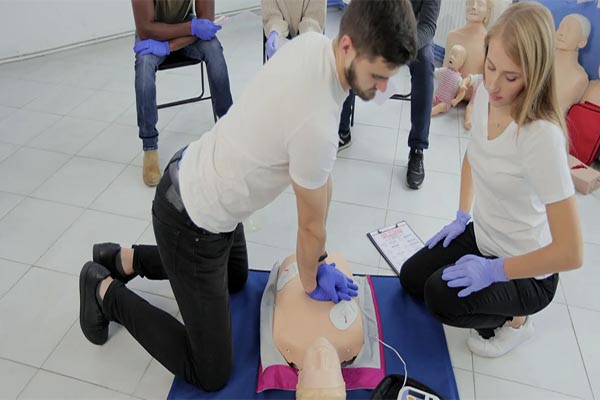
  2. Manikin Practice: You will spend plenty of time practicing chest compressions and rescue breaths on high-quality manikins.
  3. AED Training: You will practice using a trainer AED so you know exactly how the device “talks” to you during an emergency.
  4. Skills Testing: The instructor will observe your techniques to ensure you feel confident and capable.
  5. Final Quiz: A short written or verbal assessment to confirm you’ve understood the key concepts.

How do I know which class is right for me?

If you are still staring at the registration page wondering which button to click, ask yourself these three questions:

  • Does my job require me to work in a clinical setting? If yes, choose BLS.
  • Am I a teacher, parent, or coach? If yes, choose CPR/AED & First Aid.
  • Do I just want to be prepared for family emergencies? Choose CPR/AED.

If you are still unsure, you can always call our Austin office at (512) 831-4243, and we can help you match the class to your specific job description.

Conclusion

Navigating the world of emergency certifications doesn’t have to be complicated. Whether you need the advanced team-dynamics of BLS, the foundational life-saving power of CPR, or the broad medical knowledge of First Aid, getting certified is a vital step in protecting the Austin community.

At CPR Classes Near Me Austin, we provide the highest quality American Heart Association training with the convenience of same-day eCards and expert instructors. Don’t wait until an emergency happens to realize you aren’t prepared.

Ready to get certified? Contact CPR Classes Near Me Austin today to find a class that fits your schedule and career needs!

Frequently Asked Questions (FAQ)

Q: Can I take my CPR or BLS certification entirely online?

A: No. While some “blended” options allow for online book-work, the American Heart Association requires an in-person skills check with a certified instructor. Most Austin employers will not accept 100% online certifications because they lack hands-on verification.

Q: Is there an age requirement for CPR classes in Austin?

A: There is no formal minimum age. As long as a student can physically perform the compressions and pass the skills test, they can be certified. We have successfully trained many teenagers and young adults.

Q: How much do the classes cost?

A: In Austin, our BLS classes are currently discounted to $64.95. The combined CPR, AED, and First Aid class is offered at $84.95. These prices include your same-day AHA eCard.

Q: Does BLS include First Aid?

A: No. BLS is focused strictly on cardiac arrest and respiratory emergencies. If your employer requires both BLS and First Aid, you will need to take a combined course or add a First Aid module to your training.

Q: Where are the classes located?

A: We have training sites serving Austin, North Austin, Pflugerville, Round Rock, and the surrounding areas. We also offer on-site group training for businesses and organizations throughout Central Texas.

CPR Certification vs BLS: Which One Do You Need?

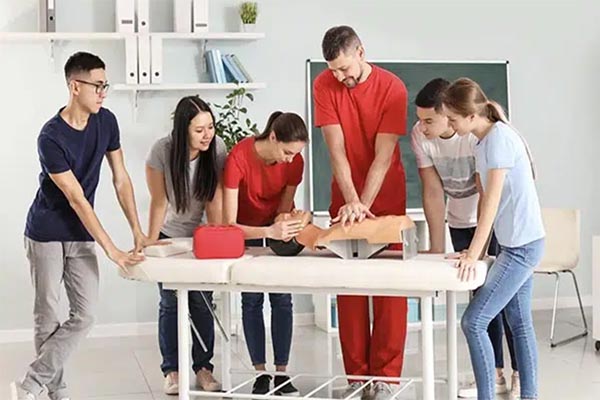
First aid instructor teaching CPR to a group of students using a practice mannequin.

Choosing the right life-saving course can feel like navigating a sea of acronyms. If you are looking to get certified, you’ve likely seen “CPR” and “BLS” used almost interchangeably. However, while they share the same goal—saving lives—they are designed for very different people and settings.

At CPR Classes Near Me, we believe that being prepared is the first step toward making a difference. Whether you are a nursing student, a high school coach, or a concerned parent, knowing the difference between these two certifications will ensure you meet your employer’s requirements and gain the right skills for your environment.

What is the main difference between CPR and BLS?

The primary difference lies in the level of detail and the intended audience.

CPR (Cardiopulmonary Resuscitation) is generally referred to as “Heartsaver” or “Layperson CPR.” It focuses on the fundamental skills needed to keep someone alive until professional help arrives. It is perfect for people who do not work in a medical environment.

BLS (Basic Life Support) is the professional standard for healthcare providers. It includes everything taught in a standard CPR class but adds advanced techniques such as team-based resuscitation, the use of medical-grade equipment like bag-valve masks, and more intense testing.

Who should take a standard CPR certification course?

Standard CPR certification is designed for the general public and “lay rescuers.” If your job involves the safety of others in a non-medical capacity, this is likely the course for you.

Common professions that require standard CPR include:

  • Teachers and daycare providers
  • Fitness instructors and personal trainers
  • Coaches and athletic directors
  • Construction workers and OSHA-regulated employees
  • Flight attendants
  • Security guards

This course is also ideal for parents, grandparents, and community volunteers who simply want to be ready to act during a cardiac emergency.

Who is required to have BLS certification?

BLS is a “professional level” certification. If you work in a clinical setting or are a first responder, your employer or licensing board will almost certainly require BLS rather than standard CPR.

You need BLS certification if you are:

  • A Registered Nurse (RN) or Licensed Practical Nurse (LPN)
  • A Doctor or Physician Assistant
  • A Dentist or Dental Hygienist
  • An EMT or Paramedic
  • A Medical or Nursing Student
  • A Physical or Occupational Therapist

If you are a student entering the healthcare field, it is highly recommended to get your BLS certification now, as most clinical rotations require it before you can step foot in a hospital.

What skills are taught in a CPR course?

A standard CPR class is fast-paced and focuses on muscle memory. The goal is to give you the confidence to jump in without overthinking.

In a standard CPR/AED class, you will learn:

  1. High-Quality Chest Compressions: The correct depth and rate for adults, children, and infants.
  2. Rescue Breathing: Techniques for delivering oxygen to a victim.
  3. AED Operation: How to safely use an Automated External Defibrillator.
  4. Choking Relief: The Heimlich maneuver and modified techniques for infants.
  5. Scene Safety: How to assess an environment before providing help.

What makes BLS training more advanced?

BLS training goes deeper into the “why” and “how” of resuscitation. Because healthcare professionals work in teams, the training emphasizes coordination.

Advanced skills included in BLS but not standard CPR include:

  • Multi-Rescuer Coordination: Learning how to switch roles seamlessly (e.g., one person doing compressions while another handles the airway).
  • Bag-Valve-Mask (BVM) Ventilation: Using a manual resuscitator to provide high-flow oxygen.
  • Pulse Checks: Healthcare providers are trained to check for a pulse for up to 10 seconds, whereas laypersons are taught to start CPR if a victim is unresponsive and not breathing.
  • Advanced Airway Management: How to provide CPR when a patient has a breathing tube or other advanced airway in place.
  • Critical Thinking: Managing complex scenarios where multiple life-threatening issues are happening at once.

Can a BLS certification replace a CPR certification?

Yes. If your job requires CPR but you choose to take a BLS course, your BLS card will almost always satisfy the requirement. Since BLS is a higher level of training that includes all CPR components, it is widely accepted as a superior credential.

However, the reverse is not true. If your employer requires BLS, a standard Heartsaver CPR card will not be accepted. Always check your specific workplace requirements before booking your seat.

Is First Aid included in these certifications?

This is a common point of confusion. Standard CPR and BLS are primarily focused on cardiac and respiratory arrest. They do not automatically include First Aid training.

  • For CPR: Many people choose to take a “CPR & First Aid” combo class. This is common for teachers and daycare workers who need to know how to handle scrapes, burns, and broken bones in addition to CPR.
  • For BLS: First Aid is almost never a standard part of a BLS class. Healthcare providers usually receive First Aid training through their medical schooling or separate certifications.

At CPR Classes Near Me, we offer both standalone BLS and combined CPR/First Aid options to ensure you get exactly what you need for your career.

How long do these certifications last?

Both CPR and BLS certifications are valid for two years.

Science and medical guidelines are constantly evolving. Every five years, the American Heart Association updates its protocols based on the latest life-saving data. Staying certified every two years ensures your skills remain sharp and that you are using the most effective techniques currently known to medicine.

Why is in-person training better than online-only?

While “online-only” certifications exist, they are rarely accepted by employers, especially in healthcare and education.

There is no substitute for the hands-on experience of compressing a manikin’s chest. In an in-person class at CPR Classes Near Me, an instructor can correct your hand placement, ensure you are hitting the right depth, and help you get comfortable with the rhythm of compressions. That physical “muscle memory” is what saves lives when the pressure is on.

How do I choose the right class?

To make the right choice, ask yourself these three questions:

  1. What is my profession? (Healthcare = BLS; General Public = CPR)
  2. Does my employer require First Aid? (If yes, look for a combo class.)
  3. Is the certification AHA-approved? (The American Heart Association is the gold standard for employer acceptance.)

Conclusion

Whether you choose CPR or BLS, the most important step is simply getting trained. Cardiac arrest can happen anywhere—at the gym, in the grocery store, or at the dinner table. Having the skills to intervene can double or even triple a victim’s chance of survival.

If you are ready to gain the confidence to save a life, contact CPR Classes Near Me today. Our expert instructors provide high-quality, AHA-certified training in a relaxed and professional environment. Don’t wait for an emergency to happen—be the one who knows what to do.

Frequently Asked Questions (FAQ)

Is BLS harder than CPR?

While BLS is more comprehensive and includes a written exam, it is not necessarily “harder.” It simply covers more ground. Our instructors at CPR Classes Near Me are experts at breaking down complex medical concepts so that every student leaves feeling confident, regardless of their medical background.

Will my BLS card say CPR on it?

Most BLS cards are titled “Basic Life Support (BLS) Provider.” Since BLS is the highest level of CPR training, it is understood by all employers that you are fully certified in CPR and AED usage.

How long does a BLS class take?

A typical initial BLS certification class takes about 4 to 5 hours. This includes hands-on practice, video instruction, and the written and skills tests. If you are renewing a current card, the process is usually shorter.

Does CPR certification cover infants?

Yes, at CPR Classes Near Me, our standard CPR and BLS courses cover adult, child, and infant techniques. This is essential for parents and those working in schools or childcare settings.

What should I wear to my class?

Since both CPR and BLS involve significant hands-on practice on the floor or at tables with manikins, we recommend wearing comfortable, casual clothing that allows you to move easily.