Which Course Should You Take if Your Employer Just Says “CPR Required”?

CPR Certification for Construction Workers

It happens more often than you’d think. You land a new job or receive a performance review, and there it is in the fine print: “CPR required.” No specific course name, no organization mentioned, just a vague mandate to get certified.

Navigating the world of emergency cardiovascular care (ECC) can feel like learning a second language. If you choose the wrong class, you might waste a Saturday and a hundred dollars on a certificate your HR department won’t even accept. Understanding the nuances of “CPR required” is the difference between being compliant on day one and having to retake a course.

In this guide, we will break down exactly how to decode your employer’s requirements, the differences between major course types, and why the “brand” of your CPR certification matters more than you think.

Is “CPR Required” the Same for Every Job?

The short answer is no. When an employer states that “CPR is required,” they are usually referring to one of two distinct paths: Healthcare Provider (Professional) or General Workplace (Lay Responder).

For those in the medical field—nurses, dental assistants, or physical therapists—the standard is almost always Basic Life Support (BLS). This course is rigorous and covers multi-rescuer resuscitation and advanced equipment. For non-clinical roles, such as teachers, coaches, or construction workers, a Heartsaver CPR and AED course is typically the standard.

The intent behind the requirement is safety and liability. Employers need to know that if an emergency occurs, you have the hands-on skills to intervene effectively. However, the level of skill expected depends entirely on your professional environment and the “duty to act” associated with your role.

What Is the Difference Between BLS and Heartsaver CPR?

This is the most common point of confusion for students. If your employer says “CPR required,” you need to determine if you need the “professional” version or the “community” version.

Basic Life Support (BLS):

  • Target Audience: Healthcare professionals and first responders.
  • Focus: High-quality CPR for adults, children, and infants; use of an Automated External Defibrillator (AED); and bag-mask ventilation.
  • Key Detail: It emphasizes team dynamics and how to work with other medical professionals during a cardiac arrest.

Heartsaver CPR AED:

  • Target Audience: Non-medical professionals (teachers, personal trainers, OSHA-regulated workplaces).
  • Focus: Fundamental life-saving skills, including chest compressions and AED use.
  • Key Detail: It is designed for someone who might be the only person on the scene until paramedics arrive.

At CPR Classes Near Me, we find that when in doubt, taking the BLS course is the safest bet. It is the “higher” level of certification; most employers who only require Heartsaver will gladly accept a BLS card, but the reverse is rarely true.

Does the Certification Provider Matter to Employers?

Yes, the organization that issues your card is arguably more important than the course title itself. Most employers in the United States specifically look for American Heart Association (AHA) certification.

The AHA is the gold standard for CPR training. Their guidelines are based on the latest science and are updated every five years. Many hospitals and corporate safety departments have strict policies that only accept AHA-aligned certifications.

If you see a “CPR required” notice, check if they specify “AHA.” Even if they don’t, opting for an AHA-certified course—like those offered at our Austin location—ensures your card will be recognized nationwide. Avoid “online-only” certifications that do not include an in-person skills check, as these are rarely accepted by employers due to the lack of hands-on verification.

Should You Include First Aid With Your CPR Certification?

If your employer’s handbook says “CPR required,” you should double-check if First Aid is also a silent requirement.

In industries like construction, childcare, and manufacturing, OSHA (Occupational Safety and Health Administration) often mandates both CPR and First Aid. A “CPR/AED” course focuses strictly on cardiac events and choking. A “First Aid” component adds training for:

  • Banding and wound care
  • Managing allergic reactions (Epi-Pen use)
  • Treating burns and bone fractures
  • Handling environmental emergencies like heatstroke

Combining these into one session, such as a CPR, AED & First Aid Class, is usually more cost-effective and saves you from having to return for a second training session later.

How Can You Verify Your Specific Job Requirements?

If you are still staring at a “CPR required” memo and aren’t sure which path to take, the best step is to ask your supervisor or HR representative two specific questions:

  1. “Do I need BLS for Healthcare Providers or Heartsaver?”
  2. “Does the certification need to be through the American Heart Association?”

If you cannot get a clear answer, look at your peers. If you work in a clinical setting (anywhere with patients), you need BLS. If you work in a corporate or public setting, Heartsaver is the standard. At CPR Classes Near Me, we provide same-day eCards for both, so you can meet your deadline immediately regardless of the course you choose.

Conclusion

When your employer says “CPR required,” they aren’t trying to be difficult—they are ensuring a safer workplace. By choosing an American Heart Association-certified course, you are gaining a credential that is respected, scientifically backed, and valid for two years. Whether you need the advanced team-based training of BLS or the essential skills of Heartsaver, getting certified is a proactive step in your professional development.

Don’t leave your compliance to chance. Contact CPR Classes Near Me today to find a local class that fits your schedule and ensures you walk away with the exact certification your employer needs.

Frequently Asked Questions

How long does a CPR certification last?

Once you successfully complete your course and receive your AHA eCard, the certification is valid for exactly two years. You will need to take a renewal course before the expiration date printed on your card to maintain your status.

Can I get my CPR certification entirely online?

While some websites offer “100% online” courses, these are almost never accepted by employers. CPR is a physical skill that requires hands-on practice. A valid certification requires an in-person skills evaluation with a certified instructor to ensure you can perform compressions correctly.

How long does the actual class take?

An American Heart Association BLS or CPR class typically takes about 3.5 to 4 hours. This time includes watching the instructional videos, practicing the hands-on manikin skills, and completing the required testing.

What is the difference between CPR and BLS?

BLS (Basic Life Support) is a type of CPR class specifically designed for healthcare professionals. It includes more advanced techniques, like two-rescuer breathing and the use of bag-mask devices. “CPR” is often used as a general term for the Heartsaver level course intended for the general public.

Will I get my card the same day?

Yes, when you train with CPR Classes Near Me, your instructor issues your official AHA eCard on the same day you complete your class. You will receive an email to claim your digital card, which you can immediately print or forward to your employer.
Which CPR Course Is Best for Non-Medical Professionals?

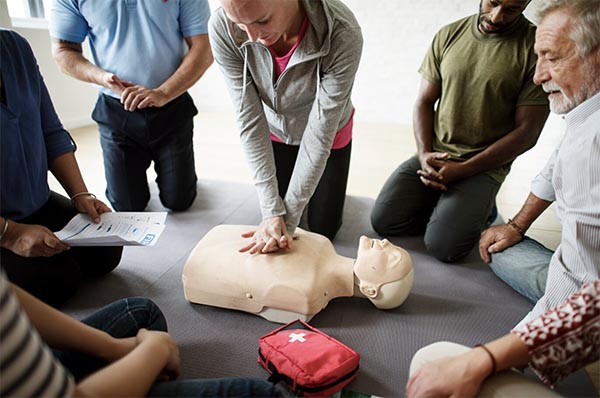
Group learning CPR with hands-on chest compressions on a training manikin.

Walking into a room full of medical equipment and manikins can feel a bit intimidating if you don’t spend your days in a hospital. We often hear from teachers, fitness trainers, and childcare providers who know they need a certification but aren’t sure which path to take. The terms “BLS,” “Heartsaver,” and “Healthcare Provider” are frequently tossed around, making it difficult to pinpoint exactly what you need.

Choosing the right course isn’t just about checking a box for your employer. It is about gaining the confidence to act when a life is on the line. Whether you are a local coach or a corporate office manager, the training you choose determines how prepared you feel during a cardiac emergency.

In this guide, we will break down the most effective cpr certifications for those outside the medical field. By the end, you’ll know exactly which course fits your lifestyle and your professional requirements.

Is the AHA BLS Course Only for Doctors and Nurses?

One of the most common myths is that Basic Life Support (BLS) is exclusively for medical professionals. While BLS is indeed the “gold standard” for healthcare providers, it is frequently the best choice for non-medical professionals as well. Many of our students at CPR Classes Near Me are actually teachers, construction workers, and personal trainers.

The BLS course through the American Heart Association (AHA) provides a higher level of depth than basic community classes. It covers high-quality chest compressions, rescue breathing, and the use of an Automated External Defibrillator (AED) for adults, children, and infants. Because it is so comprehensive, many employers prefer it because it ensures their staff is trained to the highest possible standard.

If your job requires a certification that is “OSHA-compliant” or highly “employer-accepted,” the BLS course is usually your safest bet. It is a 2-year certification that proves you can handle an emergency with the same foundational skills as a first responder.

What Is the Difference Between BLS and Heartsaver CPR?

If you are looking for a course specifically designed for the “layperson,” you might come across the Heartsaver curriculum. The primary difference lies in the technicality and the intended audience. While BLS focuses on team dynamics and professional-grade resuscitation, Heartsaver is streamlined for non-medical settings like offices or retail environments.

However, we often recommend the BLS course even to non-medical staff. Why? Because the price point and time commitment are often very similar, but the BLS card is more universally accepted. If you switch jobs or enter a new field, a BLS certification will almost always be accepted, whereas a basic Heartsaver card might not meet more stringent requirements.

At our Austin training site and other national locations, we see a wide range of professionals choosing BLS for its versatility. It gives you the “Healthcare Provider” designation, which carries significant weight on a resume, regardless of your industry.

Why Should Non-Medical Professionals Choose an AHA-Aligned Course?

When searching for “CPR classes near me,” you will likely see a variety of organizations offering training. However, not all certifications are created equal. The American Heart Association is the leader in cardiac science, and their guidelines form the basis for life-saving protocols worldwide.

Choosing an AHA-aligned course ensures that the techniques you learn are backed by the latest clinical research. Many online-only courses offer “cheap” certifications, but these are frequently rejected by employers because they lack a hands-on skills assessment. You cannot learn the physical depth of a chest compression or the timing of an AED through a computer screen alone.

By attending an in-person class, you get real-time feedback from certified instructors. This experience is what builds “muscle memory.” In a real emergency, you won’t be thinking about a video you watched; you will be relying on the physical practice you did in the classroom.

Do I Need to Add First Aid to My CPR Certification?

For many non-medical professionals, CPR alone isn’t enough to meet workplace safety standards. If you work in an environment where physical injury is possible—such as a construction site, a school, or a daycare—adding a First Aid component is highly recommended.

A CPR and First Aid combo course covers a broader spectrum of emergencies. While CPR focuses on the heart and lungs, First Aid teaches you how to manage:

  • Severe allergic reactions (using an EpiPen)
  • External bleeding and wound care
  • Bone fractures and sprains
  • Environmental emergencies like heatstroke or burns

Adding First Aid usually only extends the class time slightly, but it provides a much more well-rounded skill set. For parents and caregivers, this is often the preferred choice because it prepares them for the everyday “bumps and bruises” as well as life-threatening events.

How Long Does the Certification Process Take for Laypeople?

Time is a major factor for busy professionals. Many people put off training because they assume it will take an entire weekend. In reality, a high-quality AHA BLS or CPR course can be completed in a single afternoon.

At CPR Classes Near Me, our sessions typically run about 3.5 to 4 hours. We focus on efficiency without sacrificing the quality of the training. Because we use the latest AHA videos and hands-on practice, we can ensure every student leaves feeling confident.

Perhaps the biggest benefit for non-medical professionals is the “Same Day Card” policy. We know you might have a deadline for a new job or a coaching permit. We issue your AHA BLS eCard the same day you finish the class, so you don’t have to wait weeks for a piece of paper to arrive in the mail.

Which CPR Course Is Best for Those Working with Children?

If your “non-medical” role involves children—such as a daycare provider, nanny, or teacher—your training needs to be specific. Children and infants require different hand placements and compression depths than adults.

The best course for this group is one that specifically includes “Pediatric CPR and Airway Management.” Our BLS and CPR/First Aid classes cover the entire lifespan: adults, children, and infants. This ensures that no matter who you are caring for, you have the specific skills needed to help them. This includes techniques for clearing an obstructed airway (choking) in small children, which is a common concern for educators and parents alike.

Conclusion

For the vast majority of non-medical professionals, the AHA BLS (Basic Life Support) course is the best all-around choice. It provides the highest level of certification, is accepted by virtually every employer, and equips you with the skills to save lives across all age groups. If your role requires broader safety knowledge, pairing that BLS certification with a First Aid module is the ultimate way to ensure you are prepared for any situation.

Don’t wait until an emergency happens to wish you had the training. Whether you are in Austin or anywhere else across the country, getting certified is a quick, rewarding process that provides peace of mind for you and safety for those around you.

Ready to get certified? Contact CPR Classes Near Me today to find a class and get your same-day certification!

Frequently Asked Questions (FAQ)

1. What is the most widely accepted CPR certification for non-medical jobs?

The American Heart Association (AHA) BLS (Basic Life Support) certification is the most widely recognized and accepted card nationwide. It is considered the gold standard for many industries, including education, fitness, and construction, because it meets rigorous OSHA and workplace safety standards.

2. Can I get certified in CPR entirely online?

While online theory courses exist, most employers do not recognize certifications that lack a hands-on skills assessment. Effective CPR requires physical practice on a manikin with instructor feedback to ensure proper technique, which is why in-person training is highly recommended.

3. Is there an age limit for taking a CPR class?

There is no formal minimum age requirement to become CPR certified through the AHA. As long as the individual is physically capable of performing the chest compressions and demonstrating the necessary skills, they can receive their certification card.

4. How long is my CPR certification valid for?

AHA CPR and BLS certifications are valid for two years from the date of the class. To maintain your certification, you will need to take a renewal course before your current card expires to ensure your skills stay fresh and aligned with the latest guidelines.

5. Does the BLS course cover how to use an AED?

Yes, every AHA BLS and CPR course includes comprehensive training on how to use an Automated External Defibrillator (AED). You will learn how to set up the device, apply the pads, and follow the voice prompts to deliver a life-saving shock if necessary.

6. What should I wear to a CPR class?

Since CPR training involves physical activity—such as kneeling on the floor and performing chest compressions on manikins—it is best to wear comfortable, move-around clothing. Most students find that athletic wear or casual “business casual” attire works best.

Adult, Child, and Infant CPR: What Is Covered in Class?

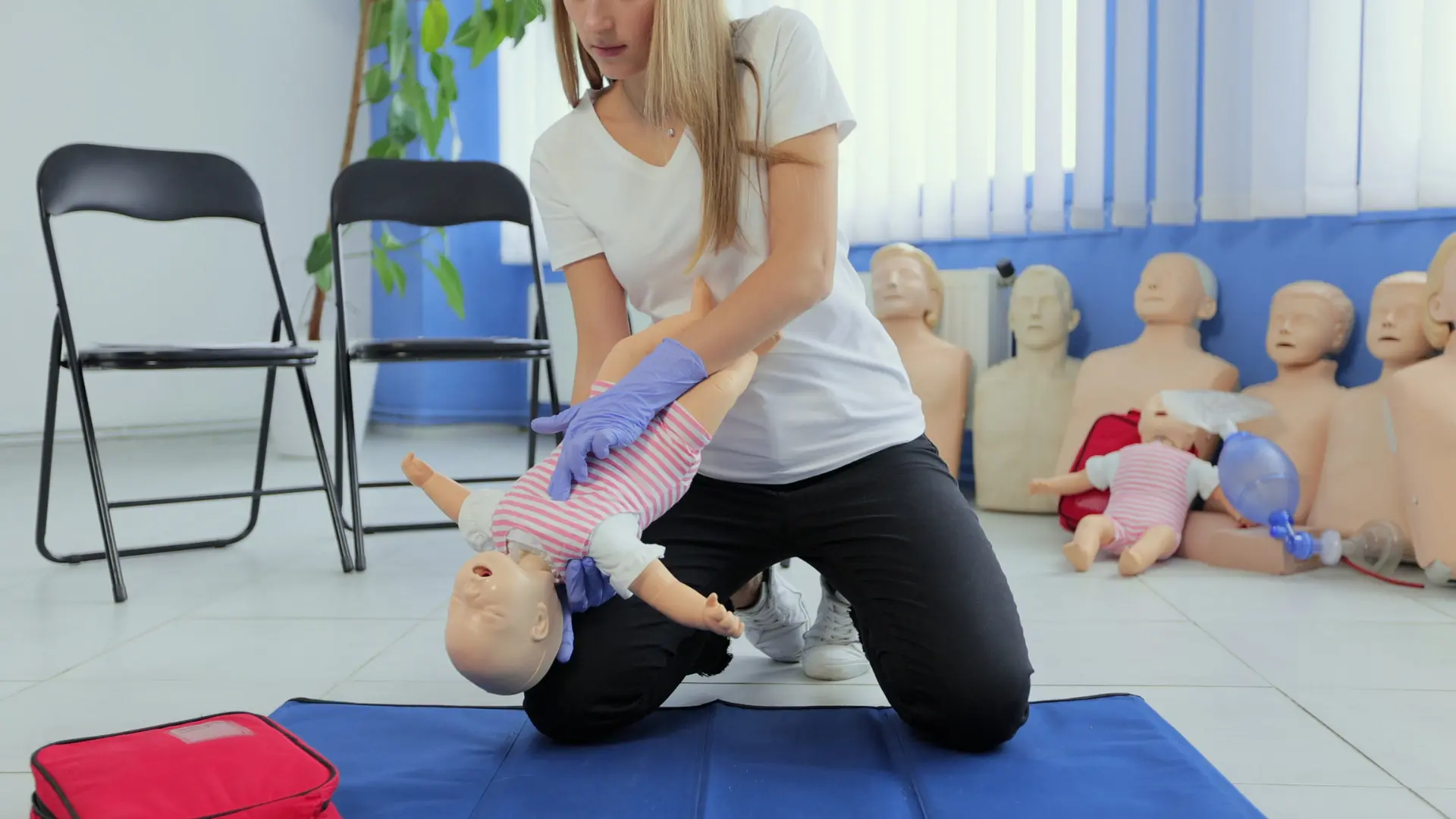
Giving CPR to an Infant

Walking into your first CPR class can feel a bit overwhelming. You know you’re there to learn how to save a life, but the technicalities of “compression-to-breath ratios” and “depth of force” can sound like a lot to manage. Whether you are a new parent, a dedicated teacher, or a workplace safety officer, understanding the nuances of Adult, Child, and Infant CPR is the cornerstone of emergency preparedness.

In this guide, we’ll pull back the curtain on what actually happens during a certification course. You will learn how the techniques shift based on the size of the victim, how to use life-saving technology like an AED, and why “hands-on” practice is the only way to truly gain confidence. By the end of this post, you’ll see that while the steps are specific, they are entirely masterable for anyone willing to learn.

Why do techniques differ for Adult, Child, and Infant CPR?

The most common question students ask is why we can’t just use the same method for everyone. The answer lies in human physiology. An adult’s skeletal structure is rigid and requires significant force to compress the chest enough to circulate blood. Conversely, an infant’s bones are still developing and very flexible; using adult-level force could cause internal damage.

In a professional CPR class, you’ll learn that “Adult” generally refers to anyone who has reached puberty, “Child” is from age one to puberty, and “Infant” is anyone under one year old. Your instructor will show you how to quickly “size up” a victim to determine which protocol to use. The goal is always the same—to act as a manual pump for the heart—but the tools (your hands, fingers, and breath) must be calibrated to the victim.

What are the specific steps for Adult CPR training?

Adult CPR is the foundation of most classes. Because cardiac arrest in adults is often caused by a heart issue, the focus is on high-quality chest compressions to keep oxygenated blood moving to the brain.

In class, you will practice:

  • Scene Safety and Assessment: Learning how to check if the environment is safe for you and the victim before you begin.
  • Chest Compressions: Using two hands, interlocked, in the center of the chest. You’ll learn to push down at least 2 inches at a rate of 100 to 120 beats per minute (think of the rhythm of “Stayin’ Alive”).
  • Rescue Breaths: Mastering the head-tilt/chin-lift maneuver to open the airway and delivering two breaths that make the chest visibly rise.
  • The 30:2 Ratio: Hard-coding the cycle of 30 compressions followed by 2 breaths into your muscle memory.

How does Child CPR differ from Adult CPR?

When it comes to children, the emergency is often respiratory-based (like drowning or choking) rather than a primary heart problem. This makes the “rescue breath” portion of the training particularly vital.

During the “Child” module of your class, you will focus on:

  • One-Handed vs. Two-Handed Compressions: Depending on the size of the child, you may only need the heel of one hand to reach the required 2-inch depth.
  • Modified Force: You’ll practice pressing down about one-third the depth of the chest, ensuring you aren’t using the full weight of your upper body as you would for an adult.
  • Prevention and Recognition: Instructors often touch on common childhood emergencies and how to spot the signs of respiratory distress before the heart stops.

What is included in Infant CPR instruction?

Infant CPR is perhaps the most delicate part of the course. It requires a high level of precision because you are working with a very small surface area.

What you will practice on infant manikins:

  • The Two-Finger Technique: Instead of using your palms, you use two fingers (or two thumbs with the hands-encircling technique) in the center of the chest.
  • 1.5 Inch Depth: Learning the “feel” of a shallower compression.
  • Puffs, Not Breaths: Because an infant’s lungs are small, you don’t give a full breath. You provide “puffs” of air using your cheeks, covering both the infant’s nose and mouth with your mouth to create a seal.
  • Response Checks: Instead of shaking the shoulders, you’ll learn to flick the bottom of the baby’s foot to check for responsiveness.

How do we learn to use an AED for all ages?

An Automated External Defibrillator (AED) is a device that can literally restart a heart. Most modern Adult, Child, and Infant CPR classes include a dedicated AED module because using one along with CPR can more than double the victim’s chance of survival.

You will learn:

  • Device Operation: How to turn the device on and follow the voice prompts (it tells you exactly what to do).
  • Pad Placement: Where to place the adhesive pads on an adult’s chest versus a child’s or infant’s chest.
  • Pediatric Settings: How to use “pediatric pads” or a “child key” to reduce the energy of the shock for smaller victims.
  • Clearance: The importance of making sure no one is touching the victim when the shock is delivered.

What are the choking relief maneuvers covered in class?

Choking is a leading cause of accidental death, especially in children and the elderly. A comprehensive class will teach you how to clear an airway for every age group.

  • For Adults and Children: You will practice the abdominal thrust (Heimlich Maneuver), learning exactly where to place your fists to create the necessary upward pressure.
  • For Infants: You will learn the “5 back blows and 5 chest thrusts” method. This involves supporting the infant face-down on your forearm to let gravity help clear the obstruction.
  • Self-Relief: Many instructors will also show you how to perform a modified version of these maneuvers on yourself if you are alone and choking.

What should I expect during the hands-on skills test?

To receive your certification, you won’t just watch videos; you have to demonstrate that you can perform the skills.

At CPR Classes Near Me, we prioritize “Practice-While-Watching.” This means you’ll have a manikin in front of you for the duration of the class. You’ll perform cycles of CPR while an instructor watches your form, correcting your hand placement or compression depth in real-time. This real-world application is what builds the “active” knowledge required to stay calm in a crisis.

Conclusion: Your Next Steps toward Preparedness

Learning Adult, Child, and Infant CPR is one of the most selfless and practical skills you can acquire. Whether you’re protecting your own family or fulfilling a requirement for your career, the knowledge gained in these few hours has the potential to change a life’s trajectory. You’ve now seen that the class covers everything from the force of a compression to the nuances of an AED shock.

Don’t wait for an emergency to realize you aren’t prepared. The confidence you need is only a class away.

Ready to gain these life-saving skills? Contact CPR Classes Near Me today to find a certification course that fits your schedule!

FAQ Section

How long does an Adult, Child, and Infant CPR class take?

Most comprehensive classes that cover all three age groups take between 3 and 4 hours to complete. This includes video instruction, hands-on practice, and the final skills assessment. Some “blended” options allow you to do the classroom portion online, reducing the in-person time to about 1 to 2 hours.

Do I need a separate certification for infants and adults?

No, most standard “CPR/AED” or “Healthcare Provider” courses are designed to be “all-ages” certifications. These courses bundle Adult, Child, and Infant CPR into one curriculum so you are prepared for any scenario. Always check the course description to ensure “Pediatric” or “Infant” modules are included.

Is there a written test for CPR certification?

Depending on the certifying body (like the AHA), there may be a short multiple-choice exam at the end of the class. However, the most important part of the process is the “skills check,” where you demonstrate the physical techniques on a manikin to the satisfaction of your instructor.

How often do I need to renew my CPR training?

CPR certifications are typically valid for two years. This is because research shows that CPR skills can degrade over time, and medical guidelines are updated periodically to reflect the latest life-saving science.

Can I hurt someone by performing CPR?

While it is possible to crack a rib during high-quality compressions, it is important to remember that the person is clinically dead if their heart has stopped. A cracked rib can heal; brain death from lack of oxygen cannot. Training helps you apply the correct amount of force to be effective while minimizing unnecessary injury.

CPR vs First Aid: Which Class Should You Take First?

When an emergency happens, every second counts. But if you are standing on the sidelines wondering what to do, those seconds can feel like hours. You know you want to be prepared, but as you look through course listings, you might find yourself stuck: Should you take a CPR class or a First Aid class first?

The truth is that while both sets of skills fall under the umbrella of “emergency response,” they serve very different purposes. One focuses on keeping the heart pumping, while the other focuses on treating injuries and managing sudden illnesses. Choosing the right one—or choosing both—depends on your job requirements and your personal goals for safety.

In this guide, we will break down the essential differences between CPR and First Aid, explore which one you should prioritize, and explain how you can master both in a single afternoon.

What is the Difference Between CPR and First Aid?

At its simplest, CPR is a life-saving procedure used when someone’s heart has stopped (cardiac arrest). First Aid is a broader term for the immediate care given to a person who is injured or suddenly becomes ill.

When you take a CPR class, you are learning how to become a temporary “mechanical heart.” You learn the rhythm of chest compressions and the technique for rescue breaths to keep oxygenated blood flowing to the brain. Without CPR, a person in cardiac arrest can suffer permanent brain damage in as little as four minutes.

First Aid, on the other hand, covers a vast range of scenarios that don’t necessarily involve the heart stopping. This includes treating heavy bleeding, cooling a burn, stabilizing a broken bone, or helping someone having a severe allergic reaction. While First Aid can save lives (like stopping a major bleed), it is often about preventing a situation from getting worse until professional help arrives.

Is CPR Included in a First Aid Class?

This is a common point of confusion for many students. While many people use the terms interchangeably, they are distinct certifications. However, at CPR Classes Near Me, we often bundle them together because they work hand-in-hand.

In a standalone First Aid course, the focus is strictly on trauma and medical emergencies like seizures, poisoning, or heatstroke. You might talk about when to start CPR, but you won’t necessarily get the hands-on practice needed for certification.

In a combined CPR and First Aid class, you get the best of both worlds. You spend half the time on the floor practicing high-quality compressions on manikins and the other half learning how to bandage wounds or use an EpiPen. If you are looking for a “one and done” solution for your employer, the combined course is almost always the best choice.

Which Certification Should You Get First?

If you are forced to choose just one to start with, the answer usually depends on your environment. However, for most people, CPR is the priority.

Cardiac arrest is one of the leading causes of death worldwide. Because the window for survival is so small, having the “hard” skill of CPR is often seen as the most critical tool in a rescuer’s toolkit. Most employers—especially in healthcare, education, and childcare—require CPR certification as their baseline safety standard.

If you are a healthcare professional, such as a nurse or EMT, you will likely start with a Basic Life Support (BLS) class. This is a professional-level CPR course that goes deeper into team dynamics and advanced airway management. For everyone else, a standard CPR and AED course is the perfect foundation.

Who Needs CPR Certification More Than First Aid?

While everyone can benefit from both, some roles have a higher demand for CPR specifically. If you work in a high-stress environment where the risk of a cardiovascular event is present, CPR is your primary focus.

Healthcare workers are the obvious group, but this also includes personal trainers, coaches, and lifeguards. These professionals are often in charge of individuals who are physically exerting themselves, which can trigger underlying heart conditions. In these cases, knowing how to use an Automated External Defibrillator (AED) and perform compressions is more likely to be used than wound care.

That said, if you work in a high-risk physical environment like construction, electrical work, or manufacturing, First Aid becomes equally important. In these fields, injuries like falls, cuts, and burns are statistically more frequent than heart attacks.

Can I Take Both CPR and First Aid at the Same Time?

Yes, and this is actually the recommended path for most people. Taking a combined class ensures that you don’t have gaps in your knowledge. For example, if you encounter a victim of a severe car accident, you may need First Aid to stop a bleed, followed immediately by CPR if they lose consciousness and their heart stops.

At our Austin training site and our locations across the country, we offer an integrated CPR, AED, and First Aid course. This 4-hour session covers everything from adult and infant CPR to choking relief and trauma care. The benefit of taking them together is that you see how the skills flow into one another.

By combining the courses, you also save time and money. Rather than taking two separate classes on different weekends, you can complete all your requirements in a single afternoon and walk away with your American Heart Association (AHA) eCard the same day.

How Long Do These Certifications Last?

Both CPR and First Aid certifications from the American Heart Association are valid for two years. This two-year window is industry-standard because life-saving skills are “perishable.” If you don’t use them, you tend to forget the specific compression depths or the steps for treating shock.

When your two-year mark approaches, you don’t necessarily have to take a different “renewal” class. You simply sign up for the same in-person course to refresh your skills, learn any updated guidelines from the AHA, and prove your competency to an instructor.

Staying current is vital. Medical research evolves, and the techniques we used ten years ago have been refined to be more effective today. Renewing every two years ensures you are providing the best possible care based on the latest science.

Why Choose In-Person Training Over Online-Only Courses?

In your search for “CPR classes near me,” you will likely find websites offering 100% online certification for a very low price. While these might seem tempting, they often fail to meet employer and OSHA requirements.

CPR and First Aid are physical skills. You cannot truly learn the “feel” of a chest compression or the pressure needed for a tourniquet by clicking a mouse. Most reputable employers—especially in Texas and throughout the U.S.—require an in-person skills check to verify that you can actually perform the techniques.

Our classes are led by certified AHA instructors who provide real-time feedback. If your compressions aren’t deep enough, or if you’re leaning on the chest, an instructor will correct you on the spot. This hands-on experience is what builds the confidence you need to act in a real emergency.

What Should I Expect in a Combined Class?

When you walk into a CPR and First Aid class, expect to be active. You won’t just be sitting in a chair watching videos. You will be on the floor working with manikins and practicing with AED trainers.

The course is structured to be scannable and easy to follow. You will cover:

  • High-Quality CPR: Learning the correct rate and depth for adults, children, and infants.
  • AED Use: Learning how to power on and follow the voice prompts of a defibrillator.
  • Choking Relief: Techniques for clearing an airway for all ages.
  • Medical Emergencies: Recognizing signs of heart attack, stroke, and allergic reactions.
  • Injury Management: Bandaging, splinting, and treating environmental emergencies like heat exhaustion.

The goal is to leave the classroom feeling empowered, not overwhelmed. We keep the tone business casual and conversational so that the information sticks.

Ready to Get Certified?

Choosing between CPR and First Aid doesn’t have to be a difficult decision. If you want to be fully prepared for any emergency—whether it’s a heart attack at the gym or a bad cut in the kitchen—the combined course is your best path forward.

At CPR Classes Near Me, we specialize in providing high-quality, AHA-compliant training that fits your schedule. Whether you are a teacher in Austin needing to meet state requirements or a corporate team looking to improve workplace safety, we are here to help.

Don’t wait for an emergency to realize you aren’t prepared. Contact CPR Classes Near Me today to find a class in Austin or at one of our many locations nationwide. Gain the skills, get your same-day certification, and be the person who knows what to do when it matters most.

Frequently Asked Questions

Which is more important, CPR or First Aid? 

Both are important, but CPR is generally considered more critical because it addresses life-threatening cardiac arrest where the window for survival is only minutes. First Aid addresses a broader range of injuries that are often less immediately fatal but still require urgent care.

Can I get my CPR and First Aid certification on the same day? 

Yes. Most training centers offer a combined CPR and First Aid course that takes approximately 4 hours to complete. You will receive your certification card for both disciplines upon finishing the class.

Do employers prefer one over the other? 

It depends on the industry. Healthcare and fitness industries almost always require CPR/AED or BLS. Construction, daycare, and manufacturing industries usually require a combination of both CPR and First Aid to comply with OSHA standards.

How long does a combined CPR and First Aid class take? 

A comprehensive, in-person class typically takes about 3.5 to 4 hours. This includes video instruction, hands-on practice, and the skills testing required for your American Heart Association eCard.

Is there an age limit for taking these classes? 

There is no minimum age requirement to learn CPR or First Aid. As long as a student can physically perform the compressions and follow the course material, they can become certified.

What is the “eCard” I receive after class? 

An eCard is the official digital certification issued by the American Heart Association. It is sent via email and can be printed or saved to your phone. It is the most widely accepted form of certification by employers nationwide.

Does CPR Certification Include AED Training? Everything You Need to Know

CPR Classes Near Me Austin

Sudden cardiac arrest doesn’t give you a warning. One moment, everything is fine; the next, a life is on the line. When every second counts, knowing how to perform CPR is vital, but is it enough? Many people wonder if signing up for a CPR class will also give them the skills to operate an Automated External Defibrillator (AED).

The short answer is: Yes, modern CPR certification almost always includes AED training. In fact, the two skills are so closely linked that most major certifying bodies, like the American Heart Association (AHA) and the Red Cross, combine them into a single curriculum.

In this guide, we’ll dive deep into why these two skills are taught together, what you can expect from a course, and how to get certified in Austin, Texas.

Is AED training always part of a CPR course?

In the modern world of emergency medical training, CPR and AED are essentially a packaged deal. Whether you are taking a course for a workplace requirement or just to be a prepared citizen, you will find that “CPR/AED” is the standard title for most certifications.

Decades ago, AEDs were complicated devices reserved for paramedics and doctors. Today, they are designed for the public. Because an AED is the only way to stop a chaotic heart rhythm during cardiac arrest, training organizations realized that teaching CPR without teaching how to use an AED was leaving out half of the solution.

When you enroll in a course at a location like CPR Classes Near Me in Austin, you aren’t just learning to push on a chest; you are learning to integrate technology that saves lives.

Why are CPR and AED skills taught together?

Think of CPR and an AED as two halves of a whole. CPR (Cardiopulmonary Resuscitation) is a manual process. When you perform chest compressions, you are acting as a manual pump for the victim’s heart, keeping oxygen-rich blood moving to the brain and vital organs.

However, CPR alone rarely “restarts” the heart. That is where the AED comes in. An AED is a smart device that can analyze the heart’s rhythm and, if necessary, deliver an electric shock to reset the heart’s electrical system.

  • The Survival Gap: Without an AED, the chance of surviving cardiac arrest drops by about 10% for every minute that passes.
  • The Synergy: CPR keeps the victim “viable” by providing blood flow, while the AED works to fix the underlying electrical problem.
  • Confidence: Learning them together ensures you don’t freeze when you see an AED cabinet on a wall in a gym or airport.

What specific AED skills will I learn in class?

Many people are intimidated by the idea of “shocking” someone, but AED training is designed to remove that fear. In a certified class, you will practice with a “trainer” AED—a device that looks and sounds exactly like the real thing but doesn’t actually deliver a shock.

During your training, you will learn:

  1. How to Power On the Device: This sounds simple, but in a high-stress situation, knowing exactly where the “on” button is matters.
  2. Pad Placement: You’ll learn exactly where to place the adhesive pads on adults, children, and infants to ensure the shock is effective.
  3. Following Voice Prompts: Modern AEDs literally talk to you. You’ll practice listening to the instructions and acting on them.
  4. Safety Precautions: You’ll learn when it’s safe to deliver a shock (e.g., ensuring no one is touching the victim) and how to handle special situations like water or metal surfaces.
  5. Integration: Most importantly, you will learn how to switch between CPR and AED use seamlessly without interrupting compressions for too long.

Do online CPR classes provide adequate AED training?

There is a big difference between watching a video of an AED and actually holding the pads in your hands. While 100% online courses exist, many employers and regulatory bodies (like OSHA) do not accept them because they lack a “skills check.”

A “Blended Learning” or “In-Person” approach is much more effective. In these settings, you get to:

  • Physicality: Feel the click of the pads as you peel them back.
  • Timing: Practice the “rhythm” of pausing compressions while the AED analyzes.
  • Feedback: Have an instructor correct your hand placement or timing in real-time.

For residents in Austin, choosing an in-person session ensures that your certification is not just a piece of paper, but a reflection of actual capability.

Are AEDs safe for untrained people to use?

Yes, AEDs are incredibly safe. They are designed so that even a person with zero training could technically use one successfully. The device will not allow you to shock someone unless it detects a “shockable rhythm.” You cannot accidentally shock someone whose heart is beating normally.

However, certification makes you much faster. In an emergency, speed is everything. A trained person can get an AED pads on and the device analyzing in under a minute, whereas an untrained person might lose precious time reading instructions.

How does the training differ for children and infants?

Cardiac arrest in children and infants is often caused by respiratory issues rather than the primary heart problems seen in adults. Because of this, the training is slightly different.

In a comprehensive CPR/AED course, you will learn:

  • Pediatric Pads: Some AEDs have smaller pads for children under 8 years old or 55 pounds.
  • Attenuators: Some devices use a special “key” or switch to reduce the energy of the shock for a smaller body.
  • Anatomical Placement: Because infants are small, pads are often placed on the front of the chest and the back, rather than both on the front.

Your instructor will guide you through these nuances so you feel prepared to help a person of any age.

How long does a CPR and AED certification last?

Most certifications from reputable providers are valid for two years. The science of resuscitation is constantly evolving. Every five years, the American Heart Association updates its guidelines based on the latest medical research.

Renewing your certification every two years ensures:

  • Your skills stay sharp (muscle memory fades over time).
  • You are up to date on the latest techniques (like the shift toward “Hands-Only CPR” for certain situations).
  • You remain compliant with workplace safety requirements.

Where can I find CPR and AED classes in Austin?

If you are looking for high-quality, hands-on training, CPR Classes Near Me offers convenient locations throughout the Austin area. These classes are designed for everyone from healthcare professionals to teachers, fitness trainers, and parents.

By choosing a local Austin provider, you get instructors who understand the specific needs of the community and provide a supportive environment for learning these life-altering skills.

Conclusion

Enrolling in a CPR certification course is one of the most impactful things you can do for your community and your family. Because modern CPR training almost always includes AED instruction, you will walk away from your class with a complete toolkit for responding to a cardiac emergency.

Don’t wait until an emergency happens to wish you knew what to do. Whether you need certification for work or simply want the peace of mind that comes with being prepared, now is the time to act.

Ready to gain the skills to save a life? 

Contact CPR Classes Near Me today to find an upcoming class in Austin and get certified!

Frequently Asked Questions (FAQ)

Q: Does every CPR class include AED?

A: While nearly all professional and “Heartsaver” level courses include AED training, it is always best to check the course description. If the course is labeled as “CPR/AED,” it is guaranteed to include it.

Q: Can I use an AED if I’m not certified?

A: Yes. Good Samaritan laws in most states protect bystanders who use an AED in good faith to save a life. The device provides voice instructions to help you through the process. However, certification is highly recommended to increase the speed and effectiveness of the rescue.

Q: Is there a separate test for the AED portion?

A: Usually, the AED “test” is integrated into your hands-on CPR skills check. Your instructor will watch to see if you can correctly apply the pads and follow the device’s prompts while maintaining proper CPR cycles.

Q: How much does a CPR/AED class in Austin cost?

A: Prices vary depending on the level of certification (e.g., Basic Life Support for healthcare vs. Heartsaver for the general public), but most classes in Austin range from $60 to $95.

What You Learn in a CPR Certification Course in Austin

CPR training session with students practicing chest compressions on a first aid mannequin

Are you ready to become a lifesaver? Whether you are a healthcare professional needing to meet job requirements or a concerned parent wanting to protect your family, enrolling in a CPR course is one of the most impactful decisions you can make. In Austin, Texas, the standard for excellence in this training is the American Heart Association (AHA) Basic Life Support (BLS) curriculum.

At CPR Classes Near Me, we provide hands-on, engaging training that prepares you for real-world emergencies. But what exactly happens behind the classroom doors? This guide breaks down every skill and concept you will master during your certification journey.

What is the Primary Goal of CPR Training?

The core objective of any CPR course is to teach you how to maintain life when a person’s heart stops beating or they stop breathing. You will learn how to act as a vital bridge between the moment an emergency occurs and the arrival of advanced medical professionals.

By the end of the course, you will understand:

  • How to recognize the signs of sudden cardiac arrest.
  • The importance of high-quality chest compressions.
  • How to use an AED to restart a heart.
  • The legal protections afforded to those who provide aid (Good Samaritan laws).

How Do You Perform High-Quality Chest Compressions?

Not all chest compressions are created equal. To save a life, compressions must be “high-quality.” In an Austin CPR class, you will practice on high-fidelity manikins to master the physical mechanics of resuscitation.

Key attributes of high-quality compressions include:

  1. Correct Depth: For adults, you must compress the chest at least 2 inches.
  2. Proper Rate: You will learn to maintain a rhythm of 100 to 120 compressions per minute (think of the beat to “Stayin’ Alive”).
  3. Chest Recoil: You must allow the chest to fully expand between compressions to let blood flow back into the heart.
  4. Minimizing Interruptions: Every second you aren’t compressing, blood flow stops. You will learn to switch rescuers in under 10 seconds.

How is an Automated External Defibrillator (AED) Used?

Many people are intimidated by medical devices, but an AED is designed for anyone to use. In your Austin certification course, you will get hands-on experience with a trainer AED.

You will learn the step-by-step process:

  • Powering on the device immediately.
  • Applying the pads correctly to a bare chest.
  • Ensuring no one is touching the victim while the device analyzes the heart rhythm.
  • Delivering a shock safely when prompted by the machine.

What are the Differences Between Adult, Child, and Infant CPR?

A “one size fits all” approach doesn’t work in emergency medicine. A baby’s body requires a much different touch than an adult’s. Our Austin classes cover the specific nuances for all age groups.

  • Adults: Use two hands for compressions; compress at least 2 inches deep.
  • Children: Use one or two hands depending on the child’s size; compress about 2 inches deep.
  • Infants: Use two fingers (or the two-thumb technique) in the center of the chest; compress about 1.5 inches deep.

How Do You Save a Choking Victim?

Choking is a leading cause of accidental death, particularly in children and the elderly. Your certification course includes comprehensive training on airway obstructions.

Techniques you will master include:

  • The Abdominal Thrust (Heimlich Maneuver): For responsive adults and children.
  • Back Slaps and Chest Thrusts: The specific protocol for choking infants.
  • Unresponsive Protocol: What to do if the choking victim loses consciousness (transitioning into CPR).

What Ventilation Techniques Will You Master?

While compressions move the blood, ventilation provides the oxygen. You will learn how to use barrier devices to protect yourself while providing rescue breaths.

Skills include:

  • Pocket Masks: How to create a proper seal over the nose and mouth.
  • Bag-Mask Devices (BVM): Often used in healthcare settings, you will learn how two rescuers work together to provide ventilation.
  • The Head-Tilt/Chin-Lift: The anatomical maneuver required to open a victim’s airway.

Why is Team Dynamics Important in a Rescue?

In many emergencies, more than one person is available to help. Learning how to work as a team can significantly improve a victim’s chance of survival.

In the Austin BLS course, you will practice:

  • Assigning clear roles (compressor, AED operator, ventilator).
  • Communicating clearly to avoid confusion.
  • Coordinating smooth transitions to prevent rescuer fatigue.

Who Should Take This CPR Course in Austin?

Our classes are designed to be accessible to everyone. Because we use the AHA curriculum, our certifications are the “Gold Standard” and are accepted by virtually all employers.

Common attendees include:

  • Healthcare Providers: Nurses (RN/LPN), Doctors, Dentists, and Pharmacists.
  • Emergency Personnel: Firefighters, Police, and EMTs.
  • Education & Childcare: Teachers, Coaches, Daycare workers, and Nannies.
  • General Public: Parents, Personal Trainers, Construction Workers, and Flight Attendants.

Why Choose CPR Classes Near Me in Austin?

When searching for “CPR classes near me,” you want a provider that values your time and provides high-quality instruction. We offer several advantages:

  • Same-Day Certification: We issue your AHA BLS eCard the very same day you finish the class.
  • Expert Instructors: Our team is comprised of AHA-certified professionals who make the class engaging and stress-free.
  • Convenient Locations: Serving Austin, Round Rock, Pflugerville, Cedar Park, and the surrounding regions.
  • No Online-Only Risks: Most employers do not accept 100% online certifications. Our in-person training ensures you are actually prepared to save a life.

Conclusion

Learning CPR is more than just checking a box for a job requirement; it is about gaining the confidence to act when every second counts. From mastering the rhythm of chest compressions to the precision of an AED, the skills you learn in our Austin course stay with you for life.

Ready to get certified? Contact CPR Classes Near Me today to find a class time that fits your schedule. Our instructors are ready to help you gain the skills needed to save lives in our community!

Frequently Asked Questions (FAQ)

How long does the CPR certification last?

AHA CPR certifications are valid for two years from the date of issue. After two years, you must take a renewal course to maintain your credentials.

Is this class the same as a BLS renewal?

Yes. In Austin, the in-person BLS course and the renewal class are the same. This ensures that even experienced providers are up-to-date on the latest life-saving guidelines.

How long does the class take?

The full AHA BLS course typically takes about 3.5 to 4 hours to complete, including the video instruction, hands-on practice, and the skills assessment.

Can I get my card the same day?

Yes! At CPR Classes Near Me Austin, we issue your official American Heart Association eCard via email the same day you successfully complete the course.

Is there an age requirement for CPR?

There is no formal minimum age. As long as the individual can physically perform the compressions and pass the written and skills tests, they can become certified.

Do I need a separate First Aid class?

It depends on your job requirements. We offer a “CPR & First Aid” combo class for those who need both certifications, such as teachers or construction workers.

CPR Certification for EMT-Track Students: What You Need First

So, you’ve decided to become an Emergency Medical Technician (EMT). That’s a massive first step toward a rewarding career in public safety and healthcare. You’re probably already looking at EMT programs, checking tuition costs, and maybe even eyeing that high-vis gear. But before you can jump on an ambulance for your first clinical rotation, there is one “gatekeeper” certification you absolutely must have in hand: professional-level CPR.

If you are an EMT-track student, you can’t just walk into any weekend CPR class and call it a day. The requirements for medical professionals are specific, and getting the wrong type of certification can stall your education before it even begins.

In this guide, we’ll break down exactly what type of CPR certification you need, why it’s a non-negotiable prerequisite, and how you can get certified today to stay on track for your EMT career.

Why is CPR certification required before starting EMT school?

You might wonder why you need to be CPR certified before you even start learning how to be an EMT. Isn’t that what the school is for? While EMT programs do teach life-saving skills, they operate on the assumption that you already possess a baseline of professional resuscitation knowledge.

  1. Safety and Liability: EMT students participate in clinical “ride-alongs.” During these shifts, you are part of a working medical team. If a patient goes into cardiac arrest, you must be legally qualified to assist immediately.
  2. Program Prerequisites: Most accredited EMT programs require proof of a valid healthcare-level CPR card as part of the application packet. Without it, your application is often considered incomplete.
  3. National Standards: The National Registry of Emergency Medical Technicians (NREMT) requires all candidates to have a current, professional-level CPR credential to be eligible for the national exam.

What is the difference between standard CPR and BLS for healthcare providers?

This is where many students get tripped up. There are “Heartsaver” or “Layperson” CPR classes, and then there is “Basic Life Support” (BLS). If you are on the EMT track, you must take the BLS version.

Standard CPR (Layperson):

  • Designed for teachers, coaches, and office workers.
  • Focuses on single-rescuer response.
  • Covers basic chest compressions and breaths.

BLS (Basic Life Support):

  • Designed specifically for healthcare professionals and first responders.
  • Includes two-rescuer CPR techniques.
  • Covers the use of a Bag-Valve-Mask (BVM), which is a standard piece of equipment on every ambulance.
  • Includes advanced AED protocols and team dynamics.
  • Covers adult, child, and infant resuscitation.

When you sign up for a class at CPR Classes Near Me, make sure you select the BLS for Healthcare Providers option. This ensures your card will be accepted by your EMT program and the NREMT.

Can I take my CPR certification course entirely online?

In short: No. While the internet is great for learning theory, you cannot learn the physical “muscle memory” of high-quality chest compressions through a computer screen.

  • Hands-on Skills are Mandatory: To earn a certification that is valid for EMT school, you must perform a skills check-off in front of a certified instructor.
  • Hybrid Options: Many students prefer “Blended Learning.” This allows you to complete the lecture and video portions online at your own pace, then visit a local facility for a 1-hour in-person skills session.
  • Employer Acceptance: Almost no ambulance service or hospital will accept an “online-only” CPR card that does not include an in-person skills verification.

What specific topics are covered in an EMT-level CPR class?

A BLS course is more rigorous than a standard class because the stakes are higher for first responders. During your training at CPR Classes Near Me, you will master several critical skills:

  1. High-Quality Chest Compressions: Learning the exact depth (at least 2 inches for adults) and rate (100–120 compressions per minute) required to circulate blood effectively.
  2. Multi-Rescuer Coordination: EMTs never work alone. You’ll learn how to switch roles with a partner seamlessly to prevent fatigue.
  3. Airway Management: You will practice using a Bag-Valve-Mask (BVM) to provide ventilations, a skill you will use frequently as an EMT.
  4. AED Operation: You’ll learn how to integrate an automated external defibrillator into the resuscitation cycle without interrupting compressions.
  5. Choking Relief: Advanced techniques for clearing obstructed airways in conscious and unconscious patients of all ages.

How long does a BLS certification stay valid for students?

For most organizations, including the American Heart Association (AHA) and the Red Cross, a BLS certification is valid for two years.

However, as an EMT student, timing is everything. If your card expires in the middle of your EMT course, you may be barred from attending your clinical rotations. It is highly recommended to get certified shortly before your program begins so that your credential remains active throughout your schooling and into your first few months of employment.

How do I find a class that fits an EMT student’s schedule?

We know that EMT-track students are busy. Many are balancing prerequisites, full-time jobs, or volunteer fire department duties. CPR Classes Near Me offers flexible scheduling to ensure you don’t fall behind.

  • Frequent Classes: We offer sessions throughout the week, including evenings and weekends.
  • Immediate Certification: Most of our students receive their digital provider card the same day they complete their skills session.
  • Convenient Locations: Our goal is to provide training within a short drive of your home or campus.

Is First Aid certification required alongside CPR for EMTs?

While many layperson classes bundle CPR and First Aid together, EMT students usually only need the standalone BLS (CPR) certification.

Why? Because your EMT program is essentially a 150+ hour advanced first aid course. You will spend months learning how to splint limbs, control bleeding, and treat burns in much greater detail than a standard 4-hour First Aid class provides. However, always check your specific program’s “required documents” list to be certain.

What should I bring to my first CPR class?

Preparing for your BLS class is the first step in practicing the professional habits you’ll need as an EMT. Here is what you should have ready:

  • Comfortable Clothing: You will be on your knees on the floor practicing on mannequins. Wear pants and comfortable shoes.
  • Pre-course Work: If you chose a blended learning format, bring a printout or digital copy of your “Part 1” completion certificate.
  • Notebook: While much of the class is hands-on, there are key ratios and numbers (like compression-to-breath ratios) that you’ll want to remember for your EMT entrance exams.

Ready to Start Your EMT Journey?

Becoming an EMT is a commitment to your community and a major career milestone. Don’t let a missing prerequisite hold you back from your goals. At CPR Classes Near Me, we specialize in providing the high-quality, professional-level BLS training that EMT programs demand.

Our instructors are experienced and understand the specific needs of future first responders. We make the process straightforward, fast, and educational, so you can focus on what matters most: passing your EMT course and saving lives.

Contact CPR Classes Near Me today to find a BLS for Healthcare Providers class and take the first step toward your EMT certification!

Frequently Asked Questions

Does a standard CPR card count for EMT school? 

Generally, no. Most EMT programs specifically require “BLS for Healthcare Providers” or “Professional Rescuer” level certification. Standard “Heartsaver” or community CPR cards usually lack the two-rescuer and BVM (Bag-Valve-Mask) training required for medical professionals.

Do I need to be 18 to get CPR certified? 

While you usually need to be 18 to finish an EMT program or work on an ambulance, there is typically no age requirement for CPR certification. Many students get certified at 17 so they are ready to enroll in EMT school the moment they turn 18.

How long does the BLS class take? 

A full in-person BLS class typically takes about 4 to 4.5 hours. If you choose the blended learning option (online lecture + in-person skills), the in-person portion usually takes about 1 to 2 hours.

What happens if I fail the CPR skills test? 

Our instructors at CPR Classes Near Me are dedicated to your success. If you struggle with a specific skill, we will work with you, provide corrections, and allow you to practice until you can perform the skill competently.

Can I use my CPR card in other states? 

Yes. BLS certifications from the American Heart Association or Red Cross are nationally recognized and are valid across the United States.

CPR Certification for CNAs: What to Take and Why

First aid instructor teaching CPR to a group of students using a practice mannequin.

As a Certified Nursing Assistant (CNA), you are the backbone of patient care. You are the one in the room more than anyone else, providing essential support and keeping a watchful eye on patient health. But what happens when a routine check-up turns into a life-threatening emergency?

That is where CPR certification comes in. For CNAs, having a valid, up-to-date certification isn’t just a “nice to have”—it is often a legal and professional requirement. However, not all CPR classes are created equal. If you take the wrong one, you might find yourself back in a classroom because your employer won’t accept it.

In this guide, we’ll break down exactly which course you need, why it matters for your career, and how you can get certified through CPR Classes Near Me to keep your career moving forward.

Is CPR certification mandatory for CNAs?

Yes, in nearly every scenario, CPR certification is a mandatory requirement for both obtaining and maintaining your CNA license. Most state boards of nursing and the Department of Health require proof of certification before you can even begin your clinical rotations.

Beyond the initial licensing, employers—including hospitals, hospice centers, and skilled nursing facilities—require an active certification as a condition of employment. If your card expires, you may be pulled from the schedule until you recertify.

Which CPR course should a CNA take?

The most common mistake CNAs make is signing up for a “General CPR” or “Heartsaver” course. While these are great for the general public or teachers, they do not meet the standards for healthcare professionals.

As a CNA, you should take the Basic Life Support (BLS) for Healthcare Providers course.

The BLS course is more comprehensive than standard CPR and includes:

  • Multi-rescuer coordination: Learning how to work with a team during a code.
  • Bag-Valve Mask (BVM) use: Training on professional ventilation equipment.
  • Advanced AED training: Using a defibrillator in a clinical setting.
  • Critical Thinking: Assessing a patient’s condition rapidly to decide the best course of action.

Most employers specifically look for an American Heart Association (AHA) or Red Cross BLS certification. At CPR Classes Near Me, we focus on providing these high-standard certifications to ensure they are accepted anywhere you choose to work.

Why is BLS preferred over standard CPR?

Standard CPR classes are designed for “lay rescuers”—people like parents, coaches, or office workers. These classes focus on the basics of chest compressions and simple rescue breaths.

As a CNA, you work in a clinical environment where you have access to medical equipment and other trained professionals. BLS training prepares you for this specific environment. It teaches you how to perform high-quality chest compressions while a nurse or doctor handles the airway, and how to switch roles seamlessly to prevent rescuer fatigue.

In short, BLS is the professional version of CPR. It gives you the technical skills required to operate in a fast-paced medical setting.

How does CPR certification benefit a CNA’s career?

While the primary goal is saving lives, being certified offers several professional advantages:

  1. Increased Employability: Having a current BLS card makes you “work-ready.” Employers prefer candidates who don’t need to be sent for training before they can start their first shift.
  2. Professional Confidence: Emergencies are stressful. Knowing you have been trained by the best allows you to remain calm and act decisively when every second counts.
  3. Legal Compliance: Keeping your certification current ensures you stay within the scope of practice defined by your state board, protecting your license.
  4. Better Patient Outcomes: Statistics show that immediate, high-quality CPR provided by the first person on the scene (usually the CNA) significantly increases the chance of a patient’s survival and recovery.

Can I take my CNA CPR certification online?

This is a tricky area. Many websites offer “instant” online CPR certification for a low price. However, most healthcare employers will not accept 100% online certifications.

The American Heart Association and Red Cross require a hands-on skills assessment. You cannot learn the proper depth of a chest compression or the “feel” of an AED by clicking through slides on a computer.

The best option for busy CNAs is a Blended Learning course. This allows you to:

  • Complete the lecture and written exam portion online at your own pace.
  • Schedule a brief, in-person skills session to demonstrate your technique on a manikin.

This “Best of Both Worlds” approach is fully accredited and widely accepted by hospitals and nursing boards.

How often do CNAs need to recertify?

Standard BLS certifications are valid for two years.

It is a good idea to start looking for a renewal class about 60 days before your current card expires. Many CNAs wait until the last minute, only to find that classes are full. If your certification lapses, you may be legally unable to perform your duties, which can lead to missed shifts and lost wages.

What should you expect during the BLS training?

If you are nervous about the class, don’t be! BLS training is designed to be supportive and educational. Here is what a typical session at CPR Classes Near Me looks like:

  • Instructional Videos: You will watch real-world scenarios to see how professional teams handle emergencies.
  • Hands-on Practice: You will spend a significant amount of time practicing on manikins.
  • AED Training: You will learn how to use an automated external defibrillator safely and effectively.
  • Choking Relief: Training includes how to help adults, children, and infants who are choking.
  • Written Exam: A multiple-choice test to ensure you understand the core concepts.
  • Skills Check: An instructor will watch you perform a few rounds of CPR to ensure your form is correct.

Why choose CPR Classes Near Me?

When you are looking for “CPR certification for CNAs,” you want a provider that is local, affordable, and accredited. We specialize in making the certification process as painless as possible for healthcare workers.

  • Certified Instructors: Our trainers are experts who understand the healthcare environment.
  • Flexible Scheduling: We offer morning, evening, and weekend classes to fit a CNA’s demanding schedule.
  • Immediate Cards: In most cases, you receive your digital certification card the same day you finish your skills session.
  • AHA Guidelines: We strictly follow the latest evidence-based guidelines, so you know your training is top-tier.

Conclusion

Obtaining your CPR certification is a milestone in your journey as a CNA. It represents your commitment to patient safety and your readiness to act in a crisis. By choosing the BLS for Healthcare Providers course, you ensure that your credentials will be accepted by any employer and that you have the skills necessary to provide the best possible care.

Don’t wait until your license renewal is due or a job opportunity passes you by. Ensure your skills are sharp and your certification is current.

Contact CPR Classes Near Me today to find a class in your area and take the next step in your healthcare career!

Frequently Asked Questions (FAQ)

Q: Do I need First Aid certification as well as CPR?

A: Most CNAs only need BLS (which covers CPR and AED). However, some home health roles or specific state requirements may ask for a Heartsaver First Aid add-on. It is always best to check your specific job description.

Q: Is BLS the same as CPR?

A: BLS (Basic Life Support) is a type of CPR specifically designed for healthcare professionals. It covers everything in a standard CPR class plus advanced techniques like team dynamics and the use of professional ventilation tools.

Q: How long does the BLS class take?

A: A full in-person BLS class typically takes about 3 to 4 hours. If you choose a blended learning option (online + in-person skills), your in-person time is usually less than an hour.

Q: What happens if I fail the written exam?

A: Don’t worry! Instructors at CPR Classes Near Me are there to help you succeed. If you struggle with a portion of the exam, they will review the material with you, and you can usually retake the test the same day.

Q: Can I use my BLS certification in another state?

A: Yes. Because we provide AHA and Red Cross certifications, your card is recognized nationally. If you move, your BLS certification stays valid until its expiration date.

Same-Day CPR Certification: How It Works (and Who It’s For)

Students performing CPR and ventilation on a training manikin in class

In a world where everything moves at the speed of light, waiting weeks for a certification card to arrive in the mail feels like a relic of the past. Whether you just landed a new job that starts Monday or your current credentials expired yesterday, the pressure to get certified quickly is real.

The good news? You don’t have to wait. Same-day CPR certification has revolutionized how professionals and everyday heroes get trained. At CPR Classes Near Me, we’ve streamlined the process so you can walk in, learn the skills, and walk out with your official American Heart Association (AHA) eCard in your inbox before you even get to your car.

But how exactly does it work, and is it the right choice for you? Let’s dive into the details.

What is same-day CPR certification?

Same-day CPR certification refers to a training format where the student completes all required coursework and hands-on skills assessments in a single day, receiving their official certification immediately upon completion.

Unlike traditional classes that might mail a paper certificate or take days to process paperwork, this modern approach uses the AHA’s digital eCard system. This ensures that as soon as your instructor marks you as “passed” in the system, your credentials are live and verifiable.

How does the same-day certification process work?

The process is designed to be efficient without cutting corners on the quality of training. Most same-day certifications follow one of two paths:

  1. The All-In-Person Method: You attend a scheduled class at a local training center. Over the course of 3 to 4 hours, an expert instructor guides you through videos, lectures, and—most importantly—physical practice on manikins. Once you pass the written (if required) and skills tests, your eCard is issued.
  2. The Blended Learning Method: This is the ultimate “time-saver.” You complete the “book work” and videos online at your own pace. Once finished, you schedule a “Skills Session” that usually lasts only 30 to 60 minutes. Because you’ve already done the theory, you just show up to prove you can do the physical compressions and use an AED.

Who is same-day CPR certification designed for?

While anyone can benefit from a fast turnaround, certain groups find same-day certification particularly vital:

  • Healthcare Professionals: Nurses, doctors, and EMTs often need Basic Life Support (BLS) certification to maintain their licenses. A gap in certification can mean being pulled from a shift.
  • New Hires: Many job offers in childcare, fitness, and construction are “contingent on certification.” Getting certified today means starting your paycheck sooner.
  • Busy Parents and Caregivers: If you only have a small window of childcare or free time, a “one-and-done” session is much more manageable than a multi-day course.
  • Students: Nursing or dental students often realize they need a specific AHA BLS card right before clinical rotations begin.

Is a same-day eCard as valid as a traditional card?

Yes, provided it is an official American Heart Association (AHA) eCard. In fact, most employers now prefer eCards over paper certificates because they are:

  • Tamper-proof: They cannot be easily forged.
  • Easy to Verify: Employers can scan a QR code to see the validity in seconds.
  • Impossible to Lose: Your card is stored digitally; you can download and print it as many times as you need.

At CPR Classes Near Me, we only issue AHA-accredited certifications, which are the gold standard for hospitals, schools, and government agencies nationwide.

Why is hands-on training required for same-day certs?

You might see websites offering “100% Online CPR” in 20 minutes. While these are fast, they are rarely accepted by employers. Why? Because you cannot learn the “muscle memory” of a chest compression by clicking a mouse.

OSHA and the AHA require a physical skills check on a manikin. Same-day certification at a physical location ensures:

  1. Correct Technique: An instructor can tell you if you aren’t pushing hard enough or fast enough.
  2. AED Familiarity: You get to handle a trainer AED, so you aren’t confused by the buttons during a real emergency.
  3. Real-Time Q&A: You can ask questions about specific scenarios, like what to do if the victim is in a confined space.

What should you bring to a same-day class?

To ensure you get your card on the same day, you should come prepared. Here is a quick checklist:

  • Comfortable Clothing: You will be on the floor or leaning over manikins. Wear clothes you can move in.
  • Online Completion Certificate: If you chose the “Blended Learning” route, you must bring the printed or digital certificate showing you finished the online portion.
  • A Valid Email Address: This is how your eCard is delivered. Double-check your spelling when you register!

How long does the certification last?

Regardless of how fast you get it, an AHA CPR or BLS certification is valid for two years. The expiration date will be clearly marked on your eCard. We recommend scheduling your renewal at least 30 days before that date to ensure you never have a lapse in coverage.

What are the benefits of choosing “CPR Classes Near Me”?

Choosing a local, specialized provider offers advantages that national “big box” training centers can’t match:

  • Speed: We focus on efficiency, ensuring you don’t spend a minute longer in class than necessary to master the skills.
  • Expertise: Our instructors are often local healthcare professionals who bring real-world experience to the table.
  • Availability: We offer frequent classes and skills sessions to fit your tight schedule.
  • Instant Gratification: We prioritize the immediate issuance of eCards so you can get back to work.

Conclusion

Same-day CPR certification isn’t just about speed; it’s about providing a path to compliance and confidence that fits into a modern lifestyle. By combining the flexibility of digital eCards with the rigors of hands-on training, you get the best of both worlds: a valid, employer-accepted certification and the ability to save a life starting today.

Don’t let an expired card or a new job requirement slow you down. Get trained, get certified, and get on with your day.

Need your CPR certification today? Contact CPR Classes Near Me now to find an upcoming session and secure your spot!

Frequently Asked Questions (FAQ)

Q: Can I get my CPR certification 100% online?

A: While you can learn the theory online, most employers (especially in healthcare and childcare) require a hands-on skills assessment. A “100% online” certificate without a manikin check is usually rejected by OSHA and the AHA.

Q: How soon will I receive my eCard after the class?

A: At CPR Classes Near Me, we aim to issue eCards immediately following the successful completion of your skills test. Most students have their card in their email inbox before they leave the building.

Q: Is the same-day certification more expensive?

A: Generally, no. The cost of a same-day class is comparable to any other high-quality AHA-accredited course. You are paying for the expertise of the instructor and the official AHA registration.

Q: What if I fail the skills test?

A: Our instructors are dedicated to your success. If you struggle with a specific skill, they will work with you, provide feedback, and allow you to practice until you can perform the technique correctly.

Q: Does my same-day certification include First Aid?

A: This depends on the specific course you register for. We offer BLS for Healthcare Providers, Heartsaver CPR/AED, and Heartsaver First Aid/CPR/AED. Make sure to select the course that meets your specific job requirements.

CPR Certification Near Me: How to Choose the Right Local Class

When a medical emergency strikes, seconds are the difference between a life saved and a tragedy. Whether you are a nurse needing to renew your credentials, a teacher responsible for a classroom, or a new parent wanting peace of mind, finding the right “CPR certification near me” is about more than just checking a box. It is about gaining the confidence to act when it matters most.

With so many providers and acronyms like BLS, AED, and AHA floating around, picking the right course can feel overwhelming. This guide will walk you through everything you need to know to choose the best local class for your specific needs.

Why is it important to choose the right CPR class?

Not all CPR classes are created equal. Choosing the wrong one could mean your employer won’t accept your card, or worse, you might not be properly trained for the specific age group or environment you work in.

Selecting the right class ensures:

  • Job Compliance: You meet the exact requirements of your workplace or licensing board.
  • Skill Mastery: You receive hands-on training tailored to your role.
  • Confidence: You leave the classroom knowing exactly how to use an AED or perform chest compressions on an infant versus an adult.

What is the difference between BLS and Heartsaver CPR?

This is the most common question students ask. The answer depends entirely on your profession.

  1. Basic Life Support (BLS):
    • Who it’s for: Doctors, nurses, EMTs, dentists, and medical students.
    • What you learn: High-quality CPR for all ages, team-based rescue, and the use of advanced equipment like bag-valve masks (BVMs).
  2. Heartsaver CPR AED:
    • Who it’s for: Teachers, coaches, personal trainers, daycare providers, and the general public.
    • What you learn: Fundamental life-saving skills, how to recognize cardiac arrest, and how to use an Automated External Defibrillator (AED).

If you are in healthcare, you almost certainly need BLS. If you are a layperson, Heartsaver is usually the standard.

Is American Heart Association (AHA) better than Red Cross?

Both the American Heart Association (AHA) and the American Red Cross (ARC) provide excellent training, but there are key differences in how they are viewed by employers.

  • AHA (The Gold Standard): The AHA is the world leader in resuscitation research. They write the guidelines that every other organization follows. Because of this, AHA certification is the most widely accepted by hospitals and healthcare facilities nationwide.
  • Red Cross: Often used by community organizations and social services. While reputable, some medical employers strictly require AHA-aligned certification.

At CPR Classes Near Me, we are an AHA Certified Training Site, ensuring your card is recognized by the widest range of employers possible.

Should I choose an online, in-person, or blended learning class?

Technology has changed how we learn, but some skills require a “hands-on” touch.

  • Online-Only: These are often the cheapest and fastest. However, most employers will not accept online-only certification. CPR is a physical skill that requires muscle memory.
  • Blended Learning: You do the “book work” online and then come in for a quick “skills check” with an instructor. This is a great middle ground for busy professionals.
  • In-Person Training: This remains the top-rated way to learn. You get immediate feedback from a certified trainer, you can ask questions in real-time, and you practice on high-tech manikins until you are perfect.

What should I look for in a local training facility?

When searching for “CPR certification near me,” look for these five “must-haves”:

  1. Same-Day Certification: You shouldn’t have to wait weeks for your card. Top providers issue your eCard the same day you finish.
  2. AHA Alignment: Look for the official American Heart Association seal to ensure the curriculum is up-to-date.
  3. Experienced Instructors: You want a trainer who has actually used these skills in the field, like a paramedic or nurse.
  4. Hands-On Equipment: Ensure the class uses modern manikins and AED trainers.
  5. Location and Scheduling: The best class is the one you can actually attend. Look for facilities with multiple locations and flexible weekend or evening times.

How much does a local CPR class typically cost?

Prices vary by location and course type, but here is a general breakdown of what to expect for quality training:

  • AHA BLS Certification: Typically starts around $59.95.
  • CPR & First Aid Combo: Usually starts around $79.95.

Beware of “scam” sites offering $20 certifications. If there is no hands-on skills test, the card is likely not OSHA-compliant and won’t be accepted by your employer.

What are the benefits of getting certified with CPR Classes Near Me?

We pride ourselves on making the CPR certification process as painless as possible. When you choose one of our local classes, you get:

  • Guaranteed Acceptance: Our AHA-certified courses meet the highest national standards.
  • Speed: We offer same-day eCards so you can get back to work immediately.
  • Expertise: Our trainers make the material engaging and easy to remember.
  • Affordability: We offer competitive, discounted rates for individuals and groups.

How often do I need to renew my CPR certification?

Most CPR and BLS certifications are valid for two years. It is a good idea to set a reminder at the 22-month mark to find a renewal class. Techniques and guidelines are updated every few years, so renewing ensures you are using the most effective, life-saving methods currently available.

Conclusion

Choosing the right CPR class doesn’t have to be a headache. By identifying your professional needs (BLS vs. Heartsaver), ensuring the provider is AHA-certified, and opting for a hands-on learning environment, you are setting yourself up for success. Remember, you aren’t just getting a card; you are gaining the ability to save a life.

Ready to get certified? Contact CPR Classes Near Me today to find a local class and get your same-day certification!

Frequently Asked Questions (FAQ)

1. Can I get a CPR card in one day?

Yes. Most in-person classes take between 2 to 4 hours depending on the course type. At CPR Classes Near Me, we issue your official AHA BLS eCard the same day you complete your training.

2. Does my CPR certification cover infants and children?

Standard Heartsaver and BLS courses typically cover adult, child, and infant CPR, as well as choking relief for all age groups. Always check the specific course description to be sure.

3. Is there a written test?

For BLS (Healthcare Provider) classes, there is a written exam and a skills test. For Heartsaver (Layperson) classes, the written test is often optional or replaced by a thorough skills evaluation, depending on the instructor and workplace requirements.

4. What if my card is already expired?

If your card is expired, you simply need to take a full certification or renewal class. There is no penalty for an expired card, but you cannot legally perform duties that require an active certification until you pass a new class.

5. Are AEDs included in the training?

Yes. All modern AHA CPR classes include training on how to use an Automated External Defibrillator (AED), as it is a critical component of the “Chain of Survival.”