Adult, Child, and Infant CPR: What Is Covered in Class?
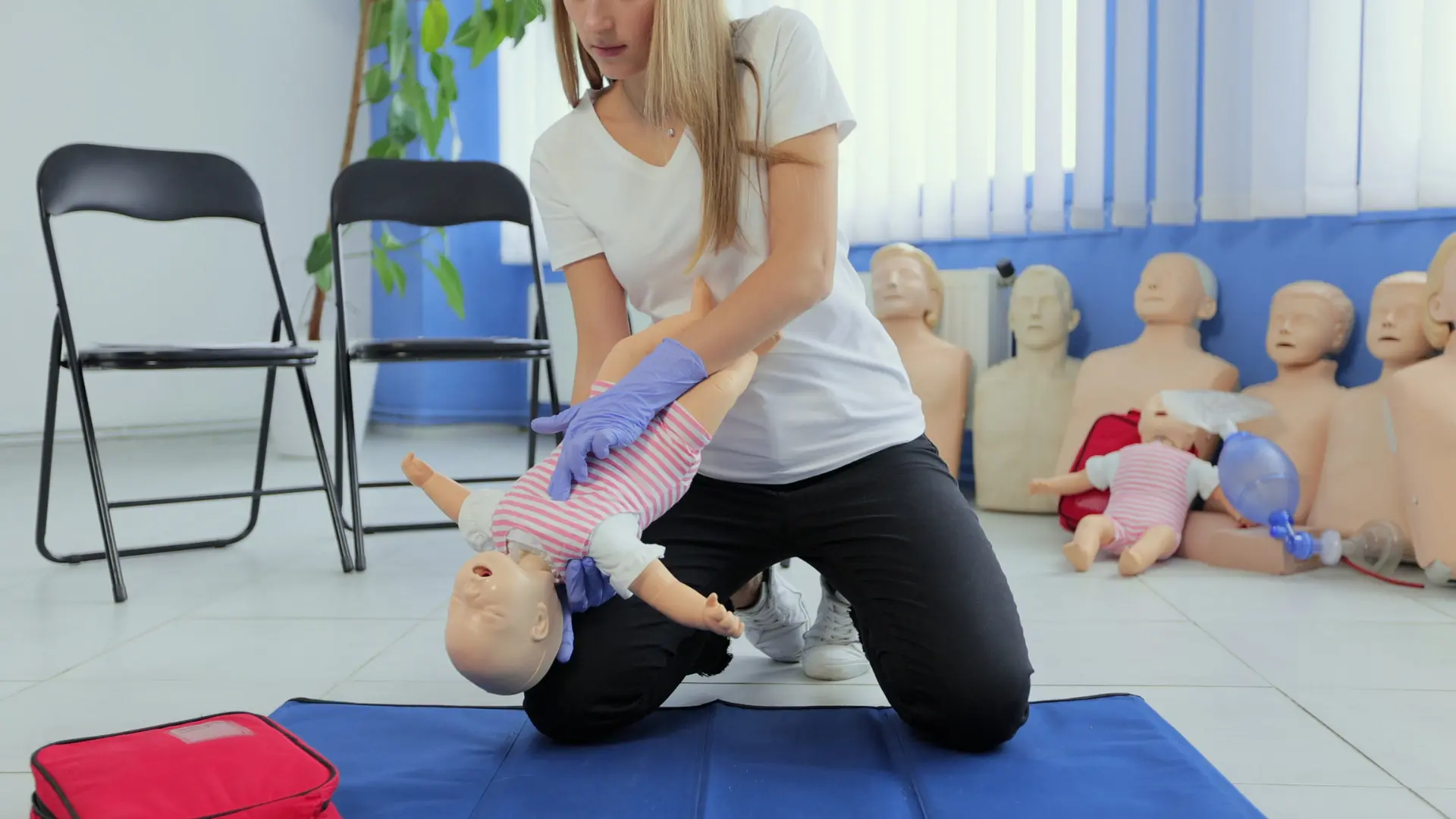
Giving CPR to an Infant

Walking into your first CPR class can feel a bit overwhelming. You know you’re there to learn how to save a life, but the technicalities of “compression-to-breath ratios” and “depth of force” can sound like a lot to manage. Whether you are a new parent, a dedicated teacher, or a workplace safety officer, understanding the nuances of Adult, Child, and Infant CPR is the cornerstone of emergency preparedness.

In this guide, we’ll pull back the curtain on what actually happens during a certification course. You will learn how the techniques shift based on the size of the victim, how to use life-saving technology like an AED, and why “hands-on” practice is the only way to truly gain confidence. By the end of this post, you’ll see that while the steps are specific, they are entirely masterable for anyone willing to learn.

Why do techniques differ for Adult, Child, and Infant CPR?

The most common question students ask is why we can’t just use the same method for everyone. The answer lies in human physiology. An adult’s skeletal structure is rigid and requires significant force to compress the chest enough to circulate blood. Conversely, an infant’s bones are still developing and very flexible; using adult-level force could cause internal damage.

In a professional CPR class, you’ll learn that “Adult” generally refers to anyone who has reached puberty, “Child” is from age one to puberty, and “Infant” is anyone under one year old. Your instructor will show you how to quickly “size up” a victim to determine which protocol to use. The goal is always the same—to act as a manual pump for the heart—but the tools (your hands, fingers, and breath) must be calibrated to the victim.

What are the specific steps for Adult CPR training?

Adult CPR is the foundation of most classes. Because cardiac arrest in adults is often caused by a heart issue, the focus is on high-quality chest compressions to keep oxygenated blood moving to the brain.

In class, you will practice:

  • Scene Safety and Assessment: Learning how to check if the environment is safe for you and the victim before you begin.
  • Chest Compressions: Using two hands, interlocked, in the center of the chest. You’ll learn to push down at least 2 inches at a rate of 100 to 120 beats per minute (think of the rhythm of “Stayin’ Alive”).
  • Rescue Breaths: Mastering the head-tilt/chin-lift maneuver to open the airway and delivering two breaths that make the chest visibly rise.
  • The 30:2 Ratio: Hard-coding the cycle of 30 compressions followed by 2 breaths into your muscle memory.

How does Child CPR differ from Adult CPR?

When it comes to children, the emergency is often respiratory-based (like drowning or choking) rather than a primary heart problem. This makes the “rescue breath” portion of the training particularly vital.

During the “Child” module of your class, you will focus on:

  • One-Handed vs. Two-Handed Compressions: Depending on the size of the child, you may only need the heel of one hand to reach the required 2-inch depth.
  • Modified Force: You’ll practice pressing down about one-third the depth of the chest, ensuring you aren’t using the full weight of your upper body as you would for an adult.
  • Prevention and Recognition: Instructors often touch on common childhood emergencies and how to spot the signs of respiratory distress before the heart stops.

What is included in Infant CPR instruction?

Infant CPR is perhaps the most delicate part of the course. It requires a high level of precision because you are working with a very small surface area.

What you will practice on infant manikins:

  • The Two-Finger Technique: Instead of using your palms, you use two fingers (or two thumbs with the hands-encircling technique) in the center of the chest.
  • 1.5 Inch Depth: Learning the “feel” of a shallower compression.
  • Puffs, Not Breaths: Because an infant’s lungs are small, you don’t give a full breath. You provide “puffs” of air using your cheeks, covering both the infant’s nose and mouth with your mouth to create a seal.
  • Response Checks: Instead of shaking the shoulders, you’ll learn to flick the bottom of the baby’s foot to check for responsiveness.

How do we learn to use an AED for all ages?

An Automated External Defibrillator (AED) is a device that can literally restart a heart. Most modern Adult, Child, and Infant CPR classes include a dedicated AED module because using one along with CPR can more than double the victim’s chance of survival.

You will learn:

  • Device Operation: How to turn the device on and follow the voice prompts (it tells you exactly what to do).
  • Pad Placement: Where to place the adhesive pads on an adult’s chest versus a child’s or infant’s chest.
  • Pediatric Settings: How to use “pediatric pads” or a “child key” to reduce the energy of the shock for smaller victims.
  • Clearance: The importance of making sure no one is touching the victim when the shock is delivered.

What are the choking relief maneuvers covered in class?

Choking is a leading cause of accidental death, especially in children and the elderly. A comprehensive class will teach you how to clear an airway for every age group.

  • For Adults and Children: You will practice the abdominal thrust (Heimlich Maneuver), learning exactly where to place your fists to create the necessary upward pressure.
  • For Infants: You will learn the “5 back blows and 5 chest thrusts” method. This involves supporting the infant face-down on your forearm to let gravity help clear the obstruction.
  • Self-Relief: Many instructors will also show you how to perform a modified version of these maneuvers on yourself if you are alone and choking.

What should I expect during the hands-on skills test?

To receive your certification, you won’t just watch videos; you have to demonstrate that you can perform the skills.

At CPR Classes Near Me, we prioritize “Practice-While-Watching.” This means you’ll have a manikin in front of you for the duration of the class. You’ll perform cycles of CPR while an instructor watches your form, correcting your hand placement or compression depth in real-time. This real-world application is what builds the “active” knowledge required to stay calm in a crisis.

Conclusion: Your Next Steps toward Preparedness

Learning Adult, Child, and Infant CPR is one of the most selfless and practical skills you can acquire. Whether you’re protecting your own family or fulfilling a requirement for your career, the knowledge gained in these few hours has the potential to change a life’s trajectory. You’ve now seen that the class covers everything from the force of a compression to the nuances of an AED shock.

Don’t wait for an emergency to realize you aren’t prepared. The confidence you need is only a class away.

Ready to gain these life-saving skills? Contact CPR Classes Near Me today to find a certification course that fits your schedule!

FAQ Section

How long does an Adult, Child, and Infant CPR class take?

Most comprehensive classes that cover all three age groups take between 3 and 4 hours to complete. This includes video instruction, hands-on practice, and the final skills assessment. Some “blended” options allow you to do the classroom portion online, reducing the in-person time to about 1 to 2 hours.

Do I need a separate certification for infants and adults?

No, most standard “CPR/AED” or “Healthcare Provider” courses are designed to be “all-ages” certifications. These courses bundle Adult, Child, and Infant CPR into one curriculum so you are prepared for any scenario. Always check the course description to ensure “Pediatric” or “Infant” modules are included.

Is there a written test for CPR certification?

Depending on the certifying body (like the AHA), there may be a short multiple-choice exam at the end of the class. However, the most important part of the process is the “skills check,” where you demonstrate the physical techniques on a manikin to the satisfaction of your instructor.

How often do I need to renew my CPR training?

CPR certifications are typically valid for two years. This is because research shows that CPR skills can degrade over time, and medical guidelines are updated periodically to reflect the latest life-saving science.

Can I hurt someone by performing CPR?

While it is possible to crack a rib during high-quality compressions, it is important to remember that the person is clinically dead if their heart has stopped. A cracked rib can heal; brain death from lack of oxygen cannot. Training helps you apply the correct amount of force to be effective while minimizing unnecessary injury.

CPR vs First Aid: Which Class Should You Take First?

When an emergency happens, every second counts. But if you are standing on the sidelines wondering what to do, those seconds can feel like hours. You know you want to be prepared, but as you look through course listings, you might find yourself stuck: Should you take a CPR class or a First Aid class first?

The truth is that while both sets of skills fall under the umbrella of “emergency response,” they serve very different purposes. One focuses on keeping the heart pumping, while the other focuses on treating injuries and managing sudden illnesses. Choosing the right one—or choosing both—depends on your job requirements and your personal goals for safety.

In this guide, we will break down the essential differences between CPR and First Aid, explore which one you should prioritize, and explain how you can master both in a single afternoon.

What is the Difference Between CPR and First Aid?

At its simplest, CPR is a life-saving procedure used when someone’s heart has stopped (cardiac arrest). First Aid is a broader term for the immediate care given to a person who is injured or suddenly becomes ill.

When you take a CPR class, you are learning how to become a temporary “mechanical heart.” You learn the rhythm of chest compressions and the technique for rescue breaths to keep oxygenated blood flowing to the brain. Without CPR, a person in cardiac arrest can suffer permanent brain damage in as little as four minutes.

First Aid, on the other hand, covers a vast range of scenarios that don’t necessarily involve the heart stopping. This includes treating heavy bleeding, cooling a burn, stabilizing a broken bone, or helping someone having a severe allergic reaction. While First Aid can save lives (like stopping a major bleed), it is often about preventing a situation from getting worse until professional help arrives.

Is CPR Included in a First Aid Class?

This is a common point of confusion for many students. While many people use the terms interchangeably, they are distinct certifications. However, at CPR Classes Near Me, we often bundle them together because they work hand-in-hand.

In a standalone First Aid course, the focus is strictly on trauma and medical emergencies like seizures, poisoning, or heatstroke. You might talk about when to start CPR, but you won’t necessarily get the hands-on practice needed for certification.

In a combined CPR and First Aid class, you get the best of both worlds. You spend half the time on the floor practicing high-quality compressions on manikins and the other half learning how to bandage wounds or use an EpiPen. If you are looking for a “one and done” solution for your employer, the combined course is almost always the best choice.

Which Certification Should You Get First?

If you are forced to choose just one to start with, the answer usually depends on your environment. However, for most people, CPR is the priority.

Cardiac arrest is one of the leading causes of death worldwide. Because the window for survival is so small, having the “hard” skill of CPR is often seen as the most critical tool in a rescuer’s toolkit. Most employers—especially in healthcare, education, and childcare—require CPR certification as their baseline safety standard.

If you are a healthcare professional, such as a nurse or EMT, you will likely start with a Basic Life Support (BLS) class. This is a professional-level CPR course that goes deeper into team dynamics and advanced airway management. For everyone else, a standard CPR and AED course is the perfect foundation.

Who Needs CPR Certification More Than First Aid?

While everyone can benefit from both, some roles have a higher demand for CPR specifically. If you work in a high-stress environment where the risk of a cardiovascular event is present, CPR is your primary focus.

Healthcare workers are the obvious group, but this also includes personal trainers, coaches, and lifeguards. These professionals are often in charge of individuals who are physically exerting themselves, which can trigger underlying heart conditions. In these cases, knowing how to use an Automated External Defibrillator (AED) and perform compressions is more likely to be used than wound care.

That said, if you work in a high-risk physical environment like construction, electrical work, or manufacturing, First Aid becomes equally important. In these fields, injuries like falls, cuts, and burns are statistically more frequent than heart attacks.

Can I Take Both CPR and First Aid at the Same Time?

Yes, and this is actually the recommended path for most people. Taking a combined class ensures that you don’t have gaps in your knowledge. For example, if you encounter a victim of a severe car accident, you may need First Aid to stop a bleed, followed immediately by CPR if they lose consciousness and their heart stops.

At our Austin training site and our locations across the country, we offer an integrated CPR, AED, and First Aid course. This 4-hour session covers everything from adult and infant CPR to choking relief and trauma care. The benefit of taking them together is that you see how the skills flow into one another.

By combining the courses, you also save time and money. Rather than taking two separate classes on different weekends, you can complete all your requirements in a single afternoon and walk away with your American Heart Association (AHA) eCard the same day.

How Long Do These Certifications Last?

Both CPR and First Aid certifications from the American Heart Association are valid for two years. This two-year window is industry-standard because life-saving skills are “perishable.” If you don’t use them, you tend to forget the specific compression depths or the steps for treating shock.

When your two-year mark approaches, you don’t necessarily have to take a different “renewal” class. You simply sign up for the same in-person course to refresh your skills, learn any updated guidelines from the AHA, and prove your competency to an instructor.

Staying current is vital. Medical research evolves, and the techniques we used ten years ago have been refined to be more effective today. Renewing every two years ensures you are providing the best possible care based on the latest science.

Why Choose In-Person Training Over Online-Only Courses?

In your search for “CPR classes near me,” you will likely find websites offering 100% online certification for a very low price. While these might seem tempting, they often fail to meet employer and OSHA requirements.

CPR and First Aid are physical skills. You cannot truly learn the “feel” of a chest compression or the pressure needed for a tourniquet by clicking a mouse. Most reputable employers—especially in Texas and throughout the U.S.—require an in-person skills check to verify that you can actually perform the techniques.

Our classes are led by certified AHA instructors who provide real-time feedback. If your compressions aren’t deep enough, or if you’re leaning on the chest, an instructor will correct you on the spot. This hands-on experience is what builds the confidence you need to act in a real emergency.

What Should I Expect in a Combined Class?

When you walk into a CPR and First Aid class, expect to be active. You won’t just be sitting in a chair watching videos. You will be on the floor working with manikins and practicing with AED trainers.

The course is structured to be scannable and easy to follow. You will cover:

  • High-Quality CPR: Learning the correct rate and depth for adults, children, and infants.
  • AED Use: Learning how to power on and follow the voice prompts of a defibrillator.
  • Choking Relief: Techniques for clearing an airway for all ages.
  • Medical Emergencies: Recognizing signs of heart attack, stroke, and allergic reactions.
  • Injury Management: Bandaging, splinting, and treating environmental emergencies like heat exhaustion.

The goal is to leave the classroom feeling empowered, not overwhelmed. We keep the tone business casual and conversational so that the information sticks.

Ready to Get Certified?

Choosing between CPR and First Aid doesn’t have to be a difficult decision. If you want to be fully prepared for any emergency—whether it’s a heart attack at the gym or a bad cut in the kitchen—the combined course is your best path forward.

At CPR Classes Near Me, we specialize in providing high-quality, AHA-compliant training that fits your schedule. Whether you are a teacher in Austin needing to meet state requirements or a corporate team looking to improve workplace safety, we are here to help.

Don’t wait for an emergency to realize you aren’t prepared. Contact CPR Classes Near Me today to find a class in Austin or at one of our many locations nationwide. Gain the skills, get your same-day certification, and be the person who knows what to do when it matters most.

Frequently Asked Questions

Which is more important, CPR or First Aid? 

Both are important, but CPR is generally considered more critical because it addresses life-threatening cardiac arrest where the window for survival is only minutes. First Aid addresses a broader range of injuries that are often less immediately fatal but still require urgent care.

Can I get my CPR and First Aid certification on the same day? 

Yes. Most training centers offer a combined CPR and First Aid course that takes approximately 4 hours to complete. You will receive your certification card for both disciplines upon finishing the class.

Do employers prefer one over the other? 

It depends on the industry. Healthcare and fitness industries almost always require CPR/AED or BLS. Construction, daycare, and manufacturing industries usually require a combination of both CPR and First Aid to comply with OSHA standards.

How long does a combined CPR and First Aid class take? 

A comprehensive, in-person class typically takes about 3.5 to 4 hours. This includes video instruction, hands-on practice, and the skills testing required for your American Heart Association eCard.

Is there an age limit for taking these classes? 

There is no minimum age requirement to learn CPR or First Aid. As long as a student can physically perform the compressions and follow the course material, they can become certified.

What is the “eCard” I receive after class? 

An eCard is the official digital certification issued by the American Heart Association. It is sent via email and can be printed or saved to your phone. It is the most widely accepted form of certification by employers nationwide.