Why Infant & Child CPR Skills Matter for Educators

Closeup of students practicing CPR chest compression on dummy.

As an educator, your daily responsibilities extend far beyond lesson plans, grading rubrics, and standardized testing. You are often the first line of defense when a student’s health or safety is suddenly compromised in the classroom. This is exactly why mastering infant and child CPR skills is not just a resume booster—it is an absolute necessity for anyone entrusted with the care of children. Whether you teach in a bustling daycare center or manage a middle school gym class, emergencies strike without warning.

As we evaluate school safety standards for the 2026 academic year, the importance of emergency preparedness has never been more apparent. Parents drop their children off every morning trusting that school staff can handle worst-case scenarios. When an accident happens, having the right training ensures you can step up confidently rather than waiting helplessly for paramedics to arrive.

This guide will break down exactly why pediatric CPR training is mandatory for modern teachers. You will learn how children’s bodies react differently to emergencies, what specific techniques you need to know, and how securing your American Heart Association certification will make you a more capable, confident educator.

Why Do Infant and Child CPR Skills Save Lives in Modern Classrooms?

When a medical emergency occurs on school grounds, time is the ultimate enemy. If a child stops breathing or their heart stops beating, irreversible brain damage can begin within just four to six minutes. Emergency medical services (EMS) do incredible work, but their average response time can range from eight to fourteen minutes depending on traffic and location.

Because educators are already in the room, they bridge that terrifying gap between the onset of an emergency and the arrival of an ambulance. By immediately beginning chest compressions, a teacher keeps oxygenated blood circulating to a student’s vital organs. This immediate intervention can literally double or triple a child’s chances of survival.

Effective infant and child CPR skills provide a vital safety net in educational settings where large groups of kids eat, play, and learn. A classroom is a dynamic environment, and teachers with muscle memory from hands-on training are far less likely to freeze under pressure. Instead of panicking, a certified educator instantly shifts into life-saving mode.

What Unforeseen School Emergencies Make Pediatric CPR Training Mandatory?

Adults typically experience sudden cardiac arrest due to underlying cardiovascular disease or arterial blockages. However, pediatric cardiac emergencies are almost always secondary to a severe respiratory issue. This means a child’s heart usually stops beating because they have been deprived of oxygen for too long.

The most common culprit in schools and daycares is choking. A child can easily aspirate a grape in the cafeteria, choke on a small toy part during recess, or swallow a pen cap during a lecture. If the airway is completely blocked, the child will quickly lose consciousness, making immediate pediatric First Aid and CPR critical.

Other sudden emergencies include severe allergic reactions (anaphylaxis) from undisclosed food allergies, asthma attacks triggered by playground exertion, or even drowning incidents during field trips. Furthermore, some children have undiagnosed congenital heart defects that can suddenly trigger an arrhythmia during physical education. In all of these scenarios, an educator trained in BLS training (Basic Life Support) is the child’s best hope.

How Does Infant and Child CPR Anatomy Differ From Adult Resuscitation?

Children are not just miniature adults; their anatomical structures require entirely different life-saving approaches. An infant’s bones are softer, their airways are significantly narrower, and their lung capacities are much smaller. If you apply the forceful chest compressions used on a full-grown adult to a baby, you risk causing severe internal injuries.

To perform effective CPR on an infant (under one year old), an educator must use just two fingers in the center of the chest, pressing down approximately 1.5 inches. For a child (ages one to puberty), the rescuer typically uses the heel of one hand to compress the chest to a depth of about 2 inches. Adult CPR, by contrast, requires two intertwined hands pressing at least 2 to 2.4 inches deep.

Understanding these physical nuances is why general adult training is not enough for school staff. Pediatric CPR requires specific hand placements, different compression depths, and a gentle touch that can only be perfected through hands-on practice with specialized manikins.

Why Are Rescue Breaths Essential for Effective Infant and Child CPR?

In recent years, “hands-only CPR” has been heavily promoted for adult victims of sudden cardiac arrest. Because adults usually have oxygen left in their bloodstream when they collapse, rapid chest compressions are often enough to keep them alive until paramedics arrive. However, this hands-only approach is not recommended for pediatric patients.

Because children generally go into cardiac arrest due to respiratory failure—such as choking or an asthma attack—their bodies are entirely depleted of oxygen by the time their heart stops. Compressing the chest of a child who has no oxygen left in their blood will simply circulate deoxygenated blood to the brain, which does not prevent brain damage.

Therefore, American Heart Association guidelines strongly emphasize the addition of rescue breaths when resuscitating infants and children. Educators learn the precise ratio of 30 compressions to 2 breaths, ensuring they replenish the child’s oxygen supply while manually pumping their heart. Mastering the exact volume of air to breathe into small lungs without over-inflating them is a core component of pediatric training.

How Do Automated External Defibrillators (AEDs) Work on Pediatric Patients?

Most modern schools, daycares, and athletic facilities are now equipped with Automated External Defibrillators (AEDs). These incredible devices analyze a patient’s heart rhythm and deliver a targeted electrical shock to restore a normal heartbeat. However, using an AED on a child requires specialized knowledge that teachers must learn.

Pediatric patients need a lower dosage of electricity than adults. An educator trained in pediatric CPR knows to look for pediatric-specific AED pads, which reduce the shock’s energy to a safe level for a child’s small body. If pediatric pads are unavailable, teachers learn the exact placement of adult pads on a child (one on the front of the chest, one on the back) so the electricity doesn’t arc improperly.

Knowing how to swiftly locate, power on, and apply an AED while simultaneously performing CPR is a complex multi-tasking skill. High-quality training courses drill this sequence repeatedly until it becomes second nature to the school staff.

Why Is American Heart Association (AHA) Certification the Standard for Teachers?

When it comes to emergency medical training, not all certifications are created equal. The American Heart Association (AHA) is widely recognized as the premier authority on cardiovascular science and emergency response protocols. Almost all state education boards and healthcare institutions mandate AHA-aligned training because of its rigorous, evidence-based curriculum.

Employers trust AHA certification because it requires students to demonstrate their skills in front of a certified instructor. Unlike cut-rate online programs that just ask you to click through a PowerPoint presentation, AHA guidelines guarantee that the cardholder has successfully executed the physical maneuvers of CPR.

For educators, holding a valid AHA certification ensures full compliance with local school board regulations, daycare licensing laws, and OSHA workplace safety standards. It protects the teacher professionally while simultaneously guaranteeing they possess the highest level of life-saving readiness.

How Does Hands-On Pediatric CPR Training Prepare Teachers for Real-World Crises?

You cannot learn to swim by reading a book, and you cannot learn CPR by watching a video online. True emergency preparedness relies heavily on muscle memory, which is only developed through physical repetition. When a classroom crisis hits, adrenaline spikes, and fine motor skills can instantly degrade if they haven’t been physically practiced.

In-person CPR classes allow teachers to experience the physical resistance of a chest cavity using advanced feedback manikins. These tools click to let the student know they are pushing deep enough and fast enough. Instructors can actively correct hand placement, adjust pacing, and ensure that rescue breaths are making the manikin’s chest rise visibly.

Furthermore, hands-on training builds immense psychological confidence. Educators who have physically practiced relieving a choking infant report far less anxiety about meal times and recess duty. They lead their classrooms with the peace of mind that comes from knowing exactly how to handle the worst-case scenario.

What Essential Emergency Response Techniques Will Educators Master in Class?

A comprehensive pediatric CPR and First Aid course is designed to cover every major life-threatening event a teacher might encounter. The curriculum begins with a strong foundation in assessing the scene to ensure it is safe for the rescuer before approaching the victim. From there, educators learn to quickly identify the subtle signs of cardiac arrest and respiratory distress in young children.

Teachers will master the Heimlich maneuver for older children and the specific back-slap and chest-thrust techniques required to dislodge objects from a choking infant. They will also learn how to seamlessly transition from choking relief to full CPR if the child loses consciousness.

Beyond CPR, these courses cover critical First Aid responses for everyday schoolyard accidents. This includes managing severe bleeding, stabilizing suspected fractures, recognizing the onset of a seizure, and utilizing an EpiPen for severe allergic reactions. By the end of the session, educators walk away as highly capable first responders.

Conclusion: Are You Ready to Protect Your Students?

As a teacher, daycare provider, or coach, you hold the lives of the next generation in your hands every single day. Taking a few hours out of your week to master infant and child CPR skills is one of the most profound and selfless ways you can protect your students. The ability to restore a child’s breathing or restart their heart is a superpower that no educator should enter a classroom without.

Don’t wait until a terrifying emergency forces you to realize the value of this training. Whether you need an initial certification or it is time to renew your expiring credentials, immediate action is the best policy.

Contact CPR Classes Near Me today to schedule your American Heart Association certified training. With hands-on instruction from industry experts, small class sizes, and same-day eCards, we make it easy for educators to get fully certified. Secure your peace of mind and protect your classroom by booking your session now!

FAQ

How long does a pediatric CPR certification last for educators?

Upon successfully completing an American Heart Association CPR course, your certification is valid for exactly two years. Educators must take a renewal class before the expiration date on their eCard to maintain continuous compliance with school and state regulations.

Can teachers take infant and child CPR classes entirely online?

No, fully online CPR certifications are rarely accepted by school districts or employers. Because CPR requires physical muscle memory and precise techniques, the American Heart Association requires a hands-on, in-person skills session with an instructor to issue a valid certification.

What is the difference between adult CPR and pediatric CPR?

Adult CPR generally focuses on hard, deep chest compressions to treat sudden cardiac arrest caused by heart disease. Pediatric CPR utilizes gentler compressions with different hand placements and places a much stronger emphasis on rescue breaths, as children usually suffer cardiac arrest secondary to respiratory failure.

Does CPR Classes Near Me provide same-day certification cards?

Yes, CPR Classes Near Me issues official American Heart Association BLS eCards on the exact same day you complete your training. This ensures educators can immediately provide proof of certification to their school administrators without any delay.

Who is qualified to take a pediatric CPR class?

Anyone who can independently complete the physical requirements of the course is highly encouraged to take it. There is no minimum age or professional prerequisite, making it perfect for teachers, daycare staff, babysitters, parents, and school bus drivers.

Adult, Child, and Infant CPR: What Is Covered in Class?

Giving CPR to an Infant

Walking into your first CPR class can feel a bit overwhelming. You know you’re there to learn how to save a life, but the technicalities of “compression-to-breath ratios” and “depth of force” can sound like a lot to manage. Whether you are a new parent, a dedicated teacher, or a workplace safety officer, understanding the nuances of Adult, Child, and Infant CPR is the cornerstone of emergency preparedness.

In this guide, we’ll pull back the curtain on what actually happens during a certification course. You will learn how the techniques shift based on the size of the victim, how to use life-saving technology like an AED, and why “hands-on” practice is the only way to truly gain confidence. By the end of this post, you’ll see that while the steps are specific, they are entirely masterable for anyone willing to learn.

Why do techniques differ for Adult, Child, and Infant CPR?

The most common question students ask is why we can’t just use the same method for everyone. The answer lies in human physiology. An adult’s skeletal structure is rigid and requires significant force to compress the chest enough to circulate blood. Conversely, an infant’s bones are still developing and very flexible; using adult-level force could cause internal damage.

In a professional CPR class, you’ll learn that “Adult” generally refers to anyone who has reached puberty, “Child” is from age one to puberty, and “Infant” is anyone under one year old. Your instructor will show you how to quickly “size up” a victim to determine which protocol to use. The goal is always the same—to act as a manual pump for the heart—but the tools (your hands, fingers, and breath) must be calibrated to the victim.

What are the specific steps for Adult CPR training?

Adult CPR is the foundation of most classes. Because cardiac arrest in adults is often caused by a heart issue, the focus is on high-quality chest compressions to keep oxygenated blood moving to the brain.

In class, you will practice:

  • Scene Safety and Assessment: Learning how to check if the environment is safe for you and the victim before you begin.
  • Chest Compressions: Using two hands, interlocked, in the center of the chest. You’ll learn to push down at least 2 inches at a rate of 100 to 120 beats per minute (think of the rhythm of “Stayin’ Alive”).
  • Rescue Breaths: Mastering the head-tilt/chin-lift maneuver to open the airway and delivering two breaths that make the chest visibly rise.
  • The 30:2 Ratio: Hard-coding the cycle of 30 compressions followed by 2 breaths into your muscle memory.

How does Child CPR differ from Adult CPR?

When it comes to children, the emergency is often respiratory-based (like drowning or choking) rather than a primary heart problem. This makes the “rescue breath” portion of the training particularly vital.

During the “Child” module of your class, you will focus on:

  • One-Handed vs. Two-Handed Compressions: Depending on the size of the child, you may only need the heel of one hand to reach the required 2-inch depth.
  • Modified Force: You’ll practice pressing down about one-third the depth of the chest, ensuring you aren’t using the full weight of your upper body as you would for an adult.
  • Prevention and Recognition: Instructors often touch on common childhood emergencies and how to spot the signs of respiratory distress before the heart stops.

What is included in Infant CPR instruction?

Infant CPR is perhaps the most delicate part of the course. It requires a high level of precision because you are working with a very small surface area.

What you will practice on infant manikins:

  • The Two-Finger Technique: Instead of using your palms, you use two fingers (or two thumbs with the hands-encircling technique) in the center of the chest.
  • 1.5 Inch Depth: Learning the “feel” of a shallower compression.
  • Puffs, Not Breaths: Because an infant’s lungs are small, you don’t give a full breath. You provide “puffs” of air using your cheeks, covering both the infant’s nose and mouth with your mouth to create a seal.
  • Response Checks: Instead of shaking the shoulders, you’ll learn to flick the bottom of the baby’s foot to check for responsiveness.

How do we learn to use an AED for all ages?

An Automated External Defibrillator (AED) is a device that can literally restart a heart. Most modern Adult, Child, and Infant CPR classes include a dedicated AED module because using one along with CPR can more than double the victim’s chance of survival.

You will learn:

  • Device Operation: How to turn the device on and follow the voice prompts (it tells you exactly what to do).
  • Pad Placement: Where to place the adhesive pads on an adult’s chest versus a child’s or infant’s chest.
  • Pediatric Settings: How to use “pediatric pads” or a “child key” to reduce the energy of the shock for smaller victims.
  • Clearance: The importance of making sure no one is touching the victim when the shock is delivered.

What are the choking relief maneuvers covered in class?

Choking is a leading cause of accidental death, especially in children and the elderly. A comprehensive class will teach you how to clear an airway for every age group.

  • For Adults and Children: You will practice the abdominal thrust (Heimlich Maneuver), learning exactly where to place your fists to create the necessary upward pressure.
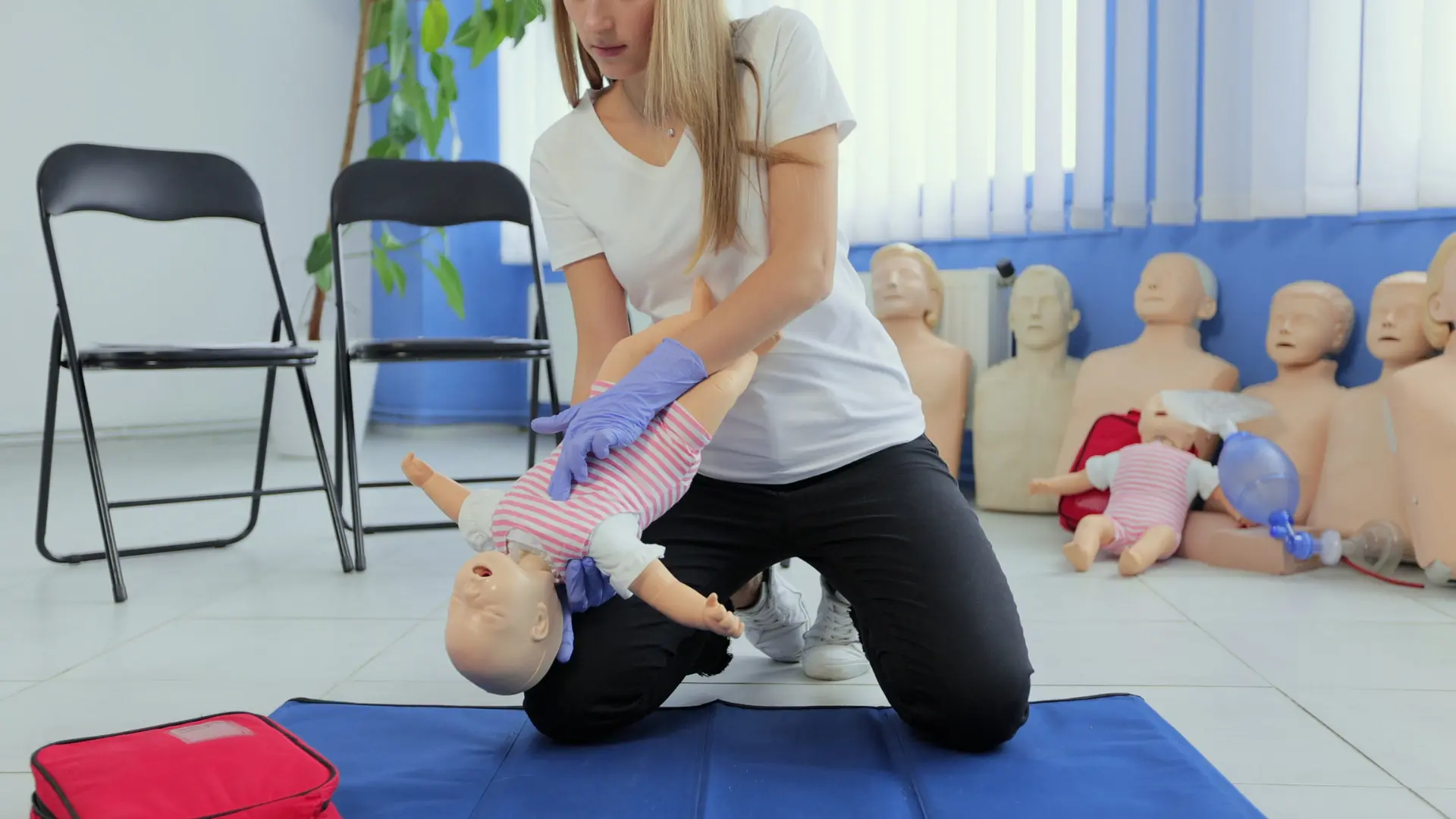
  • For Infants: You will learn the “5 back blows and 5 chest thrusts” method. This involves supporting the infant face-down on your forearm to let gravity help clear the obstruction.
  • Self-Relief: Many instructors will also show you how to perform a modified version of these maneuvers on yourself if you are alone and choking.

What should I expect during the hands-on skills test?

To receive your certification, you won’t just watch videos; you have to demonstrate that you can perform the skills.

At CPR Classes Near Me, we prioritize “Practice-While-Watching.” This means you’ll have a manikin in front of you for the duration of the class. You’ll perform cycles of CPR while an instructor watches your form, correcting your hand placement or compression depth in real-time. This real-world application is what builds the “active” knowledge required to stay calm in a crisis.

Conclusion: Your Next Steps toward Preparedness

Learning Adult, Child, and Infant CPR is one of the most selfless and practical skills you can acquire. Whether you’re protecting your own family or fulfilling a requirement for your career, the knowledge gained in these few hours has the potential to change a life’s trajectory. You’ve now seen that the class covers everything from the force of a compression to the nuances of an AED shock.

Don’t wait for an emergency to realize you aren’t prepared. The confidence you need is only a class away.

Ready to gain these life-saving skills? Contact CPR Classes Near Me today to find a certification course that fits your schedule!

FAQ Section

How long does an Adult, Child, and Infant CPR class take?

Most comprehensive classes that cover all three age groups take between 3 and 4 hours to complete. This includes video instruction, hands-on practice, and the final skills assessment. Some “blended” options allow you to do the classroom portion online, reducing the in-person time to about 1 to 2 hours.

Do I need a separate certification for infants and adults?

No, most standard “CPR/AED” or “Healthcare Provider” courses are designed to be “all-ages” certifications. These courses bundle Adult, Child, and Infant CPR into one curriculum so you are prepared for any scenario. Always check the course description to ensure “Pediatric” or “Infant” modules are included.

Is there a written test for CPR certification?

Depending on the certifying body (like the AHA), there may be a short multiple-choice exam at the end of the class. However, the most important part of the process is the “skills check,” where you demonstrate the physical techniques on a manikin to the satisfaction of your instructor.

How often do I need to renew my CPR training?

CPR certifications are typically valid for two years. This is because research shows that CPR skills can degrade over time, and medical guidelines are updated periodically to reflect the latest life-saving science.

Can I hurt someone by performing CPR?

While it is possible to crack a rib during high-quality compressions, it is important to remember that the person is clinically dead if their heart has stopped. A cracked rib can heal; brain death from lack of oxygen cannot. Training helps you apply the correct amount of force to be effective while minimizing unnecessary injury.

Infant CPR Classes in Washington DC: Lifesaving Skills for Your Child

Healthcare trainee holding a baby training doll during practice

TL;DR: Infant CPR Classes in Washington DC

Infant CPR training in Washington DC is essential for parents, caregivers, and professionals. To ensure you’re fully prepared and certified for DC requirements:

  • Focus on AHA BLS Certification: Choose an American Heart Association (AHA) Basic Life Support (BLS) course. This is the gold standard, universally accepted by DC employers, and covers CPR for Infants, Children, and Adults.
  • Infant CPR is Unique: Techniques for babies (under 1 year) are drastically different, requiring specific two-finger chest compressions and gentle breaths.
  • Hands-On Training is Essential: Avoid online-only courses. In-person, hands-on training is required to build muscle memory, ensure proper technique for infants, and receive a valid, accepted AHA eCard (often issued the same day).
  • Comprehensive Coverage: BLS training includes life-saving skills for all ages, plus training on AED use and choking relief.
  • Action: Get Your CPR Certification with CPR Classes Near Me for accredited, same-day certification in Washington DC.

Why Every Second Counts in the Nation’s Capital

Washington DC is a vibrant, bustling city where life moves fast, and preparedness is paramount. While we often think of emergencies as affecting adults, the moments immediately following a cardiac or breathing incident in an infant are arguably the most critical.

For new parents, grandparents, nannies, and childcare providers in the DC area, taking a certified Infant Cardiopulmonary Resuscitation (CPR) class is not merely a suggestion, it’s a fundamental responsibility.

Infants are uniquely vulnerable to sudden emergencies. These events could be caused by choking on a small toy, sudden cardiac arrest, or a respiratory issue.

The reality is that immediate, proper intervention can dramatically change the outcome for a baby. Knowing what to do in those first critical minutes, before professional help arrives, is a power you must possess.

This comprehensive guide delves into everything you need to know about securing top-tier Infant CPR certification right here in Washington DC. We focus on the importance of certified, hands-on training that adheres to the American Heart Association (AHA) standards. This ensures you walk away with the confidence and competence to protect the infants in your care.

By choosing an AHA-aligned training site, like CPR Classes Near Me, you invest in the highest quality, most recognized life-saving education available today.

Why is Infant CPR Training an Essential Skill for DC Parents and Caregivers?

The decision to enroll in an Infant CPR class is often driven by a deeply personal commitment to safety. However, for those in Washington DC, there is also a clear professional and statistical urgency behind this vital training.

First and foremost, the anatomy of an infant dictates a completely different emergency response than that used for an adult or even a child. A baby’s airway is smaller, their bone structure is more fragile, and the primary cause of cardiac arrest in infants is typically respiratory failure, not a sudden heart issue. This means the techniques used for resuscitation must be tailored precisely to their size and physical needs.

Infants face unique vulnerabilities that make CPR training essential:

  • Choking Incidents: Infants explore the world with their mouths. Small objects, pieces of food, or even thickened liquids can lead to airway obstruction quickly and silently.
  • Sudden Infant Death Syndrome (SIDS): While the exact cause is unknown, proper training equips caregivers to respond immediately if an infant stops breathing.
  • Respiratory Distress: Illnesses, allergic reactions, or congenital issues can cause breathing to stop, which rapidly leads to cardiac arrest if not addressed.

Moreover, if you are a professional working with children in the DC area, whether as a daycare operator, teacher, or licensed nanny, your certification is likely mandated by law or licensing requirements. Washington DC often requires professionals who work with children to have current CPR credentials.

By obtaining a comprehensive, AHA-approved Basic Life Support (BLS) certification, you ensure you meet all local employer and regulatory standards.

The confidence derived from high-quality, in-person training is perhaps the most critical benefit. In a true emergency, panic is the enemy of action. When you have physically practiced the steps of Infant CPR, your muscle memory takes over, allowing you to act quickly and effectively, significantly increasing a baby’s chance of survival.

What is the Difference Between Standard CPR and Infant CPR?

While the acronym CPR (Cardiopulmonary Resuscitation) applies across all age groups, the actual life-saving steps for an infant are dramatically different from those performed on an adult or a child. Understanding these distinctions is why specialized infant training is non-negotiable.

Infant CPR is specifically designed for babies from birth up to 12 months of age. The core principles remain circulation and breathing, but the execution is scaled down and modified for their delicate bodies.

Here are the key technical differences that distinguish Infant CPR:

  • Compression Method:
    • Adult & Child: Uses one or two hands placed over the center of the chest (sternum).
    • Infant: Uses two fingers (index and middle fingers) placed just below the nipple line.
  • Compression Depth:
    • Adult & Child: Approximately two inches (at least two inches for adults).
    • Infant: Approximately 1.5 inches, or about one-third the depth of the chest.
  • Rescue Breaths:
    • Adult & Child: Full breaths, ensuring the chest rises.
    • Infant: Tiny, gentle “puffs” of air (just enough to make the chest rise visibly, covering both the nose and mouth).
  • Choking Relief:
    • Adult & Child: Abdominal thrusts (Heimlich maneuver).
    • Infant: A combination of five back blows and five chest thrusts.

The most critical element to master is the compression technique. Because an infant’s heart is higher in the chest and their ribs are flexible, using too much force can cause serious injury. The two-finger method taught in certified courses ensures the correct pressure is applied to achieve circulation without causing harm.

In infant rescue, rescue breaths play an even more prominent role. Since breathing failure is the most common precursor to cardiac arrest in babies, prompt delivery of gentle breaths, combined with chest compressions, is essential for delivering oxygen to the brain and vital organs.

Only a practical, in-person class allows you to drill these techniques using age-appropriate mannequins and receive real-time feedback from an expert instructor. This hands-on, supportive learning environment, like those offered by CPR Classes Near Me in Washington DC, solidifies the muscle memory necessary for competent emergency response.

Which Certification Standard Should I Choose for Infant CPR in Washington DC?

When searching for “Infant CPR classes near me” in Washington DC, you will encounter various organizations offering certification. Choosing the right standard is crucial, especially if your certification is required for employment or if you want the assurance of the most credible, science-backed training.

In the United States, the two most recognized certification providers are the American Heart Association (AHA) and another major non-profit humanitarian organization. While both provide life-saving training, the American Heart Association (AHA) Basic Life Support (BLS) certification is universally regarded as the gold standard. This is particularly true within the healthcare community and for high-stakes professional roles.

Here is why AHA BLS is the preferred choice in DC:

  1. Science-Based Guidelines: The AHA establishes the science and guidelines for all resuscitation efforts. Their BLS curriculum is updated regularly based on the latest evidence, ensuring you learn the most effective techniques.
  2. Universal Acceptance: The AHA BLS eCard is the most widely accepted certification by employers nationwide. This includes:
    • Hospitals and medical offices.
    • Schools and educational facilities.
    • Licensed childcare and daycare facilities throughout the DMV area.
  3. Comprehensive Scope: While standard CPR courses may focus primarily on lay rescuers, the AHA BLS course is a comprehensive program covering the full spectrum of resuscitation:
    • Adult, Child, and Infant CPR and AED use.
    • Single-rescuer and team-based resuscitation skills.
    • Airway obstruction (choking) management for all ages.

By enrolling with a certified AHA training site, such as CPR Classes Near Me, you are not just getting a piece of plastic (or a digital card). You are receiving instruction that has met rigorous quality standards set by the leading authority in cardiovascular science. This commitment to excellence ensures that the Infant CPR skills you learn are accurate, current, and maximally effective.

What Types of Training Formats Are Available for DC Residents, and Which Is Best?

DC residents have a choice between three primary training formats for CPR certification: fully online, blended learning, and 100% in-person, hands-on classroom instruction. When it comes to mastering life-saving skills for an infant, the format you choose is as important as the content itself.

1. Fully Online Training (Not Recommended)

This option allows you to complete the entire course without ever physically demonstrating your skills to an instructor.

  • Pro: Offers maximum convenience; it can be completed anywhere, anytime.
  • Con: This is a crucial drawback: most DC employers do not accept online-only certifications. You cannot practice the physical skills of Infant CPR (two-finger compressions, depth, breath volume) without an instructor observing you. The certification card often lacks credibility.

2. Blended Learning (Partially Effective)

This format involves completing the lecture and cognitive portion of the course online, followed by a mandatory, short in-person skills session. During this session, you practice on a mannequin and demonstrate proficiency to an instructor.

  • Pro: Provides flexibility for learning the theory; it saves time in the classroom.
  • Con: The in-person session can feel rushed, and you may miss out on valuable discussion and instructor-led coaching that occurs during a full classroom session.

3. 100% In-Person, Hands-On Classroom (The Gold Standard)

This is the traditional, instructor-led model. You spend the entire course time with a certified professional in a dedicated learning environment, practicing on mannequins.

This is the best option for Infant CPR training because it provides:

  • Mastery of Technique: You receive constant, immediate feedback on your compression rate, depth, and hand placement, which is essential for an infant’s delicate frame.
  • Confidence Building: The hands-on practice reduces hesitation and builds the critical muscle memory needed to act under pressure.
  • Same-Day Certification: Reputable training sites, like CPR Classes Near Me in Washington DC, issue your official AHA eCard on the same day you successfully complete the training.
  • Q&A Opportunities: Direct access to an experienced instructor allows you to ask complex, real-world questions specific to your family or work environment.

For a skill as precise and critical as Infant CPR, the hands-on approach is invaluable. By selecting a dedicated, local provider that prioritizes in-person, AHA-aligned training, you ensure your skills are sharp and your certification is fully recognized by any professional standard in Washington DC.

Beyond the Baby: Does Infant CPR Training Cover Adults and Children Too?

When searching for “Infant CPR classes,” many people assume the training is only for babies. However, when you enroll in a comprehensive American Heart Association (AHA) Basic Life Support (BLS) course in Washington DC, you are acquiring a full spectrum of life-saving knowledge that covers every age group.

This is arguably one of the greatest values of selecting an AHA BLS-level course: you gain the skills to protect everyone in your home, workplace, or community.

The standard BLS curriculum is structured to teach you how to respond to cardiac and breathing emergencies for three distinct groups:

  1. Adults (Puberty and Older): You will learn the standard two-hand compression technique, adult rescue breathing, and the proper use of an Automated External Defibrillator (AED).
  2. Children (Age 1 to Puberty): You will practice adjusting techniques for a child, which involves using one hand for compressions and modifying the depth and breath volume.
  3. Infants (Under 1 Year): You will master the specialized two-finger compressions and gentle, mouth-over-nose-and-mouth rescue breaths, as discussed previously.

Beyond CPR itself, a quality certification course ensures you are proficient in two other crucial areas for all ages:

  • Automated External Defibrillator (AED) Usage: While rare for infants, knowing how to safely operate an AED and apply pediatric pads is a vital component of resuscitation for children and adults. The course teaches you how to recognize when a defibrillator is needed and how to use it safely.
  • Choking Relief: Airway obstruction is a major threat across all age groups. Your training will cover the specialized five back blow/five chest thrust technique for infants, as well as the standard abdominal thrusts for conscious and unconscious children and adults.

By committing to a comprehensive AHA BLS course offered by CPR Classes Near Me, you streamline your training. You walk away with a single, powerful certification that makes you an equipped rescuer for any potential emergency, regardless of the victim’s age. This comprehensive approach is particularly beneficial for busy DC professionals and parents who need to maximize their time while achieving the highest level of competence.

Conclusion: Gain the Confidence to Be a Lifesaver in DC

The urgency of knowing Infant CPR cannot be overstated. In an emergency, hesitation costs lives, and only high-quality, hands-on training can eliminate that hesitation and replace it with decisive, life-saving action.

For parents, caregivers, and professionals throughout Washington DC, investing in an American Heart Association-aligned BLS certification provides peace of mind and the proven skills to act when it matters most.

By choosing a local, certified training provider like CPR Classes Near Me, you benefit from expert instruction, a focused, hands-on learning environment, and the convenience of same-day certification. You will leave the course not just with an eCard, but with the confidence that you are fully prepared to provide competent and effective CPR to an infant, child, or adult. This critical skill is your most important tool for safeguarding the health and well-being of the people you love and care for in the nation’s capital.

Take the next step toward total preparedness today.

Get Your CPR Certification with CPR Classes Near Me.

FAQ Section

Q: How long does Infant CPR certification last, and when do I need to renew it?

A: Infant CPR certification, typically obtained through a comprehensive AHA BLS course, is valid for two years. It is important to renew your certification before it expires to ensure your skills remain sharp and current with the latest AHA guidelines. Renewal courses are available and typically focus on refreshing your knowledge and techniques. Regular renewal ensures you are always prepared to respond effectively in an emergency situation.

Q: Is the Infant CPR class designed only for healthcare professionals, or can lay rescuers take it?

A: While the American Heart Association’s Basic Life Support (BLS) certification is the mandatory standard for healthcare professionals (such as nurses and paramedics), it is highly recommended for lay rescuers as well, including new parents, teachers, and childcare providers. The BLS curriculum provides the most comprehensive and detailed training available, covering all age groups (Adult, Child, and Infant) to the highest standard, equipping anyone to handle a critical emergency with confidence and precision.

Q: Can I just take an online-only course to learn Infant CPR techniques?

A: You can take the theoretical portion of CPR training online, but an online-only certification is not recognized by most employers or licensing bodies in Washington DC or nationwide. To truly master the life-saving physical skills, such as the correct depth and rate of two-finger compressions for an infant and proper rescue breathing, you must complete a hands-on, in-person skills session with a certified instructor. This practical, in-person component is essential for gaining real competence, ensuring the skills are accurate, and receiving a valid, accepted AHA eCard.