Does CPR Certification Include AED Training? Everything You Need to Know

CPR Classes Near Me Austin

Sudden cardiac arrest doesn’t give you a warning. One moment, everything is fine; the next, a life is on the line. When every second counts, knowing how to perform CPR is vital, but is it enough? Many people wonder if signing up for a CPR class will also give them the skills to operate an Automated External Defibrillator (AED).

The short answer is: Yes, modern CPR certification almost always includes AED training. In fact, the two skills are so closely linked that most major certifying bodies, like the American Heart Association (AHA) and the Red Cross, combine them into a single curriculum.

In this guide, we’ll dive deep into why these two skills are taught together, what you can expect from a course, and how to get certified in Austin, Texas.

Is AED training always part of a CPR course?

In the modern world of emergency medical training, CPR and AED are essentially a packaged deal. Whether you are taking a course for a workplace requirement or just to be a prepared citizen, you will find that “CPR/AED” is the standard title for most certifications.

Decades ago, AEDs were complicated devices reserved for paramedics and doctors. Today, they are designed for the public. Because an AED is the only way to stop a chaotic heart rhythm during cardiac arrest, training organizations realized that teaching CPR without teaching how to use an AED was leaving out half of the solution.

When you enroll in a course at a location like CPR Classes Near Me in Austin, you aren’t just learning to push on a chest; you are learning to integrate technology that saves lives.

Why are CPR and AED skills taught together?

Think of CPR and an AED as two halves of a whole. CPR (Cardiopulmonary Resuscitation) is a manual process. When you perform chest compressions, you are acting as a manual pump for the victim’s heart, keeping oxygen-rich blood moving to the brain and vital organs.

However, CPR alone rarely “restarts” the heart. That is where the AED comes in. An AED is a smart device that can analyze the heart’s rhythm and, if necessary, deliver an electric shock to reset the heart’s electrical system.

  • The Survival Gap: Without an AED, the chance of surviving cardiac arrest drops by about 10% for every minute that passes.
  • The Synergy: CPR keeps the victim “viable” by providing blood flow, while the AED works to fix the underlying electrical problem.
  • Confidence: Learning them together ensures you don’t freeze when you see an AED cabinet on a wall in a gym or airport.

What specific AED skills will I learn in class?

Many people are intimidated by the idea of “shocking” someone, but AED training is designed to remove that fear. In a certified class, you will practice with a “trainer” AED—a device that looks and sounds exactly like the real thing but doesn’t actually deliver a shock.

During your training, you will learn:

  1. How to Power On the Device: This sounds simple, but in a high-stress situation, knowing exactly where the “on” button is matters.
  2. Pad Placement: You’ll learn exactly where to place the adhesive pads on adults, children, and infants to ensure the shock is effective.
  3. Following Voice Prompts: Modern AEDs literally talk to you. You’ll practice listening to the instructions and acting on them.
  4. Safety Precautions: You’ll learn when it’s safe to deliver a shock (e.g., ensuring no one is touching the victim) and how to handle special situations like water or metal surfaces.
  5. Integration: Most importantly, you will learn how to switch between CPR and AED use seamlessly without interrupting compressions for too long.

Do online CPR classes provide adequate AED training?

There is a big difference between watching a video of an AED and actually holding the pads in your hands. While 100% online courses exist, many employers and regulatory bodies (like OSHA) do not accept them because they lack a “skills check.”

A “Blended Learning” or “In-Person” approach is much more effective. In these settings, you get to:

  • Physicality: Feel the click of the pads as you peel them back.
  • Timing: Practice the “rhythm” of pausing compressions while the AED analyzes.
  • Feedback: Have an instructor correct your hand placement or timing in real-time.

For residents in Austin, choosing an in-person session ensures that your certification is not just a piece of paper, but a reflection of actual capability.

Are AEDs safe for untrained people to use?

Yes, AEDs are incredibly safe. They are designed so that even a person with zero training could technically use one successfully. The device will not allow you to shock someone unless it detects a “shockable rhythm.” You cannot accidentally shock someone whose heart is beating normally.

However, certification makes you much faster. In an emergency, speed is everything. A trained person can get an AED pads on and the device analyzing in under a minute, whereas an untrained person might lose precious time reading instructions.

How does the training differ for children and infants?

Cardiac arrest in children and infants is often caused by respiratory issues rather than the primary heart problems seen in adults. Because of this, the training is slightly different.

In a comprehensive CPR/AED course, you will learn:

  • Pediatric Pads: Some AEDs have smaller pads for children under 8 years old or 55 pounds.
  • Attenuators: Some devices use a special “key” or switch to reduce the energy of the shock for a smaller body.
  • Anatomical Placement: Because infants are small, pads are often placed on the front of the chest and the back, rather than both on the front.

Your instructor will guide you through these nuances so you feel prepared to help a person of any age.

How long does a CPR and AED certification last?

Most certifications from reputable providers are valid for two years. The science of resuscitation is constantly evolving. Every five years, the American Heart Association updates its guidelines based on the latest medical research.

Renewing your certification every two years ensures:

  • Your skills stay sharp (muscle memory fades over time).
  • You are up to date on the latest techniques (like the shift toward “Hands-Only CPR” for certain situations).
  • You remain compliant with workplace safety requirements.

Where can I find CPR and AED classes in Austin?

If you are looking for high-quality, hands-on training, CPR Classes Near Me offers convenient locations throughout the Austin area. These classes are designed for everyone from healthcare professionals to teachers, fitness trainers, and parents.

By choosing a local Austin provider, you get instructors who understand the specific needs of the community and provide a supportive environment for learning these life-altering skills.

Conclusion

Enrolling in a CPR certification course is one of the most impactful things you can do for your community and your family. Because modern CPR training almost always includes AED instruction, you will walk away from your class with a complete toolkit for responding to a cardiac emergency.

Don’t wait until an emergency happens to wish you knew what to do. Whether you need certification for work or simply want the peace of mind that comes with being prepared, now is the time to act.

Ready to gain the skills to save a life? 

Contact CPR Classes Near Me today to find an upcoming class in Austin and get certified!

Frequently Asked Questions (FAQ)

Q: Does every CPR class include AED?

A: While nearly all professional and “Heartsaver” level courses include AED training, it is always best to check the course description. If the course is labeled as “CPR/AED,” it is guaranteed to include it.

Q: Can I use an AED if I’m not certified?

A: Yes. Good Samaritan laws in most states protect bystanders who use an AED in good faith to save a life. The device provides voice instructions to help you through the process. However, certification is highly recommended to increase the speed and effectiveness of the rescue.

Q: Is there a separate test for the AED portion?

A: Usually, the AED “test” is integrated into your hands-on CPR skills check. Your instructor will watch to see if you can correctly apply the pads and follow the device’s prompts while maintaining proper CPR cycles.

Q: How much does a CPR/AED class in Austin cost?

A: Prices vary depending on the level of certification (e.g., Basic Life Support for healthcare vs. Heartsaver for the general public), but most classes in Austin range from $60 to $95.

Get Your Austin CPR Certification in Just One Day: The Ultimate Guide

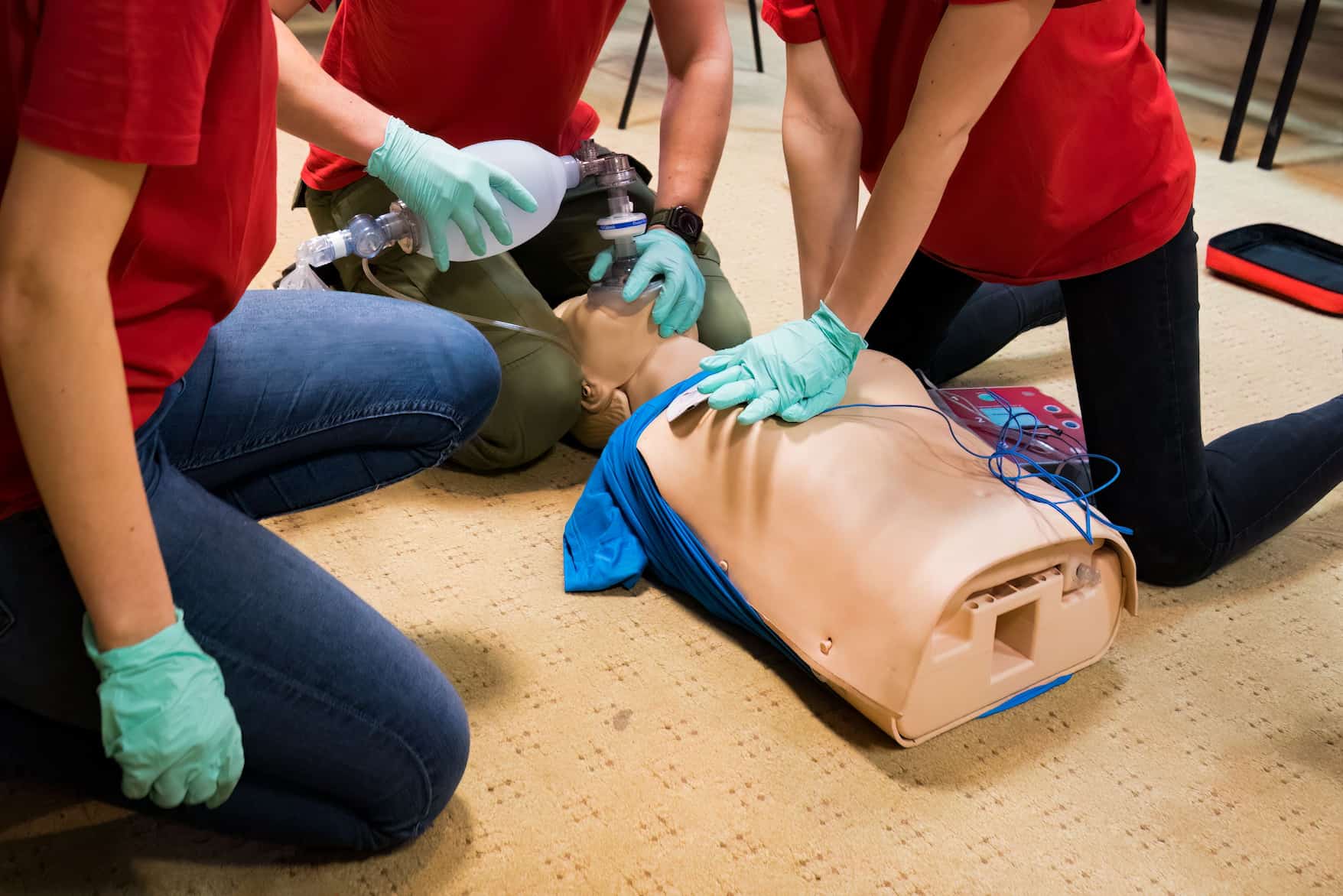
Students performing CPR and ventilation on a training manikin in class

Are you a healthcare professional needing a quick renewal? Or perhaps a new parent or teacher looking to gain life-saving skills for the first time? In the fast-paced environment of Austin, Texas, you don’t have weeks to spend in a classroom. The good news is that you don’t have to.

Getting CPR certified in Austin is now a streamlined, efficient process that fits into a single morning or afternoon. By choosing an American Heart Association (AHA) authorized training site, you can walk in with a desire to learn and walk out with a nationally recognized certification card in hand.

Is it really possible to get CPR certified in one day?

Yes, it is entirely possible to complete your full CPR certification in a single session. While some online programs claim to offer “instant” certificates, these are rarely accepted by employers because they lack the hands-on skills assessment required by OSHA and the American Heart Association.

At CPR Classes Near Me Austin, our courses are designed to be comprehensive yet efficient. A standard Basic Life Support (BLS) session typically lasts about 3.7 hours. During this time, you cover all required video modules, participate in hands-on practice, and complete your skills testing. Because our instructors are authorized to issue digital eCards, you will receive your official certification via email before you even leave the building.

What should you expect during your Austin CPR class?

When you sign up for a one-day class, you can expect a high-energy, focused environment. The goal is to move you from theory to practice as quickly as possible. You won’t just be sitting and watching videos; you will be actively engaged with the equipment.

The curriculum is standardized by the American Heart Association to ensure you receive the highest quality of training. During your Austin class, you will focus on:

  • High-Quality Chest Compressions: Learning the correct depth and rate for adults, children, and infants.
  • Rescue Breathing: Using pocket masks and bag-mask devices to provide oxygen.
  • AED Operation: Understanding how to safely and effectively use an Automated External Defibrillator.
  • Choking Relief: Master the techniques for clearing an airway for all age groups.
  • Team Dynamics: Learning how to work with other rescuers during a high-stress cardiac event.

Who needs a BLS certification in Austin?

While anyone can—and should—learn CPR, the Basic Life Support (BLS) certification is specifically designed for those who work in environments where they may be called upon to use these skills professionally. In Austin’s booming medical and education sectors, this certification is often a non-negotiable job requirement.

Common professionals who seek one-day certification include:

  1. Healthcare Providers: Nurses (RNs/LVNs), Doctors, Dentists, and Pharmacists.
  2. Emergency Responders: Firefighters, Police Officers, and EMTs.
  3. Medical Staff: CNAs, Medical Assistants, and Physical Therapists.
  4. Educators: K-12 Teachers, Coaches, and Daycare Providers.
  5. Fitness Professionals: Personal Trainers and Lifeguards.
  6. Industrial Workers: Construction Foremen and Electricians who must meet OSHA standards.

Why is in-person training better than online-only courses?

In a world of digital convenience, it’s tempting to take a 20-minute online quiz and call it “certification.” However, in the world of life-saving, there is no substitute for physical practice. This is why the vast majority of Austin employers do not accept online-only CPR cards.

In-person training offers several critical advantages:

  • Muscle Memory: You cannot learn the physical resistance of a chest compression through a computer screen. Pushing on a manikin builds the muscle memory needed to perform when it counts.
  • Immediate Feedback: Our AHA-certified instructors watch your technique in real-time. They can correct your hand placement or compression depth instantly, ensuring you are doing it right.
  • Equipment Familiarity: You get to handle real AED trainers and bag-mask devices, making you much more comfortable using them in a real emergency.
  • Peer Interaction: You practice team-based resuscitation, which is how most rescues actually occur in a clinical or professional setting.

How do you find the best CPR class in Austin?

Not all CPR classes are created equal. When searching for a provider in the Austin area, you want to ensure you are getting the best value and the most recognized credential. Here are the things you should look for:

  • AHA Alignment: Ensure the provider is an American Heart Association authorized training site. This guarantees your card will be accepted nationwide.
  • Same-Day Certification: Many providers mail physical cards weeks later. Look for a site that issues digital eCards the same day.
  • Transparent Pricing: You should know exactly what you are paying upfront. In Austin, a standard BLS class should range from $59.00 to $79.00, depending on if First Aid is included.
  • Flexible Scheduling: Life in Austin is busy. Look for a provider that offers morning, afternoon, and weekend slots to fit your schedule.
  • Local Reputation: Check for a provider that has a proven track record of certifying thousands of students and has a physical presence in the community.

What is the difference between CPR and BLS?

This is one of the most common questions we hear. While the terms are often used interchangeably, there is a technical difference that matters for your certification needs.

  • CPR (Cardiopulmonary Resuscitation): This is the general term for the life-saving procedure. “Heartsaver” courses are typically intended for non-medical professionals like parents or office workers.
  • BLS (Basic Life Support): This is a specific level of CPR training designed for healthcare providers. It includes everything in a standard CPR course but adds advanced techniques like bag-mask ventilation, pulse checks, and two-rescuer team dynamics. If your employer asks for “CPR Certification,” and you work in healthcare, they almost always mean BLS.

How long does your Austin CPR certification stay valid?

Once you complete your one-day class and receive your AHA eCard, your certification is valid for two years.

We recommend putting a reminder in your calendar for 22 months from your class date. Because the science of resuscitation is constantly evolving, the AHA updates its guidelines every few years. Renewing your certification ensures that you are always using the most effective, up-to-date techniques. The renewal process is the same as the initial certification—you simply attend another one-day session to refresh your skills and receive a new card.

Conclusion

Getting CPR certified in Austin doesn’t have to be a multi-day ordeal. With a focused, 4-hour session, you can gain the skills and the credentials needed to save a life and satisfy your employer’s requirements. By choosing a local, AHA-authorized training site like CPR Classes Near Me Austin, you are investing in high-quality instruction that is both fast and effective.

Don’t wait until an emergency happens to wish you had the training. Whether you are in Pflugerville, Round Rock, or downtown Austin, life-saving skills are just one class away.

Ready to get certified? Contact CPR Classes Near Me Austin today to find a class and get your same-day certification!

Frequently Asked Questions (FAQ)

How long does the Austin CPR class take?

The American Heart Association BLS class typically takes about 3.7 hours to complete. This includes all video instruction, hands-on practice, and the final skills assessment.

Will I get my card the same day?

Yes. When you train with us in Austin, your official AHA BLS eCard is issued digitally the same day you complete your class. You can download, print, or email it to your employer immediately.

Are there age requirements for CPR certification?

There is no specific minimum age for CPR certification. As long as the individual can perform the physical requirements of the course (such as deep chest compressions on a manikin) and pass the written portion, they can become certified.

Does this certification cover infants and children?

Yes. All of our AHA BLS and CPR/First Aid courses include specific modules for adult, child, and infant resuscitation techniques, as the methods vary significantly by age.

What should I wear to my CPR class?

Since the class involves significant hands-on practice and kneeling on the floor to work with manikins, we recommend wearing comfortable, casual clothing and closed-toe shoes.

How Long Does CPR Certification Take? A Realistic Timeline

CPR and Sports

So, you’ve decided it’s time to get CPR certified. Maybe it’s a requirement for your new job in healthcare, or perhaps you’re a coach, a teacher, or just a prepared neighbor who wants to know what to do in a crisis. One of the first questions everyone asks is: “How long is this actually going to take?”

In our fast-paced world, finding a four-hour block of time can feel like a tall order. However, when you realize that the skills you learn in those few hours could literally save a life, the investment feels much smaller. The good news is that modern CPR training is designed to be efficient, engaging, and faster than you might think.

At CPR Classes Near Me, we specialize in getting you trained and certified without wasting a second of your time. Let’s break down exactly what you can expect when it comes to the clock.

What Factors Determine the Length of a CPR Class?

Not all CPR classes are created equal, and the duration can fluctuate based on several variables. If you are looking for a “one-size-fits-all” answer, you might be surprised to find that the timeline depends largely on your specific needs.

  • The Certification Level: A basic course for a construction worker will naturally be shorter than a Basic Life Support (BLS) course for a cardiac nurse.
  • The Training Format: Are you sitting in a classroom for the whole session, or did you do half of it in your pajamas at home?
  • The Instructor’s Efficiency: Experienced instructors, like those at our AHA-certified sites, know how to keep the class moving without sacrificing quality.
  • Class Size: A class of four people moves much faster than a class of twenty, as there is less waiting time for hands-on practice.
  • The Addition of First Aid: Adding First Aid modules to your CPR training will add a significant chunk of time—usually between 1.5 to 2 hours.

How Long Does a Standard Adult CPR Course Take?

For most people in the general public, a standard Adult CPR and AED course is the go-to option. This course focuses on the fundamentals: recognizing cardiac arrest, calling 911, and performing high-quality chest compressions until help arrives.

On average, you can expect an in-person Adult CPR/AED class to last between 2 and 2.5 hours.

During this time, you will cover:

  • Scene safety and assessment.
  • Adult chest compressions.
  • Rescue breathing (with or without a mask).
  • Proper use of an Automated External Defibrillator (AED).
  • Choking relief for adults.

This timeframe is designed to give you enough “reps” on the manikin so that your muscle memory kicks in during a real emergency, while still getting you out the door in time for lunch.

Is BLS Training Longer Than a General CPR Class?

If you work in a medical environment, you likely need Basic Life Support (BLS). Because this is a “professional” level course, it goes deeper than the standard layperson class.

A full, in-person BLS course typically takes about 4 to 4.5 hours.

Why does it take longer? Because the stakes and the techniques are more complex. In a BLS class, you aren’t just learning how to help a stranger on the sidewalk; you are learning how to work as part of a high-performance rescue team. You will spend extra time on:

  1. Two-rescuer CPR techniques.
  2. Using a bag-valve mask (BVM) to provide ventilations.
  3. Pulse checks and more advanced assessment skills.
  4. Pediatric and infant CPR (which are often optional in basic classes).

At CPR Classes Near Me, we streamline this process. By focusing on hands-on mastery rather than long, boring lectures, we ensure that those 4 hours are packed with value.

How Much Time Should You Allot for CPR and First Aid Together?

Many employers—especially in childcare, education, and construction—require a “Combo” card: Heartsaver First Aid, CPR, and AED. This is the “complete package” of emergency preparedness.

If you are taking the full classroom version, you should plan to spend 4 to 6 hours at the training center.

The First Aid portion usually takes about 2 to 3 hours on its own because it covers a massive range of topics, including:

  • Allergic reactions and EpiPen use.
  • Bleeding control and tourniquets.
  • Broken bones, sprains, and splinting.
  • Seizures, strokes, and diabetic emergencies.
  • Environmental emergencies like heatstroke or hypothermia.

While it’s a longer day, it’s often the most cost-effective and time-efficient way to get all your requirements checked off in a single visit.

Can You Complete CPR Certification Online in Less Time?

Technically, yes, but there is a major “but.” You will see many websites offering 100% online CPR certification that takes about 60 to 90 minutes. While these are fast and convenient, they come with a significant risk: most employers and OSHA do not accept online-only certificates.

CPR is a physical skill. You can’t learn the correct depth and rhythm of chest compressions by clicking a mouse.

However, there is a middle ground called Blended Learning. This is how it works:

  • Part 1 (Online): You complete the lecture and video portions at your own pace (usually 1.5 to 2 hours).
  • Part 2 (Skills Session): You come to one of our locations for a focused, hands-on test (usually 30 to 60 minutes).

Total “active” time is about the same as an in-person class, but it allows you to split the work up over two different days if your schedule is tight.

How Long Does the In-Person Skills Session Take for Hybrid Classes?

If you chose the blended learning path, your “in-person” time is drastically reduced. At CPR Classes Near Me, our skills-only sessions are designed for efficiency.

You can usually expect to be in and out in 45 to 60 minutes.

Because you’ve already completed the written exam and watched the instructional videos online, the instructor only needs to verify that you can physically perform the skills. You’ll walk in, demonstrate compressions, use the AED, show you can handle a choking scenario, and you’re done. It is the perfect option for busy professionals who can’t commit to a full half-day in the classroom.

Does Recertification Take as Long as the Initial Course?

If your card is about to expire (or has recently expired), you don’t necessarily have to sit through the “beginner” version of the class again. Many providers offer Renewal or Update courses.

A renewal course usually takes about 2 to 3 hours for BLS.

These sessions assume you already have a foundation of knowledge. The instructor will quickly review any updates to the AHA guidelines (which change every few years) and then move straight into the skills testing. It’s a great way to “refresh” your memory without starting from scratch.

Note: If your certification has been expired for a long time, some instructors may require you to take the full course again to ensure you are up to date with the latest life-saving protocols.

What Can You Expect During the Training Session?

Knowing what happens during those hours can help ease any “class anxiety.” Here is a realistic breakdown of how a typical 3-hour class at CPR Classes Near Me is structured:

  1. Introduction and Video (30 mins): You’ll watch high-quality simulations of real-world emergencies.
  2. Instructor Demonstration (20 mins): A certified pro will show you exactly how the manikins work and the proper body mechanics for compressions.
  3. Hands-on Practice (60 mins): This is the core of the class. You’ll get down on the floor and practice until you feel confident.
  4. AED Training (20 mins): You’ll learn how to turn on the machine and follow its voice prompts.
  5. Skills Testing (30 mins): The instructor will watch you perform the skills one last time to ensure you’ve got it.
  6. Certification Processing (20 mins): We finalize your paperwork and, in most cases, issue your digital eCard before you even leave the building.

Conclusion: A Small Investment for a Lifetime of Preparedness

When you ask, “How long does CPR certification take?” the answer is really: not long enough to justify waiting. Whether it’s a 2-hour basic class or a 4-hour BLS intensive, you are essentially trading one afternoon for the ability to keep a heart beating until the paramedics arrive.

At CPR Classes Near Me, we pride ourselves on making this process as painless as possible. We offer convenient locations, expert instructors who actually make the material interesting, and a guarantee that you’ll receive your AHA eCard the same day you finish.

Don’t wait for an emergency to realize you aren’t prepared. Contact CPR Classes Near Me today to find a session that fits your schedule and get certified in just a few short hours!

Frequently Asked Questions (FAQ)

Q: Can I get my CPR card on the same day as the class?

A: Yes! At CPR Classes Near Me, we issue American Heart Association eCards on the same day you complete your training. You will receive an email with your digital card shortly after the class ends.

Q: Is the 2-year certification period the same for all types of CPR?

A: Generally, yes. Both AHA BLS and Heartsaver certifications are valid for two years. After that, you must take a renewal course to maintain your status.

Q: Do I have to take a written test to get certified?

A: For BLS (Healthcare Provider) courses, a written exam is required and usually consists of 25 multiple-choice questions. For many general Heartsaver courses, the focus is primarily on the physical skills test, though some employers may request a written component.

Q: Is the time for a pediatric CPR class different from an adult one?

A: If you are taking a “Pediatric-only” class, it is usually about 2 hours. If you are taking a “Comprehensive” class that covers Adults, Children, and Infants, expect the class to run about 3.5 to 4 hours.

Q: What happens if I fail the skills test?

A: Our instructors are there to help you succeed! If you struggle with a specific skill, they will provide extra coaching and let you practice until you can perform it correctly. Most students pass on their first try after our guided practice sessions.

CPR Certification vs BLS: Which One Do You Need?

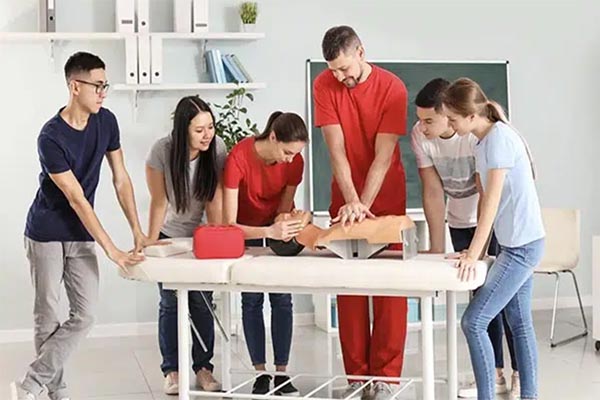
First aid instructor teaching CPR to a group of students using a practice mannequin.

Choosing the right life-saving course can feel like navigating a sea of acronyms. If you are looking to get certified, you’ve likely seen “CPR” and “BLS” used almost interchangeably. However, while they share the same goal—saving lives—they are designed for very different people and settings.

At CPR Classes Near Me, we believe that being prepared is the first step toward making a difference. Whether you are a nursing student, a high school coach, or a concerned parent, knowing the difference between these two certifications will ensure you meet your employer’s requirements and gain the right skills for your environment.

What is the main difference between CPR and BLS?

The primary difference lies in the level of detail and the intended audience.

CPR (Cardiopulmonary Resuscitation) is generally referred to as “Heartsaver” or “Layperson CPR.” It focuses on the fundamental skills needed to keep someone alive until professional help arrives. It is perfect for people who do not work in a medical environment.

BLS (Basic Life Support) is the professional standard for healthcare providers. It includes everything taught in a standard CPR class but adds advanced techniques such as team-based resuscitation, the use of medical-grade equipment like bag-valve masks, and more intense testing.

Who should take a standard CPR certification course?

Standard CPR certification is designed for the general public and “lay rescuers.” If your job involves the safety of others in a non-medical capacity, this is likely the course for you.

Common professions that require standard CPR include:

  • Teachers and daycare providers
  • Fitness instructors and personal trainers
  • Coaches and athletic directors
  • Construction workers and OSHA-regulated employees
  • Flight attendants
  • Security guards

This course is also ideal for parents, grandparents, and community volunteers who simply want to be ready to act during a cardiac emergency.

Who is required to have BLS certification?

BLS is a “professional level” certification. If you work in a clinical setting or are a first responder, your employer or licensing board will almost certainly require BLS rather than standard CPR.

You need BLS certification if you are:

  • A Registered Nurse (RN) or Licensed Practical Nurse (LPN)
  • A Doctor or Physician Assistant
  • A Dentist or Dental Hygienist
  • An EMT or Paramedic
  • A Medical or Nursing Student
  • A Physical or Occupational Therapist

If you are a student entering the healthcare field, it is highly recommended to get your BLS certification now, as most clinical rotations require it before you can step foot in a hospital.

What skills are taught in a CPR course?

A standard CPR class is fast-paced and focuses on muscle memory. The goal is to give you the confidence to jump in without overthinking.

In a standard CPR/AED class, you will learn:

  1. High-Quality Chest Compressions: The correct depth and rate for adults, children, and infants.
  2. Rescue Breathing: Techniques for delivering oxygen to a victim.
  3. AED Operation: How to safely use an Automated External Defibrillator.
  4. Choking Relief: The Heimlich maneuver and modified techniques for infants.
  5. Scene Safety: How to assess an environment before providing help.

What makes BLS training more advanced?

BLS training goes deeper into the “why” and “how” of resuscitation. Because healthcare professionals work in teams, the training emphasizes coordination.

Advanced skills included in BLS but not standard CPR include:

  • Multi-Rescuer Coordination: Learning how to switch roles seamlessly (e.g., one person doing compressions while another handles the airway).
  • Bag-Valve-Mask (BVM) Ventilation: Using a manual resuscitator to provide high-flow oxygen.
  • Pulse Checks: Healthcare providers are trained to check for a pulse for up to 10 seconds, whereas laypersons are taught to start CPR if a victim is unresponsive and not breathing.
  • Advanced Airway Management: How to provide CPR when a patient has a breathing tube or other advanced airway in place.
  • Critical Thinking: Managing complex scenarios where multiple life-threatening issues are happening at once.

Can a BLS certification replace a CPR certification?

Yes. If your job requires CPR but you choose to take a BLS course, your BLS card will almost always satisfy the requirement. Since BLS is a higher level of training that includes all CPR components, it is widely accepted as a superior credential.

However, the reverse is not true. If your employer requires BLS, a standard Heartsaver CPR card will not be accepted. Always check your specific workplace requirements before booking your seat.

Is First Aid included in these certifications?

This is a common point of confusion. Standard CPR and BLS are primarily focused on cardiac and respiratory arrest. They do not automatically include First Aid training.

  • For CPR: Many people choose to take a “CPR & First Aid” combo class. This is common for teachers and daycare workers who need to know how to handle scrapes, burns, and broken bones in addition to CPR.
  • For BLS: First Aid is almost never a standard part of a BLS class. Healthcare providers usually receive First Aid training through their medical schooling or separate certifications.

At CPR Classes Near Me, we offer both standalone BLS and combined CPR/First Aid options to ensure you get exactly what you need for your career.

How long do these certifications last?

Both CPR and BLS certifications are valid for two years.

Science and medical guidelines are constantly evolving. Every five years, the American Heart Association updates its protocols based on the latest life-saving data. Staying certified every two years ensures your skills remain sharp and that you are using the most effective techniques currently known to medicine.

Why is in-person training better than online-only?

While “online-only” certifications exist, they are rarely accepted by employers, especially in healthcare and education.

There is no substitute for the hands-on experience of compressing a manikin’s chest. In an in-person class at CPR Classes Near Me, an instructor can correct your hand placement, ensure you are hitting the right depth, and help you get comfortable with the rhythm of compressions. That physical “muscle memory” is what saves lives when the pressure is on.

How do I choose the right class?

To make the right choice, ask yourself these three questions:

  1. What is my profession? (Healthcare = BLS; General Public = CPR)
  2. Does my employer require First Aid? (If yes, look for a combo class.)
  3. Is the certification AHA-approved? (The American Heart Association is the gold standard for employer acceptance.)

Conclusion

Whether you choose CPR or BLS, the most important step is simply getting trained. Cardiac arrest can happen anywhere—at the gym, in the grocery store, or at the dinner table. Having the skills to intervene can double or even triple a victim’s chance of survival.

If you are ready to gain the confidence to save a life, contact CPR Classes Near Me today. Our expert instructors provide high-quality, AHA-certified training in a relaxed and professional environment. Don’t wait for an emergency to happen—be the one who knows what to do.

Frequently Asked Questions (FAQ)

Is BLS harder than CPR?

While BLS is more comprehensive and includes a written exam, it is not necessarily “harder.” It simply covers more ground. Our instructors at CPR Classes Near Me are experts at breaking down complex medical concepts so that every student leaves feeling confident, regardless of their medical background.

Will my BLS card say CPR on it?

Most BLS cards are titled “Basic Life Support (BLS) Provider.” Since BLS is the highest level of CPR training, it is understood by all employers that you are fully certified in CPR and AED usage.

How long does a BLS class take?

A typical initial BLS certification class takes about 4 to 5 hours. This includes hands-on practice, video instruction, and the written and skills tests. If you are renewing a current card, the process is usually shorter.

Does CPR certification cover infants?

Yes, at CPR Classes Near Me, our standard CPR and BLS courses cover adult, child, and infant techniques. This is essential for parents and those working in schools or childcare settings.

What should I wear to my class?

Since both CPR and BLS involve significant hands-on practice on the floor or at tables with manikins, we recommend wearing comfortable, casual clothing that allows you to move easily.