Are You Making These 7 Common CPR Certification Mistakes?

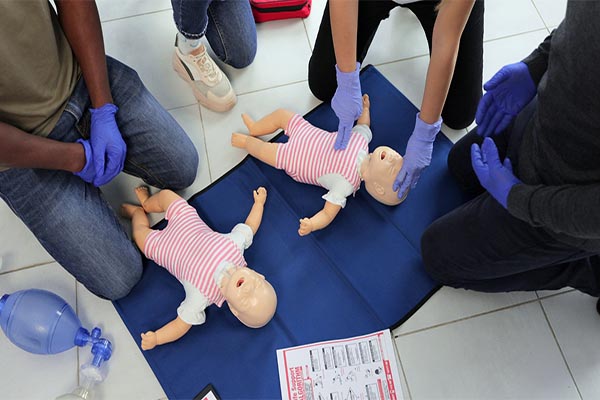
CPR training session with students practicing chest compressions on a first aid mannequin

Getting your CPR certification is one of the most proactive steps you can take to protect your family, coworkers, and community. However, simply showing up to a class doesn’t guarantee you’ll walk away with the skills—or the confidence—to save a life. Many students fall into the same traps, leading to ineffective techniques or even failing their practical exams.

At CPR Classes Near Me, we’ve seen thousands of students walk through our doors. We’ve noticed a pattern in where people struggle most. Whether you are a first-timer or a seasoned pro looking for a renewal, understanding these common pitfalls is the first step toward mastery.

In this guide, we’ll dive deep into the most frequent CPR certification mistakes and, more importantly, how you can avoid them to ensure you’re ready when the clock is ticking.

Why is proper hand placement so important?

One of the most frequent errors we see in the classroom is incorrect hand placement. It sounds simple—place your hands in the center of the chest—but in the heat of a timed assessment, many students drift.

Some students place their hands too high, near the neck, or too low, over the stomach (xiphoid process). Placing hands too low can cause internal injuries, such as a fractured breastbone or damage to the liver, rather than effectively pumping the heart.

To avoid this:

  • Locate the “Nipple Line”: For an adult, the center of the chest between the nipples is your target.
  • Use the Heel of Your Hand: Only the heel of your bottom hand should touch the chest. Interlace your fingers and pull them upward so they don’t press against the ribs.
  • Lock Your Elbows: Keep your arms straight and your shoulders directly over your hands. This allows you to use your body weight rather than just your arm strength.

Are your compressions deep enough to save a life?

“Push harder” is the most common phrase heard in a CPR class. It is human nature to be afraid of hurting the person you are trying to help. Students often perform “shallow” compressions because they are worried about breaking ribs.

However, if you don’t compress the chest at least 2 inches for an adult, the blood simply won’t reach the brain. During certification, manikins are designed with internal “clickers” or lights to tell you if you’ve hit the right depth. If you don’t hear that click, you aren’t doing effective CPR.

How to get it right:

  1. Trust the Manikin: Use the practice time to find the “sweet spot” where the click occurs.
  2. Accept the Risk: Understand that ribs may crack during real CPR, and that is a secondary concern compared to a stopped heart.
  3. Lean Into It: Use your upper body weight to drive the compression. If you find yourself getting tired quickly, you’re likely using only your arms.

Is your compression rate too fast or too slow?

Timing is everything. If you go too slow, you won’t maintain enough blood pressure to keep the brain alive. If you go too fast (over 120 beats per minute), the heart doesn’t have enough time to refill with blood between squeezes.

Many students get nervous and start pumping as fast as they can, which is a recipe for exhaustion and ineffective resuscitation.

To stay on track:

  • Think of the Music: The classic song “Stayin’ Alive” by the Bee Gees is 103 beats per minute—the perfect pace. Other options include “Dancing Queen” by ABBA or “Just Dance” by Lady Gaga.
  • Count Out Loud: “One, two, three, four…” Counting out loud helps you maintain a steady rhythm and keeps your breathing regulated.
  • Practice with a Metronome: Many modern CPR classes use metronomes or apps to help students internalize the 100–120 BPM rhythm.

Do you forget to let the chest recoil?

This is the “silent killer” of effective CPR. Recoil is the act of letting the chest come all the way back up to its neutral position after a compression.

Many students “lean” on the chest. This means they never fully release the pressure between compressions. If the chest doesn’t fully recoil, the heart can’t refill with blood. It’s like trying to pump a half-empty bellows—you’re working hard, but very little is happening.

How to avoid leaning:

  • Lighten the Load: After the downward push, make sure your weight is completely off the manikin, though your hands should remain in contact with the skin so you don’t lose your placement.
  • Think “Up and Down”: Focus as much on the “up” motion as you do on the “down” motion.
  • Check Your Posture: If you are leaning too far forward, you’ll naturally keep weight on the chest. Ensure your shoulders are directly over your hands, not in front of them.

Are you over-inflating the lungs during rescue breaths?

While many layperson classes focus on “Hands-Only CPR,” most certification levels still require rescue breaths. A common mistake is blowing too much air or blowing too hard into the victim.

Over-inflating the lungs can cause air to enter the stomach (gastric inflation). This often leads to vomiting, which can block the airway and create a much messier, more dangerous situation.

To give perfect breaths:

  • Watch the Chest: You only need to provide enough air to see the chest visibly rise. As soon as it starts to lift, stop blowing.
  • One Second Each: Each breath should last about one second.
  • Tilt the Head: Ensure you are using the “head-tilt, chin-lift” maneuver to open the airway properly. If the airway isn’t open, the air won’t go in no matter how hard you blow.

Why do students hesitate to use an AED?

In a certification class, the Automated External Defibrillator (AED) is often the part that makes students the most nervous. They worry about “zapping” someone who doesn’t need it or getting the pads in the wrong place.

The truth is, an AED is designed to be foolproof. The biggest mistake is delaying its use. Every minute that passes without a shock (if one is needed) decreases the chance of survival by about 10%.

To master the AED:

  1. Turn it on immediately: As soon as the device arrives, power it up. It will talk you through the rest of the steps.
  2. Follow the pictures: The pads have clear diagrams showing exactly where to place them.
  3. Clear the area: Ensure no one is touching the person when the AED is analyzing the rhythm or delivering a shock.

Is your certification actually valid?

Believe it or not, one of the biggest “mistakes” happens before you even step into a classroom: choosing the wrong course. There are many “online-only” certifications that claim to be valid but are not accepted by employers or OSHA because they lack a hands-on skills assessment.

If you need a certification for work—whether you are a teacher, a construction worker, or a coach—you must ensure the course includes an in-person component with a certified instructor.

How to choose correctly:

  • Check Accreditation: Look for courses backed by the American Heart Association (AHA) or the American Red Cross.
  • Avoid “Instant” Online Certificates: If there is no manikin involved, your employer likely won’t accept it.
  • Verify the Type: Ensure you are taking a “Provider” level course if required for your job, rather than just a general awareness class.

How can you summarize these common errors?

To ensure you are fully prepared, it is helpful to look at these mistakes as a checklist for your next practice session. Avoiding these specific errors will significantly improve your chances of passing your exam and saving a life.

  • Hand Placement: Instead of drifting toward the ribs or neck, keep your hands centered between the nipples to avoid internal injury.
  • Compression Depth: Don’t be afraid to push. You must reach at least 2 inches to circulate blood; use the manikin’s feedback lights or clicks as your guide.
  • Rhythm and Pace: Avoid the urge to rush. Stay between 100 and 120 beats per minute by using a song or metronome to guide your speed.
  • The Recoil Phase: Remember that the heart fills when you let go. Never lean on the chest; allow it to return to its natural height after every push.
  • Ventilation Volume: Don’t over-inflate. Stop your rescue breath the moment you see the chest rise to prevent stomach inflation and vomiting.
  • AED Speed: Never wait to use an AED. The moment it is available, turn it on and let the voice prompts lead the way.
  • Course Choice: Avoid the “online only” trap. Ensure your certification includes an in-person skills check to meet workplace requirements.

Conclusion

Mastering CPR isn’t about being a medical genius; it’s about muscle memory, composure, and following the most up-to-date guidelines. By being aware of these common certification mistakes—like leaning on the chest or pushing too shallowly—you can focus your training on the techniques that actually save lives.

When you train with CPR Classes Near Me, our experienced instructors are dedicated to catching these mistakes early. We provide the hands-on feedback you need to feel confident, not just during your test, but in a real-world emergency. Don’t wait until a crisis happens to realize your technique is off.

Ready to get certified the right way? Contact CPR Classes Near Me today to find a local, accredited class that fits your schedule!

Frequently Asked Questions (FAQ)

Can I fail a CPR certification class?

Yes, it is possible to fail if you cannot demonstrate the physical skills required by the certifying body. This usually involves failing to reach the correct compression depth, rate, or failing to use the AED safely. However, a good instructor will work with you during the practice session to ensure you are ready before the final test.

Do I have to do mouth-to-mouth during the test?

In most certified “Healthcare Provider” or “Professional Rescuer” courses, rescue breaths are required. However, many “Heartsaver” or layperson courses focus on “Hands-Only” CPR. Most classes will provide a pocket mask or a barrier device so you are never in direct contact with the manikin’s mouth.

What happens if I break a rib during CPR?

In a real-life emergency, breaking a rib is a common side effect of high-quality CPR. The priority is to circulate blood to the brain. Most “Good Samaritan” laws protect rescuers from liability for such injuries during life-saving attempts. In a certification class, you practice on manikins to learn the right amount of force to use.

How often do I need to renew my certification?

Most CPR certifications are valid for two years. Because guidelines are updated periodically and physical skills can degrade over time, you must take a renewal course every 24 months to remain “current.”

Are online-only CPR certifications legitimate?

While online courses provide great theoretical knowledge, most employers and regulatory bodies (like OSHA) do not recognize “online-only” certifications. To be fully certified, you almost always need a “Blended Learning” approach where you complete the theory online but perform the physical skills in front of a certified instructor.

CPR Certification for Daycare Providers: Infant CPR and Choking Response

As a daycare provider, you are more than just a caregiver; you are a first responder in a high-stakes environment. Whether you are rocking a newborn to sleep or supervising a group of toddlers during snack time, the safety of these little ones rests squarely on your shoulders.

While we all hope for an emergency-free workday, the reality is that infants and toddlers are naturally curious and physically vulnerable. A small toy or a piece of fruit can become a life-threatening hazard in seconds. That is why CPR certification isn’t just a “nice-to-have” on your resume—it is a vital toolkit that saves lives.

In this guide, we will break down the latest 2026 standards for infant CPR and choking response, ensuring you have the confidence to act when every second counts.

Why is CPR certification required for daycare providers?

Safety is the foundation of the childcare industry. Most state licensing boards require every staff member to maintain a current CPR and First Aid certification to ensure a baseline level of preparedness across the facility.

  • Legal Compliance: In many states, you cannot be left alone with children unless you are certified.
  • Regulatory Standards: The Child Care and Development Block Grant (CCDBG) Act mandates health and safety training for providers receiving federal funds.
  • Professional Credibility: Parents are much more likely to trust a center where every teacher displays a valid certification card.
  • Immediate Response: Emergency Medical Services (EMS) can take several minutes to arrive; your immediate action is often the difference between a full recovery and a tragedy.

What are the 2026 AHA guidelines for infant CPR?

The American Heart Association (AHA) recently updated its guidelines to streamline the “Chain of Survival.” For daycare providers, the focus is on high-quality compressions and effective rescue breaths.

  1. Check the Scene and the Baby: Ensure the area is safe. Tap the infant’s foot and shout to check for responsiveness.
  2. Call 911: If you are alone with the infant, provide two minutes of CPR first, then call 911. If someone else is there, have them call immediately.
  3. Chest Compressions: Place two fingers in the center of the chest, just below the nipple line. Push down about 1.5 inches at a rate of 100-120 compressions per minute.
  4. Rescue Breaths: After 30 compressions, deliver two gentle rescue breaths. Cover the infant’s nose and mouth with your mouth to create a seal.
  5. Repeat: Continue the cycle of 30 compressions and two breaths until the infant starts breathing or professional help arrives.

How do you respond to a choking infant?

Choking is a leading cause of accidental death in children under the age of four. Because infants have smaller, more delicate internal organs, the “Heimlich Maneuver” (abdominal thrusts) used on adults can cause serious injury. Instead, the 2026 guidelines emphasize a combination of back blows and chest thrusts.

  • Identify the obstruction: If the infant is coughing weakly or making high-pitched noises, they are choking. If they cannot cry or breathe, you must act.
  • Positioning: Lay the infant face-down along your forearm, using your thigh for support. Keep their head lower than their chest.
  • 5 Back Blows: Use the heel of your hand to give five firm blows between the shoulder blades.
  • 5 Chest Thrusts: Turn the infant face-up on your other forearm. Use two fingers to give five quick chest thrusts (the same motion as CPR).
  • Cycle: Repeat five blows and five thrusts until the object is expelled or the infant becomes unresponsive.

Why are abdominal thrusts dangerous for infants?

The 2026 updates have doubled down on the warning against abdominal thrusts for children under one year old. An infant’s liver and other organs are not yet fully protected by the ribcage. The force required to dislodge a foreign object via the abdomen could cause internal bleeding or organ damage. By using the back blow/chest thrust method, you provide the necessary pressure to clear the airway while protecting the baby’s midsection.

What is the difference between infant and child CPR?

While the goal—restoring oxygen flow—is the same, the technique changes as a child grows.

  1. Hand Placement: For infants, use two fingers. For children (age 1 to puberty), use one or two hands depending on the child’s size.
  2. Compression Depth: Aim for 1.5 inches for infants and about 2 inches for children.
  3. AED Use: Always use pediatric pads if available. If not, adult pads can be used on children, but ensure they do not touch each other on the chest.

How often should daycare workers renew their certification?

Most CPR certifications expire every two years. However, “skills decay” is a real phenomenon. Research shows that CPR skills can begin to decline as soon as six months after training.

Many high-quality daycare centers now encourage “refresher” sessions every year. Staying current ensures you are aware of the latest 2026 guideline changes, such as the unified Chain of Survival and updated choking protocols.

Can you get certified through online-only classes?

For daycare licensing, the answer is almost always no. While you can learn the “cognitive” or “lecture” portion of the class online, state boards require a hands-on skills assessment. You must demonstrate to a certified instructor that you can perform compressions at the correct depth and rate on a manikin.

“Blended learning” is the most popular option for busy daycare providers. You do the reading and videos at home, then spend an hour in a classroom for the physical testing.

How does CPR training build parent trust?

When a parent drops their child off at a daycare, they are handing over their most precious “possession.” Knowing that the staff is professionally trained in infant CPR provides immense peace of mind.

  • Transparency: Displaying your staff’s up-to-date certificates in the lobby shows a commitment to excellence.
  • Communication: Being able to explain your emergency protocols to parents during an initial tour can be the deciding factor for them choosing your center over a competitor.
  • Safety Culture: A certified staff is more likely to be proactive about “choke-proofing” the classroom, identifying hazardous toys before an accident happens.

What should you look for in a CPR class?

Not all CPR classes are created equal. For daycare providers, ensure the course covers:

  • Infant and Child CPR (Pediatric focus)
  • Choking relief for all ages
  • Hands-on manikin practice
  • AED training
  • Certification from a recognized body like the AHA or Red Cross

Conclusion

Becoming CPR certified is one of the most significant steps you can take in your professional development as a daycare provider. It transforms you from a supervisor into a lifesaver. By mastering the 2026 infant CPR and choking response techniques, you ensure that the children in your care are protected by the highest standards of modern medicine.

Don’t wait for an emergency to realize you aren’t prepared. Taking a few hours today can mean a lifetime of difference for a child in your care.

Contact CPR Classes Near Me today to find a convenient, hands-on certification course that meets your state’s licensing requirements and gives you the confidence to protect your “tiny charges.”

FAQ Section

Q: What is the age range for “Infant” CPR?

A: In the context of CPR training, an infant is defined as any child under the age of one year. Once a child reaches their first birthday, you follow “Child” CPR protocols.

Q: Should I do a “Blind Finger Sweep” if a baby is choking?

A: No. Never perform a blind finger sweep. You may accidentally push the object deeper into the airway. Only attempt to remove an object if you can clearly see it and easily reach it.

Q: What if the infant becomes unconscious while choking?

A: If the infant becomes unresponsive, stop the choking maneuvers immediately. Place them on a flat, firm surface and begin CPR starting with chest compressions. Every time you open the airway to give breaths, look for the object.

Q: Is an AED safe for a 6-month-old baby?

A: Yes. If an AED is available, it should be used. Use pediatric pads if available. If you only have adult pads, place one on the center of the chest and the other on the center of the back (sandwiching the heart) to ensure the pads do not touch.

Q: How long does a typical pediatric CPR class take?

A: A comprehensive Pediatric First Aid and CPR class usually takes between 3 to 4 hours for a full instructor-led session, or about 1 to 2 hours for a blended learning skills check.

CPR Certification vs BLS: Which One Do You Need?

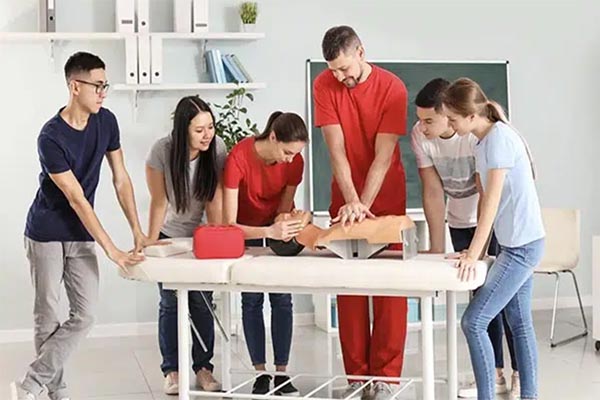
First aid instructor teaching CPR to a group of students using a practice mannequin.

Choosing the right life-saving course can feel like navigating a sea of acronyms. If you are looking to get certified, you’ve likely seen “CPR” and “BLS” used almost interchangeably. However, while they share the same goal—saving lives—they are designed for very different people and settings.

At CPR Classes Near Me, we believe that being prepared is the first step toward making a difference. Whether you are a nursing student, a high school coach, or a concerned parent, knowing the difference between these two certifications will ensure you meet your employer’s requirements and gain the right skills for your environment.

What is the main difference between CPR and BLS?

The primary difference lies in the level of detail and the intended audience.

CPR (Cardiopulmonary Resuscitation) is generally referred to as “Heartsaver” or “Layperson CPR.” It focuses on the fundamental skills needed to keep someone alive until professional help arrives. It is perfect for people who do not work in a medical environment.

BLS (Basic Life Support) is the professional standard for healthcare providers. It includes everything taught in a standard CPR class but adds advanced techniques such as team-based resuscitation, the use of medical-grade equipment like bag-valve masks, and more intense testing.

Who should take a standard CPR certification course?

Standard CPR certification is designed for the general public and “lay rescuers.” If your job involves the safety of others in a non-medical capacity, this is likely the course for you.

Common professions that require standard CPR include:

  • Teachers and daycare providers
  • Fitness instructors and personal trainers
  • Coaches and athletic directors
  • Construction workers and OSHA-regulated employees
  • Flight attendants
  • Security guards

This course is also ideal for parents, grandparents, and community volunteers who simply want to be ready to act during a cardiac emergency.

Who is required to have BLS certification?

BLS is a “professional level” certification. If you work in a clinical setting or are a first responder, your employer or licensing board will almost certainly require BLS rather than standard CPR.

You need BLS certification if you are:

  • A Registered Nurse (RN) or Licensed Practical Nurse (LPN)
  • A Doctor or Physician Assistant
  • A Dentist or Dental Hygienist
  • An EMT or Paramedic
  • A Medical or Nursing Student
  • A Physical or Occupational Therapist

If you are a student entering the healthcare field, it is highly recommended to get your BLS certification now, as most clinical rotations require it before you can step foot in a hospital.

What skills are taught in a CPR course?

A standard CPR class is fast-paced and focuses on muscle memory. The goal is to give you the confidence to jump in without overthinking.

In a standard CPR/AED class, you will learn:

  1. High-Quality Chest Compressions: The correct depth and rate for adults, children, and infants.
  2. Rescue Breathing: Techniques for delivering oxygen to a victim.
  3. AED Operation: How to safely use an Automated External Defibrillator.
  4. Choking Relief: The Heimlich maneuver and modified techniques for infants.
  5. Scene Safety: How to assess an environment before providing help.

What makes BLS training more advanced?

BLS training goes deeper into the “why” and “how” of resuscitation. Because healthcare professionals work in teams, the training emphasizes coordination.

Advanced skills included in BLS but not standard CPR include:

  • Multi-Rescuer Coordination: Learning how to switch roles seamlessly (e.g., one person doing compressions while another handles the airway).
  • Bag-Valve-Mask (BVM) Ventilation: Using a manual resuscitator to provide high-flow oxygen.
  • Pulse Checks: Healthcare providers are trained to check for a pulse for up to 10 seconds, whereas laypersons are taught to start CPR if a victim is unresponsive and not breathing.
  • Advanced Airway Management: How to provide CPR when a patient has a breathing tube or other advanced airway in place.
  • Critical Thinking: Managing complex scenarios where multiple life-threatening issues are happening at once.

Can a BLS certification replace a CPR certification?

Yes. If your job requires CPR but you choose to take a BLS course, your BLS card will almost always satisfy the requirement. Since BLS is a higher level of training that includes all CPR components, it is widely accepted as a superior credential.

However, the reverse is not true. If your employer requires BLS, a standard Heartsaver CPR card will not be accepted. Always check your specific workplace requirements before booking your seat.

Is First Aid included in these certifications?

This is a common point of confusion. Standard CPR and BLS are primarily focused on cardiac and respiratory arrest. They do not automatically include First Aid training.

  • For CPR: Many people choose to take a “CPR & First Aid” combo class. This is common for teachers and daycare workers who need to know how to handle scrapes, burns, and broken bones in addition to CPR.
  • For BLS: First Aid is almost never a standard part of a BLS class. Healthcare providers usually receive First Aid training through their medical schooling or separate certifications.

At CPR Classes Near Me, we offer both standalone BLS and combined CPR/First Aid options to ensure you get exactly what you need for your career.

How long do these certifications last?

Both CPR and BLS certifications are valid for two years.

Science and medical guidelines are constantly evolving. Every five years, the American Heart Association updates its protocols based on the latest life-saving data. Staying certified every two years ensures your skills remain sharp and that you are using the most effective techniques currently known to medicine.

Why is in-person training better than online-only?

While “online-only” certifications exist, they are rarely accepted by employers, especially in healthcare and education.

There is no substitute for the hands-on experience of compressing a manikin’s chest. In an in-person class at CPR Classes Near Me, an instructor can correct your hand placement, ensure you are hitting the right depth, and help you get comfortable with the rhythm of compressions. That physical “muscle memory” is what saves lives when the pressure is on.

How do I choose the right class?

To make the right choice, ask yourself these three questions:

  1. What is my profession? (Healthcare = BLS; General Public = CPR)
  2. Does my employer require First Aid? (If yes, look for a combo class.)
  3. Is the certification AHA-approved? (The American Heart Association is the gold standard for employer acceptance.)

Conclusion

Whether you choose CPR or BLS, the most important step is simply getting trained. Cardiac arrest can happen anywhere—at the gym, in the grocery store, or at the dinner table. Having the skills to intervene can double or even triple a victim’s chance of survival.

If you are ready to gain the confidence to save a life, contact CPR Classes Near Me today. Our expert instructors provide high-quality, AHA-certified training in a relaxed and professional environment. Don’t wait for an emergency to happen—be the one who knows what to do.

Frequently Asked Questions (FAQ)

Is BLS harder than CPR?

While BLS is more comprehensive and includes a written exam, it is not necessarily “harder.” It simply covers more ground. Our instructors at CPR Classes Near Me are experts at breaking down complex medical concepts so that every student leaves feeling confident, regardless of their medical background.

Will my BLS card say CPR on it?

Most BLS cards are titled “Basic Life Support (BLS) Provider.” Since BLS is the highest level of CPR training, it is understood by all employers that you are fully certified in CPR and AED usage.

How long does a BLS class take?

A typical initial BLS certification class takes about 4 to 5 hours. This includes hands-on practice, video instruction, and the written and skills tests. If you are renewing a current card, the process is usually shorter.

Does CPR certification cover infants?

Yes, at CPR Classes Near Me, our standard CPR and BLS courses cover adult, child, and infant techniques. This is essential for parents and those working in schools or childcare settings.

What should I wear to my class?

Since both CPR and BLS involve significant hands-on practice on the floor or at tables with manikins, we recommend wearing comfortable, casual clothing that allows you to move easily.

CPR Certification: What It Is and Why It Matters

Imagine you are at a local grocery store, a high school basketball game, or a family dinner. Suddenly, someone nearby collapses. They aren’t breathing, and they don’t have a pulse. At that moment, the clock starts ticking. Every second that passes without intervention decreases their chance of survival. Would you know what to do?

This is where CPR certification moves from being a “good idea” to an “essential life skill.” While many people think CPR is only for doctors or nurses, the reality is that most cardiac arrests happen in public or at home. The person most likely to save a life isn’t a surgeon in an operating room—it’s a bystander with the right training.

In this guide, we’ll dive deep into what CPR certification actually entails, why it is so critical for everyone (not just healthcare pros), and how you can take the first step toward becoming a neighborhood hero.

What Exactly Is CPR Certification?

CPR certification is a formal credential that proves you have undergone professional training in Cardiopulmonary Resuscitation. It isn’t just about reading a book or watching a video; it is a comprehensive educational process that combines theory with hands-on practice.

When you earn a certification, it means you have demonstrated to a certified instructor that you understand the mechanics of the human heart and lungs. You’ve shown you can perform high-quality chest compressions and provide rescue breaths according to current medical standards, such as those set by the American Heart Association (AHA) or the Red Cross.

A typical certification covers:

  • Recognizing the signs of sudden cardiac arrest.
  • How to call for emergency services effectively.
  • The proper depth and rate of chest compressions.
  • The use of an Automated External Defibrillator (AED).
  • How to assist a choking victim.

Most certifications are valid for two years. This is because life-saving skills are “perishable.” Without practice, your technique can fade, and medical guidelines are updated regularly as we learn more about how to save lives more effectively.

Why Is CPR Certification So Important for the General Public?

You might think, “I’ll just call 911.” While calling 911 is the first step, emergency medical services (EMS) take time to arrive—often between 8 to 12 minutes. Brain damage can begin in as little as 4 minutes without oxygen. CPR acts as a manual pump, keeping oxygenated blood flowing to the brain until professionals arrive.

Here are a few reasons why it matters for everyone:

  • Immediate Action: You become the bridge between the collapse and the arrival of the ambulance.
  • Confidence Over Panic: In an emergency, adrenaline spikes. Without training, most people freeze. Certification gives you a “mental script” to follow, allowing you to act decisively.
  • Protecting Loved Ones: Statistically, 70% of out-of-hospital cardiac arrests happen at home. Your training is most likely to be used on a family member or friend.
  • Empowering Communities: A community where more people are certified is a safer community. It creates a network of safety in parks, offices, and schools.

What Happens During a CPR Training Class?

If you’ve never been to a CPR class, you might feel a bit nervous about what to expect. There’s no need to worry. CPR classes are designed to be supportive, engaging, and highly practical. They are built for people of all backgrounds and physical abilities.

When you walk into a class at CPR Classes Near Me, you can expect the following:

  1. Expert Instruction: You’ll be guided by an experienced instructor who has seen these scenarios in real life. They explain the “why” behind every movement.
  2. Hands-On Practice: You won’t just sit in a chair. You’ll use medical-grade manikins to practice compressions. This helps you get a feel for how much pressure is required.
  3. AED Demonstration: You will learn how to use an Automated External Defibrillator. These machines are very easy to use—they actually talk to you—but practicing with a trainer model builds the confidence to use one in a real emergency.
  4. Skills Testing: At the end of the session, the instructor will watch you perform the skills you’ve learned. Once you demonstrate proficiency, you receive your certification.

The goal isn’t to make you a doctor; it’s to make you a capable first responder who can keep someone stable until the cavalry arrives.

Is Online CPR Certification Enough?

In the digital age, many people wonder if they can just get certified through a quick online quiz. While online courses can provide great “head knowledge,” they often lack the most important element: the hands-on component.

Performing CPR is a physical task. It requires a specific depth (about 2 inches for adults) and a specific rhythm (100–120 beats per minute). It is very difficult to judge if you are doing this correctly without a manikin that provides feedback or an instructor who can correct your form.

Most employers—especially in healthcare, education, and childcare—require a certification that includes an in-person skills check. At CPR Classes Near Me, we focus on that hands-on experience because we know it’s what actually saves lives when the pressure is on.

Who Should Consider Getting Certified?

The short answer is: everyone. However, for certain groups, CPR certification is either a job requirement or a critical safety necessity.

  • Parents and Caregivers: Infants and children require different CPR techniques than adults. Learning these can prevent a tragedy during a choking or drowning incident.
  • Teachers and Coaches: Educators are on the front lines. With kids running around and playing sports, the risk of injury or respiratory distress is higher.
  • Fitness Professionals: Gyms are high-risk environments for cardiac events due to the physical strain on the heart.
  • Workplace Safety Officers: Every office should have at least a few people who know how to use the office AED and perform CPR.
  • Healthcare Providers: For nurses, dental assistants, and physical therapists, Basic Life Support (BLS) certification is a standard requirement for employment.

What Is the Difference Between CPR and BLS?

When looking for classes, you might see two different terms: Heartsaver CPR and BLS (Basic Life Support). It’s important to know which one you need.

  • Heartsaver CPR/AED: This is designed for the general public—teachers, fitness trainers, and corporate employees. It covers the basics of CPR, AED use, and choking relief for adults, children, and infants.
  • BLS (Basic Life Support): This is a more advanced level of training designed for healthcare professionals. It includes everything in the Heartsaver course plus advanced techniques like multi-rescuer coordination and the use of bag-mask devices.

If you aren’t sure which one to take, the team at CPR Classes Near Me can help you determine which course fits your needs or job requirements.

How Does an AED Work With CPR?

You’ve probably seen AED boxes in airports or malls. They are small, portable devices that can literally “reboot” a heart that has an irregular rhythm. CPR and AEDs are a team.

While CPR keeps the blood moving manually, it rarely stops the underlying cause of the cardiac arrest. The AED is the tool that can stop the chaotic electrical activity in the heart (ventricular fibrillation) and allow a normal rhythm to return.

In a certification class, you learn:

  • Where to place the electrode pads.
  • How to ensure no one is touching the victim when the shock is delivered.
  • How to immediately resume CPR after the shock.

Using an AED within the first 3 to 5 minutes of collapse can increase survival rates to as high as 50% to 70%. Without an AED, the chances drop significantly every minute.

How Can You Maintain Your CPR Skills?

As mentioned earlier, CPR certification typically lasts for two years. But why? Studies show that CPR skills begin to decline as early as six months after training. You might forget the exact compression-to-breath ratio or feel hesitant about where to place your hands.

To stay sharp, we recommend:

  • Regular Review: Glance at your provider manual or digital resources every few months.
  • Watch Refreshers: Look at updated videos on proper technique.
  • Recertify Early: Don’t wait for your card to expire. Schedule your renewal class a month or two in advance.

By keeping your certification current, you ensure that if you ever have to use your skills, they will be second nature.

Why Choose a Local Class Over a National Chain?

When you search for “CPR classes,” you’ll find plenty of options. However, there is a distinct advantage to choosing a local provider like CPR Classes Near Me.

  • Personalized Attention: Smaller class sizes mean the instructor can spend more time with you, ensuring your technique is perfect.
  • Local Instructors: Our instructors are members of your community. They understand local emergency response times and community needs.
  • Flexible Scheduling: We know you’re busy. Local providers often offer more frequent classes at times that work for working professionals and busy parents.
  • Quick Documentation: Getting your certification card shouldn’t take weeks. We prioritize getting your credentials to you as quickly as possible.

Conclusion

CPR certification is more than just a piece of paper or a digital card. It is an investment in the safety of your family, your coworkers, and your community. It transforms you from a helpless bystander into a capable rescuer. Whether you are a parent wanting to protect your child, a professional meeting a job requirement, or simply a Good Samaritan, the skills you learn in a CPR class are the most valuable skills you will ever own.

The heart is a fragile thing, but with the right training, you have the power to keep it beating. Don’t wait for an emergency to happen before you decide to learn. Be prepared, be confident, and be the difference between a tragedy and a success story.

Ready to gain the skills that save lives? Contact CPR Classes Near Me today to find a local class and get certified!

FAQ Section

How long does a CPR certification class take?

Most in-person CPR and AED classes for the general public take between 2 to 3 hours. If you are taking a professional-level BLS (Basic Life Support) course, it may take 3 to 4 hours. The duration depends on the size of the class and the specific modules being covered (such as adding first aid).

Is the CPR test difficult?

The test is designed to ensure you understand the life-saving basics, not to “trick” you. It consists of a practical skills demonstration where you show the instructor you can perform compressions and use an AED, followed by a simple multiple-choice written exam. Most students find that if they pay attention during the hands-on portion, the test is very manageable.

Do I need to be physically fit to perform CPR?

While CPR is a physical activity, you do not need to be an athlete to do it. The most important factor is technique. Instructors teach you how to use your body weight rather than just your arm strength. If you have physical limitations, instructors can often show you modifications or how to direct others to assist.

Can I be sued for performing CPR?

In the United States, “Good Samaritan” laws protect individuals who provide voluntary assistance in an emergency. As long as you act in good faith and within the scope of your training without expecting compensation, you are generally protected from legal liability.

Does CPR always work?

Unfortunately, CPR is not a guarantee of survival. Its purpose is to buy time for professional medical help and defibrillation to arrive. However, performing CPR significantly increases the victim’s chances of survival compared to doing nothing at all. Even if the outcome isn’t what we hope for, knowing you did everything possible is vital.

Is Rescue Breathing Necessary? Modern CPR vs. Hands-Only Guide

If you’ve taken a CPR class in the last decade, you’ve likely encountered a great debate: is rescue breathing—the classic mouth-to-mouth—still necessary? It is one of the most common questions people ask when discussing modern Cardiopulmonary Resuscitation (CPR) guidelines. The rise of Hands-Only CPR has led many to believe that the vital breaths have been completely eliminated from life-saving protocols.

This is a powerful misconception.

The truth is much more nuanced than a simple “yes” or “no.” Rescue breathing has not disappeared; rather, its role has been refined and clarified based on the specific cause of the emergency and the training level of the rescuer. This shift was intentional, designed by organizations like the American Heart Association (AHA) to empower the general public to act immediately in an emergency. However, for many life-threatening situations—especially those involving children or non-cardiac arrests—rescue breathing remains absolutely essential. Understanding when to use it is key to becoming a truly prepared lifesaver.

What is the difference between Hands-Only CPR and the traditional method?

To cut through the confusion, we first need to clearly define the two main approaches to CPR in the modern era. These techniques are tailored for different situations and different levels of training.

Hands-Only CPR: The Simplest Intervention

Hands-Only CPR is the most simplified version of resuscitation. It focuses entirely on continuous, high-quality chest compressions.

  • This method is recommended for the untrained bystander who witnesses an adult suddenly collapse.
  • The goal is to push hard and fast in the center of the chest at a rate of 100 to 120 compressions per minute.
  • It eliminates the need for rescue breaths, lowering the psychological barrier that often prevents people from helping a stranger.

Standard CPR: The Comprehensive Technique

Standard CPR is the traditional, comprehensive approach required for certification.

  • This technique involves alternating cycles of chest compressions and rescue breaths at a defined ratio.
  • The current standard for a single rescuer is 30 compressions followed by 2 rescue breaths (30:2).
  • This is the skill set that all trained and certified providers—from healthcare professionals to formally trained lay rescuers—are expected to master.

The critical difference is the addition of the two breaths. Hands-Only CPR prioritizes circulation, while Standard CPR aims to provide both circulation and supplemental oxygen.

Is Rescue Breathing Necessary? Modern CPR vs. Hands-Only Guide

Why did the guidelines introduce Hands-Only CPR for adult bystanders?

The introduction of Hands-Only CPR was a landmark decision rooted in research on human behavior and cardiac physiology. The simple act of eliminating rescue breathing solved several critical problems that hampered bystander intervention.

Did fear and hesitation stop people from performing CPR?

Studies revealed that the requirement for mouth-to-mouth resuscitation was the single biggest obstacle to bystander action. People were often unwilling or hesitant to provide breaths.

  • Fear of Infection: Concerns about disease transmission, which were amplified during global health events, significantly reduced the public’s willingness to perform mouth-to-mouth on a stranger.
  • Fear of Failure: Many people worried about performing the breath technique incorrectly, worrying they might hurt the victim or fail to provide enough air.
  • Overcoming Reluctance: By removing the requirement for breathing, the guidelines provided an immediate, simple call to action: push hard and fast. This simplicity encourages intervention, which is crucial because some CPR is always better than no CPR.

Is the victim’s blood already oxygenated during a sudden collapse?

Yes, in the most common scenario for adult cardiac arrest—Sudden Cardiac Arrest (SCA)—there is typically enough oxygen stored in the blood to sustain life for a few minutes. SCA occurs when the heart’s electrical system malfunctions, causing an abrupt stop in pumping.

  • Because the person was usually breathing normally seconds before the collapse, their bloodstream remains oxygenated.
  • For the first crucial minutes, the priority is circulation, not ventilation.
  • Chest compressions are vital because they circulate this existing, oxygen-rich blood to the brain and heart until medical professionals arrive.

Does pausing compressions for rescue breaths reduce survival chances?

Every pause in chest compressions causes a dramatic drop in blood pressure and coronary perfusion pressure—the pressure that pumps blood to the heart itself.

  • Rescue breaths require the rescuer to stop compressions, even if only for a few seconds.
  • Continuous compressions maintain a more steady and effective flow of blood to the vital organs.
  • For victims of SCA in the first critical minutes, maximizing uninterrupted blood flow often outweighs the immediate benefit of supplemental breaths. Hands-Only CPR ensures the flow keeps moving.

When is rescue breathing absolutely necessary to save a life?

Despite the focus on Hands-Only CPR for bystanders, rescue breathing is still an absolutely non-negotiable component of resuscitation in numerous life-threatening situations. These scenarios fall under the category of Secondary Cardiac Arrest, where the core problem is a lack of oxygen, not an electrical failure of the heart.

Do children and infants require rescue breaths?

Yes, they do. Cardiac arrest in infants and children is overwhelmingly caused by respiratory failure—a problem with breathing—rather than a sudden, electrical heart issue like in adults.

  • Priority is Oxygen: For pediatric victims, the blood is typically oxygen-depleted before the heart stops.
  • Standard of Care: Therefore, Standard CPR (30:2 or 15:2 with two rescuers), which includes rescue breaths, is the mandatory standard of care for children and infants.
  • Hands-Only CPR is not recommended as the primary approach for pediatric victims by major guidelines.

What are the specific adult emergencies that always require rescue breathing?

Any incident where the victim has been deprived of oxygen before their heart stops requires immediate supplemental air. In these cases, simply circulating oxygen-depleted blood with compressions will not be effective long-term.

Critical adult scenarios requiring rescue breathing include:

  • Drowning Victims: Lungs are blocked with water, and the body desperately needs new oxygen.
  • Opioid Overdose: The drug suppresses the respiratory drive, causing breathing to slow and stop before the heart fails.
  • Choking Incidents: An airway blockage prevents all oxygen from entering the lungs. Rescue breaths are necessary immediately after clearing the obstruction.
  • Trauma or Smoke Inhalation: Incidents that directly compromise the airway or lungs require immediate ventilation.

In these respiratory-related emergencies, a trained individual must perform the full 30 compressions to 2 breaths cycle to effectively re-oxygenate the bloodstream.

Why are trained rescuers still required to master the full 30:2 technique?
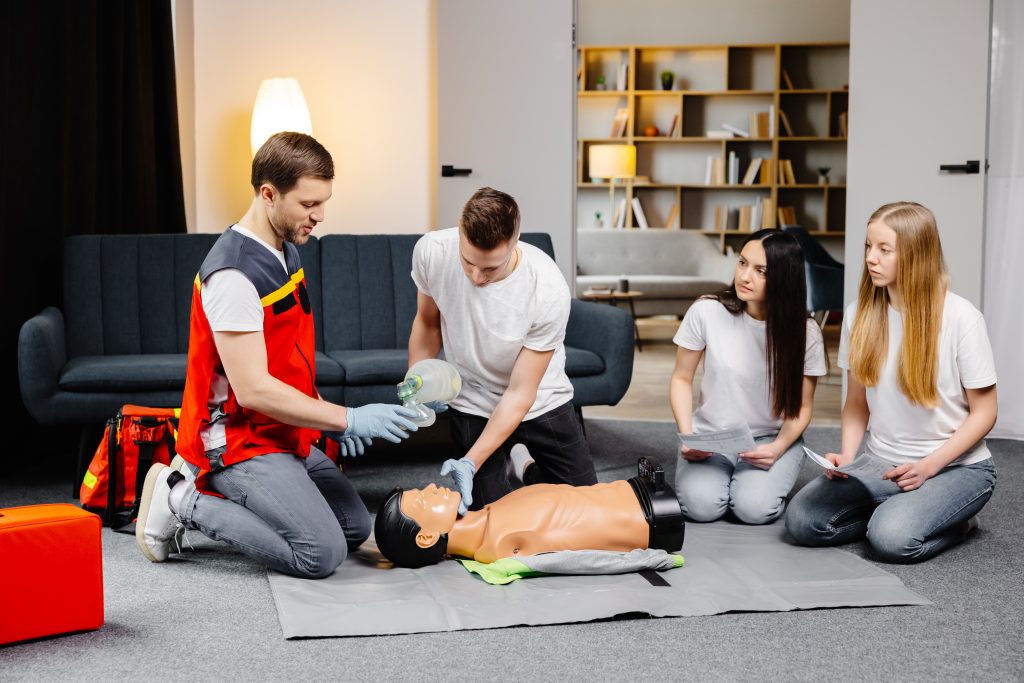
Young man instructor helping to make first aid heart compressions with dummy during the group training indoors.

Why are trained rescuers still required to master the full 30:2 technique?

For anyone who pursues formal, certified training, such as the Basic Life Support (BLS) credential, the expectation is that they master the complete, Standard CPR technique, including rescue breaths.

Does professional training allow for better decision-making?

Yes, professional training equips a rescuer with the skills and knowledge to make a rapid, accurate assessment.

  • A certified provider is not limited to one technique; they are trained to diagnose the cause of the emergency—cardiac or respiratory—and then choose the most effective intervention.
  • If a trained person finds a victim of a suspected drug overdose, they know to prioritize the delivery of oxygen via rescue breaths.
  • They are also trained to handle multi-rescuer situations and utilize team dynamics to ensure both uninterrupted compressions and timely breaths are delivered.

Do rescue breaths matter if EMS arrival is delayed?

Scientific research suggests that the benefits of Hands-Only CPR are most pronounced in the first few minutes of Sudden Cardiac Arrest. However, if the local Emergency Medical Services (EMS) response time is prolonged (potentially beyond 10 to 14 minutes), the body’s stored oxygen will become fully depleted.

  • During prolonged resuscitation efforts, studies suggest that Standard CPR (compressions plus breaths) can lead to higher long-term survival rates compared to compression-only CPR.
  • A trained rescuer is prepared for this eventuality and can provide the necessary ventilations to sustain the patient over a longer duration.

Can trained rescuers use safety devices for rescue breathing?

A crucial component of formal certification is learning how to use barrier devices, such as a CPR face shield or a pocket mask.

  • These devices allow a trained rescuer to deliver effective rescue breaths while creating a physical separation.
  • This minimizes the risk of infection and overcomes the psychological reluctance associated with direct mouth-to-mouth contact.
  • Mastering the use of a barrier device ensures that a trained provider is never forced to choose between personal safety and providing the necessary breaths.

Conclusion: The Final Verdict on Rescue Breathing

The answer to the question, “Is rescue breathing still necessary?” is clear: Absolutely, yes, it is necessary.

The modern guidelines simply clarify who needs to perform it and when.

  • For the untrained bystander witnessing an adult collapse: Hands-Only CPR is the heroic, effective intervention that saves precious time.
  • For all pediatric victims and adult respiratory arrests: Rescue breathing is a mandatory, life-saving skill that must be performed.
  • For the certified provider: Standard CPR (30:2) remains the gold standard, equipping you to handle every type of arrest scenario with confidence and competence.

Do not allow the public promotion of Hands-Only CPR to create a gap in your own knowledge. Being able to provide rescue breaths is not an outdated skill; it is a critical differentiator that allows you to save a child, a drowning victim, or someone suffering from an overdose. Your willingness to learn and use this full skillset makes you an indispensable link in the chain of survival.

Ready to master the full scope of life-saving skills?

Contact CPR Classes Near Me today to register for an American Heart Association certified BLS CPR and First Aid course and ensure you are prepared for every emergency scenario.

Modern CPR: Frequently Asked Questions (FAQ)

What is the primary reason the American Heart Association recommends Hands-Only CPR for untrained bystanders?

The primary reason is to overcome the psychological barriers that cause people to hesitate or refuse to help. Studies showed that the need for mouth-to-mouth resuscitation was the biggest deterrent to bystander action. By recommending the simple action of continuous chest compressions (Hands-Only CPR), the AHA encourages immediate intervention. This is crucial because for an adult who suffers a sudden cardiac arrest, the most important action in the first few minutes is to circulate the oxygen-rich blood that is already in their system.

If I am trained, should I always perform the 30 compressions to 2 breaths ratio?

If you are fully trained and certified, the 30 compressions to 2 breaths (30:2) ratio is the standard technique you should be prepared to use. However, you should tailor your response based on the situation and your professional judgment. If you are alone and the victim is an adult who collapsed suddenly, you may choose to begin with continuous compressions to minimize interruption, especially if you do not have a barrier device. If the victim is a child or the cause of the arrest is respiratory (like drowning), you must use the full 30:2 ratio immediately. The key is that you possess the skill for both.

Does the victim need rescue breathing immediately if the cardiac arrest was caused by an opioid overdose?

Yes, if the cardiac arrest is caused by an opioid overdose, the victim needs rescue breathing immediately. Opioids cause breathing to slow down and then stop before the heart fails, meaning the person’s blood is already severely oxygen-depleted. In this scenario, simply circulating deoxygenated blood with compressions is far less effective. A trained rescuer should initiate the full 30:2 cycle of compressions and breaths to deliver vital oxygen to the body.

How long is the CPR certification valid, and can I renew it?

The standard CPR certification card, such as the American Heart Association BLS certification, is valid for two years. Yes, you absolutely can and should renew it. Most training organizations offer renewal courses that are equivalent to the initial course but are designed to refresh your knowledge and skills, ensuring you remain current with the latest life-saving guidelines and techniques.

Why is there a different compression-to-breath ratio for children with two rescuers?

When two trained rescuers are performing CPR on an infant or child, the compression-to-breath ratio is typically 15 compressions followed by 2 breaths (15:2). This lower compression-to-breath ratio is used because pediatric cardiac arrest is usually due to a lack of oxygen (respiratory failure). The 15:2 ratio prioritizes the delivery of more frequent ventilations to the child or infant, which is necessary to re-oxygenate their blood, while still ensuring blood flow is maintained by the chest compressions.