Are You Making These 7 Common CPR Certification Mistakes?

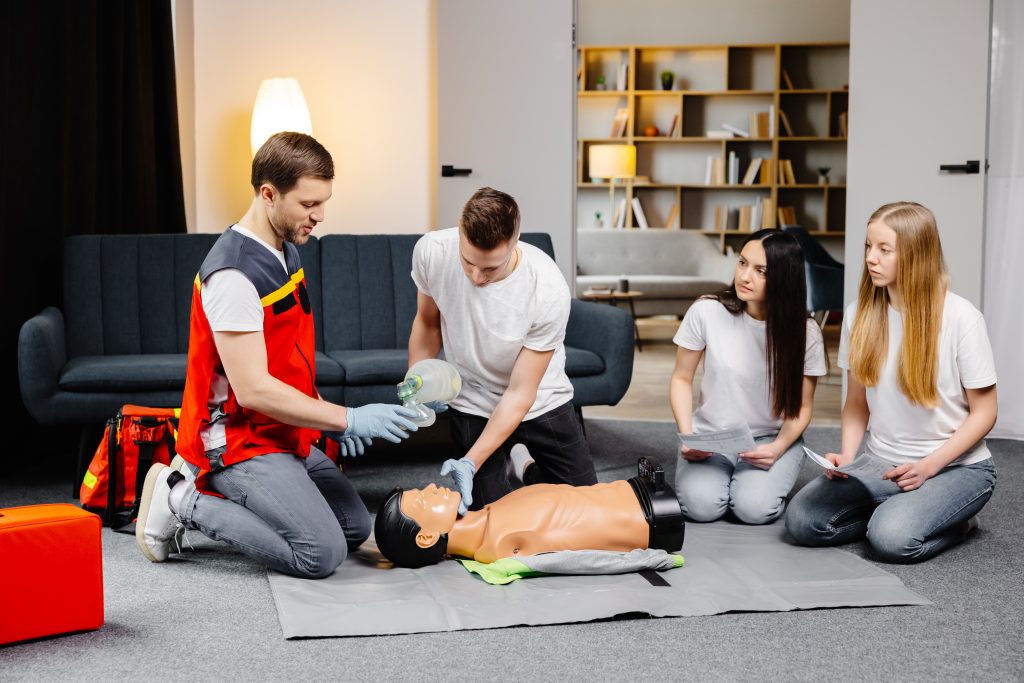
CPR training session with students practicing chest compressions on a first aid mannequin

Getting your CPR certification is one of the most proactive steps you can take to protect your family, coworkers, and community. However, simply showing up to a class doesn’t guarantee you’ll walk away with the skills—or the confidence—to save a life. Many students fall into the same traps, leading to ineffective techniques or even failing their practical exams.

At CPR Classes Near Me, we’ve seen thousands of students walk through our doors. We’ve noticed a pattern in where people struggle most. Whether you are a first-timer or a seasoned pro looking for a renewal, understanding these common pitfalls is the first step toward mastery.

In this guide, we’ll dive deep into the most frequent CPR certification mistakes and, more importantly, how you can avoid them to ensure you’re ready when the clock is ticking.

Why is proper hand placement so important?

One of the most frequent errors we see in the classroom is incorrect hand placement. It sounds simple—place your hands in the center of the chest—but in the heat of a timed assessment, many students drift.

Some students place their hands too high, near the neck, or too low, over the stomach (xiphoid process). Placing hands too low can cause internal injuries, such as a fractured breastbone or damage to the liver, rather than effectively pumping the heart.

To avoid this:

  • Locate the “Nipple Line”: For an adult, the center of the chest between the nipples is your target.
  • Use the Heel of Your Hand: Only the heel of your bottom hand should touch the chest. Interlace your fingers and pull them upward so they don’t press against the ribs.
  • Lock Your Elbows: Keep your arms straight and your shoulders directly over your hands. This allows you to use your body weight rather than just your arm strength.

Are your compressions deep enough to save a life?

“Push harder” is the most common phrase heard in a CPR class. It is human nature to be afraid of hurting the person you are trying to help. Students often perform “shallow” compressions because they are worried about breaking ribs.

However, if you don’t compress the chest at least 2 inches for an adult, the blood simply won’t reach the brain. During certification, manikins are designed with internal “clickers” or lights to tell you if you’ve hit the right depth. If you don’t hear that click, you aren’t doing effective CPR.

How to get it right:

  1. Trust the Manikin: Use the practice time to find the “sweet spot” where the click occurs.
  2. Accept the Risk: Understand that ribs may crack during real CPR, and that is a secondary concern compared to a stopped heart.
  3. Lean Into It: Use your upper body weight to drive the compression. If you find yourself getting tired quickly, you’re likely using only your arms.

Is your compression rate too fast or too slow?

Timing is everything. If you go too slow, you won’t maintain enough blood pressure to keep the brain alive. If you go too fast (over 120 beats per minute), the heart doesn’t have enough time to refill with blood between squeezes.

Many students get nervous and start pumping as fast as they can, which is a recipe for exhaustion and ineffective resuscitation.

To stay on track:

  • Think of the Music: The classic song “Stayin’ Alive” by the Bee Gees is 103 beats per minute—the perfect pace. Other options include “Dancing Queen” by ABBA or “Just Dance” by Lady Gaga.
  • Count Out Loud: “One, two, three, four…” Counting out loud helps you maintain a steady rhythm and keeps your breathing regulated.
  • Practice with a Metronome: Many modern CPR classes use metronomes or apps to help students internalize the 100–120 BPM rhythm.

Do you forget to let the chest recoil?

This is the “silent killer” of effective CPR. Recoil is the act of letting the chest come all the way back up to its neutral position after a compression.

Many students “lean” on the chest. This means they never fully release the pressure between compressions. If the chest doesn’t fully recoil, the heart can’t refill with blood. It’s like trying to pump a half-empty bellows—you’re working hard, but very little is happening.

How to avoid leaning:

  • Lighten the Load: After the downward push, make sure your weight is completely off the manikin, though your hands should remain in contact with the skin so you don’t lose your placement.
  • Think “Up and Down”: Focus as much on the “up” motion as you do on the “down” motion.
  • Check Your Posture: If you are leaning too far forward, you’ll naturally keep weight on the chest. Ensure your shoulders are directly over your hands, not in front of them.

Are you over-inflating the lungs during rescue breaths?

While many layperson classes focus on “Hands-Only CPR,” most certification levels still require rescue breaths. A common mistake is blowing too much air or blowing too hard into the victim.

Over-inflating the lungs can cause air to enter the stomach (gastric inflation). This often leads to vomiting, which can block the airway and create a much messier, more dangerous situation.

To give perfect breaths:

  • Watch the Chest: You only need to provide enough air to see the chest visibly rise. As soon as it starts to lift, stop blowing.
  • One Second Each: Each breath should last about one second.
  • Tilt the Head: Ensure you are using the “head-tilt, chin-lift” maneuver to open the airway properly. If the airway isn’t open, the air won’t go in no matter how hard you blow.

Why do students hesitate to use an AED?

In a certification class, the Automated External Defibrillator (AED) is often the part that makes students the most nervous. They worry about “zapping” someone who doesn’t need it or getting the pads in the wrong place.

The truth is, an AED is designed to be foolproof. The biggest mistake is delaying its use. Every minute that passes without a shock (if one is needed) decreases the chance of survival by about 10%.

To master the AED:

  1. Turn it on immediately: As soon as the device arrives, power it up. It will talk you through the rest of the steps.
  2. Follow the pictures: The pads have clear diagrams showing exactly where to place them.
  3. Clear the area: Ensure no one is touching the person when the AED is analyzing the rhythm or delivering a shock.

Is your certification actually valid?

Believe it or not, one of the biggest “mistakes” happens before you even step into a classroom: choosing the wrong course. There are many “online-only” certifications that claim to be valid but are not accepted by employers or OSHA because they lack a hands-on skills assessment.

If you need a certification for work—whether you are a teacher, a construction worker, or a coach—you must ensure the course includes an in-person component with a certified instructor.

How to choose correctly:

  • Check Accreditation: Look for courses backed by the American Heart Association (AHA) or the American Red Cross.
  • Avoid “Instant” Online Certificates: If there is no manikin involved, your employer likely won’t accept it.
  • Verify the Type: Ensure you are taking a “Provider” level course if required for your job, rather than just a general awareness class.

How can you summarize these common errors?

To ensure you are fully prepared, it is helpful to look at these mistakes as a checklist for your next practice session. Avoiding these specific errors will significantly improve your chances of passing your exam and saving a life.

  • Hand Placement: Instead of drifting toward the ribs or neck, keep your hands centered between the nipples to avoid internal injury.
  • Compression Depth: Don’t be afraid to push. You must reach at least 2 inches to circulate blood; use the manikin’s feedback lights or clicks as your guide.
  • Rhythm and Pace: Avoid the urge to rush. Stay between 100 and 120 beats per minute by using a song or metronome to guide your speed.
  • The Recoil Phase: Remember that the heart fills when you let go. Never lean on the chest; allow it to return to its natural height after every push.
  • Ventilation Volume: Don’t over-inflate. Stop your rescue breath the moment you see the chest rise to prevent stomach inflation and vomiting.
  • AED Speed: Never wait to use an AED. The moment it is available, turn it on and let the voice prompts lead the way.
  • Course Choice: Avoid the “online only” trap. Ensure your certification includes an in-person skills check to meet workplace requirements.

Conclusion

Mastering CPR isn’t about being a medical genius; it’s about muscle memory, composure, and following the most up-to-date guidelines. By being aware of these common certification mistakes—like leaning on the chest or pushing too shallowly—you can focus your training on the techniques that actually save lives.

When you train with CPR Classes Near Me, our experienced instructors are dedicated to catching these mistakes early. We provide the hands-on feedback you need to feel confident, not just during your test, but in a real-world emergency. Don’t wait until a crisis happens to realize your technique is off.

Ready to get certified the right way? Contact CPR Classes Near Me today to find a local, accredited class that fits your schedule!

Frequently Asked Questions (FAQ)

Can I fail a CPR certification class?

Yes, it is possible to fail if you cannot demonstrate the physical skills required by the certifying body. This usually involves failing to reach the correct compression depth, rate, or failing to use the AED safely. However, a good instructor will work with you during the practice session to ensure you are ready before the final test.

Do I have to do mouth-to-mouth during the test?

In most certified “Healthcare Provider” or “Professional Rescuer” courses, rescue breaths are required. However, many “Heartsaver” or layperson courses focus on “Hands-Only” CPR. Most classes will provide a pocket mask or a barrier device so you are never in direct contact with the manikin’s mouth.

What happens if I break a rib during CPR?

In a real-life emergency, breaking a rib is a common side effect of high-quality CPR. The priority is to circulate blood to the brain. Most “Good Samaritan” laws protect rescuers from liability for such injuries during life-saving attempts. In a certification class, you practice on manikins to learn the right amount of force to use.

How often do I need to renew my certification?

Most CPR certifications are valid for two years. Because guidelines are updated periodically and physical skills can degrade over time, you must take a renewal course every 24 months to remain “current.”

Are online-only CPR certifications legitimate?

While online courses provide great theoretical knowledge, most employers and regulatory bodies (like OSHA) do not recognize “online-only” certifications. To be fully certified, you almost always need a “Blended Learning” approach where you complete the theory online but perform the physical skills in front of a certified instructor.

Is Rescue Breathing Necessary? Modern CPR vs. Hands-Only Guide

If you’ve taken a CPR class in the last decade, you’ve likely encountered a great debate: is rescue breathing—the classic mouth-to-mouth—still necessary? It is one of the most common questions people ask when discussing modern Cardiopulmonary Resuscitation (CPR) guidelines. The rise of Hands-Only CPR has led many to believe that the vital breaths have been completely eliminated from life-saving protocols.

This is a powerful misconception.

The truth is much more nuanced than a simple “yes” or “no.” Rescue breathing has not disappeared; rather, its role has been refined and clarified based on the specific cause of the emergency and the training level of the rescuer. This shift was intentional, designed by organizations like the American Heart Association (AHA) to empower the general public to act immediately in an emergency. However, for many life-threatening situations—especially those involving children or non-cardiac arrests—rescue breathing remains absolutely essential. Understanding when to use it is key to becoming a truly prepared lifesaver.

What is the difference between Hands-Only CPR and the traditional method?

To cut through the confusion, we first need to clearly define the two main approaches to CPR in the modern era. These techniques are tailored for different situations and different levels of training.

Hands-Only CPR: The Simplest Intervention

Hands-Only CPR is the most simplified version of resuscitation. It focuses entirely on continuous, high-quality chest compressions.

  • This method is recommended for the untrained bystander who witnesses an adult suddenly collapse.
  • The goal is to push hard and fast in the center of the chest at a rate of 100 to 120 compressions per minute.
  • It eliminates the need for rescue breaths, lowering the psychological barrier that often prevents people from helping a stranger.

Standard CPR: The Comprehensive Technique

Standard CPR is the traditional, comprehensive approach required for certification.

  • This technique involves alternating cycles of chest compressions and rescue breaths at a defined ratio.
  • The current standard for a single rescuer is 30 compressions followed by 2 rescue breaths (30:2).
  • This is the skill set that all trained and certified providers—from healthcare professionals to formally trained lay rescuers—are expected to master.

The critical difference is the addition of the two breaths. Hands-Only CPR prioritizes circulation, while Standard CPR aims to provide both circulation and supplemental oxygen.

Is Rescue Breathing Necessary? Modern CPR vs. Hands-Only Guide

Why did the guidelines introduce Hands-Only CPR for adult bystanders?

The introduction of Hands-Only CPR was a landmark decision rooted in research on human behavior and cardiac physiology. The simple act of eliminating rescue breathing solved several critical problems that hampered bystander intervention.

Did fear and hesitation stop people from performing CPR?

Studies revealed that the requirement for mouth-to-mouth resuscitation was the single biggest obstacle to bystander action. People were often unwilling or hesitant to provide breaths.

  • Fear of Infection: Concerns about disease transmission, which were amplified during global health events, significantly reduced the public’s willingness to perform mouth-to-mouth on a stranger.
  • Fear of Failure: Many people worried about performing the breath technique incorrectly, worrying they might hurt the victim or fail to provide enough air.
  • Overcoming Reluctance: By removing the requirement for breathing, the guidelines provided an immediate, simple call to action: push hard and fast. This simplicity encourages intervention, which is crucial because some CPR is always better than no CPR.

Is the victim’s blood already oxygenated during a sudden collapse?

Yes, in the most common scenario for adult cardiac arrest—Sudden Cardiac Arrest (SCA)—there is typically enough oxygen stored in the blood to sustain life for a few minutes. SCA occurs when the heart’s electrical system malfunctions, causing an abrupt stop in pumping.

  • Because the person was usually breathing normally seconds before the collapse, their bloodstream remains oxygenated.
  • For the first crucial minutes, the priority is circulation, not ventilation.
  • Chest compressions are vital because they circulate this existing, oxygen-rich blood to the brain and heart until medical professionals arrive.

Does pausing compressions for rescue breaths reduce survival chances?

Every pause in chest compressions causes a dramatic drop in blood pressure and coronary perfusion pressure—the pressure that pumps blood to the heart itself.

  • Rescue breaths require the rescuer to stop compressions, even if only for a few seconds.
  • Continuous compressions maintain a more steady and effective flow of blood to the vital organs.
  • For victims of SCA in the first critical minutes, maximizing uninterrupted blood flow often outweighs the immediate benefit of supplemental breaths. Hands-Only CPR ensures the flow keeps moving.

When is rescue breathing absolutely necessary to save a life?

Despite the focus on Hands-Only CPR for bystanders, rescue breathing is still an absolutely non-negotiable component of resuscitation in numerous life-threatening situations. These scenarios fall under the category of Secondary Cardiac Arrest, where the core problem is a lack of oxygen, not an electrical failure of the heart.

Do children and infants require rescue breaths?

Yes, they do. Cardiac arrest in infants and children is overwhelmingly caused by respiratory failure—a problem with breathing—rather than a sudden, electrical heart issue like in adults.

  • Priority is Oxygen: For pediatric victims, the blood is typically oxygen-depleted before the heart stops.
  • Standard of Care: Therefore, Standard CPR (30:2 or 15:2 with two rescuers), which includes rescue breaths, is the mandatory standard of care for children and infants.
  • Hands-Only CPR is not recommended as the primary approach for pediatric victims by major guidelines.

What are the specific adult emergencies that always require rescue breathing?

Any incident where the victim has been deprived of oxygen before their heart stops requires immediate supplemental air. In these cases, simply circulating oxygen-depleted blood with compressions will not be effective long-term.

Critical adult scenarios requiring rescue breathing include:

  • Drowning Victims: Lungs are blocked with water, and the body desperately needs new oxygen.
  • Opioid Overdose: The drug suppresses the respiratory drive, causing breathing to slow and stop before the heart fails.
  • Choking Incidents: An airway blockage prevents all oxygen from entering the lungs. Rescue breaths are necessary immediately after clearing the obstruction.
  • Trauma or Smoke Inhalation: Incidents that directly compromise the airway or lungs require immediate ventilation.

In these respiratory-related emergencies, a trained individual must perform the full 30 compressions to 2 breaths cycle to effectively re-oxygenate the bloodstream.

Why are trained rescuers still required to master the full 30:2 technique?
Young man instructor helping to make first aid heart compressions with dummy during the group training indoors.

Why are trained rescuers still required to master the full 30:2 technique?

For anyone who pursues formal, certified training, such as the Basic Life Support (BLS) credential, the expectation is that they master the complete, Standard CPR technique, including rescue breaths.

Does professional training allow for better decision-making?

Yes, professional training equips a rescuer with the skills and knowledge to make a rapid, accurate assessment.

  • A certified provider is not limited to one technique; they are trained to diagnose the cause of the emergency—cardiac or respiratory—and then choose the most effective intervention.
  • If a trained person finds a victim of a suspected drug overdose, they know to prioritize the delivery of oxygen via rescue breaths.
  • They are also trained to handle multi-rescuer situations and utilize team dynamics to ensure both uninterrupted compressions and timely breaths are delivered.

Do rescue breaths matter if EMS arrival is delayed?

Scientific research suggests that the benefits of Hands-Only CPR are most pronounced in the first few minutes of Sudden Cardiac Arrest. However, if the local Emergency Medical Services (EMS) response time is prolonged (potentially beyond 10 to 14 minutes), the body’s stored oxygen will become fully depleted.

  • During prolonged resuscitation efforts, studies suggest that Standard CPR (compressions plus breaths) can lead to higher long-term survival rates compared to compression-only CPR.
  • A trained rescuer is prepared for this eventuality and can provide the necessary ventilations to sustain the patient over a longer duration.

Can trained rescuers use safety devices for rescue breathing?

A crucial component of formal certification is learning how to use barrier devices, such as a CPR face shield or a pocket mask.

  • These devices allow a trained rescuer to deliver effective rescue breaths while creating a physical separation.
  • This minimizes the risk of infection and overcomes the psychological reluctance associated with direct mouth-to-mouth contact.
  • Mastering the use of a barrier device ensures that a trained provider is never forced to choose between personal safety and providing the necessary breaths.

Conclusion: The Final Verdict on Rescue Breathing

The answer to the question, “Is rescue breathing still necessary?” is clear: Absolutely, yes, it is necessary.

The modern guidelines simply clarify who needs to perform it and when.

  • For the untrained bystander witnessing an adult collapse: Hands-Only CPR is the heroic, effective intervention that saves precious time.
  • For all pediatric victims and adult respiratory arrests: Rescue breathing is a mandatory, life-saving skill that must be performed.
  • For the certified provider: Standard CPR (30:2) remains the gold standard, equipping you to handle every type of arrest scenario with confidence and competence.

Do not allow the public promotion of Hands-Only CPR to create a gap in your own knowledge. Being able to provide rescue breaths is not an outdated skill; it is a critical differentiator that allows you to save a child, a drowning victim, or someone suffering from an overdose. Your willingness to learn and use this full skillset makes you an indispensable link in the chain of survival.

Ready to master the full scope of life-saving skills?

Contact CPR Classes Near Me today to register for an American Heart Association certified BLS CPR and First Aid course and ensure you are prepared for every emergency scenario.

Modern CPR: Frequently Asked Questions (FAQ)

What is the primary reason the American Heart Association recommends Hands-Only CPR for untrained bystanders?

The primary reason is to overcome the psychological barriers that cause people to hesitate or refuse to help. Studies showed that the need for mouth-to-mouth resuscitation was the biggest deterrent to bystander action. By recommending the simple action of continuous chest compressions (Hands-Only CPR), the AHA encourages immediate intervention. This is crucial because for an adult who suffers a sudden cardiac arrest, the most important action in the first few minutes is to circulate the oxygen-rich blood that is already in their system.

If I am trained, should I always perform the 30 compressions to 2 breaths ratio?

If you are fully trained and certified, the 30 compressions to 2 breaths (30:2) ratio is the standard technique you should be prepared to use. However, you should tailor your response based on the situation and your professional judgment. If you are alone and the victim is an adult who collapsed suddenly, you may choose to begin with continuous compressions to minimize interruption, especially if you do not have a barrier device. If the victim is a child or the cause of the arrest is respiratory (like drowning), you must use the full 30:2 ratio immediately. The key is that you possess the skill for both.

Does the victim need rescue breathing immediately if the cardiac arrest was caused by an opioid overdose?

Yes, if the cardiac arrest is caused by an opioid overdose, the victim needs rescue breathing immediately. Opioids cause breathing to slow down and then stop before the heart fails, meaning the person’s blood is already severely oxygen-depleted. In this scenario, simply circulating deoxygenated blood with compressions is far less effective. A trained rescuer should initiate the full 30:2 cycle of compressions and breaths to deliver vital oxygen to the body.

How long is the CPR certification valid, and can I renew it?

The standard CPR certification card, such as the American Heart Association BLS certification, is valid for two years. Yes, you absolutely can and should renew it. Most training organizations offer renewal courses that are equivalent to the initial course but are designed to refresh your knowledge and skills, ensuring you remain current with the latest life-saving guidelines and techniques.

Why is there a different compression-to-breath ratio for children with two rescuers?

When two trained rescuers are performing CPR on an infant or child, the compression-to-breath ratio is typically 15 compressions followed by 2 breaths (15:2). This lower compression-to-breath ratio is used because pediatric cardiac arrest is usually due to a lack of oxygen (respiratory failure). The 15:2 ratio prioritizes the delivery of more frequent ventilations to the child or infant, which is necessary to re-oxygenate their blood, while still ensuring blood flow is maintained by the chest compressions.