What You Learn in a CPR Certification Course in Austin

CPR training session with students practicing chest compressions on a first aid mannequin

Are you ready to become a lifesaver? Whether you are a healthcare professional needing to meet job requirements or a concerned parent wanting to protect your family, enrolling in a CPR course is one of the most impactful decisions you can make. In Austin, Texas, the standard for excellence in this training is the American Heart Association (AHA) Basic Life Support (BLS) curriculum.

At CPR Classes Near Me, we provide hands-on, engaging training that prepares you for real-world emergencies. But what exactly happens behind the classroom doors? This guide breaks down every skill and concept you will master during your certification journey.

What is the Primary Goal of CPR Training?

The core objective of any CPR course is to teach you how to maintain life when a person’s heart stops beating or they stop breathing. You will learn how to act as a vital bridge between the moment an emergency occurs and the arrival of advanced medical professionals.

By the end of the course, you will understand:

  • How to recognize the signs of sudden cardiac arrest.
  • The importance of high-quality chest compressions.
  • How to use an AED to restart a heart.
  • The legal protections afforded to those who provide aid (Good Samaritan laws).

How Do You Perform High-Quality Chest Compressions?

Not all chest compressions are created equal. To save a life, compressions must be “high-quality.” In an Austin CPR class, you will practice on high-fidelity manikins to master the physical mechanics of resuscitation.

Key attributes of high-quality compressions include:

  1. Correct Depth: For adults, you must compress the chest at least 2 inches.
  2. Proper Rate: You will learn to maintain a rhythm of 100 to 120 compressions per minute (think of the beat to “Stayin’ Alive”).
  3. Chest Recoil: You must allow the chest to fully expand between compressions to let blood flow back into the heart.
  4. Minimizing Interruptions: Every second you aren’t compressing, blood flow stops. You will learn to switch rescuers in under 10 seconds.

How is an Automated External Defibrillator (AED) Used?

Many people are intimidated by medical devices, but an AED is designed for anyone to use. In your Austin certification course, you will get hands-on experience with a trainer AED.

You will learn the step-by-step process:

  • Powering on the device immediately.
  • Applying the pads correctly to a bare chest.
  • Ensuring no one is touching the victim while the device analyzes the heart rhythm.
  • Delivering a shock safely when prompted by the machine.

What are the Differences Between Adult, Child, and Infant CPR?

A “one size fits all” approach doesn’t work in emergency medicine. A baby’s body requires a much different touch than an adult’s. Our Austin classes cover the specific nuances for all age groups.

  • Adults: Use two hands for compressions; compress at least 2 inches deep.
  • Children: Use one or two hands depending on the child’s size; compress about 2 inches deep.
  • Infants: Use two fingers (or the two-thumb technique) in the center of the chest; compress about 1.5 inches deep.

How Do You Save a Choking Victim?

Choking is a leading cause of accidental death, particularly in children and the elderly. Your certification course includes comprehensive training on airway obstructions.

Techniques you will master include:

  • The Abdominal Thrust (Heimlich Maneuver): For responsive adults and children.
  • Back Slaps and Chest Thrusts: The specific protocol for choking infants.
  • Unresponsive Protocol: What to do if the choking victim loses consciousness (transitioning into CPR).

What Ventilation Techniques Will You Master?

While compressions move the blood, ventilation provides the oxygen. You will learn how to use barrier devices to protect yourself while providing rescue breaths.

Skills include:

  • Pocket Masks: How to create a proper seal over the nose and mouth.
  • Bag-Mask Devices (BVM): Often used in healthcare settings, you will learn how two rescuers work together to provide ventilation.
  • The Head-Tilt/Chin-Lift: The anatomical maneuver required to open a victim’s airway.

Why is Team Dynamics Important in a Rescue?

In many emergencies, more than one person is available to help. Learning how to work as a team can significantly improve a victim’s chance of survival.

In the Austin BLS course, you will practice:

  • Assigning clear roles (compressor, AED operator, ventilator).
  • Communicating clearly to avoid confusion.
  • Coordinating smooth transitions to prevent rescuer fatigue.

Who Should Take This CPR Course in Austin?

Our classes are designed to be accessible to everyone. Because we use the AHA curriculum, our certifications are the “Gold Standard” and are accepted by virtually all employers.

Common attendees include:

  • Healthcare Providers: Nurses (RN/LPN), Doctors, Dentists, and Pharmacists.
  • Emergency Personnel: Firefighters, Police, and EMTs.
  • Education & Childcare: Teachers, Coaches, Daycare workers, and Nannies.
  • General Public: Parents, Personal Trainers, Construction Workers, and Flight Attendants.

Why Choose CPR Classes Near Me in Austin?

When searching for “CPR classes near me,” you want a provider that values your time and provides high-quality instruction. We offer several advantages:

  • Same-Day Certification: We issue your AHA BLS eCard the very same day you finish the class.
  • Expert Instructors: Our team is comprised of AHA-certified professionals who make the class engaging and stress-free.
  • Convenient Locations: Serving Austin, Round Rock, Pflugerville, Cedar Park, and the surrounding regions.
  • No Online-Only Risks: Most employers do not accept 100% online certifications. Our in-person training ensures you are actually prepared to save a life.

Conclusion

Learning CPR is more than just checking a box for a job requirement; it is about gaining the confidence to act when every second counts. From mastering the rhythm of chest compressions to the precision of an AED, the skills you learn in our Austin course stay with you for life.

Ready to get certified? Contact CPR Classes Near Me today to find a class time that fits your schedule. Our instructors are ready to help you gain the skills needed to save lives in our community!

Frequently Asked Questions (FAQ)

How long does the CPR certification last?

AHA CPR certifications are valid for two years from the date of issue. After two years, you must take a renewal course to maintain your credentials.

Is this class the same as a BLS renewal?

Yes. In Austin, the in-person BLS course and the renewal class are the same. This ensures that even experienced providers are up-to-date on the latest life-saving guidelines.

How long does the class take?

The full AHA BLS course typically takes about 3.5 to 4 hours to complete, including the video instruction, hands-on practice, and the skills assessment.

Can I get my card the same day?

Yes! At CPR Classes Near Me Austin, we issue your official American Heart Association eCard via email the same day you successfully complete the course.

Is there an age requirement for CPR?

There is no formal minimum age. As long as the individual can physically perform the compressions and pass the written and skills tests, they can become certified.

Do I need a separate First Aid class?

It depends on your job requirements. We offer a “CPR & First Aid” combo class for those who need both certifications, such as teachers or construction workers.

Get Your Austin CPR Certification in Just One Day: The Ultimate Guide

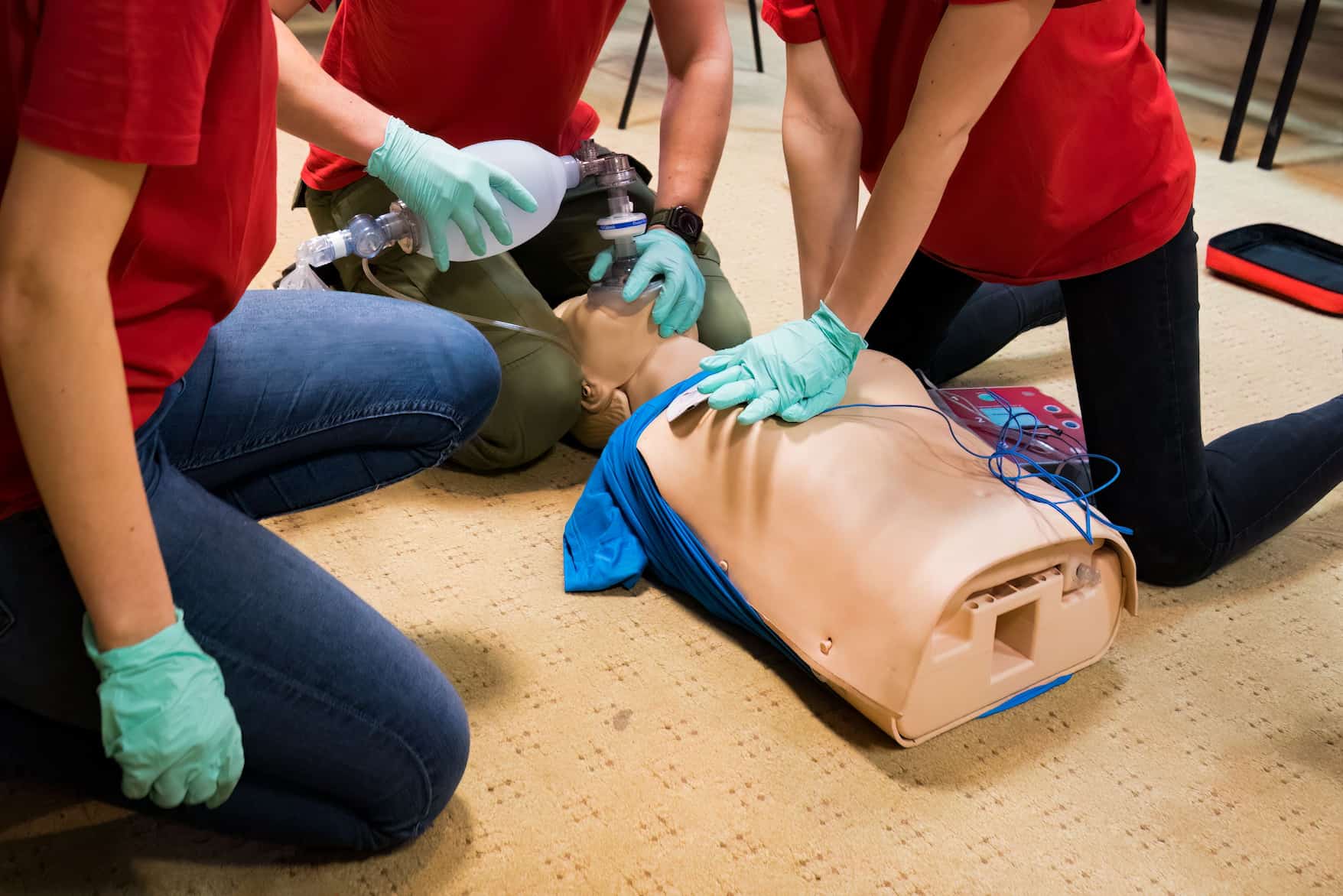
Students performing CPR and ventilation on a training manikin in class

Are you a healthcare professional needing a quick renewal? Or perhaps a new parent or teacher looking to gain life-saving skills for the first time? In the fast-paced environment of Austin, Texas, you don’t have weeks to spend in a classroom. The good news is that you don’t have to.

Getting CPR certified in Austin is now a streamlined, efficient process that fits into a single morning or afternoon. By choosing an American Heart Association (AHA) authorized training site, you can walk in with a desire to learn and walk out with a nationally recognized certification card in hand.

Is it really possible to get CPR certified in one day?

Yes, it is entirely possible to complete your full CPR certification in a single session. While some online programs claim to offer “instant” certificates, these are rarely accepted by employers because they lack the hands-on skills assessment required by OSHA and the American Heart Association.

At CPR Classes Near Me Austin, our courses are designed to be comprehensive yet efficient. A standard Basic Life Support (BLS) session typically lasts about 3.7 hours. During this time, you cover all required video modules, participate in hands-on practice, and complete your skills testing. Because our instructors are authorized to issue digital eCards, you will receive your official certification via email before you even leave the building.

What should you expect during your Austin CPR class?

When you sign up for a one-day class, you can expect a high-energy, focused environment. The goal is to move you from theory to practice as quickly as possible. You won’t just be sitting and watching videos; you will be actively engaged with the equipment.

The curriculum is standardized by the American Heart Association to ensure you receive the highest quality of training. During your Austin class, you will focus on:

  • High-Quality Chest Compressions: Learning the correct depth and rate for adults, children, and infants.
  • Rescue Breathing: Using pocket masks and bag-mask devices to provide oxygen.
  • AED Operation: Understanding how to safely and effectively use an Automated External Defibrillator.
  • Choking Relief: Master the techniques for clearing an airway for all age groups.
  • Team Dynamics: Learning how to work with other rescuers during a high-stress cardiac event.

Who needs a BLS certification in Austin?

While anyone can—and should—learn CPR, the Basic Life Support (BLS) certification is specifically designed for those who work in environments where they may be called upon to use these skills professionally. In Austin’s booming medical and education sectors, this certification is often a non-negotiable job requirement.

Common professionals who seek one-day certification include:

  1. Healthcare Providers: Nurses (RNs/LVNs), Doctors, Dentists, and Pharmacists.
  2. Emergency Responders: Firefighters, Police Officers, and EMTs.
  3. Medical Staff: CNAs, Medical Assistants, and Physical Therapists.
  4. Educators: K-12 Teachers, Coaches, and Daycare Providers.
  5. Fitness Professionals: Personal Trainers and Lifeguards.
  6. Industrial Workers: Construction Foremen and Electricians who must meet OSHA standards.

Why is in-person training better than online-only courses?

In a world of digital convenience, it’s tempting to take a 20-minute online quiz and call it “certification.” However, in the world of life-saving, there is no substitute for physical practice. This is why the vast majority of Austin employers do not accept online-only CPR cards.

In-person training offers several critical advantages:

  • Muscle Memory: You cannot learn the physical resistance of a chest compression through a computer screen. Pushing on a manikin builds the muscle memory needed to perform when it counts.
  • Immediate Feedback: Our AHA-certified instructors watch your technique in real-time. They can correct your hand placement or compression depth instantly, ensuring you are doing it right.
  • Equipment Familiarity: You get to handle real AED trainers and bag-mask devices, making you much more comfortable using them in a real emergency.
  • Peer Interaction: You practice team-based resuscitation, which is how most rescues actually occur in a clinical or professional setting.

How do you find the best CPR class in Austin?

Not all CPR classes are created equal. When searching for a provider in the Austin area, you want to ensure you are getting the best value and the most recognized credential. Here are the things you should look for:

  • AHA Alignment: Ensure the provider is an American Heart Association authorized training site. This guarantees your card will be accepted nationwide.
  • Same-Day Certification: Many providers mail physical cards weeks later. Look for a site that issues digital eCards the same day.
  • Transparent Pricing: You should know exactly what you are paying upfront. In Austin, a standard BLS class should range from $59.00 to $79.00, depending on if First Aid is included.
  • Flexible Scheduling: Life in Austin is busy. Look for a provider that offers morning, afternoon, and weekend slots to fit your schedule.
  • Local Reputation: Check for a provider that has a proven track record of certifying thousands of students and has a physical presence in the community.

What is the difference between CPR and BLS?

This is one of the most common questions we hear. While the terms are often used interchangeably, there is a technical difference that matters for your certification needs.

  • CPR (Cardiopulmonary Resuscitation): This is the general term for the life-saving procedure. “Heartsaver” courses are typically intended for non-medical professionals like parents or office workers.
  • BLS (Basic Life Support): This is a specific level of CPR training designed for healthcare providers. It includes everything in a standard CPR course but adds advanced techniques like bag-mask ventilation, pulse checks, and two-rescuer team dynamics. If your employer asks for “CPR Certification,” and you work in healthcare, they almost always mean BLS.

How long does your Austin CPR certification stay valid?

Once you complete your one-day class and receive your AHA eCard, your certification is valid for two years.

We recommend putting a reminder in your calendar for 22 months from your class date. Because the science of resuscitation is constantly evolving, the AHA updates its guidelines every few years. Renewing your certification ensures that you are always using the most effective, up-to-date techniques. The renewal process is the same as the initial certification—you simply attend another one-day session to refresh your skills and receive a new card.

Conclusion

Getting CPR certified in Austin doesn’t have to be a multi-day ordeal. With a focused, 4-hour session, you can gain the skills and the credentials needed to save a life and satisfy your employer’s requirements. By choosing a local, AHA-authorized training site like CPR Classes Near Me Austin, you are investing in high-quality instruction that is both fast and effective.

Don’t wait until an emergency happens to wish you had the training. Whether you are in Pflugerville, Round Rock, or downtown Austin, life-saving skills are just one class away.

Ready to get certified? Contact CPR Classes Near Me Austin today to find a class and get your same-day certification!

Frequently Asked Questions (FAQ)

How long does the Austin CPR class take?

The American Heart Association BLS class typically takes about 3.7 hours to complete. This includes all video instruction, hands-on practice, and the final skills assessment.

Will I get my card the same day?

Yes. When you train with us in Austin, your official AHA BLS eCard is issued digitally the same day you complete your class. You can download, print, or email it to your employer immediately.

Are there age requirements for CPR certification?

There is no specific minimum age for CPR certification. As long as the individual can perform the physical requirements of the course (such as deep chest compressions on a manikin) and pass the written portion, they can become certified.

Does this certification cover infants and children?

Yes. All of our AHA BLS and CPR/First Aid courses include specific modules for adult, child, and infant resuscitation techniques, as the methods vary significantly by age.

What should I wear to my CPR class?

Since the class involves significant hands-on practice and kneeling on the floor to work with manikins, we recommend wearing comfortable, casual clothing and closed-toe shoes.

CPR Certification for Medical Assistants: BLS or CPR/AED?

While both courses teach you how to save a life, they are not interchangeable in a professional medical environment. If you are entering the healthcare field, the distinction is critical for your employment eligibility.

A standard CPR/AED course is designed for the general public. It focuses on single-rescuer techniques and how to use a standard AED found in a public space. It assumes the rescuer has no medical background and no access to professional equipment.

Basic Life Support (BLS), however, is often titled “CPR for Healthcare Providers.” It includes everything in a standard course but adds several professional-level skills:

  • Two-Rescuer Coordination: You learn how to work with a partner to minimize breaks in chest compressions.
  • Bag-Valve-Mask (BVM) Ventilation: You are trained to use professional medical masks to provide oxygen.
  • Advanced Patient Assessment: This involves checking for a pulse and breathing simultaneously, a skill expected of medical staff.
  • Team Dynamics: You learn how to lead or support a resuscitation team during a “code” in a clinic.

For a Medical Assistant, BLS is almost always the required standard.

Why do Medical Assistants need BLS specifically?

Medical Assistants aren’t just bystanders; you are a formal member of a medical response team. If a patient collapses in a waiting room or an exam room, you are expected to respond with clinical precision.

Hospitals and private practices prefer BLS for several reasons:

  1. Clinical Competency: It proves you can operate the specific medical equipment found in a doctor’s office.
  2. Standardization: Most healthcare facilities align their internal protocols with the AHA BLS guidelines.
  3. Certification Boards: If you are pursuing your Certified Medical Assistant (CMA) or Registered Medical Assistant (RMA) credentials, these national boards specifically mandate “Healthcare Provider” level CPR.

Which certification body is best for Medical Assistants?

When it comes to healthcare, the American Heart Association (AHA) is the undisputed leader. While other organizations offer excellent training, many hospitals and private clinics specifically state in their hiring requirements that they only accept AHA-issued BLS cards.

Before you sign up for a class, it is wise to check your specific employment contract. However, if you are currently job-hunting or a student, the AHA BLS course is the most universally accepted certification you can hold.

Does a Medical Assistant need First Aid too?

In many clinical environments, the answer is yes. While BLS focuses strictly on cardiac and respiratory arrest, many clinics want their MAs to be proficient in general first aid as well. This broader training covers:

  • Wound care and severe bleeding control.
  • Stabilizing bone and joint injuries.
  • Managing allergic reactions and using Epi-Pens.
  • Responding to seizures and diabetic emergencies.

Many training centers offer a “BLS + First Aid” combination course. However, for the clinical portion of your resume, the BLS card is the primary document employers will look for first.

Can you get BLS certified online?

The short answer is no, not entirely. To meet OSHA and healthcare employer standards, you must complete what is known as “Blended Learning” or an “In-Person” course.

While you can complete the classroom portions, videos, and written exams online, you must perform a hands-on skills check in front of a certified instructor. An “online-only” certificate that does not require you to physically demonstrate compressions on a manikin is almost never accepted in the medical field. Employers need to know you have the physical strength and technique to perform high-quality CPR.

How long does the certification last?

Both BLS and standard CPR/AED certifications are typically valid for two years.

As a Medical Assistant, staying on top of your expiration date is your professional responsibility. Most employers will pull an employee from the clinical schedule if their card expires, as it creates a major legal liability for the practice. It is best practice to schedule your renewal class at least 30 days before your current card expires.

What should you expect during a BLS class?

If you’ve only ever taken a community CPR class, BLS will feel more technical and faster-paced. A typical session involves:

  1. High-Quality Compressions: You will be tested on maintaining a specific depth (2 to 2.4 inches) and a specific rate (100 to 120 beats per minute).
  2. Opioid-Related Emergencies: You’ll learn how to respond to suspected overdoses and the role of Naloxone (Narcan).
  3. Mouth-to-Mask Ventilation: You will practice using a pocket mask to provide breaths safely without direct contact.
  4. Multi-Rescuer Scenarios: You will practice switching roles every two minutes to ensure the “rescuer” performing compressions doesn’t get too tired to be effective.
  5. Written Exam: Unlike many community classes, BLS requires passing a multiple-choice exam to prove you understand the science behind the movements.

How does BLS compare to CPR/AED?

To summarize the differences clearly:

  • Target Audience: CPR/AED is for the general public, while BLS is for medical professionals like MAs and nurses.
  • Rescue Techniques: CPR/AED focuses on single rescuers. BLS focuses on team-based resuscitation involving two or more people.
  • Equipment used: CPR/AED focuses on the AED. BLS adds the Bag-Valve-Mask (BVM), which is a staple in medical offices.
  • Assessment Level: CPR/AED uses basic “look, listen, and feel” methods. BLS requires a simultaneous pulse and breathing check, which is a more advanced diagnostic skill.
  • Career Impact: A standard CPR card might get you a job at a gym, but a BLS card is usually mandatory for a job in a clinic or hospital.

Conclusion

Choosing the right certification is about more than just meeting a job requirement; it’s about being prepared for the reality of your workplace. For Medical Assistants, the BLS (Basic Life Support) certification is the industry standard. It ensures you are ready to act as a vital member of a clinical team in a high-stakes environment.

While standard CPR/AED is a great skill for any citizen to have, it lacks the advanced components required in a medical office. By choosing BLS, you align yourself with the requirements of national certification boards and major healthcare systems.

Ready to boost your credentials? Don’t leave your career to chance or settle for the wrong certification. Contact CPR Classes Near Me today to find an AHA-accredited BLS course in your area and get the professional certification you need to succeed!

Frequently Asked Questions (FAQ)

Q: I already have a CPR/AED card. Do I still need BLS?

A: Yes, in most cases. If you are working as a Medical Assistant, your employer will likely require you to “upgrade” to the BLS for Healthcare Providers level. The standard CPR card does not cover the team-based resuscitation or the professional medical equipment training required in clinics.

Q: Is BLS harder than regular CPR?

A: It is more comprehensive, but not necessarily “hard” if you are prepared. It covers more complex scenarios and requires a short written test, but the physical skills are built upon the same foundation as regular CPR. If you can do regular CPR, you can pass a BLS class.

Q: Can I use my BLS card for non-medical jobs?

A: Absolutely. A BLS card is the highest level of basic CPR training. If a job requires “CPR certification,” a BLS card will always satisfy that requirement because it exceeds the standard training.

Q: Does BLS include infant and child CPR?

A: Yes. All professional-level BLS courses include modules for Adult, Child, and Infant CPR, as well as AED use and choking relief for all age groups.

Q: How do I verify if my instructor is accredited?

A: When you book through a reputable provider like CPR Classes Near Me, your instructor will be certified by a major body like the AHA. Upon completion, you will receive an official digital eCard that can be verified online by any employer or state board.

CPR Certification for CNAs: What to Take and Why

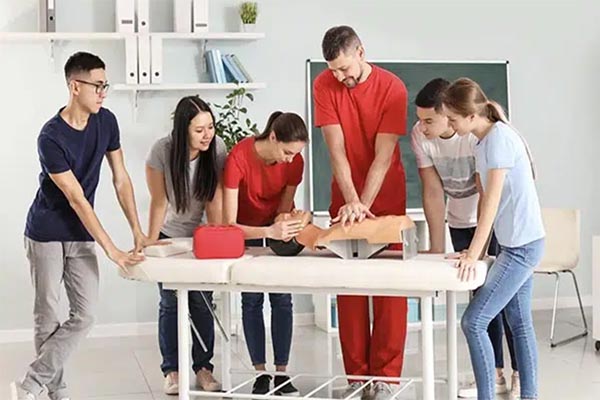
First aid instructor teaching CPR to a group of students using a practice mannequin.

As a Certified Nursing Assistant (CNA), you are the backbone of patient care. You are the one in the room more than anyone else, providing essential support and keeping a watchful eye on patient health. But what happens when a routine check-up turns into a life-threatening emergency?

That is where CPR certification comes in. For CNAs, having a valid, up-to-date certification isn’t just a “nice to have”—it is often a legal and professional requirement. However, not all CPR classes are created equal. If you take the wrong one, you might find yourself back in a classroom because your employer won’t accept it.

In this guide, we’ll break down exactly which course you need, why it matters for your career, and how you can get certified through CPR Classes Near Me to keep your career moving forward.

Is CPR certification mandatory for CNAs?

Yes, in nearly every scenario, CPR certification is a mandatory requirement for both obtaining and maintaining your CNA license. Most state boards of nursing and the Department of Health require proof of certification before you can even begin your clinical rotations.

Beyond the initial licensing, employers—including hospitals, hospice centers, and skilled nursing facilities—require an active certification as a condition of employment. If your card expires, you may be pulled from the schedule until you recertify.

Which CPR course should a CNA take?

The most common mistake CNAs make is signing up for a “General CPR” or “Heartsaver” course. While these are great for the general public or teachers, they do not meet the standards for healthcare professionals.

As a CNA, you should take the Basic Life Support (BLS) for Healthcare Providers course.

The BLS course is more comprehensive than standard CPR and includes:

  • Multi-rescuer coordination: Learning how to work with a team during a code.
  • Bag-Valve Mask (BVM) use: Training on professional ventilation equipment.
  • Advanced AED training: Using a defibrillator in a clinical setting.
  • Critical Thinking: Assessing a patient’s condition rapidly to decide the best course of action.

Most employers specifically look for an American Heart Association (AHA) or Red Cross BLS certification. At CPR Classes Near Me, we focus on providing these high-standard certifications to ensure they are accepted anywhere you choose to work.

Why is BLS preferred over standard CPR?

Standard CPR classes are designed for “lay rescuers”—people like parents, coaches, or office workers. These classes focus on the basics of chest compressions and simple rescue breaths.

As a CNA, you work in a clinical environment where you have access to medical equipment and other trained professionals. BLS training prepares you for this specific environment. It teaches you how to perform high-quality chest compressions while a nurse or doctor handles the airway, and how to switch roles seamlessly to prevent rescuer fatigue.

In short, BLS is the professional version of CPR. It gives you the technical skills required to operate in a fast-paced medical setting.

How does CPR certification benefit a CNA’s career?

While the primary goal is saving lives, being certified offers several professional advantages:

  1. Increased Employability: Having a current BLS card makes you “work-ready.” Employers prefer candidates who don’t need to be sent for training before they can start their first shift.
  2. Professional Confidence: Emergencies are stressful. Knowing you have been trained by the best allows you to remain calm and act decisively when every second counts.
  3. Legal Compliance: Keeping your certification current ensures you stay within the scope of practice defined by your state board, protecting your license.
  4. Better Patient Outcomes: Statistics show that immediate, high-quality CPR provided by the first person on the scene (usually the CNA) significantly increases the chance of a patient’s survival and recovery.

Can I take my CNA CPR certification online?

This is a tricky area. Many websites offer “instant” online CPR certification for a low price. However, most healthcare employers will not accept 100% online certifications.

The American Heart Association and Red Cross require a hands-on skills assessment. You cannot learn the proper depth of a chest compression or the “feel” of an AED by clicking through slides on a computer.

The best option for busy CNAs is a Blended Learning course. This allows you to:

  • Complete the lecture and written exam portion online at your own pace.
  • Schedule a brief, in-person skills session to demonstrate your technique on a manikin.

This “Best of Both Worlds” approach is fully accredited and widely accepted by hospitals and nursing boards.

How often do CNAs need to recertify?

Standard BLS certifications are valid for two years.

It is a good idea to start looking for a renewal class about 60 days before your current card expires. Many CNAs wait until the last minute, only to find that classes are full. If your certification lapses, you may be legally unable to perform your duties, which can lead to missed shifts and lost wages.

What should you expect during the BLS training?

If you are nervous about the class, don’t be! BLS training is designed to be supportive and educational. Here is what a typical session at CPR Classes Near Me looks like:

  • Instructional Videos: You will watch real-world scenarios to see how professional teams handle emergencies.
  • Hands-on Practice: You will spend a significant amount of time practicing on manikins.
  • AED Training: You will learn how to use an automated external defibrillator safely and effectively.
  • Choking Relief: Training includes how to help adults, children, and infants who are choking.
  • Written Exam: A multiple-choice test to ensure you understand the core concepts.
  • Skills Check: An instructor will watch you perform a few rounds of CPR to ensure your form is correct.

Why choose CPR Classes Near Me?

When you are looking for “CPR certification for CNAs,” you want a provider that is local, affordable, and accredited. We specialize in making the certification process as painless as possible for healthcare workers.

  • Certified Instructors: Our trainers are experts who understand the healthcare environment.
  • Flexible Scheduling: We offer morning, evening, and weekend classes to fit a CNA’s demanding schedule.
  • Immediate Cards: In most cases, you receive your digital certification card the same day you finish your skills session.
  • AHA Guidelines: We strictly follow the latest evidence-based guidelines, so you know your training is top-tier.

Conclusion

Obtaining your CPR certification is a milestone in your journey as a CNA. It represents your commitment to patient safety and your readiness to act in a crisis. By choosing the BLS for Healthcare Providers course, you ensure that your credentials will be accepted by any employer and that you have the skills necessary to provide the best possible care.

Don’t wait until your license renewal is due or a job opportunity passes you by. Ensure your skills are sharp and your certification is current.

Contact CPR Classes Near Me today to find a class in your area and take the next step in your healthcare career!

Frequently Asked Questions (FAQ)

Q: Do I need First Aid certification as well as CPR?

A: Most CNAs only need BLS (which covers CPR and AED). However, some home health roles or specific state requirements may ask for a Heartsaver First Aid add-on. It is always best to check your specific job description.

Q: Is BLS the same as CPR?

A: BLS (Basic Life Support) is a type of CPR specifically designed for healthcare professionals. It covers everything in a standard CPR class plus advanced techniques like team dynamics and the use of professional ventilation tools.

Q: How long does the BLS class take?

A: A full in-person BLS class typically takes about 3 to 4 hours. If you choose a blended learning option (online + in-person skills), your in-person time is usually less than an hour.

Q: What happens if I fail the written exam?

A: Don’t worry! Instructors at CPR Classes Near Me are there to help you succeed. If you struggle with a portion of the exam, they will review the material with you, and you can usually retake the test the same day.

Q: Can I use my BLS certification in another state?

A: Yes. Because we provide AHA and Red Cross certifications, your card is recognized nationally. If you move, your BLS certification stays valid until its expiration date.

Fastest Way to Renew CPR Certification in Columbus

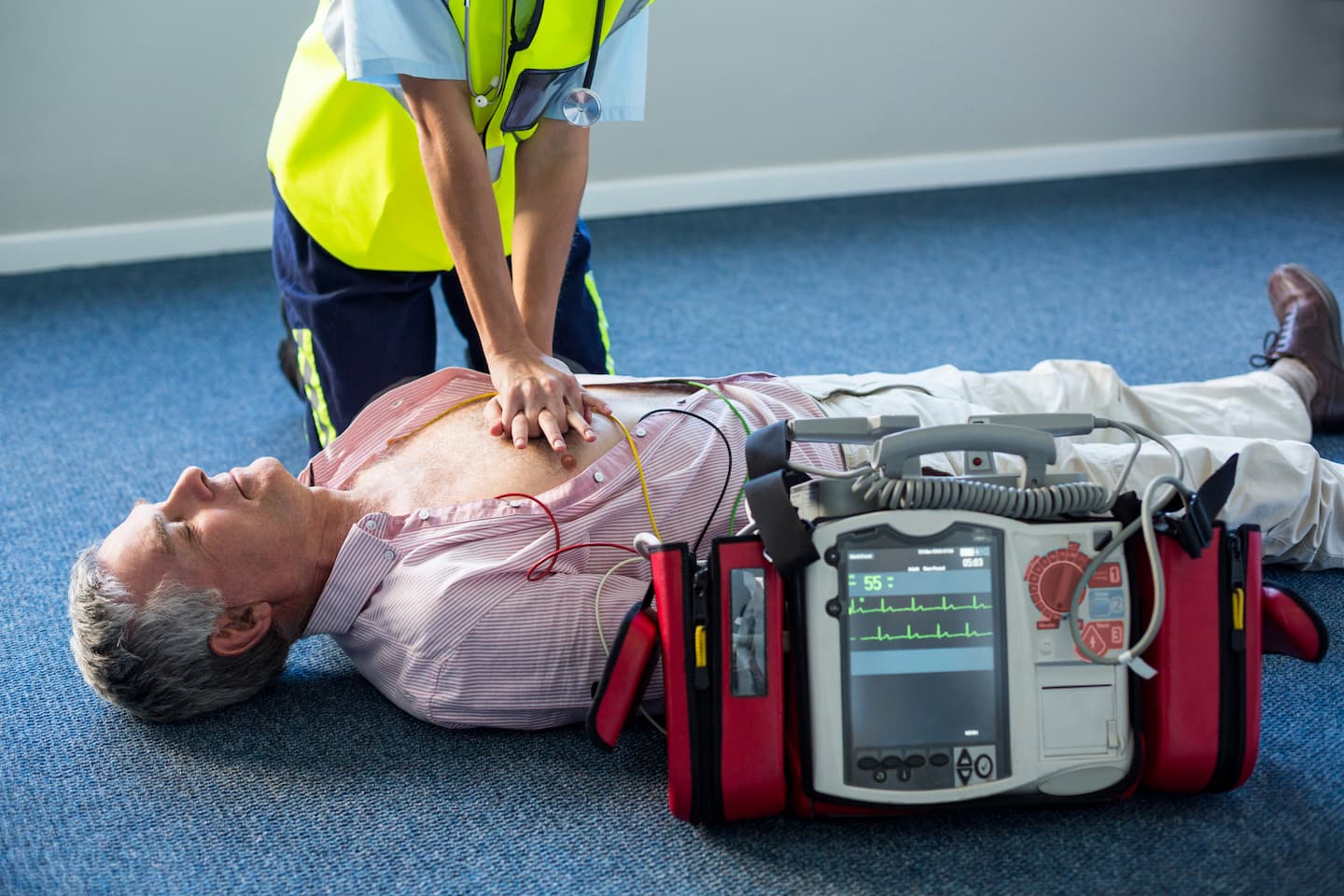
Paramedic performing CPR with defibrillator on cardiac arrest patient

Are you a healthcare professional or a dedicated community member whose CPR card is about to expire? In the fast-paced world of Columbus, Ohio, you don’t have time to wait weeks for a certificate or spend hours navigating glitchy online modules. You need a solution that is quick, official, and stress-free.

Renewing your Life Support credentials shouldn’t feel like a hurdle. Whether you are a nurse at OhioHealth, a teacher in the Columbus City School District, or a local coach, staying certified is about more than just compliance—it is about being ready to save a life at a moment’s notice.

This guide explores the absolute fastest way to renew your CPR certification in Columbus, ensuring you walk away with your American Heart Association (AHA) card the very same day.

Why is speed important for CPR renewal?

When your certification expires, it isn’t just a piece of paper you lose; it’s often your eligibility to work. Many employers in Columbus require a valid AHA BLS (Basic Life Support) card as a condition of employment. If your card lapses, you could face administrative leave or missed shifts.

The fastest way to renew is to find a provider that eliminates unnecessary steps. Traditional “blended learning” often requires you to complete hours of online videos before you can even step foot in a classroom. By choosing an efficient, in-person training site, you skip the digital headaches and get straight to the hands-on practice that matters most.

How can I get my CPR card on the same day?

The secret to the fastest renewal is finding a training center that issues electronic cards (eCards) immediately upon completion of the course. At CPR Classes Near Me Columbus, we utilize the American Heart Association’s digital platform to ensure you don’t have to wait for the mail.

As soon as you finish your skills check and pass the assessment, your instructor processes your certification. You will receive an email with your official AHA BLS eCard before you even get back to your car. This is the gold standard for those on a tight deadline.

Is there a faster alternative to online-only classes?

While online-only classes might seem fast, they are often a “speed trap.” Most reputable employers in Columbus—especially in healthcare, education, and construction—do not accept certifications that lack a hands-on skills assessment.

If you take an online-only course, you may find yourself having to retake an in-person class anyway because your employer rejected the certificate. The fastest way to do something is to do it right the first time. In-person training takes about three hours and is guaranteed to be accepted by your employer.

What makes the BLS renewal process efficient?

Efficiency comes down to the quality of instruction and the structure of the class. A streamlined renewal class focuses on the essential “high-quality” CPR metrics:

  • Depth and rate of compressions: Ensuring you are providing effective blood flow.
  • Chest recoil: Allowing the heart to refill between compressions.
  • Minimizing interruptions: Keeping the “hands-on” time as high as possible.
  • AED usage: Quick and safe operation of an Automated External Defibrillator.

By working with expert instructors, you can polish these skills quickly through hands-on practice without the fluff of a beginner-level lecture.

Where can I find the best renewal classes in Columbus?

You don’t have to travel far to find top-tier training. CPR Classes Near Me Columbus serves the entire metro area and surrounding suburbs. We provide convenient scheduling for those living or working in:

  • Dublin and Westerville
  • Upper Arlington and Grandview Heights
  • Gahanna and New Albany
  • Grove City and Hilliard
  • Reynoldsburg and Pickerington

Our location is designed for easy access, making it the perfect “pit stop” for your biennial renewal.

What should I bring to my renewal class?

To make your renewal as fast as possible, come prepared. You don’t need to bring heavy equipment or textbooks, but having these items ready will help:

  1. Comfortable clothing: You will be on the floor practicing compressions on manikins, so wear something you can move in.
  2. Your current (or expired) card: This helps the instructor verify your previous training level.
  3. A positive attitude: Our classes are designed to be laid-back and engaging.

Because there is no pre-work or mandatory online “homework,” you simply show up, learn, and leave certified.

Who is required to have a BLS renewal?

In Columbus, various industries rely on AHA-certified professionals to maintain a safe environment. You likely need a fast renewal if you work in any of the following fields:

  • Healthcare Providers: RNs, LPNs, CNAs, and dental professionals.
  • Emergency Services: Firefighters, police officers, and security personnel.
  • Education: Teachers, daycare providers, and school administrators.
  • Fitness and Sports: Personal trainers, coaches, and lifeguards.
  • Industrial/Construction: Electricians and site supervisors who must meet OSHA standards.

How much does it cost to renew in Columbus?

Fast service shouldn’t mean overpriced service. Currently, CPR Classes Near Me Columbus offers competitive, discounted rates to make sure lifesaving knowledge is accessible.

  • BLS CPR & AED: Starting at $59.95 (a $20 savings).
  • CPR, AED & First Aid: Starting at $79.95 (a $20 savings).

Investing in an AHA-approved course ensures you aren’t wasting money on a certificate that won’t be recognized by your workplace.

Can I renew my First Aid at the same time?

Yes! If your job requires both CPR and First Aid, the fastest way to handle this is a “combo” class. Instead of booking two separate appointments, you can complete both certifications in a single session. This integrated approach covers everything from cardiac arrest to wound care and allergic reactions, providing a comprehensive safety toolkit in one afternoon.

Why choose American Heart Association (AHA) over others?

While there are several organizations that offer CPR training, the AHA is the most widely recognized and respected. Their guidelines are based on the latest science and are updated regularly. When you hold an AHA card, you hold a credential that is the “gold standard” nationwide. Most hospitals and clinics in Central Ohio strictly require AHA certification for their staff.

Conclusion

Renewing your CPR certification in Columbus doesn’t have to be a time-consuming chore. By choosing an AHA-authorized training site that offers in-person, same-day eCards, you can fulfill your professional requirements in just a few hours. No online pre-work, no waiting for the mail—just expert instruction and a guaranteed certificate.

Don’t wait until your card expires! Contact CPR Classes Near Me today to secure your spot in our next Columbus class and stay rescue-ready.

Frequently Asked Questions (FAQ)

How long does the CPR renewal class take?

The standard in-person BLS renewal class in Columbus typically takes about three hours. This includes the video instruction required by the AHA, hands-on practice, and the skills assessment.

Do I need to do any work online before the class?

No. Unlike “blended” courses, our classes are 100% in-person. You do not need to complete any modules or quizzes online before arriving at the training site.

When will I receive my certification card?

You will receive your official American Heart Association BLS eCard on the same day you complete the class. It is sent directly to your email for easy printing or forwarding to your employer.

What if my CPR card is already expired?

You can still take a renewal class! The AHA allows individuals with expired cards to take the BLS course to get re-certified. However, you should check with your employer to see if they have specific policies regarding working with an expired card.

Is the certification OSHA-compliant?

Yes. Our AHA BLS and First Aid certifications meet all OSHA requirements for workplace safety, making them ideal for construction, manufacturing, and healthcare industries.

How Long Does CPR Certification Last in Ohio? Your Complete Guide

Have you ever looked at your CPR card and realized the date is a lot older than you remembered? You aren’t alone. Whether you are a nurse in Columbus, a high school coach in Cleveland, or a concerned parent in Cincinnati, keeping your life-saving skills current is vital.

In the state of Ohio, staying compliant with workplace safety and state laws is a top priority. But beyond the legalities, CPR is about being ready when a heart stops. If your skills are rusty, you might hesitate during a crisis—and in a cardiac emergency, every second counts.

In this guide, we will break down exactly how long your CPR certification lasts in Ohio, why the expiration date exists, and the easiest way to get renewed so you never have a gap in your credentials.

What is the standard expiration for CPR in Ohio?

In almost every case, a CPR certification in Ohio is valid for two years from the date it was issued. This standard is set by the major national training organizations, including the American Heart Association (AHA) and the American Red Cross.

While the state of Ohio follows these national guidelines, certain professions have specific rules:

  1. Healthcare Workers: Most hospitals and clinics require Basic Life Support (BLS) or ACLS certification, which also operates on a strict two-year cycle.
  2. School Coaches: Ohio law requires all coaches to maintain a current CPR/AED certification. If your card expires mid-season, you may be ineligible to coach until you renew.
  3. Childcare Providers: ODJFS (Ohio Department of Job and Family Services) requires active certification for staff to stay compliant with licensing.

Your certification typically expires on the last day of the month in which it was issued, exactly two years later. For example, if you passed your class on February 15, 2024, your card is generally valid through February 28, 2026.

Why does CPR certification expire every two years?

You might wonder why you need to retake a class if the basics of “pushing on the chest” haven’t changed much. There are actually three primary reasons why the two-year window is the gold standard:

  • Science Updates: The International Liaison Committee on Resuscitation (ILCOR) constantly reviews cardiac data. Every few years, guidelines for compression depth, rate, or breath ratios might be tweaked to improve survival rates.
  • Skill Degradation: Research shows that CPR skills—specifically the physical ability to perform high-quality compressions—start to decline as early as six months after a class. By the two-year mark, most people need a hands-on refresh to regain their “muscle memory.”
  • Technology Changes: AED (Automated External Defibrillator) technology is always evolving. Renewal courses ensure you are comfortable with the latest devices found in public spaces across Ohio.

Is there a grace period for expired CPR cards in Ohio?

The short answer is no. There is no official “grace period” for an expired CPR certification.

If your card expires on Monday, you are technically uncertified on Tuesday. This can have serious consequences depending on your job:

  • Employment Gaps: Many Ohio employers will not allow you to work a shift if your certification has lapsed.
  • Legal Liability: In some professional settings, performing CPR with an expired license could lead to complications, although Ohio’s Good Samaritan laws generally protect laypeople.
  • Renewal Eligibility: Some “Renewal” or “Review” courses require you to show a current, non-expired card to enroll. If yours is already expired, you might be required to take the full, longer “Provider” course again.

What is the difference between a full course and a renewal?

If your certification is still valid (or only recently expired), you are likely eligible for a CPR Renewal Course. Here is how they compare:

  1. Full Provider Course:
    • Designed for those who have never been certified or whose cards have been expired for a long time.
    • Covers every concept from scratch.
    • Usually takes 4–6 hours depending on the depth of the material.
  2. Renewal/Challenge Course:
    • Designed for experienced individuals who just need to prove their competency.
    • Focuses heavily on hands-on skills and the latest guideline updates.
    • Usually takes 2–3 hours.
    • Requires a valid (or very recently expired) card for entry.

Can you renew your CPR certification online in Ohio?

In Ohio, “blended learning” is the most popular way to renew. This allows you to do the “book work” online and then visit a local training center for a quick, 30-minute skills check.

However, be very careful with “100% Online” certifications. Many Ohio employers, especially in healthcare, nursing, and education, will not accept a certification that did not include a hands-on skills assessment with a live instructor. If you didn’t push on a mannequin, your card might not be valid for your job.

How do you find CPR renewal classes near you?

If you are in the Columbus area or anywhere in Ohio, finding a class is easy. You should look for a provider that offers:

  • Same-day certification: So you can get back to work immediately.
  • AHA or Red Cross accreditation: To ensure your card is accepted by your employer.
  • Flexible scheduling: Weekly classes that fit your busy work-life balance.

For local, hands-on training that meets all Ohio requirements, CPR Classes Near Me provides expert-led sessions designed to get you certified quickly and confidently.

Conclusion

Your CPR certification is more than just a piece of paper; it’s your license to save a life. In Ohio, that license has a two-year shelf life. By staying on top of your expiration date and scheduling a renewal class before your current card lapses, you ensure that you are always ready to respond to an emergency.

Don’t wait until your employer tells you that you can’t work tomorrow. Check your card today, and if you’re approaching that two-year mark, it’s time to refresh your skills.

Contact CPR Classes Near Me today to schedule your renewal and stay certified!

Frequently Asked Questions (FAQ)

How long is my CPR card valid for in Ohio? 

In Ohio, most CPR certifications from the American Heart Association or American Red Cross are valid for exactly two years.

What happens if my CPR certification expires? 

If your card expires, you are no longer considered certified. You may be unable to work if your job requires it, and you may have to take a full initial course instead of a shorter renewal class.

Do I have to take the whole class again to renew? 

No. If your card is still valid, you can usually take an abbreviated “Renewal” or “Recertification” course, which focuses on hands-on skills and takes significantly less time than the original class.

Will my Ohio employer accept an online-only CPR card? 

Most employers in Ohio, especially in the medical, dental, and education fields, require a hands-on skills check. Online-only courses that do not involve a mannequin session are often rejected.

Does BLS certification last longer than standard CPR? 

No. Basic Life Support (BLS) certification, which is common for healthcare providers in Ohio, also follows the two-year expiration cycle.

The Ultimate Guide to CPR Classes in Columbus, Ohio

When an emergency strikes, the difference between a tragedy and a life saved often comes down to who is standing nearby. In Columbus, Ohio, being prepared isn’t just a personal choice; for many, it is a professional requirement. Whether you are a nurse at OhioHealth, a teacher in the Columbus City School District, or a local fitness trainer, having the right skills can change everything.

This guide explores everything you need to know about finding and completing the best CPR training in the Arch City. From understanding different certification types to knowing what to expect on the day of your class, we have you covered.

Why is CPR training essential in Columbus, Ohio?

Columbus is a thriving hub of healthcare, education, and industry. Because of this, the demand for high-quality, reliable emergency training is higher than ever. CPR, or Cardiopulmonary Resuscitation, is a lifesaving technique used when someone’s heart stops beating or they stop breathing.

By taking a class locally, you contribute to a safer community. Statistics show that immediate CPR can double or even triple a person’s chance of survival after cardiac arrest. When you choose a local training site like CPR Classes Near Me Columbus, you are getting instruction tailored to the standards that Ohio employers trust most.

What is the American Heart Association (AHA) BLS certification?

The American Heart Association (AHA) is widely considered the gold standard for CPR training. Their Basic Life Support (BLS) course is the specific level of certification required by almost all healthcare professionals and many other high-responsibility industries.

Key features of the AHA BLS certification include:

  • Universal Acceptance: It is the most recognized certification by hospitals and clinics nationwide.
  • Comprehensive Skills: It covers CPR for adults, children, and infants.
  • AED Integration: You learn how to use an Automated External Defibrillator safely.
  • Two-Year Validity: Your certification remains active for 24 months before needing renewal.

What will you learn in a Columbus CPR class?

Walking into a CPR class can feel intimidating if you don’t know what to expect. At CPR Classes Near Me Columbus, the environment is designed to be laid-back and engaging while remaining professional.

During your session, you will master several critical skills:

  1. High-Quality Chest Compressions: Learn the correct depth and rate to keep blood flowing to vital organs.
  2. Rescue Breathing: Techniques to provide oxygen to the lungs when a person cannot breathe on their own.
  3. AED Operation: Step-by-step instructions on using a defibrillator to restore a heart rhythm.
  4. Choking Relief: How to assist adults, children, and infants who have a blocked airway.
  5. Team Dynamics: How to communicate effectively with other rescuers during a high-stress event.

How long does it take to get certified in Columbus?

One of the biggest concerns for busy professionals is the time commitment. Fortunately, modern CPR training is streamlined for efficiency without sacrificing quality.

In Columbus, a standard AHA BLS CPR and AED class typically takes about three hours. Because the course is lead by an instructor in person, there is no “pre-work” or online modules to complete before you arrive. You simply show up, learn the skills, pass the skills check, and you are finished.

The best part? At CPR Classes Near Me Columbus, you receive your official AHA eCard on the same day you complete the class. There is no waiting for mail or processing delays.

Can you combine First Aid with your CPR training?

Yes, many professions require both CPR and First Aid certification. Instead of scheduling two separate appointments, you can choose a combined “CPR + First Aid” course.

This expanded training includes:

  • Managing environmental emergencies (heatstroke, cold exposure).
  • Treating cuts, scrapes, and major bleeding.
  • Responding to medical emergencies like allergic reactions or seizures.
  • Assisting with broken bones and sprains.

Choosing the combined course is more cost-effective and ensures you are a fully rounded first responder.

Who should enroll in these Columbus CPR classes?

While healthcare workers are the most common students, CPR is a skill for everyone. If you work in a field where you interact with the public, certification is a massive asset.

Common professions that seek training in Columbus include:

  • Healthcare Providers: Nurses, Doctors, CNAs, and Medical Assistants.
  • Education: Teachers, Daycare Providers, and Coaches.
  • Safety & Industry: Construction workers, Electricians, and Security Guards.
  • Fitness & Leisure: Personal trainers, Lifeguards, and Flight Attendants.
  • General Public: Parents, grandparents, and community volunteers.

Why is in-person training better than online-only courses?

In a world where everything is moving digital, you might be tempted by “online-only” CPR certifications. However, there are significant risks to this approach:

  • Employer Rejection: Most Columbus employers and healthcare systems do not accept certifications that lack a hands-on skills assessment.
  • Lack of Muscle Memory: You cannot learn the physical pressure required for a chest compression by clicking a mouse.
  • No Real-Time Feedback: In an in-person class, an instructor can correct your posture or technique instantly.

To ensure your certification is valid and that you actually have the skills to save a life, in-person training is the only reliable choice.

What is the cost of CPR certification in Columbus?

Staying prepared shouldn’t break the bank. Local classes are priced competitively to ensure as many people as possible can access training.

Current pricing for Columbus courses:

  • AHA BLS CPR & AED: Starting at $59.95 (discounted from $79.95).
  • AHA BLS CPR, AED & First Aid: Starting at $79.95 (discounted from $99.95).

These prices include your instructor-led training and your official AHA eCard, which is issued the same day.

Where are these classes located in the Columbus area?

CPR Classes Near Me Columbus serves the entire metropolitan area. While the main training site is conveniently located, instructors are also available to travel for group certifications.

Areas served include:

  • Dublin, Westerville, and Upper Arlington
  • Gahanna, New Albany, and Reynoldsburg
  • Grove City, Hilliard, and Pickerington
  • Delaware, Powell, and Sunbury

If you have a business or a large group that needs certification, having an instructor come to your location is a great way to save time and ensure your whole team is prepared.

How do you renew an expiring CPR certification?

Your AHA certification is valid for two years. As your expiration date approaches, you simply need to enroll in a renewal course. In Columbus, the renewal process is identical to the standard BLS course, ensuring you are up to date with the latest 2025 guidelines and techniques. Keeping your credentials active ensures you never have a lapse in employment eligibility.

Summary of the Columbus CPR Training Experience

Choosing the right training provider is the first step toward becoming a confident lifesaver. By selecting an American Heart Association-aligned site, you ensure your certification is recognized nationwide.

Key Takeaways:

  • Classes are fast (approx. 3 hours).
  • Certifications are issued the same day.
  • Training is 100% in-person with no pre-work.
  • Courses are affordable and employer-accepted.

Ready to gain the skills you need to save a life? Don’t wait until an emergency happens. Contact CPR Classes Near Me Columbus today to find a class that fits your schedule and get certified!

Frequently Asked Questions (FAQ)

How do I get CPR Certified in Columbus?

Simply book an in-person class with CPR Classes Near Me Columbus. You will attend a single session, participate in hands-on training, and receive your American Heart Association eCard the same day. No online pre-work is required.

How much does CPR training cost?

Standard BLS CPR and AED classes are currently discounted to $59.95. If you need to add First Aid, the combined course is $79.95.

How long does the certification last?

Your American Heart Association (AHA) certification is valid for two years from the date of issuance.

Can I take my CPR certification online?

While some sites offer online-only courses, they are rarely accepted by employers because they lack the hands-on skills check. In-person training is the industry standard and the only way to ensure your certification is valid for work.

What should I wear to my CPR class?

Since CPR training involves physical activity and practicing on mannequins on the floor or at tables, it is best to wear comfortable, moveable clothing and flat shoes.

Is there a minimum age for CPR certification?

The AHA does not have a formal age requirement. Anyone who can physically perform the movements and pass the skills check is eligible to be certified.