What You Learn in a CPR Certification Course in Austin

CPR training session with students practicing chest compressions on a first aid mannequin

Are you ready to become a lifesaver? Whether you are a healthcare professional needing to meet job requirements or a concerned parent wanting to protect your family, enrolling in a CPR course is one of the most impactful decisions you can make. In Austin, Texas, the standard for excellence in this training is the American Heart Association (AHA) Basic Life Support (BLS) curriculum.

At CPR Classes Near Me, we provide hands-on, engaging training that prepares you for real-world emergencies. But what exactly happens behind the classroom doors? This guide breaks down every skill and concept you will master during your certification journey.

What is the Primary Goal of CPR Training?

The core objective of any CPR course is to teach you how to maintain life when a person’s heart stops beating or they stop breathing. You will learn how to act as a vital bridge between the moment an emergency occurs and the arrival of advanced medical professionals.

By the end of the course, you will understand:

  • How to recognize the signs of sudden cardiac arrest.
  • The importance of high-quality chest compressions.
  • How to use an AED to restart a heart.
  • The legal protections afforded to those who provide aid (Good Samaritan laws).

How Do You Perform High-Quality Chest Compressions?

Not all chest compressions are created equal. To save a life, compressions must be “high-quality.” In an Austin CPR class, you will practice on high-fidelity manikins to master the physical mechanics of resuscitation.

Key attributes of high-quality compressions include:

  1. Correct Depth: For adults, you must compress the chest at least 2 inches.
  2. Proper Rate: You will learn to maintain a rhythm of 100 to 120 compressions per minute (think of the beat to “Stayin’ Alive”).
  3. Chest Recoil: You must allow the chest to fully expand between compressions to let blood flow back into the heart.
  4. Minimizing Interruptions: Every second you aren’t compressing, blood flow stops. You will learn to switch rescuers in under 10 seconds.

How is an Automated External Defibrillator (AED) Used?

Many people are intimidated by medical devices, but an AED is designed for anyone to use. In your Austin certification course, you will get hands-on experience with a trainer AED.

You will learn the step-by-step process:

  • Powering on the device immediately.
  • Applying the pads correctly to a bare chest.
  • Ensuring no one is touching the victim while the device analyzes the heart rhythm.
  • Delivering a shock safely when prompted by the machine.

What are the Differences Between Adult, Child, and Infant CPR?

A “one size fits all” approach doesn’t work in emergency medicine. A baby’s body requires a much different touch than an adult’s. Our Austin classes cover the specific nuances for all age groups.

  • Adults: Use two hands for compressions; compress at least 2 inches deep.
  • Children: Use one or two hands depending on the child’s size; compress about 2 inches deep.
  • Infants: Use two fingers (or the two-thumb technique) in the center of the chest; compress about 1.5 inches deep.

How Do You Save a Choking Victim?

Choking is a leading cause of accidental death, particularly in children and the elderly. Your certification course includes comprehensive training on airway obstructions.

Techniques you will master include:

  • The Abdominal Thrust (Heimlich Maneuver): For responsive adults and children.
  • Back Slaps and Chest Thrusts: The specific protocol for choking infants.
  • Unresponsive Protocol: What to do if the choking victim loses consciousness (transitioning into CPR).

What Ventilation Techniques Will You Master?

While compressions move the blood, ventilation provides the oxygen. You will learn how to use barrier devices to protect yourself while providing rescue breaths.

Skills include:

  • Pocket Masks: How to create a proper seal over the nose and mouth.
  • Bag-Mask Devices (BVM): Often used in healthcare settings, you will learn how two rescuers work together to provide ventilation.
  • The Head-Tilt/Chin-Lift: The anatomical maneuver required to open a victim’s airway.

Why is Team Dynamics Important in a Rescue?

In many emergencies, more than one person is available to help. Learning how to work as a team can significantly improve a victim’s chance of survival.

In the Austin BLS course, you will practice:

  • Assigning clear roles (compressor, AED operator, ventilator).
  • Communicating clearly to avoid confusion.
  • Coordinating smooth transitions to prevent rescuer fatigue.

Who Should Take This CPR Course in Austin?

Our classes are designed to be accessible to everyone. Because we use the AHA curriculum, our certifications are the “Gold Standard” and are accepted by virtually all employers.

Common attendees include:

  • Healthcare Providers: Nurses (RN/LPN), Doctors, Dentists, and Pharmacists.
  • Emergency Personnel: Firefighters, Police, and EMTs.
  • Education & Childcare: Teachers, Coaches, Daycare workers, and Nannies.
  • General Public: Parents, Personal Trainers, Construction Workers, and Flight Attendants.

Why Choose CPR Classes Near Me in Austin?

When searching for “CPR classes near me,” you want a provider that values your time and provides high-quality instruction. We offer several advantages:

  • Same-Day Certification: We issue your AHA BLS eCard the very same day you finish the class.
  • Expert Instructors: Our team is comprised of AHA-certified professionals who make the class engaging and stress-free.
  • Convenient Locations: Serving Austin, Round Rock, Pflugerville, Cedar Park, and the surrounding regions.
  • No Online-Only Risks: Most employers do not accept 100% online certifications. Our in-person training ensures you are actually prepared to save a life.

Conclusion

Learning CPR is more than just checking a box for a job requirement; it is about gaining the confidence to act when every second counts. From mastering the rhythm of chest compressions to the precision of an AED, the skills you learn in our Austin course stay with you for life.

Ready to get certified? Contact CPR Classes Near Me today to find a class time that fits your schedule. Our instructors are ready to help you gain the skills needed to save lives in our community!

Frequently Asked Questions (FAQ)

How long does the CPR certification last?

AHA CPR certifications are valid for two years from the date of issue. After two years, you must take a renewal course to maintain your credentials.

Is this class the same as a BLS renewal?

Yes. In Austin, the in-person BLS course and the renewal class are the same. This ensures that even experienced providers are up-to-date on the latest life-saving guidelines.

How long does the class take?

The full AHA BLS course typically takes about 3.5 to 4 hours to complete, including the video instruction, hands-on practice, and the skills assessment.

Can I get my card the same day?

Yes! At CPR Classes Near Me Austin, we issue your official American Heart Association eCard via email the same day you successfully complete the course.

Is there an age requirement for CPR?

There is no formal minimum age. As long as the individual can physically perform the compressions and pass the written and skills tests, they can become certified.

Do I need a separate First Aid class?

It depends on your job requirements. We offer a “CPR & First Aid” combo class for those who need both certifications, such as teachers or construction workers.
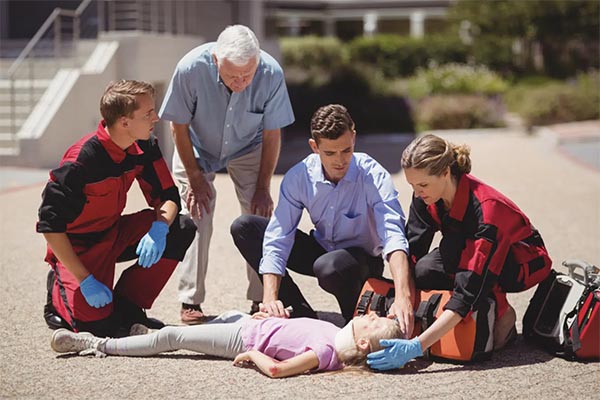
The Importance of First Aid in Austin’s Outdoor Community

Austin, Texas, is synonymous with outdoor adventure. From the limestone cliffs of the Barton Creek Greenbelt to the paddle-board-filled waters of Lady Bird Lake, our city invites us to step outside and explore. However, the very landscapes that make Central Texas beautiful also conceal unique hazards. Whether you are a seasoned trekker tackling the Hill Country or a family enjoying a weekend picnic at Zilker Park, the line between a great day and a medical emergency can be surprisingly thin.

In a city where “going outside” is a way of life, preparedness is not just a recommendation; it is a responsibility. Understanding the importance of first aid in Austin’s outdoor community is about more than just bandages and antiseptic—it is about having the confidence and competence to protect yourself and the people around you.

This guide explores the specific risks associated with our local environment, the life-saving difference training can make, and how CPR Classes Near Me can equip you with the skills you need today.

Why Is Austin’s Landscape Unique for Outdoor Enthusiasts?

Have you ever considered how the specific geography of Austin influences your safety? Unlike flat urban environments, Austin sits on the edge of the Balcones Escarpment, offering a mix of rolling hills, dense woodlands, and rocky riverbeds.

  • Rugged Terrain: The limestone trails of the Hill Country are uneven and often loose. A simple misstep can lead to complex fractures or severe sprains miles from the nearest trailhead.
  • Water Access: With natural springs and lakes integrated into the city, water safety is paramount. The currents in seemingly calm waters can be deceptive, and slippery algae-covered rocks are a common cause of falls.
  • Isolation in the City: It is possible to be physically close to downtown Austin while being operationally remote. If you are deep in the Greenbelt, an ambulance cannot simply drive up to you. Extraction takes time, making your immediate first aid response critical.

What Are the Most Common Outdoor Injuries in Central Texas?

To be prepared, you must know what you are preparing for. The injuries we see in Austin are directly related to our climate and ecosystem.

Heat-Related Illnesses

Texas heat is legendary. During our long summers, temperatures frequently soar above triple digits.

  • Heat Exhaustion: Symptoms include heavy sweating, weakness, and nausea. Without intervention, this can escalate quickly.
  • Heat Stroke: This is a life-threatening emergency where the body loses the ability to cool itself. Swift recognition and cooling protocols learned in first aid training are vital for survival.

Traumatic Injuries

  • Sprains and Fractures: Uneven trails are notorious for causing ankle and knee injuries.
  • Lacerations: Sharp limestone and thorny vegetation (like mesquite and cacti) can cause deep cuts that require immediate bleeding control to prevent infection or significant blood loss.

Environmental Hazards

  • Snake Bites: Central Texas is home to venomous snakes like Rattlesnakes, Copperheads, and Cottonmouths. Knowing the do’s and don’ts of snake bite treatment (e.g., never apply a tourniquet or try to suck out venom) is a key component of wilderness safety.
  • Allergic Reactions: From cedar fever respiratory issues to severe reactions from insect stings (bees, wasps, fire ants), anaphylaxis can happen anywhere.

How Does First Aid Knowledge Change Outcomes in Remote Areas?

When an injury occurs in a controlled environment, like an office or a home, help is usually minutes away. In the outdoors, the “Golden Hour“—the critical window where medical intervention has the highest chance of preventing death—is often consumed by travel time.

Stabilization is Key:

Knowledge of first aid allows you to stabilize a patient before professional help arrives. This includes:

  • Stopping Bleeding: Using direct pressure or a tourniquet effectively.
  • Immobilization: Splinting a broken limb to prevent further damage during transport.
  • Temperature Regulation: actively cooling a heat stroke victim or warming a hypothermia victim (yes, hypothermia can happen here in winter or after water exposure).

Without these immediate interventions, a survivable injury can become fatal before the rescue team even reaches the scene.

Why Is CPR Crucial for Water Activities at Lady Bird Lake and Barton Springs?

Water activities are a staple of Austin life, but they come with the inherent risk of drowning. Drowning is silent and quick. It doesn’t look like it does in the movies; there is often no splashing or screaming.

The Role of CPR:

When a person is pulled from the water unconscious and not breathing, their heart may have stopped, or they may be in respiratory arrest.

  • Immediate Oxygen: CPR provides artificial circulation and ventilation. For a drowning victim, the rescue breaths are particularly crucial to replace oxygen in the blood.
  • Bridge to Life: CPR keeps the brain alive until advanced life support (EMS) arrives with an AED and medication.

If you frequent Austin’s swimming holes, being certified in CPR is one of the most impactful ways you can contribute to community safety.

What Should Be in Your Austin-Specific First Aid Kit?

A generic first aid kit is a good start, but an Austin outdoor kit needs specific additions. When you take a course with CPR Classes Near Me, you learn how to use these tools effectively.

  1. Hydration Salts/Electrolytes: Water isn’t always enough when dealing with severe heat exhaustion.
  2. Fine-Point Tweezers: For removing cactus spines or ticks.
  3. SAM Splint: Lightweight and moldable, perfect for immobilizing limbs on hiking trails.
  4. Antihistamines: Vital for sudden allergic reactions to local flora or fauna.
  5. Blister Care: Moleskin or hydrocolloid bandages are essential for long treks.
  6. Tourniquet: Essential for severe bleeding control, especially for hunters or mountain bikers.

Who Should Take First Aid and CPR Training?

You might think, “I’m not a guide, do I really need this?” The answer is a resounding yes. Accidents rarely happen when it is convenient, and they rarely happen to strangers. You are most likely to perform first aid or CPR on a friend, a family member, or a partner.

  • Parents: Kids are prone to scrapes, falls, and insect bites.
  • Dog Owners: Hiking with pets brings its own risks; knowing how to manage their injuries (and your own while managing them) is helpful.
  • Solo Adventurers: You are your own first responder.
  • Group Leaders: If you organize informal hiking or biking meetups, you have a duty of care to your group.

How Can You Get Certified with CPR Classes Near Me?

Getting certified is easier and more affordable than you might think. CPR Classes Near Me offers top-rated American Heart Association (AHA) BLS, CPR, and First Aid classes right here in Austin.

Why Choose CPR Classes Near Me?

  • Same-Day Certification: We understand you are busy. You will leave our class with your AHA BLS eCard in hand (or in your email) the very same day.
  • Expert Instructors: Our team consists of healthcare professionals and experts who make learning engaging, not boring.
  • Hands-On Training: We believe in muscle memory. You will practice on modern mannequins with feedback devices to ensure your compression technique is perfect.
  • Convenient Locations: We serve the entire Austin area, including Pflugerville, Round Rock, Cedar Park, and Georgetown.

Our Class Options:

  • BLS CPR & AED: Perfect for healthcare providers and general safety. Covers adults, children, and infants.
  • First Aid + CPR/AED: The comprehensive choice for outdoor enthusiasts. Learn to manage medical emergencies, injuries, and environmental hazards alongside CPR.

What Is the “Bystander Effect” and How Do We Combat It?

The “Bystander Effect” occurs when individuals do not offer help to a victim when others are present. The assumption is often, “Someone else will handle it,” or “I don’t know what to do, so I shouldn’t interfere.”

Training Breeds Confidence:

The primary cure for the Bystander Effect is competence. When you know exactly what to do—how to check for a pulse, how to bandage a wound, how to use an AED—you stop hesitating. You become the leader the situation requires. In Austin’s tight-knit outdoor community, we look out for one another. Your certification is a badge of that commitment.

Conclusion

Austin is a playground for nature lovers, but nature demands respect. The rugged beauty of our greenbelts and lakes is best enjoyed with peace of mind. That peace of mind comes from preparation. Knowing you have the skills to handle a snake bite, a heat stroke, or a cardiac emergency allows you to focus on the fun, knowing you can handle the “what ifs.”

Don’t wait for an accident to realize you need training. The skills you learn in a single afternoon can last a lifetime—and save one, too.

Ready to become a lifesaver?

Contact CPR Classes Near Me today to schedule your training.

Get Certified. Be Prepared. Save a Life.

Frequently Asked Questions (FAQ)

1. How long does a CPR and First Aid class take in Austin?

Our American Heart Association BLS CPR classes typically run between 3 to 4 hours. If you add the First Aid module, it provides a comprehensive overview of emergency response in a single session. We value your time, which is why we ensure the training is efficient and you receive your certification card the same day.

2. Is the certification accepted by employers and parks departments?

Yes. We issue American Heart Association (AHA) certifications. The AHA is the gold standard for CPR and First Aid training in the United States. Whether you are a park ranger, a camp counselor, a healthcare worker, or a corporate employee, our certification cards are widely recognized and accepted by employers nationwide, including OSHA.

3. Do I need a medical background to take a First Aid class?

Absolutely not. Our classes are designed for everyone. We teach using simple, actionable steps that anyone can master, regardless of their background. Whether you are a teenager, a parent, or a retiree, you will leave our class feeling confident in your ability to assist in an emergency.

4. How often do I need to renew my CPR certification?

American Heart Association CPR and First Aid certifications are valid for two years. However, if you are frequently outdoors or in high-risk environments, we recommend reviewing your materials often. You can renew your certification by signing up for any of our standard BLS courses; the curriculum covers both initial certification and renewal.

5. What is the difference between CPR and First Aid?

CPR (Cardiopulmonary Resuscitation) is a specific technique used when a person’s heart or breathing has stopped. It involves chest compressions and rescue breaths. First Aid is a broader category that covers the immediate care for a wide range of illnesses and injuries, such as cuts, burns, sprains, heat exhaustion, and allergic reactions. For outdoor safety, we highly recommend taking the combined course.