Which CPR Course Is Best for Non-Medical Professionals?
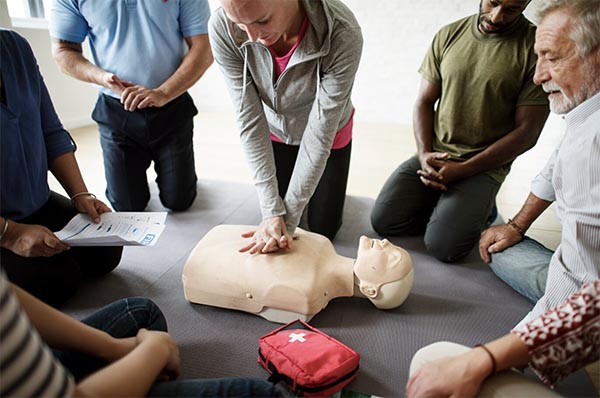
Group learning CPR with hands-on chest compressions on a training manikin.

Walking into a room full of medical equipment and manikins can feel a bit intimidating if you don’t spend your days in a hospital. We often hear from teachers, fitness trainers, and childcare providers who know they need a certification but aren’t sure which path to take. The terms “BLS,” “Heartsaver,” and “Healthcare Provider” are frequently tossed around, making it difficult to pinpoint exactly what you need.

Choosing the right course isn’t just about checking a box for your employer. It is about gaining the confidence to act when a life is on the line. Whether you are a local coach or a corporate office manager, the training you choose determines how prepared you feel during a cardiac emergency.

In this guide, we will break down the most effective cpr certifications for those outside the medical field. By the end, you’ll know exactly which course fits your lifestyle and your professional requirements.

Is the AHA BLS Course Only for Doctors and Nurses?

One of the most common myths is that Basic Life Support (BLS) is exclusively for medical professionals. While BLS is indeed the “gold standard” for healthcare providers, it is frequently the best choice for non-medical professionals as well. Many of our students at CPR Classes Near Me are actually teachers, construction workers, and personal trainers.

The BLS course through the American Heart Association (AHA) provides a higher level of depth than basic community classes. It covers high-quality chest compressions, rescue breathing, and the use of an Automated External Defibrillator (AED) for adults, children, and infants. Because it is so comprehensive, many employers prefer it because it ensures their staff is trained to the highest possible standard.

If your job requires a certification that is “OSHA-compliant” or highly “employer-accepted,” the BLS course is usually your safest bet. It is a 2-year certification that proves you can handle an emergency with the same foundational skills as a first responder.

What Is the Difference Between BLS and Heartsaver CPR?

If you are looking for a course specifically designed for the “layperson,” you might come across the Heartsaver curriculum. The primary difference lies in the technicality and the intended audience. While BLS focuses on team dynamics and professional-grade resuscitation, Heartsaver is streamlined for non-medical settings like offices or retail environments.

However, we often recommend the BLS course even to non-medical staff. Why? Because the price point and time commitment are often very similar, but the BLS card is more universally accepted. If you switch jobs or enter a new field, a BLS certification will almost always be accepted, whereas a basic Heartsaver card might not meet more stringent requirements.

At our Austin training site and other national locations, we see a wide range of professionals choosing BLS for its versatility. It gives you the “Healthcare Provider” designation, which carries significant weight on a resume, regardless of your industry.

Why Should Non-Medical Professionals Choose an AHA-Aligned Course?

When searching for “CPR classes near me,” you will likely see a variety of organizations offering training. However, not all certifications are created equal. The American Heart Association is the leader in cardiac science, and their guidelines form the basis for life-saving protocols worldwide.

Choosing an AHA-aligned course ensures that the techniques you learn are backed by the latest clinical research. Many online-only courses offer “cheap” certifications, but these are frequently rejected by employers because they lack a hands-on skills assessment. You cannot learn the physical depth of a chest compression or the timing of an AED through a computer screen alone.

By attending an in-person class, you get real-time feedback from certified instructors. This experience is what builds “muscle memory.” In a real emergency, you won’t be thinking about a video you watched; you will be relying on the physical practice you did in the classroom.

Do I Need to Add First Aid to My CPR Certification?

For many non-medical professionals, CPR alone isn’t enough to meet workplace safety standards. If you work in an environment where physical injury is possible—such as a construction site, a school, or a daycare—adding a First Aid component is highly recommended.

A CPR and First Aid combo course covers a broader spectrum of emergencies. While CPR focuses on the heart and lungs, First Aid teaches you how to manage:

  • Severe allergic reactions (using an EpiPen)
  • External bleeding and wound care
  • Bone fractures and sprains
  • Environmental emergencies like heatstroke or burns

Adding First Aid usually only extends the class time slightly, but it provides a much more well-rounded skill set. For parents and caregivers, this is often the preferred choice because it prepares them for the everyday “bumps and bruises” as well as life-threatening events.

How Long Does the Certification Process Take for Laypeople?

Time is a major factor for busy professionals. Many people put off training because they assume it will take an entire weekend. In reality, a high-quality AHA BLS or CPR course can be completed in a single afternoon.

At CPR Classes Near Me, our sessions typically run about 3.5 to 4 hours. We focus on efficiency without sacrificing the quality of the training. Because we use the latest AHA videos and hands-on practice, we can ensure every student leaves feeling confident.

Perhaps the biggest benefit for non-medical professionals is the “Same Day Card” policy. We know you might have a deadline for a new job or a coaching permit. We issue your AHA BLS eCard the same day you finish the class, so you don’t have to wait weeks for a piece of paper to arrive in the mail.

Which CPR Course Is Best for Those Working with Children?

If your “non-medical” role involves children—such as a daycare provider, nanny, or teacher—your training needs to be specific. Children and infants require different hand placements and compression depths than adults.

The best course for this group is one that specifically includes “Pediatric CPR and Airway Management.” Our BLS and CPR/First Aid classes cover the entire lifespan: adults, children, and infants. This ensures that no matter who you are caring for, you have the specific skills needed to help them. This includes techniques for clearing an obstructed airway (choking) in small children, which is a common concern for educators and parents alike.

Conclusion

For the vast majority of non-medical professionals, the AHA BLS (Basic Life Support) course is the best all-around choice. It provides the highest level of certification, is accepted by virtually every employer, and equips you with the skills to save lives across all age groups. If your role requires broader safety knowledge, pairing that BLS certification with a First Aid module is the ultimate way to ensure you are prepared for any situation.

Don’t wait until an emergency happens to wish you had the training. Whether you are in Austin or anywhere else across the country, getting certified is a quick, rewarding process that provides peace of mind for you and safety for those around you.

Ready to get certified? Contact CPR Classes Near Me today to find a class and get your same-day certification!

Frequently Asked Questions (FAQ)

1. What is the most widely accepted CPR certification for non-medical jobs?

The American Heart Association (AHA) BLS (Basic Life Support) certification is the most widely recognized and accepted card nationwide. It is considered the gold standard for many industries, including education, fitness, and construction, because it meets rigorous OSHA and workplace safety standards.

2. Can I get certified in CPR entirely online?

While online theory courses exist, most employers do not recognize certifications that lack a hands-on skills assessment. Effective CPR requires physical practice on a manikin with instructor feedback to ensure proper technique, which is why in-person training is highly recommended.

3. Is there an age limit for taking a CPR class?

There is no formal minimum age requirement to become CPR certified through the AHA. As long as the individual is physically capable of performing the chest compressions and demonstrating the necessary skills, they can receive their certification card.

4. How long is my CPR certification valid for?

AHA CPR and BLS certifications are valid for two years from the date of the class. To maintain your certification, you will need to take a renewal course before your current card expires to ensure your skills stay fresh and aligned with the latest guidelines.

5. Does the BLS course cover how to use an AED?

Yes, every AHA BLS and CPR course includes comprehensive training on how to use an Automated External Defibrillator (AED). You will learn how to set up the device, apply the pads, and follow the voice prompts to deliver a life-saving shock if necessary.

6. What should I wear to a CPR class?

Since CPR training involves physical activity—such as kneeling on the floor and performing chest compressions on manikins—it is best to wear comfortable, move-around clothing. Most students find that athletic wear or casual “business casual” attire works best.

Why Teachers and School Staff in San Antonio, TX Need CPR Training

Hands performing chest compressions on a CPR training mannequin with AED pads attached.

Why Teachers and School Staff in San Antonio, TX Need CPR Training

Hands performing chest compressions on a CPR training mannequin with AED pads attached.

If you’ve ever sat in a school office, walked through a bustling cafeteria, or attended a high-energy school sports event, you know: schools are lively, unpredictable places. In a city as vibrant and diverse as San Antonio, TX, that energy is multiplied. But with all that activity, there’s one thing every school must prioritize—safety. That’s where CPR training comes in.

Let’s break down why every teacher, administrator, and school staff member in San Antonio should be trained in CPR—and how this training can be the difference between life and death.

The Reality of Medical Emergencies in Schools

Schools are high-traffic environments with hundreds, sometimes thousands, of young students. These students are energetic, active, and, at times, medically vulnerable. Emergencies can occur anywhere—from a student collapsing in the hallway to a teacher experiencing a sudden cardiac event in the classroom.

Statistics show that sudden cardiac arrest (SCA) is one of the leading causes of death in the U.S. According to the American Heart Association, over 350,000 cardiac arrests occur outside a hospital setting every year, and about 7,000 of those happen to children. Now imagine that happening in a school without a single CPR-trained adult nearby.

Why Teachers and School Staff in San Antonio, TX Need CPR Training

Why CPR Matters So Much

Cardiopulmonary Resuscitation (CPR) is a basic yet powerful life-saving technique. It keeps oxygenated blood flowing to the brain and other vital organs until advanced medical care can take over. When done properly, CPR can double or triple a victim’s chance of survival.

In a school setting, waiting for an ambulance may take 8-12 minutes. But brain damage can begin after just 4 minutes without oxygen. That gap is where a CPR-trained staff member becomes a hero in action.

Looking to learn CPR fast? Enroll in a CPR class in San Antonio that fits your schedule and get certified today.

Teachers and Staff: The First Responders on Campus

In most schools, the nurse may not be present at all times, or there may be just one medical professional for hundreds of students. That makes teachers, janitors, front desk staff, and even coaches the de facto first responders.

Here are a few real-world scenarios:

  • A student with asthma forgets their inhaler and collapses during PE.

  • A cafeteria worker begins to choke on food.

  • A teacher suffers a heart attack in the middle of class.

In each of these cases, seconds count—and a CPR-trained colleague could be the difference between life and death.

If you’re unsure where to begin, check out this helpful guide on what to expect in a CPR certification class.

What Makes San Antonio Unique?

San Antonio isn’t just any city. It’s a sprawling metro with over 1.5 million residents and more than 17 independent school districts. With such a vast and varied school population, preparation needs to be both universal and localized.

Factors that make CPR training especially relevant in San Antonio include:

  • Hot Climate: Heat-related emergencies are more common during field days or outdoor sports.

  • Large Student Populations: More students = higher chance of emergencies.

  • Diverse Health Needs: Students may have undiagnosed or uncommunicated medical conditions.

Plus, in a city committed to family and community, training school personnel in CPR is just another way to invest in public well-being.

Find the most reputable CPR certification programs near you and schedule group training for your entire school staff.

Legal and Educational Requirements in Texas

Legal and Educational Requirements in Texas

Under the Texas Education Code, students are required to receive CPR training at some point in their high school career. But what about the adults?

While not always mandated, many Texas districts now encourage or require CPR certification for school staff, especially coaches and bus drivers. There’s a growing push to make this a statewide standard—and for good reason.

By proactively training staff, schools stay ahead of liability issues, reduce emergency response time, and build a culture of care and preparedness.

Want to know which certification is best for educators? Here’s a comparison of CPR certifications by the American Red Cross and AHA.

For official policy details, check out the Texas Education Code §28.0023.

How CPR Training Works (and Where to Find It)

Getting trained in CPR is easier than ever. In San Antonio, CPR classes are available through:

  • Private CPR training companies that offer onsite school training

  • Online hybrid courses with in-person skills assessments

Most courses take just a few hours and include instruction in:

  • Adult, child, and infant CPR

  • AED (Automated External Defibrillator) use

  • Choking rescue techniques

  • First aid basics (optional in many programs)

Not sure how long your CPR certification lasts? Here’s a quick read on how often you need to renew CPR certification.

Many of these providers offer group discounts for schools or can even come onsite for staff in-service days.

Building a Culture of Safety

When teachers and staff are CPR-trained, they gain more than a certification. They gain confidence, leadership skills, and the ability to act decisively in moments of crisis.

Even more powerful? The ripple effect. Students witnessing these skills in action are more likely to:

  • Stay calm in emergencies

  • Learn CPR themselves

  • Respect the importance of public health

This transforms a single CPR certification into a community-wide commitment to safety.

To empower your staff, consider enrolling them in a group CPR training program tailored for schools and organizations.

What Schools Can Do Next

If you’re a school administrator, teacher, or parent in San Antonio, here are some steps you can take:

  1. Advocate for Training: Bring up CPR training at staff meetings or PTA sessions.

  2. Partner with Local Providers: Set up recurring training through AHA or Red Cross-certified organizations.

  3. Incorporate AED Drills: Know where your school’s AEDs are—and make sure staff do too.

  4. Make It Fun: Host a “CPR Day” during professional development to build skills and camaraderie.

Conclusion: Empowerment Starts with Preparedness

San Antonio’s teachers and school staff are already heroes in the eyes of their students. CPR training simply adds another layer to that heroism. With minimal time and cost, school communities can arm their teams with the skills they need to save lives.

Because in an emergency, it’s not about what you wish you could do—it’s about what you’re trained to do.

Start today by finding CPR classes near you and building a safer, more prepared San Antonio school community.

AHA BLS CPR & AED Classes

Starting at $59.95
American Heart Association BLS CPR & AED Certification 
Our CPR Trainers are American Heart Association Certified. We teach the best CPR Classes and deliver your certification eCard the same day. Get your AHA BLS CPR Certification and save now!

FAQ

Our primary goal is to ensure that you receive a top-quality CPR/First Aid certification. With our in-person training in Austin, you can learn CPR and BLS in just one class. Your presence is all that’s needed to continue with your lesson! During your session, you will complete all the live-training components necessary to ensure you receive your AHA Healthcare Provider certification card.

Our CPR Classes in Austin are discounted to $59.95 (saving you $20), and our CPR + First Aid Class is offered at $79.95 (also saving you $20). When looking for CPR Classes, ensure to check for the American Heart Association seal. Other sites might seem cheaper but frequently lack the official training credentials demanded by employers.

Upon successful completion of the course, you will obtain a CPR certification that is valid for two years. The AHA CPR certification is recognized with the highest acceptance rate among employers nationwide.

Indeed! Enroll in any CPR Certification Austin BLS course to extend your certification for an additional two years. The in-person BLS course and the Renewal Class are identical.

Anyone capable of completing the course independently should consider pursuing CPR training and CPR Certification. There is no minimum age restriction for obtaining a CPR certification in Austin through the American Heart Association (AHA)..

CPR training needs to be carried out in person to guarantee its effectiveness. Our experienced instructors offer an engaging and dynamic learning experience. Typically, employers do not recognize CPR certifications that are obtained solely through online courses.

All authorized American Heart Association training centers are obligated to display the entire video. After a three-hour session with CPR Classes Near Me Austin, your BLS CPR eCard will be promptly issued by the instructor on the same day!