Group CPR Training in Austin: Onsite Business Classes

cpr classes near me

Austin is booming with innovative tech companies, thriving educational institutions, and expansive healthcare facilities. As your organization grows in this dynamic city, the safety and well-being of your employees and clients must remain a top priority. Medical emergencies can happen anywhere, and having a team prepared to act confidently can literally mean the difference between life and death.

That is exactly why group CPR training in Austin is becoming a standard practice for forward-thinking organizations. Instead of sending employees to individual classes on their own time, you can bring the classroom directly to your workplace.

In this comprehensive guide, you will learn how onsite group CPR certification works, what vital skills your team will acquire, and why the American Heart Association (AHA) standard is the only credential you should trust. We will also show you how easy it is to schedule a hands-on, team-building safety session that checks all the boxes for workplace compliance and peace of mind.

Why Is Group CPR Training in Austin Crucial for Your Business?

Medical emergencies do not wait for a convenient time to occur. Sudden cardiac arrest can strike anyone, regardless of their age, lifestyle, or physical fitness level. When a health crisis happens in the workplace, the first few minutes are absolutely critical to the victim’s survival.

Relying solely on a 911 call is not always enough. Even with Austin’s highly dedicated emergency response teams, heavy traffic on I-35 or the MoPac Expressway can delay paramedics from reaching your facility immediately. Having employees equipped with CPR and AED knowledge ensures that life-saving interventions begin the moment a colleague or client collapses.

Investing in a comprehensive safety program also protects your company legally and operationally. Many industries face strict OSHA regulations regarding workplace safety and emergency preparedness. Hosting a group training session guarantees that your entire staff meets these regulatory requirements simultaneously, completely removing the guesswork from HR compliance tracking.

Furthermore, offering this training demonstrates a profound commitment to your team’s welfare. Employees feel valued and protected when their employer actively invests in their health, safety, and professional development.

What Are the Benefits of Onsite Classes for Businesses and Teams?

Organizing individual training sessions for a large staff can quickly become an administrative nightmare. Tracking various expiration dates, reimbursing multiple individual invoices, and managing staggered time-off requests heavily drains HR resources. Onsite group classes eliminate these logistical headaches entirely.

By scheduling an onsite session, our expert instructors bring the necessary teaching equipment directly to your conference room, warehouse, or facility. This means zero travel time for your employees and minimal disruption to your daily operations. You dictate the date and time that aligns perfectly with your business schedule.

Group training also serves as an exceptional team-building exercise. Employees learn to communicate clearly and collaborate effectively under high-pressure scenarios. They practice handing off chest compressions and coordinating emergency responses with the exact colleagues they would rely on in a real-world workplace crisis.

Finally, private group sessions are highly cost-effective for organizations. Training your staff as a unified group often reduces the per-person cost compared to individual enrollments. It is a smart, economical decision that yields immeasurable returns in workplace safety and employee confidence.

Which Austin Organizations Need Group CPR Certification the Most?

Virtually every workplace benefits from having certified lifesavers on staff. However, certain industries across the Central Texas region consider this hands-on training an absolute operational necessity.

Healthcare and dental professionals are naturally at the top of the list. Clinics, nursing homes, and medical offices surrounding hubs like the Dell Seton Medical Center require immediate, synchronized emergency responses. AHA Basic Life Support (BLS) is the standardized mandate for these dedicated healthcare workers.

Educators and childcare providers also carry an immense daily responsibility. Schools, daycares, and after-school programs in neighborhoods from Pflugerville to South Congress must be prepared for unexpected pediatric emergencies. Knowing how to handle a choking infant or child is a non-negotiable skill for professional caretakers.

Additionally, fitness centers, construction sites, and hospitality venues face unique physical risks. Gyms around The Domain and construction crews expanding the downtown Austin skyline rely on fast action during physical trauma or cardiac events. Even standard corporate offices benefit immensely from having a designated emergency response team stationed on every floor.

What Does Our Onsite Group CPR Training in Austin Include?

When you book a private session with CPR Classes Near Me, you are not just getting a generic video lecture. Our curriculum is deeply interactive, fully hands-on, and backed by the latest medical science and AHA guidelines.

First, your team will learn the precise mechanics of high-quality chest compressions and proper rescue breathing. We provide individual training manikins so everyone gets ample physical practice. Developing this muscle memory is vital when adrenaline kicks in during a real-life emergency.

Next, we extensively cover the use of an Automated External Defibrillator (AED). These critical devices are increasingly common in Austin office buildings and public spaces, but they can be intimidating to use without prior instruction. We demystify the AED, showing your team exactly how to deploy it safely, quickly, and effectively.

Our comprehensive training prepares your team to treat victims of all ages. Your staff will learn the distinct physiological differences between administering aid to adults, children, and infants. We also include essential, hands-on instruction on clearing airway obstructions for choking victims of any size.

Best of all, there is no waiting around for credentials to arrive in the mail. Upon successful completion of the in-person course, our instructors issue official American Heart Association certification eCards on the exact same day.

How Do Onsite First Aid and CPR Classes Complement Each Other?

While CPR and AED training specifically addresses catastrophic cardiac events, everyday workplace injuries require a completely different medical skill set. Combining First Aid instruction with your group CPR training creates a truly comprehensive safety net for your organization.

First Aid training covers common workplace emergencies like severe bleeding, burns, allergic reactions, and physical trauma. For manufacturing plants, busy restaurants, and large corporate campuses, these localized incidents are statistically much more likely to occur than full cardiac arrest.

By booking a combined onsite class, your employees learn how to seamlessly transition between different emergency protocols. They will know exactly when to apply a bandage or tourniquet versus when to begin chest compressions. This dual knowledge minimizes workplace panic and empowers your staff to manage almost any health crisis until professional paramedics arrive.

How Does the American Heart Association Standard Elevate Your Team?

Not all safety certifications are created equal in the eyes of employers or regulators. The American Heart Association is the undisputed gold standard in emergency cardiovascular care. Their rigorous guidelines dictate how medical professionals and first responders operate nationwide.

Many discount websites offer “online-only” certifications that take just a few minutes to quickly click through. Unfortunately, these cut-rate programs are almost never accepted by employers, OSHA compliance officers, or state licensing boards. You simply cannot learn how to perform adequate, life-saving chest compressions by looking at a computer screen.

Our AHA-aligned classes strictly require an in-person, hands-on skills evaluation. This physical requirement guarantees that your employees actually possess the bodily capability and mental confidence to perform life-saving techniques. Employers across every major sector recognize, respect, and trust the AHA seal.

Once earned, this high-level credential remains valid for two full years. We make the future renewal process just as seamless, offering identical, streamlined refresher courses to keep your Austin team compliant and confident for the long haul.

How Do You Prepare Your Texas Office for Onsite CPR Classes?

Hosting an onsite training session is incredibly straightforward and stress-free. Our expert team handles all the heavy lifting and equipment transport, but a little bit of internal preparation ensures a flawless experience for your staff.

First, you will need to secure an appropriate space within your building. A large conference room, an open breakroom, or a cleared-out lobby works perfectly. We simply need enough open floor space for attendees to kneel next to the training manikins comfortably. A TV screen or blank wall for projecting the required AHA instructional videos is also highly recommended.

Next, advise your participating team members to dress comfortably. CPR is a surprisingly physical activity. Participants will be on the floor performing continuous chest compressions, so flexible, athletic, or casual clothing is highly encouraged.

Finally, communicate the training schedule clearly to all department heads. American Heart Association guidelines require students to be fully present for the entire video and hands-on session. Ensure your staff can dedicate the necessary time without needing to step away for phone calls or secondary meetings.

Why Choose CPR Classes Near Me for Your Corporate Training?

With so many logistical challenges involved in running a successful business, your safety training provider should be a reliable partner you never have to worry about. CPR Classes Near Me has proudly trained and certified thousands of students nationwide, maintaining a stellar reputation built on excellence and reliability.

Our instructors are the true heart of our training program. They are seasoned professionals who specialize in creating a supportive, engaging, and stress-free learning environment. They do not just read monotonously from a manual; they share practical, real-world insights that help students overcome the fear of stepping up during a crisis.

We also boast over 24,000 verified positive reviews from satisfied students and corporate clients. Whether you operate a tight-knit startup in East Austin or a massive corporate campus in Round Rock, we seamlessly scale our instruction to meet your exact organizational needs.

By bringing our top-rated program directly to your door, we save you immense amounts of time, money, and administrative hassle. We focus entirely on the training, so you can focus entirely on running your business.

Equip Your Austin Team to Save Lives

Medical emergencies are inherently unpredictable, but your team’s response absolutely does not have to be. Investing in group CPR training in Austin is one of the most responsible, high-impact decisions a business leader can make. It actively fosters a culture of safety, builds vital team cohesion, and ensures your organization remains fully compliant with industry regulations.

Do not wait for a workplace crisis to realize the true value of emergency preparedness. Equip your staff with the knowledge, muscle memory, and universally accepted AHA certification they need to save a life.

Ready to empower your workforce? Contact CPR Classes Near Me today to schedule your onsite group training and secure your team’s same-day certifications!

Frequently Asked Questions (FAQ)

How many employees are required to book an onsite group CPR class in Austin?

We accommodate groups of various sizes, ranging from small dedicated teams to entire corporate departments. Reach out to our coordination team with your estimated headcount, and we will tailor the instructor ratio to match your specific needs perfectly.

Are online-only CPR certifications valid for Austin businesses?

In most cases, no. Online-only programs lack the hands-on skills assessment required by OSHA and most major employers. To ensure full compliance, CPR training must include an in-person, physical evaluation with a certified instructor.

How long does the onsite CPR and AED training take?

A comprehensive Basic Life Support (BLS) CPR and AED class typically takes about 3.5 to 4 hours to complete. This includes the required AHA video modules, hands-on practice, and the final skills evaluation.

What is the difference between BLS and standard CPR?

Basic Life Support (BLS) is a more advanced, rigorous form of CPR training typically required for healthcare professionals and clinical staff. It heavily emphasizes high-quality chest compressions, multi-rescuer team dynamics, and precise AED usage compared to standard layperson CPR.

Do employees receive their CPR certification cards immediately?

Yes, they do. As soon as your team successfully completes the hands-on skills test at the end of the session, our instructors will issue official American Heart Association certification eCards on the very same day.

How often do businesses need to renew their group CPR certifications?

American Heart Association CPR and BLS certifications are valid for exactly two years from the date of issue. Businesses should schedule a group renewal class before the two-year mark to ensure there are no gaps in regulatory compliance.

How to Choose Family-Focused CPR Training in Austin

Closeup of students practicing CPR chest compression on dummy.

As a parent, grandparent, or caregiver, your top priority is keeping your loved ones safe. Whether you are spending a Saturday afternoon swimming at Barton Springs, hiking the Barton Creek Greenbelt, or just enjoying a backyard barbecue with neighbors, emergencies can happen in a split second. This is why enrolling in family-focused CPR training in Austin is one of the most important investments you can make for your family’s safety and your own peace of mind.

However, not all CPR classes are created equal. Some courses are designed strictly for clinical medical professionals, while others might be entirely online, lacking the practical, hands-on experience you desperately need to feel confident. When you are looking to learn life-saving techniques to protect your children, you need a course tailored specifically to real-world family scenarios.

In this comprehensive guide, we will walk you through exactly how to choose the right family-focused CPR training in Austin. You will learn what makes a class effective, why official American Heart Association (AHA) certification matters, and what specific life-saving skills you should walk away with to ensure you are ready to act when every second counts.

Why Are Family-Focused CPR Classes Essential for Austin Parents?

Austin is a vibrant, incredibly active city. Families here spend a massive amount of time outdoors, around water, and on the move. While this active lifestyle is fantastic for family bonding, it naturally introduces specific environmental risks.

From accidental drownings in neighborhood pools and local lakes to sudden choking hazards at the dinner table, the unexpected is always a possibility. A family-focused CPR class goes far beyond the basics of adult resuscitation. It hones in on the unique physiological differences between adults, children, and infants.

When a child’s breathing stops, the cause is almost always respiratory—such as choking, asthma, or near-drowning—rather than a primary cardiac event. A specialized, family-oriented class teaches you how to recognize these specific distress signals early. Furthermore, taking a class alongside other parents creates a highly supportive learning environment. You aren’t just memorizing compression-to-breath ratios; you are learning how to manage the intense panic and adrenaline that inevitably flood your system when a child is in danger.

How Does Austin’s Geography Make First Aid and CPR Crucial?

Living in Central Texas means having access to incredible natural landscapes, but those same landscapes can complicate emergency response times. If an emergency occurs while you are miles deep into the Walnut Creek trail system or out on a boat in the middle of Lake Travis, paramedics will not be able to reach you in standard response times.

In these crucial moments, you are the first responder. The national average response time for EMS is roughly 7 to 8 minutes, but brain damage from a lack of oxygen can begin in as little as 4 minutes.

Having specialized CPR and First Aid training means you can sustain your child’s life, maintain oxygen flow to their brain, and stabilize their condition while waiting for professional help to navigate difficult terrain. Your immediate action bridges the critical gap between the onset of the emergency and the arrival of an ambulance.

What Should You Look for in an Austin CPR Training Program?

Choosing the right provider can feel overwhelming, especially with so many options available online. However, there are a few non-negotiable standards you should always look for when booking a class to protect your family.

American Heart Association (AHA) Certification

First and foremost, look for a provider that issues official American Heart Association (AHA) certifications. The AHA sets the gold standard for emergency cardiovascular care based on the latest scientific research and data. When you choose an AHA-aligned course, you guarantee that the techniques you are learning are the most current, effective, and evidence-based methods available today.

Comprehensive Pediatric Curriculum

Your chosen class should comprehensively cover adults, children, and infants. A top-tier family-focused CPR training in Austin will teach you how to perform chest compressions and rescue breaths on all age groups. It should also cover how to properly locate and use an Automated External Defibrillator (AED), devices that are increasingly common in Austin schools, community centers, and gyms.

Same-Day Certification and Ultimate Convenience

As a parent, your time is highly valuable. Look for a training center that values your schedule by issuing your official eCard on the exact same day you complete the course. Providers with dedicated, permanent facilities—rather than pop-up classes in hotel conference rooms—offer a more professional, reliable learning experience. Ensure the location is convenient so you can get your training done and get back to your family.

How Does Infant and Child CPR Differ from Adult CPR?

One of the primary reasons general CPR classes fall short for parents is that they do not dedicate enough time to pediatric differences. The anatomical and physiological makeup of a baby or a toddler requires a completely different approach to resuscitation.

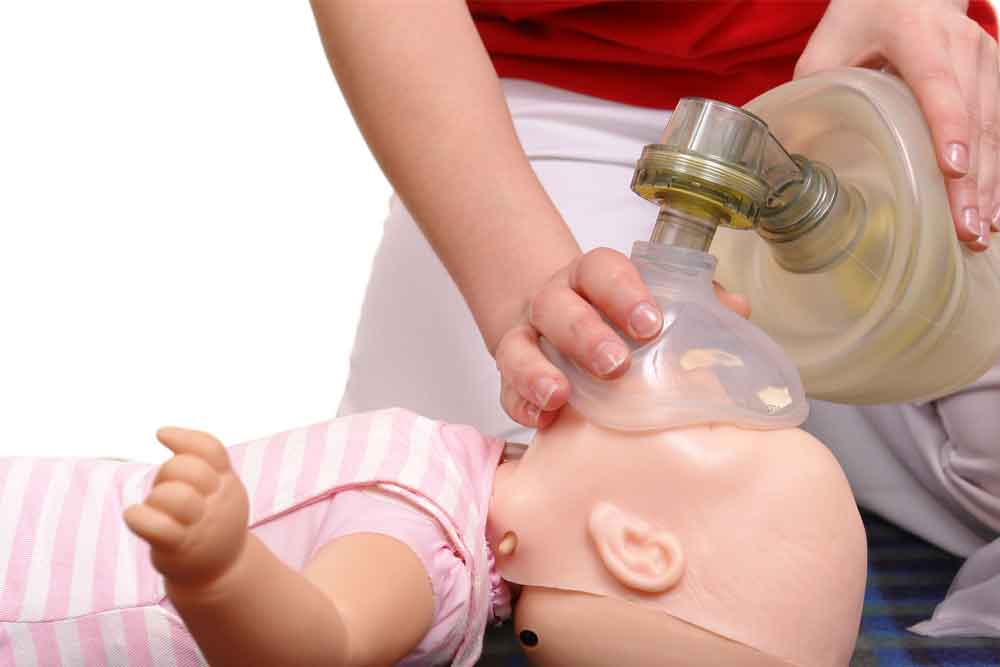
When performing CPR on an infant, you do not use two hands for chest compressions. Instead, you use two fingers placed just below the nipple line. The depth of the compression is also notably shallower—about 1.5 inches for an infant, compared to at least 2 inches for a full-grown adult. A high-quality class will provide specialized infant mannequins so you can feel the exact pressure required without fear of causing injury.

For young children, you might use one or two hands depending on the child’s size, pressing down about 2 inches. Because pediatric cardiac arrest is usually triggered by a breathing issue, rescue breaths carry a much heavier emphasis. Your instructor will teach you how to deliver a gentle puff of air for an infant—just enough to make the chest rise—rather than the deep breath required for an adult.

Choking relief is another critical distinction. If an adult is choking, you perform the traditional Heimlich maneuver. For a choking infant, you must perform a very specific, gravity-assisted sequence of back slaps and chest thrusts while safely supporting the baby’s head and neck.

Why is In-Person, Hands-On CPR Practice Crucial?

Over the past few years, there has been a massive surge in online-only certification courses. While these might seem convenient for busy Austin parents, they are entirely insufficient for mastering physical, life-saving skills.

CPR is a physical, tactile skill, much like riding a bike or swimming. You absolutely cannot learn how much pressure to apply to a human chest by clicking through a slideshow or watching a video. You need to physically lock your elbows, position your shoulders directly over a mannequin, and feel the physical resistance of the chest.

You also need an expert instructor watching your form in real-time. They will correct your hand placement and ensure you are allowing for full chest recoil between compressions. Furthermore, many employers and childcare organizations do not accept online-only CPR certificates because they lack this vital physical skills check.

Does the Training Provider Offer First Aid Certification?

While CPR is necessary for life-or-death, worst-case scenarios, everyday parenting involves a lot of minor bumps, bruises, and medical scares. The best family-focused CPR training in Austin will offer a combined First Aid and CPR class.

A comprehensive First Aid module will teach you how to handle burns from a hot stove, manage severe bleeding from a playground fall, and respond to sudden illnesses like seizures or severe allergic reactions (anaphylaxis). In a city where outdoor activities often lead to insect stings, scraped knees, and heat exhaustion in the Texas summer, knowing how to stabilize a loved one is incredibly empowering.

By bundling your CPR and First Aid training, you dedicate a single morning or afternoon to becoming a fully prepared, highly capable caregiver.

How Should You Prepare for Your Family-Focused CPR Class?

Once you have selected a high-quality, AHA-certified training provider, a little preparation can go a long way in ensuring you get the most out of your educational session.

First, dress comfortably. You will be on the floor practicing chest compressions, airway management, and recovery positions, so wear loose-fitting clothing and comfortable, closed-toe shoes.

Second, come with a list of questions. Think about the specific environments where your family spends the most time. Ask your instructor how to adapt your emergency response to these specific settings.

Finally, consider making it a whole-family affair. Encourage your spouse, the grandparents, and your regular babysitters or nannies to sign up for the exact same session. Having everyone in your child’s care circle on the same page ensures a unified, coordinated response if an emergency ever occurs.

Conclusion: Take Action for Your Family’s Safety

Medical emergencies do not wait for you to be ready; they happen without warning, often in the most ordinary of moments. Investing a few hours into a family-focused CPR training in Austin is the single most effective way to ensure you have the skills, knowledge, and confidence to protect your children when it matters most.

By prioritizing an AHA-aligned curriculum, demanding in-person hands-on practice, and seeking out expert instruction that extensively covers infants and children, you are taking a proactive step toward your family’s lifelong safety. Don’t settle for online-only shortcuts when your loved ones’ lives are on the line.

Are you ready to become a certified lifesaver for your family? Contact CPR Classes Near Me today to book your AHA-certified, hands-on CPR and First Aid training. With convenient locations, same-day certification, and expert instructors, we make it easy for Austin families to get the best training possible.

FAQ

How long does an in-person CPR certification class take?

Most comprehensive, in-person BLS CPR classes take approximately 3.5 to 4 hours to complete. If you are taking a combined CPR and First Aid course, you should expect the class to run slightly longer. You will leave the facility with your certification completed that same day.

Is it better to take CPR online or in person?

In-person CPR training is always recommended over online-only courses because it allows for hands-on practice with mannequins. An experienced instructor can correct your posture and compression depth, ensuring you build the correct muscle memory. Most reputable organizations do not accept online-only CPR certifications.

How often do I need to renew my CPR certification?

American Heart Association CPR certifications are valid for exactly two years from the date of issue. To keep your skills sharp and your certification active, you must take a renewal class before your current card expires.

At what age can a teenager take a CPR class?

There is no strict minimum age requirement to take a CPR class. As long as a teenager or child has the physical strength to perform adequate chest compressions and the maturity to understand the material, they are encouraged to get certified.

Will I learn how to use an AED in a standard CPR class?

Yes, high-quality CPR training includes instruction on how to operate an Automated External Defibrillator (AED). You will learn how to turn the device on, follow its vocal prompts, and safely deliver a shock to adults, children, and infants.

Do CPR classes teach you how to help a choking baby?

Absolutely. A family-focused CPR class covers the specific differences between adult, child, and infant emergencies. You will learn and practice the exact sequence of back slaps and chest thrusts required to dislodge an object from a choking infant’s airway.

Choking Relief for Infants and Children: What CPR Classes Cover

Infant CPR

A choking incident involving a child or baby is one of the most terrifying emergencies a parent, teacher, or caregiver can face. It happens silently, quickly, and often without any warning. Whether a toddler swallows a small toy or an infant struggles with a piece of food, the window to act is incredibly small.

Knowing exactly how to respond can mean the difference between a momentary scare and a devastating tragedy. Unfortunately, many well-meaning bystanders rely on outdated advice or panic-driven instincts. This is why formal, hands-on training is an absolute necessity.

In a certified American Heart Association (AHA) class, you learn evidence-based choking relief for infants and children. The techniques taught differ significantly from adult procedures due to a child’s delicate anatomy. By learning these age-specific protocols, you build the muscle memory required to act decisively under extreme pressure.

In this comprehensive guide, we break down exactly what to expect from your pediatric CPR training. We cover how to recognize severe airway obstructions, the distinct methods used for babies versus older children, and why in-person practice is unmatched. Here is what you will learn when you sign up for a high-quality CPR and First Aid class.

Why Pediatric Choking Requires Specialized Training

Babies and young children are naturally curious, frequently using their mouths to explore the world around them. This developmental stage makes them highly susceptible to airway obstructions. According to pediatric safety data, items like grapes, hot dogs, coins, and small toy parts are frequent culprits.

However, a child is not just a miniature adult. Their airways are narrower, their bones are still developing, and their internal organs are far more exposed. Applying adult choking techniques to an infant can cause severe, life-threatening internal damage.

This is where formal training bridges the gap between panic and effective action. A certified CPR instructor teaches you how to modify your physical force. You learn the anatomical reasons why specific thrusts are used and how to adapt your body mechanics to fit the size of the victim.

Recognizing the Signs of a Severe Airway Obstruction

Before intervening physically, you must first assess the severity of the choking incident. CPR classes emphasize the critical difference between a mild airway obstruction and a severe one. If a child is coughing forcefully or crying loudly, they still have air exchange. In these mild cases, instructors teach you to monitor the child closely and encourage them to keep coughing, rather than interfering.

A severe obstruction, on the other hand, requires immediate physical intervention. The hallmark sign of severe choking is sudden silence. The infant or child cannot cry, speak, or cough effectively.

Other unmistakable red flags include a high-pitched squeaking noise when trying to breathe, clutching the throat (the universal choking sign), and a bluish tint to the lips or skin. When you recognize these signs, you must step in immediately. Your AHA BLS CPR certification course will run through varied scenarios so you can identify these visual cues in seconds.

How Do CPR Classes Teach Choking Relief for Infants?

Infants, defined in medical training as children under one year of age, require a highly specialized approach. Because their abdominal organs are fragile and unprotected by a fully developed rib cage, you should never use abdominal thrusts on a baby. Doing so can cause catastrophic internal injuries.

Instead, CPR classes teach a strict sequence of back slaps and chest thrusts. First, you learn how to safely support the infant’s head and jaw while resting their body face-down along your forearm. Gravity plays a vital role here, so the baby’s head must be angled lower than their chest.

Once the infant is properly positioned, you deliver five forceful back slaps between the shoulder blades using the heel of your free hand. If the object does not dislodge, you carefully flip the baby over, keeping their head and neck supported. You then administer five chest thrusts using two fingers placed directly on the lower half of the breastbone.

This 5-and-5 cycle continues until the object is expelled or the infant becomes unresponsive. During an in-person class, you practice this exact sequence on realistic infant manikins. This tactile experience ensures you know exactly how much force to apply in a real-world crisis.

Performing Choking Relief for Children: What You Will Learn

For children older than one year, the approach changes. The protocol closely mirrors adult choking relief but requires crucial modifications for size and height. The primary technique taught for this age group is the abdominal thrust, widely known as the Heimlich maneuver.

In your certification class, you learn how to correctly position yourself behind the choking child. If the child is small, you may need to kneel behind them to align your arms properly. Kneeling ensures your thrusts go inward and upward, effectively forcing air out of the lungs to push the obstruction free.

Proper hand placement is essential to avoid breaking ribs or damaging organs. Instructors teach you to make a fist with one hand, place it just above the child’s navel, and grasp it with your other hand. You then deliver quick, upward thrusts as if you are trying to lift the child off their feet.

You must continue these thrusts until the airway is clear. Hands-on practice allows you to refine your grip, stance, and angle so you can deliver abdominal thrusts efficiently and without hesitation.

The Hidden Danger: Why You Should Never Do a Blind Finger Sweep

One of the most valuable lessons taught in any American Heart Association CPR class is what not to do. Human instinct often tells panicked parents to stick their fingers into a choking child’s mouth to pull the object out. This is known as a “blind finger sweep,” and it is incredibly dangerous.

Instructors explicitly warn against this practice because it usually makes the situation worse. A blind finger sweep often pushes the foreign object deeper into the narrow pediatric airway. This turns a partial blockage into a complete, fatal obstruction.

Instead, training emphasizes that you should only attempt to remove an object if you can clearly see it and easily pinch it out with your fingers. Otherwise, rely entirely on back slaps, chest thrusts, or abdominal thrusts to do the work safely.

Transitioning to CPR: What Happens If the Child Becomes Unresponsive?

A critical component of choking relief for infants and children is knowing how to escalate your care. If the obstruction cannot be cleared and the child is deprived of oxygen, they will eventually lose consciousness. At this terrifying moment, choking relief protocols transition directly into Cardiopulmonary Resuscitation (CPR).

Your instructor will guide you through this seamless transition. The moment an infant or child goes limp, you must carefully lower them to a firm, flat surface and shout for someone to call 911. You then immediately begin chest compressions.

The chest compressions used in CPR serve a dual purpose here: they circulate oxygenated blood to the brain and can also create enough internal pressure to pop the obstructing object loose. Every time you open the airway to give rescue breaths during CPR, you are taught to briefly look in the mouth for the dislodged object.

By mastering both choking relief and high-quality CPR in a single training session, you become fully equipped to handle a respiratory emergency from the first sign of distress through a full cardiac arrest.

The Value of In-Person AHA BLS Certification

While you can read countless articles or watch online videos about choking relief, nothing replaces hands-on training. In a high-stress emergency, your brain relies heavily on muscle memory. Reading about proper hand placement is fundamentally different from physically performing it on a training manikin.

Local organizations like CPR Classes Near Me offer specialized AHA BLS CPR and First Aid training that guarantees you learn these skills correctly. With highly trained instructors providing immediate, personalized feedback, you learn exactly how deep to compress a chest and how hard to deliver a back slap.

Furthermore, obtaining an official AHA eCard ensures that your certification is globally accepted by employers in healthcare, education, childcare, and beyond. You leave the classroom on the exact same day not just with a piece of paper, but with the genuine confidence that you can save a life.

Conclusion

Choking is a silent, sudden emergency that leaves zero time for second-guessing. By understanding the distinct protocols for choking relief for infants and children, you can take immediate, effective action. From delivering life-saving back slaps to a fragile baby, to properly executing abdominal thrusts on a toddler, these skills are invaluable for any parent, teacher, or medical professional.

Don’t wait until an emergency strikes to figure out what to do. Protect the ones you love and the community you serve by getting fully certified.

Ready to master these life-saving skills? Contact CPR Classes Near Me today to register for your local AHA BLS CPR certification class and gain the confidence you need to handle any emergency.

Frequently Asked Questions

How is choking relief for infants different from adults?

Infants have fragile bodies and underdeveloped rib cages, making adult techniques dangerous. Instead of abdominal thrusts, infant choking relief relies on a sequence of five back slaps followed by five chest thrusts. The infant’s head must also be carefully supported and angled downward during the procedure.

Can I use the Heimlich maneuver on a baby?

No, you should never use the Heimlich maneuver (abdominal thrusts) on a baby under one year old. Applying deep pressure to an infant’s abdomen can cause severe damage to their internal organs. Always use back slaps and chest thrusts for infants.

What should I do if a choking child becomes unconscious?

If a choking infant or child loses consciousness, immediately lower them to a firm, flat surface and shout for help or call 911. You must then begin standard CPR, starting with chest compressions. Remember to look inside the mouth for the obstructing object every time you open the airway to give rescue breaths.

How long does a CPR certification class take?

An in-person AHA BLS CPR certification class typically takes about 3.5 to 4 hours to complete. During this time, you will watch required instructional videos, complete hands-on skills practice, and take a brief evaluation to earn your same-day certification card.

Do CPR classes teach you how to use an AED on children?

Yes, a comprehensive CPR class covers the use of an Automated External Defibrillator (AED) for victims of all ages. You will learn how to apply pediatric AED pads and adjust the device settings specifically for infants and small children.

What are the most common choking hazards for infants?

Infants and toddlers frequently choke on small, round foods and household objects. Common hazards include grapes, hot dog slices, popcorn, coins, marbles, and small parts broken off from toys.

Is hands-on CPR training better than online certification?

Yes, hands-on training is vastly superior and often required by employers. In-person classes allow you to practice physical techniques on manikins, building vital muscle memory, while instructors provide real-time feedback to ensure you are applying the correct amount of force.