The Benefits of Onsite CPR Training for Austin Businesses

With Austin’s business landscape growing at an unprecedented rate, companies are constantly looking for ways to support their teams and optimize operations. From tech headquarters in The Domain to boutique firms in South Congress, creating a safe, resilient work environment is no longer optional—it is a core business strategy.
One of the most impactful investments you can make in your workforce is booking onsite CPR training for Austin businesses. Rather than sending employees off-site one by one, bringing expert instructors directly into your office transforms a standard compliance requirement into a powerful team-building experience.
In this guide, you will learn exactly why group safety training is critical in today’s fast-paced corporate environment. We will explore how it improves workplace safety, keeps you compliant with OSHA standards, and boosts overall employee morale.
Why Is Onsite CPR Training Critical for Austin Businesses?
Medical emergencies do not wait for convenient moments. Sudden cardiac arrest can happen to anyone, anywhere, and the workplace is no exception. When an emergency strikes in an office building, manufacturing floor, or retail space, the first few minutes are critical.
Having a team fully trained in cardiopulmonary resuscitation (CPR) and Automated External Defibrillator (AED) usage drastically increases survival rates. According to the American Heart Association, immediate CPR can double or even triple a victim’s chance of survival. When you choose corporate CPR certification in Austin, you are actively turning your employees into first responders.
Bringing the training onsite means your staff learns these life-saving skills in the exact environment where they might need to use them. They can identify where your office AED is located, understand the layout of your workspace for emergency response, and practice communicating with the very colleagues they would be working alongside during a crisis.
How Does Corporate CPR Certification Improve Workplace Safety?
Workplace safety goes far beyond ergonomic chairs and wet floor signs. True safety means being prepared for the worst-case scenario. Onsite CPR training elevates your company’s baseline of security by creating a network of capable, confident individuals ready to act.
When employees participate in group First Aid classes in Texas, they learn how to recognize the early warning signs of cardiac arrest, respiratory failure, and severe choking. This rapid recognition is the first link in the chain of survival. Instead of panicking or waiting passively for EMS to navigate Austin traffic, your team can begin life-saving chest compressions immediately.
Furthermore, onsite training provides:
- Contextual Learning: Employees practice navigating tight office corridors or open-plan desks during simulated emergencies.
- AED Familiarity: Staff can practice using the specific model of Automated External Defibrillator housed in your building.
- Reduced Bystander Effect: Because the team trains together, they learn how to delegate tasks quickly, such as calling 911 or waiting by the elevator for paramedics.
What Are the Financial and Compliance Benefits of Group First Aid Classes?
Managing a business in Central Texas means juggling budgets, timelines, and regulatory requirements. Coordinating individual safety certifications for dozens of employees is a logistical nightmare. Onsite CPR training streamlines this entire process, saving your organization both time and money.
From a compliance perspective, the Occupational Safety and Health Administration (OSHA) requires certain industries to have trained first-aid providers on site. Even for businesses not strictly regulated by these mandates, OSHA’s General Duty Clause requires employers to provide a safe workplace. Providing AHA BLS for employers ensures your company meets the highest, most widely accepted standard of safety training.
Financially, the benefits are undeniable. Consider the hidden costs of off-site training:
- Reimbursing employees for mileage to and from a training center
- Losing a full day of productivity as staff travel across town
- Managing varying expiration dates for individual certifications
By scheduling an onsite session, you pay a streamlined group rate. Your team steps away from their desks for a few hours, receives premium, hands-on instruction, and returns to work the same day. Plus, with a provider like CPR Classes Near Me, your staff will receive their American Heart Association eCards on the exact same day they complete the class.
How Does Team-Based Lifesaving Training Boost Employee Morale?
In a competitive job market like Austin, employee retention is heavily influenced by company culture. Modern professionals want to know that their employer cares about their well-being. Investing in their personal development—especially in a skill that extends beyond the office—sends a powerful message.
Onsite CPR training is inherently collaborative. Employees must communicate, take turns performing chest compressions, and work together to solve simulated emergency scenarios. This breaks down departmental silos. The marketing director might be practicing rescue breaths alongside the newest IT hire, fostering connections that wouldn’t happen in a standard meeting.
Employees leave the session feeling empowered. They gain a credential they can carry with them, giving them the confidence to protect not just their coworkers, but their own families at home. This psychological safety and sense of shared responsibility naturally translates into higher morale and a more cohesive workplace culture.
What Industries in Central Texas Benefit Most from AHA BLS for Employers?
While every organization benefits from having trained lifesavers on staff, certain sectors in the Greater Austin area have an elevated need for onsite CPR training. The diversity of the local economy means different work environments face unique safety challenges.
Healthcare and Clinical Offices:
Austin is home to major medical networks and independent clinics. Nurses, dental assistants, physical therapists, and medical office personnel require consistent, employer-accepted BLS CPR certification. Onsite training ensures the entire clinical team is operating on the exact same AHA protocols.
Education and Childcare:
Schools, daycares, and tutoring centers in neighborhoods from Mueller to Pflugerville must maintain rigorous safety standards. Teachers and childcare providers must know how to handle pediatric emergencies, including child and infant CPR and choking relief.
Construction and Manufacturing:
With the boom in real estate development and semiconductor manufacturing around communities like Taylor and Round Rock, industrial workers face higher physical risks. Onsite First Aid and CPR training is an absolute necessity to maintain OSHA compliance and respond to workplace accidents instantly.
Hospitality and Fitness:
Austin’s vibrant hotel, restaurant, and gym scenes see high volumes of foot traffic daily. Personal trainers, hospitality staff, and event coordinators are often the first on the scene if a guest collapses. Quick, confident action from staff can prevent a tragedy and protect the business’s reputation.
How Can You Schedule Onsite Training with CPR Classes Near Me?
Setting up a group training session shouldn’t be a hassle. The process is designed to be as seamless as possible for HR departments and office managers. You simply provide the space—a conference room, a cleared-out lobby, or a breakroom—and the instructors handle the rest.
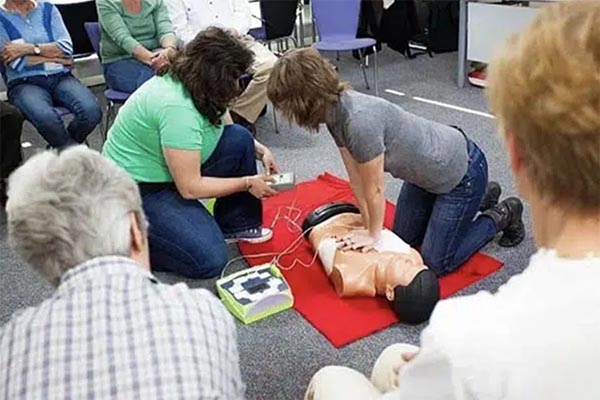
Professional instructors will arrive with all necessary equipment, including sanitized adult, child, and infant mannequins, training AEDs, and first aid supplies. The curriculum is entirely hands-on, ensuring small class sizes where every employee gets personalized feedback on their technique.
Because the instructors are certified by the American Heart Association, you are guaranteed the highest quality of education. Whether your office is located in Downtown Austin, South Congress, Cedar Park, or Georgetown, expert trainers can travel directly to your facility.
Conclusion: Protect Your Austin Business Today
As your Austin business scales, maintaining a safe, compliant, and confident workforce must remain a top priority. Relying on emergency services to navigate a rapidly growing city is not enough; your team needs the skills to act decisively in the critical first minutes of a cardiac event.
Onsite CPR training for Austin businesses offers an unmatched blend of convenience, compliance, and team-building. It saves your company money on logistical costs, fulfills OSHA requirements, and empowers your employees with life-saving skills they will carry forever.
Don’t wait for a workplace emergency to realize the value of preparedness. Take action to protect your team, your clients, and your peace of mind. Contact CPR Classes Near Me today to schedule an engaging, comprehensive onsite training session for your staff and get everyone certified in just a few hours.
Frequently Asked Questions
Is onsite CPR training OSHA compliant?
Yes, completing an AHA BLS or First Aid certification course onsite meets OSHA requirements for workplace safety. The training covers hands-on chest compressions, AED use, and emergency response, satisfying regulatory standards for businesses across Texas.
How many employees are required to book an onsite CPR class in Austin?
Most training providers can accommodate a wide range of group sizes, from small executive teams to large warehouse staffs. Contact CPR Classes Near Me directly to discuss your specific headcount and they will tailor the instructor ratio to ensure everyone gets hands-on practice.
Will my staff get their CPR certification cards the same day?
Yes. When you train with CPR Classes Near Me, your employees will receive their official American Heart Association eCards on the exact same day they successfully complete the onsite class.
How long does an onsite corporate CPR class take?
A standard AHA BLS CPR certification class takes approximately 3.5 to 4 hours to complete. This includes comprehensive video instruction, hands-on skills practice with mannequins, and the final evaluation, ensuring your team can get back to work quickly.
Do the instructors bring their own training equipment?
Absolutely. The certified instructors will travel to your Austin office with all necessary supplies, including adult and infant mannequins, training AEDs, and individual face shields for safe, hygienic practice.
How long is the AHA CPR certification valid for my employees?
Upon successful completion of the course, each employee’s American Heart Association certification is valid for two years. To maintain compliance, you can easily schedule a renewal class at your office before the two-year mark.