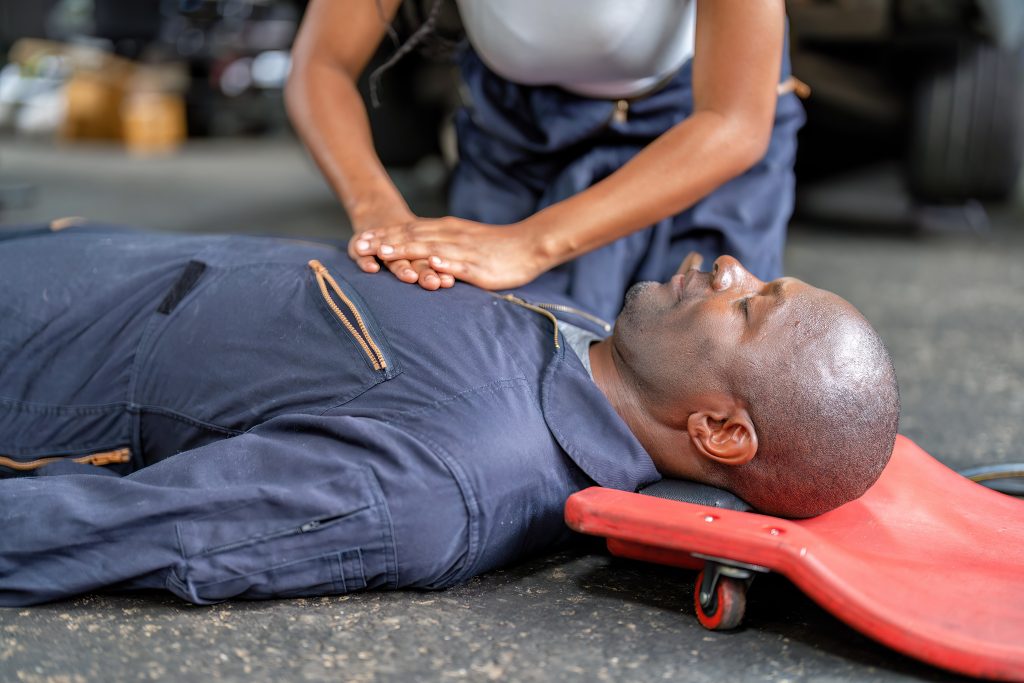
Group CPR Training in Austin: Onsite Business Classes

cpr classes near me

Austin is booming with innovative tech companies, thriving educational institutions, and expansive healthcare facilities. As your organization grows in this dynamic city, the safety and well-being of your employees and clients must remain a top priority. Medical emergencies can happen anywhere, and having a team prepared to act confidently can literally mean the difference between life and death.

That is exactly why group CPR training in Austin is becoming a standard practice for forward-thinking organizations. Instead of sending employees to individual classes on their own time, you can bring the classroom directly to your workplace.

In this comprehensive guide, you will learn how onsite group CPR certification works, what vital skills your team will acquire, and why the American Heart Association (AHA) standard is the only credential you should trust. We will also show you how easy it is to schedule a hands-on, team-building safety session that checks all the boxes for workplace compliance and peace of mind.

Why Is Group CPR Training in Austin Crucial for Your Business?

Medical emergencies do not wait for a convenient time to occur. Sudden cardiac arrest can strike anyone, regardless of their age, lifestyle, or physical fitness level. When a health crisis happens in the workplace, the first few minutes are absolutely critical to the victim’s survival.

Relying solely on a 911 call is not always enough. Even with Austin’s highly dedicated emergency response teams, heavy traffic on I-35 or the MoPac Expressway can delay paramedics from reaching your facility immediately. Having employees equipped with CPR and AED knowledge ensures that life-saving interventions begin the moment a colleague or client collapses.

Investing in a comprehensive safety program also protects your company legally and operationally. Many industries face strict OSHA regulations regarding workplace safety and emergency preparedness. Hosting a group training session guarantees that your entire staff meets these regulatory requirements simultaneously, completely removing the guesswork from HR compliance tracking.

Furthermore, offering this training demonstrates a profound commitment to your team’s welfare. Employees feel valued and protected when their employer actively invests in their health, safety, and professional development.

What Are the Benefits of Onsite Classes for Businesses and Teams?

Organizing individual training sessions for a large staff can quickly become an administrative nightmare. Tracking various expiration dates, reimbursing multiple individual invoices, and managing staggered time-off requests heavily drains HR resources. Onsite group classes eliminate these logistical headaches entirely.

By scheduling an onsite session, our expert instructors bring the necessary teaching equipment directly to your conference room, warehouse, or facility. This means zero travel time for your employees and minimal disruption to your daily operations. You dictate the date and time that aligns perfectly with your business schedule.

Group training also serves as an exceptional team-building exercise. Employees learn to communicate clearly and collaborate effectively under high-pressure scenarios. They practice handing off chest compressions and coordinating emergency responses with the exact colleagues they would rely on in a real-world workplace crisis.

Finally, private group sessions are highly cost-effective for organizations. Training your staff as a unified group often reduces the per-person cost compared to individual enrollments. It is a smart, economical decision that yields immeasurable returns in workplace safety and employee confidence.

Which Austin Organizations Need Group CPR Certification the Most?

Virtually every workplace benefits from having certified lifesavers on staff. However, certain industries across the Central Texas region consider this hands-on training an absolute operational necessity.

Healthcare and dental professionals are naturally at the top of the list. Clinics, nursing homes, and medical offices surrounding hubs like the Dell Seton Medical Center require immediate, synchronized emergency responses. AHA Basic Life Support (BLS) is the standardized mandate for these dedicated healthcare workers.

Educators and childcare providers also carry an immense daily responsibility. Schools, daycares, and after-school programs in neighborhoods from Pflugerville to South Congress must be prepared for unexpected pediatric emergencies. Knowing how to handle a choking infant or child is a non-negotiable skill for professional caretakers.

Additionally, fitness centers, construction sites, and hospitality venues face unique physical risks. Gyms around The Domain and construction crews expanding the downtown Austin skyline rely on fast action during physical trauma or cardiac events. Even standard corporate offices benefit immensely from having a designated emergency response team stationed on every floor.

What Does Our Onsite Group CPR Training in Austin Include?

When you book a private session with CPR Classes Near Me, you are not just getting a generic video lecture. Our curriculum is deeply interactive, fully hands-on, and backed by the latest medical science and AHA guidelines.

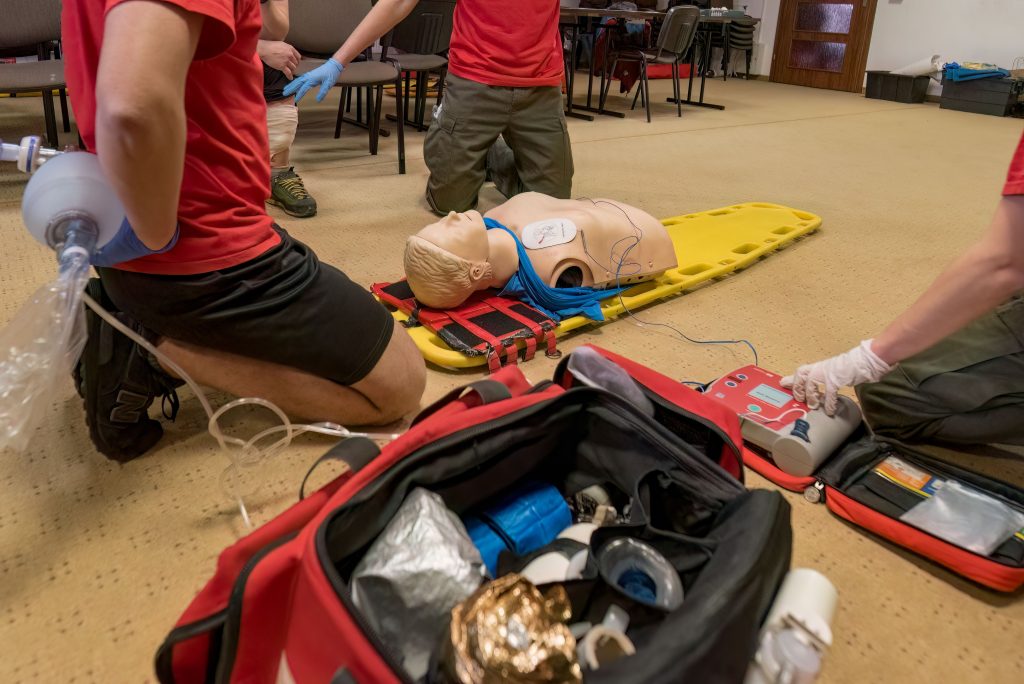
First, your team will learn the precise mechanics of high-quality chest compressions and proper rescue breathing. We provide individual training manikins so everyone gets ample physical practice. Developing this muscle memory is vital when adrenaline kicks in during a real-life emergency.

Next, we extensively cover the use of an Automated External Defibrillator (AED). These critical devices are increasingly common in Austin office buildings and public spaces, but they can be intimidating to use without prior instruction. We demystify the AED, showing your team exactly how to deploy it safely, quickly, and effectively.

Our comprehensive training prepares your team to treat victims of all ages. Your staff will learn the distinct physiological differences between administering aid to adults, children, and infants. We also include essential, hands-on instruction on clearing airway obstructions for choking victims of any size.

Best of all, there is no waiting around for credentials to arrive in the mail. Upon successful completion of the in-person course, our instructors issue official American Heart Association certification eCards on the exact same day.

How Do Onsite First Aid and CPR Classes Complement Each Other?

While CPR and AED training specifically addresses catastrophic cardiac events, everyday workplace injuries require a completely different medical skill set. Combining First Aid instruction with your group CPR training creates a truly comprehensive safety net for your organization.

First Aid training covers common workplace emergencies like severe bleeding, burns, allergic reactions, and physical trauma. For manufacturing plants, busy restaurants, and large corporate campuses, these localized incidents are statistically much more likely to occur than full cardiac arrest.

By booking a combined onsite class, your employees learn how to seamlessly transition between different emergency protocols. They will know exactly when to apply a bandage or tourniquet versus when to begin chest compressions. This dual knowledge minimizes workplace panic and empowers your staff to manage almost any health crisis until professional paramedics arrive.

How Does the American Heart Association Standard Elevate Your Team?

Not all safety certifications are created equal in the eyes of employers or regulators. The American Heart Association is the undisputed gold standard in emergency cardiovascular care. Their rigorous guidelines dictate how medical professionals and first responders operate nationwide.

Many discount websites offer “online-only” certifications that take just a few minutes to quickly click through. Unfortunately, these cut-rate programs are almost never accepted by employers, OSHA compliance officers, or state licensing boards. You simply cannot learn how to perform adequate, life-saving chest compressions by looking at a computer screen.

Our AHA-aligned classes strictly require an in-person, hands-on skills evaluation. This physical requirement guarantees that your employees actually possess the bodily capability and mental confidence to perform life-saving techniques. Employers across every major sector recognize, respect, and trust the AHA seal.

Once earned, this high-level credential remains valid for two full years. We make the future renewal process just as seamless, offering identical, streamlined refresher courses to keep your Austin team compliant and confident for the long haul.

How Do You Prepare Your Texas Office for Onsite CPR Classes?

Hosting an onsite training session is incredibly straightforward and stress-free. Our expert team handles all the heavy lifting and equipment transport, but a little bit of internal preparation ensures a flawless experience for your staff.

First, you will need to secure an appropriate space within your building. A large conference room, an open breakroom, or a cleared-out lobby works perfectly. We simply need enough open floor space for attendees to kneel next to the training manikins comfortably. A TV screen or blank wall for projecting the required AHA instructional videos is also highly recommended.

Next, advise your participating team members to dress comfortably. CPR is a surprisingly physical activity. Participants will be on the floor performing continuous chest compressions, so flexible, athletic, or casual clothing is highly encouraged.

Finally, communicate the training schedule clearly to all department heads. American Heart Association guidelines require students to be fully present for the entire video and hands-on session. Ensure your staff can dedicate the necessary time without needing to step away for phone calls or secondary meetings.

Why Choose CPR Classes Near Me for Your Corporate Training?

With so many logistical challenges involved in running a successful business, your safety training provider should be a reliable partner you never have to worry about. CPR Classes Near Me has proudly trained and certified thousands of students nationwide, maintaining a stellar reputation built on excellence and reliability.

Our instructors are the true heart of our training program. They are seasoned professionals who specialize in creating a supportive, engaging, and stress-free learning environment. They do not just read monotonously from a manual; they share practical, real-world insights that help students overcome the fear of stepping up during a crisis.

We also boast over 24,000 verified positive reviews from satisfied students and corporate clients. Whether you operate a tight-knit startup in East Austin or a massive corporate campus in Round Rock, we seamlessly scale our instruction to meet your exact organizational needs.

By bringing our top-rated program directly to your door, we save you immense amounts of time, money, and administrative hassle. We focus entirely on the training, so you can focus entirely on running your business.

Equip Your Austin Team to Save Lives

Medical emergencies are inherently unpredictable, but your team’s response absolutely does not have to be. Investing in group CPR training in Austin is one of the most responsible, high-impact decisions a business leader can make. It actively fosters a culture of safety, builds vital team cohesion, and ensures your organization remains fully compliant with industry regulations.

Do not wait for a workplace crisis to realize the true value of emergency preparedness. Equip your staff with the knowledge, muscle memory, and universally accepted AHA certification they need to save a life.

Ready to empower your workforce? Contact CPR Classes Near Me today to schedule your onsite group training and secure your team’s same-day certifications!

Frequently Asked Questions (FAQ)

How many employees are required to book an onsite group CPR class in Austin?

We accommodate groups of various sizes, ranging from small dedicated teams to entire corporate departments. Reach out to our coordination team with your estimated headcount, and we will tailor the instructor ratio to match your specific needs perfectly.

Are online-only CPR certifications valid for Austin businesses?

In most cases, no. Online-only programs lack the hands-on skills assessment required by OSHA and most major employers. To ensure full compliance, CPR training must include an in-person, physical evaluation with a certified instructor.

How long does the onsite CPR and AED training take?

A comprehensive Basic Life Support (BLS) CPR and AED class typically takes about 3.5 to 4 hours to complete. This includes the required AHA video modules, hands-on practice, and the final skills evaluation.

What is the difference between BLS and standard CPR?

Basic Life Support (BLS) is a more advanced, rigorous form of CPR training typically required for healthcare professionals and clinical staff. It heavily emphasizes high-quality chest compressions, multi-rescuer team dynamics, and precise AED usage compared to standard layperson CPR.

Do employees receive their CPR certification cards immediately?

Yes, they do. As soon as your team successfully completes the hands-on skills test at the end of the session, our instructors will issue official American Heart Association certification eCards on the very same day.

How often do businesses need to renew their group CPR certifications?

American Heart Association CPR and BLS certifications are valid for exactly two years from the date of issue. Businesses should schedule a group renewal class before the two-year mark to ensure there are no gaps in regulatory compliance.

What to Ask HR Before You Book a CPR Course

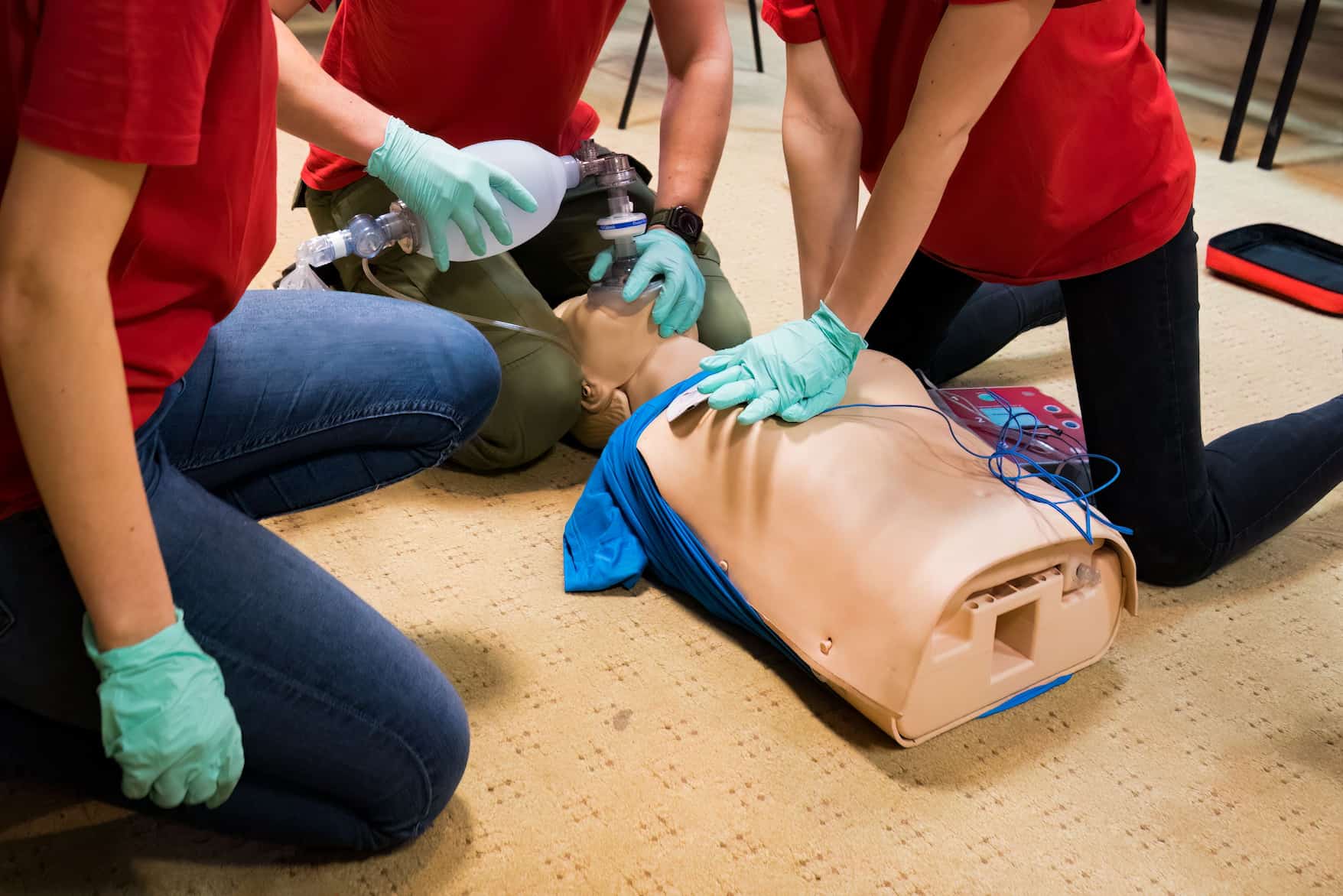
Students performing CPR and ventilation on a training manikin in class

Landing a job that requires life-saving skills is highly rewarding, but keeping your qualifications up to date can feel like a chore. Whether you are a dedicated nurse, a childcare provider, an educator, or a corporate safety warden, keeping your certifications current is non-negotiable. However, before you jump online and book the very first class you find, you need to have a quick chat with your Human Resources department.

Taking a few minutes to ask the right questions can save you from spending money out of pocket or sitting through a class that your company won’t even accept. Not all training programs are created equal, and employers have strict standards for workplace CPR compliance. In this comprehensive guide, we will break down the exact questions you should ask your HR representative before signing up for your next training session.

By alignment-checking your training plans with corporate guidelines, you can ensure your credentials will be accepted instantly. Let’s look at the crucial questions you need to ask to ensure your upcoming educational investment goes smoothly.

Which Certifying Body Does Our Company Accept?

Did you know that some commercial entities issue certificates that hold zero weight in the professional world? This is why your very first question to HR must clarify which certifying organization your company recognizes. For the vast majority of healthcare facilities, corporate offices, and educational institutions, the American Heart Association (AHA) is the gold standard.

Choosing an American Heart Association approved course ensures that your training follows the latest peer-reviewed science and emergency cardiac care guidelines. Many businesses explicitly state in their compliance bylaws that only AHA courses meet their employment mandates. If you accidentally choose an unaccredited provider, you risk having your credentials rejected entirely.

Before confirming any booking, check the provider’s website for the official certifying seal. At CPR Classes Near Me, all of our instructors are fully certified through the American Heart Association. This gives our students total peace of mind knowing their credentials boast the highest employer acceptance rate nationwide.

Does My Role Require Standard CPR or Basic Life Support (BLS)?

It is incredibly common for professionals to confuse a standard CPR course with a Basic Life Support (BLS) training program. While both teach life-saving skills, they are built for entirely different levels of care. Asking HR for your precise course requirements ensures you do not accidentally enroll in the wrong level of instruction.

A standard CPR and First Aid class is typically designed for teachers, fitness coaches, construction workers, and general community members. This training focuses on basic single-rescuer techniques, choking relief, and fundamental first aid for adults, children, and infants. It provides excellent foundational knowledge for everyday emergencies in public settings.

On the flip side, a BLS training course is tailored specifically for healthcare providers, public safety personnel, and medical office staff. This advanced curriculum dives deep into high-quality chest compressions, multi-rescuer team dynamics, bag-mask ventilation techniques, and automated external defibrillator (AED) integration. Confirming the exact level your license or employer demands will keep you from having to take a second class to fix an oversight.

Will the Company Pay for My CPR Training Directly or via Reimbursement?

Understanding the financial side of professional development is a smart move for any employee. Training costs can vary based on the specific curriculum, so you should always verify the company’s payment policy up front. Some organizations have direct corporate accounts with local training centers, allowing you to sign up without spending a dime.

If your company does not use direct corporate billing, ask if they offer a tuition reimbursement program. In many cases, you will pay for the class when booking and then submit your receipt and copy of your certification card to receive your money back. HR can provide you with the correct expense forms and walk you through their specific submission workflow.

Be wary of unauthorized online programs that promise cut-rate prices. While a cheap online module might look attractive to a budget-conscious manager, these courses almost always lack the mandatory hands-on testing components required by workplace safety regulators. Investing in an official, compliant course ensures your reimbursement request will pass through accounting without a hitch.

Is a Purely Online CPR Course Acceptable for Workplace Compliance?

In our digital world, it is tempting to try to complete all of your professional training through a computer screen. However, when it comes to learning life-saving techniques, hands-on practice is absolutely essential. You must ask your HR department if they accept online-only certificates, as the vast majority of industries strictly forbid them.

Regulatory bodies like OSHA and various state licensing boards require practical, in-person evaluation using physical manikins and AED trainers. Without this physical practice, it is impossible to master the correct hand placement, compression depth, and rhythm needed to save a human life. Employers know this, which is why pure online certifications are routinely rejected during compliance audits.

To meet professional standards, look for high-quality, in-person CPR training that provides immediate, face-to-face feedback from expert instructors. This format guarantees that you walk away with the practical muscle memory and confidence required to handle real-world cardiac emergencies safely.

What Is the Deadline for Submitting My Renewed Certification Card?

Timing is everything when it comes to maintaining your professional credentials. A standard certification is valid for exactly two years from your course completion date. Allowing your credentials to expire can cause serious headaches, including being temporarily removed from work schedules or facing professional licensing fines.

Ask HR exactly when they need your updated documentation in their system. Do not wait until the final week of your renewal month to look for an open class. Give yourself a comfortable buffer of a few weeks so you can find a local class time that fits neatly into your busy personal schedule.

If you are facing a tight deadline, you need to find a provider that offers rapid documentation delivery. Many traditional training facilities take weeks to mail out physical cards, leaving your employment status up in the air. Choosing a modern provider that prioritizes same-day eCard delivery ensures you can hand over your proof of compliance to HR the very same afternoon you finish class.

Conclusion: Take the Next Step in Safety Compliance

Navigating workplace compliance requirements does not have to be difficult. By asking your HR department these five essential questions, you protect your wallet, save precious time, and guarantee that your training aligns perfectly with company standards. Armed with the correct details regarding certifying bodies, required course levels, and payment policies, you can move forward with complete confidence.

When you are ready to book an official, employer-accepted CPR course, look no further than our local professional training programs. We offer comprehensive, engaging, and stress-free in-person classes led by certified American Heart Association instructors. We focus on giving you top-quality, practical skills while respecting your time with efficient schedules and immediate credential processing.

Do not leave your workplace compliance or life-saving skills to chance with unverified online courses. Contact CPR Classes Near Me today to check our upcoming availability, explore group training options, and secure your spot in a class that guarantees workplace acceptance!

Frequently Asked Questions

How long does a professional CPR certification remain valid?

An official American Heart Association certification is valid for exactly two years from the date you complete your class. To avoid any gaps in workplace compliance, it is highly recommended to schedule your renewal course a few weeks before your current card officially expires.

Can I complete my required training entirely online?

Generally, no. Most employers, state licensing boards, and OSHA safety regulations do not accept certifications from purely online courses. True competency requires real-world, in-person practice with manikins and AED equipment under the direct supervision of a certified instructor.

What is the main difference between a standard CPR class and a BLS class?

A standard CPR and First Aid class is geared toward the general public, teachers, and fitness coaches, focusing on basic life-saving steps. A Basic Life Support (BLS) course is an advanced program designed specifically for healthcare professionals and first responders, covering multi-rescuer dynamics and medical ventilation tools.

How quickly will I receive my certification card after finishing the course?

When you train with a modern provider like CPR Classes Near Me, your official American Heart Association BLS eCard is issued directly to you on the very same day you finish your class. This ensures you can immediately submit your updated proof of compliance to your employer without any stressful delays.

Are there age requirements to take an American Heart Association class?

There is no formal minimum age requirement to receive an official certification through the American Heart Association. Anyone who is physically capable of performing high-quality chest compressions and independently completing the course requirements is welcome to enroll in a class.

OSHA First Aid: A Compliance Checklist for Raleigh Businesses

CPR Certification for Construction Workers

For every business operating within the vibrant, rapidly expanding economy of Raleigh, North Carolina, safety compliance is not merely a bureaucratic checkbox. It is a fundamental responsibility. Workplace injuries, while hopefully rare, demand an immediate and effective response. In these critical moments, having a robust, compliant first aid program is the difference between a minor incident and a tragic, preventable fatality.

The regulatory authority overseeing these requirements is the Occupational Safety and Health Administration (OSHA). OSHA’s standard 29 CFR 1910.151 sets the foundation for medical services and first aid across most general industries. This standard applies equally to a small tech office downtown or a large manufacturing facility on the outskirts of Wake County.

However, compliance with this specific standard is uniquely challenging because it is performance-based. It doesn’t hand out a single, universal checklist. Instead, it requires Raleigh businesses to assess their specific risks and proximity to emergency medical services (EMS). This guide translates the complex language of OSHA into a practical, actionable checklist designed specifically for employers in the Raleigh area. Our goal is to ensure your workplace is prepared, compliant, and, most importantly, safe, with the right training provided by certified experts like CPR Classes Near Me.

What is the Core OSHA Requirement for First Aid Personnel in Raleigh Workplaces?

OSHA’s fundamental requirement regarding first aid personnel revolves entirely around the question of prompt attention. Simply put, every employer must ensure that prompt medical attention is available to every injured employee.

The primary regulatory provision is found in 29 CFR 1910.151(b). This section states that in the absence of an infirmary, clinic, or hospital in near proximity to the workplace, which is used for the treatment of all injured employees, a person or persons must be adequately trained to render first aid. Adequate first aid supplies must also be readily available.

For many businesses in the Raleigh metropolitan area, especially those outside the downtown core or located in industrial parks, relying on a nearby hospital is not a fail-safe strategy. The key to compliance is understanding how OSHA defines that crucial term, “near proximity.” This interpretation is what determines whether your company is required to invest in on-site first aid and CPR training.

If your workplace location cannot guarantee swift access to professional medical services, the burden falls on you, the employer, to designate and train employees to serve as immediate first responders. This trained personnel must be available on-site during all working hours, across all shifts. Their certification must be current, reflecting training from nationally recognized programs like those accredited by the American Heart Association (AHA).

Raleigh businesses must not only look at the distance to the nearest clinic but also the guaranteed response time of the local EMS system, a far more challenging metric to confirm. If your assessment shows a potential delay in external emergency care, then establishing an internal, certified first aid response team becomes a legal necessity, not just a safety recommendation.

This requirement also mandates consultation. Employers must ensure the ready availability of medical personnel for advice and consultation on matters of plant health (29 CFR 1910.151(a)). This means having a formal arrangement with a healthcare professional to assist in designing and reviewing your workplace’s safety and health program. Compliance is a continuous loop, requiring ongoing review and adaptation to changing workplace conditions.

OSHA First Aid: A Compliance Checklist for Raleigh Businesses

How Far is “Near Proximity” According to OSHA’s 3-4 Minute Rule?

The term “near proximity” in OSHA standards is intentionally vague in the text but has been consistently clarified through interpretation letters and enforcement actions. These interpretations provide Raleigh businesses with a critical, time-based standard.

OSHA defines “near proximity” by response time, differentiating based on the likelihood of a catastrophic injury at your specific worksite. This distinction is paramount for determining your training obligations.

The Strict 3-4 Minute Rule (High-Hazard Workplaces):

For workplaces where there is a reasonable possibility of a serious, life-threatening injury, the emergency medical response time must be no more than 3 to 4 minutes.

  • What constitutes a high-hazard workplace?
    • Any site where injuries involving stopped breathing, cardiac arrest, profuse uncontrolled bleeding, falls, suffocation, electrocution, or amputation are possible.
    • Examples include most construction sites, manufacturing operations, industrial facilities, and certain utility or maintenance jobs around Raleigh.

If your Raleigh business falls into this category, and the local EMS cannot guarantee a response within that 3–4 minute window, you must have on-site employees who are adequately trained and certified in first aid and CPR. This trained individual must be able to reach the victim within the 3–4 minute timeframe.

The Extended 15-Minute Rule (Low-Hazard Workplaces):

OSHA recognizes that a slightly longer response time is acceptable in environments where the possibility of a serious, life-threatening injury is more remote.

  • What constitutes a low-hazard workplace?
    • Typical office environments, retail stores (excluding kitchens or workshops), and administrative settings.
    • In these cases, a response time of up to 15 minutes may be deemed reasonable by OSHA.

However, even in a low-hazard Raleigh office, relying on the 15-minute rule requires constant vigilance. If, for instance, a server room technician is working alone and is accidentally electrocuted, a high-hazard scenario, the 3–4 minute rule immediately applies. Because it is challenging to guarantee a 3–4 minute EMS response time anywhere, having trained personnel is almost always the safest and most legally defensible approach to compliance in the Raleigh area.

This dual interpretation means that Raleigh employers must perform a thorough worksite analysis to identify all potential high-hazard scenarios and set their first aid program’s standard accordingly. It is safer to train personnel than to gamble on the speed of the nearest emergency room.

How Can Raleigh Businesses Create an OSHA-Compliant First Aid Program?

Compliance with OSHA 1910.151 involves more than just purchasing a first aid kit; it requires a structured, four-part program that addresses management, analysis, control, and training. This framework is essential for achieving and maintaining safety compliance in any Raleigh-based operation.

The Raleigh Business Compliance Checklist:

  1. Management Leadership and Employee Involvement:
    • Appoint a Program Administrator: Designate a specific individual to be responsible for all aspects of the program, including training, supply checks, and recordkeeping.
    • Develop Written Policies: Document your company’s emergency action plan (EAP) and your specific first aid plan.
    • Ensure Ready Consultation: Establish a formal relationship with a local medical professional for advice on occupational health matters and the content of your first aid program.
  2. Worksite Hazard Analysis:
    • Conduct a Hazard Assessment: Walk through every area of the workplace to identify specific hazards—from machinery and chemicals to slip/fall risks.
    • Determine Response Time: Verify the guaranteed response time of local EMS to your worksite and classify your facility as high- or low-hazard based on the 3–4 minute rule.
    • Review Injury Logs: Use the OSHA 300 log and other injury reports to identify common or unique workplace injuries that require specialized supplies or training.
  3. Hazard Prevention and Control:
    • Provide Corrosive Protection: If corrosive materials are used, ensure suitable facilities for quick drenching or flushing of the eyes and body are available within the immediate work area (29 CFR 1910.151(c)).
    • Establish Communication: Ensure all employees know how to quickly report an emergency and communicate the location of first aid providers and supplies.
    • Maintain Supplies: Assign a person to inspect and replenish all first aid supplies at sufficient intervals (at least monthly, and immediately after any use).
  4. Safety and Health Training (The First Responder Mandate):
    • Designate Trained Personnel: Ensure that at least one employee, or more depending on the size and shifts, is adequately trained to render first aid and CPR.
    • Use Recognized Training: Ensure training is comparable to that of the American Heart Association (AHA) or American Red Cross, emphasizing hands-on skills.
    • Mandate CPR/AED: Given the life-critical nature of cardiac arrest, OSHA’s best practices guide strongly recommends that first aid providers also be certified in Cardiopulmonary Resuscitation (CPR) and know how to use an Automated External Defibrillator (AED).

What are the Mandatory Supplies and Equipment for OSHA First Aid Kits?

While OSHA requires that “adequate first aid supplies shall be readily available” (29 CFR 1910.151(b)), it does not provide a mandatory list for general industry. Instead, OSHA points employers toward the American National Standard (ANSI) Z308.1 as the minimum content requirement. Raleigh businesses should use the latest ANSI standard to ensure their kits are “adequate.”

OSHA mandates that supplies must:

  • Be readily available and easily accessible to all employees.
  • Be kept in a sanitary and usable condition.
  • Be replenished as necessary after use or expiration.

The contents of the kit must be tailored to the specific hazards of the Raleigh workplace. For example, a landscaping company needs supplies for severe cuts and insect bites, while a lab needs supplies for chemical exposure.

ANSI Z308.1 Minimum Kit Requirements (The OSHA-Recommended Baseline):

OSHA encourages using ANSI standards to determine your kit contents, differentiating between two classes based on your workplace risk:

  • Class A Kits (General/Low-Risk): Typically sufficient for offices and retail, these kits contain items like adhesive bandages, antiseptic wipes, a breathing barrier, one cold pack, a burn dressing, hand sanitizer, medical exam gloves, and trauma pads.
  • Class B Kits (High-Risk/Complex): Recommended for manufacturing, construction, and high-hazard environments, these kits contain larger quantities of all Class A items and require specialized equipment for trauma. Key mandatory additions include:
    • A Tourniquet.
    • A Splint.
    • Larger capacity Eye/Skin Wash.
    • Increased quantities of adhesive tape and roller bandages.

Key Considerations for Raleigh Employers:

  • Corrosive Material Facilities: If your work involves injurious corrosive materials, you must provide quick-drenching and flushing facilities, like an eyewash station, for immediate emergency use within the work area. This is a separate, non-negotiable requirement (29 CFR 1910.151(c)).
  • Bloodborne Pathogens: Employers whose first aid responders may be exposed to blood or other potentially infectious materials must provide appropriate personal protective equipment (PPE), such as gloves, gowns, and face shields, in compliance with the Bloodborne Pathogens Standard (29 CFR 1910.1030).
What Type of First Aid Training Meets OSHA Standards?

What Type of First Aid Training Meets OSHA Standards?

The entire OSHA first aid program hinges on the competence of your designated personnel. Training must not only cover basic skills but also instill the confidence and practical ability required to act effectively within the narrow, life-saving window of 3–4 minutes.

OSHA specifies that the training must be “adequate” and should be comparable to that of a national organization like the American Red Cross or the American Heart Association (AHA). The best-in-class programs universally share key characteristics that define OSHA compliance:

Characteristics of OSHA-Compliant First Aid and CPR Training:

  1. Nationally Recognized Certification: The certification card must be issued by a reputable, nationally recognized organization, such as the American Heart Association (AHA). The AHA’s Basic Life Support (BLS) certification, often combined with a comprehensive First Aid course, is the gold standard and is recognized across the nation. CPR Classes Near Me Raleigh offers this level of training.
  2. Hands-On Skill Practice (Mandatory): Online-only, didactic training is generally not accepted by OSHA as meeting the adequacy requirement. Effective first aid training is practical, requiring hands-on components where participants physically practice life-saving skills.
    • Skills to Master: Chest compressions, rescue breathing, wound care, splinting, and use of an Automated External Defibrillator (AED).
  3. Site-Specific Focus: The training should be customized to address the most likely injuries at your Raleigh workplace. A construction crew needs more trauma training than a dentist’s office.
  4. Bloodborne Pathogens (BBP) Integration: Any employee who may be expected to render first aid as part of their duty must receive specific training on the BBP Standard (29 CFR 1910.1030). This includes how to use PPE and properly handle and dispose of contaminated materials.
  5. Refresher and Recertification: Certifications, including AHA BLS and First Aid, are typically valid for two years. Employers are responsible for ensuring that all designated first responders maintain current credentials. Scheduling regular refresher training is vital to prevent skills from degrading.

Why Choose AHA-Aligned Training in Raleigh?

When selecting a training partner, Raleigh businesses should prioritize those who offer the most employer-accepted credentials. CPR Classes Near Me Raleigh provides the American Heart Association (AHA) certified training, which is specifically highlighted by OSHA’s own literature as meeting the standard’s requirements.

  • AHA BLS CPR & First Aid: This combined course teaches comprehensive skills for sudden cardiac arrest, choking, wounds, burns, and environmental emergencies, all the scenarios required for a robust first aid program.
  • Same-Day eCards: Efficiency is key. Reputable local providers can issue same-day certification eCards, ensuring your employees are officially compliant immediately upon successful completion of the course.

By utilizing a certified local provider like CPR Classes Near Me, Raleigh employers can confidently check the “Adequately Trained” box on their OSHA compliance checklist, knowing they have met the most rigorous national standard.

Conclusion: Securing Your Raleigh Business Through Proactive Readiness

OSHA workplace first aid requirements are not abstract rules written for faraway industries; they are specific, time-sensitive mandates that directly apply to every Raleigh business. Compliance boils down to one simple question: Can you ensure prompt medical attention for an injured employee within the critical 3–4 minute window?

For most businesses, the only dependable answer is “Yes, because we have trained personnel.”

By conducting a thorough hazard analysis, implementing the necessary ANSI-compliant supplies, and most importantly, investing in hands-on, nationally certified first aid and CPR training, you move beyond mere compliance. You create a culture of readiness that protects your most valuable asset: your employees. Being prepared safeguards lives, reduces liability, and ensures your operation continues smoothly, even when the unexpected occurs.

Don’t wait until an emergency arises to discover your first aid program is inadequate. Start your compliance journey today by ensuring your team receives the best, most recognized training available.

Take the next step toward guaranteed OSHA compliance.

Ready to ensure your Raleigh business is fully compliant with OSHA’s life-saving first aid requirements? Contact CPR Classes Near Me today to schedule American Heart Association (AHA) certified BLS CPR and First Aid training for your entire team. We offer group and on-site courses tailored to your specific workplace hazards.

Contact CPR Classes Near Me to schedule your group certification!

OSHA First Aid: Frequently Asked Questions

Does OSHA require every employee in a Raleigh office to be CPR certified?

No, OSHA does not require every employee in a Raleigh office or low-hazard workplace to be CPR certified. The requirement, under 29 CFR 1910.151(b), is only that a person or persons be adequately trained to render first aid when a hospital or clinic is not in “near proximity.” For low-hazard workplaces, “near proximity” is generally interpreted to mean emergency services can arrive within 15 minutes. However, OSHA recommends training for more people than just the designated responders. For high-hazard environments, the 3–4 minute rule often makes having multiple trained responders mandatory for compliance, and since cardiac arrest can happen anywhere, CPR certification is a critical component of that training.

How often must our employees renew their First Aid and CPR certifications to remain OSHA compliant?

First Aid and CPR certifications must be renewed periodically to maintain compliance, as determined by the certifying organization. Certifications from recognized organizations like the American Heart Association (AHA) or American Red Cross are typically valid for two years. The employer is responsible for tracking these expiration dates and ensuring that designated first responders complete a refresher course and renew their certification before it expires. OSHA emphasizes that training should be repeated periodically to maintain and update knowledge and skills, recommending instructor-led retraining at least annually for life-threatening emergencies.

Are we required to have an Automated External Defibrillator (AED) on-site in our Raleigh business?

OSHA does not have a federal standard that specifically mandates the placement of an AED in every workplace. However, the use of an AED is an integral part of modern life-saving practices, and OSHA’s Best Practices Guide strongly recommends that first aid programs include AED usage training and equipment, especially in environments where electrocution or cardiac arrest is a known risk. Furthermore, AED placement and usage are often governed by specific North Carolina state laws, which may offer legal protections (Good Samaritan laws) to those who respond to cardiac emergencies using an AED. For maximum safety and liability protection, providing an AED and training employees through programs like those offered by CPR Classes Near Me is highly encouraged.

What is the difference between an ANSI Class A and Class B first aid kit, and which one does my Raleigh business need?

The American National Standard Institute (ANSI) Z308.1 defines two classes of kits, which OSHA references for minimum supply recommendations: Class A Kits are designed for low-hazard work environments, containing the minimum basic supplies to treat common injuries. Class B Kits are designed for high-risk work environments, containing a wider variety and larger quantity of supplies, including mandatory items for severe trauma like a tourniquet and splints. Your Raleigh business should conduct a hazard assessment to determine which class is appropriate. If your risk assessment shows potential for severe injuries (e.g., crush injuries, severe bleeding), a Class B kit is required to meet OSHA’s “adequate supplies” standard.

Does our company need to provide Bloodborne Pathogens (BBP) training for our first aid responders?

Yes, absolutely. If your Raleigh company designates employees as first aid providers, and there is a “reasonable anticipation” that they will have skin, eye, mucous membrane, or parenteral contact with blood or other potentially infectious materials (OPIM) while performing their first aid duties, they must receive training that complies with the OSHA Bloodborne Pathogens Standard (29 CFR 1910.1030). This BBP training must cover the use of personal protective equipment (PPE), exposure control plans, Hepatitis B vaccination, and post-exposure evaluation and follow-up. First aid providers trained by CPR Classes Near Me often receive this critical BBP awareness training as part of their comprehensive certification.