Best CPR Class for Medical Assistants in Austin
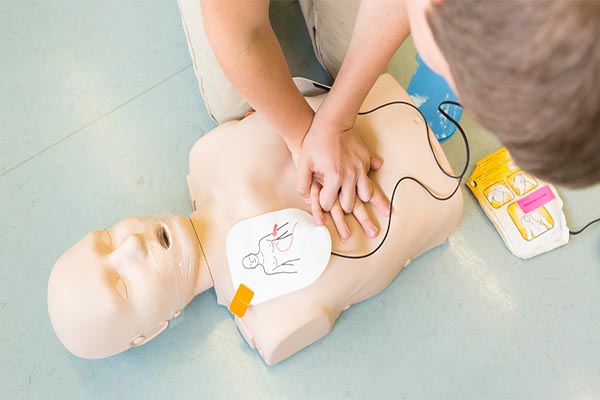
As a Medical Assistant (MA) in Austin, Texas, your role places you on the absolute front lines of patient care. Whether you are checking vitals in a bustling clinical setting downtown or assisting with minor surgical procedures in Round Rock, your clinic counts on you during critical moments. When a medical emergency or cardiac event strikes an outpatient facility, your rapid response can spell the difference between life and death.
Securing the proper clinical certification is more than just checking an administrative box for human resources; it is about building the competence to act decisively under pressure. However, with so many general safety courses available online, finding the specific credential required by clinical employers can be confusing.
This guide outlines exactly what makes a certification course the best CPR class for medical assistants in Austin, detailing the specific curriculum you need, compliance standards, and how you can obtain your official certification credentials in a single afternoon.
Why Is the AHA BLS Course the Industry Standard for Austin Medical Assistants?
Medical assistants operate within a specialized scope of practice that bridges clinical tasks and administrative workflows. Because you work directly with vulnerable patient populations, standard community CPR courses do not meet the legal or professional standards required by Texas healthcare networks.
The premier credential for practicing and aspiring medical assistants is the American Heart Association (AHA) Basic Life Support (BLS) provider course. The AHA is the nation’s leading authority on resuscitation science, and its guidelines are recognized across all major hospital networks, private practices, and urgent care clinics.
When an Austin medical facility lists a CPR requirement on a job description, they are almost universally looking for an authentic AHA BLS eCard. This healthcare-level course elevates standard rescue procedures into advanced clinical interventions, preparing you to operate seamlessly alongside nurses, physicians, and first responders.
What Lifesaving Skills Are Taught in an Austin Healthcare Provider CPR Class?
A high-quality BLS training program ensures you are proficient in managing both cardiac and respiratory emergencies. The class is structured around hands-on laboratory practice and real-time skill assessments to ensure complete muscle memory.
During your instructional session, you will master several foundational skills:
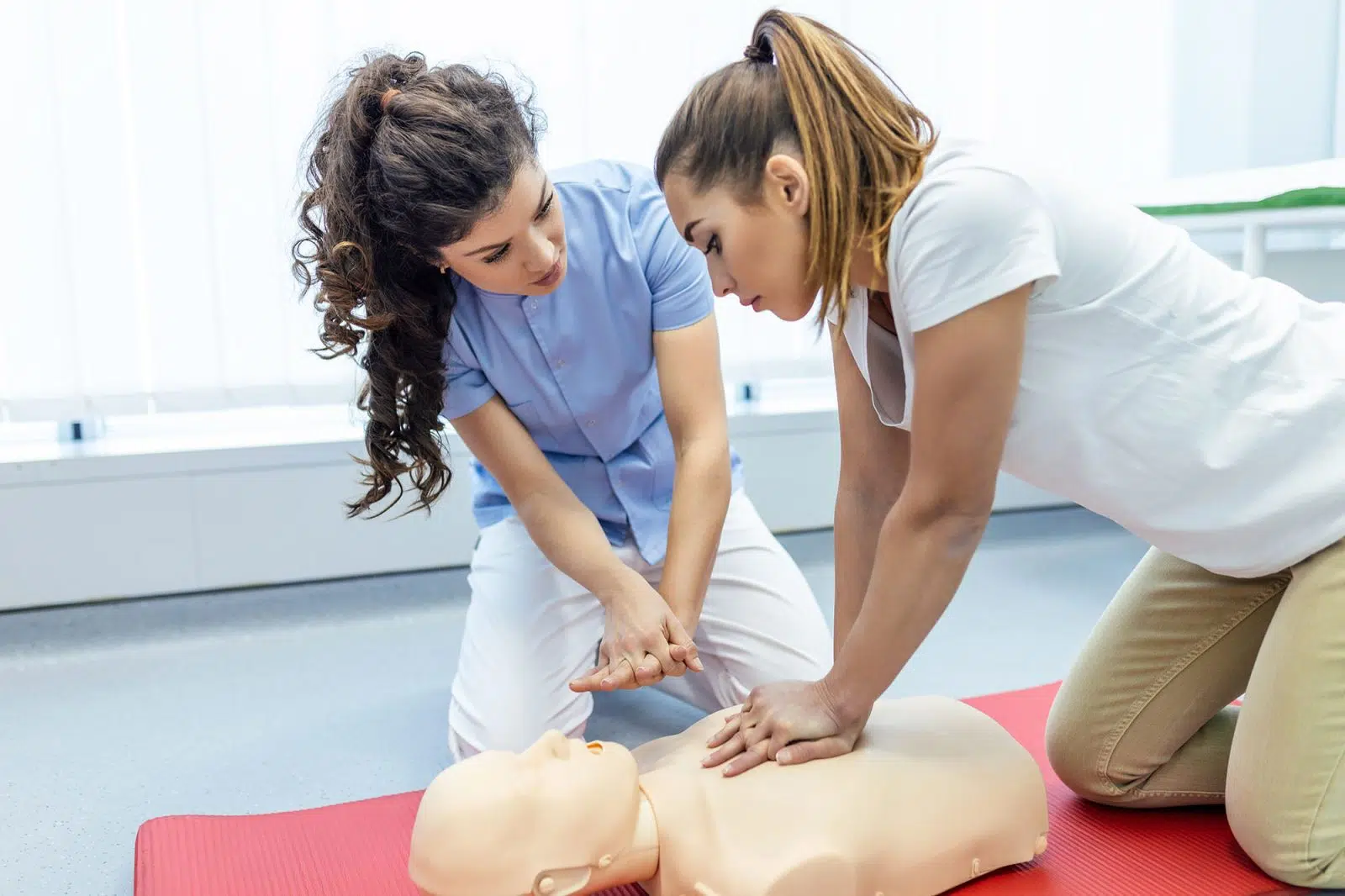
- High-Quality Chest Compressions: Learn the precise hand placement, compression depth, and specific compression rates required to optimize blood flow in adults, children, and infants.
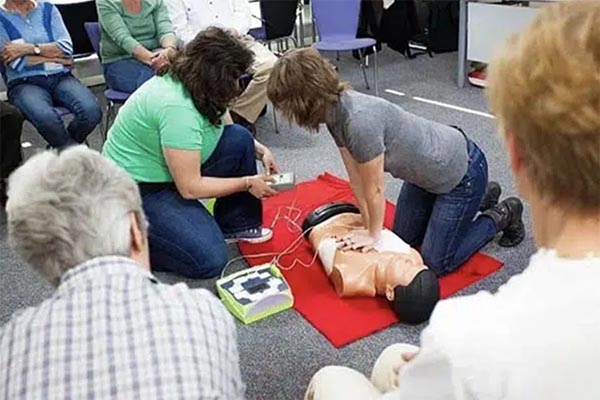
- Automated External Defibrillator (AED) Operation: Master the setup, pad placement, and safety protocols for utilizing an AED on patients of all age groups.
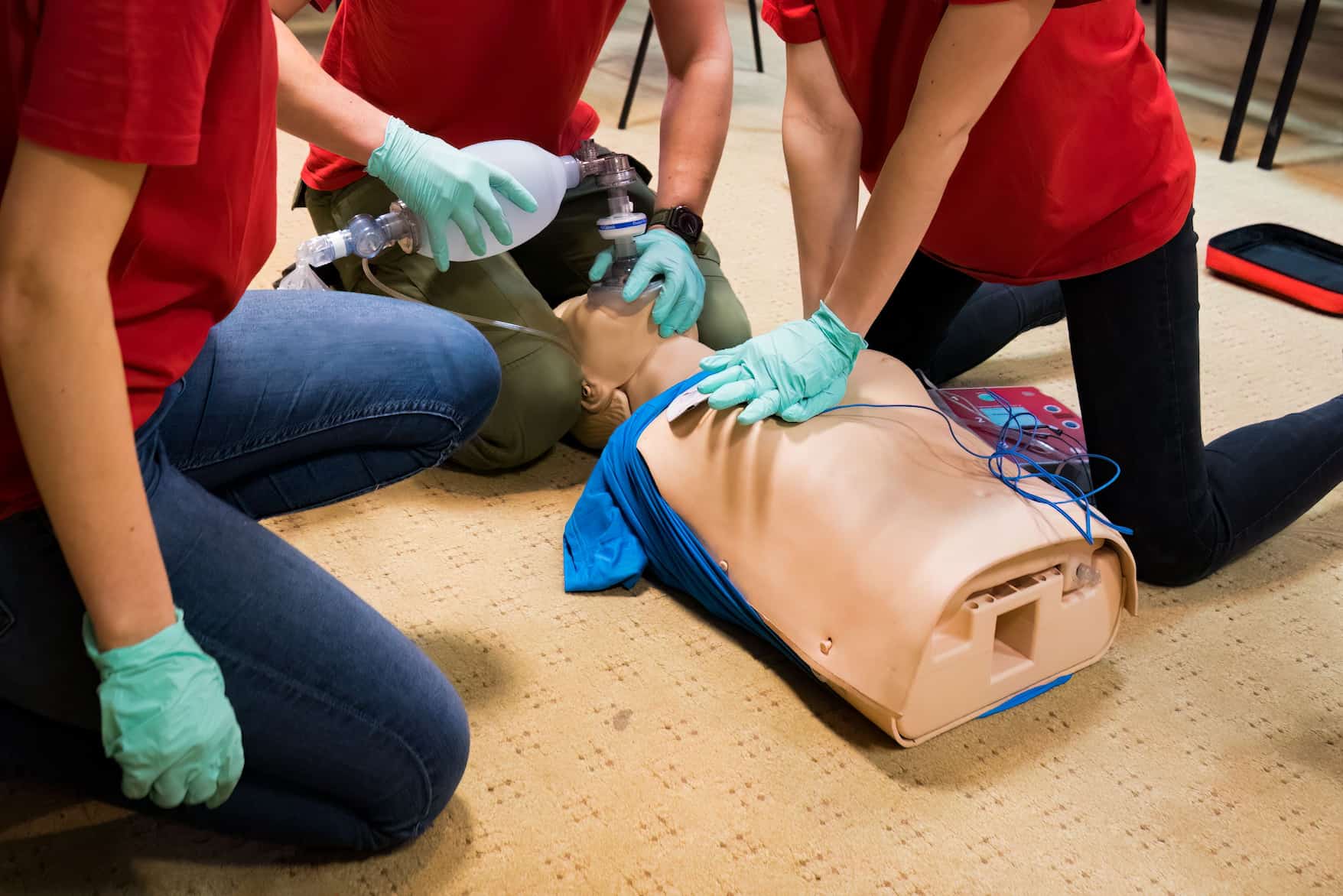
- Advanced Ventilation Techniques: Gain proficiency in utilizing pocket masks and bag-mask ventilation devices to provide effective rescue breaths while minimizing interruptions in compressions.
- Multi-Rescuer Team Dynamics: Practice structured communication and clear role division to ensure smooth, synchronized resuscitation efforts during multi-provider emergencies.
- Foreign-Body Airway Obstruction Relief: Learn the proper manual adjustments required to clear choking emergencies across all stages of physical development.
How Long Does It Take to Complete a Medical Assistant CPR Certification?
Medical assistants balance demanding schedules filled with patient triage, laboratory processing, and administrative documentation. Fortunately, obtaining an official healthcare-provider credential does not require weeks of lectures or extended multi-day seminars.
An authorized, comprehensive AHA BLS course in Austin requires approximately 3.7 hours of focused, interactive classroom training. This timeframe includes the required instructional video segments, hands-on physical practice with feedback manikins, a practical skills assessment, and the final written examination.
Because the entire curriculum is designed to be highly structured and efficient, you can easily complete your training during a morning or evening block. You will walk out of the training center completely certified and ready to return to your clinic the very next day.
Can Medical Assistants Use Online-Only CPR Courses for Clinical Work?
In a world filled with digital convenience, online-only CPR certifications frequently claim to offer quick and inexpensive solutions. However, for healthcare professionals like medical assistants, relying on an online-only program is a significant career risk.
The overwhelming majority of medical employers in the Austin area explicitly reject CPR certifications that lack a verified, in-person physical skills evaluation. True resuscitation proficiency cannot be mastered by simply reading text on a screen or clicking through a digital slideshow.
Manipulating a bag-mask device, establishing a proper seal, and achieving the correct depth of physical compressions require tactical, hands-on feedback from a live instructor. Investing in an authentic, in-person training session ensures that your time and money are spent on a credential that is fully compliant and guaranteed to be accepted by human resources departments.
Where Can You Find Convenient AHA BLS Training Classes in the Austin Area?
Accessibility is critical when scheduling continuing education or professional certification courses. Centralized training locations allow you to minimize travel times and fit your education seamlessly into your busy workweek.
Local clinical training sites cater extensively to the entire Austin metropolitan area, offering regular sessions for healthcare workers located in:
- Downtown Austin and Central Medical Districts
- Pflugerville and Austin North
- Round Rock, Georgetown, and Hutto
- Cedar Park, Leander, and Liberty Hill
- Buda, Kyle, and San Marcos
- Lakeway, West Lake Hills, and Bee Cave
Whether you choose a centrally located facility or a specialized North Austin classroom, you will receive identical, high-caliber instruction that adheres strictly to current AHA guidelines.
What Is the Cost of Medical Assistant CPR Training in Austin?
Maintaining professional compliance should be both reliable and affordable. Investing in a verified certification program protects your medical credentials while providing exceptional value.
In Austin, an official AHA BLS certification class is priced competitively at $64.95, which reflects a standard $20 discount off traditional healthcare training rates. For medical assistants working in specialized practices, pediatric offices, or occupational health settings that demand broader safety training, an integrated BLS CPR and First Aid course is available for $84.95.
When evaluating local options, always confirm that the official AHA certification eCard is built directly into the base price. Beware of unverified alternative providers that list incredibly low initial rates, only to tack on expensive hidden fees for printing your physical card or processing your exam results.
How Long Does an Austin Healthcare CPR Certification Remain Valid?
Every official American Heart Association BLS credential features a set expiration timeline to ensure your clinical skills stay aligned with contemporary resuscitation updates. Your certification is valid for exactly two years from the date of your successful course completion.
Because the core educational requirements for an initial certification and a professional renewal are identical, keeping your credential active is simple. You will register for the standard in-person BLS class to extend your certification for an additional two-year window.
Planning your renewal appointment a few weeks before your current card expires ensures that you experience absolutely no administrative gaps in your employment status.
Secure Your Compliant Medical Assistant CPR Certification Today
Your role as a medical assistant demands professional readiness, precise clinical execution, and a verified set of emergency care credentials. Do not trust your career path or your workplace compliance to unverified online-only courses that lack real-world authority.
By choosing an authorized, in-person AHA BLS course, you ensure that you receive premium hands-on instruction, an affordable flat-rate price, and an official certification card issued directly on the same day you finish your training.
Are you ready to secure your clinical credentials, renew your expiring certification, or take the next big step in your healthcare career? Contact CPR Classes Near Me today or browse our live interactive calendar to reserve your seat in our next available Austin class.
Frequently Asked Questions
What specific CPR certification do medical assistants need in Austin?
Medical assistants in Austin almost universally require the American Heart Association (AHA) Basic Life Support (BLS) for Healthcare Providers certification. Standard community CPR courses or unaccredited online programs do not fulfill the clinical compliance guidelines enforced by local hospital networks and medical offices.
How quickly will I receive my CPR certification card after completing the class?
You will receive your official AHA BLS eCard on the exact same day that you complete your classroom instruction and pass your practical assessments. Our instructors issue the digital credentials immediately following the session, allowing you to quickly submit proof of compliance to your employer.
Are there any hidden fees for the AHA eCard or exam processing?
No, there are absolutely no hidden fees when booking your training. The flat rate of $64.95 for the BLS course covers your interactive instruction, hands-on laboratory materials, your formal skills testing, and the prompt issuance of your official AHA eCard.
Can I complete my medical assistant CPR certification entirely online?
No, online-only certifications are not accepted by reputable healthcare employers in the Austin area. Resuscitation proficiency requires physical mastery of compression depth and ventilation equipment, which must be practiced and assessed in person under the supervision of a certified instructor.
What should I do if my current medical assistant CPR card is about to expire?
If your current card is nearing its expiration date, you should register for an upcoming in-person BLS class as soon as possible. Because the renewal process requires identical hands-on practice, attending a standard 3.7-hour local class will seamlessly extend your valid certification status for another two years.