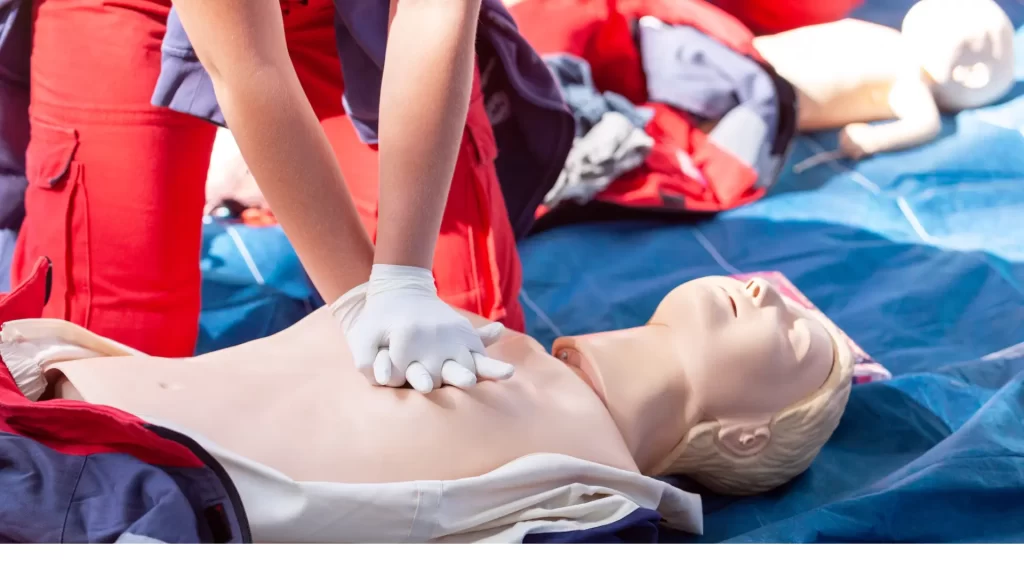
Washington DC is a city that never stops. From the bustling corridors of Capitol Hill to the high-energy neighborhoods of DuPont Circle and the Navy Yard, the capital is a hub of activity. In such a vibrant environment, being prepared for a medical emergency isn’t just a good idea, it’s a responsibility. Whether you’re a healthcare professional working in one of DC’s world-class hospitals or a parent wanting to keep your family safe, finding the right training is the first step.
Getting certified in CPR (Cardiopulmonary Resuscitation) is one of the most impactful things you can do for your community. If you are searching for the best local training options in the District, look no further. We have compiled a comprehensive look at what makes CPR training in Washington DC unique and how you can get certified efficiently.
Why is Washington DC a prime location for CPR training?
Washington DC is unique because of its high density of both healthcare facilities and federal agencies. Many professionals moving to the city for work find that CPR certification is a mandatory requirement for their positions. This high demand has resulted in a robust local infrastructure for emergency training.
Local training centers in DC are tailored to the urban lifestyle. They offer:
Proximity to Public Transit: Most training centers are located near Metro stops like Union Station, Gallery Place, or Foggy Bottom, making it easy to fit a class into a busy commute.
Diverse Course Options: Because the city serves everyone from high-level government officials to elementary school teachers, classes are tiered to meet different professional needs.
High Standards: Training in the capital often aligns with the highest international standards, ensuring your certification is recognized nationwide.
What certification levels are available through CPR Classes Near Me?
When you look for training in Washington DC, you will notice that not all CPR classes are the same. “CPR Classes Near Me” offers a variety of levels to ensure you get exactly the training you need for your specific situation.
AHA BLS for Healthcare Providers: This is the gold standard for doctors, nurses, and paramedics. It covers multi-rescuer CPR and advanced techniques.
Heartsaver® First Aid CPR AED: Designed for laypeople, such as teachers, fitness trainers, and corporate employees. It covers the basics of CPR and how to use an AED machine.
Bloodborne Pathogens: Often required for those in childcare or industrial work, this course focuses on safety and cleanup in medical situations.
Pediatric CPR: Focused specifically on infants and children, this is a must for new parents and childcare workers in the DC area.
How do you choose between AHA and Red Cross curricula?
A common question among those seeking “CPR Classes Near Me Washington DC” is whether to choose an American Heart Association (AHA) course or a Red Cross course. Both are respected, but there are subtle differences to consider.
Employer Requirements: Many hospitals and clinical settings in DC specifically require an AHA certification. It is always best to check with your manager first.
Content Focus: AHA courses tend to have a heavy focus on the science and technical precision of chest compressions. Red Cross courses are often lauded for their practical, scenario-based approach.
Recognition: Both are recognized across the United States, but AHA is frequently viewed as the primary standard-setter for CPR techniques used globally.
Where are the best training sites located within the DC Metro area?
Geography matters in a city with traffic as legendary as DC’s. “CPR Classes Near Me” focuses on providing training options in convenient neighborhoods to save you time.
You can find sessions in:
Downtown / K Street: Ideal for office workers who want to take a class after the workday or during a long lunch break.
Georgetown: A hub for university students and residential families who prefer a more local setting.
Capitol Hill: Serving the legislative community and surrounding residential areas.
Adams Morgan / Woodley Park: Convenient for those living in the more residential parts of the District.
By choosing a site close to your home or office, you remove the barrier of travel and make it much easier to keep your certification current.
What should you expect during your Washington DC CPR training session?
Here is a typical walkthrough of what a session looks like:
Instructional Videos: Most classes start with a visual guide provided by the governing health body to set the foundation.
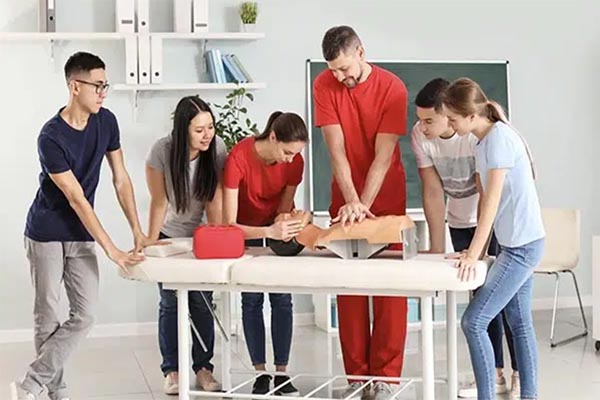
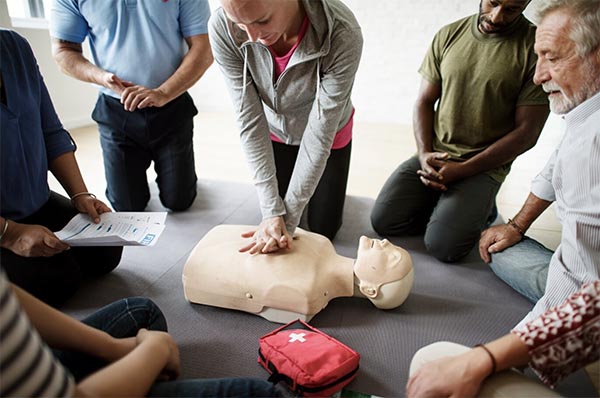
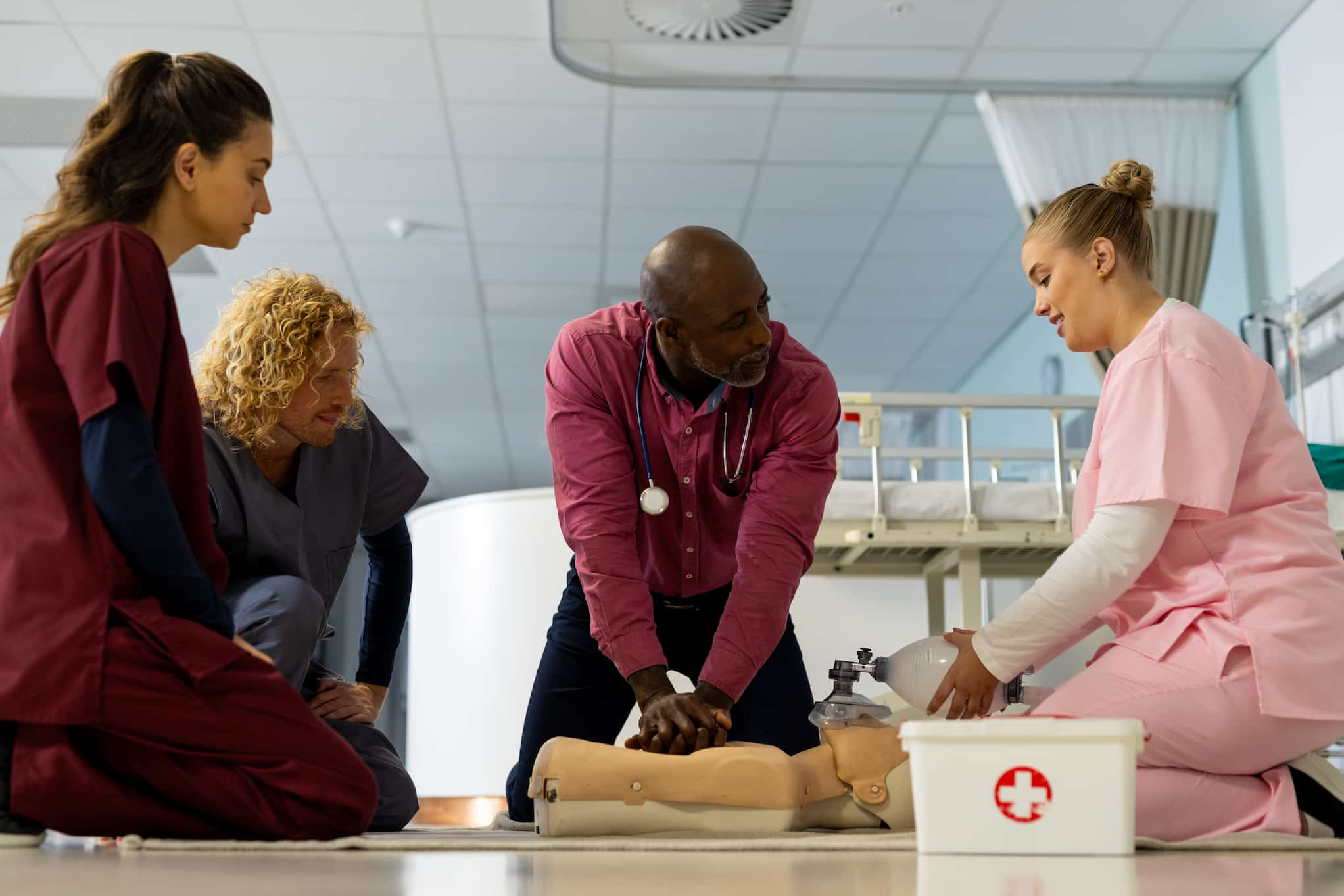
Hands-on Practice: You will spend the majority of your time working with a high-fidelity manikin. This is where you learn the feel of the correct depth and rhythm for chest compressions.
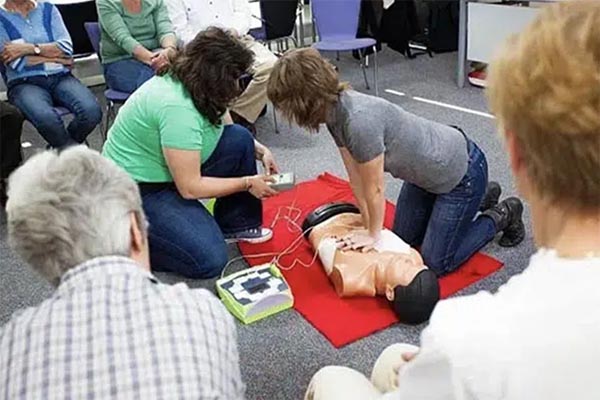
AED Familiarization: You will practice using a trainer AED (which does not deliver a real shock) to understand the voice prompts and pad placement.
Skill Testing: Toward the end of the class, the instructor will watch you perform the skills you’ve learned to ensure you are ready to use them in the real world.
Written Exam: For some certifications, a short multiple-choice test is required to ensure you understand the concepts.
Is BLS different from standard Heartsaver CPR?
Yes, and this is a critical distinction for DC residents to understand. While both teach the fundamental skill of chest compressions, they serve different purposes.
Heartsaver CPR is intended for the general public. It covers:
Adult, child, and infant CPR.
AED usage.
Choking relief.
BLS (Basic Life Support) is for healthcare professionals. It includes everything in Heartsaver plus:
Two-person rescue techniques.
Bag-valve mask (BVM) usage.
Advanced airway support concepts.
Critical thinking during a cardiac arrest team effort.
If you are a student at George Washington University or working at MedStar Washington Hospital Center, you almost certainly need BLS.
Can groups or businesses get private onsite CPR training in DC?
Absolutely. Many DC-based businesses, law firms, and NGOs prefer that our instructors come to them. Onsite training is an excellent way to ensure your entire team is compliant with OSHA safety regulations without requiring them to commute to a separate facility.
Benefits of onsite training include:
Convenience: We bring the equipment like manikins, AED trainers, and workbooks directly to your conference room.
Customization: We can tailor scenarios to your specific workplace layout.
Team Building: Learning life-saving skills together builds confidence and a sense of shared responsibility among staff.
How do you keep your certification current once you’ve completed training?
CPR certifications typically expire every two years. In a city as fast-paced as Washington DC, it’s easy to let that date slip by.
To maintain your status:
Set a Reminder: Put a notification in your digital calendar for 22 months after your class date.
Take a Renewal Course: Renewal courses are often shorter than initial certification courses because they skip the very basic introductory concepts.
Stay Informed: AHA and Red Cross update their guidelines every few years. Even if your card is valid, reading up on the latest tweaks to compression ratios is a good practice.
Conclusion
Taking the time to get certified in CPR is one of the most proactive steps you can take as a resident of Washington DC. The city is full of opportunities to help others, and being equipped with the knowledge to respond in a crisis is invaluable. Whether you need certification for your job or simply for peace of mind, there is a local class ready to welcome you.
Ready to make a difference? Ensure your skills are up to date and your confidence is high by booking your next session with local experts who understand the unique needs of the DC community.
Q: How long does a typical CPR class in Washington DC take?
A: Most CPR and First Aid classes last between 2 and 4 hours, depending on the level of certification. BLS classes for healthcare providers generally take about 4 hours, while a standard CPR/AED class for laypeople may be closer to 2 or 3 hours.
Q: Is my DC CPR certification valid in other states like Virginia or Maryland?
A: Yes. Because our classes are built on AHA or Red Cross standards, your certification is nationally recognized. If you move from DC to Arlington or Silver Spring, your card remains valid until its expiration date.
Q: Can I take a CPR class online?
A: While there are online portions available (Blended Learning), a full certification recognized by employers usually requires an in-person skills session. You can study the theory online, but you must demonstrate the physical skills to a certified instructor in Washington DC to receive your card.
Q: What should I wear to my CPR training session?
A: Wear comfortable clothing that allows you to move easily. You will be spending time on your knees practicing compressions on a manikin, so pants and closed-toe shoes are highly recommended over professional attire or skirts.
Q: Will I receive my certification card the same day?
A: Most classes offer digital e-cards which are often processed and sent to your email on the same business day or within 24 hours of completing the course and skills test.
Is Passing a CPR Class Hard in Washington DC? What You Need to Know
If you’re a professional in the nation’s capital, you know that time is your most valuable asset. Whether you are a teacher in Ward 3, a fitness instructor in DuPont Circle, or a nurse at a major DC hospital, your schedule is packed. When you find out you need a CPR certification, the first question that usually pops up is: “Is this going to be hard to pass?”
There is a common misconception that medical certifications are designed to “weed people out.” Many people envision a stern instructor with a stopwatch and a complex 100-page exam. In reality, the goal of CPR training in Washington DC is exactly the opposite. The mission is to ensure you feel confident enough to save a life.
In this guide, we’ll break down exactly what makes these classes manageable, what the testing process looks like, and why you don’t need a medical degree to pass with flying colors.
Is the CPR Exam Difficulty Level Overrated?
The short answer is yes. CPR classes are designed for competency, not for academic exclusion. The curriculums provided by organizations like the American Heart Association (AHA) are structured so that if you participate in the class, you are almost guaranteed to pass.
Most students find that the “difficulty” isn’t in the complexity of the information, but in the physical coordination required for chest compressions. Once you get the rhythm down, the rest follows a logical flow.
Here is why most people find it easier than expected:
The steps are repetitive to build muscle memory.
Instructors use real-world scenarios that make sense.
The material is stripped of unnecessary medical jargon.
You are encouraged to ask questions throughout the session.
What Kind of Topics Are Covered in the Curriculum?
To understand if a class is “hard,” you first need to look at what you are learning. A standard CPR class in Washington DC focuses on three primary pillars.
High-Quality Compressions: Learning the correct depth and rate for adults, children, and infants.
AED Usage: Understanding how to operate an Automated External Defibrillator safely.
Rescue Breathing: Using pocket masks or bag-mask devices to provide oxygen.
Because the focus is on these core skills, you aren’t memorizing thousands of facts. You are mastering a specific sequence of actions. For most DC professionals, this practical approach is much easier to digest than a traditional classroom lecture.
How Does the Hands-On Skills Test Work?
The practical assessment is often what makes students nervous, but it is actually the most helpful part of the class. In Washington DC, your instructor will watch you perform the skills on a manikin.
What you need to know about the skills test:
It’s coaching-based: If you are pushing too shallowly, the instructor will tell you. You can correct it on the spot.
Use of technology: Many manikins now have feedback devices that light up when you hit the right depth.
No “trick” scenarios: The test scenarios are exactly what you practiced for hours during the class.
Physicality over memory: It is more about getting your body used to the motion than it is about intense mental strain.
Is the Written Test Hard to Navigate?
If you choose a Basic Life Support (BLS) class or a standard Heartsaver course, there may be a written component. However, this is usually an open-resource or highly guided review.
The written test is designed to ensure you understand basic safety, such as:
When to call 911 in the DC metro area.
How to ensure the scene is safe before approaching.
The correct ratio of compressions to breaths (30:2).
Most students finish the written portion in under 20 minutes. If you have been paying attention to the videos and the instructor’s demonstrations, the answers are usually very intuitive.
Why Do Some People Struggle With the Class?
While the pass rate is extremely high, some individuals do find certain aspects challenging. Identifying these early can help you prepare.
Common hurdles include:
Physical Stamina: Doing two minutes of high-quality compressions is a workout! It requires leaning over a manikin and using your upper body strength.
Overthinking the Steps: Sometimes students try to add complex medical steps they saw on TV. CPR is about simplicity.
Test Anxiety: Nervousness can cause people to forget the 30:2 ratio momentarily, but instructors are there to help you reset.
What are the Requirements for DC Professionals?
In Washington DC, requirements vary by industry. Knowing exactly what you need can reduce the stress of picking the “wrong” class.
Healthcare Providers: Usually require BLS (Basic Life Support). This is slightly more rigorous but still focuses on core competencies.
Teachers and Coaches: Often require Heartsaver CPR and AED. This is very beginner-friendly.
General Public: Usually take a non-certification or basic awareness course, which is purely informational.
By matching the right class level to your needs, you ensure the difficulty level matches your background knowledge.
How Can You Prepare for Success Before the Class?
You don’t need to study for weeks. However, doing a few small things can make your session at CPR Classes Near Me Washington DC even easier.
Wear Comfortable Clothes: You will be on your knees on the floor working with manikins. Wear sneakers and flexible pants.
Watch a Summary Video: Spend 5 minutes on a reputable site watching a “CPR Overview” video. Having a visual reference beforehand makes the live class click much faster.
Hydrate: As mentioned, it is a physical activity. Being hydrated helps with focus and stamina.
Arrive Early: Familiarizing yourself with the training site in DC helps lower your initial anxiety.
How Long Does Certification Last in DC?
Once you pass, your certification is good for two years. This is a federal standard followed by the major training providers. Because you don’t have to do this every month, the pressure to “master” it perfectly on day one is mitigated by the fact that you will have a renewal period to refresh your skills later.
Why Choose Local Training in Washington DC?
Taking a class locally at CPR Classes Near Me Washington DC offers advantages that online-only courses cannot match.
Immediate Certification: You leave with the knowledge and, in many cases, your digital card immediately.
Expert Instructors: Local instructors understand the specific regulations for DC schools and workplaces.
Equipment Quality: You get to use the latest high-fidelity manikins that make learning easier through tactile feedback.
Are Hybrid Classes Easier Than In-Person Classes?
Hybrid classes allow you to do the “classroom” portion online and then come into the DC office for a “skills check.”
Pros of Hybrid:
You learn at your own pace.
You can re-watch videos as many times as you want.
The in-person portion is shorter (usually 30-60 minutes).
Cons of Hybrid:
You don’t have an instructor to answer questions in real-time during the learning phase.
You must be self-disciplined to complete the modules.
For most people who are worried about the difficulty, an all-in-person class is often better because you have the support of a live instructor from start to finish.
Conclusion: You Are More Capable Than You Think
Passing a CPR class in Washington DC isn’t about being a medical expert; it’s about being a prepared citizen or professional. The classes are designed to be inclusive, straightforward, and supportive. The instructors at CPR Classes Near Me are dedicated to making sure you leave the room feeling like a lifesaver, not a test-taker.
The physical skills are easy to learn, the written components are logical, and the environment is built for your success. Don’t let the fear of a “hard test” stop you from gaining a skill that could save a family member, a colleague, or a neighbor.
A: Most instructors will allow you to review the questions you missed and retake the exam on the same day. The goal is mastery of the material, so instructors will work with you until you understand the correct answers.
Q: Do I need to be in great physical shape to pass?
A: While CPR requires some physical effort, you do not need to be an athlete. If you have physical limitations that prevent you from kneeling, instructors can often accommodate you by placing the manikin on a table.
Q: Is the DC certification valid in other states?
A: Yes. Certifications from major providers like the AHA or Red Cross are recognized nationally. If you move from DC to Virginia or Maryland, your card remains valid until its expiration date.
Q: How many people are usually in a DC class?
A: Class sizes are kept small to ensure everyone gets enough hands-on time with the manikins and direct attention from the instructor.
Austin, Texas, is synonymous with outdoor adventure. From the limestone cliffs of the Barton Creek Greenbelt to the paddle-board-filled waters of Lady Bird Lake, our city invites us to step outside and explore. However, the very landscapes that make Central Texas beautiful also conceal unique hazards. Whether you are a seasoned trekker tackling the Hill Country or a family enjoying a weekend picnic at Zilker Park, the line between a great day and a medical emergency can be surprisingly thin.
In a city where “going outside” is a way of life, preparedness is not just a recommendation; it is a responsibility. Understanding the importance of first aid in Austin’s outdoor community is about more than just bandages and antiseptic—it is about having the confidence and competence to protect yourself and the people around you.
This guide explores the specific risks associated with our local environment, the life-saving difference training can make, and how CPR Classes Near Me can equip you with the skills you need today.
Why Is Austin’s Landscape Unique for Outdoor Enthusiasts?
Have you ever considered how the specific geography of Austin influences your safety? Unlike flat urban environments, Austin sits on the edge of the Balcones Escarpment, offering a mix of rolling hills, dense woodlands, and rocky riverbeds.
Rugged Terrain: The limestone trails of the Hill Country are uneven and often loose. A simple misstep can lead to complex fractures or severe sprains miles from the nearest trailhead.
Water Access: With natural springs and lakes integrated into the city, water safety is paramount. The currents in seemingly calm waters can be deceptive, and slippery algae-covered rocks are a common cause of falls.
Isolation in the City: It is possible to be physically close to downtown Austin while being operationally remote. If you are deep in the Greenbelt, an ambulance cannot simply drive up to you. Extraction takes time, making your immediate first aid response critical.
What Are the Most Common Outdoor Injuries in Central Texas?
To be prepared, you must know what you are preparing for. The injuries we see in Austin are directly related to our climate and ecosystem.
Heat-Related Illnesses
Texas heat is legendary. During our long summers, temperatures frequently soar above triple digits.
Heat Exhaustion: Symptoms include heavy sweating, weakness, and nausea. Without intervention, this can escalate quickly.
Heat Stroke: This is a life-threatening emergency where the body loses the ability to cool itself. Swift recognition and cooling protocols learned in first aid training are vital for survival.
Traumatic Injuries
Sprains and Fractures: Uneven trails are notorious for causing ankle and knee injuries.
Lacerations: Sharp limestone and thorny vegetation (like mesquite and cacti) can cause deep cuts that require immediate bleeding control to prevent infection or significant blood loss.
Environmental Hazards
Snake Bites: Central Texas is home to venomous snakes like Rattlesnakes, Copperheads, and Cottonmouths. Knowing the do’s and don’ts of snake bite treatment (e.g., never apply a tourniquet or try to suck out venom) is a key component of wilderness safety.
Allergic Reactions: From cedar fever respiratory issues to severe reactions from insect stings (bees, wasps, fire ants), anaphylaxis can happen anywhere.
How Does First Aid Knowledge Change Outcomes in Remote Areas?
When an injury occurs in a controlled environment, like an office or a home, help is usually minutes away. In the outdoors, the “Golden Hour“—the critical window where medical intervention has the highest chance of preventing death—is often consumed by travel time.
Stabilization is Key:
Knowledge of first aid allows you to stabilize a patient before professional help arrives. This includes:
Stopping Bleeding: Using direct pressure or a tourniquet effectively.
Immobilization: Splinting a broken limb to prevent further damage during transport.
Temperature Regulation: actively cooling a heat stroke victim or warming a hypothermia victim (yes, hypothermia can happen here in winter or after water exposure).
Without these immediate interventions, a survivable injury can become fatal before the rescue team even reaches the scene.
Why Is CPR Crucial for Water Activities at Lady Bird Lake and Barton Springs?
Water activities are a staple of Austin life, but they come with the inherent risk of drowning. Drowning is silent and quick. It doesn’t look like it does in the movies; there is often no splashing or screaming.
The Role of CPR:
When a person is pulled from the water unconscious and not breathing, their heart may have stopped, or they may be in respiratory arrest.
Immediate Oxygen: CPR provides artificial circulation and ventilation. For a drowning victim, the rescue breaths are particularly crucial to replace oxygen in the blood.
Bridge to Life: CPR keeps the brain alive until advanced life support (EMS) arrives with an AED and medication.
If you frequent Austin’s swimming holes, being certified in CPR is one of the most impactful ways you can contribute to community safety.
What Should Be in Your Austin-Specific First Aid Kit?
A generic first aid kit is a good start, but an Austin outdoor kit needs specific additions. When you take a course with CPR Classes Near Me, you learn how to use these tools effectively.
Hydration Salts/Electrolytes: Water isn’t always enough when dealing with severe heat exhaustion.
Fine-Point Tweezers: For removing cactus spines or ticks.
SAM Splint: Lightweight and moldable, perfect for immobilizing limbs on hiking trails.
Antihistamines: Vital for sudden allergic reactions to local flora or fauna.
Blister Care: Moleskin or hydrocolloid bandages are essential for long treks.
Tourniquet: Essential for severe bleeding control, especially for hunters or mountain bikers.
Who Should Take First Aid and CPR Training?
You might think, “I’m not a guide, do I really need this?” The answer is a resounding yes. Accidents rarely happen when it is convenient, and they rarely happen to strangers. You are most likely to perform first aid or CPR on a friend, a family member, or a partner.
Parents: Kids are prone to scrapes, falls, and insect bites.
Dog Owners: Hiking with pets brings its own risks; knowing how to manage their injuries (and your own while managing them) is helpful.
Solo Adventurers: You are your own first responder.
Group Leaders: If you organize informal hiking or biking meetups, you have a duty of care to your group.
How Can You Get Certified with CPR Classes Near Me?
Getting certified is easier and more affordable than you might think. CPR Classes Near Me offers top-rated American Heart Association (AHA) BLS, CPR, and First Aid classes right here in Austin.
Why Choose CPR Classes Near Me?
Same-Day Certification: We understand you are busy. You will leave our class with your AHA BLS eCard in hand (or in your email) the very same day.
Expert Instructors: Our team consists of healthcare professionals and experts who make learning engaging, not boring.
Hands-On Training: We believe in muscle memory. You will practice on modern mannequins with feedback devices to ensure your compression technique is perfect.
Convenient Locations: We serve the entire Austin area, including Pflugerville, Round Rock, Cedar Park, and Georgetown.
Our Class Options:
BLS CPR & AED: Perfect for healthcare providers and general safety. Covers adults, children, and infants.
First Aid + CPR/AED: The comprehensive choice for outdoor enthusiasts. Learn to manage medical emergencies, injuries, and environmental hazards alongside CPR.
What Is the “Bystander Effect” and How Do We Combat It?
The “Bystander Effect” occurs when individuals do not offer help to a victim when others are present. The assumption is often, “Someone else will handle it,” or “I don’t know what to do, so I shouldn’t interfere.”
Training Breeds Confidence:
The primary cure for the Bystander Effect is competence. When you know exactly what to do—how to check for a pulse, how to bandage a wound, how to use an AED—you stop hesitating. You become the leader the situation requires. In Austin’s tight-knit outdoor community, we look out for one another. Your certification is a badge of that commitment.
Conclusion
Austin is a playground for nature lovers, but nature demands respect. The rugged beauty of our greenbelts and lakes is best enjoyed with peace of mind. That peace of mind comes from preparation. Knowing you have the skills to handle a snake bite, a heat stroke, or a cardiac emergency allows you to focus on the fun, knowing you can handle the “what ifs.”
Don’t wait for an accident to realize you need training. The skills you learn in a single afternoon can last a lifetime—and save one, too.
1. How long does a CPR and First Aid class take in Austin?
Our American Heart Association BLS CPR classes typically run between 3 to 4 hours. If you add the First Aid module, it provides a comprehensive overview of emergency response in a single session. We value your time, which is why we ensure the training is efficient and you receive your certification card the same day.
2. Is the certification accepted by employers and parks departments?
Yes. We issue American Heart Association (AHA) certifications. The AHA is the gold standard for CPR and First Aid training in the United States. Whether you are a park ranger, a camp counselor, a healthcare worker, or a corporate employee, our certification cards are widely recognized and accepted by employers nationwide, including OSHA.
3. Do I need a medical background to take a First Aid class?
Absolutely not. Our classes are designed for everyone. We teach using simple, actionable steps that anyone can master, regardless of their background. Whether you are a teenager, a parent, or a retiree, you will leave our class feeling confident in your ability to assist in an emergency.
4. How often do I need to renew my CPR certification?
American Heart Association CPR and First Aid certifications are valid for two years. However, if you are frequently outdoors or in high-risk environments, we recommend reviewing your materials often. You can renew your certification by signing up for any of our standard BLS courses; the curriculum covers both initial certification and renewal.
5. What is the difference between CPR and First Aid?
CPR (Cardiopulmonary Resuscitation) is a specific technique used when a person’s heart or breathing has stopped. It involves chest compressions and rescue breaths. First Aid is a broader category that covers the immediate care for a wide range of illnesses and injuries, such as cuts, burns, sprains, heat exhaustion, and allergic reactions. For outdoor safety, we highly recommend taking the combined course.
Austin is a city that never stops moving. From the bustling crowds on South Congress to the hikers conquering Mount Bonnell and the swimmers cooling off at Barton Springs, our community is vibrant, active, and alive. But with such an active lifestyle comes an increased responsibility to look out for one another. Have you ever wondered what you would do if a medical emergency struck while you were enjoying a day out in the city?
Getting CPR certified isn’t just a box to check for a job application; it is a vital skill that empowers you to protect the people around you. Whether you are a healthcare professional, a concerned parent, or just an Austinite who wants to be prepared, the time to act is now. At CPR Classes Near Me, we believe that everyone should have the confidence to save a life. Here are the top five reasons why you should get CPR certified in Austin this year.
1. Do You Want the Power to Save a Life?
The most compelling reason to learn CPR is arguably the most obvious: it saves lives. Sudden Cardiac Arrest (SCA) does not discriminate. It can happen to anyone, anywhere, at any time—regardless of age or fitness level. According to the American Heart Association, more than 350,000 cardiac arrests occur outside of the hospital each year in the United States.
Why Seconds Matter:
Immediate Action: Survival rates drop by 7-10% for every minute that passes without CPR.
The Gap: Emergency services in Austin are world-class, but traffic and distance can sometimes delay response times.
The Bridge: You act as the bridge between the emergency and the ambulance. By performing chest compressions, you keep oxygenated blood flowing to the brain and other vital organs.
When you take a class with CPR Classes Near Me, you aren’t just memorizing a textbook. You are learning hands-on techniques that turn you from a helpless bystander into a lifesaver.
2. Is Your Career Ready for the Next Step?
Austin’s job market is booming, and competition is fierce. Did you know that CPR certification is a requirement for many of the city’s fastest-growing industries? It is no longer just for doctors and nurses. Employers across the board are looking for candidates who bring extra value and safety to the workplace.
Industries Requiring Certification:
Healthcare: RNs, CNAs, and medical office personnel.
Education: Teachers, daycare providers, and coaches.
Fitness: Personal trainers, yoga instructors, and gym staff.
Construction & Trades: Electricians and safety officers.
Hospitality: Hotel staff, lifeguards, and event coordinators.
Even if your employer doesn’t explicitly require it, having “AHA BLS Certified” on your resume demonstrates responsibility and a proactive attitude. Our Austin courses are fully accredited by the American Heart Association, ensuring your card is recognized and respected by employers nationwide.
3. Are You Prepared for Austin’s Active Lifestyle?
We live in one of the most active cities in the country. Austinites love their outdoor activities, from kayaking on Lady Bird Lake to attending massive events like ACL and SXSW. While this active culture is great for our health, it also increases the exposure to potential emergencies such as heatstroke, dehydration leading to cardiac events, or drowning accidents.
Common Austin Scenarios:
Heat-Related Illness: Texas summers are brutal. Heat exhaustion can escalate quickly.
Water Safety: With so many pools, creeks, and lakes, water safety is paramount.
Crowd Control: Large festivals can make it difficult for EMS to reach a victim instantly.
By getting certified, you ensure that your fun weekend doesn’t turn into a tragedy. You will be the person in your hiking group or running club who knows exactly what to do when things go wrong.
4. Can You Protect Your Loved Ones at Home?
It is a frightening statistic, but it is one you need to know: nearly 70% of out-of-hospital cardiac arrests happen at home. This means that if you ever have to perform CPR, the person you are saving will likely be a spouse, a parent, a child, or a friend.
The “Home Field” Advantage:
Recognition: You will learn to recognize the signs of a stroke or cardiac arrest immediately.
Confidence: Panic is the enemy. Training gives you the muscle memory to act without hesitation.
Child & Infant Safety: Our classes cover techniques for adults, children, and infants, ensuring you are ready to protect your entire family.
Don’t leave the safety of your family up to chance. Taking a few hours to attend a class at our convenient North Lamar or Pflugerville locations could mean the difference between losing a loved one and celebrating another birthday with them.
5. Do You Want to Build Unshakable Confidence?
Have you ever frozen in a stressful situation? It is a natural human response, but it is one that training can overcome. One of the most underrated benefits of CPR certification is the psychological boost it provides.
From Panic to Power:
Overcoming Helplessness: Knowing you have the skills to intervene removes the feeling of helplessness during a crisis.
Leadership: In an emergency, people look for a leader. Your training allows you to take command of the scene, delegate tasks (like calling 911), and administer care.
Peace of Mind: You walk through the world with a little less anxiety, knowing you can handle the worst-case scenario.
Our instructors at CPR Classes Near Me are experienced professionals who create a low-stress, high-impact learning environment. We use real-world scenarios to ensure you leave the classroom feeling ready, not overwhelmed.
Why Choose CPR Classes Near Me in Austin?
You have options for training, but we pride ourselves on being the premier choice for Austin residents. We understand that your time is valuable and your need for quality is high.
Same-Day Certification: We don’t make you wait. You will receive your AHA BLS eCard the very same day you complete the class.
Guaranteed Acceptance: Our certifications are American Heart Association aligned, meaning they are accepted by virtually every employer.
Convenient Locations: Whether you are in Central Austin (North Lamar Blvd) or further north in Pflugerville (Old Austin Hutto Rd), we have a classroom near you.
Affordable Pricing: With classes starting at just $59.95, we make life-saving training accessible to everyone.
Conclusion
The decision to get CPR certified is a decision to value life. Whether motivated by career requirements, family safety, or simply the desire to be a good neighbor in our beautiful city, the benefits are undeniable. Don’t wait for an emergency to wish you were prepared.
Join the thousands of Austinites who have already taken the step to become certified lifesavers. It takes just a few hours of your time, but the impact lasts a lifetime.
Our American Heart Association (AHA) Basic Life Support (BLS) classes typically take about 3.7 to 4 hours. We value your time and ensure the course is efficient while covering all necessary video modules and hands-on skills practice.
Will I get my CPR card the same day?
Yes! At CPR Classes Near Me, we issue your American Heart Association BLS eCard the same day you successfully complete the class. You won’t have to wait days or weeks to provide proof of certification to your employer.
Is this certification accepted by employers in Austin?
Absolutely. We provide American Heart Association (AHA) certification, which is the gold standard in the industry. It is universally accepted by healthcare organizations, hospitals, schools, and construction companies throughout Texas and the United States.
Do I need to bring anything to the class?
You generally do not need to bring any special equipment. We provide all the necessary training materials, including mannequins and AED trainers. We recommend wearing comfortable clothing since you will be practicing hands-on compressions.
Where are your Austin classrooms located?
We have two convenient locations to serve the Austin area. Our central location is at 5540 N Lamar Blvd, Austin, TX 78756. Our North location serves Pflugerville and surrounding areas at 1006 Old Austin Hutto Rd, Pflugerville, TX 78660.
Can I take the class online?
While there are online components available for some courses, the American Heart Association requires an in-person skills session for full certification. Most employers will not accept a certification that was obtained entirely online without a hands-on skills evaluation. Our classes provide the required in-person training.
In today’s digital world, you can learn almost anything online—from cooking to coding. But when it comes to life-saving skills like Cardiopulmonary Resuscitation (CPR), the decision between clicking “play” on a video and stepping into a classroom carries a lot more weight.
Whether you are a nurse renewing your BLS credential, a teacher preparing for the school year, or a parent wanting peace of mind, choosing the right class format is critical. You might be wondering: Is an online certificate actually valid? or Do I really need to spend hours in a classroom?
As a premier provider of CPR Classes Near Me, we understand the confusion. In this guide, we will break down the pros and cons of online versus in-person training so you can choose the path that fits your schedule—and keeps you compliant.
What is In-Person CPR Training?
In-person training is the traditional method of learning CPR. You attend a scheduled class at a local facility, guided by a certified instructor. These sessions are designed to be interactive, physical, and comprehensive.
Why Choose In-Person Training?
The primary advantage of in-person training is the hands-on experience. CPR is a physical skill. Watching a video of someone performing chest compressions is very different from pushing down on a high-fidelity manikin yourself.
Muscle Memory: You physically practice the depth and rate of compressions (100-120 per minute), ensuring you “feel” what it takes to circulate blood manually.
Immediate Feedback: If your elbows are bending or you aren’t pushing hard enough, an instructor corrects you instantly. This prevents you from developing bad habits that could be fatal in a real emergency.
Equipment Familiarity: You get to handle an AED (Automated External Defibrillator), practice applying pads, and listen to the device’s voice prompts in a controlled setting.
Are There Downsides?
The main hurdle for most people is logistics. You have to drive to a location and commit a few hours of your day. However, providers like CPR Classes Near Me optimize these sessions to be efficient, often issuing your American Heart Association (AHA) eCard the very same day.
What is Online CPR Training?
Online CPR training delivers course content via digital modules. You read text, watch instructional videos, and take quizzes on your computer or smartphone.
The Appeal of Online Courses
The biggest selling point is flexibility. You can pause the training to take a call, finish it at 2 AM in your pajamas, or break it up over several days. For those who just want knowledge for personal reasons and don’t need a work-recognized card, this can be a convenient option.
The Hidden Trap: Employer Acceptance
Here is the catch that trips up many professionals: Online-only certifications are rarely accepted by employers in healthcare, childcare, or industrial safety.
Most regulatory bodies, including OSHA and the American Heart Association, require a hands-on skills check for a certification to be valid. If you take a 100% online course that does not require you to touch a manikin, there is a high probability your employer will reject it, forcing you to pay for and attend an in-person class anyway.
Will My Employer Accept an Online Certification?
This is the most common question we hear. If you are taking CPR for a job requirement, the answer is almost always no—unless it includes an in-person skills session.
Who Typically Requires In-Person Training?
Healthcare Providers: Nurses, doctors, CNAs, and EMTs generally require AHA Basic Life Support (BLS), which mandates a skills test.
Childcare Workers: Daycares and schools usually require state-approved training that includes physical practice.
Construction & Safety: OSHA guidelines strongly emphasize the need for physical practice to verify competency.
If you submit an online-only certificate to a hospital or school district, you risk being non-compliant. It is always safer to choose a course that guarantees hands-on verification.
Comparison: Online vs. In-Person at a Glance
Not sure which way to lean? Here is a quick comparison of how the two formats stack up.
Convenience: Online wins for scheduling, but In-Person wins for “one-and-done” completion (no need to schedule a separate skills check later).
Cost: Online courses often appear cheaper upfront, but hidden fees for “skills sessions” or having to retake a rejected class can make them more expensive in the long run.
Confidence: In-Person is superior. Real-life emergencies are stressful; having physical muscle memory helps you act on instinct.
Validation: In-Person training is universally accepted. Online-only is frequently rejected for professional use.
Is Blended Learning a Good Compromise?
Blended learning is a hybrid model where you do the “book work” online and then come into a facility for a short skills session. While this offers some flexibility, you still have to travel to a training center to meet with an instructor.
At CPR Classes Near Me, we focus on providing high-quality, efficient in-person classes. We find that completing the theory and the skills together in one cohesive session often leads to better retention and a smoother experience—plus, you walk out with your certification card in hand immediately.
Why “CPR Classes Near Me” is Your Best Option
We know your time is valuable. That’s why we have streamlined the in-person experience to be as painless and professional as possible.
AHA Certification: We issue American Heart Association cards, the gold standard in the industry.
Same-Day Certification: No waiting by the mailbox. You qualify, you pass, you get your eCard.
Expert Instructors: Our team consists of healthcare and safety professionals who make the class engaging, not boring.
Locally Owned: We are part of your community, helping Austin stay safe.
When you weigh the risks of an online course being rejected against the confidence and compliance of in-person training, the choice is clear.
Ready to Get Certified?
Don’t risk your compliance or your confidence with a “click-through” course. Get real hands-on training that empowers you to save a life.
A: You can find websites that will issue a “certification” online, but it is important to know that these are typically not recognized by employers, OSHA, or hospitals. To be fully certified—especially for a job—you almost always need a hands-on skills evaluation with an instructor.
Q: How long does an in-person CPR class take?
A: Class times vary by provider, but our streamlined BLS and CPR classes are designed to be efficient. You can typically expect to spend a few hours learning and practicing, ensuring you leave confident without taking up your entire day.
Q: Is online CPR training valid for OSHA?
A: generally, no. OSHA standards state that online training alone does not meet the requirements for first aid and CPR training because it lacks the physical skills demonstration. A hands-on component is required.
Q: Do I need a book for the class?
A: For American Heart Association classes, students are usually required to have access to the student manual. Check with your specific class registration details to see if the book is included or needs to be purchased separately.
Q: How often do I need to renew my certification?
A: Most CPR and BLS certifications, including those from the AHA, are valid for two years. You must retake a course before your card expires to remain compliant.
Q: What is the difference between CPR and BLS?
A: CPR (Cardiopulmonary Resuscitation) is a general term for the lifesaving technique. BLS (Basic Life Support) is a higher-level certification specifically for healthcare providers (nurses, doctors, EMTs) that covers team dynamics, advanced airways, and 2-rescuer scenarios.
Understanding the Legal Landscape of CPR in the Lone Star State
The question of whether CPR certification is a legal requirement in Texas is not a simple “yes” or “no.” Unlike a universal mandate for every citizen, Texas law approaches CPR with targeted, industry-specific requirements designed to protect vulnerable populations and ensure professional competence in high-risk settings. While you may not be legally required to be certified just by living here, your profession, your workplace, or your role in the community can make it an absolute legal necessity.
Understanding where the law draws the line is crucial for compliance and for ensuring you have the right type of certification for your career.
Where CPR Certification Is Strictly Mandated by Texas Law
Texas state regulations impose mandatory CPR certification on professionals who are most likely to encounter a medical emergency and whose immediate action could save a life, especially those caring for children.
Childcare Providers: This is one of the clearest mandates. The Texas Department of Family and Protective Services (DFPS) requires all licensed childcare center staff, including daycare workers, preschool teachers, and foster parents, to maintain current Pediatric CPR and First Aid certification. This ensures caregivers are prepared for emergencies involving infants and young children, a highly vulnerable group.
School Employees (Specific Roles): While not all teachers are universally required by the state to be certified, Texas Education Code requires specific roles to maintain current certification. This includes physical education instructors, athletic coaches or sponsors, marching band directors, cheerleading coaches, and school nurses. Many individual school districts expand this requirement to include all teachers and key administrative staff.
First Responders: Professionals with a “duty to act,” such as Emergency Medical Technicians (EMTs), paramedics, firefighters, and licensed lifeguards, must maintain current certification, usually at the Basic Life Support (BLS) level, as a condition of their employment and licensing.
Licensed Healthcare Professionals (Employer Mandate): For healthcare workers like nurses, doctors, and dental hygienists, the requirement is often mandated by their employer, medical facility, or professional board, rather than by a single state law. For example, the Texas Board of Nursing does not universally require BLS for licensure, but virtually every major hospital or clinic in Texas will require active, current AHA Basic Life Support (BLS) certification for employment.
In these fields, an expired certification can result in loss of employment or an inability to renew a professional license.
The Distinction: BLS vs. Heartsaver and Why It Matters
Texas professionals must choose the correct type of course to meet their legal or employer mandate. The two most recognized certifications, typically offered by the American Heart Association (AHA) or the American Red Cross, fall into distinct categories:
Basic Life Support (BLS) Provider: This is the healthcare professional standard. It includes training for adult, child, and infant CPR, AED use, and advanced skills like bag-mask ventilation and team dynamics. This is what nurses, doctors, paramedics, and many students entering a healthcare program are required to hold.
Heartsaver CPR/AED/First Aid: This is the lay rescuer standard. It is designed for non-medical professionals like teachers, coaches, and general workplace staff. It focuses on single-rescuer CPR and AED use for the public. This is often the requirement for childcare and school staff.
The High School Graduation Mandate: CPR Training for Students
Texas has taken significant legislative steps to promote widespread CPR knowledge among its residents. Under Texas Senate Bill 261, all students in Grades 7–12 must receive instruction in the principles and techniques of Cardiopulmonary Resuscitation (CPR) before graduating high school.
It is important to note that this requirement focuses on instruction and does not always result in a student receiving an official, two-year certification card. However, this mandate ensures a new generation of Texans enters the workforce or college with a foundational understanding of this life-saving skill.
The Good Samaritan Law: Protection for Those Who Act
While the state mandates CPR for certain professions, it also encourages the general public to step up in an emergency. Texas is protected by a Good Samaritan Law that offers legal immunity to individuals who provide emergency care in good faith and without expecting compensation.
This law is a powerful incentive, assuring residents that if they use their CPR training to help a stranger in need, they are protected from civil liability, provided their actions are not deemed grossly negligent. This legal protection reinforces the value of being CPR-certified, even if your job doesn’t strictly require it.
Conclusion: Certification is the Standard, Not the Exception
While Texas law does not place a blanket requirement on every resident to be CPR certified, it strategically targets key professional groups, making certification an absolute legal and professional necessity for childcare workers, certain educators, and first responders. For the medical community, while the state licensure board may not mandate it, the employer standard requires it almost without exception.
For any professional working in the Lone Star State, and for any citizen who wants the confidence to help in a cardiac emergency, holding a current, recognized American Heart Association or American Red Cross CPR certification is the undisputed best practice. It is the foundation of emergency preparedness that keeps Texas communities safe and compliant.
Thinking about getting CPR certified in Chicago? Whether it’s for work, school, or personal preparedness, you’ll likely need to take and pass a CPR test. And while the test isn’t meant to be difficult, knowing what to expect—and how to prepare—can make the process a lot less stressful.
In this guide, we’ll walk you through practical, proven tips to help you pass your CPR test on the first try—including both the written and hands-on portions. We’ll also point you to trusted resources in Chicago to help you get started.
What’s on the CPR Test in Chicago?
Most CPR courses in Chicago follow nationally recognized guidelines, such as those from the American Heart Association (AHA) or the Red Cross. Your CPR test will typically include:
Written Test
A multiple-choice quiz covering core concepts like:
Chest compression depth and rate
Rescue breathing
AED use
Choking response
Usually 20–30 questions
Passing score is often 80% or higher
Skills Test (Practical Exam)
You’ll perform CPR on a manikin while being observed by a certified instructor
Demonstrate:
Proper hand placement and compression technique
Rescue breaths using a mask
Safe and effective use of an AED
Choking relief maneuvers (adult, child, or infant depending on your class)
Don’t worry—the skills are covered thoroughly in class, and instructors give you time to practice before the test.
Top Tips to Pass the CPR Test in Chicago
1. Choose a High-Quality CPR Class
Start with the right training provider. Look for a course that:
Follows AHA or Red Cross guidelines
Offers hands-on practice with experienced instructors
Provides prep materials in advance
Need help finding a nearby, trusted class? Check out available sessions on our Chicago CPR page.
2. Practice the Hands-On Skills Repeatedly
Muscle memory matters. The skills portion is about confidence and accuracy, so:
Practice chest compressions to the right depth and rhythm (100–120 per minute)
Get comfortable switching between compressions and breaths
Learn to operate an AED quickly and correctly
Instructors often let you practice as much as you need. If something feels awkward, speak up—they want you to pass.
3. Review Your Study Materials
Don’t just skim through your workbook. Instead:
Read the step-by-step CPR process for adults, children, and infants
Memorize key ratios: like 30:2 compressions-to-breaths for adults
Understand when and how to call 911 or activate EMS
Watch video tutorials if available
If you’re part of a group needing certification—for work, healthcare, education, or safety training—you might also want to look into our company and group certification programs.
4. Simulate Test Conditions
Before test day, practice like it’s the real thing:
Use a pillow or CPR training manikin to simulate compressions
Time yourself doing 30 compressions + 2 breaths
Quiz yourself or have someone ask you practice questions
A little prep outside of class can boost your test-day confidence significantly.
5. Ask Questions in Class
Don’t hesitate to ask your instructor for clarification on any step of the process:
Unsure about how to use an AED? Ask.
Struggling with infant CPR hand placement? Ask.
Nervous about test format? Ask.
Your instructors are there to guide—not judge. Most will let you repeat skills or re-demo if you need another try.
6. Know That You Can Retake the Test
Most CPR providers in Chicago are generous when it comes to retakes. If you don’t pass:
You may be allowed to retake the written or skills portion on the same day
You can usually re-enroll at a discounted rate if needed
Check with your provider’s specific policy. If you’re unsure who to go with, our All Locations page can help you find a class near you.
7. Stay Calm on Test Day
The CPR test isn’t about being perfect—it’s about being prepared to act in a real emergency. You’re not expected to be a medical expert. Just demonstrate:
Basic understanding of the steps
Willingness to help
Confidence in using your hands to save a life
Breathe deeply, focus on what you’ve learned, and go for it.
Frequently Asked Questions About the CPR Test in Chicago
How long does the CPR test take?
Usually around 30–60 minutes, depending on the class size and whether it includes both written and skills assessments.
Can I take the CPR test online in Chicago?
Some providers offer blended learning, where you complete the written portion online and schedule the hands-on test at a local training center.
What if I need CPR certification for work right away?
Many providers in Chicago offer same-day certification or accelerated options. Use our Contact Us page if you need help finding an urgent session.
Final Thoughts: You’ve Got This
The CPR test in Chicago isn’t hard—it just requires focus, a little practice, and the right class. With the tips above, you’ll be well on your way to passing and becoming certified to save lives.
Whether you’re preparing for your first CPR test or renewing your credentials, CPRClassesNearMe.com is your go-to resource for scheduling classes, finding expert instructors, and getting certified quickly and confidently.
If you’re thinking about taking a CPR class in Charlotte, NC, one question likely comes up early: “How hard is it to pass the CPR test?”
Whether you’re a healthcare worker, a teacher, or just someone who wants to be prepared, the idea of taking a test—especially one involving lifesaving skills—can be a little intimidating.
The good news? Most people pass on their first try. The CPR test is designed for the average person, and with the right training, it’s very doable. Below, we’ll break down exactly what the test includes, what to expect, how to prepare, and where to take it in Charlotte.
What’s on the CPR Test?
Most CPR certification courses—like those offered through the American Heart Association (AHA) BLS CPR Training or CPR & First Aid Classes—include two parts:
1. Written Exam
The written portion is usually a short multiple-choice test that covers:
The correct steps for adult, child, and infant CPR
Compression-to-breath ratios
When and how to use an AED
Basic first aid topics (if included in your course)
If you’ve followed along in class or completed the online module, you’ll likely find this part straightforward.
2. Skills Test (Hands-On)
This is where you demonstrate:
Chest compressions on a CPR manikin
Rescue breaths using a barrier device
AED operation
Choking response for adults or infants (depending on the course)
Don’t worry—you’ll practice all these skills before the test. Instructors guide you through everything and give you multiple chances to get it right.
Tip: If you’re taking the test through one of our CPR Classes, you’ll be coached and encouraged every step of the way.
Is It Hard to Pass?
In most cases, no.
Passing the CPR test in Charlotte is very achievable. It’s not meant to trick you—it’s designed to make sure you understand the basics and can help in an emergency.
Here’s why you probably won’t have a problem:
It’s Designed for Regular People
Courses are created for people without medical backgrounds—parents, teachers, fitness instructors, etc.
You’ll Practice Everything First
During class, you’ll go over every step before you’re tested. If you have questions, instructors are there to help.
Mistakes Are Okay
If you mess up a skill during the test, the instructor will often let you try again. The goal is competency, not perfection.
How Long Does a CPR Class Take in Charlotte?
Depending on the format and course type, a CPR class can take:
2 to 3 hours for basic adult CPR
4 to 6 hours for full BLS or CPR + First Aid certification
1 to 2 hours for the in-person skills test if you take an online blended course
We recommend checking our CPR Classes page for current course formats and availability.
Where Can You Take the CPR Test in Charlotte, NC?
Charlotte offers plenty of convenient, high-quality training locations. These include:
Local hospitals (like Atrium Health or Novant Health)
Fire departments and EMS agencies
Community colleges like Central Piedmont Community College
If you’re not sure which class is right for your industry, feel free to contact us for help choosing the right course.
What Happens If You Don’t Pass?
It’s rare, but if you don’t pass the CPR test on the first try, most training centers offer:
A chance to retake the skills test immediately
Remediation coaching or extra practice
A free or discounted re-enrollment in the next available class
Make sure to ask about the provider’s retake policy when booking your class on CPRClassesNearMe.com.
How to Prepare for the CPR Test
Even though the test isn’t difficult, being prepared helps ease nerves and boost your confidence.
1. Review the Training Materials
Whether you’re learning online or in-person, review the steps for:
Chest compressions
Rescue breaths
AED operation
Choking response
2. Watch CPR Demos Online
Seeing the steps in action can reinforce what you’ve learned.
3. Ask Questions in Class
Your instructor is there to help. Don’t hesitate to ask for clarification or extra practice.
4. Choose a High-Quality Training Provider
The quality of your training matters. Choose certified instructors from reputable programs listed on our CPR Classes or CPR & First Aid pages.
Final Thoughts: It’s Easier Than You Think
The CPR test in Charlotte, NC is very passable with a little preparation and the right training center. If you can follow simple instructions, practice the hands-on skills, and stay calm, you’ll do great.
Plus, once you pass, you’ll walk away with the confidence to act in a real emergency—and that’s something worth being proud of.
Ready to Get Certified?
Visit our homepage to find upcoming CPR classes in Charlotte, or explore our All Locations for training centers near you.
Still have questions? Reach out through our Contact Us page—we’re happy to help.
When you’re in the middle of performing CPR, every second counts. But what happens if the person you’re trying to save suddenly vomits? It’s a common—and understandably alarming—scenario that can leave even trained rescuers unsure of what to do next.
The short answer is: No, you should not stop CPR entirely if the person vomits, but you must promptly clear the airway, drain vomit or fluid, then resume compressions immediately.
However, you must respond quickly and appropriately to protect their airway and ensure your life-saving efforts continue effectively.
Let’s break down exactly what to do, why vomiting happens during CPR, and how you can stay prepared.
Why Vomiting Happens During CPR
Vomiting is one of the most common complications during cardiopulmonary resuscitation, especially when rescue breaths are involved.
Common causes include:
Gastric inflation: Too much air goes into the stomach during rescue breaths.
Unconsciousness: The body loses control over muscle reflexes, making vomiting more likely.
Chest compressions: Forceful compressions can increase abdominal pressure.
Underlying medical conditions or trauma: May cause nausea or vomiting before or during cardiac arrest.
It’s important to know: vomiting doesn’t mean you’ve done something wrong. It’s often an unavoidable part of the resuscitation process.
What to Do if Vomiting Occurs During CPR
When someone vomits during CPR, the immediate danger is airway obstruction or aspiration—when vomit enters the lungs. You need to act fast but stay calm.
Step-by-step guide:
Roll the person onto their side (recovery position) This allows vomit to drain from the mouth and reduces the risk of it entering the lungs.
Clear the airway Use a gloved hand or cloth if available to sweep away visible vomit from the mouth. Avoid putting your fingers deep into the mouth unless necessary—this can stimulate more vomiting.
Return the person to their back Once the mouth is clear, quickly roll them back and resume chest compressions immediately.
Modify rescue breaths (if trained) If you are performing rescue breaths (and trained to do so), be cautious. Avoid giving breaths until the airway is clear. If vomit continues, focus solely on chest compressions.
Continue CPR until EMS arrives Never stop CPR unless:
The person shows signs of life (movement, breathing, response)
You are physically unable to continue
A medical professional takes over
Should You Continue Rescue Breaths if Vomiting Occurs?
Rescue breaths can be effective, especially in cases of drowning or pediatric cardiac arrest. But in the presence of vomiting, it may not be safe or feasible to continue breaths immediately.
What guidelines suggest:
American Heart Association (AHA) guidelines for untrained bystanders now recommend “Hands-Only CPR“– chest compressions only.
If vomit is obstructing the airway or rescue breaths are causing more complications, stick to compressions.
Bottom line: If you’re unsure, focus on high-quality chest compressions until help arrives.
Common Myths About Vomiting and CPR
Let’s clear up a few misconceptions that might prevent you from acting confidently in an emergency:
Myth 1: Vomiting means CPR should stop
False. Vomiting is common, and CPR should continue after clearing the airway.
Myth 2: You could make the situation worse by continuing CPR
False. Doing something is always better than doing nothing. Chest compressions help circulate blood to vital organs.
Myth 3: Only professionals should handle someone who vomits during CPR
False. Everyday people save lives every day. Basic knowledge and composure can make all the difference.
What If You’re Uncomfortable Giving CPR After Vomiting?
It’s understandable to feel hesitant, especially when things get messy. But try to remember: your efforts could mean the difference between life and death.
Here’s how you can protect yourself and stay effective:
Use a CPR face shield or barrier device if available
Focus on compressions if you’re unsure about giving breaths
Call 911 immediately and put your phone on speaker for dispatcher guidance
Take a certified CPR class to build confidence and hands-on skills
Legal Protection for Good Samaritans
Worried about legal consequences? Most U.S. states have Good Samaritan laws that protect people who try to help in emergencies.
As long as you act in good faith and within your level of training, you are generally shielded from liability.
How to Prepare for Real-Life CPR Scenarios
Vomiting isn’t the only complication that can arise during CPR. To be fully prepared:
Take a certified CPR class near you through the Red Cross, American Heart Association, or a local provider
Learn how to recognize cardiac arrest vs. choking or seizures
Practice recovery positions and airway clearing techniques
Keep a CPR mask or keychain barrier device in your first aid kit or bag
Training doesn’t just teach technique—it gives you the confidence to act fast, even when things don’t go perfectly.
Final Thoughts: CPR Is Still Worth It—Even If It Gets Messy
Vomiting during CPR may feel like a curveball, but it’s a manageable and common part of the process. The key is to remain calm, protect the airway, and continue chest compressions. Your efforts matter more than you think—and could give someone a real chance at survival.
If you’re reading this because you’re curious, concerned, or preparing to be CPR-certified, you’re already on the right path.
Ready to get trained? Search for CPR classes near you today on CPRClassesNearMe.com and get the skills that save lives—even in the messiest situations.
The ability to perform Cardiopulmonary Resuscitation (CPR) is more than just a resume builder; it is a life-saving skill that transforms bystanders into first responders. In the thriving commercial heart of Downtown Raleigh and the bustling community of Wake Forest, ensuring that employees, teachers, and team members are certified in CPR is a critical step in creating a safe environment. Traditional classes often require travel and time away from work, presenting a logistical hurdle for organizations.
However, the solution to this challenge is both simple and highly effective: on-site CPR training. This approach brings the certified instructors and hands-on equipment directly to your location, maximizing convenience without compromising quality. Whether your business is nestled among the skyscrapers of Downtown Raleigh or located closer to the residential and commercial hubs of Wake Forest, securing top-tier, American Heart Association (AHA) certified training has never been easier. This comprehensive guide details exactly why on-site training is the superior choice and how your organization can leverage the services of local experts who specialize in this convenient delivery model.
Why is On-Site CPR Training the Smart Choice for Raleigh and Wake Forest Businesses?
On-site CPR training transforms the logistics of group certification from a burden into a benefit. It is an investment that respects your team’s time and your company’s resources. The traditional model requires coordinating multiple schedules, compensating for travel time, and dealing with unfamiliar training locations.
The on-site model completely eliminates these inefficiencies.
Minimizing Operational Downtime: When the class comes to you, staff members avoid lengthy commutes to external training centers. They are able to remain on-site and return to their duties immediately upon completion. This dramatically reduces lost productivity and ensures business continuity.
Convenience for Large Groups: Organizing training for ten, twenty, or even fifty employees is simplified into a single booking. This is especially useful for large organizations in the Downtown Raleigh corridor or growing facilities in the Wake Forest area.
A Familiar and Comfortable Setting: Learning life-saving skills can be stressful, but training in a known environment—your own conference room or break area—fosters comfort. A relaxed atmosphere enhances the learning experience, encouraging better focus and retention of vital techniques.
Tailored to Your Environment: An on-site course can be subtly tailored to your specific workplace concerns. While the core curriculum remains strictly AHA-compliant, instructors can focus on emergency scenarios most relevant to your specific business, whether that involves a corporate office, a manufacturing facility, or a childcare center.
Simplified Group Coordination: Human Resources and departmental heads only need to manage a single event schedule. There is no need to track individual employee attendance and reimbursement for classes held at disparate public venues.
Choosing the on-site model is a clear decision for any Raleigh or Wake Forest business prioritizing efficiency, convenience, and preparedness. It proves that securing critical safety training doesn’t have to disrupt the working week. It is a streamlined approach that gets your team certified faster and with less administrative effort.
Screenshot
Does On-Site Training Meet the Gold Standard of American Heart Association Certification?
Absolutely. The key measure of any CPR training is its certification authority, and the American Heart Association (AHA) Basic Life Support (BLS) certification is universally recognized as the gold standard. When you choose a reputable on-site provider like CPR Classes Near Me Raleigh, you are guaranteed that the training meets the highest clinical and educational criteria set by the AHA.
Certification standards are meticulously maintained regardless of the training location.
AHA-Aligned Curriculum: Every on-site class follows the official, evidence-based AHA curriculum. This ensures consistency in the quality of instruction, covering the latest guidelines for adult, child, and infant resuscitation. The focus is always on high-quality, hands-on CPR.
The Power of Hands-On Practice: Effective CPR requires physical skill, not just theoretical knowledge. On-site classes emphasize the “practice-while-watching” methodology. Certified instructors bring all necessary training equipment—including mannequins, AED trainers, and barrier devices—to your facility. This comprehensive, hands-on approach is mandatory for earning AHA certification.
Guaranteed Employer Acceptance: For healthcare professionals (Nurses, RNs, CNAs, Physical Therapists) and those in regulated industries (childcare, education), the AHA BLS certification is the most widely accepted and often mandatory credential nationwide. On-site training through an authorized AHA Training Site ensures your team receives the required, non-negotiable proof of competence.
Same-Day Certification Cards: Efficiency is paramount. Upon successful completion of the course, trainees receive their official AHA BLS eCard immediately, on the same day as the training. There is no waiting period, allowing professionals to meet compliance requirements without delay. This same-day service is a huge benefit for professionals in the fast-paced Downtown Raleigh environment.
Training by Certified Local Experts: The instructors are American Heart Association certified and are often local professionals themselves. They understand the specific needs and environments of the Wake County region, enhancing the relevance of the training.
The convenience of on-site delivery is simply a logistical feature; the integrity of the AHA certification remains completely intact and fully guaranteed. Your organization receives the exact same, valid, and highly-respected certification that is earned in a traditional training center.
What Essential Life-Saving Skills are Taught in an On-Site Group Class?
An on-site CPR training session is designed to be a comprehensive, yet concise, dive into the core life-saving techniques required in various emergency scenarios. The focus is on creating confident, capable responders who can act decisively until Emergency Medical Services (EMS) arrives.
The curriculum is structured around the critical moments following a cardiac or breathing emergency:
High-Quality Chest Compressions: Students learn the proper depth, rate, and recoil necessary to effectively circulate blood in adults, children, and infants. Mastering compression technique is the cornerstone of modern CPR. The goal is to maximize blood flow to the brain and vital organs.
Rescue Breathing Techniques: Instruction includes the correct methods for delivering effective rescue breaths, ensuring oxygen reaches the victim’s lungs. This is practiced using sanitary training barrier devices and mannequins for various age groups, providing a realistic experience.
Automated External Defibrillator (AED) Use: Participants receive detailed, hands-on training on how to operate an AED. This includes:
Recognizing when defibrillation is necessary.
Proper placement of AED pads on different body types.
Following the machine’s prompts during a crisis.
Understanding that rapid defibrillation is one of the most vital links in the Chain of Survival.
Choking Relief: Comprehensive training covers identifying and clearing airway obstructions in conscious and unconscious adults, children, and infants using proven AHA techniques. This is critical for environments like restaurants or childcare facilities in Wake Forest.
Understanding the Chain of Survival: Trainees learn the five critical steps—or the Chain of Survival—that maximize the chance of survival from cardiac arrest. This framework guides responders on recognizing the emergency, calling for help, performing CPR, using an AED, and preparing for professional care.
Additionally, groups have the option to include a full First Aid certification module. This expanded session teaches essential skills to manage immediate trauma and medical emergencies, such as:
Controlling severe bleeding and treating shock.
Bandaging wounds and stabilizing bone or joint injuries.
Recognizing and providing initial care for medical emergencies like strokes, seizures, and diabetic issues.
Handling environmental emergencies like heatstroke or cold-related issues.
These courses are led by instructors who are highly experienced, often coming from emergency medical backgrounds, ensuring real-world expertise informs every lesson and builds maximum student confidence.
Who in the Downtown Raleigh and Wake Forest Area Needs AHA BLS Certification?
The necessity for high-quality CPR certification extends far beyond traditional hospital settings. While healthcare providers constitute a large portion of trainees, many other professions and organizations throughout Downtown Raleigh and Wake Forest rely on certified personnel for safety, compliance, and peace of mind. On-site training is especially valuable for these professional groups.
Key industries and roles that frequently utilize on-site group certification include:
Healthcare Professionals: This is the primary group, requiring Basic Life Support (BLS) certification.
Nurses (RNs, LPNs) and CNAs.
Dentists, Dental Assistants, and Hygienists.
Pharmacists, Physical Therapists, and Occupational Therapists.
Education and Childcare: Schools, daycare centers, and preschools in Wake Forest and surrounding areas must meet state and local safety regulations.
Teachers and School Staff (K-12).
Childcare Providers and Daycare Workers.
School Administrators and Athletic Directors.
Corporate and Office Environments (Downtown Raleigh): Many large companies based downtown recognize the ethical and legal benefit of prepared staff.
Safety Teams and Emergency Response Leaders.
Human Resources (HR) and Administrative Staff.
Any company committed to a proactive safety culture.
Fitness and Recreation: Public safety is paramount in these environments.
Personal Trainers and Group Fitness Instructors.
Coaches and Referees for youth and adult sports.
Staff at local gyms and community centers.
Industrial and Construction: Workers in physically demanding or high-risk environments often need both CPR and First Aid for OSHA compliance.
Construction Workers and Site Managers.
Electricians, Plumbers, and Engineers.
Manufacturing and Warehouse Staff.
Hospitality and Tourism: Staff who deal directly with the public in hotels, restaurants, and event venues in the Raleigh area.
Hotel Staff and Concierges.
Flight Attendants and Airline Personnel.
For any employer, having certified staff on-hand minimizes liability and maximizes the chance of a positive outcome during an emergency, reinforcing the cultural commitment to employee well-being and safety.
How Can My Company Schedule a Custom CPR Training Session Near Downtown Raleigh?
Scheduling an on-site training session for a group near Downtown Raleigh or in Wake Forest is a streamlined process designed for organizational efficiency. The goal is to move from initial contact to certification in the shortest, most effective time possible.
The typical process involves a few simple steps:
Initial Contact and Consultation: The first step is to reach out to the certified training provider. You can easily contact CPR Classes Near Me Raleigh to clearly state your needs:
Your desired location (e.g., Downtown Raleigh office, Wake Forest school).
The approximate number of employees needing certification.
The specific course required (e.g., BLS only, or BLS + First Aid).
Your preferred dates and times. Flexible scheduling is often available to meet shift work or weekend needs.
Logistics Planning and Quote: The provider will determine the necessary instructor and equipment ratios based on your group size. A formal quote covering the cost per student, materials, and travel will be provided. On-site training often results in competitive group pricing, offering significant value compared to individual registrations. Group discounts make this choice highly economical.
Course Confirmation and Preparation: Once the date is confirmed, the training organization will handle all setup. The only requirements from your side are a suitable space (a large meeting room or common area) and confirmation of the attendees. This minimal preparation ensures a stress-free experience for your team.
Training Day Execution: The instructor arrives at your Raleigh or Wake Forest location with all necessary, modern training equipment. The session is conducted in a professional yet relaxed environment, maximizing hands-on practice. The class takes approximately 3.7 hours for BLS certification.
Same-Day Certification: Upon successful completion of the course, the instructor issues the official American Heart Association eCard to each certified participant immediately, concluding the training process efficiently and providing instant compliance verification.
This simple, five-step process ensures that securing group certification is swift, hassle-free, and customized to your corporate or organizational calendar. It’s the ultimate way to get certified on your terms.
What Makes CPR Classes Near Me Raleigh the Top On-Site Provider in the Area?
When investing in life-saving training, quality and reliability are the most important considerations. In the competitive Raleigh and Wake Forest market, CPR Classes Near Me Raleigh stands out as the premier choice for organizations seeking certified, convenient, and high-value group training. This distinction is built upon several core commitments:
Exclusive American Heart Association Focus: Commitment to only offering the AHA BLS curriculum ensures your certification holds the highest value and is accepted by every major employer and licensing board in North Carolina and nationwide. Your organization can trust the quality of the credential.
Unmatched Convenience and Accessibility: The company specializes in on-site delivery, guaranteeing that instructors can travel anywhere within the greater Raleigh area, including the specific needs of Downtown Raleigh businesses and institutions in Wake Forest. The instructors are experts in setting up effective training spaces in non-traditional environments, minimizing disruption to your workday.
Guaranteed Same-Day Certification: Eliminating the wait time for official credentials is a huge benefit for busy professionals. The ability to issue the AHA BLS eCard immediately upon course completion ensures instant compliance for those who need it for licensing or employment. This is a crucial feature for time-sensitive renewals.
Expert and Engaging Instructors: The team consists of local, certified trainers dedicated to delivering the finest training experience. Their approach emphasizes a fun, relaxed, and confidence-building atmosphere, moving beyond rote memorization to foster true mastery of life-saving skills. They use real-world experience to make the content relatable.
Affordable, Transparent Pricing: With discounted rates starting as low as $59.95 for BLS CPR & AED Classes and $79.95 for the First Aid combination course, CPR Classes Near Me Raleigh ensures that securing the gold standard certification is highly accessible. This competitive pricing is paired with transparent practices, avoiding the hidden fees sometimes associated with other, less credible training options.
A Dedication to Hands-On Excellence: The training model is centered entirely on ensuring every student gains practical competence. Instructors prioritize one-on-one feedback during the skills sessions to maximize retention and boost confidence in an emergency.
Choosing a provider that combines the gold standard of AHA certification with unparalleled on-site service and same-day credentials guarantees the best return on your investment in safety and compliance. It is a decision to prioritize quality, convenience, and professional recognition.
Conclusion: Secure Your Group’s Certification Today
The need for competent, certified CPR responders is constant in any thriving community, especially in high-traffic and rapidly growing areas like Downtown Raleigh and Wake Forest. By opting for on-site training through a certified American Heart Association provider, your organization can seamlessly integrate this crucial requirement into its operations. You are not just checking a compliance box; you are empowering your employees with the confidence and ability to save a life, making your workplace and community safer for everyone.
On-site CPR training is the most responsible, convenient, and cost-effective method for ensuring your entire team is professionally certified. It reduces downtime, guarantees the highest standard of certification (AHA), and delivers the eCards immediately.
Do not let complicated scheduling and travel logistics prevent your team from obtaining this essential certification. Take the proactive step today toward a safer, better-prepared workplace.
Ready to bring the gold standard of AHA certification directly to your office, school, or facility in Downtown Raleigh or Wake Forest?
1. How long does the on-site CPR certification training take for a group?
The typical length of the American Heart Association (AHA) BLS CPR & AED certification course, which includes the required video and hands-on skills practice, is approximately 3.7 hours. The AHA mandates a minimum duration to ensure thorough training and skills mastery. If your group chooses the combined CPR, AED, and First Aid course, the length will be slightly longer to accommodate the additional First Aid content, typically around 7 hours in total. This estimate is for the actual instruction and testing time, not including short breaks. By choosing the on-site model, the training provider works efficiently to ensure the course meets all AHA requirements while respecting your employees’ schedules, allowing them to earn their full, two-year certification in just a single training session.
2. Is the American Heart Association (AHA) certification received from on-site training truly accepted by all employers?
Yes, absolutely. The American Heart Association (AHA) Basic Life Support (BLS) certification is the most widely recognized and accepted CPR credential in the United States. It is considered the gold standard in emergency cardiovascular care training. Organizations like CPR Classes Near Me Raleigh are official AHA Certified Training Sites, meaning the content, instruction, and certification cards meet the highest national standard. This specific certification is the one required by nearly all healthcare employers (hospitals, clinics, medical offices), as well as schools, daycares, fitness centers, and other professional entities across Raleigh, Wake Forest, and the entire country. The AHA eCard you receive on the same day is the verifiable proof your employer needs for compliance and licensing purposes.
3. How often do my employees need to renew their CPR certification, and can we do the renewal on-site as well?
CPR certification is valid for two years from the date of successful course completion. This two-year period is the industry standard set by the American Heart Association. The renewal process is straightforward. For certification renewal, employees must enroll in an equivalent AHA BLS course, just like a first-time certification, to review new science and refresh skills. CPR Classes Near Me Raleigh offers renewal training that can also be conducted entirely on-site at your Downtown Raleigh or Wake Forest facility. The renewal course covers the latest science and techniques, allowing your team to maintain their current credential efficiently and conveniently without any lapse in their certification status.