Can You Fail CPR Certification? What You Need to Know
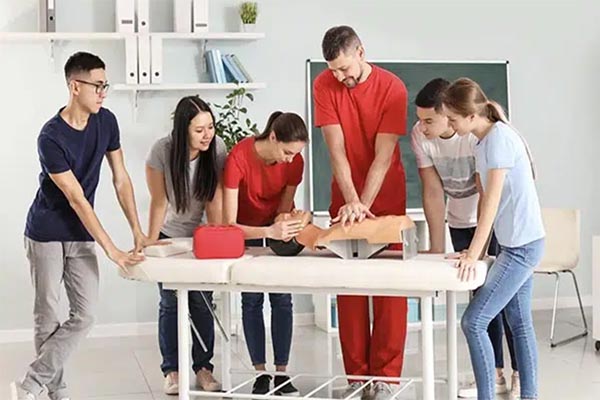
First aid instructor teaching CPR to a group of students using a practice mannequin.

Have you ever sat in a classroom, looking at a CPR manikin, and felt a tiny knot of anxiety in your stomach? You’re not alone. Whether you need your card for a new job in healthcare or you just want to be prepared to save a life, the question “Can you fail CPR certification?” is incredibly common.

The short answer is: yes, it is possible to fail. But here is the good news—the process is designed to help you succeed, not to trip you up. CPR training isn’t a “gotcha” style exam; it’s a competency-based program intended to ensure that if a real emergency happens, you actually know what to do.

In this guide, we’ll break down exactly what might cause someone to miss the mark, what happens if you don’t pass on your first try, and how you can prepare to breeze through your class with CPR Classes Near Me.

Is it hard to pass a CPR certification course?

For the vast majority of people, passing a CPR course is very straightforward. The curriculum is built to be logical and repetitive, which helps the information stick. Most people find that the hands-on nature of the class makes the “how-to” much easier to remember than just reading a textbook.

That said, “easy” doesn’t mean “automatic.” You do have to show up, pay attention, and demonstrate that you can perform the physical skills. If you approach the class with a willingness to learn and practice, you are almost guaranteed to walk away with your certification.

What are the most common reasons people fail?

While the failure rate is low, there are a few specific areas where students tend to struggle. Usually, it comes down to one of three things:

  1. Physical Technique Issues: This is the most common reason for a “not yet” during the skills test. CPR is physically demanding. You might fail to push deep enough (at least 2 inches for adults) or you might be going too fast or too slow (the “Stayin’ Alive” beat is the goal).
  2. Missing Critical Steps: CPR follows a very specific “Chain of Survival.” If you forget to check if the scene is safe or neglect to call 911 before starting compressions, an instructor might ask you to restart the scenario.
  3. Test Anxiety on the Written Exam: Some people are great at the physical part but get nervous when faced with a multiple-choice test. If you don’t meet the minimum passing score (which is usually around 80% to 84% depending on the provider), you may need to retake that portion.

What happens if you fail the written exam?

If you don’t hit the required score on your written test, don’t panic. It is not the end of the road. Most instructors will allow you to review the questions you missed right then and there.

In many cases, the instructor will provide “remediation.” This is a fancy way of saying they will sit down with you, explain the concepts you didn’t quite grasp, and give you a second chance to take the test or a similar version of it. The goal of CPR Classes Near Me is to ensure you understand the material, so instructors are usually very happy to help you get over that finish line.

What happens if you fail the hands-on skills test?

The skills test is where you show the instructor you can actually do the work. If you are struggling with your compression depth or hand placement, the instructor will usually give you feedback in real-time.

If, by the end of the session, you still aren’t meeting the required standards, you won’t receive your card that day. However, you aren’t “banned” from trying again. You will likely be encouraged to:

  • Review the instructional videos.
  • Practice the physical motions at home (even on a firm pillow).
  • Schedule a follow-up session or retake the skills portion of the class.

Are there physical requirements that could cause a failure?

CPR is a physical act. You are essentially acting as someone’s heart and lungs. This requires you to be on your knees on the floor and use your upper body strength to compress a chest.

Common physical hurdles include:

  • Inability to kneel: If you have severe knee or back issues that prevent you from getting on the floor, you should talk to your instructor beforehand. Often, accommodations can be made, such as placing the manikin on a table.
  • Fatigue: Performing high-quality compressions for two minutes is exhausting. If you can’t maintain the depth and rate due to exhaustion, you might fail the skills check.

Can you fail for not showing up?

This might seem obvious, but “failure to complete” is a common reason people don’t get certified. Most accredited courses, like those found through CPR Classes Near Me, require 100% attendance. Because the information is condensed into a few hours, missing even thirty minutes of class means you missed a vital module (like how to use an AED or how to help a choking infant). If you are late or have to leave early, you will likely have to reschedule the entire course.

How can you prepare to ensure you pass?

Preparation is the best cure for nerves. If you want to make sure you pass on the first try, follow these simple steps:

  • Watch the videos: If you are taking a blended learning course (part online, part in-person), don’t skip the videos. They provide the visual rhythm you need for the skills test.
  • Focus on the numbers: Memorize the key ratios. For adults, it’s always 30 compressions to 2 breaths. Knowing these numbers cold will save you a lot of stress during the test.
  • Dress comfortably: You will be moving around, kneeling, and working hard. Wear clothes that allow you to move freely and shoes that give you a good grip on the floor.
  • Ask questions: If you aren’t sure where your hands go or how to tilt the head for a breath, ask! Your instructor is your best resource.

How does the instructor decide if you pass or fail?

Instructors use a standardized checklist provided by the certifying body (like the American Heart Association). They are looking for specific “Critical Skills Descriptors.” These usually include:

  1. Checking the scene for safety.
  2. Checking for responsiveness (tap and shout).
  3. Calling for help/911 and getting an AED.
  4. Correct hand placement in the center of the chest.
  5. Adequate compression depth and rate (100–120 beats per minute).
  6. Allowing the chest to fully recoil between compressions.
  7. Delivering effective rescue breaths that make the chest rise.

If you check all these boxes, you pass!

Why is the AED portion so important?

Many students worry about the Automated External Defibrillator (AED) portion of the test. However, the AED is actually the easiest part of the class because the machine literally tells you what to do! As long as you follow the voice prompts exactly—turn it on, plug in the pads, and stay clear when it tells you to—you will pass this section with flying colors.

Is the certification the same for everyone?

The criteria for passing can vary slightly depending on the level of the course. For instance:

  • Layperson CPR: Focuses on high-quality compressions and basic AED use.
  • Healthcare Provider (BLS): Has a higher standard for precision, including two-rescuer scenarios and the use of bag-mask ventilators.

When you book through CPR Classes Near Me, make sure you select the course that matches your needs so you aren’t overcomplicating the process for yourself.

Conclusion

Failing a CPR certification is rare, but it does happen. When it does, it’s usually a sign that you just need a little more practice to ensure you can safely save a life. Remember, the goal of the certification isn’t just to get a plastic card—it’s to gain the confidence and skill to act when someone’s life is on the line.

By choosing a reputable training provider, staying engaged during class, and practicing your physical techniques, you’ll find that passing your CPR test is not only achievable but also an empowering experience.

Ready to get certified? 

Don’t let the fear of a test hold you back. Our instructors are dedicated to your success and will work with you every step of the way to ensure you feel confident and capable.

Contact CPR Classes Near Me today to find a class in your area and start your journey to becoming a lifesaver!

Frequently Asked Questions (FAQ)

Q: Can I retake the CPR test the same day if I fail?

A: In most cases, yes. If you fail the written exam or a specific skill, many instructors will allow you to review the material and re-test immediately or at the end of the class session.

Q: Is there a limit to how many times I can retake the test?

A: Most organizations do not have a hard limit on retakes, but individual training centers may have policies. Usually, if you cannot pass after a couple of attempts, they may suggest you retake the entire course to reinforce your foundational knowledge.

Q: Do I have to pay again if I fail?

A: This depends on the training center’s policy. Some include one free retake in the initial cost, while others may require a small fee for a remedial session. Always ask about the “re-test policy” before booking.

Q: What is the passing score for the CPR written exam?

A: While it varies, the American Heart Association generally requires a score of 84% or higher, while the Red Cross typically requires 80%.

Q: Can I fail if I am not strong enough to do compressions?

A: You must be able to compress the chest at least 2 inches for an adult. If you struggle with strength, instructors can teach you better body mechanics (like using your body weight rather than just your arms) to help you succeed.
CPR vs BLS in Washington DC: What’s the Difference and Which Do You Need?

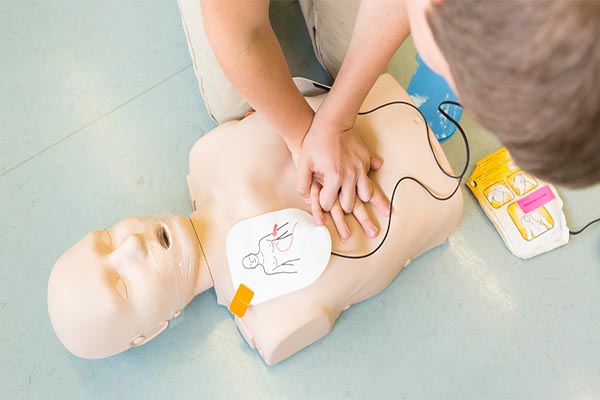
Hands performing chest compressions on a CPR training mannequin with AED pads attached.

TL;DR: CPR vs. BLS: Which Is Right for You?

Choosing between CPR (Heartsaver) and BLS (Basic Life Support) depends entirely on your job role and the environment where you work in Washington DC:

  • Standard CPR is for laypeople. If you’re a teacher, fitness coach, office manager, or parent, this covers the basics: chest compressions, rescue breaths, and how to use an AED.
  • BLS is for Healthcare Professionals. If you’re a nurse, doctor, paramedic, or dental professional, you need this advanced certification. It covers multi-rescuer teamwork, pulse checks, and advanced airway equipment like bag-mask devices.

Both certifications are vital for workplace safety in the District, and both typically require renewal every two years.

Ready to get certified in the Nation’s Capital?

Don’t wait until an emergency happens to test your skills. Ensure you have the confidence and credentials required by your employer with hands-on training that sticks.

Get Your CPR Certification with CPR Classes Near Me Washington DC

CPR vs BLS: Which Do You Need?

If you’re living or working in the nation’s capital, you know that Washington DC moves at a breakneck pace. Whether you are navigating the halls of a major hospital in Foggy Bottom or managing a busy office near Capitol Hill, safety is a priority that cannot be ignored. When it comes to emergency preparedness, two acronyms frequently pop up: CPR and BLS.

At first glance, they might seem like the same thing. Both involve helping someone whose heart has stopped, and both are essential skills for saving lives. However, choosing the wrong one can be a costly mistake, especially if your job requires a specific type of certification. This guide will walk you through the nuances of CPR versus BLS in Washington DC, helping you decide which certification is the perfect fit for your lifestyle and professional needs.

What Is the Fundamental Difference Between CPR and BLS?

To understand the difference, think of CPR as the foundation and BLS as the complete medical structure built upon that foundation.

  • Standard CPR (Heartsaver): This is generally referred to as “Layperson CPR.” It is designed for those who do not work in a clinical or medical setting. It teaches you how to recognize a cardiac arrest, perform high-quality chest compressions, and use an AED. It is the baseline for anyone who wants to be prepared to help a neighbor, family member, or coworker.
  • BLS (Basic Life Support): This is the professional standard. BLS is essentially “CPR for Healthcare Providers.” It includes everything in a standard CPR class but adds complex skills required in a medical environment. These include two-person rescue techniques, the use of a bag-mask device, and training on how to handle advanced team-based resuscitation scenarios.

In Washington DC, the distinction is vital. A teacher at a public school will likely only need standard CPR. Conversely, a nurse at a local medical center or a dentist in a private clinic will be required to hold a current BLS certification. The difference lies in the level of intensity and the specific medical equipment you are expected to know how to operate.

Why Do Healthcare Professionals in DC Require BLS?

Washington DC is home to some of the most prestigious medical institutions in the world. From research hospitals to private specialized clinics, the standard of care is exceptionally high. Employers in these sectors require BLS because they need their staff to function as part of a high-performance team.

In a clinical setting, an emergency rarely involves just one person acting alone. BLS training teaches professionals how to switch roles seamlessly during a rescue, ensuring that chest compressions remain deep and fast while another provider manages the airway. BLS also covers infant and child resuscitation at a much deeper level than standard CPR, which is critical for pediatric wards and clinics across the District.

Who Should Opt for Standard CPR Training Instead?

If your job doesn’t involve direct patient care in a hospital or clinic, standard CPR is likely the right choice for you. In Washington DC, this certification is highly recommended, and often required, for several professional groups.

  • Teachers and Daycare Providers: Essential for ensuring the safety of children and satisfying state licensing requirements.
  • Fitness Instructors and Coaches: Most gyms near Dupont Circle and beyond require trainers to be certified in case a client experiences an emergency.
  • Office Managers and Human Resources: Having a designated safety lead in an office setting is a best practice for local businesses in the private sector.
  • Federal Employees: Many federal agencies encourage or mandate basic life-saving skills for their personnel as part of workplace safety initiatives.
  • Security Personnel: As often the very first people on the scene in office buildings or residential complexes, basic CPR is a prerequisite.

The focus in these roles is on immediate action. You are the “first link” in the chain of survival, keeping the victim stable until DC Fire and EMS arrive on the scene.

What Specific Skills Are Taught in a DC BLS Course?

When you sign up for a BLS course with CPR Classes Near Me Washington DC, you’re stepping into an intensive, hands-on learning environment. The curriculum is robust and focuses on professional accountability.

  1. Team Dynamics: Learning how to effectively lead or follow in a multi-rescuer situation, including how to transition roles quickly.
  2. Advanced Airway Management: Mastery of using bag-mask ventilation rather than the simple mouth-to-mouth or pocket masks taught in basic classes.
  3. Accurate Pulse Checks: Training on how to correctly identify a pulse in infants and adults within a critical 10-second window.
  4. High-Performance Compressions: Learning the exact depth and rate needed to maximize blood flow, with minimal interruptions between cycles.
  5. Opioid-Associated Emergencies: Recognizing and responding to overdose situations, a skill that has become increasingly vital in modern urban environments.

Standard CPR classes, by contrast, focus more on simplicity. The goal is to ensure that someone with no medical background feels confident enough to jump in and begin the rescue without hesitation.

How Long Does Certification Last in the District of Columbia?

Regardless of whether you choose CPR or BLS, your certification is not permanent. In Washington DC, most accredited certifications are valid for exactly two years.

Staying current is critical for several key reasons:

  • Skills Decay: Studies consistently show that life-saving skills begin to fade within just a few months of training. Regular renewal keeps these techniques fresh in your muscle memory.
  • Employment Compliance: If your DC employer requires certification, an expired card is often treated the same as having no certification at all. This can lead to administrative suspension from work duties.
  • Evolving Standards: The science of resuscitation changes as medical research improves. Renewing every two years ensures you are using the most current, evidence-based methods approved by major safety organizations.

Why Is Hands-On Training Better Than Online-Only Courses?

While it might be tempting to take a quick, 30-minute online course, employers in Washington DC rarely accept online-only certifications for professional requirements. Life-saving is a physical skill, not just a theoretical one.

Hands-on training allows you to:

  • Feel the physical resistance of a manikin’s chest, ensuring you learn the correct pressure needed.
  • Practice the rhythm of compressions with real-time feedback from an instructor.
  • Ask complex questions of a training expert who has real-world emergency experience.
  • Demonstrate competency, which builds the genuine confidence required to act during a real crisis.

CPR Classes Near Me provides the necessary hands-on components that satisfy both national standards and local DC workplace regulations.

How Do You Choose the Best Class in Washington DC?

When searching for “CPR classes near me” in Washington DC, look for a provider that offers convenience, quality, and valid accreditation. DC is a city where time is limited. You need a location that is accessible and class schedules that fit around a busy professional or academic life.

Look for training providers that offer:

  • Clear Certification Levels: They should distinguish clearly between standard CPR and professional BLS classes.
  • Qualified Instruction: Ensuring that the teacher is certified and experienced in emergency response.
  • Small Class Sizes: This ensures that every student gets individual attention and feedback during the skills practice.
  • Current Materials: Ensure the course follows the latest emergency cardiovascular care (ECC) guidelines.
  • Fast Certification Issuance: You should receive your digital certification card shortly after completing the requirements.

Is One Certification More Expensive Than the Other?

Generally, because BLS is more comprehensive and requires more training hours, the cost may be slightly higher than a standard CPR course. However, for those in the medical field, this is considered a necessary professional investment.

Standard CPR is the most cost-effective option for laypeople and is designed to get you trained and certified quickly without the clinical overhead required by BLS courses.

Summary of Main Differences

If you are still deciding, remember that the choice is primarily based on your role. Standard CPR focuses on the solo rescuer in public settings using basic equipment. BLS focuses on professional teams in clinical settings using advanced medical devices.

Standard CPR is ideal for the “everyday hero”—the person who wants to be ready if a colleague or stranger collapses. BLS is for the “duty-bound professional”—those whose job descriptions include the responsibility to provide medical care as part of a structured medical system.

Conclusion

The District of Columbia is a place where being prepared can make all the difference. Whether you are a resident looking to keep your family safe or a professional aiming to fulfill a mandatory workplace requirement, understanding the difference between CPR and BLS is the first step toward readiness.

Standard CPR is perfect for teachers, coaches, and parents, while BLS is the essential tool for those in healthcare and emergency response. Both represent a commitment to the community and the safety of those around you.

Don’t wait until an emergency happens to realize you need training. Take the initiative today to secure your future and protect the lives of your fellow Washingtonians.

Get Your CPR Certification with CPR Classes Near Me Washington DC. Whether you need a standard certification for your small business or a professional BLS card for your hospital rotation, we are here to help you get certified quickly and confidently.

FAQ Section

Q: Can I take a BLS class even if I’m not a healthcare professional?

A: Yes. Anyone is allowed to take a BLS class. If you prefer the most comprehensive training available and are comfortable with technical medical information, BLS is an excellent choice. However, remember that standard CPR is sufficient for most non-medical employers.

Q: Is BLS harder than CPR?

A: BLS is more comprehensive, meaning it covers more techniques and specialized equipment like bag-masks. While it is more intensive, the course is structured so that anyone can learn the skills if they focus and practice under instructor guidance.

Q: Do I need to be 18 to get certified in DC?

A: No. There is no official age limit for certification. The requirement is purely physical; if the student can physically compress the manikin’s chest to the required depth and pass the skills test, they are eligible to receive their card.

Q: How long does a typical class take?

A: A standard CPR/AED class usually takes about 2 to 3 hours. A professional BLS course for healthcare providers usually runs between 3.5 and 4.5 hours, depending on the number of students and their prior experience levels.

Q: Will my DC certification be valid if I move to another state?

A: Yes. Accredited CPR and BLS certifications are recognized across the country. If you move from DC to Maryland, Virginia, or any other state, your certification remains current until the printed expiration date.

Where to Take CPR Classes in Washington DC: Best Local Training Options

First aid instructor teaching CPR to a group of students using a practice mannequin.

Where to Take CPR Classes in Washington DC

Washington DC is a city that never stops. From the bustling corridors of Capitol Hill to the high-energy neighborhoods of DuPont Circle and the Navy Yard, the capital is a hub of activity. In such a vibrant environment, being prepared for a medical emergency isn’t just a good idea, it’s a responsibility. Whether you’re a healthcare professional working in one of DC’s world-class hospitals or a parent wanting to keep your family safe, finding the right training is the first step.

Getting certified in CPR (Cardiopulmonary Resuscitation) is one of the most impactful things you can do for your community. If you are searching for the best local training options in the District, look no further. We have compiled a comprehensive look at what makes CPR training in Washington DC unique and how you can get certified efficiently.

Why is Washington DC a prime location for CPR training?

Washington DC is unique because of its high density of both healthcare facilities and federal agencies. Many professionals moving to the city for work find that CPR certification is a mandatory requirement for their positions. This high demand has resulted in a robust local infrastructure for emergency training.

Local training centers in DC are tailored to the urban lifestyle. They offer:

  • Proximity to Public Transit: Most training centers are located near Metro stops like Union Station, Gallery Place, or Foggy Bottom, making it easy to fit a class into a busy commute.
  • Diverse Course Options: Because the city serves everyone from high-level government officials to elementary school teachers, classes are tiered to meet different professional needs.
  • High Standards: Training in the capital often aligns with the highest international standards, ensuring your certification is recognized nationwide.

What certification levels are available through CPR Classes Near Me?

When you look for training in Washington DC, you will notice that not all CPR classes are the same. “CPR Classes Near Me” offers a variety of levels to ensure you get exactly the training you need for your specific situation.

  1. AHA BLS for Healthcare Providers: This is the gold standard for doctors, nurses, and paramedics. It covers multi-rescuer CPR and advanced techniques.
  2. Heartsaver® First Aid CPR AED: Designed for laypeople, such as teachers, fitness trainers, and corporate employees. It covers the basics of CPR and how to use an AED machine.
  3. Bloodborne Pathogens: Often required for those in childcare or industrial work, this course focuses on safety and cleanup in medical situations.
  4. Pediatric CPR: Focused specifically on infants and children, this is a must for new parents and childcare workers in the DC area.

How do you choose between AHA and Red Cross curricula?

A common question among those seeking “CPR Classes Near Me Washington DC” is whether to choose an American Heart Association (AHA) course or a Red Cross course. Both are respected, but there are subtle differences to consider.

  • Employer Requirements: Many hospitals and clinical settings in DC specifically require an AHA certification. It is always best to check with your manager first.
  • Content Focus: AHA courses tend to have a heavy focus on the science and technical precision of chest compressions. Red Cross courses are often lauded for their practical, scenario-based approach.
  • Recognition: Both are recognized across the United States, but AHA is frequently viewed as the primary standard-setter for CPR techniques used globally.

Where are the best training sites located within the DC Metro area?

Geography matters in a city with traffic as legendary as DC’s. “CPR Classes Near Me” focuses on providing training options in convenient neighborhoods to save you time. 

You can find sessions in:

  • Downtown / K Street: Ideal for office workers who want to take a class after the workday or during a long lunch break.
  • Georgetown: A hub for university students and residential families who prefer a more local setting.
  • Capitol Hill: Serving the legislative community and surrounding residential areas.
  • Adams Morgan / Woodley Park: Convenient for those living in the more residential parts of the District.

By choosing a site close to your home or office, you remove the barrier of travel and make it much easier to keep your certification current.

What should you expect during your Washington DC CPR training session?

If you have never taken a CPR class before, you might feel a bit nervous. However, classes are designed to be encouraging and interactive

Here is a typical walkthrough of what a session looks like:

  • Instructional Videos: Most classes start with a visual guide provided by the governing health body to set the foundation.
  • Hands-on Practice: You will spend the majority of your time working with a high-fidelity manikin. This is where you learn the feel of the correct depth and rhythm for chest compressions.
  • AED Familiarization: You will practice using a trainer AED (which does not deliver a real shock) to understand the voice prompts and pad placement.
  • Skill Testing: Toward the end of the class, the instructor will watch you perform the skills you’ve learned to ensure you are ready to use them in the real world.
  • Written Exam: For some certifications, a short multiple-choice test is required to ensure you understand the concepts.

Is BLS different from standard Heartsaver CPR?

Yes, and this is a critical distinction for DC residents to understand. While both teach the fundamental skill of chest compressions, they serve different purposes.

Heartsaver CPR is intended for the general public. It covers:

  • Adult, child, and infant CPR.
  • AED usage.
  • Choking relief.

BLS (Basic Life Support) is for healthcare professionals. It includes everything in Heartsaver plus:

  • Two-person rescue techniques.
  • Bag-valve mask (BVM) usage.
  • Advanced airway support concepts.
  • Critical thinking during a cardiac arrest team effort.

If you are a student at George Washington University or working at MedStar Washington Hospital Center, you almost certainly need BLS.

Can groups or businesses get private onsite CPR training in DC?

Absolutely. Many DC-based businesses, law firms, and NGOs prefer that our instructors come to them. Onsite training is an excellent way to ensure your entire team is compliant with OSHA safety regulations without requiring them to commute to a separate facility.

Benefits of onsite training include:

  • Convenience: We bring the equipment like manikins, AED trainers, and workbooks directly to your conference room.
  • Customization: We can tailor scenarios to your specific workplace layout.
  • Team Building: Learning life-saving skills together builds confidence and a sense of shared responsibility among staff.

How do you keep your certification current once you’ve completed training?

CPR certifications typically expire every two years. In a city as fast-paced as Washington DC, it’s easy to let that date slip by. 

To maintain your status:

  1. Set a Reminder: Put a notification in your digital calendar for 22 months after your class date.
  2. Take a Renewal Course: Renewal courses are often shorter than initial certification courses because they skip the very basic introductory concepts.
  3. Stay Informed: AHA and Red Cross update their guidelines every few years. Even if your card is valid, reading up on the latest tweaks to compression ratios is a good practice.

Conclusion

Taking the time to get certified in CPR is one of the most proactive steps you can take as a resident of Washington DC. The city is full of opportunities to help others, and being equipped with the knowledge to respond in a crisis is invaluable. Whether you need certification for your job or simply for peace of mind, there is a local class ready to welcome you.

Ready to make a difference? Ensure your skills are up to date and your confidence is high by booking your next session with local experts who understand the unique needs of the DC community.

Get Your CPR Certification with CPR Classes Near Me Washington DC.

Frequently Asked Questions (FAQ)

Q: How long does a typical CPR class in Washington DC take?

A: Most CPR and First Aid classes last between 2 and 4 hours, depending on the level of certification. BLS classes for healthcare providers generally take about 4 hours, while a standard CPR/AED class for laypeople may be closer to 2 or 3 hours.

Q: Is my DC CPR certification valid in other states like Virginia or Maryland?

A: Yes. Because our classes are built on AHA or Red Cross standards, your certification is nationally recognized. If you move from DC to Arlington or Silver Spring, your card remains valid until its expiration date.

Q: Can I take a CPR class online?

A: While there are online portions available (Blended Learning), a full certification recognized by employers usually requires an in-person skills session. You can study the theory online, but you must demonstrate the physical skills to a certified instructor in Washington DC to receive your card.

Q: What should I wear to my CPR training session?

A: Wear comfortable clothing that allows you to move easily. You will be spending time on your knees practicing compressions on a manikin, so pants and closed-toe shoes are highly recommended over professional attire or skirts.

Q: Will I receive my certification card the same day?

A: Most classes offer digital e-cards which are often processed and sent to your email on the same business day or within 24 hours of completing the course and skills test.

Are CPR Classes Hard to Pass in Washington DC? What You Need to Know

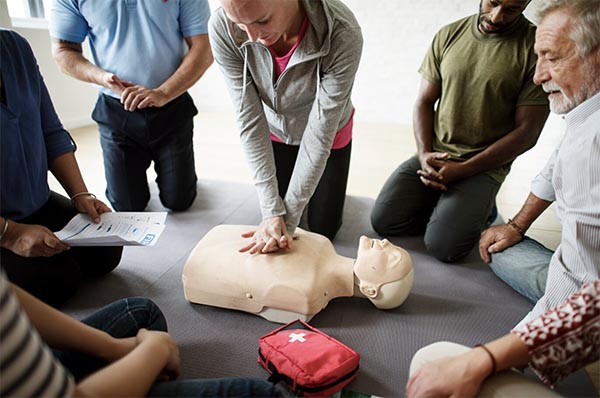
Group learning CPR with hands-on chest compressions on a training manikin.

TL;DR: Can You Pass a CPR Class in DC?

Worried about the difficulty? Don’t be! Passing a CPR class in Washington DC is designed to be straightforward and stress-free.

  • Competency-Based: The course focuses on life-saving skills, not complex medical theory.
  • Supportive Environment: Instructors coach you through the physical steps until you’re confident.
  • Manageable Exams: Written tests are intuitive, and practical assessments focus on simple muscle memory.
  • Tailored to You: Whether you’re a healthcare pro or a local teacher, the class matches your specific needs.

Passing isn’t about being a medical expert, it’s about having the confidence to act.

Ready to get certified?

Get Your CPR Certification with CPR Classes Near Me Washington DC

Is Passing a CPR Class Hard in Washington DC? What You Need to Know

If you’re a professional in the nation’s capital, you know that time is your most valuable asset. Whether you are a teacher in Ward 3, a fitness instructor in DuPont Circle, or a nurse at a major DC hospital, your schedule is packed. When you find out you need a CPR certification, the first question that usually pops up is: “Is this going to be hard to pass?”

There is a common misconception that medical certifications are designed to “weed people out.” Many people envision a stern instructor with a stopwatch and a complex 100-page exam. In reality, the goal of CPR training in Washington DC is exactly the opposite. The mission is to ensure you feel confident enough to save a life.

In this guide, we’ll break down exactly what makes these classes manageable, what the testing process looks like, and why you don’t need a medical degree to pass with flying colors.

Is the CPR Exam Difficulty Level Overrated?

The short answer is yes. CPR classes are designed for competency, not for academic exclusion. The curriculums provided by organizations like the American Heart Association (AHA) are structured so that if you participate in the class, you are almost guaranteed to pass.

Most students find that the “difficulty” isn’t in the complexity of the information, but in the physical coordination required for chest compressions. Once you get the rhythm down, the rest follows a logical flow.

Here is why most people find it easier than expected:

  • The steps are repetitive to build muscle memory.
  • Instructors use real-world scenarios that make sense.
  • The material is stripped of unnecessary medical jargon.
  • You are encouraged to ask questions throughout the session.

What Kind of Topics Are Covered in the Curriculum?

To understand if a class is “hard,” you first need to look at what you are learning. A standard CPR class in Washington DC focuses on three primary pillars.

  1. High-Quality Compressions: Learning the correct depth and rate for adults, children, and infants.
  2. AED Usage: Understanding how to operate an Automated External Defibrillator safely.
  3. Rescue Breathing: Using pocket masks or bag-mask devices to provide oxygen.

Because the focus is on these core skills, you aren’t memorizing thousands of facts. You are mastering a specific sequence of actions. For most DC professionals, this practical approach is much easier to digest than a traditional classroom lecture.

How Does the Hands-On Skills Test Work?

The practical assessment is often what makes students nervous, but it is actually the most helpful part of the class. In Washington DC, your instructor will watch you perform the skills on a manikin.

What you need to know about the skills test:

  • It’s coaching-based: If you are pushing too shallowly, the instructor will tell you. You can correct it on the spot.
  • Use of technology: Many manikins now have feedback devices that light up when you hit the right depth.
  • No “trick” scenarios: The test scenarios are exactly what you practiced for hours during the class.
  • Physicality over memory: It is more about getting your body used to the motion than it is about intense mental strain.

Is the Written Test Hard to Navigate?

If you choose a Basic Life Support (BLS) class or a standard Heartsaver course, there may be a written component. However, this is usually an open-resource or highly guided review.

The written test is designed to ensure you understand basic safety, such as:

  • When to call 911 in the DC metro area.
  • How to ensure the scene is safe before approaching.
  • The correct ratio of compressions to breaths (30:2).

Most students finish the written portion in under 20 minutes. If you have been paying attention to the videos and the instructor’s demonstrations, the answers are usually very intuitive.

Why Do Some People Struggle With the Class?

While the pass rate is extremely high, some individuals do find certain aspects challenging. Identifying these early can help you prepare.

Common hurdles include:

  • Physical Stamina: Doing two minutes of high-quality compressions is a workout! It requires leaning over a manikin and using your upper body strength.
  • Overthinking the Steps: Sometimes students try to add complex medical steps they saw on TV. CPR is about simplicity.
  • Test Anxiety: Nervousness can cause people to forget the 30:2 ratio momentarily, but instructors are there to help you reset.

What are the Requirements for DC Professionals?

In Washington DC, requirements vary by industry. Knowing exactly what you need can reduce the stress of picking the “wrong” class.

  • Healthcare Providers: Usually require BLS (Basic Life Support). This is slightly more rigorous but still focuses on core competencies.
  • Teachers and Coaches: Often require Heartsaver CPR and AED. This is very beginner-friendly.
  • General Public: Usually take a non-certification or basic awareness course, which is purely informational.

By matching the right class level to your needs, you ensure the difficulty level matches your background knowledge.

How Can You Prepare for Success Before the Class?

You don’t need to study for weeks. However, doing a few small things can make your session at CPR Classes Near Me Washington DC even easier.

  1. Wear Comfortable Clothes: You will be on your knees on the floor working with manikins. Wear sneakers and flexible pants.
  2. Watch a Summary Video: Spend 5 minutes on a reputable site watching a “CPR Overview” video. Having a visual reference beforehand makes the live class click much faster.
  3. Hydrate: As mentioned, it is a physical activity. Being hydrated helps with focus and stamina.
  4. Arrive Early: Familiarizing yourself with the training site in DC helps lower your initial anxiety.

How Long Does Certification Last in DC?

Once you pass, your certification is good for two years. This is a federal standard followed by the major training providers. Because you don’t have to do this every month, the pressure to “master” it perfectly on day one is mitigated by the fact that you will have a renewal period to refresh your skills later.

Why Choose Local Training in Washington DC?

Taking a class locally at CPR Classes Near Me Washington DC offers advantages that online-only courses cannot match.

  • Immediate Certification: You leave with the knowledge and, in many cases, your digital card immediately.
  • Expert Instructors: Local instructors understand the specific regulations for DC schools and workplaces.
  • Equipment Quality: You get to use the latest high-fidelity manikins that make learning easier through tactile feedback.

Are Hybrid Classes Easier Than In-Person Classes?

Hybrid classes allow you to do the “classroom” portion online and then come into the DC office for a “skills check.”

Pros of Hybrid:

  • You learn at your own pace.
  • You can re-watch videos as many times as you want.
  • The in-person portion is shorter (usually 30-60 minutes).

Cons of Hybrid:

  • You don’t have an instructor to answer questions in real-time during the learning phase.
  • You must be self-disciplined to complete the modules.

For most people who are worried about the difficulty, an all-in-person class is often better because you have the support of a live instructor from start to finish.

Conclusion: You Are More Capable Than You Think

Passing a CPR class in Washington DC isn’t about being a medical expert; it’s about being a prepared citizen or professional. The classes are designed to be inclusive, straightforward, and supportive. The instructors at CPR Classes Near Me are dedicated to making sure you leave the room feeling like a lifesaver, not a test-taker.

The physical skills are easy to learn, the written components are logical, and the environment is built for your success. Don’t let the fear of a “hard test” stop you from gaining a skill that could save a family member, a colleague, or a neighbor.

Get Your CPR Certification with CPR Classes Near Me Washington DC! Whether you need a renewal or are a first-timer, we provide the supportive environment you need to pass with confidence.

FAQ: Frequently Asked Questions

Q: What happens if I fail the written exam?

A: Most instructors will allow you to review the questions you missed and retake the exam on the same day. The goal is mastery of the material, so instructors will work with you until you understand the correct answers.

Q: Do I need to be in great physical shape to pass?

A: While CPR requires some physical effort, you do not need to be an athlete. If you have physical limitations that prevent you from kneeling, instructors can often accommodate you by placing the manikin on a table.

Q: Is the DC certification valid in other states?

A: Yes. Certifications from major providers like the AHA or Red Cross are recognized nationally. If you move from DC to Virginia or Maryland, your card remains valid until its expiration date.

Q: How many people are usually in a DC class?

A: Class sizes are kept small to ensure everyone gets enough hands-on time with the manikins and direct attention from the instructor.