Is Your Life-Saving Skill Set Up to Date? A Guide to CPR Renewal
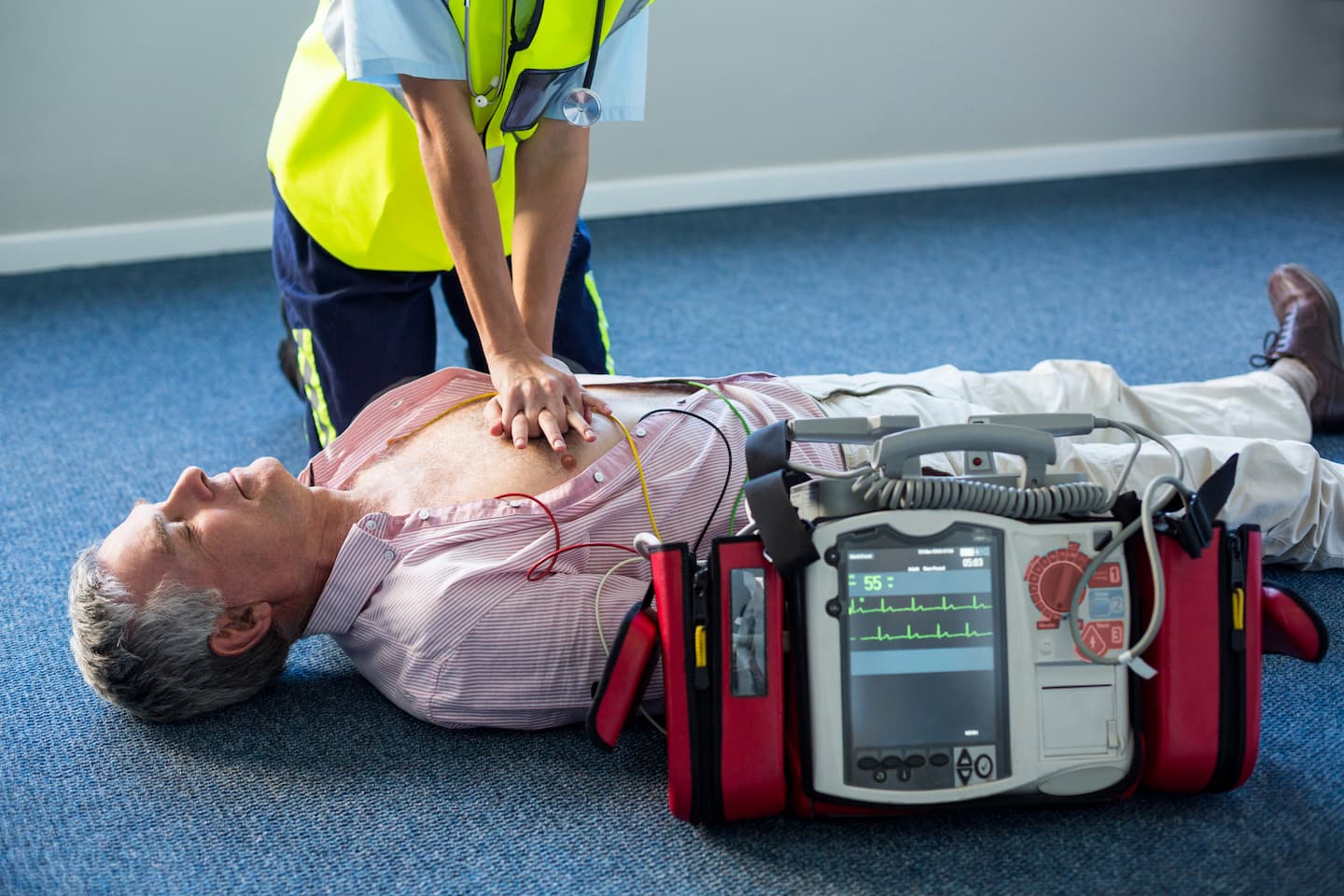
Paramedic performing CPR with defibrillator on cardiac arrest patient

Whether you are a seasoned nurse, a dedicated high school coach, or a proactive parent, your CPR certification is more than just a piece of paper—it’s a promise to be ready when the unthinkable happens. But as time passes, even the most diligent responders can find their skills getting a little rusty.

In the world of emergency response, “staying current” isn’t just a suggestion; it’s a necessity. Medical guidelines evolve, technology like AEDs becomes more advanced, and your muscle memory naturally fades. This comprehensive guide will walk you through everything you need to know about renewing your CPR certification, ensuring you remain a confident and capable link in the chain of survival.

Why is CPR certification renewal necessary?

The most critical reason to renew your CPR certification is skill retention. Research from major health organizations shows that CPR skills begin to decline significantly just a few months after training. By the two-year mark, many people struggle to remember the correct compression depth or the proper ratio of breaths to pumps. Regular renewal forces you to refresh that muscle memory so that you don’t hesitate during a real emergency.

Beyond the physical skills, renewal keeps you informed about the latest science. Every few years, organizations like the American Heart Association update their “Chain of Survival” based on new data. What was considered “best practice” five years ago might be outdated today. Renewal ensures you are providing the most effective care possible based on the latest life-saving research.

Finally, for many, it is a matter of professional survival. If you work in healthcare, education, or childcare, a lapsed certification can lead to immediate suspension or even the loss of your license. Staying ahead of your expiration date is the best way to avoid unnecessary professional stress.

When should you start the renewal process?

Most CPR certifications are valid for exactly two years from the date of your last class. You can find this date printed clearly on your provider card or within your digital certificate portal. However, you shouldn’t wait until the day before it expires to start looking for a class.

We recommend starting the renewal process at least 30 to 60 days before your current card expires. This “buffer zone” is essential for a few reasons:

  1. Class Availability: Popular time slots (like Saturday mornings) can fill up weeks in advance.
  2. Abbreviated Options: Many providers offer “Renewal” or “Challenge” courses that are shorter and cheaper than the full initial course. However, these are often only available to those whose cards are still valid.
  3. Processing Time: While many digital cards are issued instantly, some employers require a verified physical copy which can take a few days to process.

If your card has already expired, don’t panic—but do act quickly. Most training centers will require you to take the full “Initial” course again if your card is even one day past its expiration date, as you are no longer eligible for the abbreviated renewal curriculum.

How do you choose the right renewal course?

Not all CPR classes are created equal. The “right” course for you depends entirely on your job requirements and your learning style. To make the best choice, ask yourself these three questions:

1. What does my employer require?

If you are a doctor, nurse, or paramedic, you likely need BLS (Basic Life Support) for Healthcare Providers. If you work in an office or a gym, a Heartsaver CPR/AED course is usually sufficient. Always check if your employer requires a specific accrediting body, such as the American Heart Association or the American Red Cross.

2. Which format fits my schedule?

  • In-Person: Best for hands-on learners who want immediate feedback from an instructor.
  • Blended Learning: The “gold standard” for busy professionals. You complete the lecture and testing portions online at your own pace, then drop in for a quick 30-minute hands-on skills check.
  • Online Only: Be cautious here. While convenient, 100% online courses often do not meet OSHA or workplace requirements because they lack a physical skills assessment on a manikin.

3. Does the course include AED training?

In the modern world, CPR and AEDs go hand-in-hand. Ensure your renewal course includes the latest protocols for using an Automated External Defibrillator on adults, children, and infants.

What should you expect during a CPR renewal class?

A renewal course is designed to be more efficient than your first class. Instead of starting from scratch, the instructor focuses on “refreshing” your existing knowledge and correcting any bad habits you may have picked up. You can typically expect the following:

  • Review of Core Techniques: You’ll revisit high-quality chest compressions (2 inches deep for adults) and the 30:2 compression-to-breath ratio.
  • AED Troubleshooting: You’ll practice applying pads quickly and following the voice prompts of the device.
  • Choking Relief: A refresher on the Heimlich maneuver for various age groups.
  • The Skills Test: You will be asked to demonstrate your skills on a manikin while the instructor observes. They aren’t looking for perfection, but they are looking for “competency”—meaning you can perform the steps safely and effectively.
  • Written Exam: Depending on the level of certification (like BLS), there may be a short multiple-choice quiz to verify your understanding of the theory.

How can you maintain your skills between renewals?

Two years is a long time. To ensure you don’t lose your edge between renewal cycles, consider these simple maintenance tips:

  • Watch a Video: Every six months, spend 5 minutes watching a YouTube video from a reputable source (like the AHA) on “Hands-Only CPR.”
  • Download an App: There are several free apps that provide step-by-step emergency guides and metronomes to help you keep the correct beat (100–120 compressions per minute).
  • Locate the AEDs: Whenever you are in a familiar place—like your office, the mall, or your gym—take note of where the nearest AED is located. Simply knowing where the equipment is can save precious minutes in a crisis.

Conclusion

Renewing your CPR certification is a small investment of time that pays massive dividends in safety and confidence. Whether you are doing it for a job requirement or simply to protect your loved ones, staying current ensures that if you are ever called to act, you will be ready.

Don’t wait for an emergency to realize your skills have faded. Check your card today, look for the expiration date, and get ahead of the curve.

Ready to update your skills? Contact CPR Classes Near Me today to find a renewal course that fits your schedule and keeps you certified!

Frequently Asked Questions (FAQ)

Q: Can I renew my CPR certification online?

A: Yes, you can complete the educational portion of your renewal online. However, if you need the certification for a workplace or professional license (OSHA compliance), you must also complete an in-person skills assessment with a certified instructor to receive your valid card.

Q: Is there a grace period after my CPR card expires?

A: Generally, no. Most accrediting bodies do not offer a grace period. Once the date on your card passes, you are technically uncertified. While some instructors may allow you into a renewal class within 30 days of expiration, many employers will consider you non-compliant the moment the card expires.

Q: How long does a CPR renewal class take?

A: A traditional in-person renewal class typically takes 2 to 3 hours. If you choose a blended learning format, the in-person skills check can often be completed in 30 to 45 minutes after you finish your online coursework.

Q: What is the difference between BLS and CPR renewal?

A: BLS (Basic Life Support) is a more advanced form of CPR training specifically designed for healthcare providers. It includes two-person CPR, bag-valve mask usage, and more intense testing. Standard CPR renewal (Heartsaver) is designed for laypeople and focuses on basic life-saving skills.

Q: Do I need to buy a new student manual for every renewal?

A: Most organizations require you to have access to the current student manual during your course. Since guidelines are updated every few years, it is important to ensure you are studying from the most recent edition provided by your training center.
Same-Day CPR Certification: How It Works (and Who It’s For)

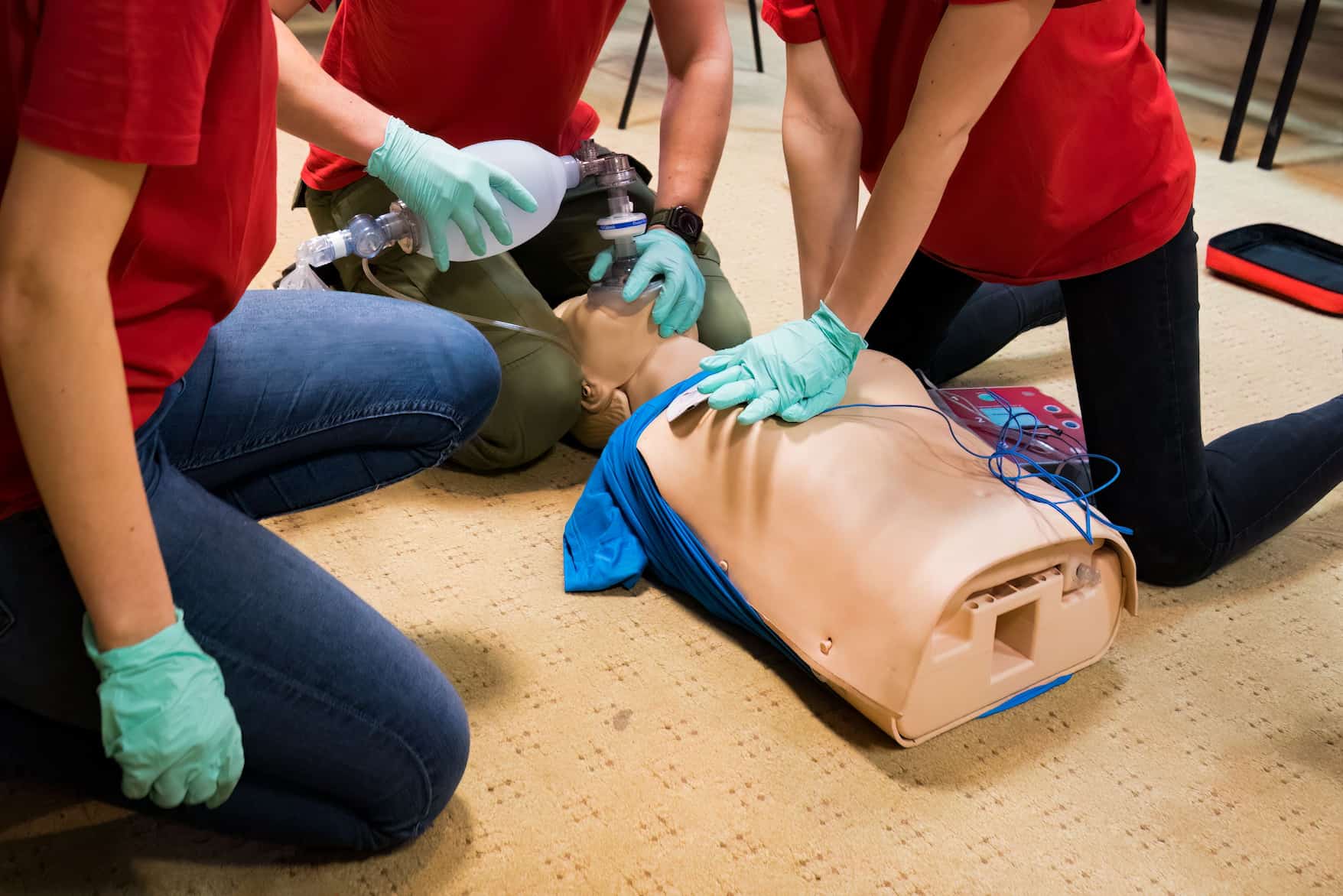
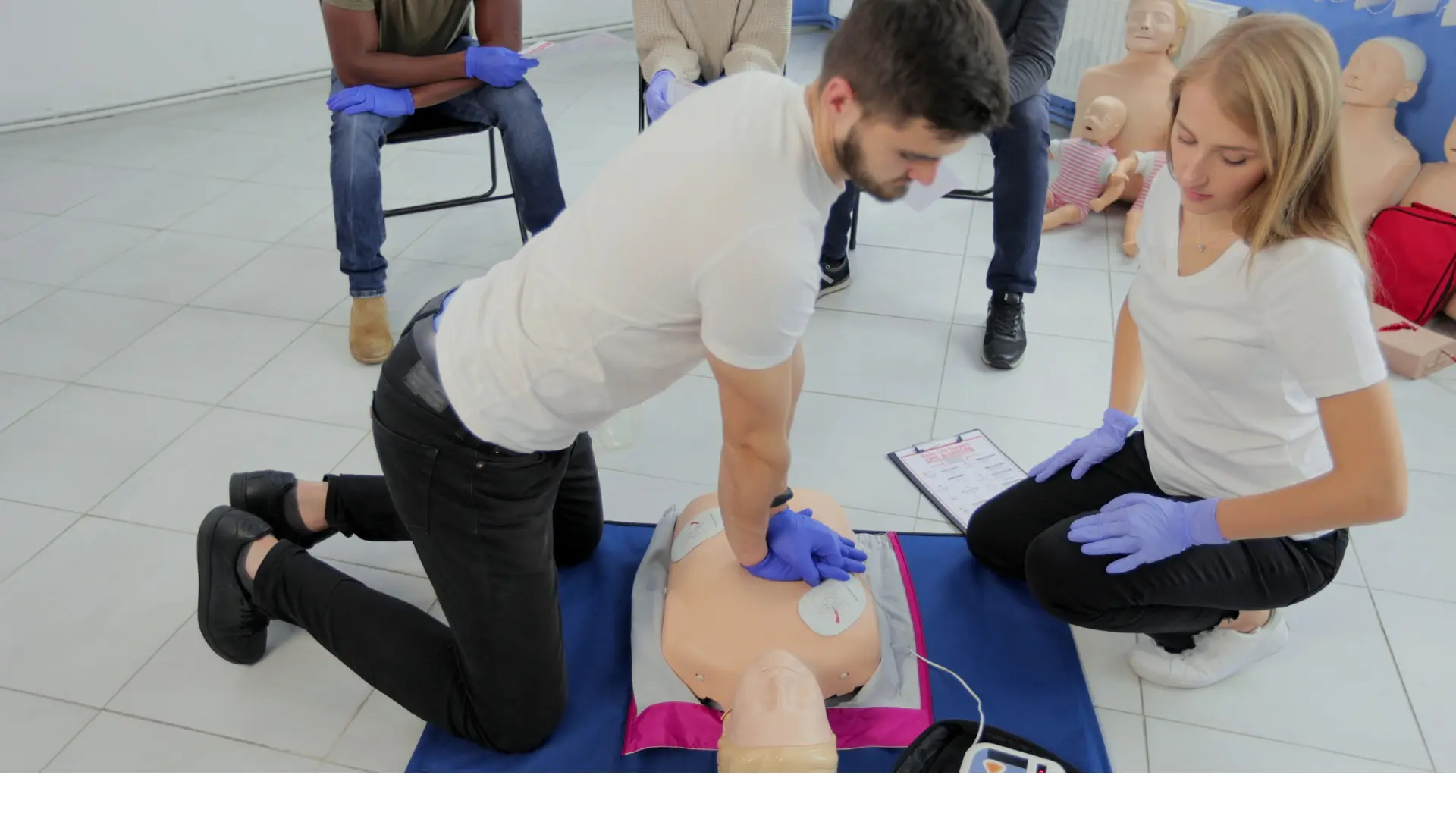
Students performing CPR and ventilation on a training manikin in class

In a world where everything moves at the speed of light, waiting weeks for a certification card to arrive in the mail feels like a relic of the past. Whether you just landed a new job that starts Monday or your current credentials expired yesterday, the pressure to get certified quickly is real.

The good news? You don’t have to wait. Same-day CPR certification has revolutionized how professionals and everyday heroes get trained. At CPR Classes Near Me, we’ve streamlined the process so you can walk in, learn the skills, and walk out with your official American Heart Association (AHA) eCard in your inbox before you even get to your car.

But how exactly does it work, and is it the right choice for you? Let’s dive into the details.

What is same-day CPR certification?

Same-day CPR certification refers to a training format where the student completes all required coursework and hands-on skills assessments in a single day, receiving their official certification immediately upon completion.

Unlike traditional classes that might mail a paper certificate or take days to process paperwork, this modern approach uses the AHA’s digital eCard system. This ensures that as soon as your instructor marks you as “passed” in the system, your credentials are live and verifiable.

How does the same-day certification process work?

The process is designed to be efficient without cutting corners on the quality of training. Most same-day certifications follow one of two paths:

  1. The All-In-Person Method: You attend a scheduled class at a local training center. Over the course of 3 to 4 hours, an expert instructor guides you through videos, lectures, and—most importantly—physical practice on manikins. Once you pass the written (if required) and skills tests, your eCard is issued.
  2. The Blended Learning Method: This is the ultimate “time-saver.” You complete the “book work” and videos online at your own pace. Once finished, you schedule a “Skills Session” that usually lasts only 30 to 60 minutes. Because you’ve already done the theory, you just show up to prove you can do the physical compressions and use an AED.

Who is same-day CPR certification designed for?

While anyone can benefit from a fast turnaround, certain groups find same-day certification particularly vital:

  • Healthcare Professionals: Nurses, doctors, and EMTs often need Basic Life Support (BLS) certification to maintain their licenses. A gap in certification can mean being pulled from a shift.
  • New Hires: Many job offers in childcare, fitness, and construction are “contingent on certification.” Getting certified today means starting your paycheck sooner.
  • Busy Parents and Caregivers: If you only have a small window of childcare or free time, a “one-and-done” session is much more manageable than a multi-day course.
  • Students: Nursing or dental students often realize they need a specific AHA BLS card right before clinical rotations begin.

Is a same-day eCard as valid as a traditional card?

Yes, provided it is an official American Heart Association (AHA) eCard. In fact, most employers now prefer eCards over paper certificates because they are:

  • Tamper-proof: They cannot be easily forged.
  • Easy to Verify: Employers can scan a QR code to see the validity in seconds.
  • Impossible to Lose: Your card is stored digitally; you can download and print it as many times as you need.

At CPR Classes Near Me, we only issue AHA-accredited certifications, which are the gold standard for hospitals, schools, and government agencies nationwide.

Why is hands-on training required for same-day certs?

You might see websites offering “100% Online CPR” in 20 minutes. While these are fast, they are rarely accepted by employers. Why? Because you cannot learn the “muscle memory” of a chest compression by clicking a mouse.

OSHA and the AHA require a physical skills check on a manikin. Same-day certification at a physical location ensures:

  1. Correct Technique: An instructor can tell you if you aren’t pushing hard enough or fast enough.
  2. AED Familiarity: You get to handle a trainer AED, so you aren’t confused by the buttons during a real emergency.
  3. Real-Time Q&A: You can ask questions about specific scenarios, like what to do if the victim is in a confined space.

What should you bring to a same-day class?

To ensure you get your card on the same day, you should come prepared. Here is a quick checklist:

  • Comfortable Clothing: You will be on the floor or leaning over manikins. Wear clothes you can move in.
  • Online Completion Certificate: If you chose the “Blended Learning” route, you must bring the printed or digital certificate showing you finished the online portion.
  • A Valid Email Address: This is how your eCard is delivered. Double-check your spelling when you register!

How long does the certification last?

Regardless of how fast you get it, an AHA CPR or BLS certification is valid for two years. The expiration date will be clearly marked on your eCard. We recommend scheduling your renewal at least 30 days before that date to ensure you never have a lapse in coverage.

What are the benefits of choosing “CPR Classes Near Me”?

Choosing a local, specialized provider offers advantages that national “big box” training centers can’t match:

  • Speed: We focus on efficiency, ensuring you don’t spend a minute longer in class than necessary to master the skills.
  • Expertise: Our instructors are often local healthcare professionals who bring real-world experience to the table.
  • Availability: We offer frequent classes and skills sessions to fit your tight schedule.
  • Instant Gratification: We prioritize the immediate issuance of eCards so you can get back to work.

Conclusion

Same-day CPR certification isn’t just about speed; it’s about providing a path to compliance and confidence that fits into a modern lifestyle. By combining the flexibility of digital eCards with the rigors of hands-on training, you get the best of both worlds: a valid, employer-accepted certification and the ability to save a life starting today.

Don’t let an expired card or a new job requirement slow you down. Get trained, get certified, and get on with your day.

Need your CPR certification today? Contact CPR Classes Near Me now to find an upcoming session and secure your spot!

Frequently Asked Questions (FAQ)

Q: Can I get my CPR certification 100% online?

A: While you can learn the theory online, most employers (especially in healthcare and childcare) require a hands-on skills assessment. A “100% online” certificate without a manikin check is usually rejected by OSHA and the AHA.

Q: How soon will I receive my eCard after the class?

A: At CPR Classes Near Me, we aim to issue eCards immediately following the successful completion of your skills test. Most students have their card in their email inbox before they leave the building.

Q: Is the same-day certification more expensive?

A: Generally, no. The cost of a same-day class is comparable to any other high-quality AHA-accredited course. You are paying for the expertise of the instructor and the official AHA registration.

Q: What if I fail the skills test?

A: Our instructors are dedicated to your success. If you struggle with a specific skill, they will work with you, provide feedback, and allow you to practice until you can perform the technique correctly.

Q: Does my same-day certification include First Aid?

A: This depends on the specific course you register for. We offer BLS for Healthcare Providers, Heartsaver CPR/AED, and Heartsaver First Aid/CPR/AED. Make sure to select the course that meets your specific job requirements.

How Long Does CPR Certification Take? A Realistic Timeline

CPR and Sports

So, you’ve decided it’s time to get CPR certified. Maybe it’s a requirement for your new job in healthcare, or perhaps you’re a coach, a teacher, or just a prepared neighbor who wants to know what to do in a crisis. One of the first questions everyone asks is: “How long is this actually going to take?”

In our fast-paced world, finding a four-hour block of time can feel like a tall order. However, when you realize that the skills you learn in those few hours could literally save a life, the investment feels much smaller. The good news is that modern CPR training is designed to be efficient, engaging, and faster than you might think.

At CPR Classes Near Me, we specialize in getting you trained and certified without wasting a second of your time. Let’s break down exactly what you can expect when it comes to the clock.

What Factors Determine the Length of a CPR Class?

Not all CPR classes are created equal, and the duration can fluctuate based on several variables. If you are looking for a “one-size-fits-all” answer, you might be surprised to find that the timeline depends largely on your specific needs.

  • The Certification Level: A basic course for a construction worker will naturally be shorter than a Basic Life Support (BLS) course for a cardiac nurse.
  • The Training Format: Are you sitting in a classroom for the whole session, or did you do half of it in your pajamas at home?
  • The Instructor’s Efficiency: Experienced instructors, like those at our AHA-certified sites, know how to keep the class moving without sacrificing quality.
  • Class Size: A class of four people moves much faster than a class of twenty, as there is less waiting time for hands-on practice.
  • The Addition of First Aid: Adding First Aid modules to your CPR training will add a significant chunk of time—usually between 1.5 to 2 hours.

How Long Does a Standard Adult CPR Course Take?

For most people in the general public, a standard Adult CPR and AED course is the go-to option. This course focuses on the fundamentals: recognizing cardiac arrest, calling 911, and performing high-quality chest compressions until help arrives.

On average, you can expect an in-person Adult CPR/AED class to last between 2 and 2.5 hours.

During this time, you will cover:

  • Scene safety and assessment.
  • Adult chest compressions.
  • Rescue breathing (with or without a mask).
  • Proper use of an Automated External Defibrillator (AED).
  • Choking relief for adults.

This timeframe is designed to give you enough “reps” on the manikin so that your muscle memory kicks in during a real emergency, while still getting you out the door in time for lunch.

Is BLS Training Longer Than a General CPR Class?

If you work in a medical environment, you likely need Basic Life Support (BLS). Because this is a “professional” level course, it goes deeper than the standard layperson class.

A full, in-person BLS course typically takes about 4 to 4.5 hours.

Why does it take longer? Because the stakes and the techniques are more complex. In a BLS class, you aren’t just learning how to help a stranger on the sidewalk; you are learning how to work as part of a high-performance rescue team. You will spend extra time on:

  1. Two-rescuer CPR techniques.
  2. Using a bag-valve mask (BVM) to provide ventilations.
  3. Pulse checks and more advanced assessment skills.
  4. Pediatric and infant CPR (which are often optional in basic classes).

At CPR Classes Near Me, we streamline this process. By focusing on hands-on mastery rather than long, boring lectures, we ensure that those 4 hours are packed with value.

How Much Time Should You Allot for CPR and First Aid Together?

Many employers—especially in childcare, education, and construction—require a “Combo” card: Heartsaver First Aid, CPR, and AED. This is the “complete package” of emergency preparedness.

If you are taking the full classroom version, you should plan to spend 4 to 6 hours at the training center.

The First Aid portion usually takes about 2 to 3 hours on its own because it covers a massive range of topics, including:

  • Allergic reactions and EpiPen use.
  • Bleeding control and tourniquets.
  • Broken bones, sprains, and splinting.
  • Seizures, strokes, and diabetic emergencies.
  • Environmental emergencies like heatstroke or hypothermia.

While it’s a longer day, it’s often the most cost-effective and time-efficient way to get all your requirements checked off in a single visit.

Can You Complete CPR Certification Online in Less Time?

Technically, yes, but there is a major “but.” You will see many websites offering 100% online CPR certification that takes about 60 to 90 minutes. While these are fast and convenient, they come with a significant risk: most employers and OSHA do not accept online-only certificates.

CPR is a physical skill. You can’t learn the correct depth and rhythm of chest compressions by clicking a mouse.

However, there is a middle ground called Blended Learning. This is how it works:

  • Part 1 (Online): You complete the lecture and video portions at your own pace (usually 1.5 to 2 hours).
  • Part 2 (Skills Session): You come to one of our locations for a focused, hands-on test (usually 30 to 60 minutes).

Total “active” time is about the same as an in-person class, but it allows you to split the work up over two different days if your schedule is tight.

How Long Does the In-Person Skills Session Take for Hybrid Classes?

If you chose the blended learning path, your “in-person” time is drastically reduced. At CPR Classes Near Me, our skills-only sessions are designed for efficiency.

You can usually expect to be in and out in 45 to 60 minutes.

Because you’ve already completed the written exam and watched the instructional videos online, the instructor only needs to verify that you can physically perform the skills. You’ll walk in, demonstrate compressions, use the AED, show you can handle a choking scenario, and you’re done. It is the perfect option for busy professionals who can’t commit to a full half-day in the classroom.

Does Recertification Take as Long as the Initial Course?

If your card is about to expire (or has recently expired), you don’t necessarily have to sit through the “beginner” version of the class again. Many providers offer Renewal or Update courses.

A renewal course usually takes about 2 to 3 hours for BLS.

These sessions assume you already have a foundation of knowledge. The instructor will quickly review any updates to the AHA guidelines (which change every few years) and then move straight into the skills testing. It’s a great way to “refresh” your memory without starting from scratch.

Note: If your certification has been expired for a long time, some instructors may require you to take the full course again to ensure you are up to date with the latest life-saving protocols.

What Can You Expect During the Training Session?

Knowing what happens during those hours can help ease any “class anxiety.” Here is a realistic breakdown of how a typical 3-hour class at CPR Classes Near Me is structured:

  1. Introduction and Video (30 mins): You’ll watch high-quality simulations of real-world emergencies.
  2. Instructor Demonstration (20 mins): A certified pro will show you exactly how the manikins work and the proper body mechanics for compressions.
  3. Hands-on Practice (60 mins): This is the core of the class. You’ll get down on the floor and practice until you feel confident.
  4. AED Training (20 mins): You’ll learn how to turn on the machine and follow its voice prompts.
  5. Skills Testing (30 mins): The instructor will watch you perform the skills one last time to ensure you’ve got it.
  6. Certification Processing (20 mins): We finalize your paperwork and, in most cases, issue your digital eCard before you even leave the building.

Conclusion: A Small Investment for a Lifetime of Preparedness

When you ask, “How long does CPR certification take?” the answer is really: not long enough to justify waiting. Whether it’s a 2-hour basic class or a 4-hour BLS intensive, you are essentially trading one afternoon for the ability to keep a heart beating until the paramedics arrive.

At CPR Classes Near Me, we pride ourselves on making this process as painless as possible. We offer convenient locations, expert instructors who actually make the material interesting, and a guarantee that you’ll receive your AHA eCard the same day you finish.

Don’t wait for an emergency to realize you aren’t prepared. Contact CPR Classes Near Me today to find a session that fits your schedule and get certified in just a few short hours!

Frequently Asked Questions (FAQ)

Q: Can I get my CPR card on the same day as the class?

A: Yes! At CPR Classes Near Me, we issue American Heart Association eCards on the same day you complete your training. You will receive an email with your digital card shortly after the class ends.

Q: Is the 2-year certification period the same for all types of CPR?

A: Generally, yes. Both AHA BLS and Heartsaver certifications are valid for two years. After that, you must take a renewal course to maintain your status.

Q: Do I have to take a written test to get certified?

A: For BLS (Healthcare Provider) courses, a written exam is required and usually consists of 25 multiple-choice questions. For many general Heartsaver courses, the focus is primarily on the physical skills test, though some employers may request a written component.

Q: Is the time for a pediatric CPR class different from an adult one?

A: If you are taking a “Pediatric-only” class, it is usually about 2 hours. If you are taking a “Comprehensive” class that covers Adults, Children, and Infants, expect the class to run about 3.5 to 4 hours.

Q: What happens if I fail the skills test?

A: Our instructors are there to help you succeed! If you struggle with a specific skill, they will provide extra coaching and let you practice until you can perform it correctly. Most students pass on their first try after our guided practice sessions.