What Happens If Your CPR Certification Expires? Your Guide to Renewal

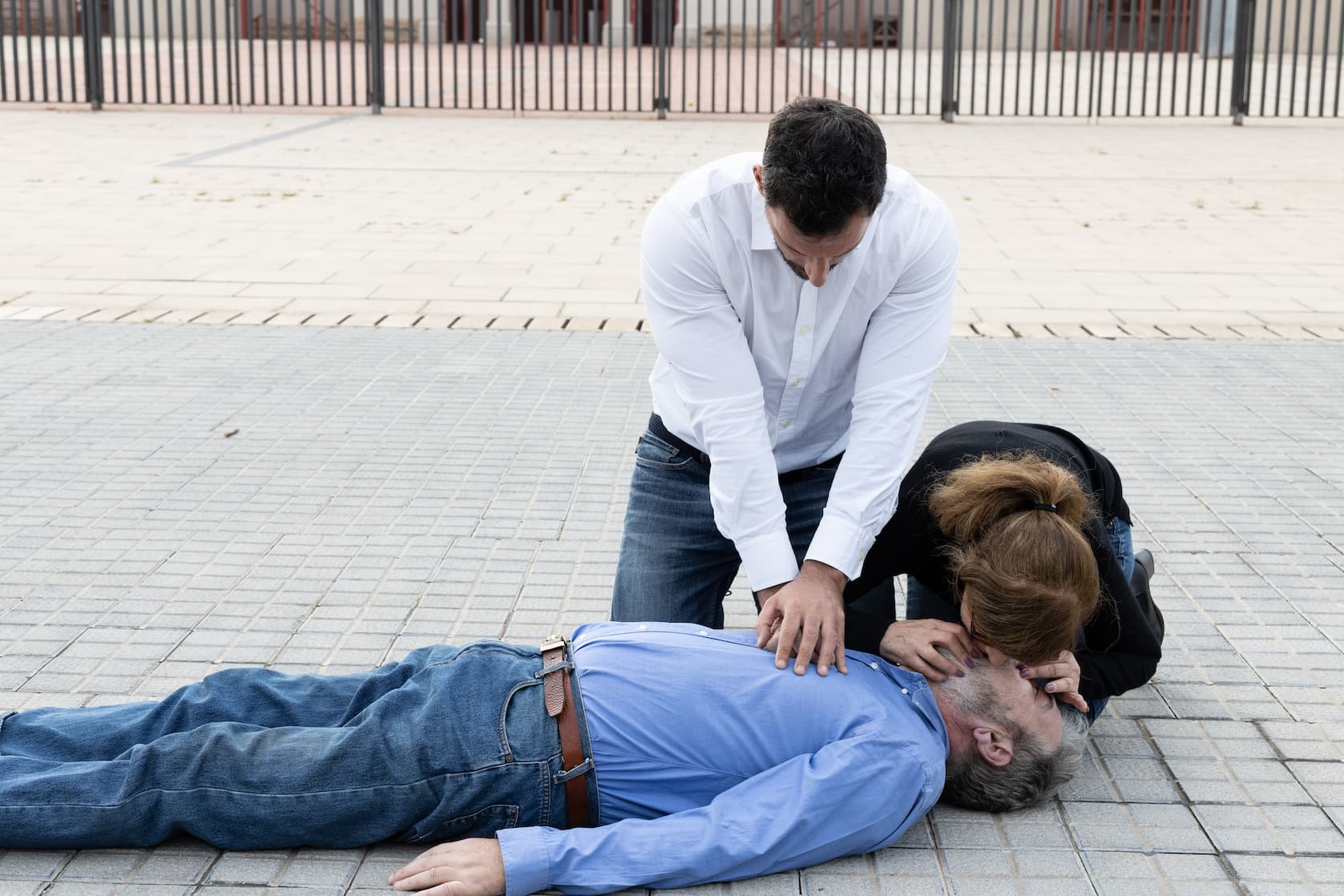
Two bystanders giving CPR and rescue breaths to a man on the ground under Good Samaritan aid

You might wonder why a life-saving skill needs a “best by” date. After all, once you learn how to ride a bike, you don’t usually forget. However, CPR is a high-stakes clinical skill that relies on precision. Organizations like the American Heart Association (AHA) and the American Red Cross set a two-year expiration for several vital reasons.

First, medical science is always evolving. Every few years, the International Liaison Committee on Resuscitation (ILCOR) reviews global cardiac data. They might find that a specific compression depth or a different ratio of breaths-to-compressions saves more lives. If your certification is five years old, you are likely using outdated techniques that are less effective.

Second, “skill decay” is a very real phenomenon. Research shows that most people—including healthcare professionals—begin to lose the physical muscle memory required for high-quality chest compressions within just six months of training. By the two-year mark, your ability to perform effective CPR has significantly diminished. The expiration date acts as a safety “reset” to ensure you remain competent. This is why CPR recertification in Columbus is crucial.

Is there a grace period for expired CPR cards?

A common myth is that there is a 30-day “grace period” after your card expires. In the past, some providers allowed this, but today, most major certifying bodies have eliminated it.

If your card expires on the 31st of the month, you are officially uncertified on the 1st of the next month. This means:

  • You cannot legally claim to be CPR certified.
  • You may be ineligible to enroll in a “Renewal” or “Update” course and may have to take the full “Provider” course again.
  • Your employer may not allow you to remain on the schedule.

While some individual employers might give you a few weeks to get recertified, the certification itself is technically invalid the moment it passes the expiration date printed on the card.

Can you still perform CPR if your certification is expired?

Yes, you can—and should—perform CPR in an emergency even if your card has expired. Life-saving doesn’t require a valid piece of plastic; it requires action. If you witness a cardiac arrest, your primary goal is to keep blood flowing to the brain until paramedics arrive.

From a legal standpoint, most states have “Good Samaritan Laws” that protect laypeople who act in good faith during an emergency. These laws generally do not require you to have an active certification to be protected, as long as you are acting as a reasonable person would in that situation. However, for professionals like nurses, teachers, or lifeguards, the legal landscape is different, as they may be held to a higher standard of care based on their professional obligations.

How does an expired certification affect your job?

For many professions, a valid CPR or Basic Life Support (BLS) card is a non-negotiable requirement of employment. If you are a nurse, dental assistant, daycare provider, or fitness trainer, an expired card is more than a nuisance; it’s a compliance violation.

  • Immediate Suspension: Many healthcare facilities use tracking software that alerts management when a certification lapses. This can result in being “taken off the schedule” immediately until proof of renewal is provided.
  • Loss of Professional Liability Insurance: Some professional insurance policies are contingent upon maintaining all required certifications. If your CPR card expires, you might not be covered in the event of a workplace incident.
  • Career Stagnation: If you are applying for a new job, an expired certification can stall your application. Most employers will not hire a candidate who isn’t fully compliant with safety requirements.

What is the difference between a renewal course and a full course?

When your certification is current, you are eligible for a Renewal Course (sometimes called an “Update” or “Review” course). This is the preferred path for most people because:

  1. It’s Faster: Renewal courses focus on updates and skills testing rather than teaching every concept from scratch.
  2. It’s Cheaper: Because the class time is shorter, the cost is typically lower.
  3. It’s Less Intensive: It assumes you already have a foundation of knowledge and just need to shake off the rust.

If you let your certification expire for a long period (usually more than 30 days, though this varies by provider), you will likely be required to take the Full Provider Course. This means spending 4 to 6 hours in a classroom covering every basic detail, even the parts you still remember. Staying on top of your renewal date saves you both time and money.

How do you find your expiration date?

If you aren’t sure when your card expires, don’t guess. You can verify your status in a few ways:

  • Check the Card: Most digital or physical cards clearly list the “Recommended Renewal Date” or “Expiration Date.”
  • AHA eCard Search: If you were certified through the American Heart Association, you can visit their website and enter your name and email to look up your digital eCard.
  • Red Cross Tool: The Red Cross offers a similar lookup tool where you can scan a QR code or enter your certificate ID.
  • Contact Your Training Center: If you took a class at a local site like CPR Classes Near Me, they keep records of your training and can often send you a copy of your card.

What are the steps to renew an expired certification?

Renewing doesn’t have to be a headache. Follow these steps to get back into compliance:

  1. Identify the Correct Course: Do you need Heartsaver (for the general public) or BLS (for healthcare providers)? Taking the wrong course won’t satisfy your employer.
  2. Choose Your Learning Style: * In-Person: Traditional classroom setting with an instructor.
    • Blended Learning: You complete the “book work” online at your own pace and then visit a center for a quick hands-on skills check.
  3. Schedule the Class: Don’t wait until the last minute. Classes can fill up quickly.
  4. Complete the Skills Test: You must demonstrate high-quality compressions and proper AED use on a manikin to earn your new card.
  5. Submit Proof: Once you receive your digital card, save a copy and email it to your supervisor or HR department immediately.

Why should you choose local training over purely online courses?

You may see ads for “100% Online CPR Certification” that claim you can get certified in 15 minutes. Be careful. OSHA and most employers do not recognize CPR certifications that do not include a hands-on skills assessment.

CPR is a physical skill. You cannot learn the correct depth of a compression or the feel of a chest recoil by clicking a mouse. Choosing a local provider like CPR Classes Near Me ensures that you receive hands-on training from a certified instructor. This not only makes you compliant with workplace rules but also gives you the confidence that you could actually save a life if the moment arrived.

Conclusion

An expired CPR certification is more than just a lapse in paperwork; it’s a lapse in your readiness to help someone in their most desperate moment. Whether you are a healthcare professional keeping your license active or a parent wanting to keep your family safe, staying current with your training is essential. By renewing on time, you avoid the hassle of retaking a full course, stay compliant with your job, and—most importantly—keep your life-saving skills sharp.

Don’t wait until your card is invalid. Check your date today, and if you’re due for a refresh, get back into the classroom.

Ready to renew your life-saving skills? Contact CPR Classes Near Me today to find a convenient local class and get your certification back on track!

Frequently Asked Questions

Does my CPR certification ever truly expire? 

Yes. Almost all reputable CPR certifications from the AHA or Red Cross are valid for exactly two years from the end of the month they were issued. After that date, the card is no longer valid for professional or legal compliance.

Can I renew my certification if it has already expired? 

Yes, you can always get recertified. However, if your card has been expired for more than a few weeks, you will likely have to take a “Full Provider” course rather than a shorter “Renewal” course.

Will my employer pay for my CPR renewal? 

Many employers, especially in healthcare and education, will cover the cost of the course or provide the training in-house. Check with your HR department before paying out of pocket.

What is the “blended learning” option for renewal? 

Blended learning allows you to complete the classroom portion of the training online through a series of videos and quizzes. Afterward, you must meet with an instructor in person for about 30-45 minutes to prove you can physically perform the skills.

Is BLS different from CPR? 

Basic Life Support (BLS) is a higher level of CPR training designed for healthcare professionals (nurses, doctors, EMTs). It includes advanced techniques like bag-valve-mask ventilation and multi-rescuer coordination. If your job requires BLS, a standard Heartsaver CPR card will not be sufficient.

Top 5 Reasons to Get CPR Certified in Austin This Year

Austin is a city that never stops moving. From the bustling crowds on South Congress to the hikers conquering Mount Bonnell and the swimmers cooling off at Barton Springs, our community is vibrant, active, and alive. But with such an active lifestyle comes an increased responsibility to look out for one another. Have you ever wondered what you would do if a medical emergency struck while you were enjoying a day out in the city?

Getting CPR certified isn’t just a box to check for a job application; it is a vital skill that empowers you to protect the people around you. Whether you are a healthcare professional, a concerned parent, or just an Austinite who wants to be prepared, the time to act is now. At CPR Classes Near Me, we believe that everyone should have the confidence to save a life. Here are the top five reasons why you should get CPR certified in Austin this year.

1. Do You Want the Power to Save a Life?

The most compelling reason to learn CPR is arguably the most obvious: it saves lives. Sudden Cardiac Arrest (SCA) does not discriminate. It can happen to anyone, anywhere, at any time—regardless of age or fitness level. According to the American Heart Association, more than 350,000 cardiac arrests occur outside of the hospital each year in the United States.

Why Seconds Matter:

  • Immediate Action: Survival rates drop by 7-10% for every minute that passes without CPR.
  • The Gap: Emergency services in Austin are world-class, but traffic and distance can sometimes delay response times.
  • The Bridge: You act as the bridge between the emergency and the ambulance. By performing chest compressions, you keep oxygenated blood flowing to the brain and other vital organs.

When you take a class with CPR Classes Near Me, you aren’t just memorizing a textbook. You are learning hands-on techniques that turn you from a helpless bystander into a lifesaver.

2. Is Your Career Ready for the Next Step?

Austin’s job market is booming, and competition is fierce. Did you know that CPR certification is a requirement for many of the city’s fastest-growing industries? It is no longer just for doctors and nurses. Employers across the board are looking for candidates who bring extra value and safety to the workplace.

Industries Requiring Certification:

  • Healthcare: RNs, CNAs, and medical office personnel.
  • Education: Teachers, daycare providers, and coaches.
  • Fitness: Personal trainers, yoga instructors, and gym staff.
  • Construction & Trades: Electricians and safety officers.
  • Hospitality: Hotel staff, lifeguards, and event coordinators.

Even if your employer doesn’t explicitly require it, having “AHA BLS Certified” on your resume demonstrates responsibility and a proactive attitude. Our Austin courses are fully accredited by the American Heart Association, ensuring your card is recognized and respected by employers nationwide.

3. Are You Prepared for Austin’s Active Lifestyle?

We live in one of the most active cities in the country. Austinites love their outdoor activities, from kayaking on Lady Bird Lake to attending massive events like ACL and SXSW. While this active culture is great for our health, it also increases the exposure to potential emergencies such as heatstroke, dehydration leading to cardiac events, or drowning accidents.

Common Austin Scenarios:

  • Heat-Related Illness: Texas summers are brutal. Heat exhaustion can escalate quickly.
  • Water Safety: With so many pools, creeks, and lakes, water safety is paramount.
  • Crowd Control: Large festivals can make it difficult for EMS to reach a victim instantly.

By getting certified, you ensure that your fun weekend doesn’t turn into a tragedy. You will be the person in your hiking group or running club who knows exactly what to do when things go wrong.

4. Can You Protect Your Loved Ones at Home?

It is a frightening statistic, but it is one you need to know: nearly 70% of out-of-hospital cardiac arrests happen at home. This means that if you ever have to perform CPR, the person you are saving will likely be a spouse, a parent, a child, or a friend.

The “Home Field” Advantage:

  • Recognition: You will learn to recognize the signs of a stroke or cardiac arrest immediately.
  • Confidence: Panic is the enemy. Training gives you the muscle memory to act without hesitation.
  • Child & Infant Safety: Our classes cover techniques for adults, children, and infants, ensuring you are ready to protect your entire family.

Don’t leave the safety of your family up to chance. Taking a few hours to attend a class at our convenient North Lamar or Pflugerville locations could mean the difference between losing a loved one and celebrating another birthday with them.

5. Do You Want to Build Unshakable Confidence?

Have you ever frozen in a stressful situation? It is a natural human response, but it is one that training can overcome. One of the most underrated benefits of CPR certification is the psychological boost it provides.

From Panic to Power:

  • Overcoming Helplessness: Knowing you have the skills to intervene removes the feeling of helplessness during a crisis.
  • Leadership: In an emergency, people look for a leader. Your training allows you to take command of the scene, delegate tasks (like calling 911), and administer care.
  • Peace of Mind: You walk through the world with a little less anxiety, knowing you can handle the worst-case scenario.

Our instructors at CPR Classes Near Me are experienced professionals who create a low-stress, high-impact learning environment. We use real-world scenarios to ensure you leave the classroom feeling ready, not overwhelmed.

Why Choose CPR Classes Near Me in Austin?

You have options for training, but we pride ourselves on being the premier choice for Austin residents. We understand that your time is valuable and your need for quality is high.

  • Same-Day Certification: We don’t make you wait. You will receive your AHA BLS eCard the very same day you complete the class.
  • Guaranteed Acceptance: Our certifications are American Heart Association aligned, meaning they are accepted by virtually every employer.
  • Convenient Locations: Whether you are in Central Austin (North Lamar Blvd) or further north in Pflugerville (Old Austin Hutto Rd), we have a classroom near you.
  • Affordable Pricing: With classes starting at just $59.95, we make life-saving training accessible to everyone.

Conclusion

The decision to get CPR certified is a decision to value life. Whether motivated by career requirements, family safety, or simply the desire to be a good neighbor in our beautiful city, the benefits are undeniable. Don’t wait for an emergency to wish you were prepared.

Join the thousands of Austinites who have already taken the step to become certified lifesavers. It takes just a few hours of your time, but the impact lasts a lifetime.

Ready to get started? Contact CPR Classes Near Me today to book your spot!

Frequently Asked Questions (FAQ)

How long does the CPR class take in Austin?

Our American Heart Association (AHA) Basic Life Support (BLS) classes typically take about 3.7 to 4 hours. We value your time and ensure the course is efficient while covering all necessary video modules and hands-on skills practice.

Will I get my CPR card the same day?

Yes! At CPR Classes Near Me, we issue your American Heart Association BLS eCard the same day you successfully complete the class. You won’t have to wait days or weeks to provide proof of certification to your employer.

Is this certification accepted by employers in Austin?

Absolutely. We provide American Heart Association (AHA) certification, which is the gold standard in the industry. It is universally accepted by healthcare organizations, hospitals, schools, and construction companies throughout Texas and the United States.

Do I need to bring anything to the class?

You generally do not need to bring any special equipment. We provide all the necessary training materials, including mannequins and AED trainers. We recommend wearing comfortable clothing since you will be practicing hands-on compressions.

Where are your Austin classrooms located?

We have two convenient locations to serve the Austin area. Our central location is at 5540 N Lamar Blvd, Austin, TX 78756. Our North location serves Pflugerville and surrounding areas at 1006 Old Austin Hutto Rd, Pflugerville, TX 78660.

Can I take the class online?

While there are online components available for some courses, the American Heart Association requires an in-person skills session for full certification. Most employers will not accept a certification that was obtained entirely online without a hands-on skills evaluation. Our classes provide the required in-person training.