Who Needs What? The Ultimate Guide to CPR Certification Requirements by Job
Whether you are starting a new career in healthcare, coaching a youth soccer team, or managing a high-voltage construction site, one question inevitably pops up: “Which CPR class do I actually need?”
It’s a fair question. If you pick the wrong one, you might waste a Saturday in a class that your boss won’t accept. If you skip it entirely, you could be out of compliance with OSHA or state licensing boards.
At CPR Classes Near Me, we believe that life-saving skills should be accessible and easy to understand. This guide breaks down CPR requirements role-by-role, so you can book the right session with total confidence.
Why is CPR certification required for so many different jobs?
The simple answer is safety and liability, but the real reason is “the four-minute rule.” Research shows that when a person’s heart stops, brain damage begins within four to six minutes.
OSHA (the Occupational Safety and Health Administration) generally requires that if your workplace is not in “near proximity” (defined as 3–4 minutes) to a hospital or clinic, the employer must have someone on-site trained to provide first aid and CPR.
Beyond the legal requirements, having staff who can react calmly in a crisis is a massive asset for any business. It protects your customers, your employees, and your reputation.
What are the CPR requirements for healthcare professionals?
If you work in a clinical setting, “standard” CPR isn’t enough. You are considered a professional rescuer, and your training reflects that.
Doctors and Registered Nurses (RN/LPN)
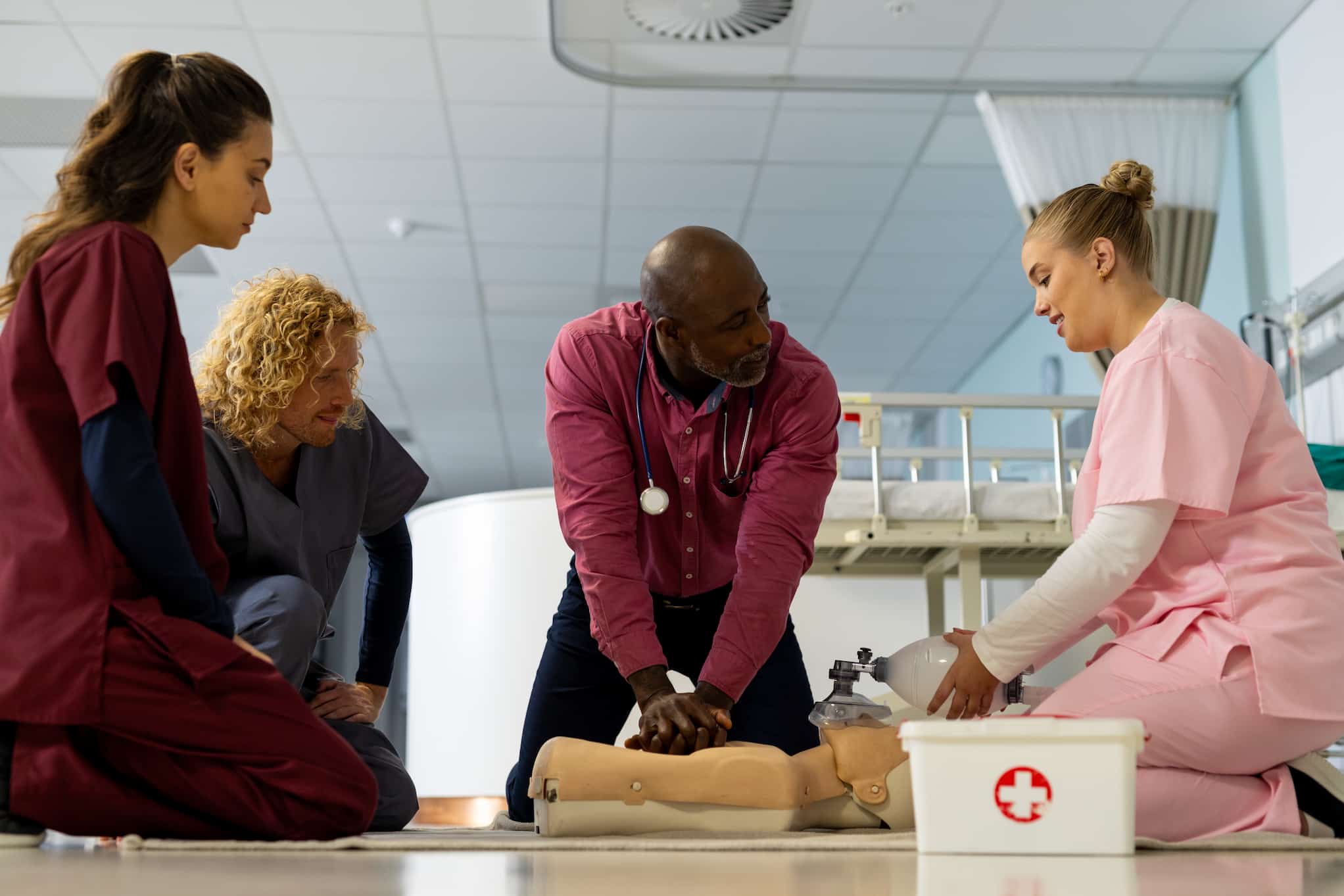
Healthcare providers are almost always required to hold a Basic Life Support (BLS) certification. Unlike community classes, BLS focuses on:
- Two-rescuer CPR techniques.
- Bag-valve-mask (BVM) ventilation.
- Team dynamics in a hospital or clinic setting.
- Pulse checks and advanced assessment.
Dentists and Dental Hygienists
Most state dental boards require BLS certification for licensure. Because sedation is often used in dental offices, the risk of respiratory or cardiac distress is higher, making professional-level training mandatory.
Pharmacists and Pharmacy Techs
With the rise of pharmacists administering vaccinations, many states now mandate that they maintain BLS certification to handle potential allergic reactions or syncopal (fainting) episodes.
Do teachers and childcare providers need specialized CPR?
Yes. When you work with children, the protocols change. Pediatric CPR focuses heavily on respiratory issues, as children are more likely to stop breathing before their heart stops.
K-12 Teachers and School Staff
Most states require teachers to be certified in Heartsaver® Pediatric CPR/AED. This covers:
- Adult CPR: For staff and older students.
- Child CPR: For elementary-aged kids.
- Infant CPR: Essential for preschool and daycare workers.
- Choking Relief: Specific techniques for small children.
Daycare Workers and Nannies
Licensing for childcare centers is strict. You usually need a certification that specifically lists “Pediatric” on the card. Employers often look for courses that are approved by the EMSA (Emergency Medical Services Authority) or similar state-level agencies.
What are the CPR standards for the fitness and sports industry?
In a gym, people are pushing their bodies to the limit. High-intensity interval training (HIIT), heavy lifting, and competitive sports naturally increase the risk of cardiac events.
Personal Trainers and Group Fitness Instructors
Most major certifying bodies (like NASM, ACE, or ISSA) will not issue or renew a personal training credential without a valid CPR/AED certificate. For this role, a Heartsaver® CPR/AED course is the gold standard. It ensures you know how to:
- Recognize the signs of a heart attack vs. overexertion.
- Use an Automated External Defibrillator (AED) quickly.
- Perform high-quality compressions on an adult.
Coaches and Athletic Trainers
High school and collegiate coaches are often required by their athletic associations to have both CPR and First Aid. Since heatstroke and concussions are common in sports, the First Aid component is just as vital as the CPR.
Which trades and industrial jobs require OSHA-compliant CPR?
Construction and trade work are high-risk environments. Between electrical hazards, extreme heat, and heavy machinery, the “first responder” is often a coworker.
Electricians and Linemen
OSHA Standard 1910.269 is very specific: employees working on energized lines must have CPR training. If you work in a team of two or more, at least two people must be trained. If you are a new hire, you usually have 3 months to get certified.
Construction Workers and Contractors
While not every single person on a job site may be required by law to have a card, many general contractors require it for safety compliance. At a minimum, there must be a designated “safety officer” or first aid provider on-site at all times.
Logging and Commercial Diving
These are two of the most dangerous jobs in the world. OSHA mandates that all logging employees and all commercial dive team members maintain current CPR and First Aid certification.
Are there CPR requirements for corporate office roles?
In a standard office setting, CPR is rarely “mandatory” by law, but it is highly recommended.
Workplace Safety Teams (ERT)
Many large corporations have Emergency Response Teams (ERT). These are volunteer employees who are trained to bridge the gap until 911 arrives. They typically need:
- CPR/AED certification.
- Standard First Aid.
- Bloodborne Pathogens training (to handle cleanups safely).
Flight Attendants and Cabin Crew
The FAA requires flight attendants to be trained in CPR and the use of the onboard AED. Since you are 30,000 feet in the air, you are the only medical help available for the first 20 minutes of an emergency.
How do you choose the right certification level?
If you’re still unsure, follow this simple hierarchy:
- Are you a licensed medical professional? Choose BLS (Basic Life Support).
- Do you work with children? Choose Pediatric CPR/AED & First Aid.
- Do you work in an office, gym, or construction site? Choose Heartsaver® CPR/AED & First Aid.
- Are you a parent or community member? Choose Community CPR (usually non-certification) or Heartsaver®.
What should you look for in a CPR class?
Not all “certificates” are created equal. Many online-only courses offer a 15-minute video and a PDF printout. Warning: Most employers and regulatory bodies (like OSHA or state nursing boards) will not accept a certificate that does not include an in-person skills assessment.
A valid, high-quality course should include:
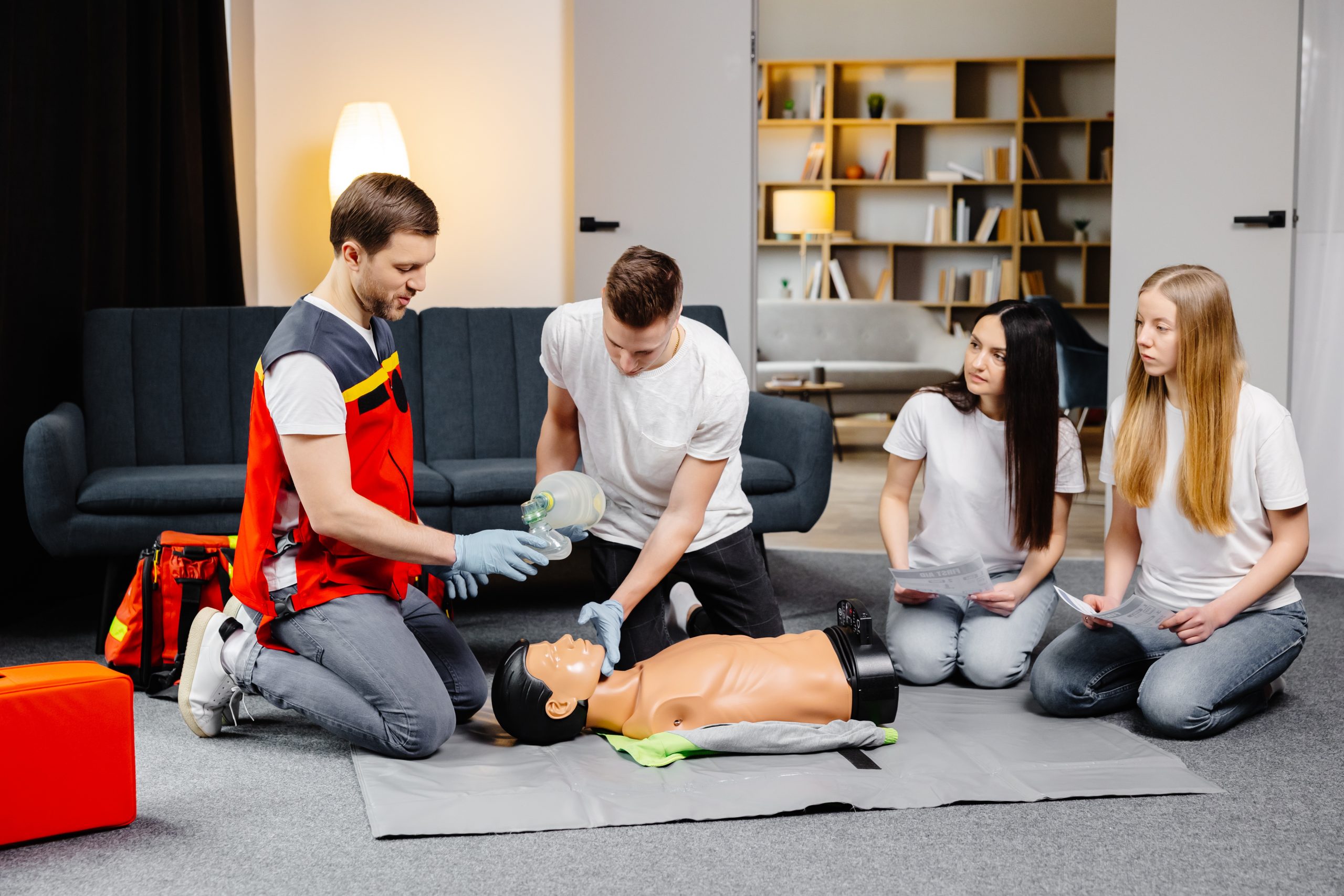
- Hands-on practice: You must physically practice compressions on a manikin.
- AED training: You should practice with a trainer unit to understand the prompts.
- A reputable curriculum: Look for courses based on the latest American Heart Association (AHA) or Red Cross guidelines.
- An instructor: Someone to correct your hand placement and compression depth in real-time.
Conclusion
Getting the right CPR certification isn’t just about checking a box for your employer; it’s about having the confidence to save a life when the unthinkable happens. Whether you are a nurse needing BLS or a coach needing a Heartsaver card, knowing the requirements for your specific role ensures you stay compliant and prepared.
Don’t wait until an emergency happens to realize your skills are out of date. Stay ahead of the curve and keep your workplace safe.
Contact CPR Classes Near Me today to find a local, certified instructor and get your career-ready certification in just a few hours!
Frequently Asked Questions
Does my CPR certification expire?
Yes. Most CPR certifications are valid for two years. After 24 months, your skills begin to “fade,” and the science may have updated, so you are required to take a renewal or “challenge” course to maintain your credential.
Can I get my CPR certification entirely online?
Technically, you can buy a “certificate” online, but it is rarely accepted for work. Most employers require “Blended Learning” (online theory + in-person skills) or a fully in-person class. If your job depends on it, always ensure there is a hands-on component.
What is the difference between CPR and BLS?
Think of CPR as the “general” version and BLS as the “professional” version. CPR classes are for the general public (lay rescuers). BLS is more rigorous, covers team-based scenarios, and is required for anyone working in a hospital or clinical environment.
Do I need First Aid with my CPR?
It depends on your job. Teachers, construction workers, and coaches almost always need the “CPR/AED & First Aid” combo. Healthcare workers usually just need “BLS,” as their medical training covers the first aid portion.
Is an AED hard to use?
Not at all. Modern AEDs are designed to be used by anyone. Once you turn it on, a voice walks you through every step. The machine will even analyze the heart rhythm and tell you if a shock is necessary—it won’t shock someone who doesn’t need it.