
CPR Certification for Substitute Teachers and Education Support Staff
Schools are dynamic, high-energy environments where the unexpected happens daily. While full-time educators often receive mandatory safety training before the school year begins, guest educators and auxiliary staff cannot afford to be left in the dark. Obtaining a valid CPR certification for substitute teachers and education support staff is not just a resume booster—it is a critical layer of protection for students.
When a medical emergency strikes in a classroom, cafeteria, or school bus, every second counts. The school nurse may be on the opposite side of the campus, and first responders might be minutes away. In these crucial moments, the adult closest to the student must take immediate action to sustain life until professional help arrives.
This is exactly why having trained professionals in every corner of a school building is vital for campus safety. Whether you are stepping into a new classroom for the day or driving the afternoon bus route, you need the confidence to act swiftly. In this comprehensive guide, we will explore why emergency readiness matters, what life-saving skills you will learn, and how to get fully certified.
If you need to meet district requirements quickly, contact CPR Classes Near Me today for hands-on, employer-accepted training.
Why Is CPR Certification for Substitute Teachers an Essential Requirement for School Safety?
Substitute teachers walk into unfamiliar environments every single day. Unlike permanent staff, you may not know the individual medical histories of the thirty students sitting in front of you. A student could have a severe allergy, an undiagnosed heart condition, or a history of seizure disorders that you are unaware of.
Because of this unpredictability, CPR certification for substitute teachers is an indispensable tool. When sudden cardiac arrest or a severe choking incident occurs, the brain begins to lose oxygen within minutes. Irreversible brain damage can happen long before paramedics even arrive at the school’s front office.
Being certified means you are never helpless in a crisis; you become the immediate first responder for that classroom. When evaluating campus safety, administrators often look at the “Chain of Survival.” The very first link in this chain is immediate recognition and early CPR, making your presence and your rapid intervention critical to a positive outcome.
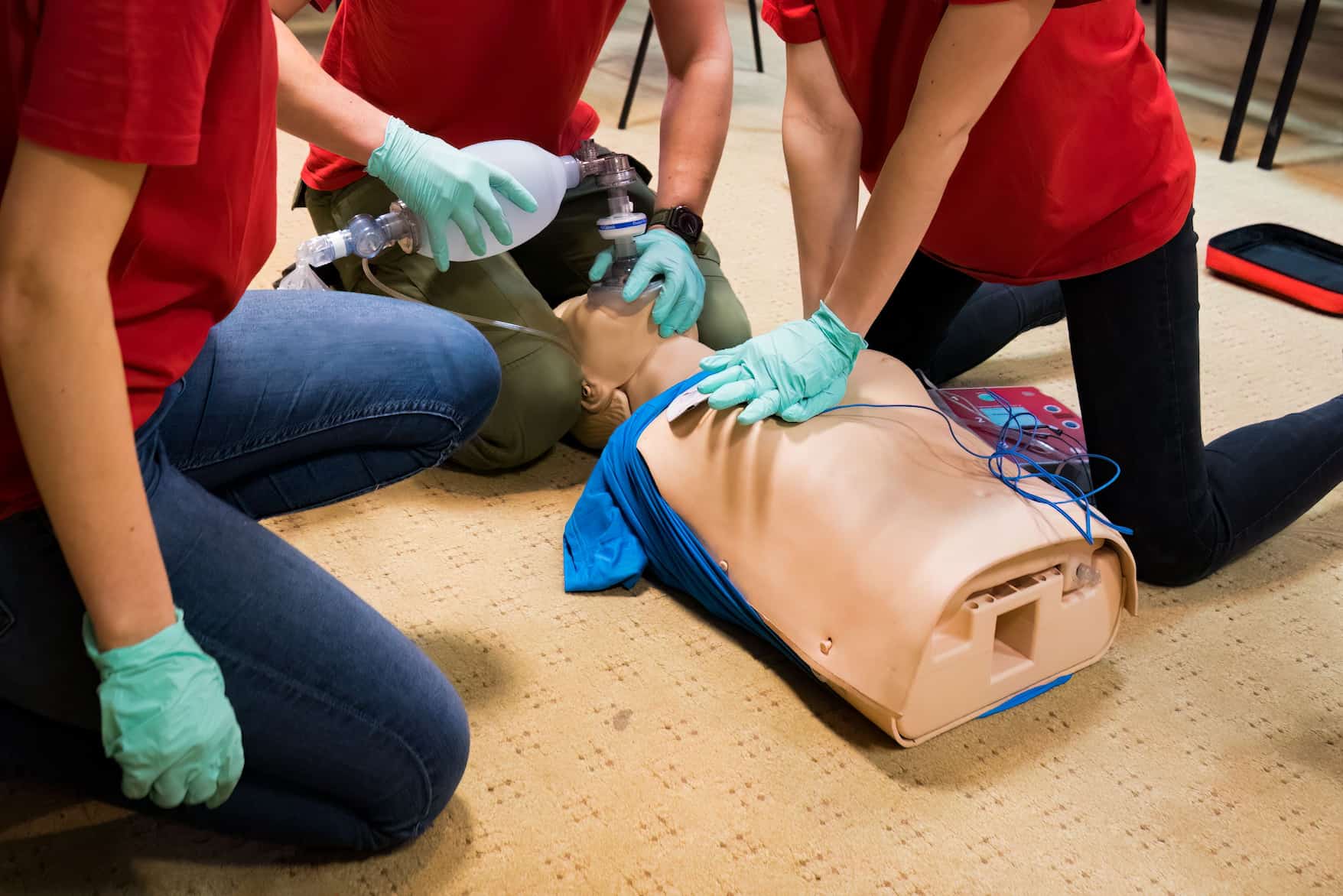
Many school districts recognize this reality and now mandate that all short-term and long-term substitute teachers hold a valid American Heart Association (AHA) certification card. Taking an in-person class builds the physical muscle memory needed to perform chest compressions correctly under pressure. Hands-on practice ensures that if a student collapses, your training automatically kicks in.
How Does Hands-On Pediatric CPR Training Prepare Education Support Staff for Emergencies?
Education support staff—including paraprofessionals, cafeteria workers, custodians, and bus drivers—are the backbone of any school facility. You interact with students in transitional areas where accidents are highly likely to happen. The playground, the noisy lunchroom, and the moving school bus are common sites for unpredictable medical emergencies.
For cafeteria workers and lunch monitors, the most immediate threat is a severe choking incident. A loud, crowded cafeteria can quickly mask the silent signs of a student with a blocked airway. Specialized training teaches you how to recognize the universal signs of choking and apply the Heimlich maneuver safely to a child or adolescent.
School bus drivers face a uniquely isolated environment during their daily routes. If a child stops breathing while the bus is on a busy highway, the driver is the only adult available to help. Proper training gives drivers the tactical skills to safely pull over, assess the student, and begin life-saving compressions while communicating with emergency dispatch.
Custodians and maintenance staff also benefit heavily from this training, as they often work in gymnasiums and outdoor facilities before and after standard hours. If a student-athlete collapses during early morning practice, the custodial staff might be the only other people on campus. Their ability to deliver immediate chest compressions can mean the difference between life and death.
What Specific Life-Saving Skills Do Substitute Teachers Learn in a Basic Life Support Class?
When you step into a professional training center, the goal is to transform anxiety into actionable confidence. A premium certification course covers a wide spectrum of emergency responses tailored to different age groups. Schools serve everyone from pre-K toddlers to high school seniors, so absolute versatility is key.
Here are the core skills you will master during a high-quality, instructor-led session:
- Adult, Child, and Infant CPR: You will learn the critical differences in compression depth and hand placement for various body sizes. This ensures you can help anyone, from a small kindergartener to a fellow staff member.
- Automated External Defibrillator (AED) Operation: Schools are increasingly equipped with public access AEDs in hallways and gyms. You will learn how to turn on the device, follow its vocal prompts, apply the pads to a bare chest, and safely deliver a shock.
- Choking Relief Methods: Instructors teach airway clearance methods for conscious and unconscious choking victims. You will practice the Heimlich maneuver and back blows on specialized mannequins.
- Safe Rescue Breathing: You will learn how to properly tilt the head, lift the chin, and deliver effective rescue breaths using a pocket mask or bag-valve mask to protect against disease transmission.
- Emergency Team Dynamics: School emergencies rarely happen in a vacuum. You will practice communicating clearly with other staff, directing someone to call 911, and sending a runner to grab the nearest AED.
Furthermore, understanding the legal protections provided by Good Samaritan laws is a vital component of the curriculum. Instructors explain how these laws protect individuals who step forward to provide good-faith assistance, removing the hesitation that often plagues bystanders.
Why Do School Districts Reject Online CPR Courses in Favor of In-Person Training?
In the fast-paced digital age, it is tempting to search for a quick online-only course just to check a box for human resources. However, the vast majority of school districts strictly reject online-only certificates for educators. There is a very important, safety-driven reason for this firm policy.
Cardiopulmonary resuscitation is a physical, demanding skill, not just a cognitive concept. You must push hard and fast in the center of the chest, depressing at least two inches for an adult. An online video cannot monitor your posture, correct your hand placement, or measure the depth and recoil of your compressions.
The American Heart Association sets the gold standard for emergency cardiovascular care in the United States. Their guidelines stipulate that true emergency competency requires physical evaluation by a certified instructor. During an in-person session, an expert watches your technique closely and provides real-time, corrective feedback.
When hiring substitute teachers and support staff, administrators want the absolute peace of mind that comes with AHA-approved, hands-on training. They know that a certificate earned in a physical classroom translates to a much higher chance of survival for a student in distress.
How Can Active CPR and First Aid Certification Boost a Substitute Teacher’s Career?
Substitute teaching is a competitive field, especially for those hoping to secure a long-term placement or a permanent contract with a desirable district. Principals and hiring managers look for candidates who bring extra value and a sense of reliability to their campus.
Holding an active CPR certification for substitute teachers immediately elevates your resume to the top of the pile. It signals to administration that you take student safety seriously and have invested your own time into professional development. You are no longer just a guest in the building; you are a fully prepared educational partner.
Furthermore, many physical education classes, field trips, and after-school programs require a certified adult to be present at all times. If you are qualified to step into these specialized roles, you become a much more versatile asset to the school’s scheduling coordinator. You will likely receive more calls for high-demand, consistent assignments.
First aid training is an excellent complementary skill that rounds out your emergency profile. Knowing how to handle severe allergic reactions, manage bleeding, or stabilize a suspected sprain makes you invaluable. When you apply for your next district role, a valid AHA certification card proves you are ready for any challenge.
What Are the Most Common Classroom Medical Emergencies Handled by Support Staff?
Schools are a microcosm of the general population, meaning any medical emergency that happens in the outside world can easily happen in a classroom. However, certain high-stress incidents are statistically more common in educational settings.
Severe allergic reactions, known as anaphylaxis, are incredibly prevalent due to peanut, dairy, and bee sting allergies. A student may accidentally consume an allergen in the cafeteria, leading to rapid airway swelling and panic. Support staff trained in emergency response can identify the symptoms and assist with life-saving medication while waiting for EMS to arrive.
Asthma attacks are another frequent occurrence, especially during recess, physical education, or seasonal transitions. If an attack becomes severe and the student stops breathing, the situation rapidly escalates to a cardiac event. Immediate recognition and intervention are necessary to prevent the heart from stopping entirely.
Additionally, choking incidents are not limited to the cafeteria environment. Younger children frequently put small objects like pen caps, erasers, or toys into their mouths during class time. A substitute teacher or teacher’s aide must be able to recognize the difference between a partial airway obstruction and a complete obstruction, immediately delivering back blows and abdominal thrusts.
Why Should Educators Choose CPR Classes Near Me for Same-Day Certification?
When you need to get certified for a school district role, you want a training provider that is efficient, professional, and universally accepted. CPR Classes Near Me is the premier destination for educators looking to fulfill their safety requirements without hassle or delay.
Our classes are completely aligned with the American Heart Association, ensuring your credentials will be accepted by school districts nationwide. We do not cut corners; we provide the exact hands-on, instructor-led training that school administrators strictly demand. Our small class sizes guarantee you get the personalized attention and mannequin practice time you deserve.
We know that substitute teachers and support staff have busy schedules and tight deadlines. That is why we offer highly flexible class times and, most importantly, same-day certification cards. You will walk out of our training center with your official AHA eCard in hand, ready to upload to your district’s HR portal immediately.
We also cater to groups and entire school districts for added convenience. If a local school needs to certify all of its paraprofessionals and bus drivers at once, our instructors can travel to your location to provide on-site training. This ensures that the entire support staff meets OSHA compliance standards simultaneously.
Conclusion
The safety of our local schools relies heavily on the physical preparedness of every adult in the building. From the substitute teacher covering a high school science lab to the bus driver navigating morning traffic, emergencies do not discriminate by job title. Earning a CPR certification for substitute teachers and education support staff is a fundamental responsibility that directly saves lives.
By mastering chest compressions, AED operation, and choking relief, you become a vital safeguard for the students in your care. You will also drastically improve your employability, easily meet strict district requirements, and gain the profound confidence that comes from knowing exactly what to do when seconds count.
Don’t wait for a tragic emergency to realize the immense importance of life-saving skills. Secure your employer-accepted AHA certification today. Contact CPR Classes Near Me to schedule your hands-on training and get your same-day eCard!
FAQ
What is the best CPR certification for substitute teachers?
The American Heart Association (AHA) Basic Life Support (BLS) or Heartsaver course is widely considered the best option. Most school districts specifically require AHA certification because of its rigorous, hands-on training standards. It ensures you are fully prepared for actual classroom emergencies.
Does education support staff need to take pediatric CPR?
Yes, anyone working in a school environment should have pediatric training. Children’s bodies require different compression depths and rescue breathing techniques than adults do. A comprehensive course will cover adult, child, and infant protocols so you are prepared for any age group.
Will school districts accept an online-only CPR card?
No, the vast majority of school districts and educational employers do not accept online-only CPR certifications. They require a hands-on skills assessment conducted in person by a certified instructor. This ensures you have the physical muscle memory to perform compressions correctly.
How long does a CPR certification class take for educators?
A standard, in-person CPR and AED class typically takes between three to four hours to complete. This timeframe includes engaging video instruction, hands-on practice with specialized mannequins, and a final skills evaluation. You will leave the classroom fully certified that same day.
How long is my CPR certification valid once completed?
Your American Heart Association CPR certification is valid for exactly two years from the date of issue. Before your card expires, you will need to take a fast-paced renewal course to refresh your physical skills and stay updated on the latest emergency medical guidelines.