Infant CPR vs Full CPR Certification: What’s the Difference?
When a medical emergency occurs, knowing how to perform CPR can mean the difference between life and death. Many parents, caregivers, and professionals wonder whether taking a specialized infant CPR class is enough, or if they need a complete, full CPR certification.
Understanding the difference between Infant CPR vs Full CPR Certification comes down to anatomical requirements, technique variations, and certification scope. Performing adult resuscitation techniques on a baby can cause severe injury, while using delicate infant techniques on an adult will be ineffective.
In this guide, you will learn the physical differences in hand placement and compression depth, why rescue breathing varies by age group, and how to choose the right class for your needs.
What Is the Main Physical Difference in Performing Infant CPR vs Adult CPR?
The main physical differences between infant and adult CPR stem directly from human anatomy. An infant’s rib cage is far more flexible, their bones are softer, and their internal organs sit closer to the chest surface.
During adult CPR, a rescuer uses the heels of both hands on the center of the chest to depress the sternum at least 2 inches, up to 2.4 inches. Applying this level of force to a baby can cause severe internal injury.
When performing CPR on an infant under 12 months old, rescuers modify their technique based on the number of rescuers present:
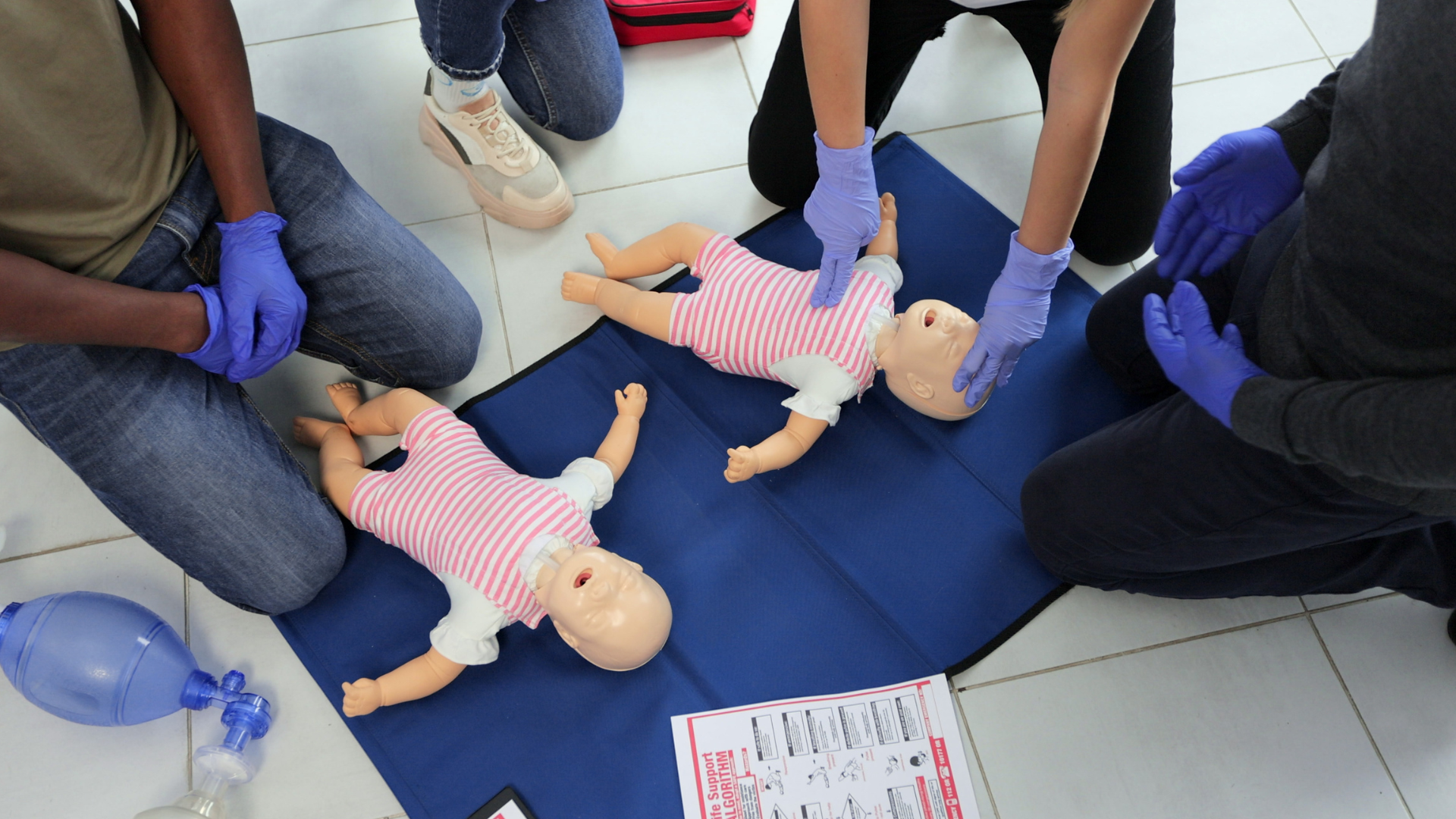
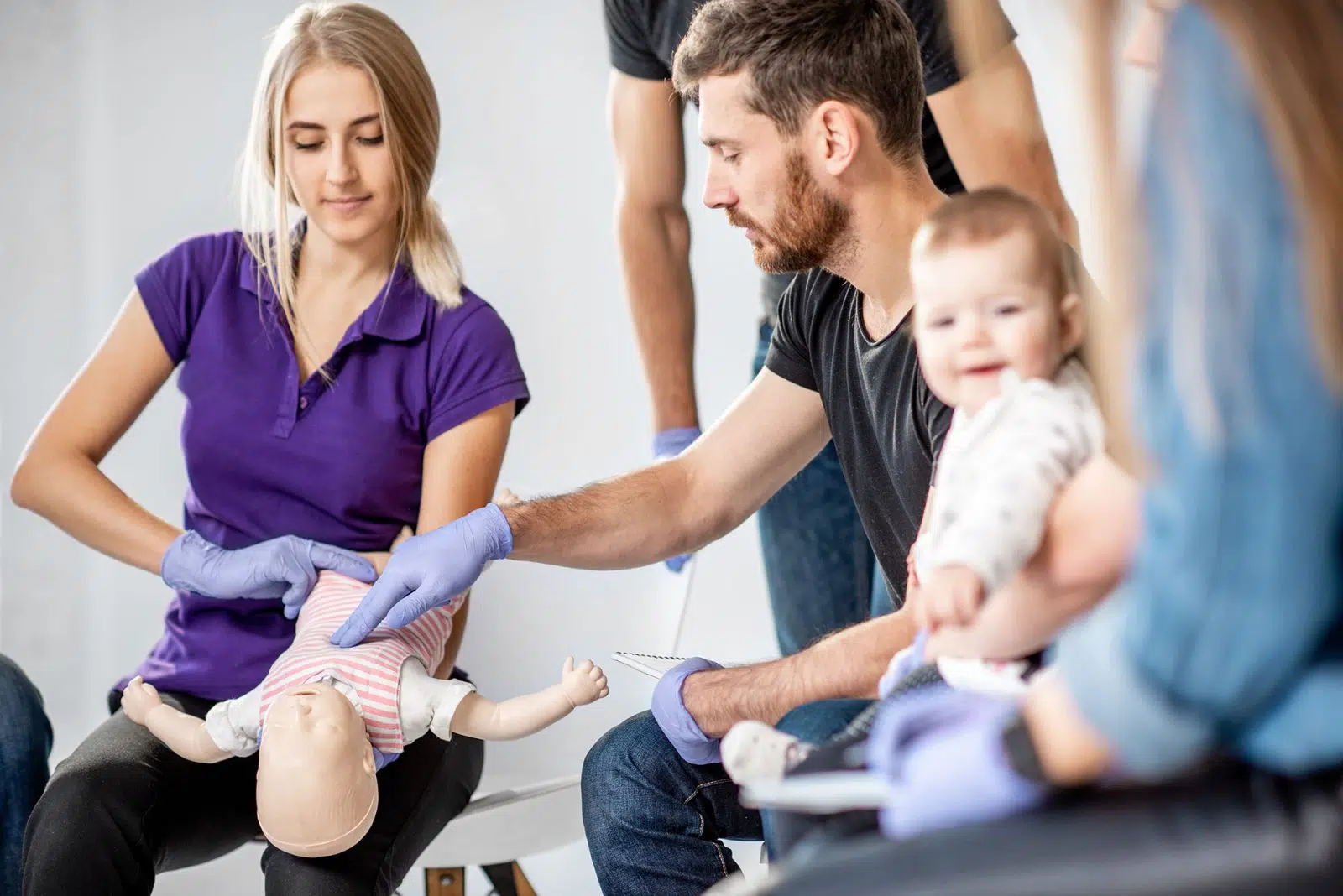
- Single Rescuer Technique: Place two fingers in the center of the chest, just below the nipple line, and compress down about 1.5 inches.
- Two-Rescuer Technique: Encircle the infant’s torso with both hands and press down on the sternum using both thumbs.
- Compression Depth: Depress the chest about 1.5 inches, which equals approximately one-third the total depth of the infant’s torso.
Airway management also differs based on age. Opening an adult’s airway requires a pronounced head-tilt and chin-lift to pull the tongue away from the back of the throat.
Doing this to a baby can pinch their flexible trachea and block their airway. An infant’s head must be kept in a neutral position, often called the “sniffing position,” where the nose points straight up toward the ceiling without tilting the head back.
Why Is Rescue Breathing Managed Differently for Infants and Adults?
Rescue breathing protocols differ between infants and adults because of body size and the underlying root causes of cardiac events in different age groups.
Adult cardiac arrest usually stems from a primary cardiac event, such as a heart attack or arrhythmia. This means an adult’s blood still contains oxygen when they collapse, making continuous chest compressions the top priority to keep blood moving to the brain.
Infants rarely experience primary heart failure. Instead, infant cardiac arrest is almost always secondary to a severe respiratory issue, including:
- Choking or foreign object airway obstruction
- Near-drowning incidents
- Severe asthma attacks or allergic reactions
- Sudden Infant Death Syndrome (SIDS) or accidental suffocation
Because oxygen deprivation causes the infant’s heart to stop, rescue breaths are vital right from the start of resuscitation.
When delivering rescue breaths to an infant, place your mouth over both the baby’s mouth and nose simultaneously to create an airtight seal. Administer gentle puffs of air from your cheeks rather than deep, forceful breaths from your lungs, and watch for the chest to gently rise. For adults, cover only the mouth while pinching the nostrils closed, delivering full breaths until the chest rises.
What Does a Full CPR Certification Course Cover Compared to Infant-Only Modules?
A full CPR certification course, such as an American Heart Association (AHA) Basic Life Support (BLS) class, is a comprehensive credential covering emergency life support for adults, children, and infants.
While an infant-only workshop focuses strictly on pediatric choking relief and infant CPR, a full CPR certification course prepares you to handle emergencies across all age groups.
In a full AHA BLS certification class, you receive comprehensive training on:
- Adult and Child Resuscitation: Step-by-step guidance on hand placement, chest compression rates between 100 and 120 beats per minute, and proper ventilation strategies.
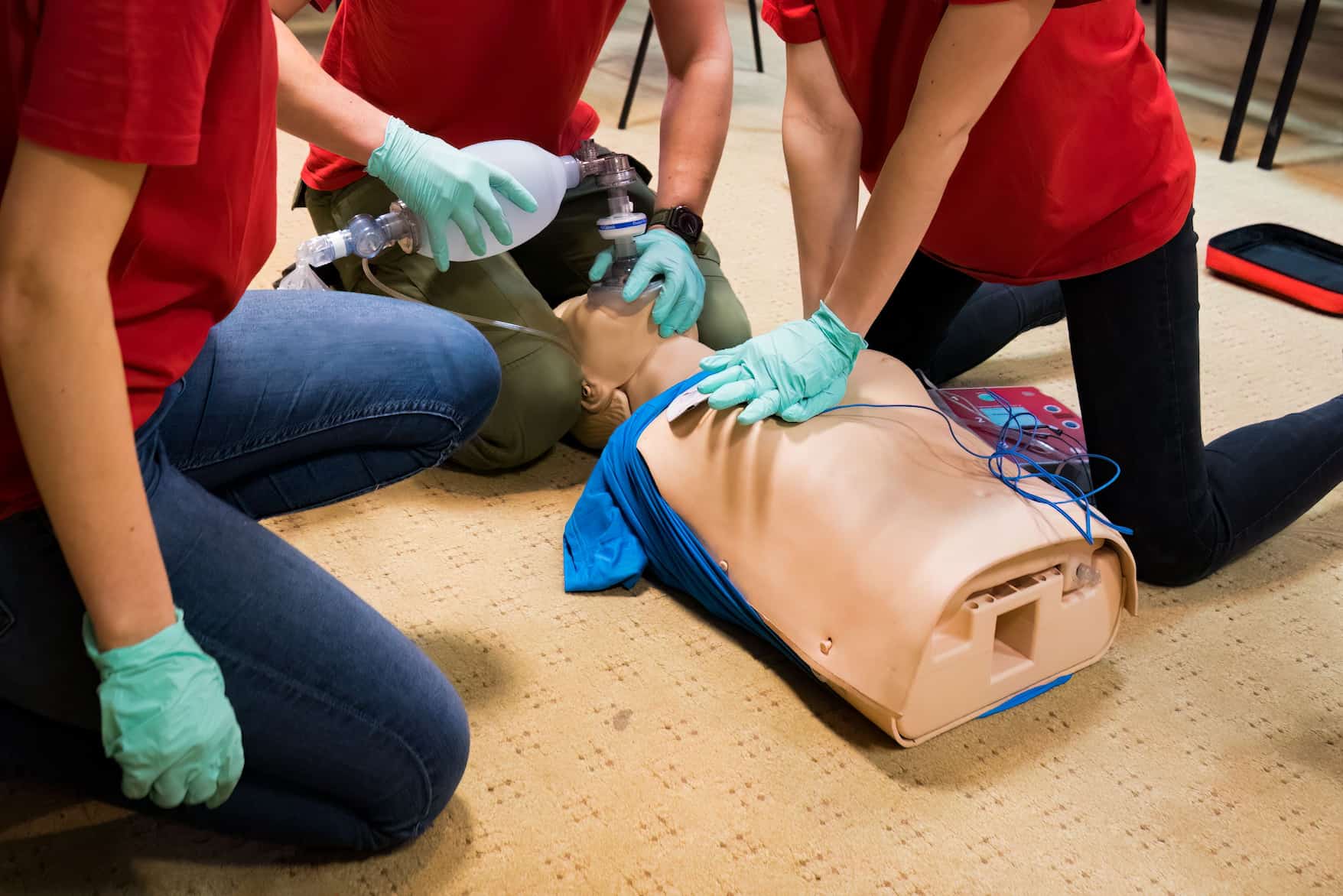
- Automated External Defibrillator (AED) Use: Hands-on practice placing and operating AED pads on adults, children, and infants using pediatric attenuators.
- Multi-Rescuer Teamwork: Coordinating compression-to-ventilation ratios, switching roles to prevent fatigue, and managing high-performance team dynamics.
- Airway Obstruction Relief: Practical techniques for clearing choking hazards in conscious and unconscious adults, children, and infants.
- Official Certification eCard: Earning an OSHA-compliant, employer-accepted AHA BLS eCard valid for two years.
Who Needs an Infant CPR Class vs a Full CPR Certification?
Deciding between an infant-focused module and a full CPR certification depends on your workplace requirements, career path, and personal life.
Who Needs a Full CPR Certification?
Employers requiring official workplace safety compliance insist on full AHA BLS or CPR and First Aid certification. Professions that require full certification include:
- Nurses, physicians, dental staff, and emergency medical technicians
- Elementary, middle, and high school teachers, coaches, and administrators
- Daycare directors, licensed childcare providers, and preschool staff
- Lifeguards, swim instructors, personal trainers, and fitness instructors
- Construction managers, electricians, and industrial safety officers
Who Benefits from Infant CPR Classes?
Informal infant CPR classes are ideal for individuals who want targeted skills to protect a baby in their care without needing a formal credential for work:
- New and expectant parents
- Grandparents and family caregivers
- Babysitters and casual neighborhood nannies
If you work as a professional nanny or commercial daycare employee, state licensing boards typically require a full adult, child, and infant CPR and First Aid certification card rather than an informal infant-only class.
How Does AED Operation Change Between Infants and Adults?
Automated External Defibrillators (AEDs) deliver an electrical shock to reset the heart’s rhythm during sudden cardiac arrest. While AEDs guide rescuers with clear voice prompts, pad placement and energy levels change based on the victim’s age.
On an adult, place one AED pad on the upper right chest and the other pad on the lower left side of the torso. On an infant, standard pads are often too large and would touch each other if placed on the front of the chest. Rescuers must place one pad directly in the center of the infant’s chest and the second pad directly in the center of the back.
AEDs also adjust the shock energy delivered to infants. Most AEDs use pediatric attenuator pads or a key to reduce the electrical dose to a safe level for a baby’s heart. If pediatric equipment is unavailable during a life-threatening emergency, you can safely use standard adult pads placed on the front and back of the infant.
Why Choose CPR Classes Near Me for Your Certification?
Earning your certification through a trusted training provider ensures your skills are up to date and your credential is accepted by employers nationwide.
At CPR Classes Near Me, we provide hands-on, American Heart Association aligned training designed to fit your schedule:
- Official AHA Certification: Earn an employer-accepted AHA BLS eCard recognized by hospitals, school districts, and corporate safety boards nationwide.
- Same-Day eCard Delivery: Complete your class and receive your official digital certification card on the very same day.
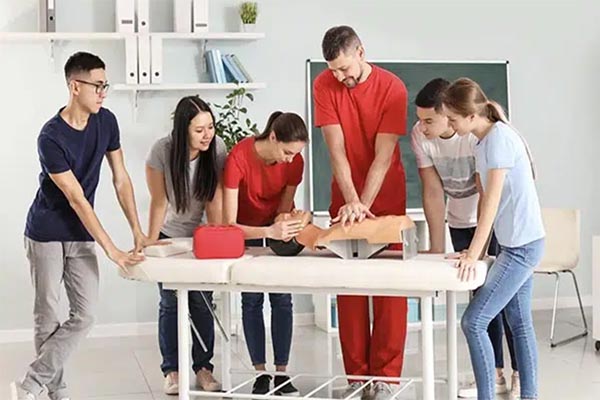
- Hands-On Learning: Practice compressions, rescue breathing, and AED operation on specialized adult, child, and infant manikins guided by experienced instructors.
- Affordable Pricing: Basic Life Support courses start at $64.95, while combination CPR and First Aid classes are offered at $84.95.
- Flexible Schedules: Select from convenient morning, evening, and weekend classes across our training locations.
Ready to Get Certified? Contact CPR Classes Near Me Today!
Whether you are a healthcare professional updating your credentials or a new parent learning life-saving emergency skills, hands-on training builds confidence when seconds count.
Understanding the differences between Infant CPR vs Full CPR Certification helps you choose the exact training you need to respond effectively in an emergency.
Don’t wait for an emergency to learn these critical skills. Contact CPR Classes Near Me today at (512) 831-4243 or visit our website to sign up for an upcoming class and receive your official certification card on the same day!
Frequently Asked Questions
Can I use adult CPR techniques on an infant in an emergency?
No, using adult CPR techniques on an infant can cause severe physical harm. Pressing down two inches with the full force of two hands can fracture an infant’s ribs and damage underlying organs. Always use two fingers or the encircle-thumb technique to compress an infant’s chest about 1.5 inches.
Is Infant CPR included in a standard BLS CPR certification course?
Yes, official American Heart Association (AHA) Basic Life Support (BLS) certification courses cover Infant CPR alongside Adult and Child CPR. Completing a full BLS certification ensures you are trained to perform CPR on victims of any age.
How often do I need to renew my CPR certification?
AHA BLS CPR certifications remain valid for two years from the issue date. To maintain your credentials and keep your workplace compliance active, you must complete a CPR renewal course every two years.
Can an AED be used on an infant under one year old?
Yes, an AED can be used on infants under one year of age. It is best to use pediatric attenuator pads that lower the energy shock. Place one pad on the center of the chest and the second pad on the center of the back to keep them from touching.
Are online-only CPR certifications accepted by employers?
Most healthcare employers, school boards, and state regulatory agencies reject online-only CPR certifications. Effective resuscitation requires hands-on skill evaluation using physical manikins. Authentic AHA certification requires an in-person, instructor-led skills evaluation.