Why the American Heart Association Defines CPR Training

Healthcare worker holding a red heart with a medical cross symbol.

TLDR (Too Long; Didn’t Read)

The American Heart Association (AHA) is the gold standard authority for CPR and resuscitation science, backed by over a century of research.

  • Mission: To fund research, fight heart disease/stroke, and set definitive, evidence-based guidelines for life-saving care globally.
  • AHA vs. CPR/BLS: CPR is the basic skill; BLS (Basic Life Support) is the advanced professional certification that includes CPR and AED use; AHA Certification is the credential that validates the training is high-quality and science-backed.
  • Why It Matters: AHA certification is the most widely accepted credential by employers (especially in healthcare), ensuring you learn the current, effective techniques required to save a life. You must complete a mandatory hands-on session to get certified.
  • Next Step: Get certified with an AHA-approved Training Site like CPR Classes Near Me Washington DC to gain the skills and credential employers trust.

Why is the American Heart Association the gold standard for CPR training?

In the United States, hundreds of thousands of cardiac arrests happen outside of a hospital setting every year. These critical moments often rely on immediate action by an everyday hero, a bystander. This is where the American Heart Association (AHA) steps in.

But what exactly is the American Heart Association? You may know them from the ubiquitous red-and-white shield logo or from the certification card you need for work. In reality, the AHA is far more than a certifying body; it is a global engine for scientific discovery and public health advocacy.

The AHA is the relentless force driving the improvement of cardiovascular health worldwide. Its mission touches everything from groundbreaking medical research to setting the definitive, evidence-based standards for life-saving skills like Cardiopulmonary Resuscitation (CPR).

For anyone seeking a reliable, high-quality CPR credential, particularly the Basic Life Support (BLS) certification, the AHA is the benchmark. Its commitment to science and education ensures that when you choose an AHA-certified course, like those offered by CPR Classes Near Me Washington DC, you’re learning the most effective techniques available to save a life.

In this comprehensive guide, we will explore the history, mission, impact, and unparalleled authority of the American Heart Association, explaining why its guidelines are the gold standard for resuscitation science and why holding an AHA eCard is the most valuable credential you can earn.

Why was the American Heart Association founded and how did it begin?

The story of the American Heart Association stretches back over a century, beginning at a time when physicians were largely resigned to the limitations of treating heart disease.

The organization was formally founded in Chicago on June 10, 1924. It was started by six pioneering cardiologists and social workers who believed that scientific research, prevention, and public education could lead to better outcomes for patients.

  • A Time of “Ignorance”: One of the founders, Dr. Paul Dudley White, famously described the early years as a period of “almost unbelievable ignorance” about cardiovascular disease. Heart disease was already America’s number one killer, yet treatment often amounted to mandatory bed rest.
  • A Shift in Focus (1948): The organization was initially established as a professional scientific society for doctors. However, a major reorganization in 1948 transformed the AHA into a nationwide voluntary health organization. This shift opened the doors for thousands of volunteers and supporters, allowing the organization to focus on crucial public fundraising and widespread community outreach.
  • Early Milestones: This reorganization paved the way for the AHA to award its first research grant and launch its first public campaign, “Heart Week,” cementing its role as a leader in both science and public engagement.

Since then, the AHA has funded groundbreaking research that led to major medical advances, including linking dietary fat and cholesterol to heart disease (1956) and contributing to the development of the artificial heart valve and the fully implanted pacemaker (1957).

What is the American Heart Association’s core mission and how does it impact public health?

The modern American Heart Association operates under a powerful, clearly defined mission, updated in 2018: “To be a relentless force for a world of longer, healthier lives.”

This mission is supported by strategic work across five key pillars, which collectively have a profound impact on public health globally:

  1. Research Funding: The AHA is the nation’s largest non-government funder of cardiovascular and cerebrovascular research. Since 1949, it has invested over $6.1 billion in science, driving discoveries that impact everything from medication development to surgical techniques and resuscitation protocols.
  2. Heart and Brain Health: The organization promotes consumer education on healthy living, nutrition, exercise, and preventative care. Programs like Go Red for Women (launched in 2004) specifically raise awareness that heart disease is the leading cause of death for women.
  3. Equitable Health: The AHA actively works to address health disparities rooted in societal structures, aiming to ensure equitable delivery and accessibility of life-saving care and resources, especially in low-resource settings.
  4. Advocacy: The AHA champions stronger public health policies, including fighting for smoke-free environments, improving emergency medical services (EMS) systems, and promoting quality standards in hospitals.
  5. Professional Education and Development: This pillar is critical for the general public and professionals alike. The AHA trains millions of people annually in CPR and advanced life support, ensuring that healthcare providers and lay rescuers have consistent, evidence-based training.

How does the AHA set the gold standard for resuscitation science?

The American Heart Association holds its ultimate authority through its role as the global leader in Emergency Cardiovascular Care (ECC) guidelines. These guidelines are not arbitrary; they are the foundation for virtually every resuscitation course taught around the world.

The Foundation of Evidence

Every five years, the AHA publishes comprehensive Guidelines for CPR and ECC, such as the 2025 Guidelines, following an exhaustive review of global resuscitation science. This process ensures that the techniques taught are the most current and effective available.

Key elements of the AHA’s scientific authority include:

  • Evidence-Based Practice: The guidelines are developed based on an unbiased, rigorous review of scientific literature, frequently in collaboration with other international organizations like the International Liaison Committee on Resuscitation (ILCOR).
  • The Chain of Survival: The AHA defines the necessary sequence of actions required to maximize the survival rate of someone experiencing cardiac arrest. This sequence outlines the precise, time-sensitive steps that must be taken, including:
    • Immediate recognition of cardiac arrest and activation of the emergency response system.
    • Early CPR with emphasis on high-quality chest compressions.
    • Rapid defibrillation (using an AED).
    • Effective advanced life support and post-cardiac arrest care.
    • Recovery.
  • The Get With The Guidelines (GWTG) Program: This hospital-based quality improvement program helps hospitals implement the latest AHA guidelines and track data, directly turning research into practice and constantly refining resuscitation efforts in clinical settings.

The resulting guidelines ensure that a person certified in Washington DC, or anywhere in the U.S., is trained using the exact same standard of care established by the world’s top cardiologists and resuscitation scientists.

What is the difference between CPR, BLS, and AHA certification?

When looking for training, you will often encounter three key terms: CPR, BLS, and AHA. While they are related, they represent different levels of skill and credentialing.

1. CPR (Cardiopulmonary Resuscitation)

CPR is the fundamental skill set. It is an emergency procedure performed when the heart stops beating, aiming to keep blood (and thus oxygen) flowing to the brain and other vital organs until professional medical help arrives.

Key components of CPR taught in all AHA courses include:

  • Hands-on Chest Compressions: Focusing on high-quality, continuous compressions at the correct depth and rate.
  • Rescue Breaths (Ventilations): Providing air to oxygenate the victim’s blood.
  • Choking Relief: Techniques for clearing airway obstructions in various age groups.

2. BLS (Basic Life Support)

BLS is the higher-level, professional credential that incorporates CPR, but with additional focus and complexity necessary for those working in a healthcare or regulated setting. The AHA BLS Provider Course is the industry standard.

BLS goes beyond basic CPR by teaching:

  • Advanced Assessment: Identifying signs of cardiac arrest, respiratory arrest, and stroke.
  • Automated External Defibrillator (AED) Proficiency: Detailed training on the safe and effective use of an AED.
  • Team Dynamics: Effective communication and collaboration within a resuscitation team setting, crucial for healthcare teams.
  • Multi-Age Proficiency: Training that is robust and detailed for adults, children, and infants.

3. AHA Certification

AHA Certification is the credential that validates a person has mastered the skills and cognitive material for BLS (or other AHA courses) according to the latest, scientific guidelines.

AHA certification is the most trusted because:

  • It means the instructor and curriculum were audited and approved by the highest authority in resuscitation science.
  • It ensures the training includes a mandatory, in-person, hands-on skills session, which most employers require.
  • It is recognized nationally, making it a portable and reliable credential for any professional.

Why is AHA certification the most trusted credential for employers nationwide?

In the professional world, the type of CPR certification you hold matters immensely. Many employers specify that they will only accept a certification from the American Heart Association, a demand rooted in quality assurance and legal compliance.

1. Guaranteed Acceptance and Standardization

The most compelling reason to choose AHA certification is its universal acceptance. 

  • Healthcare Industry: For Nurses, EMTs, CNAs, and Medical Office Personnel, the AHA BLS Provider card is the de facto requirement. Hospitals and clinics rely on the AHA’s strict, scientifically validated training curriculum.
  • Regulated Industries: Professions subject to health and safety regulations, such as Childcare Providers, Teachers, and Physical Therapists, rely on the AHA’s credential due to its alignment with federal standards. The certification is often OSHA approved, meeting the requirements for various safety-sensitive jobs, including construction workers and flight attendants.

By choosing the AHA, you eliminate the risk of an employer rejecting your eCard because they don’t recognize the training provider or curriculum.

2. Commitment to Hands-On Skills

Unlike some online-only courses that are often rejected by employers, AHA training models emphasize proficiency. The AHA strongly advocates for Blended Learning (HeartCode®) which combines:

  • Online Cognitive Module: The student learns the necessary science, theory, and algorithms at their own pace.
  • In-Person Skills Session: A mandatory, hands-on session with a certified instructor and training manikins is required to prove competence in chest compressions and rescue breathing.

Training sites like CPR Classes Near Me facilitate this process, ensuring that every student leaves with the tactile skills necessary to act decisively in an emergency.

3. Quick and Convenient Certification

For busy professionals in the nation’s capital, speed is essential. One key benefit of choosing an accredited training site in the Washington DC area is the immediate issuance of the certification.

  • Same-Day eCards: Upon successful completion of the course, participants often receive their official AHA BLS eCard the same day. This immediate credentialing is vital for those who need to start a new job or maintain current compliance without delay.

Beyond BLS, what other life-saving programs does the AHA offer?

While Basic Life Support (BLS) is the most widely known certification, the AHA offers a full spectrum of Emergency Cardiovascular Care (ECC) courses tailored to various professional levels.

These programs all operate under the same high-quality, evidence-based umbrella established by the AHA:

  • Advanced Cardiovascular Life Support (ACLS): Designed for healthcare professionals who either direct or participate in the management of cardiopulmonary arrest or other cardiovascular emergencies. ACLS involves advanced airway management, pharmacology, and interpreting ECGs (electrocardiograms).
  • Pediatric Advanced Life Support (PALS): Similar to ACLS but focused entirely on managing life-threatening emergencies in infants and children, including resuscitation, rhythm disturbances, and shock.
  • Heartsaver® Courses: These are courses specifically designed for the general public, non-healthcare workers, or those who need to meet OSHA requirements (e.g., teachers, daycare workers, corporate staff). They include:
    • Heartsaver CPR AED
    • Heartsaver First Aid
    • Heartsaver Pediatric First Aid CPR AED

The comprehensive nature of the AHA’s offerings ensures that everyone can find the certification level they need, all backed by the same scientific authority.

What are the American Heart Association’s goals for improving survival rates?

The work of the AHA is far from complete. Despite its historical success, survival rates for Out-of-Hospital Cardiac Arrest (OHCA) remain critically low, around 9.1% for adults. The AHA recognizes this public health crisis and has set ambitious goals to combat it.

The AHA’s Emergency Cardiovascular Care (ECC) 2030 Impact Goals focus on measurable improvement in several key areas:

  • Increasing Bystander CPR Rates: Currently, only about 40% of OHCA victims receive immediate bystander CPR. The AHA aims to increase this rate significantly by expanding training accessibility and awareness, especially in public settings.
  • Improving Access and Equity: Data shows significant disparities in cardiac arrest survival based on geography (rural vs. metropolitan) and race/ethnicity. The AHA is prioritizing equitable delivery of life-saving interventions across the Chain of Survival to eliminate these disparities.
  • Early Defibrillation: The goal is to substantially increase the proportion of individuals who have an AED applied before the arrival of emergency services. Immediate CPR and AED use can double or even triple a victim’s chance of survival.
  • Establishing Cardiac Arrest as a Reportable Disease: This goal seeks to mandate standardized reporting of outcomes from various sources, enabling the AHA and other organizations to better track progress, identify gaps in care, and refine future guidelines.

These goals emphasize that every person trained in CPR, whether a Washington DC resident or a medical professional, contributes directly to a massive, national public health effort spearheaded by the AHA.

Conclusion

The American Heart Association is the single most important organization in the fight against cardiovascular disease and stroke. From its modest beginnings in 1924 to its current role as a global scientific powerhouse, the AHA has defined the modern approach to prevention, treatment, and emergency response.

For professionals, the choice is clear: an AHA certification is not just a piece of paper; it represents adherence to the highest standard of care, ensuring you have the proven, science-backed skills that employers trust and that victims need. It is a commitment to being part of the solution to the nation’s leading cause of death.

By getting certified with an AHA-approved Training Site, you are empowering yourself and your community with a skill set backed by a century of research and dedication.

Ready to join the relentless force for longer, healthier lives?

Schedule Your CPR Certification with CPR Classes Near Me Today!

Frequently Asked Questions (FAQ) Section

What is the most common CPR certification offered by the American Heart Association?

The most common and widely recognized certification offered by the American Heart Association is the Basic Life Support (BLS) Provider Certification. This course is specifically designed for healthcare professionals and students who need a comprehensive certification covering CPR and AED use for adults, children, and infants. However, for non-healthcare professionals (teachers, corporate staff, general public), the AHA also offers its popular Heartsaver courses, which focus on fundamental CPR, AED, and First Aid skills.

How long does an American Heart Association CPR certification remain valid?

An American Heart Association CPR or BLS certification is typically valid for two years. The two-year validity period ensures that certified professionals and lay rescuers refresh their knowledge and skills regularly and stay current with the AHA’s latest resuscitation science and guidelines, which are frequently updated. After this period, a renewal course is required.

Is the BLS certification the same as standard CPR certification?

No, BLS (Basic Life Support) is more comprehensive than a standard CPR certification. Standard CPR (often taught in Heartsaver courses) focuses mainly on chest compressions and rescue breaths for a single rescuer. BLS is an advanced certification that encompasses all CPR skills but adds: 1) advanced assessment and rescue techniques; 2) proficient use of an AED; 3) recognition of advanced life-threatening emergencies; and 4) essential skills for working effectively within a resuscitation team. BLS is generally mandatory for clinical healthcare roles.

Can I take an American Heart Association CPR certification course entirely online?

No, you cannot receive a full, accredited AHA CPR or BLS certification entirely online. The AHA requires a mandatory hands-on skills session to ensure competency in performing the physical techniques of chest compressions and rescue breathing. While you can complete the cognitive (lecture) portion of the course through the AHA’s online platform (known as Blended Learning or HeartCode®), you must still attend an in-person session with an AHA Instructor to successfully demonstrate your skills before receiving your eCard.

Why do employers often require the American Heart Association certification over other providers?

Employers overwhelmingly prefer the AHA certification because it is universally recognized as the gold standard, backed by over 100 years of research. The AHA is the primary organization that writes and updates the scientific guidelines for CPR and Emergency Cardiovascular Care used throughout the United States. Requiring AHA certification ensures that employees are trained in the most current, evidence-based techniques, which mitigates liability and guarantees a standardized level of emergency preparedness.

Is Rescue Breathing Necessary? Modern CPR vs. Hands-Only Guide

If you’ve taken a CPR class in the last decade, you’ve likely encountered a great debate: is rescue breathing—the classic mouth-to-mouth—still necessary? It is one of the most common questions people ask when discussing modern Cardiopulmonary Resuscitation (CPR) guidelines. The rise of Hands-Only CPR has led many to believe that the vital breaths have been completely eliminated from life-saving protocols.

This is a powerful misconception.

The truth is much more nuanced than a simple “yes” or “no.” Rescue breathing has not disappeared; rather, its role has been refined and clarified based on the specific cause of the emergency and the training level of the rescuer. This shift was intentional, designed by organizations like the American Heart Association (AHA) to empower the general public to act immediately in an emergency. However, for many life-threatening situations—especially those involving children or non-cardiac arrests—rescue breathing remains absolutely essential. Understanding when to use it is key to becoming a truly prepared lifesaver.

What is the difference between Hands-Only CPR and the traditional method?

To cut through the confusion, we first need to clearly define the two main approaches to CPR in the modern era. These techniques are tailored for different situations and different levels of training.

Hands-Only CPR: The Simplest Intervention

Hands-Only CPR is the most simplified version of resuscitation. It focuses entirely on continuous, high-quality chest compressions.

  • This method is recommended for the untrained bystander who witnesses an adult suddenly collapse.
  • The goal is to push hard and fast in the center of the chest at a rate of 100 to 120 compressions per minute.
  • It eliminates the need for rescue breaths, lowering the psychological barrier that often prevents people from helping a stranger.

Standard CPR: The Comprehensive Technique

Standard CPR is the traditional, comprehensive approach required for certification.

  • This technique involves alternating cycles of chest compressions and rescue breaths at a defined ratio.
  • The current standard for a single rescuer is 30 compressions followed by 2 rescue breaths (30:2).
  • This is the skill set that all trained and certified providers—from healthcare professionals to formally trained lay rescuers—are expected to master.

The critical difference is the addition of the two breaths. Hands-Only CPR prioritizes circulation, while Standard CPR aims to provide both circulation and supplemental oxygen.

Is Rescue Breathing Necessary? Modern CPR vs. Hands-Only Guide

Why did the guidelines introduce Hands-Only CPR for adult bystanders?

The introduction of Hands-Only CPR was a landmark decision rooted in research on human behavior and cardiac physiology. The simple act of eliminating rescue breathing solved several critical problems that hampered bystander intervention.

Did fear and hesitation stop people from performing CPR?

Studies revealed that the requirement for mouth-to-mouth resuscitation was the single biggest obstacle to bystander action. People were often unwilling or hesitant to provide breaths.

  • Fear of Infection: Concerns about disease transmission, which were amplified during global health events, significantly reduced the public’s willingness to perform mouth-to-mouth on a stranger.
  • Fear of Failure: Many people worried about performing the breath technique incorrectly, worrying they might hurt the victim or fail to provide enough air.
  • Overcoming Reluctance: By removing the requirement for breathing, the guidelines provided an immediate, simple call to action: push hard and fast. This simplicity encourages intervention, which is crucial because some CPR is always better than no CPR.

Is the victim’s blood already oxygenated during a sudden collapse?

Yes, in the most common scenario for adult cardiac arrest—Sudden Cardiac Arrest (SCA)—there is typically enough oxygen stored in the blood to sustain life for a few minutes. SCA occurs when the heart’s electrical system malfunctions, causing an abrupt stop in pumping.

  • Because the person was usually breathing normally seconds before the collapse, their bloodstream remains oxygenated.
  • For the first crucial minutes, the priority is circulation, not ventilation.
  • Chest compressions are vital because they circulate this existing, oxygen-rich blood to the brain and heart until medical professionals arrive.

Does pausing compressions for rescue breaths reduce survival chances?

Every pause in chest compressions causes a dramatic drop in blood pressure and coronary perfusion pressure—the pressure that pumps blood to the heart itself.

  • Rescue breaths require the rescuer to stop compressions, even if only for a few seconds.
  • Continuous compressions maintain a more steady and effective flow of blood to the vital organs.
  • For victims of SCA in the first critical minutes, maximizing uninterrupted blood flow often outweighs the immediate benefit of supplemental breaths. Hands-Only CPR ensures the flow keeps moving.

When is rescue breathing absolutely necessary to save a life?

Despite the focus on Hands-Only CPR for bystanders, rescue breathing is still an absolutely non-negotiable component of resuscitation in numerous life-threatening situations. These scenarios fall under the category of Secondary Cardiac Arrest, where the core problem is a lack of oxygen, not an electrical failure of the heart.

Do children and infants require rescue breaths?

Yes, they do. Cardiac arrest in infants and children is overwhelmingly caused by respiratory failure—a problem with breathing—rather than a sudden, electrical heart issue like in adults.

  • Priority is Oxygen: For pediatric victims, the blood is typically oxygen-depleted before the heart stops.
  • Standard of Care: Therefore, Standard CPR (30:2 or 15:2 with two rescuers), which includes rescue breaths, is the mandatory standard of care for children and infants.
  • Hands-Only CPR is not recommended as the primary approach for pediatric victims by major guidelines.

What are the specific adult emergencies that always require rescue breathing?

Any incident where the victim has been deprived of oxygen before their heart stops requires immediate supplemental air. In these cases, simply circulating oxygen-depleted blood with compressions will not be effective long-term.

Critical adult scenarios requiring rescue breathing include:

  • Drowning Victims: Lungs are blocked with water, and the body desperately needs new oxygen.
  • Opioid Overdose: The drug suppresses the respiratory drive, causing breathing to slow and stop before the heart fails.
  • Choking Incidents: An airway blockage prevents all oxygen from entering the lungs. Rescue breaths are necessary immediately after clearing the obstruction.
  • Trauma or Smoke Inhalation: Incidents that directly compromise the airway or lungs require immediate ventilation.

In these respiratory-related emergencies, a trained individual must perform the full 30 compressions to 2 breaths cycle to effectively re-oxygenate the bloodstream.

Why are trained rescuers still required to master the full 30:2 technique?
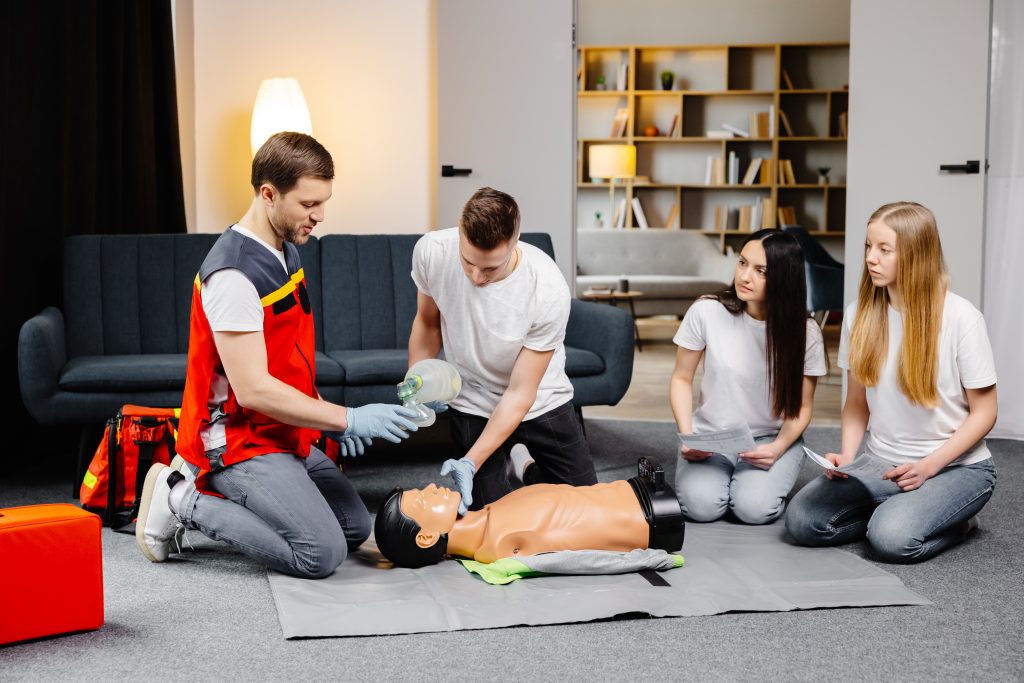
Young man instructor helping to make first aid heart compressions with dummy during the group training indoors.

Why are trained rescuers still required to master the full 30:2 technique?

For anyone who pursues formal, certified training, such as the Basic Life Support (BLS) credential, the expectation is that they master the complete, Standard CPR technique, including rescue breaths.

Does professional training allow for better decision-making?

Yes, professional training equips a rescuer with the skills and knowledge to make a rapid, accurate assessment.

  • A certified provider is not limited to one technique; they are trained to diagnose the cause of the emergency—cardiac or respiratory—and then choose the most effective intervention.
  • If a trained person finds a victim of a suspected drug overdose, they know to prioritize the delivery of oxygen via rescue breaths.
  • They are also trained to handle multi-rescuer situations and utilize team dynamics to ensure both uninterrupted compressions and timely breaths are delivered.

Do rescue breaths matter if EMS arrival is delayed?

Scientific research suggests that the benefits of Hands-Only CPR are most pronounced in the first few minutes of Sudden Cardiac Arrest. However, if the local Emergency Medical Services (EMS) response time is prolonged (potentially beyond 10 to 14 minutes), the body’s stored oxygen will become fully depleted.

  • During prolonged resuscitation efforts, studies suggest that Standard CPR (compressions plus breaths) can lead to higher long-term survival rates compared to compression-only CPR.
  • A trained rescuer is prepared for this eventuality and can provide the necessary ventilations to sustain the patient over a longer duration.

Can trained rescuers use safety devices for rescue breathing?

A crucial component of formal certification is learning how to use barrier devices, such as a CPR face shield or a pocket mask.

  • These devices allow a trained rescuer to deliver effective rescue breaths while creating a physical separation.
  • This minimizes the risk of infection and overcomes the psychological reluctance associated with direct mouth-to-mouth contact.
  • Mastering the use of a barrier device ensures that a trained provider is never forced to choose between personal safety and providing the necessary breaths.

Conclusion: The Final Verdict on Rescue Breathing

The answer to the question, “Is rescue breathing still necessary?” is clear: Absolutely, yes, it is necessary.

The modern guidelines simply clarify who needs to perform it and when.

  • For the untrained bystander witnessing an adult collapse: Hands-Only CPR is the heroic, effective intervention that saves precious time.
  • For all pediatric victims and adult respiratory arrests: Rescue breathing is a mandatory, life-saving skill that must be performed.
  • For the certified provider: Standard CPR (30:2) remains the gold standard, equipping you to handle every type of arrest scenario with confidence and competence.

Do not allow the public promotion of Hands-Only CPR to create a gap in your own knowledge. Being able to provide rescue breaths is not an outdated skill; it is a critical differentiator that allows you to save a child, a drowning victim, or someone suffering from an overdose. Your willingness to learn and use this full skillset makes you an indispensable link in the chain of survival.

Ready to master the full scope of life-saving skills?

Contact CPR Classes Near Me today to register for an American Heart Association certified BLS CPR and First Aid course and ensure you are prepared for every emergency scenario.

Modern CPR: Frequently Asked Questions (FAQ)

What is the primary reason the American Heart Association recommends Hands-Only CPR for untrained bystanders?

The primary reason is to overcome the psychological barriers that cause people to hesitate or refuse to help. Studies showed that the need for mouth-to-mouth resuscitation was the biggest deterrent to bystander action. By recommending the simple action of continuous chest compressions (Hands-Only CPR), the AHA encourages immediate intervention. This is crucial because for an adult who suffers a sudden cardiac arrest, the most important action in the first few minutes is to circulate the oxygen-rich blood that is already in their system.

If I am trained, should I always perform the 30 compressions to 2 breaths ratio?

If you are fully trained and certified, the 30 compressions to 2 breaths (30:2) ratio is the standard technique you should be prepared to use. However, you should tailor your response based on the situation and your professional judgment. If you are alone and the victim is an adult who collapsed suddenly, you may choose to begin with continuous compressions to minimize interruption, especially if you do not have a barrier device. If the victim is a child or the cause of the arrest is respiratory (like drowning), you must use the full 30:2 ratio immediately. The key is that you possess the skill for both.

Does the victim need rescue breathing immediately if the cardiac arrest was caused by an opioid overdose?

Yes, if the cardiac arrest is caused by an opioid overdose, the victim needs rescue breathing immediately. Opioids cause breathing to slow down and then stop before the heart fails, meaning the person’s blood is already severely oxygen-depleted. In this scenario, simply circulating deoxygenated blood with compressions is far less effective. A trained rescuer should initiate the full 30:2 cycle of compressions and breaths to deliver vital oxygen to the body.

How long is the CPR certification valid, and can I renew it?

The standard CPR certification card, such as the American Heart Association BLS certification, is valid for two years. Yes, you absolutely can and should renew it. Most training organizations offer renewal courses that are equivalent to the initial course but are designed to refresh your knowledge and skills, ensuring you remain current with the latest life-saving guidelines and techniques.

Why is there a different compression-to-breath ratio for children with two rescuers?

When two trained rescuers are performing CPR on an infant or child, the compression-to-breath ratio is typically 15 compressions followed by 2 breaths (15:2). This lower compression-to-breath ratio is used because pediatric cardiac arrest is usually due to a lack of oxygen (respiratory failure). The 15:2 ratio prioritizes the delivery of more frequent ventilations to the child or infant, which is necessary to re-oxygenate their blood, while still ensuring blood flow is maintained by the chest compressions.