Get Your Austin CPR Certification in Just One Day: The Ultimate Guide
Are you a healthcare professional needing a quick renewal? Or perhaps a new parent or teacher looking to gain life-saving skills for the first time? In the fast-paced environment of Austin, Texas, you don’t have weeks to spend in a classroom. The good news is that you don’t have to.
Getting CPR certified in Austin is now a streamlined, efficient process that fits into a single morning or afternoon. By choosing an American Heart Association (AHA) authorized training site, you can walk in with a desire to learn and walk out with a nationally recognized certification card in hand.
Is it really possible to get CPR certified in one day?
Yes, it is entirely possible to complete your full CPR certification in a single session. While some online programs claim to offer “instant” certificates, these are rarely accepted by employers because they lack the hands-on skills assessment required by OSHA and the American Heart Association.
At CPR Classes Near Me Austin, our courses are designed to be comprehensive yet efficient. A standard Basic Life Support (BLS) session typically lasts about 3.7 hours. During this time, you cover all required video modules, participate in hands-on practice, and complete your skills testing. Because our instructors are authorized to issue digital eCards, you will receive your official certification via email before you even leave the building.
What should you expect during your Austin CPR class?
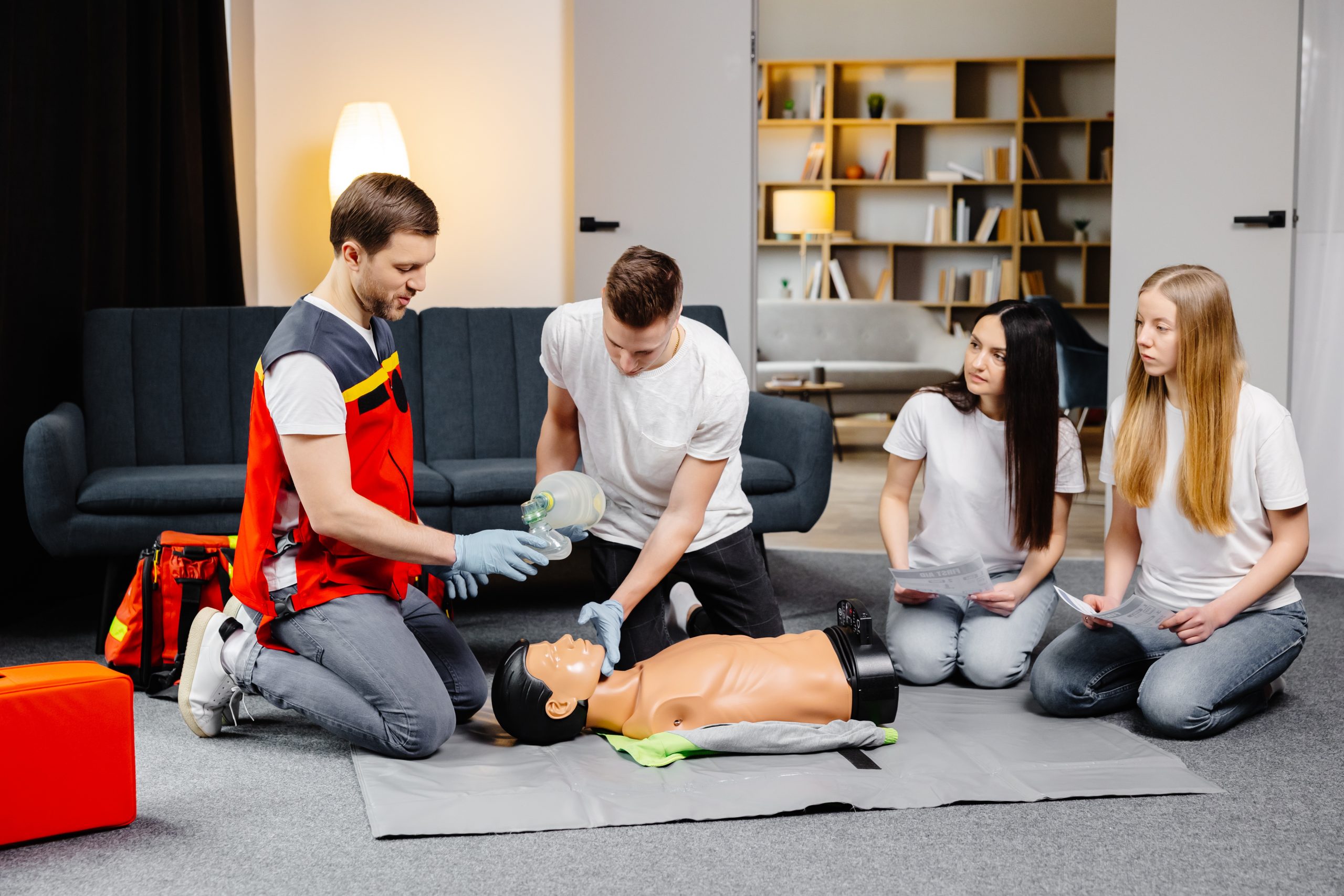
When you sign up for a one-day class, you can expect a high-energy, focused environment. The goal is to move you from theory to practice as quickly as possible. You won’t just be sitting and watching videos; you will be actively engaged with the equipment.
The curriculum is standardized by the American Heart Association to ensure you receive the highest quality of training. During your Austin class, you will focus on:
- High-Quality Chest Compressions: Learning the correct depth and rate for adults, children, and infants.
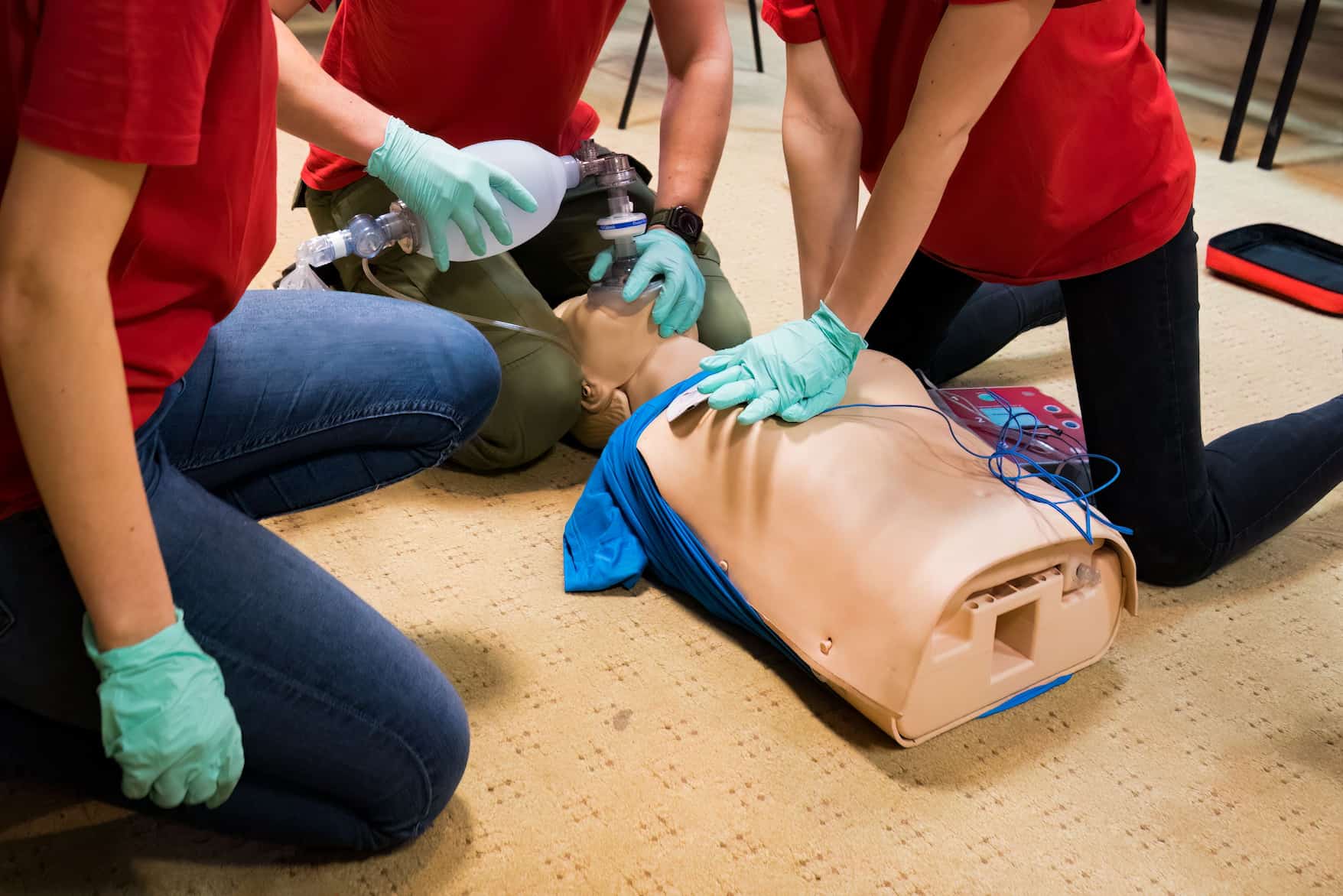
- Rescue Breathing: Using pocket masks and bag-mask devices to provide oxygen.
- AED Operation: Understanding how to safely and effectively use an Automated External Defibrillator.
- Choking Relief: Master the techniques for clearing an airway for all age groups.
- Team Dynamics: Learning how to work with other rescuers during a high-stress cardiac event.
Who needs a BLS certification in Austin?
While anyone can—and should—learn CPR, the Basic Life Support (BLS) certification is specifically designed for those who work in environments where they may be called upon to use these skills professionally. In Austin’s booming medical and education sectors, this certification is often a non-negotiable job requirement.
Common professionals who seek one-day certification include:
- Healthcare Providers: Nurses (RNs/LVNs), Doctors, Dentists, and Pharmacists.
- Emergency Responders: Firefighters, Police Officers, and EMTs.
- Medical Staff: CNAs, Medical Assistants, and Physical Therapists.
- Educators: K-12 Teachers, Coaches, and Daycare Providers.
- Fitness Professionals: Personal Trainers and Lifeguards.
- Industrial Workers: Construction Foremen and Electricians who must meet OSHA standards.
Why is in-person training better than online-only courses?
In a world of digital convenience, it’s tempting to take a 20-minute online quiz and call it “certification.” However, in the world of life-saving, there is no substitute for physical practice. This is why the vast majority of Austin employers do not accept online-only CPR cards.
In-person training offers several critical advantages:
- Muscle Memory: You cannot learn the physical resistance of a chest compression through a computer screen. Pushing on a manikin builds the muscle memory needed to perform when it counts.
- Immediate Feedback: Our AHA-certified instructors watch your technique in real-time. They can correct your hand placement or compression depth instantly, ensuring you are doing it right.
- Equipment Familiarity: You get to handle real AED trainers and bag-mask devices, making you much more comfortable using them in a real emergency.
- Peer Interaction: You practice team-based resuscitation, which is how most rescues actually occur in a clinical or professional setting.
How do you find the best CPR class in Austin?
Not all CPR classes are created equal. When searching for a provider in the Austin area, you want to ensure you are getting the best value and the most recognized credential. Here are the things you should look for:
- AHA Alignment: Ensure the provider is an American Heart Association authorized training site. This guarantees your card will be accepted nationwide.
- Same-Day Certification: Many providers mail physical cards weeks later. Look for a site that issues digital eCards the same day.
- Transparent Pricing: You should know exactly what you are paying upfront. In Austin, a standard BLS class should range from $59.00 to $79.00, depending on if First Aid is included.
- Flexible Scheduling: Life in Austin is busy. Look for a provider that offers morning, afternoon, and weekend slots to fit your schedule.
- Local Reputation: Check for a provider that has a proven track record of certifying thousands of students and has a physical presence in the community.
What is the difference between CPR and BLS?
This is one of the most common questions we hear. While the terms are often used interchangeably, there is a technical difference that matters for your certification needs.
- CPR (Cardiopulmonary Resuscitation): This is the general term for the life-saving procedure. “Heartsaver” courses are typically intended for non-medical professionals like parents or office workers.
- BLS (Basic Life Support): This is a specific level of CPR training designed for healthcare providers. It includes everything in a standard CPR course but adds advanced techniques like bag-mask ventilation, pulse checks, and two-rescuer team dynamics. If your employer asks for “CPR Certification,” and you work in healthcare, they almost always mean BLS.
How long does your Austin CPR certification stay valid?
Once you complete your one-day class and receive your AHA eCard, your certification is valid for two years.
We recommend putting a reminder in your calendar for 22 months from your class date. Because the science of resuscitation is constantly evolving, the AHA updates its guidelines every few years. Renewing your certification ensures that you are always using the most effective, up-to-date techniques. The renewal process is the same as the initial certification—you simply attend another one-day session to refresh your skills and receive a new card.
Conclusion
Getting CPR certified in Austin doesn’t have to be a multi-day ordeal. With a focused, 4-hour session, you can gain the skills and the credentials needed to save a life and satisfy your employer’s requirements. By choosing a local, AHA-authorized training site like CPR Classes Near Me Austin, you are investing in high-quality instruction that is both fast and effective.
Don’t wait until an emergency happens to wish you had the training. Whether you are in Pflugerville, Round Rock, or downtown Austin, life-saving skills are just one class away.
Ready to get certified? Contact CPR Classes Near Me Austin today to find a class and get your same-day certification!
Frequently Asked Questions (FAQ)
How long does the Austin CPR class take?
The American Heart Association BLS class typically takes about 3.7 hours to complete. This includes all video instruction, hands-on practice, and the final skills assessment.
Will I get my card the same day?
Yes. When you train with us in Austin, your official AHA BLS eCard is issued digitally the same day you complete your class. You can download, print, or email it to your employer immediately.
Are there age requirements for CPR certification?
There is no specific minimum age for CPR certification. As long as the individual can perform the physical requirements of the course (such as deep chest compressions on a manikin) and pass the written portion, they can become certified.
Does this certification cover infants and children?
Yes. All of our AHA BLS and CPR/First Aid courses include specific modules for adult, child, and infant resuscitation techniques, as the methods vary significantly by age.
What should I wear to my CPR class?
Since the class involves significant hands-on practice and kneeling on the floor to work with manikins, we recommend wearing comfortable, casual clothing and closed-toe shoes.