Empowering Austin Educators: The Ultimate Guide to CPR Certification for Teachers, School Staff, and Childcare Workers
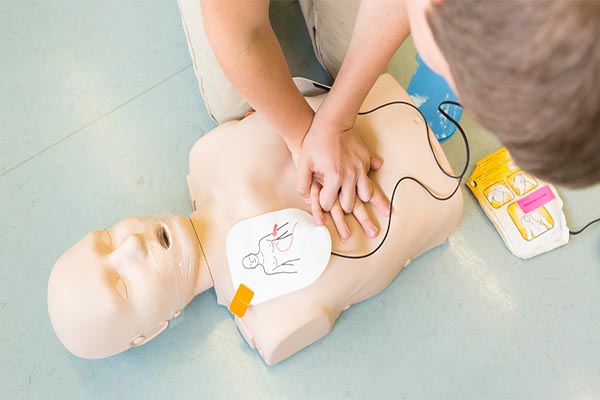
Hands performing chest compressions on a CPR training mannequin with AED pads attached.

Every single day, thousands of children step into classrooms, playgrounds, and childcare centers across the Austin metropolitan area. As educators, school administrators, and daycare providers, you are charged with more than just academic development; you are the primary guardians of student safety. When a medical emergency occurs, such as an unexpected playground injury, a severe allergic reaction, or sudden cardiac arrest, the response time of those on-site is the single most critical factor in saving a life.

For school staff and childcare providers, maintaining a valid, hands-on rescue credential is not merely a legal checkbox—it is a foundational pillar of community safety. If you are looking to secure or renew your credentials, getting your CPR Certification for Teachers in Austin through an official, American Heart Association (AHA) aligned program ensures you possess the real-world skills and state-approved validation to protect the young lives in your care.

What Are the Texas CPR Requirements for Teachers and School Staff?

The Texas Education Agency (TEA) maintains rigorous safety guidelines to ensure school personnel can respond effectively to sudden life-threatening crises. Under Texas Education Code Section 21.459, school districts are required to provide instruction to campuses on primary lifesaving techniques. Specifically, any staff member serving as a coach, physical education instructor, athletic trainer, cheerleading sponsor, or director of school-sponsored extracurricular activities must maintain active, hands-on CPR and Automated External Defibrillator (AED) certification.

Furthermore, individual school districts across Central Texas—including Austin ISD, Round Rock ISD, and Pflugerville ISD—frequently mandate that all classroom teachers, campus receptionists, and administrative support staff complete formal emergency training. Because a crisis can happen in a hallway or cafeteria just as easily as on a sports field, school systems prioritize staff-wide readiness. To satisfy these institutional and state-level directives, your certification course must feature an in-person, hands-on skills assessment using responsive training manikins.

Texas Education Code Compliance: Online-only courses that do not include physical, face-to-face skills practice do not meet the stringent standards set by Texas school districts and the TEA.

What Are the Texas Childcare CPR and First Aid Regulations?

If you operate or work within a licensed childcare center, preschool, or registered home daycare in the Lone Star State, your regulatory standards are established by Texas Health and Human Services (HHS) Child Care Regulation. State licensing standards dictate that all staff members who provide direct care to children must be certified in pediatric CPR and pediatric first aid.

This mandate is designed to address the distinct physiological differences between treating adults and saving infants or young children. Childcare facilities must have at least one employee on-site at all times who holds an active, hands-on certification. To ensure compliance during state inspections, your physical credential must clearly state that you have completed both CPR and First Aid training covering infants, children, and adults.

Why Do Teachers and Childcare Workers Need AHA BLS Certification?

While basic community CPR courses exist, the American Heart Association (AHA) Basic Life Support (BLS) course is the gold standard demanded by educational institutions and childcare licensing boards. The BLS designation proves you have mastered professional-grade rescue techniques.

A comprehensive AHA BLS course teaches you how to recognize the early signs of cardiac distress, perform high-quality chest compressions, deliver rescue breaths using barrier devices, quickly employ an AED, and relieve severe choking. By training to the professional BLS standard, you gain the muscle memory and mental clarity needed to manage an active emergency scene until Austin-Travis County EMS arrives on the scene.

How Does Pediatric CPR Differ from Adult CPR Techniques?

One of the most valuable aspects of classroom-based CPR training for educators is learning how to safely adjust rescue techniques based on the victim’s age. Performing adult-level compressions on a toddler or infant can cause severe physical harm, while using child-level pressure on an adult will fail to circulate oxygenated blood effectively.

Our targeted training programs highlight the critical mechanical and procedural differences across three distinct age groups:

  • Adult Resuscitation: Requires two-handed chest compressions pushed to a depth of at least 2 inches (but no more than 2.4 inches) at a steady tempo of 100 to 120 compressions per minute.
  • Child Resuscitation (1 year to puberty): Compressions are delivered using one or two hands, depending on the child’s physical size, pressing to a depth of approximately 2 inches.
  • Infant Resuscitation (under 1 year): Requires using two fingers or a two-thumb-encircling technique on the center of the chest, depressing the sternum exactly 1.5 inches to protect the infant’s fragile ribcage.

What Crucial Lifesaving Skills Are Covered in the Classroom?

A certified, in-person training session with CPR Classes Near Me Austin provides an interactive learning environment where you practice real-world rescue scenarios alongside experienced local professionals. The curriculum is comprehensive, leaving no gaps in your emergency preparedness.

Throughout your 3.7-hour training class, you will master the following essential skills:

  • High-Quality Chest Compressions: Mastering correct hand positioning, proper body mechanics to prevent fatigue, and ensuring full chest recoil between compressions.
  • Airway Management & Ventilation: Learning how to open a blocked airway using the head-tilt/chin-lift maneuver and delivering rescue breaths using pocket masks and bag-valve masks.
  • AED Operation: Understanding how to safely apply, power on, and follow the voice prompts of an Automated External Defibrillator on both child and adult victims.
  • Choking Relief (Foreign Body Airway Obstruction): Practicing abdominal thrusts (Heimlich maneuver) on standing child/adult manikins, and back blows combined with chest thrusts for choking infants.
  • First Aid Essentials: Managing severe bleeding, treating shock, handling allergic reactions (including EpiPen administration), and identifying signs of heat exhaustion or stroke.

Can Teachers and Daycare Staff Earn CPR Certification Online?

Many busy teachers and childcare workers are tempted by online-only programs that promise instant certification for low prices. However, these programs carry a massive hidden risk: they are almost universally rejected by Texas school districts, private academies, and state childcare licensing inspectors.

Because virtual courses cannot evaluate your physical technique, depth of compression, or speed of AED pad placement, they do not carry the backing of major safety organizations. The American Heart Association does not recognize online-only certificates without an in-person, hands-on skills session. Investing your time and money in a non-compliant online course often results in having to retake the entire training in person to satisfy employer mandates.

How Do On-Site Group CPR Training Classes Benefit School Campuses?

Coordinating individual schedules for dozens of teachers, aides, counselors, and cafeteria staff can be an administrative nightmare. To solve this logistical challenge, CPR Classes Near Me Austin specializes in on-site group CPR and First Aid training directly at your school campus, preschool, or daycare facility.

Our certified mobile instructors travel throughout the entire Austin metroplex—including Bastrop, Buda, Cedar Park, Georgetown, Hutto, Kyle, Lago Vista, Lakeway, Leander, Liberty Hill, Manor, Pflugerville, Round Rock, San Marcos, Taylor, and West Lake Hills. We bring all the necessary training materials, sterile manikins, and AED trainers directly to your facility. This on-site approach minimizes disruption to your academic calendar, ensures team cohesion during simulated emergencies, and allows your entire staff to earn their 2-year certifications simultaneously in a familiar setting.

What is the Step-by-Step Process to Secure Your Austin CPR eCard?

Securing your official American Heart Association credential through our Austin program is structured to be simple, fast, and stress-free.

1.Select Your Class Type:Under 5 Minutes.

Choose between the comprehensive AHA BLS CPR & AED Class ($64.95) or the combined CPR AED & First Aid Class ($84.95) based on your school’s or licensing board’s specific requirements.

2.Register Online or Book a Group:Under 5 Minutes.

Select a convenient date and time slot using our streamlined local booking calendar. For schools and daycare centers, call our Austin office to schedule a custom on-site group training session.

3.Attend the Hands-On Class:3.7 Hours.

Join our certified instructors at our comfortable Austin training site or host us at your location. You will watch instructional video modules, practice compressions on realistic manikins, and run through hands-on emergency scenarios.

4.Pass the Practical Skills Assessment:In-Class Evaluation.

Demonstrate your ability to deliver high-quality chest compressions, administer rescue breaths, and safely deploy an AED under the direct, supportive supervision of your instructor.

5.Receive Your Same-Day AHA eCard:Immediate Delivery.

Upon successful completion of the practical assessment, our team issues your official, OSHA-compliant American Heart Association eCard directly to your email inbox before you leave the classroom.

Ready to Secure Your Lifesaving Credentials Today?

Do not wait for an emergency to find out if you are truly prepared to save a life. Ensuring your school campus or childcare facility is safe, compliant, and ready to respond is one of the most important decisions you can make this school year.

Whether you are an individual classroom teacher needing to renew your biannual credentials or a school administrator looking to schedule a private, on-site certification day for your entire workforce, our local Austin team is ready to help.

Get certified with the experts. Contact CPR Classes Near Me today to enroll in an upcoming class or to request a customized group training quote for your school or childcare facility!

Frequently Asked Questions

How long is an Austin CPR certification valid for teachers?

An official American Heart Association (AHA) CPR and First Aid certification card is valid for exactly two years from the date of course completion. To maintain continuous compliance with Texas state laws and school district requirements, teachers and childcare workers must complete a renewal course before their current card expires.

Do online CPR classes meet Texas childcare licensing requirements?

No, online-only CPR certifications do not satisfy Texas Health and Human Services (HHS) licensing standards. Child Care Regulation mandates that all childcare staff complete hands-on, in-person training where a certified instructor evaluates physical compressions, rescue breathing, and AED pad placement on physical manikins.

How much do CPR and First Aid classes cost in Austin?

Individual AHA BLS CPR & AED classes in Austin are priced at a discounted rate of $64.95 (saving you $20 off the standard rate). The combined CPR, AED, and First Aid course is offered at a discounted rate of $84.95. Both course options include all hands-on training materials and same-day electronic card delivery.

Can school districts host private CPR classes on campus?

Yes. Our certified, local instructors regularly travel directly to school campuses, private academies, and daycare centers across the Austin area to perform on-site group training. We bring all necessary sterile manikins, AED units, and instructional media, letting your staff learn together in a familiar environment.

What happens if my CPR certification has already expired?

If your CPR certification has expired, you must enroll in a standard in-person certification course to regain your active status. The American Heart Association does not offer a grace period for expired cards; you must complete a full, standard BLS or CPR/First Aid training class to receive a valid new eCard.
How to Choose a CPR Renewal Course for Clinical Roles

For healthcare professionals, keeping your life-saving credentials current is more than a line item on a compliance checklist. It is a fundamental safeguard for patient care. When your two-year certification window starts closing, finding the correct CPR renewal course for clinical roles becomes an urgent priority.

The medical field does not accept general, entry-level safety certificates. Clinical environments—ranging from bustling emergency departments to quiet physical therapy clinics—demand a rigorous, standardized tier of training. Choosing the wrong program can result in rejected credentials, unnecessary out-of-pocket expenses, and even temporary suspension from work.

This comprehensive guide will show you exactly how to evaluate renewal options, navigate strict employer mandates, and select a course that keeps you fully compliant and prepared to act in critical moments.

Why Do Clinical Employers Mandate Specific CPR Standards?

Clinical settings present complex emergency scenarios that require coordinated, high-performance team responses. Unlike a bystander assisting in a public space, healthcare workers must operate within structured resuscitation systems. Therefore, employers mandate specialized BLS CPR certification rather than basic heartsaver classes.

The vast majority of hospitals, outpatient surgical centers, and skilled nursing facilities require credentials directly aligned with the American Heart Association (AHA). The AHA sets the gold standard for evidence-based cardiovascular care guidelines. When an employer asks for clinical CPR, they are almost universally looking for an official AHA BLS (Basic Life Support) Provider card.

Hospitals and clinics must answer to strict regulatory bodies, insurance providers, and joint commission standards. Accepting unaccredited or non-standardized training leaves a facility vulnerable to massive liability. By requiring a standardized, accredited CPR renewal course for clinical roles, healthcare organizations ensure that every staff member can seamlessly integrate into a multi-rescuer resuscitation team.

What Is the Difference Between BLS and General CPR Courses?

It is common to feel confused by the array of safety courses available online and in local communities. However, for those working in clinical roles, the distinction between Basic Life Support (BLS) and general CPR is absolute.

General CPR classes teach basic, single-rescuer skills designed for the public. These classes focus primarily on single-rescuer lifesaving techniques, basic chest compressions, and simple rescue breaths using mouth-to-mouth or barrier shields. They are intended for individuals like teachers, coaches, retail workers, and parents.

A professional healthcare provider CPR course, by contrast, trains you to perform rapid assessments, check central pulses, and coordinate seamlessly with other medical responders during high-stress cardiac events. It covers advanced skills such as team resuscitation dynamics, carotid pulse checks for adults, brachial pulse checks for infants, and the use of professional bag-mask ventilation systems.

Can I Take My Clinical CPR Renewal Entirely Online?

If you are looking for a quick fix, you will find countless websites offering “100% online clinical CPR certification.” However, as a clinical professional, you must avoid these programs.

Crucial Compliance Fact: Reputable clinical employers and licensing boards do not recognize CPR certifications obtained solely through online courses.

To build true muscle memory, you must practice with real physical equipment. Authentic, employer-accepted hands-on CPR training requires you to demonstrate compression depth, recoil, and ventilation techniques on physical feedback manikins under the watchful eye of a certified instructor. Purely digital courses lack this vital tactile component, making them functionally useless for clinical compliance.

How Long Does a Compliant BLS Renewal Class Take?

As a busy medical professional, your time is incredibly valuable. Fortunately, a highly efficient, authorized AHA BLS renewal does not require days of classroom time.

At our authorized training sites, we structure the class to respect your schedule while ensuring absolute compliance. A complete, high-quality, in-person session with CPR Classes Near Me takes approximately 3.7 hours.

During this single, focused session, you will review the updated guidelines, practice your hands-on skills, complete your practical evaluation, and take your written assessment. Because we streamline the administrative process, your instructor will issue your official AHA BLS digital eCard on the exact same day you complete the class.

What Key Skills Are Covered in a Professional Renewal Course?

A high-quality renewal course does not just repeat basic facts; it sharpens the precise physical skills you need to save lives in a clinical environment. When you enroll in an authorized AHA BLS course, you will actively master the following core competencies:

  • High-Quality Compressions: Perfecting your hand placement, compression depth (at least 2 inches for adults), and rate (100 to 120 compressions per minute) to maintain optimal systemic perfusion.
  • Advanced Ventilation Techniques: Learning how to properly assemble, seal, and use bag-mask devices and pocket masks without causing gastric inflation.
  • Automated External Defibrillator (AED) Integration: Rapidly deploying and safely operating an AED in both single-rescuer and team-based clinical scenarios.
  • Multi-Rescuer Team Dynamics: Understanding clear roles, closed-loop communication, and smooth transitions during continuous chest compressions.
  • Foreign Body Airway Obstruction: Mastering age-appropriate techniques to quickly relieve choking in adults, children, and infants.

How Do I Verify That a CPR Class Is Legitimate?

Before you hand over your credit card, you must verify that the training center is fully accredited. Use this quick, reliable verification checklist to ensure your class is legitimate:

  • Look for the Official Seal: Ensure the training facility displays the official American Heart Association training site alignment.
  • Verify the Card Type: Confirm that the class issues an official AHA BLS Provider eCard—not a house-brand or generic “national” certificate.
  • Avoid “100% Online” Claims: If a website promises a clinical-grade card without a live, in-person skills check, it is not a legitimate program for healthcare workers.
  • Ask About the Instructors: Confirm that the courses are taught by active, certified AHA instructors who have real-world emergency response experience.

By choosing a trusted, locally established provider like CPR Classes Near Me, you can confidently book your class knowing your certification is fully accredited and guaranteed to be accepted by clinical employers nationwide.

Get Your Accredited Clinical CPR Renewal Today

Do not risk your clinical compliance or your career with unaccredited, online-only courses. Protect your patients and secure your professional credentials with a convenient, hands-on class designed specifically for healthcare providers.

With convenient locations in major cities across the United States—including Austin, Atlanta, Chicago, Phoenix, Houston, and many more—the team at CPR Classes Near Me makes staying certified stress-free. Our certified instructors provide top-tier, highly engaging instruction in a supportive, professional environment.

Ready to secure your seat? Contact CPR Classes Near Me today to find a convenient local class, view upcoming schedules, and get your official AHA BLS eCard issued on the very same day.

Frequently Asked Questions

How long does a clinical CPR certification remain valid?

An official American Heart Association BLS certification is valid for exactly two years from the end of the month in which it was issued. To prevent any gaps in your employment eligibility, you should schedule your renewal class at least a few weeks before your current card expires.

What is the cost of a BLS CPR renewal course?

At our training sites, we keep professional certification highly accessible. Our official, in-person AHA BLS class starts at $64.95, representing a direct $20 discount to help healthcare professionals stay compliant. If you also need First Aid certification for your specific clinical role, we offer a combined BLS and First Aid class starting at $84.95.

What should I do if my clinical CPR card has already expired?

If your card has expired, you cannot legally perform duties that require an active BLS credential in most clinical settings. You must take the complete BLS class to restore your active status. Fortunately, because our in-person courses are highly efficient, you can complete your training and receive your new, valid eCard on the very same day.

Is there a difference between an initial BLS class and a renewal class?

The course content and the final certification card are identical. Because the AHA updates its guidelines periodically, all participants—whether taking the course for the first time or renewing for the fifth time—must complete the full, hands-on instructional components and practical evaluations to ensure perfect mastery of the latest life-saving protocols.

What does “same-day eCard delivery” mean?

It means you do not have to wait weeks for a paper certificate to arrive in the mail. Immediately after you successfully complete your classroom instruction and practical skills check, your instructor will process your paperwork and digitally issue your official AHA eCard. You can instantly view, download, and email this digital credential to your clinical employer or licensing board.

Why Healthcare Workers Usually Need BLS Instead of Basic CPR

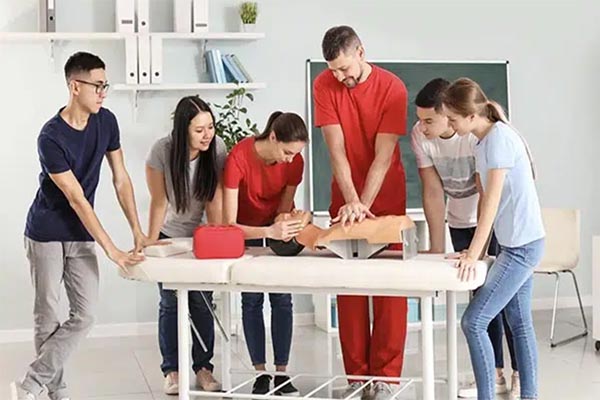
First aid instructor teaching CPR to a group of students using a practice mannequin.

If you work in healthcare, you have likely received a checklist of onboarding requirements from your employer. Near the top of that list is almost certainly a demand for a current life-saving credential. However, if you sign up for a standard, community-level CPR class, you might find yourself turned away on your first day of clinical orientation.

Understanding the differences between BLS vs basic CPR is crucial for maintaining your professional credentials. While both courses teach how to respond to cardiac arrest, they are designed for entirely different audiences, environments, and situations.

At CPR Classes Near Me, we frequently help nurses, therapists, and dental professionals navigate these class types to ensure they get the exact certification they need to work. Let’s break down exactly why clinical settings demand a more advanced level of training.

What is the Core Difference Between BLS vs Basic CPR?

At its simplest, Basic Life Support (BLS) is a specialized class designed for medical professionals, whereas basic CPR is geared toward laypeople. A standard CPR course (often labeled as “Heartsaver”) teaches single-rescuer techniques, basic automated external defibrillator (AED) use, and choking relief. It is perfect for teachers, fitness coaches, and construction workers who may need to act before paramedics arrive.

In contrast, an American Heart Association BLS course is structured specifically for clinical environments. It assumes you will be working alongside other trained professionals as part of a highly coordinated team. BLS covers multi-rescuer resuscitation, advanced airway techniques, and rapid physical assessments that are not taught in basic layperson classes.

Why Do Employers Require BLS for Clinical Environments?

Hospitals, outpatient clinics, and nursing facilities require BLS because they operate under a higher standard of care. If a patient collapses in a hospital hallway, the response is rarely a single person acting alone. It is an immediate team effort involving nurses, doctors, and technicians who must assign and execute specific roles.

BLS teaches healthcare workers how to manage these rapid team dynamics. It covers how to cycle through chest compressions to prevent fatigue, how to assign a team leader, and how to communicate clearly under stress. Basic CPR classes simply do not provide the team-focused training required to coordinate a multi-person rescue effort in a clinic.

What Advanced Techniques Are Only Taught in BLS Classes?

The clinical depth of BLS includes several technical procedures that laypeople are not trained to perform. These skills require specialized medical equipment commonly found in clinical crash carts.

Here are the key technical skills unique to a healthcare provider BLS course:

  • Pulse Checks: BLS students are trained to perform rapid, simultaneous pulse and breathing checks (taking no more than 10 seconds) on the carotid or brachial artery. Basic CPR classes teach laypeople to look only for “signs of life” or normal breathing to keep the process simple.
  • Bag-Mask Ventilation: Medical professionals must know how to use a bag-valve-mask (BVM) to deliver positive-pressure ventilation. This requires mastering the “E-C clamp” technique to create a tight seal over the patient’s face, a skill not taught in community CPR.
  • Advanced Airway Integration: BLS training covers how to coordinate chest compressions when an advanced airway (such as an endotracheal tube or supraglottic device) is in place, transitioning from cycles of 30:2 to continuous compressions with a breath every 6 seconds.
  • Two-Rescuer CPR Ratios: Healthcare workers learn specific compression-to-ventilation ratios that change based on the number of rescuers and the age of the patient (such as a 15:2 ratio for two-rescuer infant CPR).

How Do Licensing Boards and Hospital Guidelines Enforce This?

State licensing boards, professional associations, and healthcare employers almost universally require an American Heart Association (AHA) BLS certification. These organizations must comply with strict national standards, such as those set by the Occupational Safety and Health Administration (OSHA) and Joint Commission hospital accreditation rules.

Because community-level CPR courses do not cover advanced airway management or professional team dynamics, they do not meet clinical compliance standards. Presenting a layperson CPR card to a hospital credentialing specialist will result in immediate rejection, potentially delaying your start date or leading to shifts missed.

Can Healthcare Workers Take Their BLS Training Online?

While many online companies advertise fast, fully digital BLS certifications, employers and licensing boards rarely accept them. The AHA and major healthcare networks require an in-person, hands-on skills assessment to verify your technique.

During a hands-on BLS class with CPR Classes Near Me, an instructor directly evaluates your compression depth, compression rate, and bag-mask ventilation technique. This physical verification ensures you can perform high-quality life-saving skills on a real patient. A fully online course cannot replicate this hands-on feedback, which is why in-person or hybrid (online lecture with in-person skills check) classes remain the industry gold standard.

Get Your Official AHA BLS Certification Today

Don’t let an expired or incorrect credential stall your medical career. At CPR Classes Near Me, we offer fully accredited American Heart Association BLS classes designed to fit your busy shifts. Our local, hands-on courses are led by experienced instructors who make sure you walk out with the practical skills and confidence you need in a clinical emergency.

Best of all, we issue your official American Heart Association BLS eCard on the very same day you complete your training.

If you are ready to renew your credentials or earn your first clinical life support certification, contact CPR Classes Near Me today to find a class time that fits your schedule!

Frequently Asked Questions

Is BLS harder to pass than basic CPR?

While BLS covers more advanced clinical scenarios and equipment, the material is highly accessible. The course is designed to be supportive and educational. With our experienced instructors, you will have plenty of hands-on practice to master the techniques before your evaluation.

How long does a healthcare provider BLS certification last?

An official American Heart Association BLS certification is valid for two years from the date of your class. You will need to take a BLS renewal class before your current card’s expiration date to maintain active credentials.

Does BLS cover infant and child CPR?

Yes. BLS training includes complete modules for high-quality CPR, choking relief, and AED use for adults, children, and infants, with specific techniques for both single-rescuer and multi-rescuer scenarios.

Can I use a BLS card if a job only asks for basic CPR?

Yes, BLS is a higher-level certification. If an employer or volunteer group only requires basic CPR, they will gladly accept a valid BLS card because it demonstrates a higher level of life-saving proficiency.

What should I bring to my in-person BLS class?

You only need to bring comfortable clothing that allows you to move freely, as you will be practicing compressions on floor-level and table-level manikins. All training materials, barrier devices, and feedback equipment are provided at our training center.

Hospital Job Applicants: What You Must Know About CPR Credentials

Securing a job in a fast-paced hospital environment requires more than an impressive resume and polished interview skills. Healthcare employers carry massive regulatory burdens, meaning every single member of the clinical and support staff must possess verified, bulletproof emergency skills before stepping onto the floor. If you are preparing to submit applications or head into an interview, your life-support credentials will be scrutinized almost immediately.

Landing your dream role requires understanding exactly what credentials hospital human resource departments look for during the screening process. A minor mistake on your certification card can stall your application or remove you from the hiring pool entirely. This guide breaks down the essential compliance details regarding CPR credentials that every hospital job applicant must understand to protect their career prospects.

Why Do Hospitals Strictly Verify Your CPR Credentials?

Hospital compliance departments do not check your certification cards merely to tick a box on an onboarding checklist. Healthcare facilities are strictly regulated by national oversight bodies and insurance providers that mandate specific safety standards. If a hospital allows an employee with an unverified or sub-standard certification to provide patient care, the institution risks massive legal liability, insurance complications, and the loss of its accreditation.

When you apply for a healthcare role, your credential acts as a legal assurance that you can perform high-quality chest compressions and rescue breathing under extreme stress. Employers need to know that you can operate an Automated External Defibrillator (AED) and clear airway obstructions instantly. Because lives are directly on the line, hospitals place the verification of these skills at the very top of their hiring priorities.

What Specific Type of CPR Certification Do Hospital Employers Demand?

The single most common mistake made by healthcare job applicants is registering for a general public CPR class. General courses are designed for babysitters, fitness coaches, or corporate office workers. Hospital employers require a specialized tier of training known as Basic Life Support (BLS).

A standard CPR card will explicitly state “Heartsaver” or “Community CPR,” which will be rejected by hospital HR representatives for clinical roles. A true healthcare credential must be labeled as Basic Life Support for Healthcare Providers. This advanced level of training covers multi-rescuer team dynamics, advanced airway ventilation techniques using bag-mask devices, and precise compression-to-ventilation ratios for adults, children, and infants.

Is an Online CPR Certification Card Accepted by Healthcare Employers?

In an effort to save time, many job seekers turn to fully online courses that promise rapid certification from home. However, navigating the modern healthcare job market with a purely online CPR certificate is a recipe for immediate rejection. Hospital systems across the country overwhelmingly maintain a strict policy against online-only certifications.

Emergency life support is a highly physical, tactile skill that requires muscle memory. You cannot learn the correct depth of a chest compression or the exact physical resistance of an infant’s chest through a computer screen. Authorized training programs require you to perform these maneuvers on physical manikins under the direct observation of a certified instructor. If your certification process did not involve a live, hands-on skills evaluation, your credential is not considered valid by major medical employers.

Why Is American Heart Association Alignment Mandatory for Hospital Jobs?

There are countless companies on the internet offering certificates that sound official, but very few carry true structural authority. The gold standard for the medical industry is the American Heart Association (AHA). The vast majority of hospitals across the country explicitly state in their job descriptions that applicants must hold an official AHA credential.

The reason for this universal preference comes down to curriculum consistency and strict quality control. The AHA updates its scientific guidelines based on rigorous clinical data to maximize patient survival outcomes. When a hospital hiring manager sees the official AHA seal on your digital eCard, they know you have completed a comprehensive session that includes watching standardized instructional videos and passing practical examinations. Opting for a non-AHA course to save a few dollars often results in having to pay twice when the hospital rejects the card.

How Long Does an Authorized Healthcare Provider Course Typically Take?

If you need to secure your credentials quickly to meet a rapid hiring deadline, you must plan your schedule around authorized class lengths. Official AHA training centers are contractually obligated to display the complete, unedited curriculum video to ensure educational integrity. You cannot skip sections or rush through the mandatory training modules.

A standard, comprehensive in-person BLS course takes approximately 3.7 hours to finish. During this window, you will move seamlessly through interactive lecture blocks, hands-on practice intervals on medical manikins, real-time feedback coaching from your instructor, and a formal written examination. Setting aside a single morning or afternoon is all it takes to walk away with a fully compliant, job-ready credential.

How Long Do Your Emergency Credentials Remain Valid for Employment?

Once you successfully complete your in-person training session and pass your practical skills evaluations, your certification is officially active. All standard American Heart Association BLS credentials remain valid for exactly two years from the month of issue.

As an active applicant or working professional, tracking this expiration date is your personal professional responsibility. Hospitals closely monitor these dates using automated tracking software, and letting your card expire can result in immediate suspension from clinical duties. Fortunately, when your renewal window approaches, the process is straightforward—the structural framework and practical testing requirements for a renewal class are identical to the initial full course.

Secure Your Same-Day AHA BLS Certification Today

Do not let an invalid or expired certification stall your healthcare career momentum. If you are actively submitting resumes or preparing for upcoming hospital interviews, having an official, employer-accepted card in hand gives you an immediate competitive advantage over other applicants.

At CPR Classes Near Me, we provide authentic, top-tier American Heart Association BLS courses led by certified professional instructors. We focus on providing a comfortable, highly interactive learning environment where you gain true operational confidence. Best of all, we eliminate the stress of waiting for your paperwork—your official AHA BLS eCard is processed and delivered directly to your inbox on the exact same day you complete your class. Take control of your professional compliance and ensure your application stands out for all the right reasons.

Contact CPR Classes Near Me today to find a local session, secure a discounted seat, and earn the trusted credentials that hospital employers demand!

Frequently Asked Questions

What happens if I apply for a hospital job with a non-AHA CPR certificate?

If you submit an application with a non-AHA credential, the hospital’s human resources or compliance department will typically flag your application as non-compliant. You will generally be required to retake an authorized, hands-on AHA BLS course before you can be formally hired or allowed to begin orientation.

Can a hospital reject my CPR card if it does not have a hands-on component?

Yes, hospitals almost universally reject CPR credentials that were obtained through online-only courses lacking a live, in-person skills assessment. Healthcare employers require documented proof of your physical muscle memory and tactical competence on adult and infant manikins before clearing you for patient care.

Is there a difference between regular CPR and BLS for healthcare providers?

Yes, regular CPR courses are designed for the general public and focus on basic, single-rescuer techniques. Basic Life Support (BLS) is explicitly engineered for healthcare professionals, covering advanced topics like multi-rescuer team dynamics, bag-mask ventilation, advanced airway management, and strict healthcare-level compression ratios.

How quickly will I receive my certification card after finishing the course?

When you train with an authorized provider like CPR Classes Near Me, your official American Heart Association digital eCard is issued on the very same day you finish your class. This ensures you can immediately forward your verified credentials to hospital hiring managers without delaying your onboarding process.

Does a BLS certification include specialized training for children and infants?

Yes, the comprehensive AHA BLS curriculum explicitly covers high-quality resuscitation techniques for adults, children, and infants. You will learn the distinct variations in hand placement, compression depth, and ventilation frequencies required to safely treat patients of all ages.

CPR Certification for Dental Assistants and Dental Offices: The Complete Compliance Guide

When a medical emergency occurs in a dental office, every second counts. Patients undergoing dental treatments can experience sudden cardiac arrest, severe allergic reactions, or respiratory distress right in the chair. To handle these high-stress situations, dental practices must act as cohesive, rapid-response teams.

This is why having a current CPR Certification for Dental Assistants and Dental Offices is a non-negotiable standard of care. It ensures that every team member, from the clinical staff to the front desk, can step in to save a life.

In this comprehensive guide, we will break down the exact training mandates, explore state board compliance standards, and show you how to get certified.

Why Is CPR Certification for Dental Assistants and Dental Offices Mandatory?

Dental settings present unique physiological stressors for patients. The combination of dental anxiety, local anesthetics, invasive procedures, and pre-existing medical conditions can trigger life-threatening events. Studies show that syncope (fainting), hyperventilation, and adverse drug reactions are surprisingly common in dental operatories.

If a patient’s heart stops or they stop breathing during a procedure, the dentist cannot handle the emergency alone. The entire clinical team must coordinate immediately to perform high-quality resuscitation and operate emergency equipment.

State dental boards and national organizations like the Dental Assisting National Board (DANB) mandate active CPR credentials to protect public safety. Maintaining your team’s certification is also a key factor in keeping your dental malpractice insurance valid.

What Level of CPR Certification Do Dental Offices Need?

Not all CPR courses are created equal. While general public or “layperson” CPR courses are excellent for families or retail workers, they do not meet the legal requirements for dental professionals.

Dental offices require a healthcare-grade certification, typically referred to as Basic Life Support (BLS). This curriculum is specifically designed for individuals working in clinical environments.

Dentists, hygienists, and dental assistants must obtain this professional BLS certification. The program is certified by recognized bodies like the American Heart Association (AHA) or the American Red Cross and covers multi-rescuer CPR, bag-valve-mask use, and advanced airways.

For the non-clinical front desk and administrative staff, a standard adult and pediatric CPR and AED certification is highly recommended to ensure the entire office can respond during an emergency.

How Does Basic Life Support (BLS) Training Differ From Standard CPR?

Standard CPR focuses on single-rescuer scenarios using minimal equipment. In contrast, professional BLS training is built for a team-based medical environment. It assumes you have access to professional emergency tools, such as barrier devices, oxygen equipment, and advanced airway adjuncts.

Key training differences include:

  • Bag-Valve-Mask (BVM) Ventilation: Learning how to seal and compress a BVM device to deliver oxygenated breaths with two-person coordination.
  • Pulse Checks: Quickly and accurately identifying a pulse in adults, children, and infants in under 10 seconds.
  • Multi-Rescuer Team Dynamics: Practicing structured roles (compressor, ventilator, AED operator) to minimize interruptions in chest compressions.
  • Advanced Airways: Safely administering rescue breaths when a patient has an advanced airway tube in place.

Understanding these advanced concepts ensures your team can seamlessly assist emergency medical services (EMS) when they arrive on the scene.

What Does a Hands-on Dental CPR Training Session Entail?

While online modules are great for learning medical theory, they cannot teach the muscle memory required to save a life. A proper hybrid or fully in-person class features structured, hands-on practice led by a certified instructor.

During your training session, your staff will practice:

  • High-Quality Chest Compressions: Achieving a depth of at least two inches on adults and a rate of 100 to 120 compressions per minute.
  • AED Placement and Safety: Properly applying electrode pads, letting the machine analyze the heart rhythm, and clearing the patient before a shock is delivered.
  • Choking Relief: Clearing foreign body airway obstructions in conscious and unconscious victims of all ages.
  • Pediatric Resuscitation: Adapting compression depths and rescue breathing ratios for pediatric dental patients.

How Often Must Dental Office Staff Renew Their CPR Certification?

A standard BLS or healthcare CPR certification is valid for two years from the date of course completion. Once this period expires, you must complete a renewal course to maintain your active credentials.

Skill decay is a serious concern in the medical community. Research indicates that CPR psychomotor skills begin to deteriorate as early as three to six months after initial training.

Waiting longer than two years to refresh your skills can leave your team underprepared during a real crisis. Many forward-thinking dental practices host annual, in-office refresher sessions to keep emergency protocols fresh.

Can You Get Certified Through an Online-Only CPR Course?

The short answer is no. Most state dental boards and credentialing organizations like DANB strictly reject 100% online CPR certificates. They require a live physical skills assessment verified by a certified instructor.

However, you can take advantage of blended learning options. This hybrid format allows your dental staff to complete the classroom and cognitive portions online at their own pace.

Once completed, you simply schedule a quick, 30-to-45-minute in-person skills check to verify compression depth, ventilation technique, and AED usage on a smart manikin. This approach minimizes office downtime while fully satisfying state board requirements.

How Many Continuing Education (CE) Credits Do Dental Professionals Earn?

Because BLS is a professional development requirement, most accredited training providers offer Continuing Education (CE) credits upon completion. These credits can be applied directly toward your state license renewal cycle.

Typically, a standard healthcare provider CPR or BLS course awards 2 to 4 CE hours. If you opt for a comprehensive combination course that integrates basic first aid alongside CPR, you can earn up to 6 CE hours.

Always verify that your training center is approved by the Academy of General Dentistry (AGD) PACE program or your local state dental board to guarantee your CE hours will count.

Make Safety Your Practice’s Priority

Maintaining your dental office’s emergency readiness is a regulatory necessity and a moral obligation to your patients. Investing in regular, high-quality CPR training protects your dental assistants’ credentials, fulfills licensing board mandates, and builds trust with your community.

Ready to get your team certified or looking to renew your expired credentials? We specialize in flexible, hands-on BLS training programs tailored specifically for busy dental practices.

Contact CPR Classes Near Me today to schedule your next group class or individual skills check!

Frequently Asked Questions

Do dental assistants need CPR certification?

Yes, dental assistants must maintain an active CPR or Basic Life Support (BLS) certification to fulfill state licensing requirements and maintain professional credentials like those from the Dental Assisting National Board (DANB).

Which CPR certification is accepted by state dental boards?

Most state dental boards require a healthcare-grade Basic Life Support (BLS) certification that includes a live, in-person hands-on skills evaluation. Courses certified by the American Heart Association (AHA) or American Red Cross are universally accepted.

How long is a dental office CPR certification valid?

A standard BLS and CPR certification is valid for exactly two years. Dental professionals must take a renewal course before their current card’s expiration date to avoid compliance gaps.

Can dental offices use 100% online CPR courses?

No, 100% online courses are generally rejected by licensing boards because they lack a hands-on physical skills assessment. However, blended learning courses that feature an online lecture followed by a brief in-person skills check are widely accepted.

What is the penalty for letting dental CPR certifications expire?

Practicing with an expired CPR certification can lead to fines from your state dental board, the suspension of your clinical license, and the denial of malpractice insurance claims if an emergency occurs.

BLS for Austin Nursing Students: What Local Programs Typically Expect

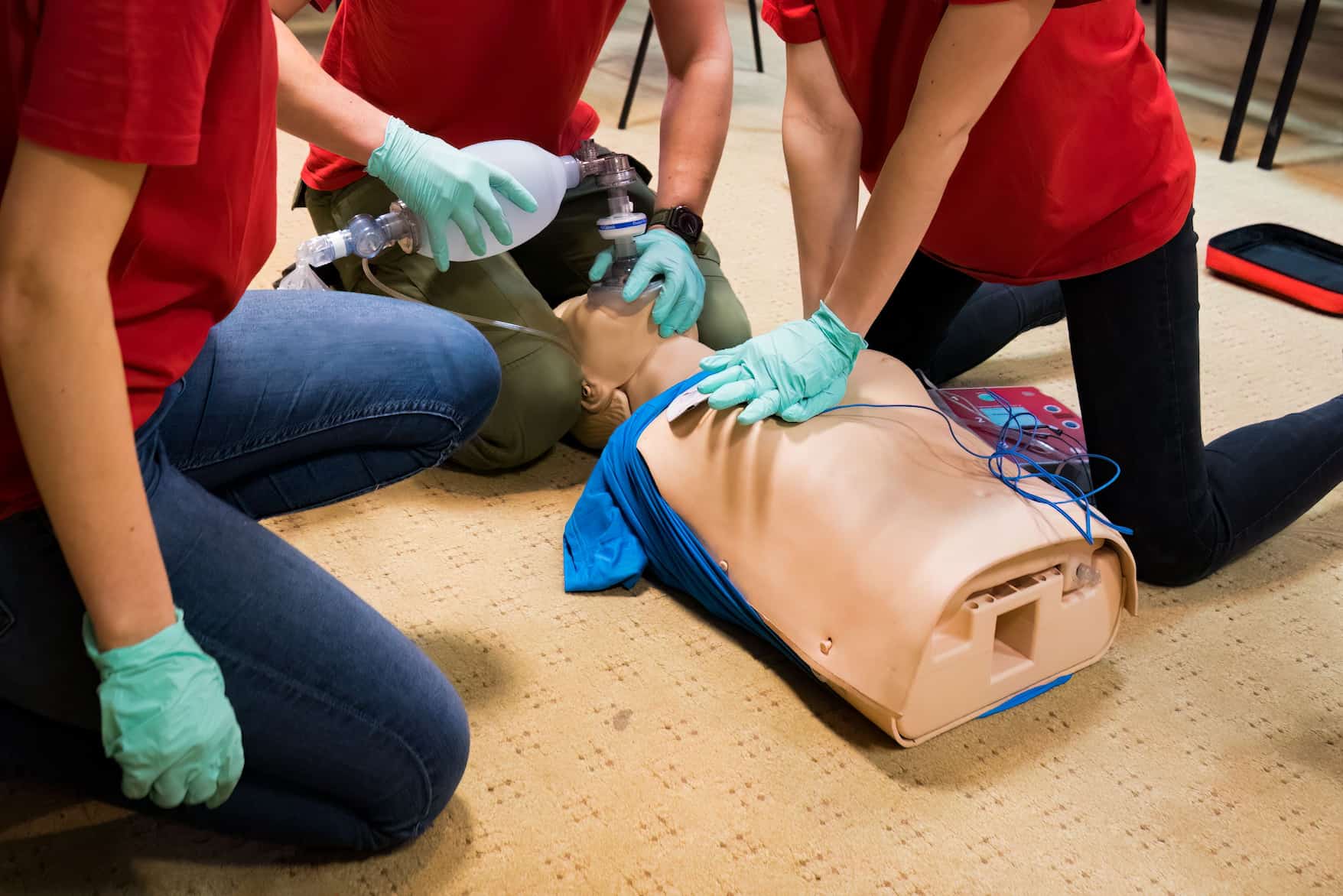
Students performing CPR and ventilation on a training manikin in class

Preparing for nursing school is an incredibly exciting milestone, but it also comes with a mountain of clinical compliance paperwork. Between background checks, immunization records, and drug screens, there is one critical credential you cannot afford to overlook: your Basic Life Support (BLS) certification.

If you are enrolling in a nursing program in the Austin area, you will quickly find that keeping an active BLS card is a strict, non-negotiable prerequisite for stepping foot in any local hospital or clinical facility. However, not all CPR courses are created equal. Slipping up and taking the wrong class can cost you time, delay your clinical rotations, and force you to pay for training twice.

In this comprehensive guide, we will break down exactly why Austin nursing schools are so strict about their BLS requirements, what you will experience during your training, and how to ensure your certification meets every local institutional standard.

Why Do Austin Nursing Programs Specifically Require BLS Certification?

To understand why local schools are so rigid about this requirement, you have to look at the clinical environments where you will be trained. Major healthcare networks throughout Central Texas—such as Ascension Seton, St. David’s HealthCare, and Baylor Scott & White—partner with local colleges to host nursing students for clinical rotations.

These hospital networks maintain strict patient safety standards. They mandate that anyone providing direct patient care, including student nurses, must be fully certified to respond to cardiac and respiratory emergencies. Because hospitals require their staff to hold professional-level lifesaver credentials, nursing schools must enforce the exact same standard.

Furthermore, general CPR classes designed for the public do not cover the advanced team-based dynamics and clinical scenarios you will encounter in a hospital ward. Basic Life Support training ensures that when a code is called on your floor, you can seamlessly jump in to assist the healthcare team without hesitation.

Which BLS Certifying Body Is Accepted by Local Nursing Schools?

There is one golden rule when it comes to clinical compliance in Central Texas: Your BLS certification must be from the American Heart Association (AHA).

While there are other national organizations that teach emergency resuscitation, local nursing programs and major hospital systems almost exclusively recognize the AHA. In fact, submitting a non-AHA card to your clinical coordinator is one of the most common reasons students get turned away on compliance day.

When searching for a local course, always look for the official American Heart Association seal. Many online providers use misleading language to make their courses look official, but they lack the genuine credentials required by academic institutions. Taking a course through an authorized training site like CPR Classes Near Me Austin guarantees that your card will be fully accepted.

Can I Take My BLS Certification Online for Nursing School?

The short answer is no. Virtually all nursing programs in Austin reject 100% online CPR certifications.

Online-only courses are popular because they are fast and cheap, but they lack the physical, hands-on practice that is vital to mastering life-saving skills. You cannot learn the physical muscle memory of proper chest compression depth, or the spatial coordination of operating an Automated External Defibrillator (AED), simply by clicking through slides on a computer.

To meet school requirements, you must complete an in-person class where an authorized instructor physically evaluates your technique on adult, child, and infant manikins. If you prefer a hybrid approach, the AHA does allow “blended learning,” where you complete the cognitive portion online and then attend an in-person hands-on skills session. However, a fully in-person class remains the most straightforward way to get certified and ask real-time questions.

What Skills Will You Learn in an Austin BLS Class?

An AHA BLS course is designed to prepare you for high-stress, multi-rescuer medical emergencies. Unlike basic community CPR, this curriculum focuses on the clinical precision needed in professional healthcare environments.

During your session, you will dive deep into both the theory and physical application of the following core emergency skills:

  • High-Quality CPR: You will learn the exact compression depth (at least 2 inches for adults) and rate (100 to 120 compressions per minute) required to keep blood circulating to vital organs.
  • Airway Management & Ventilation: Instructors will teach you how to use barrier devices and pocket masks, as well as how to coordinate two-rescuer bag-mask ventilation.
  • AED Operation: You will practice safely setting up, powering, and delivering shocks using an Automated External Defibrillator on both adult and pediatric victims.
  • Team Dynamics: Because hospital codes rely on seamless communication, you will practice multi-rescuer scenarios where you must delegate roles, communicate clearly, and minimize compression interruptions.
  • Choking Relief: You will master the foreign-body airway obstruction clearance techniques for conscious and unconscious adults, children, and infants.

How Long Does the BLS Certification Class Take to Complete?

For busy nursing students juggling heavy study loads, time is incredibly precious. Fortunately, the in-person BLS class is designed to be highly efficient.

At authorized AHA training centers, the entire course—including the instructional video, hands-on practice, physical skills evaluation, and written exam—takes approximately 3.7 hours to complete. Because the curriculum is highly structured, there is no wasted time.

Once you successfully complete the course, you do not have to wait weeks for your physical card to arrive in the mail. Providers like CPR Classes Near Me Austin issue your official AHA BLS eCard digitally on the very same day. This means you can immediately download the PDF and upload it directly to your school’s clinical compliance portal.

How Often Must Nursing Students Renew Their BLS Certification?

Your AHA BLS certification is valid for exactly two years from the month it was issued.

As a nursing student, it is your responsibility to monitor this expiration date closely. If your card expires in the middle of a semester, your clinical coordinator will immediately pull you from your hospital shifts until you provide proof of renewal. Missing clinical hours due to an expired card can delay your graduation or force you to retake a course.

Fortunately, renewing your card is simple. The renewal class is identical to the standard in-person BLS class, allowing you to quickly refresh your skills, pass the evaluation, and secure another two years of compliance in a single afternoon.

Ready to Complete Your Clinical Compliance?

Meeting your clinical prerequisites does not have to be stressful. If you are preparing to start your nursing journey in the Central Texas region, secure your schedule ahead of time to avoid last-minute registration rushes.

Get compliant, gain the confidence to handle cardiac emergencies, and set yourself up for clinical success. Contact CPR Classes Near Me today to book your in-person AHA BLS class and receive your official certification card on the very same day.

Frequently Asked Questions

What happens if my BLS card expires during my nursing school semester?

If your BLS certification expires during the academic semester, you will be barred from participating in clinical rotations until you complete a renewal class. To prevent clinical delays, it is best to renew your card at least one month before it expires.

How much does an AHA BLS class typically cost in Austin?

An authorized American Heart Association BLS class in Austin typically starts at $64.95. Be cautious of websites advertising cheaper online-only classes, as these do not include the hands-on skills testing required by nursing schools.

Is a standard First Aid card sufficient for nursing clinicals?

No, a standard First Aid card or general CPR card is not sufficient. Nursing programs specifically require the professional-grade “Basic Life Support (BLS) for Healthcare Providers” certification, which includes advanced clinical concepts and team rescue dynamics.

What should I wear to my in-person BLS class in Austin?

You should wear comfortable, casual clothing or clean nursing scrubs. The class involves significant physical activity, including kneeling on the floor to perform continuous chest compressions on practice manikins.

Do Austin nursing schools accept BLS cards from the Red Cross?

While some schools may technically accept American Red Cross BLS, the vast majority of Austin nursing programs and local hospital systems specifically mandate American Heart Association (AHA) certifications to maintain absolute uniformity across clinical teams.