How to Choose a CPR Renewal Course for Clinical Roles
For healthcare professionals, keeping your life-saving credentials current is more than a line item on a compliance checklist. It is a fundamental safeguard for patient care. When your two-year certification window starts closing, finding the correct CPR renewal course for clinical roles becomes an urgent priority.
The medical field does not accept general, entry-level safety certificates. Clinical environments—ranging from bustling emergency departments to quiet physical therapy clinics—demand a rigorous, standardized tier of training. Choosing the wrong program can result in rejected credentials, unnecessary out-of-pocket expenses, and even temporary suspension from work.
This comprehensive guide will show you exactly how to evaluate renewal options, navigate strict employer mandates, and select a course that keeps you fully compliant and prepared to act in critical moments.
Why Do Clinical Employers Mandate Specific CPR Standards?
Clinical settings present complex emergency scenarios that require coordinated, high-performance team responses. Unlike a bystander assisting in a public space, healthcare workers must operate within structured resuscitation systems. Therefore, employers mandate specialized BLS CPR certification rather than basic heartsaver classes.
The vast majority of hospitals, outpatient surgical centers, and skilled nursing facilities require credentials directly aligned with the American Heart Association (AHA). The AHA sets the gold standard for evidence-based cardiovascular care guidelines. When an employer asks for clinical CPR, they are almost universally looking for an official AHA BLS (Basic Life Support) Provider card.
Hospitals and clinics must answer to strict regulatory bodies, insurance providers, and joint commission standards. Accepting unaccredited or non-standardized training leaves a facility vulnerable to massive liability. By requiring a standardized, accredited CPR renewal course for clinical roles, healthcare organizations ensure that every staff member can seamlessly integrate into a multi-rescuer resuscitation team.
What Is the Difference Between BLS and General CPR Courses?
It is common to feel confused by the array of safety courses available online and in local communities. However, for those working in clinical roles, the distinction between Basic Life Support (BLS) and general CPR is absolute.
General CPR classes teach basic, single-rescuer skills designed for the public. These classes focus primarily on single-rescuer lifesaving techniques, basic chest compressions, and simple rescue breaths using mouth-to-mouth or barrier shields. They are intended for individuals like teachers, coaches, retail workers, and parents.
A professional healthcare provider CPR course, by contrast, trains you to perform rapid assessments, check central pulses, and coordinate seamlessly with other medical responders during high-stress cardiac events. It covers advanced skills such as team resuscitation dynamics, carotid pulse checks for adults, brachial pulse checks for infants, and the use of professional bag-mask ventilation systems.
Can I Take My Clinical CPR Renewal Entirely Online?
If you are looking for a quick fix, you will find countless websites offering “100% online clinical CPR certification.” However, as a clinical professional, you must avoid these programs.
Crucial Compliance Fact: Reputable clinical employers and licensing boards do not recognize CPR certifications obtained solely through online courses.
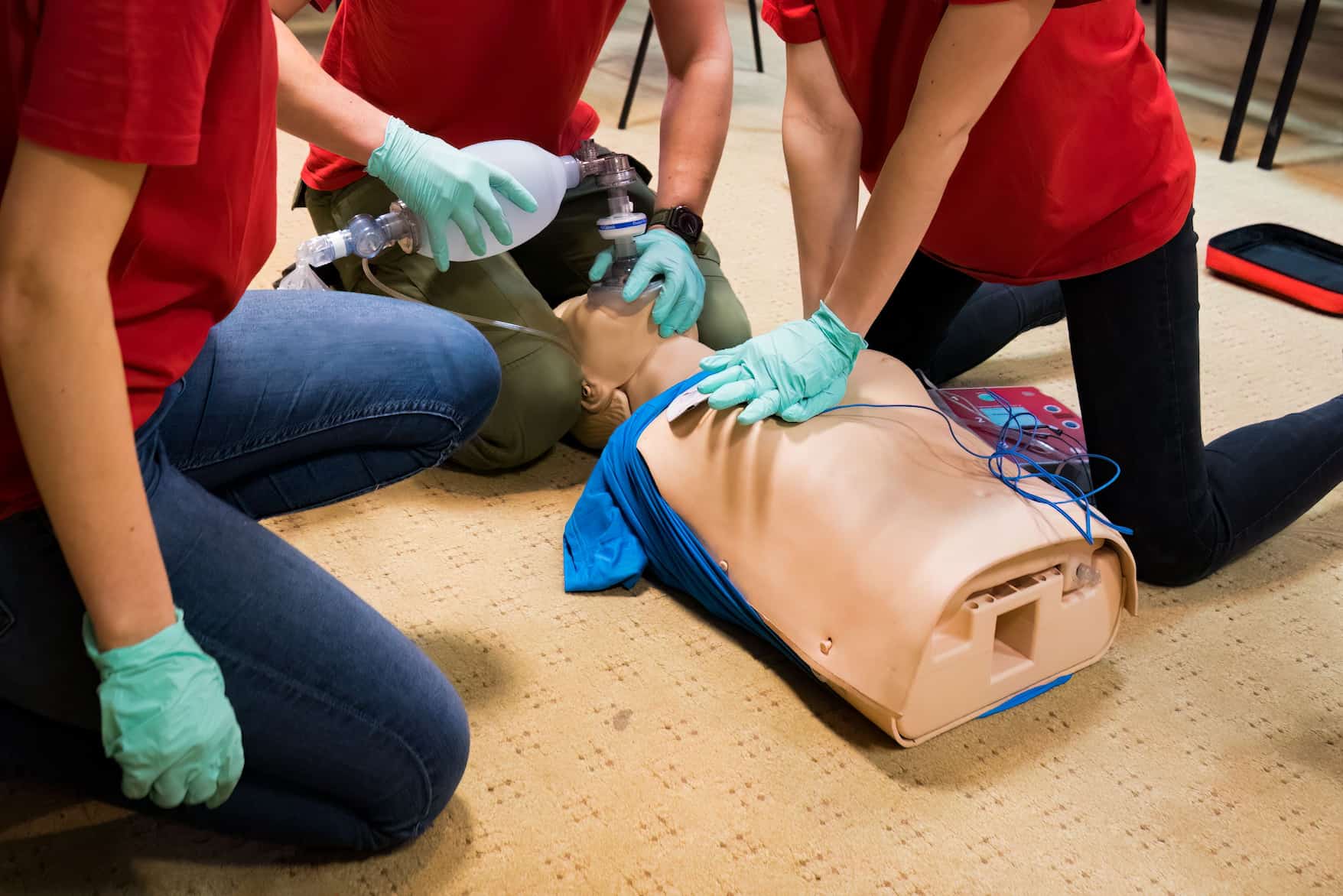
To build true muscle memory, you must practice with real physical equipment. Authentic, employer-accepted hands-on CPR training requires you to demonstrate compression depth, recoil, and ventilation techniques on physical feedback manikins under the watchful eye of a certified instructor. Purely digital courses lack this vital tactile component, making them functionally useless for clinical compliance.
How Long Does a Compliant BLS Renewal Class Take?
As a busy medical professional, your time is incredibly valuable. Fortunately, a highly efficient, authorized AHA BLS renewal does not require days of classroom time.
At our authorized training sites, we structure the class to respect your schedule while ensuring absolute compliance. A complete, high-quality, in-person session with CPR Classes Near Me takes approximately 3.7 hours.
During this single, focused session, you will review the updated guidelines, practice your hands-on skills, complete your practical evaluation, and take your written assessment. Because we streamline the administrative process, your instructor will issue your official AHA BLS digital eCard on the exact same day you complete the class.
What Key Skills Are Covered in a Professional Renewal Course?
A high-quality renewal course does not just repeat basic facts; it sharpens the precise physical skills you need to save lives in a clinical environment. When you enroll in an authorized AHA BLS course, you will actively master the following core competencies:
- High-Quality Compressions: Perfecting your hand placement, compression depth (at least 2 inches for adults), and rate (100 to 120 compressions per minute) to maintain optimal systemic perfusion.
- Advanced Ventilation Techniques: Learning how to properly assemble, seal, and use bag-mask devices and pocket masks without causing gastric inflation.
- Automated External Defibrillator (AED) Integration: Rapidly deploying and safely operating an AED in both single-rescuer and team-based clinical scenarios.
- Multi-Rescuer Team Dynamics: Understanding clear roles, closed-loop communication, and smooth transitions during continuous chest compressions.
- Foreign Body Airway Obstruction: Mastering age-appropriate techniques to quickly relieve choking in adults, children, and infants.
How Do I Verify That a CPR Class Is Legitimate?
Before you hand over your credit card, you must verify that the training center is fully accredited. Use this quick, reliable verification checklist to ensure your class is legitimate:
- Look for the Official Seal: Ensure the training facility displays the official American Heart Association training site alignment.
- Verify the Card Type: Confirm that the class issues an official AHA BLS Provider eCard—not a house-brand or generic “national” certificate.
- Avoid “100% Online” Claims: If a website promises a clinical-grade card without a live, in-person skills check, it is not a legitimate program for healthcare workers.
- Ask About the Instructors: Confirm that the courses are taught by active, certified AHA instructors who have real-world emergency response experience.
By choosing a trusted, locally established provider like CPR Classes Near Me, you can confidently book your class knowing your certification is fully accredited and guaranteed to be accepted by clinical employers nationwide.
Get Your Accredited Clinical CPR Renewal Today
Do not risk your clinical compliance or your career with unaccredited, online-only courses. Protect your patients and secure your professional credentials with a convenient, hands-on class designed specifically for healthcare providers.
With convenient locations in major cities across the United States—including Austin, Atlanta, Chicago, Phoenix, Houston, and many more—the team at CPR Classes Near Me makes staying certified stress-free. Our certified instructors provide top-tier, highly engaging instruction in a supportive, professional environment.
Ready to secure your seat? Contact CPR Classes Near Me today to find a convenient local class, view upcoming schedules, and get your official AHA BLS eCard issued on the very same day.
Frequently Asked Questions
How long does a clinical CPR certification remain valid?
An official American Heart Association BLS certification is valid for exactly two years from the end of the month in which it was issued. To prevent any gaps in your employment eligibility, you should schedule your renewal class at least a few weeks before your current card expires.
What is the cost of a BLS CPR renewal course?
At our training sites, we keep professional certification highly accessible. Our official, in-person AHA BLS class starts at $64.95, representing a direct $20 discount to help healthcare professionals stay compliant. If you also need First Aid certification for your specific clinical role, we offer a combined BLS and First Aid class starting at $84.95.
What should I do if my clinical CPR card has already expired?
If your card has expired, you cannot legally perform duties that require an active BLS credential in most clinical settings. You must take the complete BLS class to restore your active status. Fortunately, because our in-person courses are highly efficient, you can complete your training and receive your new, valid eCard on the very same day.
Is there a difference between an initial BLS class and a renewal class?
The course content and the final certification card are identical. Because the AHA updates its guidelines periodically, all participants—whether taking the course for the first time or renewing for the fifth time—must complete the full, hands-on instructional components and practical evaluations to ensure perfect mastery of the latest life-saving protocols.
What does “same-day eCard delivery” mean?
It means you do not have to wait weeks for a paper certificate to arrive in the mail. Immediately after you successfully complete your classroom instruction and practical skills check, your instructor will process your paperwork and digitally issue your official AHA eCard. You can instantly view, download, and email this digital credential to your clinical employer or licensing board.