Fastest Ways to Renew BLS in Austin: Same-Day AHA Cards

CPR training session with students practicing chest compressions on a first aid mannequin

Maintaining your clinical credentials should not require jumping through endless corporate hoops or losing days of valuable shift work. For medical staff, first responders, and emergency personnel throughout Travis and Williamson counties, keeping a Basic Life Support status active is a non-negotiable professional mandate. If your current credential is close to its expiration date, finding an efficient path to renew BLS in Austin is essential to preventing any gaps in your employment eligibility.

The process does not have to be long or overly complicated. By choosing an optimized, American Heart Association (AHA) authorized training site, you can finish your entire update in just a single afternoon or morning block. You will walk out of the classroom fully authorized and prepared for your shifts.

This comprehensive guide breaks down the quickest pathways to secure your official documentation, explores what to expect during your hands-on classroom review, and shows you how to receive your digital verification card the very same day.

How Long Does an Official BLS Renewal Class in Austin Take?

When you need to renew BLS in Austin, the total time commitment is a major priority. An official, fully accredited AHA BLS renewal class is completed in a single in-person session lasting approximately 3.7 hours. This focused time block guarantees that you fulfill every national training criterion established by the American Heart Association without any unnecessary delay.

During this focused session, you will fast-track through core concepts while prioritizing high-quality muscle memory. The instructional flow is designed for professionals who have seen this material before but require a strict review of updated guidelines. You will watch the official AHA instructional modules, practice with high-fidelity manikins, and finish your skills test in under four hours.

This streamlined setup eliminates the need for multi-day seminars or prolonged lectures. It provides the ideal balance of speed and thoroughness, allowing busy medical workers to easily schedule their training around demanding hospital shifts or clinic hours.

Can You Earn Your AHA BLS Certification with Same-Day Card Delivery?

Yes, you can absolutely earn your official digital documentation on the exact same day that you complete your classroom work. The modern standard for clinical verification relies entirely on the AHA eCard system, which cuts out the old-fashioned wait times associated with physical paper certificates.

As soon as your instructor verifies your successful written exam score and passes your manual rescue skills evaluation, your digital eCard is processed. Your secure digital profile updates in real time, sending an official credential directly to your email inbox before you leave the parking lot.

[Classroom Dismissal] ➔ [Instructor Digital Sign-Off] ➔ [Instant Email Notification with eCard Link]

This rapid turnaround is a lifesaver if you are facing a strict human resources deadline at your hospital or clinic. Instead of waiting days for processing, you can immediately print your electronic certificate or forward the official verification link directly to your employer’s compliance portal.

Why In-Person Training is the Quickest Pathway to Employer Acceptance

While online-only shortcuts might seem tempting when looking to renew BLS in Austin, they almost always lead to compliance issues. The vast majority of healthcare organizations, emergency networks, and corporate medical boards across Texas strictly reject any Basic Life Support credentials that lack a live, monitored manual skills check.

In-person sessions ensure you receive direct feedback on compression depth, recoil speed, and ventilation volume. Learning from live instructors who are seasoned emergency response experts gives you a major advantage, ensuring your physical technique is up to standard.

  • Real-time Corrections: Instructors tweak your hand placement instantly, ensuring you do not form bad habits.
  • Guaranteed Compliance: In-person AHA training satisfies all strict OSHA guidelines and hospital credentialing rules.
  • True Equipment Practice: You get to work with actual automated external defibrillator (AED) trainers and pocket masks, building real confidence.

Choosing a certified in-person class protects you from wasting money on a cheap online certificate that your employer will turn down, forcing you to start the process all over again.

What Lifesaving Protocols are Covered in an Advanced Austin CPR Renewal?

A professional Basic Life Support update goes far beyond basic first aid tips. It is a highly technical review of the chain of survival for adults, children, and infants, tailored specifically for multi-rescuer clinical environments.

High-Quality Compressions ➔ Advanced Airway Management ➔ Rapid AED Integration ➔ Team Dynamics

Your classroom training covers the precise mechanics of high-quality chest compressions, ensuring you hit the exact depths and rates required for maximum blood flow. You will also practice advanced ventilation techniques using bag-mask devices and barrier shields, ensuring smooth oxygen delivery with minimal interruptions.

A major focus of the modern curriculum is perfecting team dynamics. You will practice coordinated rescue scenarios where multiple providers must seamlessly manage roles, clear airways, trade off compressions, and operate an AED together. This direct training ensures you can walk back onto your clinic floor ready to communicate clearly and act decisively during sudden cardiac events.

Who is Required to Hold a Valid Basic Life Support Recertification in Texas?

Basic Life Support compliance forms the foundational safety backbone across the entire Central Texas medical community. If your daily work involves direct patient care, diagnostics, or emergency management, keeping this credential current is a core professional duty.

Registered Nurses and Certified Nursing Assistants operating in acute care facilities, hospitals, and long-term care environments rely on this certification to manage advanced multi-rescuer system dynamics. The intense nature of hospital care means these professionals must refresh their muscle memory regularly to maintain high-quality intervention standards under pressure.

Medical office personnel and dental clinic staff require this validation to ensure rapid airway clearance and immediate AED use during outpatient emergencies. Because sudden cardiac events can happen in specialized clinical waiting rooms, administrative and support staff must remain just as prepared as frontline emergency nurses.

Physical therapists, occupational specialists, and sports medicine units utilize this training to recognize sudden adult cardiac arrest during rehabilitation sessions. Meanwhile, first responders and public safety personnel utilize these fast-track updates to ensure high-quality compressions during high-stress field operations throughout the metropolitan area.

Outside of traditional hospital settings, this level of validation is regularly required for private health specialists, dental surgeons, athletic coaches, and childcare directors. Anyone tasked with supervising vulnerable groups can benefit from holding the highest standard of life-saving validation available.

Where Can You Find Convenient Training Locations Throughout the Austin Metro Area?

You do not have to drive far to find exceptional local training options. High-quality registration portals provide flexible classroom scheduling distributed across multiple neighborhoods to keep your commute as short as possible.

Whether you need a convenient morning slot at a primary Austin training hub or an evening class in Austin North, you can easily find options that fit your schedule. Local classes also serve surrounding communities like Pflugerville, Round Rock, Cedar Park, Lakeway, Buda, and Kyle.

If you are managing a larger team at an outpatient center, urgent care clinic, or local school district, you can arrange custom group training sessions. Certified instructors will travel directly to your facility anywhere in the region, bringing all the necessary manikins and testing gear to certify your whole staff at once right on-site.

How Much Does a Local AHA BLS Class Cost and What is Included?

Quality emergency training should be both reliable and affordable. In the local region, an official AHA BLS certification class starts at a discounted promotional rate of $64.95, giving you a top-tier educational experience at an accessible price.

Be Smart with Your Credentials: If a local provider lists prices that seem too good to be true, double-check for the official American Heart Association seal. Many unaccredited online businesses sell cheap, unofficial certifications that fail to meet employer standards, costing you more time and money in the long run.

Your registration fee covers everything you need for success. It includes your full classroom session, hands-on practice equipment, your formal skills assessment, and the issuance of your official same-day digital eCard. There are no hidden processing fees or surprise charges at checkout.

Secure Your Same-Day Certification Today

Do not risk missing shifts or losing your professional compliance status due to an expired card. Securing an official, affordable, and incredibly fast update is simple and stress-free. With expert-led classes that take less than four hours and provide immediate digital documentation, you can easily check this requirement off your list.

Take a moment to view the upcoming calendar options at our local training hubs, pick the time slot that fits your schedule, and complete your registration in just a few clicks. Contact CPR Classes Near Me today to secure your seat and protect your clinical credentials!

Frequently Asked Questions About Local BLS Recertification

How long does an official BLS renewal certification last?

An official American Heart Association Basic Life Support credential remains fully valid for exactly two years from the final day of your course completion. Once that two-year window closes, you must complete another approved classroom renewal session to keep your active employment status.

Is there a difference between a standard BLS course and a renewal class?

Content-wise, the core guidelines, skills tests, and written exams are identical for both versions. Because the AHA requires all authorized training sites to present the complete instructional material and video sequences, a renewal class features the same comprehensive information as an initial certification course.

Can I complete my entire BLS recertification online?

No, a 100% online course will not earn you an universally accepted professional credential. True employer-compliant validation requires an in-person skills check to verify your manual technique, compression depth, and ventilation timing.

What happens if my current BLS credential has already expired?

If your card has passed its expiration date, you need to sign up for an upcoming classroom session as soon as possible. Most clinical employers do not offer a grace period and will immediately take you off active shifts until you show an updated, valid AHA eCard.

Is there a minimum age requirement to take an Austin CPR renewal course?

There is no official minimum age limit enforced by the American Heart Association for this training. Anyone who can independently understand the course material and physically perform high-quality chest compressions on the training manikins is welcome to enroll.
How Long CPR Certification Lasts and Why Renewal Matters

When an emergency strikes in a workplace, school, or public setting, seconds count. Knowing how to perform cardiopulmonary resuscitation (CPR) can mean the difference between life and death for someone experiencing sudden cardiac arrest. However, keeping those emergency response training skills sharp requires more than just a one-time class.

Many professionals and everyday citizens find themselves wondering exactly how long their safety credentials remain valid. Understanding the lifespan of your credential ensures you remain compliant with workplace regulations and prepared to act during a crisis.

This comprehensive guide will break down exactly how long cpr certification lasts, explore the critical reasons why regulatory bodies mandate regular recertification, and explain how you can seamlessly renew your skills.

How Long Does CPR Certification Last for Healthcare Providers and Professionals?

An official American Heart Association (AHA) Basic Life Support (BLS) CPR certification is valid for exactly two years from the date of issuance. This twenty-four-month window applies across all professional sectors, ensuring that every certified individual maintains a baseline level of emergency preparedness. Whether you are a registered nurse, an educator, or a construction site safety manager, your official eCard will clearly display an expiration date marked two years out from your class completion.

The two-year timeline is not an arbitrary number selected by training centers. It is a standardized timeframe established by major medical and regulatory bodies to guarantee public safety. Once those 24 months pass, your card expires, and you are no longer considered certified to perform these life-saving interventions in a professional capacity.

To help you understand how this timeline impacts different industries, consider who must track this 24-month window closely:

  • Clinical Healthcare Workers: Registered nurses (RNs), certified nursing assistants (CNAs), physical therapists, and medical office staff must hold active, unexpired cards to maintain clinical privileges.
  • Childcare and Education Professionals: Teachers, daycare operators, coaches, and referees require up-to-date training to protect the youth under their supervision.
  • Industrial and Field Operators: Construction crews, commercial electricians, and flight attendants rely on active certifications to meet strict industry safety protocols.
  • Aquatics and Hospitality Personnel: Lifeguards, swim instructors, and hotel safety teams must keep their credentials active to handle high-risk recreational environments.

Why Does the American Heart Association Mandate a Two-Year Expiration?

The primary reason behind the strict two-year limit on your BLS certification is the natural degradation of both cognitive knowledge and manual psychomotor skills. Scientific studies consistently demonstrate that CPR skills begin to decline significantly as early as six months after completing a training course. While you might remember the basic concept of chest compressions, the precise depth, compression rate, and hand placement tend to fade without regular application.

Furthermore, emergency medicine is a rapidly evolving field. Every few years, the American Heart Association updates its structural guidelines based on extensive clinical data and outcomes from real-world cardiac events. For instance, changes in recommended compression-to-breath ratios, advancements in Automated External Defibrillator (AED) technology interfaces, and updated choking relief protocols are integrated directly into the curriculum.

By requiring a renewal class every two years, the medical community ensures that every cardholder is practicing the most advanced, proven techniques available. This regular refresh directly increases the survival rates of cardiac arrest victims in our communities.

What Are the Real Risks of Allowing Your CPR Card to Expire?

Allowing your safety credentials to lapse introduces significant liability, regulatory risks, and personal safety concerns. From a professional standpoint, working with an expired CPR card can result in immediate suspension, formal workplace reprimands, or even termination. Regulatory bodies like the Occupational Safety and Health Administration (OSHA) mandate strict compliance guidelines for high-risk industries, and non-compliance can lead to massive corporate fines during safety audits.

Beyond the administrative penalties, the human cost of skill erosion is the most critical risk. If you are faced with an infant choking or an adult collapsing from sudden cardiac arrest, hesitation can be catastrophic.

An expired certification often leads to a lack of confidence, causing a bystander to delay chest compressions or misuse an AED. When blood flow to the brain stops, irreversible cellular damage can begin within four to six minutes, making immediate, highly accurate intervention absolutely paramount.

What Is Covered During an Official CPR Renewal Class?

An authentic, employer-accepted CPR renewal class is not a condensed or abbreviated version of the safety material; it is a full, rigorous review of essential life-saving mechanics. The American Heart Association mandates that all authorized training centers cover the complete, updated curriculum to ensure zero gaps in your emergency readiness.

When you attend an official session, you will actively engage in comprehensive, hands-on instruction led by certified professionals. The core material includes:

  • High-Quality Chest Compressions: Perfecting proper hand placement, ensuring a depth of at least two inches for adults, and maintaining a steady cadence of 100 to 120 compressions per minute.
  • Advanced Ventilation Techniques: Utilizing barrier devices and pocket masks to deliver effective rescue breaths while minimizing interruptions in chest compressions.
  • Automated External Defibrillator (AED) Integration: Mastering the safe setup, pad placement, and operational prompts of an AED for adult, child, and infant victims.
  • Pediatric Resuscitation Dynamics: Adapting compression depth and force using the two-finger or two-thumb technique specifically for infants and small children.
  • Airway Obstruction Management: Executing precise abdominal thrusts and back blows to quickly clear foreign body airway blockages across all age categories.
  • Coordinated Team Dynamics: Learning how to effectively communicate and trade roles with other rescuers to prevent fatigue during multi-rescuer resuscitation efforts.

Can You Renew a CPR Certification Entirely Online?

No, purely online CPR certifications are heavily rejected by employers and do not meet OSHA workplace safety compliance standards. While many web-based platforms promise cheap, instant certifications that do not require an in-person component, these cards lack official American Heart Association credentials.

The mechanics of performing high-quality CPR require physical, tactile practice that a computer screen simply cannot replicate. Instructors must evaluate your actual compression depth, your recoil speed on a physical manikin, and your ability to properly clear a simulated airway.

An official, fully compliant training session requires your physical presence for a live-training event lasting approximately 3.7 hours. This interactive format guarantees you walk away with real confidence, recognized credentials, and a legitimate same-day certification card that is guaranteed to pass any employer audit nationwide.

How Long Is the Grace Period After a CPR Certification Expires?

Critical Safety Rule: There is no official or legal grace period once your CPR certification expires. The moment the expiration date printed on your AHA eCard passes, your credential is formally invalid.

While some employers may offer an internal, administrative window for you to schedule a class, you are legally uncertified during that interim period. You cannot act as a designated safety officer, and healthcare providers cannot work clinical shifts with a lapsed card.

Fortunately, the American Heart Association structure makes recertification straightforward. If your card has expired, you do not face a penalty; you simply enroll in an official BLS course to restore your status. The course material for a first-time student and a renewing provider is identical, ensuring everyone receives the same elite level of hands-on evaluation.

How to Easily Schedule Your Next Recertification Class

Staying ahead of your expiration date is the best way to avoid disruptions in your employment or gaps in your emergency readiness. It is highly recommended to schedule your next training session roughly 30 to 45 days before your current card expires. This proactive approach gives you ample flexibility to find a convenient class time that fits your busy lifestyle.

When choosing a training provider, always verify that the facility displays the official American Heart Association seal. Signing up with a premium, local training site streamlines the entire process, allowing you to complete your live evaluation and receive your digital eCard on the exact same day you finish your class.

Secure Your Same-Day Certification Card Today

Don’t wait until an unexpected workplace audit or an emergency situation catches you off guard with an invalid card. Keeping your life-saving skills sharp is a vital responsibility for professionals and community members alike. At CPR Classes Near Me, our certified instructors provide engaging, hands-on, and fully compliant courses designed to get you certified efficiently.

Whether you need to earn your credential for the very first time or extend your current compliance for another two years, we are here to help. Contact CPR Classes Near Me today to view upcoming class schedules in your area, lock in affordable local pricing, and secure your same-day certification card.

Frequently Asked Questions

How long is a CPR certification card valid?

An official American Heart Association (AHA) CPR or BLS certification card remains fully valid for exactly two years (24 months) from the date you successfully complete your training course. Once that date passes, the card expires and must be renewed to maintain legal and professional compliance.

Is there a penalty if I let my CPR certification expire before renewing?

There is no formal penalty or fee issued by training centers for letting your card lapse, but you will instantly lose your active certified status. You will simply need to enroll in a standard, in-person course to earn a fresh card, as grace periods are not legally recognized by regulatory bodies.

Why do employers refuse to accept 100% online CPR certifications?

Employers and regulatory agencies like OSHA reject pure online certifications because they lack live, hands-on skills assessments. True emergency response requires physical practice on a manikin to master compression depth and timing, which cannot be accurately evaluated through a computer quiz.

How many hours does an official CPR certification course take to complete?

An authorized, comprehensive in-person AHA BLS certification course takes approximately 3.7 hours to complete. This dedicated window covers all instructional videos, hands-on practice sessions, and the final practical skills evaluation required to issue your credential.

Will I receive my physical or digital CPR card immediately after finishing the class?

Yes, when you train with an authorized, top-tier provider like CPR Classes Near Me, your official American Heart Association BLS eCard is processed and issued digitally on the very same day you successfully finish your class.

Can You Still Work if Your CPR Certification Expired?

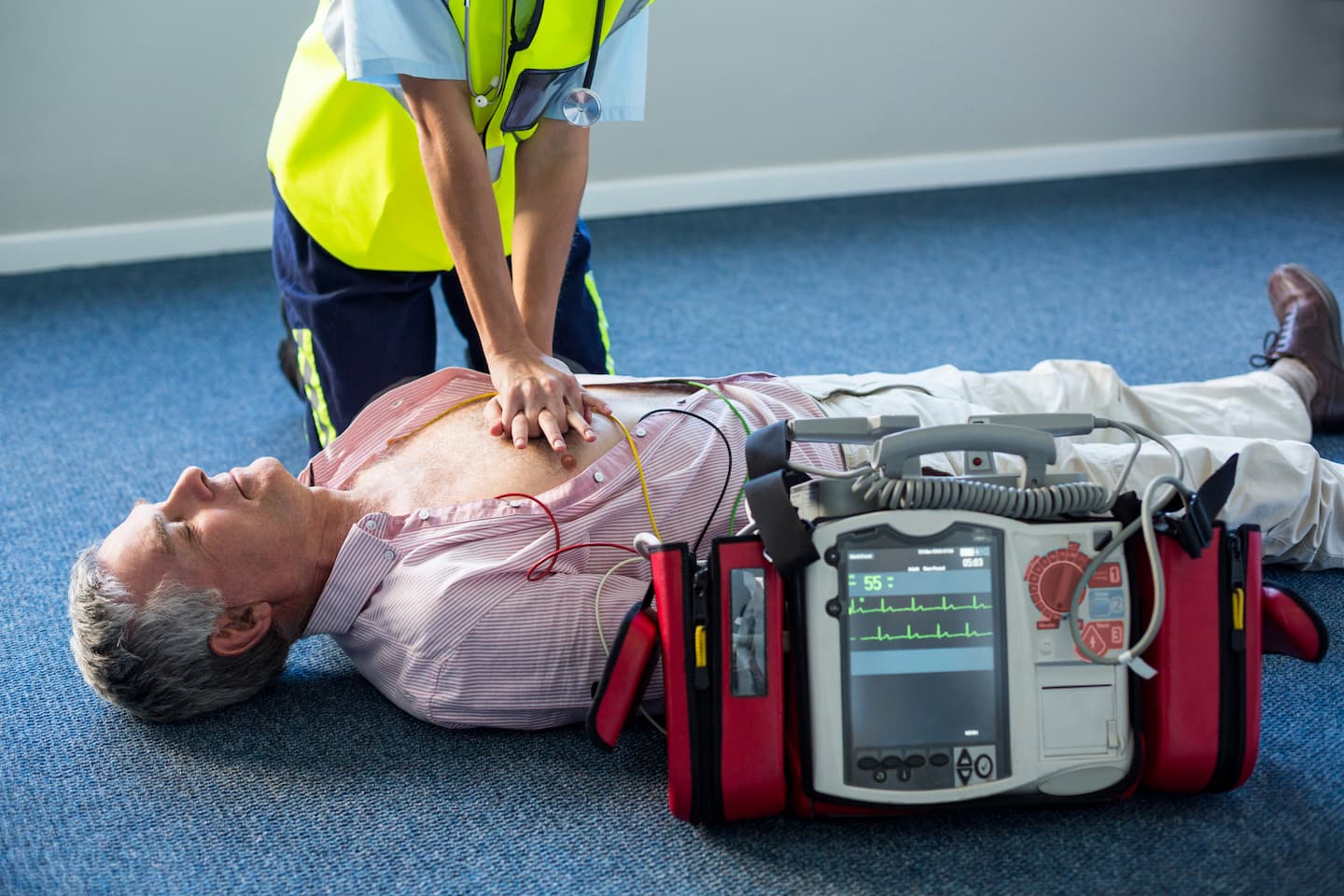
Paramedic performing CPR with defibrillator on cardiac arrest patient

Discovering that you have an expired cpr certification can cause immediate panic, especially if your job relies on it. Whether you work on a clinical floor, manage an active fitness studio, or run an early childhood development center, keeping your life-saving credentials current is a core professional duty.

This guide breaks down exactly what happens to your employment status when your card lapses. You will learn about workplace liability, regulatory compliance, and the fastest steps you can take to get back to work safely.

Can you legally work with an expired CPR certification?

The short answer is that it depends entirely on your specific profession and state licensing regulations. For many healthcare workers, emergency responders, and childcare professionals, working with an expired cpr certification is a direct violation of state law. In these fields, an active credential is a non-negotiable prerequisite for employment.

For other industries, like general corporate offices or retail management, CPR training might be highly encouraged but not legally mandated by a state board. In those cases, the restriction is a matter of company policy rather than statutory law. However, if your official job description requires active certification, letting it lapse means you no longer meet the minimum qualifications for your role.

It is a common misconception that there is a standard legal grace period for life-saving credentials. The American Heart Association and the American Red Cross are explicit: certifications are valid for exactly two years to the day. Once that date passes, your card is officially invalid, and you are no longer considered certified under their guidelines.

What happens if an employer catches an expired CPR card?

When an employer notices that your certification has lapsed, their reaction is driven by compliance, liability, and insurance mandates. Most organizations run routine audits of employee files to ensure every team member meets safety standards. If your file flag comes up red, the consequences are usually immediate.

In high-stakes environments like hospitals or care facilities, you will likely be taken off the schedule immediately. Employers cannot risk the regulatory fines that come with staffing uncertified personnel. For roles where you do not provide direct patient care, you might be temporarily reassigned to administrative duties that do not carry a life-safety requirement.

Beyond immediate scheduling changes, a lapsed card can lead to formal disciplinary action. Many employment contracts state that maintaining necessary certifications is the sole responsibility of the employee. Failing to do so can result in a written warning, formal suspension without pay, or even termination if the lapse causes a severe disruption to staffing.

Is there a grace period for CPR certification renewal?

There is no official grace period granted by major training organizations. Both the American Heart Association and the American Red Cross design their courses to expire exactly 24 months after the issue date. The moment that expiration date passes, your credentials are fully lapsed in their databases.

While the certifying bodies offer zero leeway, individual employers occasionally provide a brief internal window to resolve the issue. An employer might give you a two-week period to complete a CPR renewal course if your lapse was accidental and you have a class scheduled. However, you should never assume this accommodation exists, as many healthcare facilities have a zero-tolerance policy.

Relying on an informal workplace grace period introduces significant professional risk. If an emergency occurs while you are working on an expired card, an internal company extension will not protect you from regulatory scrutiny. It is always safest to treat the expiration date on your card as a hard, final deadline.

What are the legal liability risks of working without active CPR?

Working with an expired credential introduces severe legal vulnerabilities for both you and your employer. If an emergency occurs on your shift and you must perform resuscitation, your lapsed status changes the legal landscape. Plaintiff attorneys can use an expired card to argue that your skills were outdated or non-compliant with current medical guidelines.

While Good Samaritan laws generally protect citizens who act in good faith during emergencies, these protections are drastically different for professionals on the clock. If your job description mandates CPR delivery, you are held to a professional standard of care. Operating without a valid certification makes it much easier for a third party to claim professional negligence.

For employers, the financial and regulatory risks are massive. Allowing an uncertified employee to work can result in the loss of facility licensing, steep fines from state boards, and the denial of insurance coverage if a malpractice lawsuit occurs. This is precisely why human resource departments are unyielding when it comes to certification tracking.

How does an expired CPR certification affect healthcare workers?

For healthcare workers, an active card is fundamentally linked to your professional license. Nurses, respiratory therapists, dental hygienists, and physical therapists must maintain valid life-support credentials to keep their state licenses active. A lapse in certification can trigger a domino effect that compromises your entire professional standing.

If a state licensing board audits a medical facility and finds staff members working with an expired cpr certification, the facility faces immediate penalties. The individual professional can also face a formal board investigation for practicing outside of compliant standards. In healthcare, this is not considered a minor administrative oversight; it is treated as a serious breach of patient safety protocols.

Additionally, healthcare workers cannot simply take a basic community course to satisfy their workplace requirements. Hospital systems and clinical environments require a specific tier of training, usually focused on basic life support for healthcare providers. Ensuring you sign up for the precise level of training required by your licensing board is vital to resolving a lapse.

What steps should you take if your CPR certification has lapsed?

If you check your wallet or digital portal and realize your card has expired, your very first step must be transparency. Notify your supervisor or human resources manager immediately to discuss your scheduling options. Trying to hide a lapsed credential is far worse than admitting an oversight, as an audit will eventually catch the discrepancy.

Once you have communicated with your employer, you need to find an accelerated training solution. Many providers offer blended learning options that combine online coursework with an in-person skills check. This format allows you to complete the cognitive portion of the class at your own pace late at night, minimizing your total time away from work.

Your ultimate goal should be booking an immediate, hands-on evaluation. Look for local training centers that offer daily schedules or walk-in skills assessments. Getting your physical skills verified by a certified instructor is the final, mandatory hurdle to restoring your active status and getting cleared to return to your normal shifts.

Can you take a renewal course if your certification is already expired?

Whether you qualify for an abbreviated renewal course depends heavily on which organization issued your original card and how long it has been expired. Historically, if your card was even one day past its expiration date, you had to take the full, longer initial certification class all over again.

Currently, the rules are slightly more flexible, though still strict. The American Heart Association generally requires an active card to sit for a standard update course, but individual training centers have some discretion to accept recently expired students if they can demonstrate strong baseline skills. The American Red Cross sometimes allows a brief window past expiration for challenge courses, provided you can pass the written and practical tests on the first try without remediation.

If your certification has been expired for more than a few months, you must expect to register for the full initial course. While this takes a few more hours of your day, it ensures that you are thoroughly re-educated on any updated guidelines or changes in emergency cardiovascular care training that occurred during your lapse.

Get compliant fast with professional training

An expired cpr certification does not have to stall your career or leave your employer in a compliance bind. The fastest way to protect your job, eliminate your legal liability, and ensure you are ready to handle a life-threatening emergency is to book a local recertification class right away.

At CPR Classes Near Me, we specialize in providing accessible, fully accredited emergency training designed to fit the demanding schedules of busy professionals. Our classes strictly follow the most up-to-date guidelines, ensuring you walk away with a verified credential that satisfies your employers, insurance providers, and state licensing boards.

Do not let a lapsed card keep you off the schedule or put your workplace at risk. Contact CPR Classes Near Me today to find an upcoming class in your area and secure your renewal with an expert instructor.

Frequently Asked Questions

Is there a 30-day grace period for an expired CPR certification?

No, there is no official 30-day grace period provided by the American Heart Association or the American Red Cross. Once the expiration date listed on your card passes, your certification is considered legally invalid.

Can my employer fire me on the spot if my CPR card expires?

Yes, if your job description or state licensing laws require an active CPR certification as a condition of employment, your employer has the legal right to suspend or terminate your employment for letting it lapse.

Does an expired CPR certification protect me under Good Samaritan laws?

Good Samaritan laws generally protect everyday citizens who volunteer to help in an emergency, regardless of certification status. However, if you are working in a professional capacity where CPR is a required duty, you are held to a professional standard and may face liability if your card is expired.

What is the difference between a initial CPR class and a CPR renewal course?

A renewal course is a shortened, fast-paced class designed for individuals who currently hold an active or very recently expired card and need to refresh their skills. An initial class is a longer, comprehensive session required for first-timers or those whose certifications have been lapsed for an extended period.

How often do I need to update my CPR certification for work?

You must update your certification every two years. Both major national credentialing bodies issue cards that remain valid for exactly 24 months from the date of course completion.