CPR Certification for CNAs: What to Take and Why
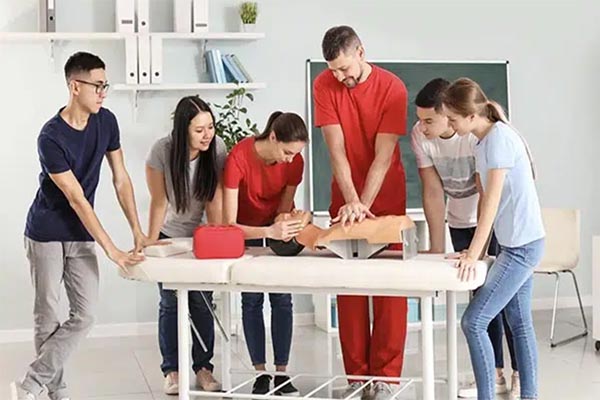
First aid instructor teaching CPR to a group of students using a practice mannequin.

As a Certified Nursing Assistant (CNA), you are the backbone of patient care. You are the one in the room more than anyone else, providing essential support and keeping a watchful eye on patient health. But what happens when a routine check-up turns into a life-threatening emergency?

That is where CPR certification comes in. For CNAs, having a valid, up-to-date certification isn’t just a “nice to have”—it is often a legal and professional requirement. However, not all CPR classes are created equal. If you take the wrong one, you might find yourself back in a classroom because your employer won’t accept it.

In this guide, we’ll break down exactly which course you need, why it matters for your career, and how you can get certified through CPR Classes Near Me to keep your career moving forward.

Is CPR certification mandatory for CNAs?

Yes, in nearly every scenario, CPR certification is a mandatory requirement for both obtaining and maintaining your CNA license. Most state boards of nursing and the Department of Health require proof of certification before you can even begin your clinical rotations.

Beyond the initial licensing, employers—including hospitals, hospice centers, and skilled nursing facilities—require an active certification as a condition of employment. If your card expires, you may be pulled from the schedule until you recertify.

Which CPR course should a CNA take?

The most common mistake CNAs make is signing up for a “General CPR” or “Heartsaver” course. While these are great for the general public or teachers, they do not meet the standards for healthcare professionals.

As a CNA, you should take the Basic Life Support (BLS) for Healthcare Providers course.

The BLS course is more comprehensive than standard CPR and includes:

  • Multi-rescuer coordination: Learning how to work with a team during a code.
  • Bag-Valve Mask (BVM) use: Training on professional ventilation equipment.
  • Advanced AED training: Using a defibrillator in a clinical setting.
  • Critical Thinking: Assessing a patient’s condition rapidly to decide the best course of action.

Most employers specifically look for an American Heart Association (AHA) or Red Cross BLS certification. At CPR Classes Near Me, we focus on providing these high-standard certifications to ensure they are accepted anywhere you choose to work.

Why is BLS preferred over standard CPR?

Standard CPR classes are designed for “lay rescuers”—people like parents, coaches, or office workers. These classes focus on the basics of chest compressions and simple rescue breaths.

As a CNA, you work in a clinical environment where you have access to medical equipment and other trained professionals. BLS training prepares you for this specific environment. It teaches you how to perform high-quality chest compressions while a nurse or doctor handles the airway, and how to switch roles seamlessly to prevent rescuer fatigue.

In short, BLS is the professional version of CPR. It gives you the technical skills required to operate in a fast-paced medical setting.

How does CPR certification benefit a CNA’s career?

While the primary goal is saving lives, being certified offers several professional advantages:

  1. Increased Employability: Having a current BLS card makes you “work-ready.” Employers prefer candidates who don’t need to be sent for training before they can start their first shift.
  2. Professional Confidence: Emergencies are stressful. Knowing you have been trained by the best allows you to remain calm and act decisively when every second counts.
  3. Legal Compliance: Keeping your certification current ensures you stay within the scope of practice defined by your state board, protecting your license.
  4. Better Patient Outcomes: Statistics show that immediate, high-quality CPR provided by the first person on the scene (usually the CNA) significantly increases the chance of a patient’s survival and recovery.

Can I take my CNA CPR certification online?

This is a tricky area. Many websites offer “instant” online CPR certification for a low price. However, most healthcare employers will not accept 100% online certifications.

The American Heart Association and Red Cross require a hands-on skills assessment. You cannot learn the proper depth of a chest compression or the “feel” of an AED by clicking through slides on a computer.

The best option for busy CNAs is a Blended Learning course. This allows you to:

  • Complete the lecture and written exam portion online at your own pace.
  • Schedule a brief, in-person skills session to demonstrate your technique on a manikin.

This “Best of Both Worlds” approach is fully accredited and widely accepted by hospitals and nursing boards.

How often do CNAs need to recertify?

Standard BLS certifications are valid for two years.

It is a good idea to start looking for a renewal class about 60 days before your current card expires. Many CNAs wait until the last minute, only to find that classes are full. If your certification lapses, you may be legally unable to perform your duties, which can lead to missed shifts and lost wages.

What should you expect during the BLS training?

If you are nervous about the class, don’t be! BLS training is designed to be supportive and educational. Here is what a typical session at CPR Classes Near Me looks like:

  • Instructional Videos: You will watch real-world scenarios to see how professional teams handle emergencies.
  • Hands-on Practice: You will spend a significant amount of time practicing on manikins.
  • AED Training: You will learn how to use an automated external defibrillator safely and effectively.
  • Choking Relief: Training includes how to help adults, children, and infants who are choking.
  • Written Exam: A multiple-choice test to ensure you understand the core concepts.
  • Skills Check: An instructor will watch you perform a few rounds of CPR to ensure your form is correct.

Why choose CPR Classes Near Me?

When you are looking for “CPR certification for CNAs,” you want a provider that is local, affordable, and accredited. We specialize in making the certification process as painless as possible for healthcare workers.

  • Certified Instructors: Our trainers are experts who understand the healthcare environment.
  • Flexible Scheduling: We offer morning, evening, and weekend classes to fit a CNA’s demanding schedule.
  • Immediate Cards: In most cases, you receive your digital certification card the same day you finish your skills session.
  • AHA Guidelines: We strictly follow the latest evidence-based guidelines, so you know your training is top-tier.

Conclusion

Obtaining your CPR certification is a milestone in your journey as a CNA. It represents your commitment to patient safety and your readiness to act in a crisis. By choosing the BLS for Healthcare Providers course, you ensure that your credentials will be accepted by any employer and that you have the skills necessary to provide the best possible care.

Don’t wait until your license renewal is due or a job opportunity passes you by. Ensure your skills are sharp and your certification is current.

Contact CPR Classes Near Me today to find a class in your area and take the next step in your healthcare career!

Frequently Asked Questions (FAQ)

Q: Do I need First Aid certification as well as CPR?

A: Most CNAs only need BLS (which covers CPR and AED). However, some home health roles or specific state requirements may ask for a Heartsaver First Aid add-on. It is always best to check your specific job description.

Q: Is BLS the same as CPR?

A: BLS (Basic Life Support) is a type of CPR specifically designed for healthcare professionals. It covers everything in a standard CPR class plus advanced techniques like team dynamics and the use of professional ventilation tools.

Q: How long does the BLS class take?

A: A full in-person BLS class typically takes about 3 to 4 hours. If you choose a blended learning option (online + in-person skills), your in-person time is usually less than an hour.

Q: What happens if I fail the written exam?

A: Don’t worry! Instructors at CPR Classes Near Me are there to help you succeed. If you struggle with a portion of the exam, they will review the material with you, and you can usually retake the test the same day.

Q: Can I use my BLS certification in another state?

A: Yes. Because we provide AHA and Red Cross certifications, your card is recognized nationally. If you move, your BLS certification stays valid until its expiration date.
CPR Certification for Nurses: What Hospitals Typically Require

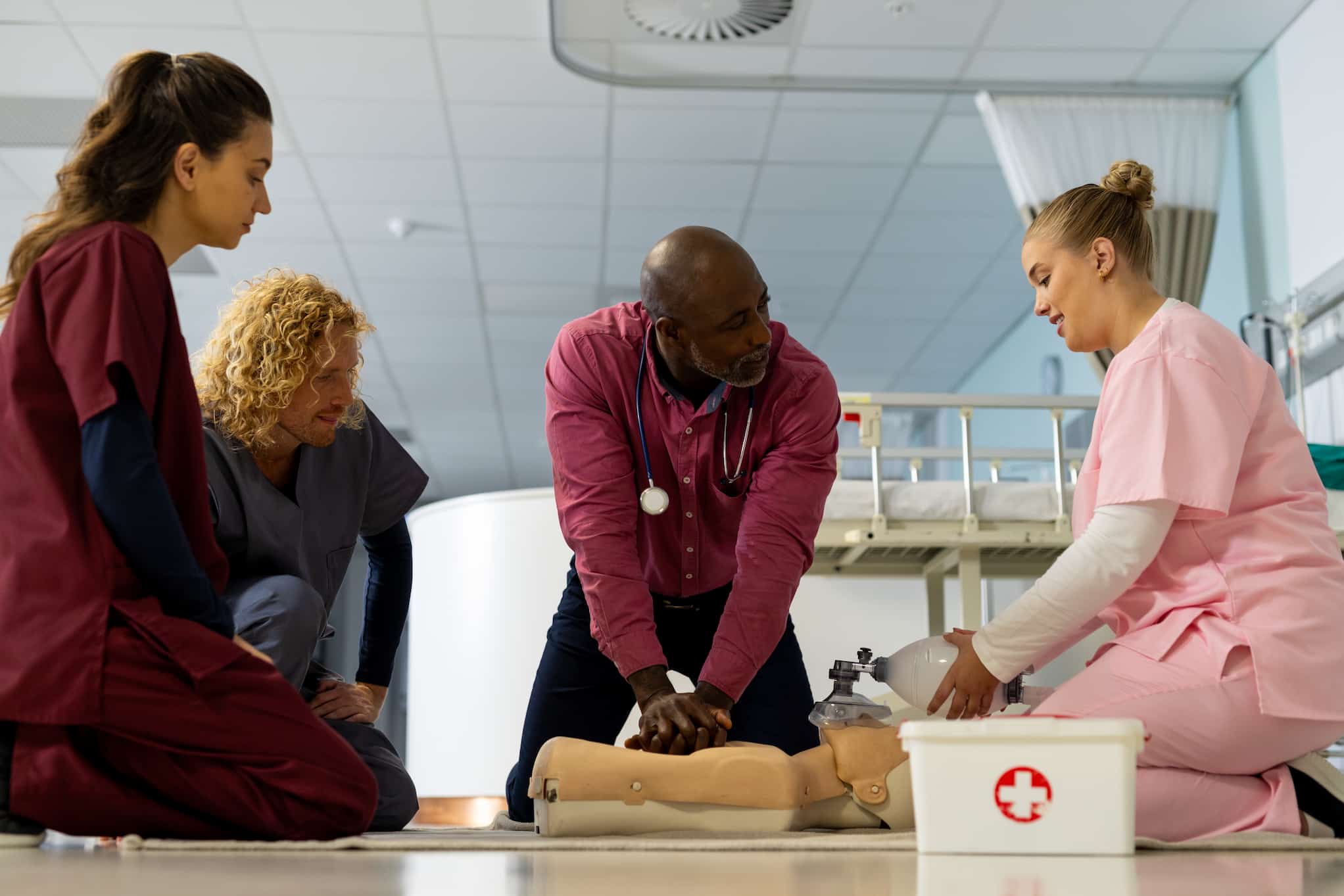
Medical team practicing CPR on a training manikin in a hospital setting

Entering the nursing profession is a journey of lifelong learning, and at the heart of that journey is a single, life-saving skill: Cardiopulmonary Resuscitation (CPR). However, for nurses, “basic” CPR isn’t usually enough to meet the rigorous standards of modern healthcare. If you are a Registered Nurse (RN), Licensed Practical Nurse (LPN), or a nursing student preparing for clinicals, you’ve likely realized that hospitals are very specific about the credentials they accept.

In this guide, CPR Classes Near Me will break down exactly what hospitals look for, why certain brands matter more than others, and how you can ensure your certification stays current to protect your patients—and your license.

Is Standard CPR Enough for Nursing Professionals?

While a “Heartsaver” or community-level CPR course is great for the general public, it is almost never sufficient for hospital employment. Hospitals require healthcare providers to hold a Basic Life Support (BLS) certification.

The difference lies in the depth of the training. While standard CPR focuses on chest compressions and rescue breaths for a single rescuer, BLS is designed for clinical environments. It covers:

  • Multi-rescuer coordination and team dynamics.
  • Advanced airway management (using bag-mask ventilators).
  • High-quality chest compressions with specific metrics for depth and rate.
  • Seamless integration of an Automated External Defibrillator (AED).

For a nurse, BLS is the baseline. It is the certification that tells a hospital you can function effectively as part of a rapid response team.

Which Certifying Body Do Hospitals Prefer?

If you look at job postings for major hospital systems, you will almost always see one name mentioned: the American Heart Association (AHA).

Why is the AHA the “Gold Standard” for hospitals?

  1. The Science: The AHA is a leading researcher in cardiovascular science. Most other organizations actually base their curriculum on the AHA’s evidence-based guidelines.
  2. Rigorous Standards: AHA courses require a higher passing score on exams (typically 84%) and a strict hands-on skills assessment.
  3. Uniformity: Hospitals want all staff—from doctors to respiratory therapists to nurses—speaking the same “language” during a code. Standardizing with AHA certification ensures everyone follows the same protocols.

While some facilities may accept American Red Cross BLS, many top-tier hospital systems mandate AHA-exclusive certification. Before you sign up for a class, it is always wise to check your specific facility’s policy, but you can rarely go wrong with an AHA BLS Provider card.

Do Nurses Need More Than Just BLS?

The answer depends entirely on where you work within the hospital. While BLS is required for virtually every nurse, certain specialties demand higher-level certifications.

  • Pediatric Units (PICU, NICU, Pediatrics): If you work with children or infants, you will almost certainly be required to hold Pediatric Advanced Life Support (PALS). This course goes beyond basic resuscitation to cover pediatric-specific pharmacology, respiratory emergencies, and shock.
  • Emergency & Critical Care: Nurses in the ER or ICU are expected to manage complex cardiac scenarios. In these environments, advanced training in managing arrhythmias and team leadership is the norm.
  • Obstetrics: Labor and delivery nurses may be required to hold specialized certifications like the Neonatal Resuscitation Program (NRP) in addition to their BLS.

Are Online-Only CPR Certifications Accepted?

In short: No. Hospitals almost universally reject “online-only” CPR or BLS certifications.

Nursing is a hands-on profession, and life-saving skills require physical mastery. To meet hospital and OSHA requirements, your certification must include a “hands-on skills session.”

You have two main options:

  1. Full In-Person Classroom: You attend a 4-hour session with an instructor, practice on manikins, and take your test on-site.
  2. Blended Learning: You complete the “HeartCode” or online portion through the AHA website at your own pace, then meet with an instructor for a 1-hour “skills check” to demonstrate your technique on a manikin.

Both of these options result in a valid AHA BLS Provider card, but the “online-only” certificates with no manikin practice are generally considered invalid for clinical employment.

How Often Must Nurses Recertify?

Healthcare-level certifications (BLS and PALS) are valid for two years.

However, don’t wait until the week your card expires to find a class. Many hospitals utilize “primary source verification,” meaning their HR software tracks your expiration date automatically. If your certification lapses by even one day, you may be pulled from the schedule and unable to work until you provide a current card.

Staying current isn’t just a hurdle for HR; it’s a safety issue. Research shows that CPR skills can begin to degrade within months of training. Regular recertification ensures that your “muscle memory” is sharp when a patient’s life is on the line.

Can You Earn Continuing Education (CE) Credits?

Yes! One of the perks of staying current with your certifications is that most BLS and PALS courses are eligible for Continuing Education hours. Since most State Boards of Nursing require a certain number of CE hours for license renewal, your regular CPR training can pull double duty.

Make sure your training provider is accredited to offer CE credits for nurses so you can claim those hours toward your professional development.

What Should You Look for in a Training Center?

When you’re ready to book your class, don’t just pick the cheapest option. For a nurse, the quality of instruction matters. Look for a training center that:

  • Provides AHA Cards: Ensure they are an authorized AHA training site or provider.
  • Offers Flexible Scheduling: As a nurse, you likely work odd shifts. Find a center with weekend or evening options.
  • Has Modern Equipment: Practicing on “smart” manikins that provide real-time feedback on your compression depth and rate is the best way to ensure you’re doing it right.
  • Offers Same-Day Cards: In the digital age, you shouldn’t have to wait weeks for your card. Many centers now issue digital eCards immediately after the class.

Conclusion: Be Ready When the Code Is Called

For nurses, CPR certification is more than a checkbox for HR—it is a commitment to patient safety. While hospitals typically require AHA-branded BLS as the minimum standard, your specific unit may require you to go further with PALS or other specialized training.

By choosing a reputable training provider and staying ahead of your expiration dates, you ensure that you are always prepared to lead in an emergency.

Ready to renew your credentials? Don’t let your certification lapse! Contact CPR Classes Near Me today to find an American Heart Association BLS class that fits your busy nursing schedule. Our expert instructors and hands-on training will give you the confidence to save lives every single day.

Frequently Asked Questions (FAQ)

Q: Can I use a Heartsaver CPR card for my nursing job?

A: No. Heartsaver is intended for laypeople (teachers, coaches, etc.). Nurses are required to have the “BLS Provider” certification, which includes healthcare-specific protocols.

Q: Is the American Red Cross BLS accepted by hospitals?

A: Some hospitals accept it, but the American Heart Association (AHA) is the most widely required brand. If you are unsure, always opt for the AHA to ensure your card is accepted nationwide.

Q: Do I need to take a separate First Aid class?

A: Generally, no. Most hospital-based nursing roles do not require a separate First Aid certification, as your clinical training covers these skills. However, check your specific job description.

Q: How long is a BLS skills check session?

A: If you choose the “Blended Learning” option, the in-person skills check usually takes 45 to 90 minutes, depending on the instructor and your experience level.

Q: Can I work if my CPR card is expired but I have a class scheduled?

A: Most hospitals have a zero-tolerance policy for expired certifications. You should consult your manager, but typically you cannot be on the floor with an expired card.

Who Needs What? The Ultimate Guide to CPR Certification Requirements by Job

Whether you are starting a new career in healthcare, coaching a youth soccer team, or managing a high-voltage construction site, one question inevitably pops up: “Which CPR class do I actually need?”

It’s a fair question. If you pick the wrong one, you might waste a Saturday in a class that your boss won’t accept. If you skip it entirely, you could be out of compliance with OSHA or state licensing boards.

At CPR Classes Near Me, we believe that life-saving skills should be accessible and easy to understand. This guide breaks down CPR requirements role-by-role, so you can book the right session with total confidence.

Why is CPR certification required for so many different jobs?

The simple answer is safety and liability, but the real reason is “the four-minute rule.” Research shows that when a person’s heart stops, brain damage begins within four to six minutes.

OSHA (the Occupational Safety and Health Administration) generally requires that if your workplace is not in “near proximity” (defined as 3–4 minutes) to a hospital or clinic, the employer must have someone on-site trained to provide first aid and CPR.

Beyond the legal requirements, having staff who can react calmly in a crisis is a massive asset for any business. It protects your customers, your employees, and your reputation.

What are the CPR requirements for healthcare professionals?

If you work in a clinical setting, “standard” CPR isn’t enough. You are considered a professional rescuer, and your training reflects that.

Doctors and Registered Nurses (RN/LPN)

Healthcare providers are almost always required to hold a Basic Life Support (BLS) certification. Unlike community classes, BLS focuses on:

  • Two-rescuer CPR techniques.
  • Bag-valve-mask (BVM) ventilation.
  • Team dynamics in a hospital or clinic setting.
  • Pulse checks and advanced assessment.

Dentists and Dental Hygienists

Most state dental boards require BLS certification for licensure. Because sedation is often used in dental offices, the risk of respiratory or cardiac distress is higher, making professional-level training mandatory.

Pharmacists and Pharmacy Techs

With the rise of pharmacists administering vaccinations, many states now mandate that they maintain BLS certification to handle potential allergic reactions or syncopal (fainting) episodes.

Do teachers and childcare providers need specialized CPR?

Yes. When you work with children, the protocols change. Pediatric CPR focuses heavily on respiratory issues, as children are more likely to stop breathing before their heart stops.

K-12 Teachers and School Staff

Most states require teachers to be certified in Heartsaver® Pediatric CPR/AED. This covers:

  1. Adult CPR: For staff and older students.
  2. Child CPR: For elementary-aged kids.
  3. Infant CPR: Essential for preschool and daycare workers.
  4. Choking Relief: Specific techniques for small children.

Daycare Workers and Nannies

Licensing for childcare centers is strict. You usually need a certification that specifically lists “Pediatric” on the card. Employers often look for courses that are approved by the EMSA (Emergency Medical Services Authority) or similar state-level agencies.

What are the CPR standards for the fitness and sports industry?

In a gym, people are pushing their bodies to the limit. High-intensity interval training (HIIT), heavy lifting, and competitive sports naturally increase the risk of cardiac events.

Personal Trainers and Group Fitness Instructors

Most major certifying bodies (like NASM, ACE, or ISSA) will not issue or renew a personal training credential without a valid CPR/AED certificate. For this role, a Heartsaver® CPR/AED course is the gold standard. It ensures you know how to:

  • Recognize the signs of a heart attack vs. overexertion.
  • Use an Automated External Defibrillator (AED) quickly.
  • Perform high-quality compressions on an adult.

Coaches and Athletic Trainers

High school and collegiate coaches are often required by their athletic associations to have both CPR and First Aid. Since heatstroke and concussions are common in sports, the First Aid component is just as vital as the CPR.

Which trades and industrial jobs require OSHA-compliant CPR?

Construction and trade work are high-risk environments. Between electrical hazards, extreme heat, and heavy machinery, the “first responder” is often a coworker.

Electricians and Linemen

OSHA Standard 1910.269 is very specific: employees working on energized lines must have CPR training. If you work in a team of two or more, at least two people must be trained. If you are a new hire, you usually have 3 months to get certified.

Construction Workers and Contractors

While not every single person on a job site may be required by law to have a card, many general contractors require it for safety compliance. At a minimum, there must be a designated “safety officer” or first aid provider on-site at all times.

Logging and Commercial Diving

These are two of the most dangerous jobs in the world. OSHA mandates that all logging employees and all commercial dive team members maintain current CPR and First Aid certification.

Are there CPR requirements for corporate office roles?

In a standard office setting, CPR is rarely “mandatory” by law, but it is highly recommended.

Workplace Safety Teams (ERT)

Many large corporations have Emergency Response Teams (ERT). These are volunteer employees who are trained to bridge the gap until 911 arrives. They typically need:

  • CPR/AED certification.
  • Standard First Aid.
  • Bloodborne Pathogens training (to handle cleanups safely).

Flight Attendants and Cabin Crew

The FAA requires flight attendants to be trained in CPR and the use of the onboard AED. Since you are 30,000 feet in the air, you are the only medical help available for the first 20 minutes of an emergency.

How do you choose the right certification level?

If you’re still unsure, follow this simple hierarchy:

  1. Are you a licensed medical professional? Choose BLS (Basic Life Support).
  2. Do you work with children? Choose Pediatric CPR/AED & First Aid.
  3. Do you work in an office, gym, or construction site? Choose Heartsaver® CPR/AED & First Aid.
  4. Are you a parent or community member? Choose Community CPR (usually non-certification) or Heartsaver®.

What should you look for in a CPR class?

Not all “certificates” are created equal. Many online-only courses offer a 15-minute video and a PDF printout. Warning: Most employers and regulatory bodies (like OSHA or state nursing boards) will not accept a certificate that does not include an in-person skills assessment.

A valid, high-quality course should include:

  • Hands-on practice: You must physically practice compressions on a manikin.
  • AED training: You should practice with a trainer unit to understand the prompts.
  • A reputable curriculum: Look for courses based on the latest American Heart Association (AHA) or Red Cross guidelines.
  • An instructor: Someone to correct your hand placement and compression depth in real-time.

Conclusion

Getting the right CPR certification isn’t just about checking a box for your employer; it’s about having the confidence to save a life when the unthinkable happens. Whether you are a nurse needing BLS or a coach needing a Heartsaver card, knowing the requirements for your specific role ensures you stay compliant and prepared.

Don’t wait until an emergency happens to realize your skills are out of date. Stay ahead of the curve and keep your workplace safe.

Contact CPR Classes Near Me today to find a local, certified instructor and get your career-ready certification in just a few hours!

Frequently Asked Questions

Does my CPR certification expire?

Yes. Most CPR certifications are valid for two years. After 24 months, your skills begin to “fade,” and the science may have updated, so you are required to take a renewal or “challenge” course to maintain your credential.

Can I get my CPR certification entirely online?

Technically, you can buy a “certificate” online, but it is rarely accepted for work. Most employers require “Blended Learning” (online theory + in-person skills) or a fully in-person class. If your job depends on it, always ensure there is a hands-on component.

What is the difference between CPR and BLS?

Think of CPR as the “general” version and BLS as the “professional” version. CPR classes are for the general public (lay rescuers). BLS is more rigorous, covers team-based scenarios, and is required for anyone working in a hospital or clinical environment.

Do I need First Aid with my CPR?

It depends on your job. Teachers, construction workers, and coaches almost always need the “CPR/AED & First Aid” combo. Healthcare workers usually just need “BLS,” as their medical training covers the first aid portion.

Is an AED hard to use?

Not at all. Modern AEDs are designed to be used by anyone. Once you turn it on, a voice walks you through every step. The machine will even analyze the heart rhythm and tell you if a shock is necessary—it won’t shock someone who doesn’t need it.