Fastest Way to Renew CPR Certification in Columbus
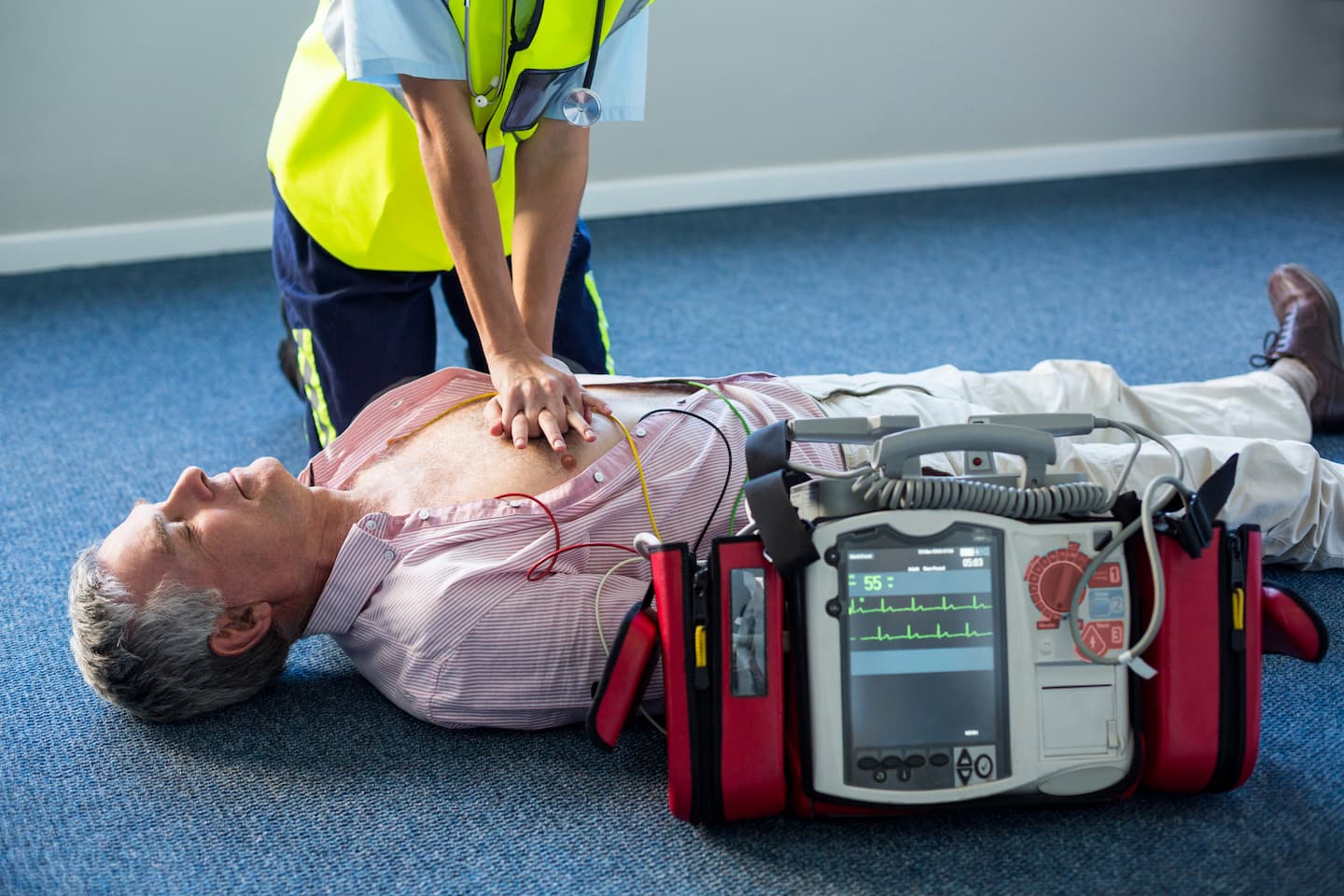
Paramedic performing CPR with defibrillator on cardiac arrest patient

Are you a healthcare professional or a dedicated community member whose CPR card is about to expire? In the fast-paced world of Columbus, Ohio, you don’t have time to wait weeks for a certificate or spend hours navigating glitchy online modules. You need a solution that is quick, official, and stress-free.

Renewing your Life Support credentials shouldn’t feel like a hurdle. Whether you are a nurse at OhioHealth, a teacher in the Columbus City School District, or a local coach, staying certified is about more than just compliance—it is about being ready to save a life at a moment’s notice.

This guide explores the absolute fastest way to renew your CPR certification in Columbus, ensuring you walk away with your American Heart Association (AHA) card the very same day.

Why is speed important for CPR renewal?

When your certification expires, it isn’t just a piece of paper you lose; it’s often your eligibility to work. Many employers in Columbus require a valid AHA BLS (Basic Life Support) card as a condition of employment. If your card lapses, you could face administrative leave or missed shifts.

The fastest way to renew is to find a provider that eliminates unnecessary steps. Traditional “blended learning” often requires you to complete hours of online videos before you can even step foot in a classroom. By choosing an efficient, in-person training site, you skip the digital headaches and get straight to the hands-on practice that matters most.

How can I get my CPR card on the same day?

The secret to the fastest renewal is finding a training center that issues electronic cards (eCards) immediately upon completion of the course. At CPR Classes Near Me Columbus, we utilize the American Heart Association’s digital platform to ensure you don’t have to wait for the mail.

As soon as you finish your skills check and pass the assessment, your instructor processes your certification. You will receive an email with your official AHA BLS eCard before you even get back to your car. This is the gold standard for those on a tight deadline.

Is there a faster alternative to online-only classes?

While online-only classes might seem fast, they are often a “speed trap.” Most reputable employers in Columbus—especially in healthcare, education, and construction—do not accept certifications that lack a hands-on skills assessment.

If you take an online-only course, you may find yourself having to retake an in-person class anyway because your employer rejected the certificate. The fastest way to do something is to do it right the first time. In-person training takes about three hours and is guaranteed to be accepted by your employer.

What makes the BLS renewal process efficient?

Efficiency comes down to the quality of instruction and the structure of the class. A streamlined renewal class focuses on the essential “high-quality” CPR metrics:

  • Depth and rate of compressions: Ensuring you are providing effective blood flow.
  • Chest recoil: Allowing the heart to refill between compressions.
  • Minimizing interruptions: Keeping the “hands-on” time as high as possible.
  • AED usage: Quick and safe operation of an Automated External Defibrillator.

By working with expert instructors, you can polish these skills quickly through hands-on practice without the fluff of a beginner-level lecture.

Where can I find the best renewal classes in Columbus?

You don’t have to travel far to find top-tier training. CPR Classes Near Me Columbus serves the entire metro area and surrounding suburbs. We provide convenient scheduling for those living or working in:

  • Dublin and Westerville
  • Upper Arlington and Grandview Heights
  • Gahanna and New Albany
  • Grove City and Hilliard
  • Reynoldsburg and Pickerington

Our location is designed for easy access, making it the perfect “pit stop” for your biennial renewal.

What should I bring to my renewal class?

To make your renewal as fast as possible, come prepared. You don’t need to bring heavy equipment or textbooks, but having these items ready will help:

  1. Comfortable clothing: You will be on the floor practicing compressions on manikins, so wear something you can move in.
  2. Your current (or expired) card: This helps the instructor verify your previous training level.
  3. A positive attitude: Our classes are designed to be laid-back and engaging.

Because there is no pre-work or mandatory online “homework,” you simply show up, learn, and leave certified.

Who is required to have a BLS renewal?

In Columbus, various industries rely on AHA-certified professionals to maintain a safe environment. You likely need a fast renewal if you work in any of the following fields:

  • Healthcare Providers: RNs, LPNs, CNAs, and dental professionals.
  • Emergency Services: Firefighters, police officers, and security personnel.
  • Education: Teachers, daycare providers, and school administrators.
  • Fitness and Sports: Personal trainers, coaches, and lifeguards.
  • Industrial/Construction: Electricians and site supervisors who must meet OSHA standards.

How much does it cost to renew in Columbus?

Fast service shouldn’t mean overpriced service. Currently, CPR Classes Near Me Columbus offers competitive, discounted rates to make sure lifesaving knowledge is accessible.

  • BLS CPR & AED: Starting at $59.95 (a $20 savings).
  • CPR, AED & First Aid: Starting at $79.95 (a $20 savings).

Investing in an AHA-approved course ensures you aren’t wasting money on a certificate that won’t be recognized by your workplace.

Can I renew my First Aid at the same time?

Yes! If your job requires both CPR and First Aid, the fastest way to handle this is a “combo” class. Instead of booking two separate appointments, you can complete both certifications in a single session. This integrated approach covers everything from cardiac arrest to wound care and allergic reactions, providing a comprehensive safety toolkit in one afternoon.

Why choose American Heart Association (AHA) over others?

While there are several organizations that offer CPR training, the AHA is the most widely recognized and respected. Their guidelines are based on the latest science and are updated regularly. When you hold an AHA card, you hold a credential that is the “gold standard” nationwide. Most hospitals and clinics in Central Ohio strictly require AHA certification for their staff.

Conclusion

Renewing your CPR certification in Columbus doesn’t have to be a time-consuming chore. By choosing an AHA-authorized training site that offers in-person, same-day eCards, you can fulfill your professional requirements in just a few hours. No online pre-work, no waiting for the mail—just expert instruction and a guaranteed certificate.

Don’t wait until your card expires! Contact CPR Classes Near Me today to secure your spot in our next Columbus class and stay rescue-ready.

Frequently Asked Questions (FAQ)

How long does the CPR renewal class take?

The standard in-person BLS renewal class in Columbus typically takes about three hours. This includes the video instruction required by the AHA, hands-on practice, and the skills assessment.

Do I need to do any work online before the class?

No. Unlike “blended” courses, our classes are 100% in-person. You do not need to complete any modules or quizzes online before arriving at the training site.

When will I receive my certification card?

You will receive your official American Heart Association BLS eCard on the same day you complete the class. It is sent directly to your email for easy printing or forwarding to your employer.

What if my CPR card is already expired?

You can still take a renewal class! The AHA allows individuals with expired cards to take the BLS course to get re-certified. However, you should check with your employer to see if they have specific policies regarding working with an expired card.

Is the certification OSHA-compliant?

Yes. Our AHA BLS and First Aid certifications meet all OSHA requirements for workplace safety, making them ideal for construction, manufacturing, and healthcare industries.
What Happens If Your CPR Certification Expires? Your Guide to Renewal

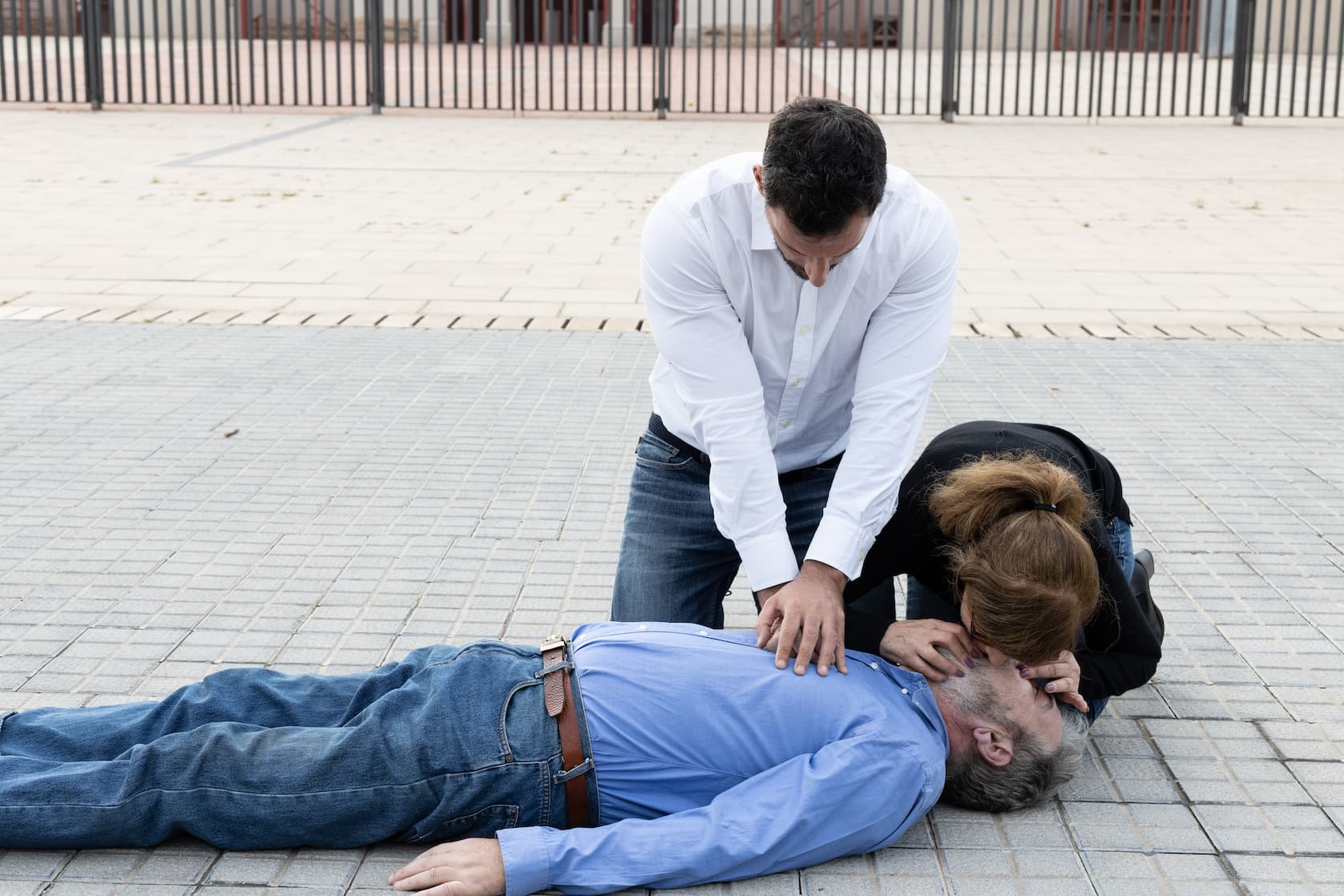
Two bystanders giving CPR and rescue breaths to a man on the ground under Good Samaritan aid

You might wonder why a life-saving skill needs a “best by” date. After all, once you learn how to ride a bike, you don’t usually forget. However, CPR is a high-stakes clinical skill that relies on precision. Organizations like the American Heart Association (AHA) and the American Red Cross set a two-year expiration for several vital reasons.

First, medical science is always evolving. Every few years, the International Liaison Committee on Resuscitation (ILCOR) reviews global cardiac data. They might find that a specific compression depth or a different ratio of breaths-to-compressions saves more lives. If your certification is five years old, you are likely using outdated techniques that are less effective.

Second, “skill decay” is a very real phenomenon. Research shows that most people—including healthcare professionals—begin to lose the physical muscle memory required for high-quality chest compressions within just six months of training. By the two-year mark, your ability to perform effective CPR has significantly diminished. The expiration date acts as a safety “reset” to ensure you remain competent. This is why CPR recertification in Columbus is crucial.

Is there a grace period for expired CPR cards?

A common myth is that there is a 30-day “grace period” after your card expires. In the past, some providers allowed this, but today, most major certifying bodies have eliminated it.

If your card expires on the 31st of the month, you are officially uncertified on the 1st of the next month. This means:

  • You cannot legally claim to be CPR certified.
  • You may be ineligible to enroll in a “Renewal” or “Update” course and may have to take the full “Provider” course again.
  • Your employer may not allow you to remain on the schedule.

While some individual employers might give you a few weeks to get recertified, the certification itself is technically invalid the moment it passes the expiration date printed on the card.

Can you still perform CPR if your certification is expired?

Yes, you can—and should—perform CPR in an emergency even if your card has expired. Life-saving doesn’t require a valid piece of plastic; it requires action. If you witness a cardiac arrest, your primary goal is to keep blood flowing to the brain until paramedics arrive.

From a legal standpoint, most states have “Good Samaritan Laws” that protect laypeople who act in good faith during an emergency. These laws generally do not require you to have an active certification to be protected, as long as you are acting as a reasonable person would in that situation. However, for professionals like nurses, teachers, or lifeguards, the legal landscape is different, as they may be held to a higher standard of care based on their professional obligations.

How does an expired certification affect your job?

For many professions, a valid CPR or Basic Life Support (BLS) card is a non-negotiable requirement of employment. If you are a nurse, dental assistant, daycare provider, or fitness trainer, an expired card is more than a nuisance; it’s a compliance violation.

  • Immediate Suspension: Many healthcare facilities use tracking software that alerts management when a certification lapses. This can result in being “taken off the schedule” immediately until proof of renewal is provided.
  • Loss of Professional Liability Insurance: Some professional insurance policies are contingent upon maintaining all required certifications. If your CPR card expires, you might not be covered in the event of a workplace incident.
  • Career Stagnation: If you are applying for a new job, an expired certification can stall your application. Most employers will not hire a candidate who isn’t fully compliant with safety requirements.

What is the difference between a renewal course and a full course?

When your certification is current, you are eligible for a Renewal Course (sometimes called an “Update” or “Review” course). This is the preferred path for most people because:

  1. It’s Faster: Renewal courses focus on updates and skills testing rather than teaching every concept from scratch.
  2. It’s Cheaper: Because the class time is shorter, the cost is typically lower.
  3. It’s Less Intensive: It assumes you already have a foundation of knowledge and just need to shake off the rust.

If you let your certification expire for a long period (usually more than 30 days, though this varies by provider), you will likely be required to take the Full Provider Course. This means spending 4 to 6 hours in a classroom covering every basic detail, even the parts you still remember. Staying on top of your renewal date saves you both time and money.

How do you find your expiration date?

If you aren’t sure when your card expires, don’t guess. You can verify your status in a few ways:

  • Check the Card: Most digital or physical cards clearly list the “Recommended Renewal Date” or “Expiration Date.”
  • AHA eCard Search: If you were certified through the American Heart Association, you can visit their website and enter your name and email to look up your digital eCard.
  • Red Cross Tool: The Red Cross offers a similar lookup tool where you can scan a QR code or enter your certificate ID.
  • Contact Your Training Center: If you took a class at a local site like CPR Classes Near Me, they keep records of your training and can often send you a copy of your card.

What are the steps to renew an expired certification?

Renewing doesn’t have to be a headache. Follow these steps to get back into compliance:

  1. Identify the Correct Course: Do you need Heartsaver (for the general public) or BLS (for healthcare providers)? Taking the wrong course won’t satisfy your employer.
  2. Choose Your Learning Style: * In-Person: Traditional classroom setting with an instructor.
    • Blended Learning: You complete the “book work” online at your own pace and then visit a center for a quick hands-on skills check.
  3. Schedule the Class: Don’t wait until the last minute. Classes can fill up quickly.
  4. Complete the Skills Test: You must demonstrate high-quality compressions and proper AED use on a manikin to earn your new card.
  5. Submit Proof: Once you receive your digital card, save a copy and email it to your supervisor or HR department immediately.

Why should you choose local training over purely online courses?

You may see ads for “100% Online CPR Certification” that claim you can get certified in 15 minutes. Be careful. OSHA and most employers do not recognize CPR certifications that do not include a hands-on skills assessment.

CPR is a physical skill. You cannot learn the correct depth of a compression or the feel of a chest recoil by clicking a mouse. Choosing a local provider like CPR Classes Near Me ensures that you receive hands-on training from a certified instructor. This not only makes you compliant with workplace rules but also gives you the confidence that you could actually save a life if the moment arrived.

Conclusion

An expired CPR certification is more than just a lapse in paperwork; it’s a lapse in your readiness to help someone in their most desperate moment. Whether you are a healthcare professional keeping your license active or a parent wanting to keep your family safe, staying current with your training is essential. By renewing on time, you avoid the hassle of retaking a full course, stay compliant with your job, and—most importantly—keep your life-saving skills sharp.

Don’t wait until your card is invalid. Check your date today, and if you’re due for a refresh, get back into the classroom.

Ready to renew your life-saving skills? Contact CPR Classes Near Me today to find a convenient local class and get your certification back on track!

Frequently Asked Questions

Does my CPR certification ever truly expire? 

Yes. Almost all reputable CPR certifications from the AHA or Red Cross are valid for exactly two years from the end of the month they were issued. After that date, the card is no longer valid for professional or legal compliance.

Can I renew my certification if it has already expired? 

Yes, you can always get recertified. However, if your card has been expired for more than a few weeks, you will likely have to take a “Full Provider” course rather than a shorter “Renewal” course.

Will my employer pay for my CPR renewal? 

Many employers, especially in healthcare and education, will cover the cost of the course or provide the training in-house. Check with your HR department before paying out of pocket.

What is the “blended learning” option for renewal? 

Blended learning allows you to complete the classroom portion of the training online through a series of videos and quizzes. Afterward, you must meet with an instructor in person for about 30-45 minutes to prove you can physically perform the skills.

Is BLS different from CPR? 

Basic Life Support (BLS) is a higher level of CPR training designed for healthcare professionals (nurses, doctors, EMTs). It includes advanced techniques like bag-valve-mask ventilation and multi-rescuer coordination. If your job requires BLS, a standard Heartsaver CPR card will not be sufficient.

Stay Certified: The Ultimate Guide to CPR Renewal Classes in Columbus

Hands performing chest compressions on a CPR training mannequin with AED pads attached.

Keeping your life-saving skills sharp isn’t just a professional requirement; it is a commitment to the safety of your community. If you are a healthcare provider, an educator, or a safety-conscious professional in Central Ohio, staying up to date with your American Heart Association (AHA) credentials is non-negotiable.

At CPR Classes Near Me Columbus, we specialize in making the renewal process efficient, engaging, and highly effective. Whether your card is about to expire or you simply want to refresh your knowledge, our local training center is designed to get you back in the field with confidence.

Why are CPR renewal classes in Columbus necessary?

CPR certification is not a “one and done” event. Skills degrade over time, and medical guidelines frequently evolve to improve victim outcomes. The American Heart Association requires renewal every two years to ensure that everyone holding a card is proficient in the latest life-saving techniques.

In Columbus, many professions—from nursing at OhioHealth to teaching in Columbus City Schools—mandate a current BLS (Basic Life Support) card. Attending a renewal class ensures there is no gap in your employment eligibility while reinforcing the muscle memory needed to act during a cardiac emergency.

What will you learn during a CPR renewal session?

A renewal class focuses on high-quality repetitions and updates. Because you have been certified before, the course moves at a business-casual, conversational pace that respects your prior experience while filling in any knowledge gaps.

Key areas covered include:

  • High-Quality Chest Compressions: Perfecting the depth and rate for adults, children, and infants.
  • AED Operation: Quick and safe deployment of an Automated External Defibrillator.
  • Team Dynamics: How to lead or participate in a multi-rescuer resuscitation attempt.
  • Airway Management: Effective use of barrier devices and rescue breathing techniques.
  • Choking Relief: Real-world maneuvers for conscious and unconscious victims of all ages.

How does the AHA BLS certification benefit Columbus professionals?

The American Heart Association (AHA) is the gold standard for CPR training. While other organizations offer “CPR” cards, the AHA BLS certification is the most widely accepted by hospitals, clinics, and government agencies in Ohio.

By choosing an AHA-aligned course, you ensure:

  1. Guaranteed Acceptance: Your employer will recognize the credential.
  2. OSHA Compliance: Meets federal workplace safety requirements.
  3. Same-Day Results: No waiting weeks for a card to arrive in the mail.

Who should enroll in Columbus CPR renewal classes?

Our classes are tailored for anyone who currently holds or previously held a CPR card. While we see a high volume of medical professionals, our doors are open to anyone in the Columbus metro area.

Common attendees include:

  • Registered Nurses (RNs) and Licensed Practical Nurses (LPNs)
  • Dental professionals and medical office staff
  • Physical therapists and personal trainers
  • Daycare providers and K-12 teachers
  • Construction foremen and safety officers
  • Lifeguards and swim instructors

Is in-person training better than online-only CPR courses?

While online “fast-track” courses might seem tempting, they often fail to meet employer standards. Most Columbus healthcare systems and schools require a hands-on skills assessment.

At CPR Classes Near Me Columbus, we offer the best of both worlds: a streamlined in-person experience led by expert instructors. You get the physical practice required to actually save a life, which a computer screen simply cannot replicate. Furthermore, our instructors provide real-time feedback, ensuring your technique is perfect before you leave the classroom.

How long does the CPR renewal process take?

We value your time. Our Columbus renewal classes are designed to be comprehensive yet concise. Typically, a full BLS certification and assessment session takes about three hours.

The best part? You don’t have to wait for your results. We issue your official AHA BLS eCard on the same day you complete the class. You can walk out of our facility and immediately email your digital certificate to your employer or licensing board.

What is the cost of CPR renewal in Columbus?

We believe life-saving education should be accessible. Currently, our CPR classes in Columbus are competitively priced:

  • AHA BLS CPR & AED: Starting at $59.95 (a $20 savings from standard rates).
  • BLS CPR + First Aid Combo: Starting at $79.95.

Investing in a local, AHA-authorized class ensures you aren’t wasting money on a “cheap” certification that your employer might reject.

Where can you find CPR renewal near you?

Our training site serves the entire Columbus region. We are conveniently located for residents and professionals in:

  • Dublin and Westerville
  • Upper Arlington and Grandview Heights
  • Gahanna and New Albany
  • Grove City and Hilliard
  • Reynoldsburg and Pickerington

If you have a large group, our instructors can even travel to your office or facility anywhere in Ohio to conduct on-site training.

Conclusion

Renewing your CPR certification in Columbus shouldn’t be a stressful hurdle. It is an opportunity to sharpen your skills, stay compliant with workplace regulations, and maintain the readiness to save a life. With same-day eCards, expert instructors, and a relaxed learning environment, CPR Classes Near Me Columbus is your partner in emergency preparedness.

Don’t let your certification lapse. Ensure you are ready for the unexpected and keep your professional credentials current.

Contact CPR Classes Near Me today to secure your spot in our next Columbus renewal class!

Frequently Asked Questions (FAQ)

Q: How do I know if I need BLS or Heartsaver CPR?

A: Generally, healthcare providers (nurses, doctors, EMTs) require BLS (Basic Life Support). Non-healthcare workers (teachers, coaches, construction workers) often only need Heartsaver CPR and First Aid. However, BLS is the higher-level certification and is accepted by almost all employers.

Q: Can I attend a renewal class if my card has already expired?

A: Yes. At CPR Classes Near Me Columbus, you can enroll in our BLS course even if your previous card has lapsed. You will receive the same high-quality training and the same two-year AHA certification.

Q: Do I need to complete any online “pre-work” before the class?

A: No. Our in-person classes are designed to be comprehensive. You simply show up, participate in the instructor-led training, and complete your skills check-off.

Q: How long is my new CPR card valid for?

A: All American Heart Association CPR certifications are valid for two years from the date of issue.

Q: What if I lose my digital eCard?

A: Since we issue digital eCards, you can log in to the AHA portal at any time to claim or print a copy of your certificate.