CPR Certification for Nursing School: Avoiding Rejected Credentials
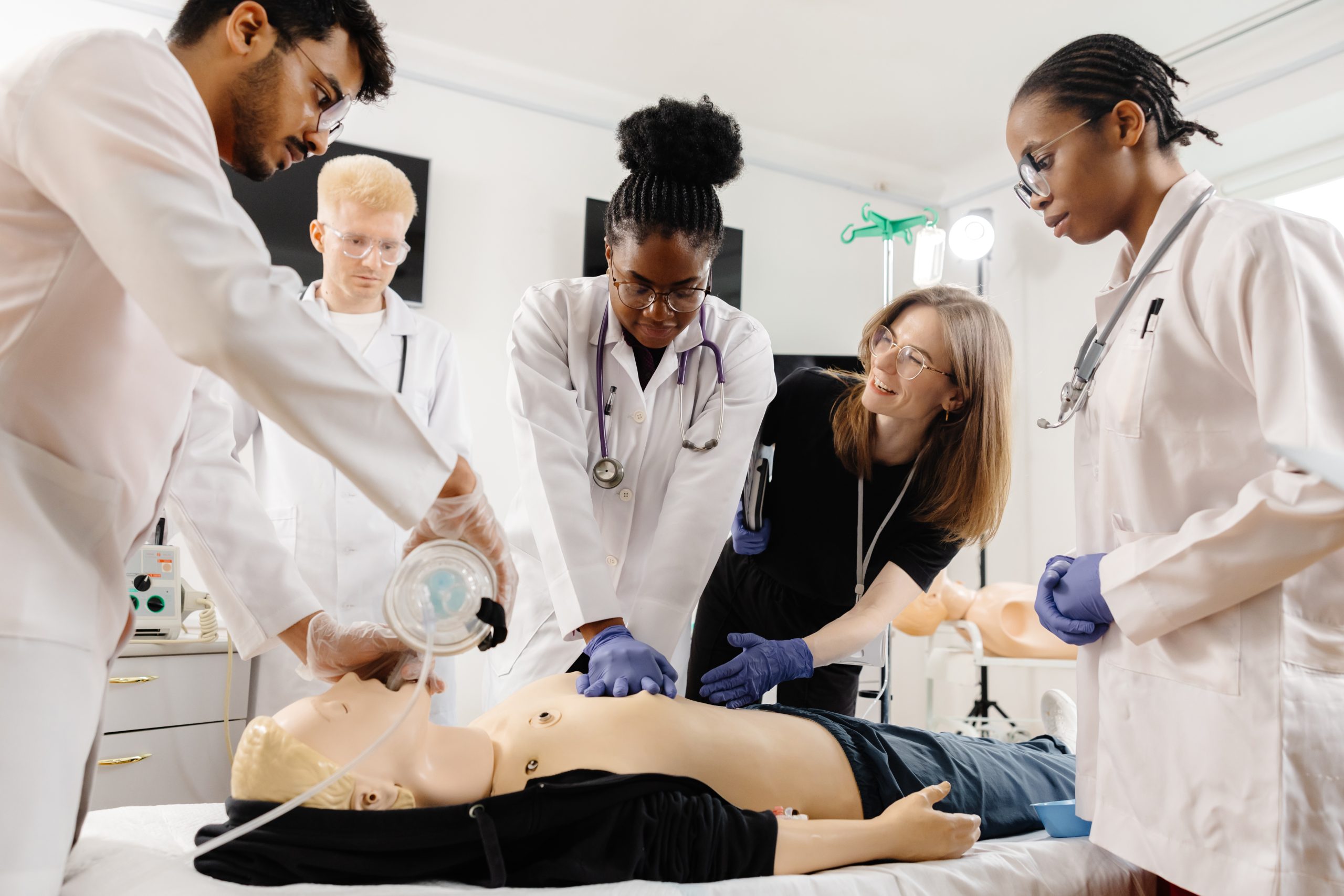
Entering nursing school is a whirlwind of textbooks, clinical rotations, and a mountain of paperwork. Among the most critical documents in your compliance folder is your CPR certification. However, many students face a frustrating setback: they spend time and money on a course only to have their clinical site or nursing program reject the certificate.

How do you ensure your credentials are accepted the first time? This guide breaks down exactly what nursing schools require and why choosing the right provider is the most important step in your professional journey.

Why is specific CPR certification required for nursing school?

Nursing schools and hospitals have a legal and ethical responsibility to ensure that every individual providing patient care is trained to the highest possible standard. In a healthcare setting, “standard CPR” isn’t enough.

Nursing programs require Basic Life Support (BLS). Unlike general CPR courses designed for the public, BLS is specifically tailored for healthcare providers. It covers advanced techniques including:

  • Multi-rescuer team dynamics.
  • The use of Bag-Valve Masks (BVM).
  • Critical thinking in a clinical environment.

Without the correct BLS credential, you cannot participate in clinicals, which can delay your graduation or even lead to dismissal from the program.

Which CPR provider do nursing schools actually accept?

The healthcare industry has a clear favorite: the American Heart Association (AHA). While there are many organizations that offer CPR training, the vast majority of nursing schools and hospital systems in the United States only accept AHA BLS Provider cards.

Why is the AHA the gold standard?

  1. Evidence-Based Guidelines: They set the national standards for resuscitation science.
  2. Consistency: An AHA card earned in Florida represents the same level of skill as one earned in Texas.
  3. Universal Recognition: It is the most widely recognized and employer-accepted certification nationwide.

Before you book a class, check your school’s handbook. If it says “AHA BLS for Healthcare Providers required,” any other brand—regardless of how professional the website looks—will likely be rejected.

Can you get CPR certification online for nursing school?

This is the most common reason for rejected credentials. Many students search for “fast CPR certification” and end up on websites offering 100% online courses for a low fee.

Nursing schools will almost never accept a 100% online CPR certificate.

The reason is simple: you cannot prove you can save a life through a computer screen. Real-world CPR requires physical stamina, the correct hand placement, and the proper depth of compressions.

  • The Problem: Online-only courses lack “skills testing.”
  • The Result: Hospitals and schools view these as “awareness” courses, not “certification” courses.
  • The Solution: You must attend an in-person, instructor-led class or a “blended” course that includes a hands-on skills session with a certified instructor.

What is the difference between BLS and Heartsaver?

When browsing for classes, you will see two main categories: BLS and Heartsaver. Choosing the wrong one is a guaranteed way to have your credentials rejected.

  • BLS (Basic Life Support): This is for nurses, doctors, EMTs, and nursing students. It focuses on healthcare-level intervention.
  • Heartsaver: This is for the general public, teachers, and fitness trainers. It is less intensive and does not meet the requirements for nursing school clinicals.

Always ensure you are signing up for the AHA BLS Provider course. At CPR Classes Near Me, we specialize in this specific certification to ensure our students are always compliant with their school’s demands.

How do you verify your CPR card is authentic?

Fraudulent “certification mills” are a real threat. To avoid being a victim of a scam, look for these three things:

  1. The AHA Seal: The official American Heart Association logo should be present on the training site’s website and the card itself.
  2. Electronic Verification: AHA now issues eCards. You should receive a digital link that allows you and your school to verify your certification through the official AHA website.
  3. Physical Presence: A legitimate provider will have a physical training location where you perform compressions on a manikin.

How can you avoid last-minute credential rejection?

To keep your clinical start date on track, follow this simple checklist:

  • Verify the Requirement: Confirm your school requires “AHA BLS Provider.”
  • Avoid “Online-Only”: If there is no manikin involved, it isn’t valid for nursing school.
  • Check the Provider: Ensure the company is an authorized AHA Training Site.
  • Get Same-Day Results: Nursing schools often have tight deadlines. Choose a provider like CPR Classes Near Me that issues your eCard the same day you finish.
  • Save Your eCard: Keep your digital certificate in a dedicated “Compliance” folder on your phone for easy access during clinical audits.

Why should nursing students choose CPR Classes Near Me?

We understand the pressure nursing students are under. You don’t just need a card; you need the confidence to act in a code blue situation and the peace of mind that your paperwork is bulletproof.

When you train with us, you benefit from:

  • Guaranteed Acceptance: We are an American Heart Association Certified Training Site. Our cards are accepted by nursing schools and hospitals nationwide.
  • Expert Instructors: Learn from professionals who make the training engaging and practical for your future career.
  • Efficiency: We offer flexible scheduling and issue your AHA BLS eCard the very same day.
  • In-Person Training: We provide the hands-on practice you need to master chest compressions, AED use, and rescue breathing.

Don’t risk your clinical placement with a “cheap” online course. Invest in a certification that counts.

Contact CPR Classes Near Me today to schedule your AHA BLS certification and start your nursing journey with confidence!

Frequently Asked Questions (FAQ)

1. Does my nursing school accept Red Cross CPR?

While the Red Cross is a reputable organization, many nursing schools and hospitals specifically mandate American Heart Association (AHA) certification. It is vital to check your program’s specific requirements before enrolling, as most prefer or strictly require AHA BLS.

2. How long does the BLS certification last?

Your AHA BLS certification is valid for two years. You must complete a renewal course before the end of the month in which your card expires to maintain your clinical eligibility.

3. What happens if I show up to clinicals with an online-only CPR card?

In most cases, you will be sent home immediately. Clinical sites require hands-on verification of your skills. Being sent home can result in an unexcused absence, which may impact your grade or standing in the nursing program.

4. Is the AED part of the BLS course?

Yes. The AHA BLS course includes comprehensive training on the use of an Automated External Defibrillator (AED) for adults, children, and infants. This is a core requirement for healthcare provider certification.

5. Can I get my CPR card the same day?

Yes, at CPR Classes Near Me, we issue your official American Heart Association BLS eCard the same day you complete your class. This ensures you can meet your school’s compliance deadlines without delay.
CPR Certification for Nurses: What Hospitals Typically Require

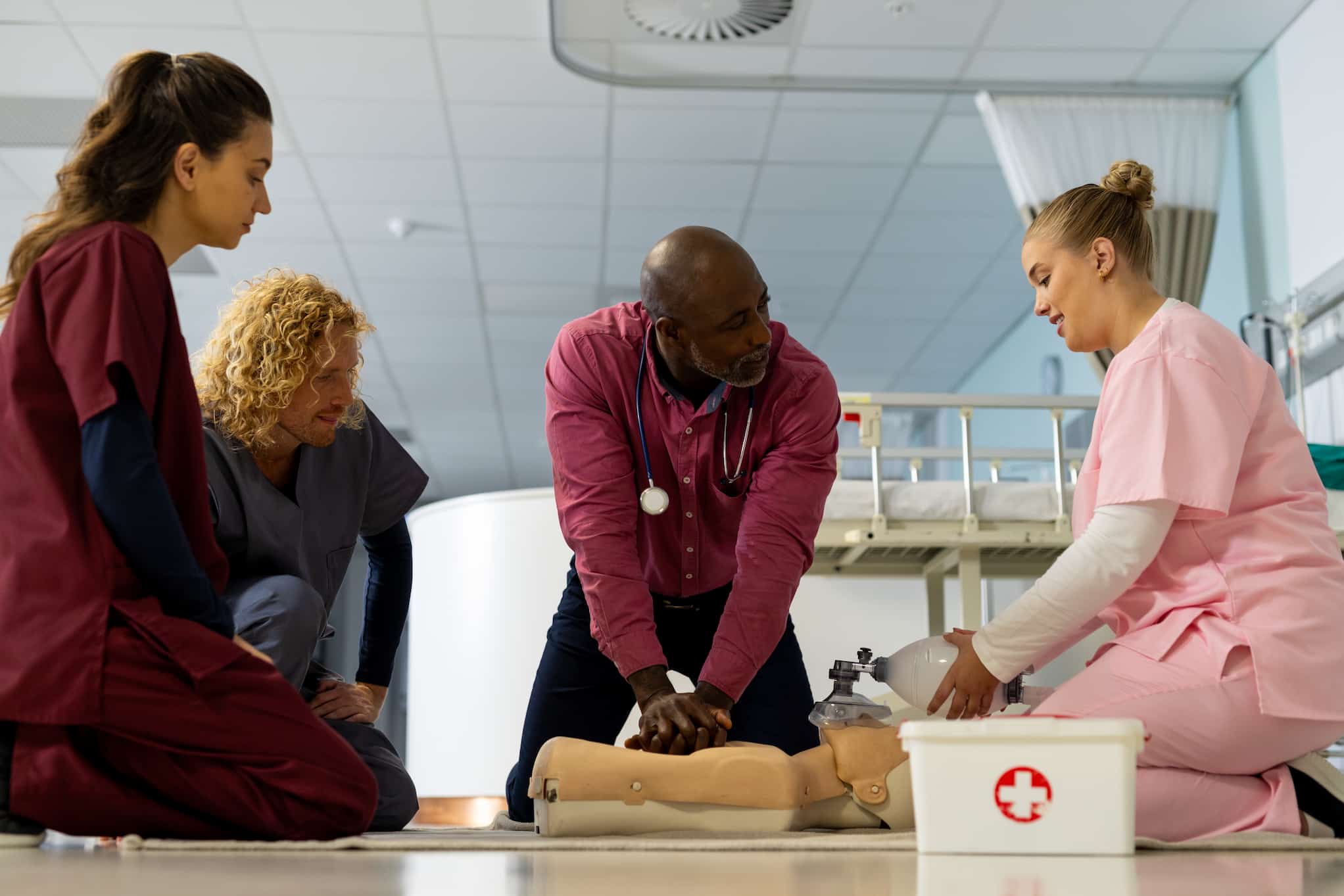
Medical team practicing CPR on a training manikin in a hospital setting

Entering the nursing profession is a journey of lifelong learning, and at the heart of that journey is a single, life-saving skill: Cardiopulmonary Resuscitation (CPR). However, for nurses, “basic” CPR isn’t usually enough to meet the rigorous standards of modern healthcare. If you are a Registered Nurse (RN), Licensed Practical Nurse (LPN), or a nursing student preparing for clinicals, you’ve likely realized that hospitals are very specific about the credentials they accept.

In this guide, CPR Classes Near Me will break down exactly what hospitals look for, why certain brands matter more than others, and how you can ensure your certification stays current to protect your patients—and your license.

Is Standard CPR Enough for Nursing Professionals?

While a “Heartsaver” or community-level CPR course is great for the general public, it is almost never sufficient for hospital employment. Hospitals require healthcare providers to hold a Basic Life Support (BLS) certification.

The difference lies in the depth of the training. While standard CPR focuses on chest compressions and rescue breaths for a single rescuer, BLS is designed for clinical environments. It covers:

  • Multi-rescuer coordination and team dynamics.
  • Advanced airway management (using bag-mask ventilators).
  • High-quality chest compressions with specific metrics for depth and rate.
  • Seamless integration of an Automated External Defibrillator (AED).

For a nurse, BLS is the baseline. It is the certification that tells a hospital you can function effectively as part of a rapid response team.

Which Certifying Body Do Hospitals Prefer?

If you look at job postings for major hospital systems, you will almost always see one name mentioned: the American Heart Association (AHA).

Why is the AHA the “Gold Standard” for hospitals?

  1. The Science: The AHA is a leading researcher in cardiovascular science. Most other organizations actually base their curriculum on the AHA’s evidence-based guidelines.
  2. Rigorous Standards: AHA courses require a higher passing score on exams (typically 84%) and a strict hands-on skills assessment.
  3. Uniformity: Hospitals want all staff—from doctors to respiratory therapists to nurses—speaking the same “language” during a code. Standardizing with AHA certification ensures everyone follows the same protocols.

While some facilities may accept American Red Cross BLS, many top-tier hospital systems mandate AHA-exclusive certification. Before you sign up for a class, it is always wise to check your specific facility’s policy, but you can rarely go wrong with an AHA BLS Provider card.

Do Nurses Need More Than Just BLS?

The answer depends entirely on where you work within the hospital. While BLS is required for virtually every nurse, certain specialties demand higher-level certifications.

  • Pediatric Units (PICU, NICU, Pediatrics): If you work with children or infants, you will almost certainly be required to hold Pediatric Advanced Life Support (PALS). This course goes beyond basic resuscitation to cover pediatric-specific pharmacology, respiratory emergencies, and shock.
  • Emergency & Critical Care: Nurses in the ER or ICU are expected to manage complex cardiac scenarios. In these environments, advanced training in managing arrhythmias and team leadership is the norm.
  • Obstetrics: Labor and delivery nurses may be required to hold specialized certifications like the Neonatal Resuscitation Program (NRP) in addition to their BLS.

Are Online-Only CPR Certifications Accepted?

In short: No. Hospitals almost universally reject “online-only” CPR or BLS certifications.

Nursing is a hands-on profession, and life-saving skills require physical mastery. To meet hospital and OSHA requirements, your certification must include a “hands-on skills session.”

You have two main options:

  1. Full In-Person Classroom: You attend a 4-hour session with an instructor, practice on manikins, and take your test on-site.
  2. Blended Learning: You complete the “HeartCode” or online portion through the AHA website at your own pace, then meet with an instructor for a 1-hour “skills check” to demonstrate your technique on a manikin.

Both of these options result in a valid AHA BLS Provider card, but the “online-only” certificates with no manikin practice are generally considered invalid for clinical employment.

How Often Must Nurses Recertify?

Healthcare-level certifications (BLS and PALS) are valid for two years.

However, don’t wait until the week your card expires to find a class. Many hospitals utilize “primary source verification,” meaning their HR software tracks your expiration date automatically. If your certification lapses by even one day, you may be pulled from the schedule and unable to work until you provide a current card.

Staying current isn’t just a hurdle for HR; it’s a safety issue. Research shows that CPR skills can begin to degrade within months of training. Regular recertification ensures that your “muscle memory” is sharp when a patient’s life is on the line.

Can You Earn Continuing Education (CE) Credits?

Yes! One of the perks of staying current with your certifications is that most BLS and PALS courses are eligible for Continuing Education hours. Since most State Boards of Nursing require a certain number of CE hours for license renewal, your regular CPR training can pull double duty.

Make sure your training provider is accredited to offer CE credits for nurses so you can claim those hours toward your professional development.

What Should You Look for in a Training Center?

When you’re ready to book your class, don’t just pick the cheapest option. For a nurse, the quality of instruction matters. Look for a training center that:

  • Provides AHA Cards: Ensure they are an authorized AHA training site or provider.
  • Offers Flexible Scheduling: As a nurse, you likely work odd shifts. Find a center with weekend or evening options.
  • Has Modern Equipment: Practicing on “smart” manikins that provide real-time feedback on your compression depth and rate is the best way to ensure you’re doing it right.
  • Offers Same-Day Cards: In the digital age, you shouldn’t have to wait weeks for your card. Many centers now issue digital eCards immediately after the class.

Conclusion: Be Ready When the Code Is Called

For nurses, CPR certification is more than a checkbox for HR—it is a commitment to patient safety. While hospitals typically require AHA-branded BLS as the minimum standard, your specific unit may require you to go further with PALS or other specialized training.

By choosing a reputable training provider and staying ahead of your expiration dates, you ensure that you are always prepared to lead in an emergency.

Ready to renew your credentials? Don’t let your certification lapse! Contact CPR Classes Near Me today to find an American Heart Association BLS class that fits your busy nursing schedule. Our expert instructors and hands-on training will give you the confidence to save lives every single day.

Frequently Asked Questions (FAQ)

Q: Can I use a Heartsaver CPR card for my nursing job?

A: No. Heartsaver is intended for laypeople (teachers, coaches, etc.). Nurses are required to have the “BLS Provider” certification, which includes healthcare-specific protocols.

Q: Is the American Red Cross BLS accepted by hospitals?

A: Some hospitals accept it, but the American Heart Association (AHA) is the most widely required brand. If you are unsure, always opt for the AHA to ensure your card is accepted nationwide.

Q: Do I need to take a separate First Aid class?

A: Generally, no. Most hospital-based nursing roles do not require a separate First Aid certification, as your clinical training covers these skills. However, check your specific job description.

Q: How long is a BLS skills check session?

A: If you choose the “Blended Learning” option, the in-person skills check usually takes 45 to 90 minutes, depending on the instructor and your experience level.

Q: Can I work if my CPR card is expired but I have a class scheduled?

A: Most hospitals have a zero-tolerance policy for expired certifications. You should consult your manager, but typically you cannot be on the floor with an expired card.