In today’s digital world, you can learn almost anything online—from cooking to coding. But when it comes to life-saving skills like Cardiopulmonary Resuscitation (CPR), the decision between clicking “play” on a video and stepping into a classroom carries a lot more weight.
Whether you are a nurse renewing your BLS credential, a teacher preparing for the school year, or a parent wanting peace of mind, choosing the right class format is critical. You might be wondering: Is an online certificate actually valid? or Do I really need to spend hours in a classroom?
As a premier provider of CPR Classes Near Me, we understand the confusion. In this guide, we will break down the pros and cons of online versus in-person training so you can choose the path that fits your schedule—and keeps you compliant.
What is In-Person CPR Training?
In-person training is the traditional method of learning CPR. You attend a scheduled class at a local facility, guided by a certified instructor. These sessions are designed to be interactive, physical, and comprehensive.
Why Choose In-Person Training?
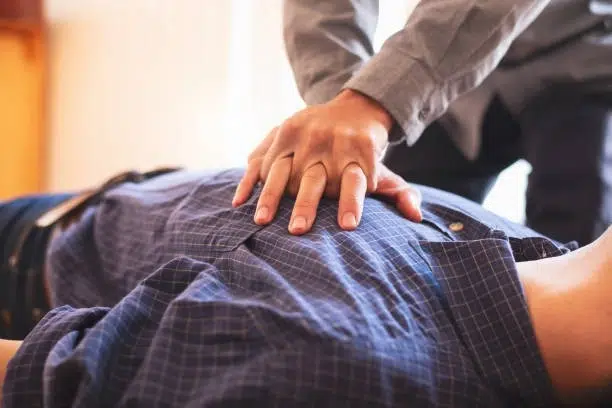
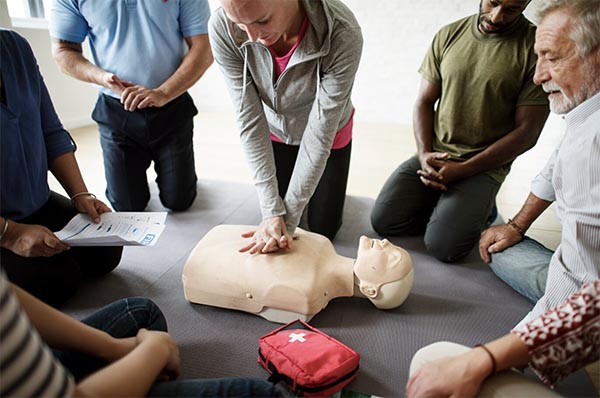
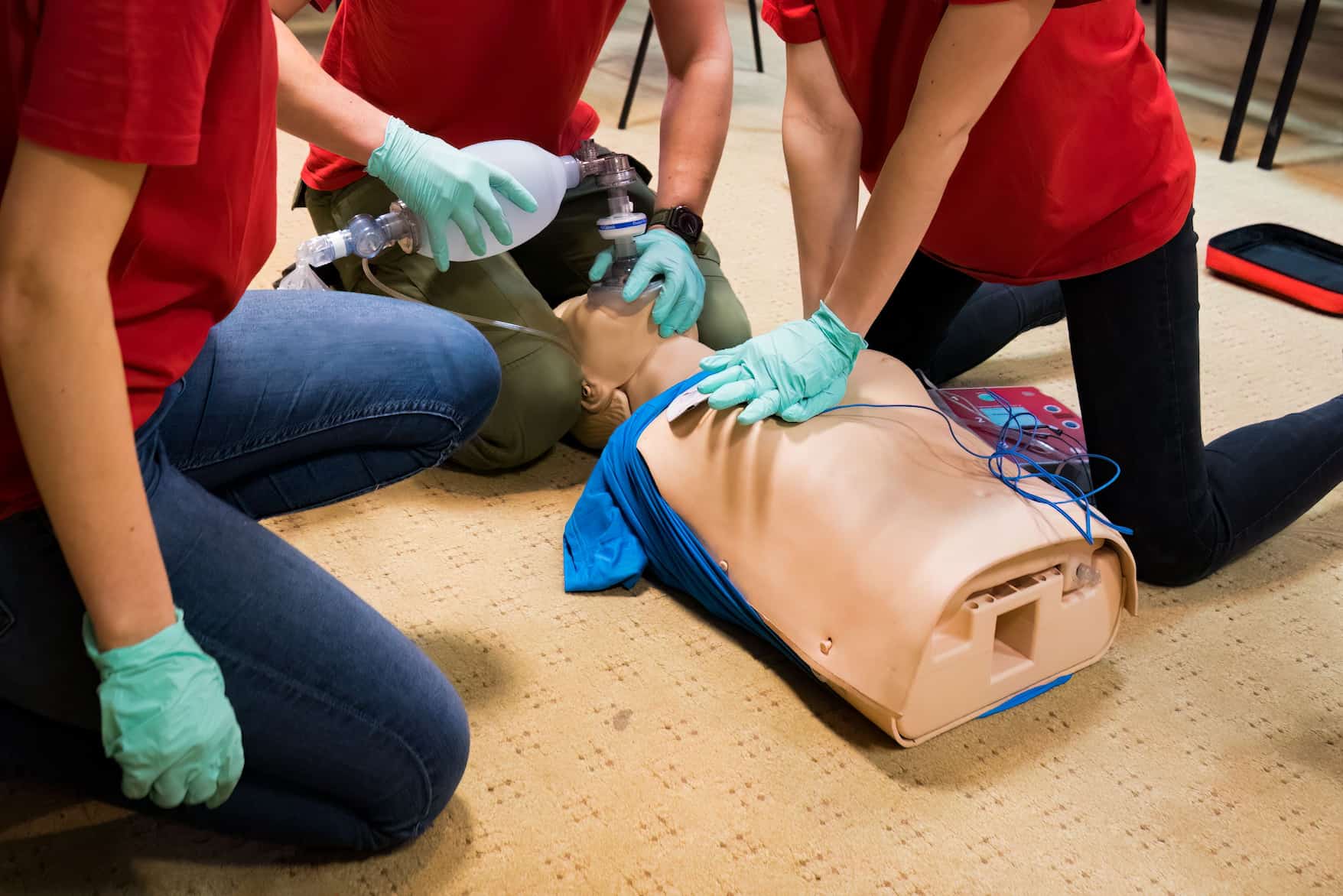
The primary advantage of in-person training is the hands-on experience. CPR is a physical skill. Watching a video of someone performing chest compressions is very different from pushing down on a high-fidelity manikin yourself.
Muscle Memory: You physically practice the depth and rate of compressions (100-120 per minute), ensuring you “feel” what it takes to circulate blood manually.
Immediate Feedback: If your elbows are bending or you aren’t pushing hard enough, an instructor corrects you instantly. This prevents you from developing bad habits that could be fatal in a real emergency.
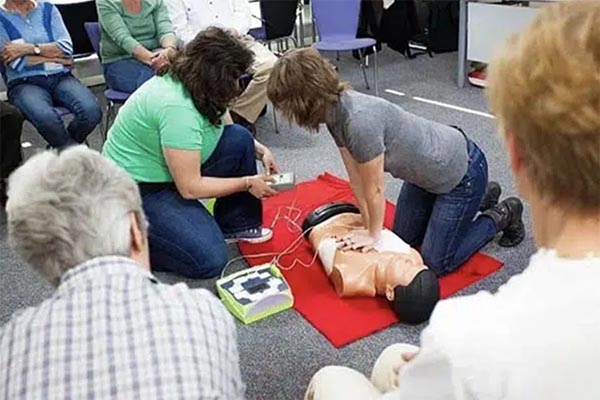
Equipment Familiarity: You get to handle an AED (Automated External Defibrillator), practice applying pads, and listen to the device’s voice prompts in a controlled setting.
Are There Downsides?
The main hurdle for most people is logistics. You have to drive to a location and commit a few hours of your day. However, providers like CPR Classes Near Me optimize these sessions to be efficient, often issuing your American Heart Association (AHA) eCard the very same day.
What is Online CPR Training?
Online CPR training delivers course content via digital modules. You read text, watch instructional videos, and take quizzes on your computer or smartphone.
The Appeal of Online Courses
The biggest selling point is flexibility. You can pause the training to take a call, finish it at 2 AM in your pajamas, or break it up over several days. For those who just want knowledge for personal reasons and don’t need a work-recognized card, this can be a convenient option.
The Hidden Trap: Employer Acceptance
Here is the catch that trips up many professionals: Online-only certifications are rarely accepted by employers in healthcare, childcare, or industrial safety.
Most regulatory bodies, including OSHA and the American Heart Association, require a hands-on skills check for a certification to be valid. If you take a 100% online course that does not require you to touch a manikin, there is a high probability your employer will reject it, forcing you to pay for and attend an in-person class anyway.
Will My Employer Accept an Online Certification?
This is the most common question we hear. If you are taking CPR for a job requirement, the answer is almost always no—unless it includes an in-person skills session.
Who Typically Requires In-Person Training?
Healthcare Providers: Nurses, doctors, CNAs, and EMTs generally require AHA Basic Life Support (BLS), which mandates a skills test.
Childcare Workers: Daycares and schools usually require state-approved training that includes physical practice.
Construction & Safety: OSHA guidelines strongly emphasize the need for physical practice to verify competency.
If you submit an online-only certificate to a hospital or school district, you risk being non-compliant. It is always safer to choose a course that guarantees hands-on verification.
Comparison: Online vs. In-Person at a Glance
Not sure which way to lean? Here is a quick comparison of how the two formats stack up.
Convenience: Online wins for scheduling, but In-Person wins for “one-and-done” completion (no need to schedule a separate skills check later).
Cost: Online courses often appear cheaper upfront, but hidden fees for “skills sessions” or having to retake a rejected class can make them more expensive in the long run.
Confidence: In-Person is superior. Real-life emergencies are stressful; having physical muscle memory helps you act on instinct.
Validation: In-Person training is universally accepted. Online-only is frequently rejected for professional use.
Is Blended Learning a Good Compromise?
Blended learning is a hybrid model where you do the “book work” online and then come into a facility for a short skills session. While this offers some flexibility, you still have to travel to a training center to meet with an instructor.
At CPR Classes Near Me, we focus on providing high-quality, efficient in-person classes. We find that completing the theory and the skills together in one cohesive session often leads to better retention and a smoother experience—plus, you walk out with your certification card in hand immediately.
Why “CPR Classes Near Me” is Your Best Option
We know your time is valuable. That’s why we have streamlined the in-person experience to be as painless and professional as possible.
AHA Certification: We issue American Heart Association cards, the gold standard in the industry.
Same-Day Certification: No waiting by the mailbox. You qualify, you pass, you get your eCard.
Expert Instructors: Our team consists of healthcare and safety professionals who make the class engaging, not boring.
Locally Owned: We are part of your community, helping Austin stay safe.
When you weigh the risks of an online course being rejected against the confidence and compliance of in-person training, the choice is clear.
Ready to Get Certified?
Don’t risk your compliance or your confidence with a “click-through” course. Get real hands-on training that empowers you to save a life.
A: You can find websites that will issue a “certification” online, but it is important to know that these are typically not recognized by employers, OSHA, or hospitals. To be fully certified—especially for a job—you almost always need a hands-on skills evaluation with an instructor.
Q: How long does an in-person CPR class take?
A: Class times vary by provider, but our streamlined BLS and CPR classes are designed to be efficient. You can typically expect to spend a few hours learning and practicing, ensuring you leave confident without taking up your entire day.
Q: Is online CPR training valid for OSHA?
A: generally, no. OSHA standards state that online training alone does not meet the requirements for first aid and CPR training because it lacks the physical skills demonstration. A hands-on component is required.
Q: Do I need a book for the class?
A: For American Heart Association classes, students are usually required to have access to the student manual. Check with your specific class registration details to see if the book is included or needs to be purchased separately.
Q: How often do I need to renew my certification?
A: Most CPR and BLS certifications, including those from the AHA, are valid for two years. You must retake a course before your card expires to remain compliant.
Q: What is the difference between CPR and BLS?
A: CPR (Cardiopulmonary Resuscitation) is a general term for the lifesaving technique. BLS (Basic Life Support) is a higher-level certification specifically for healthcare providers (nurses, doctors, EMTs) that covers team dynamics, advanced airways, and 2-rescuer scenarios.
When it comes to the safety of students, every second counts. A sudden cardiac emergency can happen to anyone, anywhere, and the school environment is no exception. This is why having staff trained in Cardiopulmonary Resuscitation (CPR) and the use of an Automated External Defibrillator (AED) is absolutely crucial.
In Texas, the state has clearly defined laws on school safety, including specific requirements for emergency response training. However, there’s a common misconception that all Texas teachers must be CPR certified. The reality is more nuanced. The Texas Education Code (TEC) is very specific about which educators need to be certified, which must simply be offered instruction, and what students must learn.
As an educator, administrator, or concerned parent, it’s vital to know the precise legal mandates. This blog will walk you through the state’s requirements, explain who needs to be certified, and help you understand your school district’s responsibilities. We’ll be breaking down the statutes to ensure you have the most factual and easy-to-digest information.
Does Texas Law Require All Teachers to Maintain CPR Certification?
The short answer is no, state law does not mandate that every single classroom teacher in Texas must maintain an active CPR and AED certification.
The Texas Education Agency does not make this a universal requirement for professional educator licensure. This is one of the most significant points of confusion regarding the requirements for Texas Educators. The ultimate requirement for general classroom teachers is often determined by the individual school district, not the state.
However, the state legislature has passed laws that place a significant burden on school districts to ensure training and resources are readily available. This distinction between “must be certified” and “must be offered instruction” is the core of the state’s legal framework.
Don’t wait for an emergency to learn these critical skills. Find a high-quality, certified CPR and AED class near you today!
What is the State’s General Mandate for School Districts?
The Texas Education Code TEC 22.902 requires that a school district must annually make available to all district employees and volunteers instruction in:
The principles and techniques of Cardiopulmonary Resuscitation (CPR).
This means the district is responsible for offering the training. It does not mean every employee must take it, nor does it mean every participant must leave with a certification card, unless their specific role is listed below.
Which Specific School Staff Must Be CPR and AED Certified by Law?
While the state doesn’t mandate certification for all teachers, it is absolutely required for staff whose roles involve a higher risk of physical activity or direct health responsibility. These mandates are codified in the Texas Education Code (TECS 33.086 and S 22.902).
The following personnel must receive and maintain certification in both CPR and the use of an AED from a nationally recognized association (like the American Heart Association or the American Red Cross):
School Nurses
Assistant School Nurses
Athletic Coaches or Sponsors
Physical Education Instructors
Head Directors of a School Marching Band
Cheerleading Coaches or Chief Sponsors
Any student who serves as an Athletic Trainer
Why are these roles singled out?
These positions are identified as those most likely to be present when a student or peer suffers a sudden cardiac emergency.
Coaches and PE Instructors: They are with students during strenuous physical activity, which increases the risk of cardiac events.
Nurses: They are the primary medical responders on campus, making CPR/AED proficiency a fundamental part of their professional duty.
Band Directors and Cheer Sponsors: Their activities are often physically demanding and frequently occur off-campus.
It’s critical that individuals in these roles not only receive training but also maintain current certification to ensure their skills remain sharp and up-to-date with the latest guidelines.
How Do Individual Texas School Districts Impact the CPR Requirement?
Even though state law only mandates certification for specific roles, individual school districts have the authority to establish more stringent requirements.
A district’s local policy is often the reason why a general education teacher might still need certification. School districts use their local authority to create policies that enhance student safety beyond the state minimum.
How District Policy May Expand CPR Mandates:
Universal Requirement: Some districts may require all campus staff (including core subject teachers, librarians, and administrative staff) to achieve and maintain CPR/AED certification as a condition of employment.
Specific Campus Needs: A district might identify certain elementary or special education campuses where a higher percentage of staff need certification due to student vulnerability.
Hiring/Retention: A district may make CPR certification a highly preferred or required qualification for new hires, even in non-mandated roles.
When a teacher is hired, they should always consult the local school district’s policy to understand their personal CPR certification requirements. The district’s policy dictates the real-world requirement for employment, which may be stricter than the state’s minimum standard.
What Role Do Automated External Defibrillators (AEDs) Play in Texas Schools?
CPR is only one piece of the emergency response puzzle; the Automated External Defibrillator (AED) is the other. Texas law is very clear about the necessity of having AEDs on school grounds.
The Texas Education Code (TEC S 38.017) mandates that every school district must ensure that:
At least one AED is available at each campus within the district.
The principal should consider placing the AED in the primary location where students engage in athletic activities.
The AED must be readily available during any University Interscholastic League (UIL) athletic competition held on campus.
Furthermore, state law requires that the certified staff (nurses, coaches, etc.) must receive and maintain certification in the use of an AED. This ensures that the equipment isn’t just physically present but that trained professionals are available to use it immediately.
An AED significantly increases the chance of survival for a victim of sudden cardiac arrest. Having the machine and the trained personnel on hand creates a vital link in the Chain of Survival.
Are Students in Texas Required to Learn CPR Before Graduating?
Yes, Texas has been proactive in ensuring its students leave high school with these critical lifesaving skills.
The Texas Administrative Code (19 TAC 74.38) specifies the following requirements for student instruction:
Grade Level: Instruction must be provided to students in Grades 7-12.
Frequency: Each student must receive the instruction at least once before graduation from high school.
Content: The instruction must cover CPR techniques and the use of an AED.
Training Standards: The training must be developed by the American Heart Association or the American Red Cross, or use nationally recognized, evidence-based guidelines. It must also incorporate psychomotor skills (hands-on practice).
Certification: The instruction for students is not required to result in certification.
The mandate for student instruction is a comprehensive effort to create a generation of prepared bystanders. While the state doesn’t require the certification card, the requirement for hands-on, psychomotor skill training ensures students leave with a working knowledge of how to act in an emergency.
What Protections Exist for Educators Who Perform CPR in an Emergency?
A common fear among bystanders, including teachers, is the legal liability involved in rendering aid. In Texas, the Good Samaritan Law offers important legal protection.
Texas law provides liability protection for individuals who:
Are providing emergency care or CPR at the scene of an emergency.
This protection is intended to encourage prompt action by bystanders, including school employees who may not be officially certified. However, the law generally does not protect a person from liability if their actions are willfully or wantonly negligent—meaning they weren’t acting reasonably or had malicious intent.
For certified staff, maintaining their current certification not only fulfills their legal duty but also strengthens their defense under the Good Samaritan principles, as it demonstrates they were acting within their training.
How Do Texas’s Requirements Compare to Other States?
Texas’s approach to CPR/AED training in schools is highly aligned with national trends but also features some unique characteristics.
The specific staff certification mandate (nurses, coaches) is a strong consensus among states. Roles involving high-risk activities or primary health care are almost always required to be certified across the country.
The student CPR instruction mandate, requiring training but not certification for high school graduation, is also common. Over 40 states require CPR training for high school graduation, placing Texas among the majority.
The largest point of comparison is the requirement for all teachers. Texas is among the states that do not mandate certification for every general classroom teacher, leaving that decision to the local school district. A few states have broader, all-staff requirements, but Texas prioritizes specific high-risk roles.
Texas sits in a strong position, ensuring all necessary resources (AEDs) and training for high-risk personnel are covered by law, while also empowering students with the knowledge to save a life. The remaining gap—universal certification for all teachers—is left to the discretion of local school boards.
Conclusion: Understanding Your CPR Duty in Texas
The question of whether CPR classes are mandatory for Texas Educators is best answered with a clarifying, “It depends on your role and your district.”
The bottom line is clear:
If you are a coach, school nurse, PE instructor, or band/cheer director, the state of Texas requires you to be currently certified in CPR and AED use.
If you are a general classroom teacher, the state requires your school district to offer you instruction annually, but your local district policy will determine if you must maintain an official certification card as a condition of your employment.
Understanding these specific rules is the key to both legal compliance and maximizing student safety. By knowing the difference between a state mandate and a local policy, you can ensure you are properly trained and prepared to act when an emergency strikes. Being trained isn’t just about following the law; it’s about being ready to be the difference between life and death.
Ready to find a certified class that meets Texas requirements? You can easily find a class in Austin and surrounding areas that follows the American Heart Association or American Red Cross guidelines by checking out our dedicated city page: CPR Classes Near Me in Austin.
The Fearless Responder: The One Fear That Shouldn’t Hold You Back
It is a moment you train for: a person collapses, their life hanging in the balance. As an AHA-certified rescuer—whether you are a healthcare professional off the clock or a citizen with a recent CPR card—you know the steps to save a life. You know the importance of high-quality compressions and timely defibrillation.
Yet, a subtle, often paralyzing fear can sometimes take root: “What if I hurt them? Can I be sued?”
This concern, fueled by dramatic legal myths, is a primary reason bystanders hesitate. This delay is catastrophic; for every minute CPR is delayed, the victim’s chance of survival drops by approximately 10%. This is precisely why Good Samaritan Laws were created.
These state-level statutes are foundational to public health. They were created with a single, crucial purpose: to shield well-meaning, voluntary rescuers from civil liability.
In short, they protect you from being sued if your attempt to save a life, performed in good faith and within the scope of your training, results in an unintended injury.
For anyone holding a certification—especially the gold standard of training, the American Heart Association (AHA) BLS or Heartsaver card—understanding this law is as critical as knowing the compression rate. When you understand your legal protection, you gain the confidence to act decisively when a life depends on it.
This comprehensive guide will dissect the core principles of Good Samaritan Laws, clarify what they cover, and explain why your certified training is your best legal defense.
Your Legal Shield: Dissecting the Five Core Elements of Good Samaritan Immunity
Good Samaritan Laws are not blanket immunity from all actions. They are a specific legal defense that applies only when a set of clearly defined conditions are met. These conditions ensure the law is protecting genuine, selfless acts of rescue, not reckless or malicious behavior.
The vast majority of state statutes across the U.S. require the following critical elements to be present for the law’s protection to apply:
1. The Situation Must Be an Emergency (Imminent Peril)
The law is designed for immediate, life-threatening crises outside of a typical medical setting.
Covered Examples: Cardiac arrest, a severe choking incident, a massive stroke, or a victim injured at the scene of an accident.
The Intent: The goal is to encourage rapid intervention when time is the most critical factor. If the situation is not an imminent peril (e.g., helping someone stand up from a minor fall), the actions may be viewed as unnecessary and could negate the law’s protection. The scene must clearly present an urgent risk of death or serious injury.
2. The Act Must Be Voluntary (No Pre-Existing Duty)
The person offering aid must not have a pre-existing legal duty or relationship that obligates them to help.
The Lay Rescuer: A certified layperson who stops to help at a restaurant or on the street is acting voluntarily and is protected.
The Professional Distinction: An on-duty EMT, firefighter, or hospital employee, who is being paid to respond, has a duty to act. Their legal liability is governed by different, professional standards (often malpractice insurance), and they are not typically covered by Good Samaritan immunity for actions within their employment scope.
The Off-Duty Professional: Crucially, a physician or nurse who stops to help while off-duty and without compensation is generally covered, as they are acting voluntarily as a bystander.
3. Care Must Be Rendered Without Expectation of Compensation
The Good Samaritan must be acting altruistically, with no intent to ask for or accept payment for the emergency aid provided.
If the rescuer accepts payment for the act, the court may view them as operating under a professional contract or business arrangement, which instantly nullifies the protection.
This element firmly establishes that the motivation must be selfless public assistance. Accepting a small token of gratitude is usually acceptable, but any request or expectation of payment negates the law’s protection.
4. The Rescuer Must Act in Good Faith
This is the most fundamental element, referring to the rescuer’s honest and sincere intention to help.
Defining Good Faith: It means acting without malicious intent, without the desire to exploit the situation, and without a conscious intent to cause harm.
The entire legal framework of the Good Samaritan Law rests on the premise of protecting genuinely kind acts. Your training certificate serves as strong evidence of your intent to do good.
5. Consent Must Be Obtained or Implied
Consent is always required before rendering aid, but the law recognizes exceptions in life-and-death situations.
Implied Consent: In a true emergency, such as a victim who is unconscious, unresponsive, or otherwise incapable of communication, implied consent is legally assumed. The law presumes any reasonable person would want to be saved from death.
Explicit Refusal: If a conscious, mentally competent adult victim explicitly refuses care, the rescuer must honor that refusal to remain protected. Continuing care against the victim’s will could be considered battery.
The Core Distinction: Ordinary Negligence vs. Gross Negligence
The greatest fear for a rescuer is making a mistake that causes harm. Good Samaritan Laws are designed to eliminate the legal risk associated with reasonable mistakes. This rests on the difference between two types of negligence:
Ordinary Negligence (Protected): Simple mistakes, errors in judgment, or minor carelessness that a reasonable person might make in a stressful, life-or-death situation. This includes things like the inevitable breakage of a rib during a high-quality chest compression.
Gross Negligence (Not Protected): Extreme, reckless, or willful conduct that shows a conscious and voluntary disregard for the safety of others. This is behavior far outside the standard of care that creates a high probability of harm.
Why Accidental Injuries during CPR are Protected
The textbook case of accidental injury during CPR is a broken rib or a fractured sternum. Medically and legally, this is considered a consequence of the successful delivery of high-quality compressions necessary to pump blood and save a life.
Prioritizing Life: The law recognizes that the priority in cardiac arrest is restoring circulation to the brain. A potential injury to the ribs is far less severe than death from a lack of oxygen.
The Shield: So long as you were performing the skill as taught in your AHA course—compressing hard and fast—the law protects you from civil liability for this ordinary negligence. Your action was necessary and reasonable under the circumstances.
Conversely, an act of gross negligence would be providing care far beyond your training, such as a layperson attempting to intubate a victim, or dragging an accident victim with suspected spinal injuries across a parking lot when the immediate scene was safe. Such reckless disregard for a victim’s well-being is not protected.
The AHA Advantage: Why Certification is Your Strongest Legal Defense
For a Good Samaritan Law defense to hold up in court, the rescuer must prove they acted reasonably and within the scope of their training. This is where your AHA certification becomes your most powerful legal asset.
Establishing the Standard of Care
Your certification defines the “standard of care” you are held to. When your actions are scrutinized in court, a judge or jury will ask: “Did the rescuer act as a reasonably prudent person with similar training would have acted?”
Uncertified Rescuer: An uncertified person is judged against the basic standard of a “reasonable, prudent layperson.” This standard is vague and harder to defend because there is no documented proof of skill or knowledge.
AHA Certified Rescuer: A person with an official AHA BLS Provider or Heartsaver certification is judged against the established, rigorous, and evidence-based standards set by the American Heart Association.
When a claim is brought to court, the rescuer’s documentation serves as incontrovertible proof that:
You Were Trained: You possess verifiable documentation (the official AHA eCard) showing you have completed a standardized, nationally recognized course.
You Were Competent: You successfully passed a mandatory hands-on skills test monitored by a certified instructor, validating your ability to perform high-quality CPR and use an AED.
You Acted Within Scope: By performing the exact, proven techniques taught in your course (compression-to-ventilation ratios, correct rate/depth, AED deployment), you demonstrate that your actions were reasonable and well-informed, drastically reducing the possibility of a finding of gross negligence.
In essence, your AHA card is your legal evidence that you did not act recklessly, but with a trained knowledge base endorsed by the leading authority on resuscitation science.
CPR and the AED: Specific Legal Protections for Defibrillation
Recognizing the life-saving potential of the Automated External Defibrillator (AED), virtually all 50 states have specific statutes that provide even more explicit protection for its use, especially when coupled with CPR.
Widespread Immunity for AED Use
These statutes often extend the civil immunity to a larger group of people and entities to encourage the placement and use of the device:
The AED User: Protection is granted to the individual who uses the AED, provided they acted according to the device’s prompts and their training.
The AED Owner/Site: Protection is often extended to the business, school, or organization that purchased and placed the AED.
The Training Provider: Crucially, many laws extend liability protection to the entity (like our certified AHA Training Center) and the licensed medical director who provides the CPR and AED training.
The law recognizes that an AED is a machine designed to be used by the public. Since the AED provides clear, automated voice prompts, using the device is a procedure that falls well within the “scope of training” for any AHA-certified rescuer. The legal risk of using the device is minimal compared to the certainty of death without it. If the AED tells you to shock, and you do so after clearing the victim, you are protected.
The Final Verdict: Why Training Is Your Confident Call to Action
The fear of legal repercussion is a powerful, yet fundamentally misplaced, obstacle to saving a life. Good Samaritan Laws have been overwhelmingly successful in their mission to provide a firm legal foundation for heroic action.
The most effective, practical, and defensible way to ensure you are covered by these laws is to invest in certified, high-quality training. Your certification transforms you from a well-meaning amateur into a protected, reasonable, and competent rescuer. It is the documentation that eliminates the grey area around your “scope of training” and proves your commitment to life-saving techniques.
Don’t let legal myths dictate your response to an emergency. Get the gold standard of training that is recognized nationwide. Your AHA certification is your passport to confident, protected, and effective action. When the time comes, you will be prepared, protected by the law, and ready to be a hero.
Become the Protected Responder: Register for Your AHA Certification Today
You now know the legal truth: Good Samaritan protection is strongest when backed by certified training. Our certified American Heart Association (AHA) courses—from Basic Life Support (BLS) for healthcare providers to Heartsaver CPR AED for the public—ensure you meet the highest standard of care recognized by the law.
Thinking about getting CPR certified in Chicago? Whether it’s for work, school, or personal preparedness, you’ll likely need to take and pass a CPR test. And while the test isn’t meant to be difficult, knowing what to expect—and how to prepare—can make the process a lot less stressful.
In this guide, we’ll walk you through practical, proven tips to help you pass your CPR test on the first try—including both the written and hands-on portions. We’ll also point you to trusted resources in Chicago to help you get started.
What’s on the CPR Test in Chicago?
Most CPR courses in Chicago follow nationally recognized guidelines, such as those from the American Heart Association (AHA) or the Red Cross. Your CPR test will typically include:
Written Test
A multiple-choice quiz covering core concepts like:
Chest compression depth and rate
Rescue breathing
AED use
Choking response
Usually 20–30 questions
Passing score is often 80% or higher
Skills Test (Practical Exam)
You’ll perform CPR on a manikin while being observed by a certified instructor
Demonstrate:
Proper hand placement and compression technique
Rescue breaths using a mask
Safe and effective use of an AED
Choking relief maneuvers (adult, child, or infant depending on your class)
Don’t worry—the skills are covered thoroughly in class, and instructors give you time to practice before the test.
Top Tips to Pass the CPR Test in Chicago
1. Choose a High-Quality CPR Class
Start with the right training provider. Look for a course that:
Follows AHA or Red Cross guidelines
Offers hands-on practice with experienced instructors
Provides prep materials in advance
Need help finding a nearby, trusted class? Check out available sessions on our Chicago CPR page.
2. Practice the Hands-On Skills Repeatedly
Muscle memory matters. The skills portion is about confidence and accuracy, so:
Practice chest compressions to the right depth and rhythm (100–120 per minute)
Get comfortable switching between compressions and breaths
Learn to operate an AED quickly and correctly
Instructors often let you practice as much as you need. If something feels awkward, speak up—they want you to pass.
3. Review Your Study Materials
Don’t just skim through your workbook. Instead:
Read the step-by-step CPR process for adults, children, and infants
Memorize key ratios: like 30:2 compressions-to-breaths for adults
Understand when and how to call 911 or activate EMS
Watch video tutorials if available
If you’re part of a group needing certification—for work, healthcare, education, or safety training—you might also want to look into our company and group certification programs.
4. Simulate Test Conditions
Before test day, practice like it’s the real thing:
Use a pillow or CPR training manikin to simulate compressions
Time yourself doing 30 compressions + 2 breaths
Quiz yourself or have someone ask you practice questions
A little prep outside of class can boost your test-day confidence significantly.
5. Ask Questions in Class
Don’t hesitate to ask your instructor for clarification on any step of the process:
Unsure about how to use an AED? Ask.
Struggling with infant CPR hand placement? Ask.
Nervous about test format? Ask.
Your instructors are there to guide—not judge. Most will let you repeat skills or re-demo if you need another try.
6. Know That You Can Retake the Test
Most CPR providers in Chicago are generous when it comes to retakes. If you don’t pass:
You may be allowed to retake the written or skills portion on the same day
You can usually re-enroll at a discounted rate if needed
Check with your provider’s specific policy. If you’re unsure who to go with, our All Locations page can help you find a class near you.
7. Stay Calm on Test Day
The CPR test isn’t about being perfect—it’s about being prepared to act in a real emergency. You’re not expected to be a medical expert. Just demonstrate:
Basic understanding of the steps
Willingness to help
Confidence in using your hands to save a life
Breathe deeply, focus on what you’ve learned, and go for it.
Frequently Asked Questions About the CPR Test in Chicago
How long does the CPR test take?
Usually around 30–60 minutes, depending on the class size and whether it includes both written and skills assessments.
Can I take the CPR test online in Chicago?
Some providers offer blended learning, where you complete the written portion online and schedule the hands-on test at a local training center.
What if I need CPR certification for work right away?
Many providers in Chicago offer same-day certification or accelerated options. Use our Contact Us page if you need help finding an urgent session.
Final Thoughts: You’ve Got This
The CPR test in Chicago isn’t hard—it just requires focus, a little practice, and the right class. With the tips above, you’ll be well on your way to passing and becoming certified to save lives.
Whether you’re preparing for your first CPR test or renewing your credentials, CPRClassesNearMe.com is your go-to resource for scheduling classes, finding expert instructors, and getting certified quickly and confidently.
If you’re thinking about taking a CPR class in Charlotte, NC, one question likely comes up early: “How hard is it to pass the CPR test?”
Whether you’re a healthcare worker, a teacher, or just someone who wants to be prepared, the idea of taking a test—especially one involving lifesaving skills—can be a little intimidating.
The good news? Most people pass on their first try. The CPR test is designed for the average person, and with the right training, it’s very doable. Below, we’ll break down exactly what the test includes, what to expect, how to prepare, and where to take it in Charlotte.
What’s on the CPR Test?
Most CPR certification courses—like those offered through the American Heart Association (AHA) BLS CPR Training or CPR & First Aid Classes—include two parts:
1. Written Exam
The written portion is usually a short multiple-choice test that covers:
The correct steps for adult, child, and infant CPR
Compression-to-breath ratios
When and how to use an AED
Basic first aid topics (if included in your course)
If you’ve followed along in class or completed the online module, you’ll likely find this part straightforward.
2. Skills Test (Hands-On)
This is where you demonstrate:
Chest compressions on a CPR manikin
Rescue breaths using a barrier device
AED operation
Choking response for adults or infants (depending on the course)
Don’t worry—you’ll practice all these skills before the test. Instructors guide you through everything and give you multiple chances to get it right.
Tip: If you’re taking the test through one of our CPR Classes, you’ll be coached and encouraged every step of the way.
Is It Hard to Pass?
In most cases, no.
Passing the CPR test in Charlotte is very achievable. It’s not meant to trick you—it’s designed to make sure you understand the basics and can help in an emergency.
Here’s why you probably won’t have a problem:
It’s Designed for Regular People
Courses are created for people without medical backgrounds—parents, teachers, fitness instructors, etc.
You’ll Practice Everything First
During class, you’ll go over every step before you’re tested. If you have questions, instructors are there to help.
Mistakes Are Okay
If you mess up a skill during the test, the instructor will often let you try again. The goal is competency, not perfection.
How Long Does a CPR Class Take in Charlotte?
Depending on the format and course type, a CPR class can take:
2 to 3 hours for basic adult CPR
4 to 6 hours for full BLS or CPR + First Aid certification
1 to 2 hours for the in-person skills test if you take an online blended course
We recommend checking our CPR Classes page for current course formats and availability.
Where Can You Take the CPR Test in Charlotte, NC?
Charlotte offers plenty of convenient, high-quality training locations. These include:
Local hospitals (like Atrium Health or Novant Health)
Fire departments and EMS agencies
Community colleges like Central Piedmont Community College
If you’re not sure which class is right for your industry, feel free to contact us for help choosing the right course.
What Happens If You Don’t Pass?
It’s rare, but if you don’t pass the CPR test on the first try, most training centers offer:
A chance to retake the skills test immediately
Remediation coaching or extra practice
A free or discounted re-enrollment in the next available class
Make sure to ask about the provider’s retake policy when booking your class on CPRClassesNearMe.com.
How to Prepare for the CPR Test
Even though the test isn’t difficult, being prepared helps ease nerves and boost your confidence.
1. Review the Training Materials
Whether you’re learning online or in-person, review the steps for:
Chest compressions
Rescue breaths
AED operation
Choking response
2. Watch CPR Demos Online
Seeing the steps in action can reinforce what you’ve learned.
3. Ask Questions in Class
Your instructor is there to help. Don’t hesitate to ask for clarification or extra practice.
4. Choose a High-Quality Training Provider
The quality of your training matters. Choose certified instructors from reputable programs listed on our CPR Classes or CPR & First Aid pages.
Final Thoughts: It’s Easier Than You Think
The CPR test in Charlotte, NC is very passable with a little preparation and the right training center. If you can follow simple instructions, practice the hands-on skills, and stay calm, you’ll do great.
Plus, once you pass, you’ll walk away with the confidence to act in a real emergency—and that’s something worth being proud of.
Ready to Get Certified?
Visit our homepage to find upcoming CPR classes in Charlotte, or explore our All Locations for training centers near you.
Still have questions? Reach out through our Contact Us page—we’re happy to help.
When you’re in the middle of performing CPR, every second counts. But what happens if the person you’re trying to save suddenly vomits? It’s a common—and understandably alarming—scenario that can leave even trained rescuers unsure of what to do next.
The short answer is: No, you should not stop CPR entirely if the person vomits, but you must promptly clear the airway, drain vomit or fluid, then resume compressions immediately.
However, you must respond quickly and appropriately to protect their airway and ensure your life-saving efforts continue effectively.
Let’s break down exactly what to do, why vomiting happens during CPR, and how you can stay prepared.
Why Vomiting Happens During CPR
Vomiting is one of the most common complications during cardiopulmonary resuscitation, especially when rescue breaths are involved.
Common causes include:
Gastric inflation: Too much air goes into the stomach during rescue breaths.
Unconsciousness: The body loses control over muscle reflexes, making vomiting more likely.
Chest compressions: Forceful compressions can increase abdominal pressure.
Underlying medical conditions or trauma: May cause nausea or vomiting before or during cardiac arrest.
It’s important to know: vomiting doesn’t mean you’ve done something wrong. It’s often an unavoidable part of the resuscitation process.
What to Do if Vomiting Occurs During CPR
When someone vomits during CPR, the immediate danger is airway obstruction or aspiration—when vomit enters the lungs. You need to act fast but stay calm.
Step-by-step guide:
Roll the person onto their side (recovery position) This allows vomit to drain from the mouth and reduces the risk of it entering the lungs.
Clear the airway Use a gloved hand or cloth if available to sweep away visible vomit from the mouth. Avoid putting your fingers deep into the mouth unless necessary—this can stimulate more vomiting.
Return the person to their back Once the mouth is clear, quickly roll them back and resume chest compressions immediately.
Modify rescue breaths (if trained) If you are performing rescue breaths (and trained to do so), be cautious. Avoid giving breaths until the airway is clear. If vomit continues, focus solely on chest compressions.
Continue CPR until EMS arrives Never stop CPR unless:
The person shows signs of life (movement, breathing, response)
You are physically unable to continue
A medical professional takes over
Should You Continue Rescue Breaths if Vomiting Occurs?
Rescue breaths can be effective, especially in cases of drowning or pediatric cardiac arrest. But in the presence of vomiting, it may not be safe or feasible to continue breaths immediately.
What guidelines suggest:
American Heart Association (AHA) guidelines for untrained bystanders now recommend “Hands-Only CPR“– chest compressions only.
If vomit is obstructing the airway or rescue breaths are causing more complications, stick to compressions.
Bottom line: If you’re unsure, focus on high-quality chest compressions until help arrives.
Common Myths About Vomiting and CPR
Let’s clear up a few misconceptions that might prevent you from acting confidently in an emergency:
Myth 1: Vomiting means CPR should stop
False. Vomiting is common, and CPR should continue after clearing the airway.
Myth 2: You could make the situation worse by continuing CPR
False. Doing something is always better than doing nothing. Chest compressions help circulate blood to vital organs.
Myth 3: Only professionals should handle someone who vomits during CPR
False. Everyday people save lives every day. Basic knowledge and composure can make all the difference.
What If You’re Uncomfortable Giving CPR After Vomiting?
It’s understandable to feel hesitant, especially when things get messy. But try to remember: your efforts could mean the difference between life and death.
Here’s how you can protect yourself and stay effective:
Use a CPR face shield or barrier device if available
Focus on compressions if you’re unsure about giving breaths
Call 911 immediately and put your phone on speaker for dispatcher guidance
Take a certified CPR class to build confidence and hands-on skills
Legal Protection for Good Samaritans
Worried about legal consequences? Most U.S. states have Good Samaritan laws that protect people who try to help in emergencies.
As long as you act in good faith and within your level of training, you are generally shielded from liability.
How to Prepare for Real-Life CPR Scenarios
Vomiting isn’t the only complication that can arise during CPR. To be fully prepared:
Take a certified CPR class near you through the Red Cross, American Heart Association, or a local provider
Learn how to recognize cardiac arrest vs. choking or seizures
Practice recovery positions and airway clearing techniques
Keep a CPR mask or keychain barrier device in your first aid kit or bag
Training doesn’t just teach technique—it gives you the confidence to act fast, even when things don’t go perfectly.
Final Thoughts: CPR Is Still Worth It—Even If It Gets Messy
Vomiting during CPR may feel like a curveball, but it’s a manageable and common part of the process. The key is to remain calm, protect the airway, and continue chest compressions. Your efforts matter more than you think—and could give someone a real chance at survival.
If you’re reading this because you’re curious, concerned, or preparing to be CPR-certified, you’re already on the right path.
Ready to get trained? Search for CPR classes near you today on CPRClassesNearMe.com and get the skills that save lives—even in the messiest situations.
The ability to perform Cardiopulmonary Resuscitation (CPR) is more than just a resume builder; it is a life-saving skill that transforms bystanders into first responders. In the thriving commercial heart of Downtown Raleigh and the bustling community of Wake Forest, ensuring that employees, teachers, and team members are certified in CPR is a critical step in creating a safe environment. Traditional classes often require travel and time away from work, presenting a logistical hurdle for organizations.
However, the solution to this challenge is both simple and highly effective: on-site CPR training. This approach brings the certified instructors and hands-on equipment directly to your location, maximizing convenience without compromising quality. Whether your business is nestled among the skyscrapers of Downtown Raleigh or located closer to the residential and commercial hubs of Wake Forest, securing top-tier, American Heart Association (AHA) certified training has never been easier. This comprehensive guide details exactly why on-site training is the superior choice and how your organization can leverage the services of local experts who specialize in this convenient delivery model.
Why is On-Site CPR Training the Smart Choice for Raleigh and Wake Forest Businesses?
On-site CPR training transforms the logistics of group certification from a burden into a benefit. It is an investment that respects your team’s time and your company’s resources. The traditional model requires coordinating multiple schedules, compensating for travel time, and dealing with unfamiliar training locations.
The on-site model completely eliminates these inefficiencies.
Minimizing Operational Downtime: When the class comes to you, staff members avoid lengthy commutes to external training centers. They are able to remain on-site and return to their duties immediately upon completion. This dramatically reduces lost productivity and ensures business continuity.
Convenience for Large Groups: Organizing training for ten, twenty, or even fifty employees is simplified into a single booking. This is especially useful for large organizations in the Downtown Raleigh corridor or growing facilities in the Wake Forest area.
A Familiar and Comfortable Setting: Learning life-saving skills can be stressful, but training in a known environment—your own conference room or break area—fosters comfort. A relaxed atmosphere enhances the learning experience, encouraging better focus and retention of vital techniques.
Tailored to Your Environment: An on-site course can be subtly tailored to your specific workplace concerns. While the core curriculum remains strictly AHA-compliant, instructors can focus on emergency scenarios most relevant to your specific business, whether that involves a corporate office, a manufacturing facility, or a childcare center.
Simplified Group Coordination: Human Resources and departmental heads only need to manage a single event schedule. There is no need to track individual employee attendance and reimbursement for classes held at disparate public venues.
Choosing the on-site model is a clear decision for any Raleigh or Wake Forest business prioritizing efficiency, convenience, and preparedness. It proves that securing critical safety training doesn’t have to disrupt the working week. It is a streamlined approach that gets your team certified faster and with less administrative effort.
Screenshot
Does On-Site Training Meet the Gold Standard of American Heart Association Certification?
Absolutely. The key measure of any CPR training is its certification authority, and the American Heart Association (AHA) Basic Life Support (BLS) certification is universally recognized as the gold standard. When you choose a reputable on-site provider like CPR Classes Near Me Raleigh, you are guaranteed that the training meets the highest clinical and educational criteria set by the AHA.
Certification standards are meticulously maintained regardless of the training location.
AHA-Aligned Curriculum: Every on-site class follows the official, evidence-based AHA curriculum. This ensures consistency in the quality of instruction, covering the latest guidelines for adult, child, and infant resuscitation. The focus is always on high-quality, hands-on CPR.
The Power of Hands-On Practice: Effective CPR requires physical skill, not just theoretical knowledge. On-site classes emphasize the “practice-while-watching” methodology. Certified instructors bring all necessary training equipment—including mannequins, AED trainers, and barrier devices—to your facility. This comprehensive, hands-on approach is mandatory for earning AHA certification.
Guaranteed Employer Acceptance: For healthcare professionals (Nurses, RNs, CNAs, Physical Therapists) and those in regulated industries (childcare, education), the AHA BLS certification is the most widely accepted and often mandatory credential nationwide. On-site training through an authorized AHA Training Site ensures your team receives the required, non-negotiable proof of competence.
Same-Day Certification Cards: Efficiency is paramount. Upon successful completion of the course, trainees receive their official AHA BLS eCard immediately, on the same day as the training. There is no waiting period, allowing professionals to meet compliance requirements without delay. This same-day service is a huge benefit for professionals in the fast-paced Downtown Raleigh environment.
Training by Certified Local Experts: The instructors are American Heart Association certified and are often local professionals themselves. They understand the specific needs and environments of the Wake County region, enhancing the relevance of the training.
The convenience of on-site delivery is simply a logistical feature; the integrity of the AHA certification remains completely intact and fully guaranteed. Your organization receives the exact same, valid, and highly-respected certification that is earned in a traditional training center.
What Essential Life-Saving Skills are Taught in an On-Site Group Class?
An on-site CPR training session is designed to be a comprehensive, yet concise, dive into the core life-saving techniques required in various emergency scenarios. The focus is on creating confident, capable responders who can act decisively until Emergency Medical Services (EMS) arrives.
The curriculum is structured around the critical moments following a cardiac or breathing emergency:
High-Quality Chest Compressions: Students learn the proper depth, rate, and recoil necessary to effectively circulate blood in adults, children, and infants. Mastering compression technique is the cornerstone of modern CPR. The goal is to maximize blood flow to the brain and vital organs.
Rescue Breathing Techniques: Instruction includes the correct methods for delivering effective rescue breaths, ensuring oxygen reaches the victim’s lungs. This is practiced using sanitary training barrier devices and mannequins for various age groups, providing a realistic experience.
Automated External Defibrillator (AED) Use: Participants receive detailed, hands-on training on how to operate an AED. This includes:
Recognizing when defibrillation is necessary.
Proper placement of AED pads on different body types.
Following the machine’s prompts during a crisis.
Understanding that rapid defibrillation is one of the most vital links in the Chain of Survival.
Choking Relief: Comprehensive training covers identifying and clearing airway obstructions in conscious and unconscious adults, children, and infants using proven AHA techniques. This is critical for environments like restaurants or childcare facilities in Wake Forest.
Understanding the Chain of Survival: Trainees learn the five critical steps—or the Chain of Survival—that maximize the chance of survival from cardiac arrest. This framework guides responders on recognizing the emergency, calling for help, performing CPR, using an AED, and preparing for professional care.
Additionally, groups have the option to include a full First Aid certification module. This expanded session teaches essential skills to manage immediate trauma and medical emergencies, such as:
Controlling severe bleeding and treating shock.
Bandaging wounds and stabilizing bone or joint injuries.
Recognizing and providing initial care for medical emergencies like strokes, seizures, and diabetic issues.
Handling environmental emergencies like heatstroke or cold-related issues.
These courses are led by instructors who are highly experienced, often coming from emergency medical backgrounds, ensuring real-world expertise informs every lesson and builds maximum student confidence.
Who in the Downtown Raleigh and Wake Forest Area Needs AHA BLS Certification?
The necessity for high-quality CPR certification extends far beyond traditional hospital settings. While healthcare providers constitute a large portion of trainees, many other professions and organizations throughout Downtown Raleigh and Wake Forest rely on certified personnel for safety, compliance, and peace of mind. On-site training is especially valuable for these professional groups.
Key industries and roles that frequently utilize on-site group certification include:
Healthcare Professionals: This is the primary group, requiring Basic Life Support (BLS) certification.
Nurses (RNs, LPNs) and CNAs.
Dentists, Dental Assistants, and Hygienists.
Pharmacists, Physical Therapists, and Occupational Therapists.
Education and Childcare: Schools, daycare centers, and preschools in Wake Forest and surrounding areas must meet state and local safety regulations.
Teachers and School Staff (K-12).
Childcare Providers and Daycare Workers.
School Administrators and Athletic Directors.
Corporate and Office Environments (Downtown Raleigh): Many large companies based downtown recognize the ethical and legal benefit of prepared staff.
Safety Teams and Emergency Response Leaders.
Human Resources (HR) and Administrative Staff.
Any company committed to a proactive safety culture.
Fitness and Recreation: Public safety is paramount in these environments.
Personal Trainers and Group Fitness Instructors.
Coaches and Referees for youth and adult sports.
Staff at local gyms and community centers.
Industrial and Construction: Workers in physically demanding or high-risk environments often need both CPR and First Aid for OSHA compliance.
Construction Workers and Site Managers.
Electricians, Plumbers, and Engineers.
Manufacturing and Warehouse Staff.
Hospitality and Tourism: Staff who deal directly with the public in hotels, restaurants, and event venues in the Raleigh area.
Hotel Staff and Concierges.
Flight Attendants and Airline Personnel.
For any employer, having certified staff on-hand minimizes liability and maximizes the chance of a positive outcome during an emergency, reinforcing the cultural commitment to employee well-being and safety.
How Can My Company Schedule a Custom CPR Training Session Near Downtown Raleigh?
Scheduling an on-site training session for a group near Downtown Raleigh or in Wake Forest is a streamlined process designed for organizational efficiency. The goal is to move from initial contact to certification in the shortest, most effective time possible.
The typical process involves a few simple steps:
Initial Contact and Consultation: The first step is to reach out to the certified training provider. You can easily contact CPR Classes Near Me Raleigh to clearly state your needs:
Your desired location (e.g., Downtown Raleigh office, Wake Forest school).
The approximate number of employees needing certification.
The specific course required (e.g., BLS only, or BLS + First Aid).
Your preferred dates and times. Flexible scheduling is often available to meet shift work or weekend needs.
Logistics Planning and Quote: The provider will determine the necessary instructor and equipment ratios based on your group size. A formal quote covering the cost per student, materials, and travel will be provided. On-site training often results in competitive group pricing, offering significant value compared to individual registrations. Group discounts make this choice highly economical.
Course Confirmation and Preparation: Once the date is confirmed, the training organization will handle all setup. The only requirements from your side are a suitable space (a large meeting room or common area) and confirmation of the attendees. This minimal preparation ensures a stress-free experience for your team.
Training Day Execution: The instructor arrives at your Raleigh or Wake Forest location with all necessary, modern training equipment. The session is conducted in a professional yet relaxed environment, maximizing hands-on practice. The class takes approximately 3.7 hours for BLS certification.
Same-Day Certification: Upon successful completion of the course, the instructor issues the official American Heart Association eCard to each certified participant immediately, concluding the training process efficiently and providing instant compliance verification.
This simple, five-step process ensures that securing group certification is swift, hassle-free, and customized to your corporate or organizational calendar. It’s the ultimate way to get certified on your terms.
What Makes CPR Classes Near Me Raleigh the Top On-Site Provider in the Area?
When investing in life-saving training, quality and reliability are the most important considerations. In the competitive Raleigh and Wake Forest market, CPR Classes Near Me Raleigh stands out as the premier choice for organizations seeking certified, convenient, and high-value group training. This distinction is built upon several core commitments:
Exclusive American Heart Association Focus: Commitment to only offering the AHA BLS curriculum ensures your certification holds the highest value and is accepted by every major employer and licensing board in North Carolina and nationwide. Your organization can trust the quality of the credential.
Unmatched Convenience and Accessibility: The company specializes in on-site delivery, guaranteeing that instructors can travel anywhere within the greater Raleigh area, including the specific needs of Downtown Raleigh businesses and institutions in Wake Forest. The instructors are experts in setting up effective training spaces in non-traditional environments, minimizing disruption to your workday.
Guaranteed Same-Day Certification: Eliminating the wait time for official credentials is a huge benefit for busy professionals. The ability to issue the AHA BLS eCard immediately upon course completion ensures instant compliance for those who need it for licensing or employment. This is a crucial feature for time-sensitive renewals.
Expert and Engaging Instructors: The team consists of local, certified trainers dedicated to delivering the finest training experience. Their approach emphasizes a fun, relaxed, and confidence-building atmosphere, moving beyond rote memorization to foster true mastery of life-saving skills. They use real-world experience to make the content relatable.
Affordable, Transparent Pricing: With discounted rates starting as low as $59.95 for BLS CPR & AED Classes and $79.95 for the First Aid combination course, CPR Classes Near Me Raleigh ensures that securing the gold standard certification is highly accessible. This competitive pricing is paired with transparent practices, avoiding the hidden fees sometimes associated with other, less credible training options.
A Dedication to Hands-On Excellence: The training model is centered entirely on ensuring every student gains practical competence. Instructors prioritize one-on-one feedback during the skills sessions to maximize retention and boost confidence in an emergency.
Choosing a provider that combines the gold standard of AHA certification with unparalleled on-site service and same-day credentials guarantees the best return on your investment in safety and compliance. It is a decision to prioritize quality, convenience, and professional recognition.
Conclusion: Secure Your Group’s Certification Today
The need for competent, certified CPR responders is constant in any thriving community, especially in high-traffic and rapidly growing areas like Downtown Raleigh and Wake Forest. By opting for on-site training through a certified American Heart Association provider, your organization can seamlessly integrate this crucial requirement into its operations. You are not just checking a compliance box; you are empowering your employees with the confidence and ability to save a life, making your workplace and community safer for everyone.
On-site CPR training is the most responsible, convenient, and cost-effective method for ensuring your entire team is professionally certified. It reduces downtime, guarantees the highest standard of certification (AHA), and delivers the eCards immediately.
Do not let complicated scheduling and travel logistics prevent your team from obtaining this essential certification. Take the proactive step today toward a safer, better-prepared workplace.
Ready to bring the gold standard of AHA certification directly to your office, school, or facility in Downtown Raleigh or Wake Forest?
1. How long does the on-site CPR certification training take for a group?
The typical length of the American Heart Association (AHA) BLS CPR & AED certification course, which includes the required video and hands-on skills practice, is approximately 3.7 hours. The AHA mandates a minimum duration to ensure thorough training and skills mastery. If your group chooses the combined CPR, AED, and First Aid course, the length will be slightly longer to accommodate the additional First Aid content, typically around 7 hours in total. This estimate is for the actual instruction and testing time, not including short breaks. By choosing the on-site model, the training provider works efficiently to ensure the course meets all AHA requirements while respecting your employees’ schedules, allowing them to earn their full, two-year certification in just a single training session.
2. Is the American Heart Association (AHA) certification received from on-site training truly accepted by all employers?
Yes, absolutely. The American Heart Association (AHA) Basic Life Support (BLS) certification is the most widely recognized and accepted CPR credential in the United States. It is considered the gold standard in emergency cardiovascular care training. Organizations like CPR Classes Near Me Raleigh are official AHA Certified Training Sites, meaning the content, instruction, and certification cards meet the highest national standard. This specific certification is the one required by nearly all healthcare employers (hospitals, clinics, medical offices), as well as schools, daycares, fitness centers, and other professional entities across Raleigh, Wake Forest, and the entire country. The AHA eCard you receive on the same day is the verifiable proof your employer needs for compliance and licensing purposes.
3. How often do my employees need to renew their CPR certification, and can we do the renewal on-site as well?
CPR certification is valid for two years from the date of successful course completion. This two-year period is the industry standard set by the American Heart Association. The renewal process is straightforward. For certification renewal, employees must enroll in an equivalent AHA BLS course, just like a first-time certification, to review new science and refresh skills. CPR Classes Near Me Raleigh offers renewal training that can also be conducted entirely on-site at your Downtown Raleigh or Wake Forest facility. The renewal course covers the latest science and techniques, allowing your team to maintain their current credential efficiently and conveniently without any lapse in their certification status.
If you’ve taken a CPR class in the last decade, you’ve likely encountered a great debate: is rescue breathing—the classic mouth-to-mouth—still necessary? It is one of the most common questions people ask when discussing modern Cardiopulmonary Resuscitation (CPR) guidelines. The rise of Hands-Only CPR has led many to believe that the vital breaths have been completely eliminated from life-saving protocols.
This is a powerful misconception.
The truth is much more nuanced than a simple “yes” or “no.” Rescue breathing has not disappeared; rather, its role has been refined and clarified based on the specific cause of the emergency and the training level of the rescuer. This shift was intentional, designed by organizations like the American Heart Association (AHA) to empower the general public to act immediately in an emergency. However, for many life-threatening situations—especially those involving children or non-cardiac arrests—rescue breathing remains absolutely essential. Understanding when to use it is key to becoming a truly prepared lifesaver.
What is the difference between Hands-Only CPR and the traditional method?
To cut through the confusion, we first need to clearly define the two main approaches to CPR in the modern era. These techniques are tailored for different situations and different levels of training.
Hands-Only CPR: The Simplest Intervention
Hands-Only CPR is the most simplified version of resuscitation. It focuses entirely on continuous, high-quality chest compressions.
This method is recommended for the untrained bystander who witnesses an adult suddenly collapse.
The goal is to push hard and fast in the center of the chest at a rate of 100 to 120 compressions per minute.
It eliminates the need for rescue breaths, lowering the psychological barrier that often prevents people from helping a stranger.
Standard CPR: The Comprehensive Technique
Standard CPR is the traditional, comprehensive approach required for certification.
This technique involves alternating cycles of chest compressions and rescue breaths at a defined ratio.
The current standard for a single rescuer is 30 compressions followed by 2 rescue breaths (30:2).
This is the skill set that all trained and certified providers—from healthcare professionals to formally trained lay rescuers—are expected to master.
The critical difference is the addition of the two breaths. Hands-Only CPR prioritizes circulation, while Standard CPR aims to provide both circulation and supplemental oxygen.
Why did the guidelines introduce Hands-Only CPR for adult bystanders?
The introduction of Hands-Only CPR was a landmark decision rooted in research on human behavior and cardiac physiology. The simple act of eliminating rescue breathing solved several critical problems that hampered bystander intervention.
Did fear and hesitation stop people from performing CPR?
Studies revealed that the requirement for mouth-to-mouth resuscitation was the single biggest obstacle to bystander action. People were often unwilling or hesitant to provide breaths.
Fear of Infection: Concerns about disease transmission, which were amplified during global health events, significantly reduced the public’s willingness to perform mouth-to-mouth on a stranger.
Fear of Failure: Many people worried about performing the breath technique incorrectly, worrying they might hurt the victim or fail to provide enough air.
Overcoming Reluctance: By removing the requirement for breathing, the guidelines provided an immediate, simple call to action: push hard and fast. This simplicity encourages intervention, which is crucial because some CPR is always better than no CPR.
Is the victim’s blood already oxygenated during a sudden collapse?
Yes, in the most common scenario for adult cardiac arrest—Sudden Cardiac Arrest (SCA)—there is typically enough oxygen stored in the blood to sustain life for a few minutes. SCA occurs when the heart’s electrical system malfunctions, causing an abrupt stop in pumping.
Because the person was usually breathing normally seconds before the collapse, their bloodstream remains oxygenated.
For the first crucial minutes, the priority is circulation, not ventilation.
Chest compressions are vital because they circulate this existing, oxygen-rich blood to the brain and heart until medical professionals arrive.
Does pausing compressions for rescue breaths reduce survival chances?
Every pause in chest compressions causes a dramatic drop in blood pressure and coronary perfusion pressure—the pressure that pumps blood to the heart itself.
Rescue breaths require the rescuer to stop compressions, even if only for a few seconds.
Continuous compressions maintain a more steady and effective flow of blood to the vital organs.
For victims of SCA in the first critical minutes, maximizing uninterrupted blood flow often outweighs the immediate benefit of supplemental breaths. Hands-Only CPR ensures the flow keeps moving.
When is rescue breathing absolutely necessary to save a life?
Despite the focus on Hands-Only CPR for bystanders, rescue breathing is still an absolutely non-negotiable component of resuscitation in numerous life-threatening situations. These scenarios fall under the category of Secondary Cardiac Arrest, where the core problem is a lack of oxygen, not an electrical failure of the heart.
Do children and infants require rescue breaths?
Yes, they do. Cardiac arrest in infants and children is overwhelmingly caused by respiratory failure—a problem with breathing—rather than a sudden, electrical heart issue like in adults.
Priority is Oxygen: For pediatric victims, the blood is typically oxygen-depleted before the heart stops.
Standard of Care: Therefore, Standard CPR (30:2 or 15:2 with two rescuers), which includes rescue breaths, is the mandatory standard of care for children and infants.
Hands-Only CPR is not recommended as the primary approach for pediatric victims by major guidelines.
What are the specific adult emergencies that always require rescue breathing?
Any incident where the victim has been deprived of oxygen before their heart stops requires immediate supplemental air. In these cases, simply circulating oxygen-depleted blood with compressions will not be effective long-term.
Drowning Victims: Lungs are blocked with water, and the body desperately needs new oxygen.
Opioid Overdose: The drug suppresses the respiratory drive, causing breathing to slow and stop before the heart fails.
Choking Incidents: An airway blockage prevents all oxygen from entering the lungs. Rescue breaths are necessary immediately after clearing the obstruction.
Trauma or Smoke Inhalation: Incidents that directly compromise the airway or lungs require immediate ventilation.
In these respiratory-related emergencies, a trained individual must perform the full 30 compressions to 2 breaths cycle to effectively re-oxygenate the bloodstream.
Young man instructor helping to make first aid heart compressions with dummy during the group training indoors.
Why are trained rescuers still required to master the full 30:2 technique?
For anyone who pursues formal, certified training, such as the Basic Life Support (BLS) credential, the expectation is that they master the complete, Standard CPR technique, including rescue breaths.
Does professional training allow for better decision-making?
Yes, professional training equips a rescuer with the skills and knowledge to make a rapid, accurate assessment.
A certified provider is not limited to one technique; they are trained to diagnose the cause of the emergency—cardiac or respiratory—and then choose the most effective intervention.
If a trained person finds a victim of a suspected drug overdose, they know to prioritize the delivery of oxygen via rescue breaths.
They are also trained to handle multi-rescuer situations and utilize team dynamics to ensure both uninterrupted compressions and timely breaths are delivered.
Do rescue breaths matter if EMS arrival is delayed?
Scientific research suggests that the benefits of Hands-Only CPR are most pronounced in the first few minutes of Sudden Cardiac Arrest. However, if the local Emergency Medical Services (EMS) response time is prolonged (potentially beyond 10 to 14 minutes), the body’s stored oxygen will become fully depleted.
During prolonged resuscitation efforts, studies suggest that Standard CPR (compressions plus breaths) can lead to higher long-term survival rates compared to compression-only CPR.
A trained rescuer is prepared for this eventuality and can provide the necessary ventilations to sustain the patient over a longer duration.
Can trained rescuers use safety devices for rescue breathing?
A crucial component of formal certification is learning how to use barrier devices, such as a CPR face shield or a pocket mask.
These devices allow a trained rescuer to deliver effective rescue breaths while creating a physical separation.
This minimizes the risk of infection and overcomes the psychological reluctance associated with direct mouth-to-mouth contact.
Mastering the use of a barrier device ensures that a trained provider is never forced to choose between personal safety and providing the necessary breaths.
Conclusion: The Final Verdict on Rescue Breathing
The answer to the question, “Is rescue breathing still necessary?” is clear: Absolutely, yes, it is necessary.
The modern guidelines simply clarify who needs to perform it and when.
For the untrained bystander witnessing an adult collapse: Hands-Only CPR is the heroic, effective intervention that saves precious time.
For all pediatric victims and adult respiratory arrests: Rescue breathing is a mandatory, life-saving skill that must be performed.
For the certified provider: Standard CPR (30:2) remains the gold standard, equipping you to handle every type of arrest scenario with confidence and competence.
Do not allow the public promotion of Hands-Only CPR to create a gap in your own knowledge. Being able to provide rescue breaths is not an outdated skill; it is a critical differentiator that allows you to save a child, a drowning victim, or someone suffering from an overdose. Your willingness to learn and use this full skillset makes you an indispensable link in the chain of survival.
Ready to master the full scope of life-saving skills?
Contact CPR Classes Near Me today to register for an American Heart Association certified BLS CPR and First Aid course and ensure you are prepared for every emergency scenario.
Modern CPR: Frequently Asked Questions (FAQ)
What is the primary reason the American Heart Association recommends Hands-Only CPR for untrained bystanders?
The primary reason is to overcome the psychological barriers that cause people to hesitate or refuse to help. Studies showed that the need for mouth-to-mouth resuscitation was the biggest deterrent to bystander action. By recommending the simple action of continuous chest compressions (Hands-Only CPR), the AHA encourages immediate intervention. This is crucial because for an adult who suffers a sudden cardiac arrest, the most important action in the first few minutes is to circulate the oxygen-rich blood that is already in their system.
If I am trained, should I always perform the 30 compressions to 2 breaths ratio?
If you are fully trained and certified, the 30 compressions to 2 breaths (30:2) ratio is the standard technique you should be prepared to use. However, you should tailor your response based on the situation and your professional judgment. If you are alone and the victim is an adult who collapsed suddenly, you may choose to begin with continuous compressions to minimize interruption, especially if you do not have a barrier device. If the victim is a child or the cause of the arrest is respiratory (like drowning), you must use the full 30:2 ratio immediately. The key is that you possess the skill for both.
Does the victim need rescue breathing immediately if the cardiac arrest was caused by an opioid overdose?
Yes, if the cardiac arrest is caused by an opioid overdose, the victim needs rescue breathing immediately. Opioids cause breathing to slow down and then stop before the heart fails, meaning the person’s blood is already severely oxygen-depleted. In this scenario, simply circulating deoxygenated blood with compressions is far less effective. A trained rescuer should initiate the full 30:2 cycle of compressions and breaths to deliver vital oxygen to the body.
How long is the CPR certification valid, and can I renew it?
The standard CPR certification card, such as the American Heart Association BLS certification, is valid for two years. Yes, you absolutely can and should renew it. Most training organizations offer renewal courses that are equivalent to the initial course but are designed to refresh your knowledge and skills, ensuring you remain current with the latest life-saving guidelines and techniques.
Why is there a different compression-to-breath ratio for children with two rescuers?
When two trained rescuers are performing CPR on an infant or child, the compression-to-breath ratio is typically 15 compressions followed by 2 breaths (15:2). This lower compression-to-breath ratio is used because pediatric cardiac arrest is usually due to a lack of oxygen (respiratory failure). The 15:2 ratio prioritizes the delivery of more frequent ventilations to the child or infant, which is necessary to re-oxygenate their blood, while still ensuring blood flow is maintained by the chest compressions.
The arrival of a new baby is an experience filled with profound joy, love, and, inevitably, a certain level of anxiety. As a new parent, your instinct is to protect your child at all costs. You baby-proof the house, install the perfect car seat, and research the safest sleep guidelines. Yet, many essential steps toward preparedness are often overlooked until it is too late. The most crucial investment you can make is not in gear or gadgets, but in your own knowledge and confidence to act when seconds count.
This preparation centers on obtaining specialized, hands-on training in pediatric Cardiopulmonary Resuscitation (CPR) and comprehensive First Aid. For families in the Triangle area, gaining this certification locally in Raleigh is a foundational step in ensuring the utmost safety for your infant or toddler. By acquiring these skills, you are doing more than just earning a certificate; you are equipping yourself to be your child’s critical first line of defense during a medical emergency. The goal is simple: to transform moments of panic into opportunities for life-saving action.
Why is Infant-Specific CPR Training Essential for Raleigh Parents?
Standard adult CPR techniques are fundamentally different from those required for an infant, making specialized pediatric training an absolute necessity for new parents. An infant’s anatomy is delicate and unique, meaning mistakes in compression depth or force can lead to further injury. This is why generalized CPR training is not enough. You must learn the exact modifications needed to resuscitate a tiny body safely and effectively.
Compression Depth: For an adult, chest compressions are deep and use the full weight of the rescuer. For an infant, the compression depth is far shallower—roughly one-third the depth of the chest, or about 1.5 inches.
Hand Placement: While adults require the heel of one or two hands, infant CPR typically uses just two fingers placed directly on the breastbone, slightly below the nipple line.
Airway Management: An infant’s airway is extremely fragile. Over-tilting the head can actually obstruct the airway, meaning rescue breaths require a much gentler “puff” and a slight, controlled head tilt to maintain openness.
The American Heart Association (AHA) mandates specific techniques for infant resuscitation because quick, correct action significantly increases the chance of survival. With infants, cardiac arrest is most often the result of a respiratory problem, such as choking or suffocation, rather than a primary heart issue. This means intervening quickly to restore breathing is paramount. Training ensures you can execute these life-saving variations under stress, giving your child the best chance for a positive outcome until professional help arrives.
What Pediatric First Aid Essentials Go Beyond Basic CPR?
While CPR training addresses cardiac and respiratory arrest, pediatric first aid provides a broad spectrum of skills necessary for handling the vast majority of everyday childhood emergencies that are not immediately life-threatening. The most comprehensive classes for parents in Raleigh combine both certifications. This comprehensive preparedness is what truly gives parents peace of mind, allowing them to manage everything from a minor burn to a severe allergic reaction.
Pediatric First Aid covers essential skills, including the ability to identify and treat various common childhood ailments and injuries. These are the incidents that are far more likely to occur than full cardiac arrest.
Key First Aid Scenarios Covered for Parents:
Choking Relief: This is arguably the most common and terrifying scenario. You learn the specific sequence of five back blows and five chest thrusts for conscious infants, a crucial technique different from the adult Heimlich maneuver.
Wound Care and Bleeding Control: Learn how to manage severe bleeding, properly dress minor cuts and scrapes, and determine when a wound requires professional suturing.
Burns and Scalds: Understand the classification of burns and the immediate steps to take, such as cooling the area with running water and knowing when to call 911 for severe injuries.
Poisoning Management: Learn how to recognize signs of accidental poisoning, what information to gather, and the correct procedure for contacting the Poison Control Center immediately.
Fever and Febrile Seizures: Gain knowledge on how to monitor and manage high fevers in infants, and, most importantly, how to respond calmly and correctly if a febrile seizure occurs.
Anaphylaxis and Severe Allergic Reactions: Learn the critical steps for recognizing a severe allergic reaction and practicing how to administer an epinephrine auto-injector device (like an EpiPen) if a child has a known allergy.
Musculoskeletal Injuries: Training includes the R.I.C.E. method (Rest, Ice, Compression, Elevation) for treating sprains and strains, and how to immobilize a suspected fracture until medical help is available.
By mastering these diverse skills, parents transition from feeling helpless observers to confident first responders, ready to address a wide array of crises within the critical first minutes.
What Are the Most Common Life-Threatening Pediatric Scenarios New Parents Face?
New parents are right to worry about the “what-ifs,” and professional training focuses on the statistically most dangerous scenarios for children, often caused by accidental injury rather than illness. Understanding the most likely threats helps parents prioritize their vigilance and use their training effectively.
The Top Three Risk Categories for Infants and Young Children:
Airway Obstruction (Choking and Suffocation):
Choking is a primary concern, especially as babies start solids or begin exploring the world by placing small objects in their mouths (often around six months).
Parents have a window of approximately 30 to 60 seconds to dislodge an obstruction before a child loses consciousness.
Suffocation is a major factor in Sudden Unexpected Infant Death (SUID). Safe sleep practices are preventive, but knowing infant CPR is the safety net should respiratory arrest occur.
Drowning:
For children aged one to four, drowning is tragically the leading cause of death.
This includes not only pools but also household water sources like bathtubs, toilets, and unattended buckets.
The ability to initiate CPR immediately after rescue is paramount for improving neurological outcomes.
Accidental Poisoning and Burns:
Curiosity drives children to explore, often leading to them ingesting medications, cleaning supplies, or household chemicals.
Burns can result from hot liquids (scalds), hot stoves, or curling irons.
First aid training teaches parents how to manage these immediate injuries and provides the critical protocols for securing emergency help and contacting poison control without delay.
By focusing heavily on prevention strategies and immediate intervention for these specific risks, comprehensive courses ensure that parents are not just generally prepared, but specifically prepared for the realities of keeping a child safe in the home environment. They provide the practical skills needed for immediate action when the unexpected occurs.
How Does Hands-On Training Build Confidence and Reduce Anxiety?
The distinction between watching a video and physically practicing a skill on a specialized mannequin is the difference between knowing what to do and being able to do it. The ultimate goal of high-quality CPR training is not merely certification, but the cultivation of confidence, which is the single most important factor in a high-stress emergency situation. When panic sets in, trained muscle memory takes over.
Key Benefits of Hands-On, In-Person Instruction:
Muscle Memory Development: Practicing chest compressions and rescue breaths repeatedly on training manikins builds the kinesthetic memory necessary to act without hesitation.
Real-Time Feedback: Experienced, local instructors in Raleigh provide immediate corrective feedback on compression depth, rate (100–120 beats per minute, often set to a song rhythm), and hand placement, ensuring techniques are flawless.
Scenario Simulation: Instructors guide participants through realistic emergency scenarios, such as “unconscious choking infant,” allowing parents to experience the stress and then successfully execute the sequence of back blows, chest thrusts, and subsequent CPR.
Reduced Decision Paralysis: In a crisis, people often freeze or hesitate. By internalizing the sequence of steps—check the scene, call 911, and begin care—parents can bypass the panic and move directly into the life-saving protocol.
Parents frequently report a significant reduction in general anxiety related to their child’s safety after completing a hands-on course. This sense of preparedness transforms constant worry into rational confidence, allowing them to better enjoy their experience as new parents. They know that if the unthinkable happens, they are not helpless; they are capable of performing the crucial first steps to save their child’s life.
When Is the Ideal Time for Expecting Raleigh Parents to Get Certified?
The best time to take a pediatric CPR and First Aid course is before the baby is born. However, securing this essential training at any time is a worthwhile investment. Many expectant parents prioritize this training in the second or early third trimester, ensuring they are certified and ready before they are sleep-deprived and busy navigating the first few hectic weeks of parenthood.
Key Timing Considerations:
Be Ready for Day One: Accidents and medical emergencies do not wait for a convenient time. Being certified before you bring your baby home means you are fully prepared from the moment they enter your life.
Renewal Cycle: AHA certifications are valid for two years. Starting early means your skills are current and refreshed during the critical infant and toddler stages.
Including the Support Network: It is highly recommended that anyone who will be caring for your child—partners, grandparents, older siblings (if appropriate), and nannies—also receive certification. The class provides an excellent opportunity to learn as a family unit.
Childcare Requirements: Many high-quality daycare centers and preschools require their staff to hold pediatric CPR and First Aid certification. As a parent, you deserve to hold yourself to the same standard of preparedness.
Classes offered by reputable providers in Raleigh, such as CPR Classes Near Me, ensure that the training is American Heart Association-certified, guaranteeing that your valuable time is spent mastering the most accepted and effective techniques available nationwide. Choosing a provider that offers convenient scheduling and same-day certification maximizes the value for busy new families.
How Can New Parents Ensure They Choose the Highest Quality Training?
Not all CPR and First Aid programs are created equal, and for a skill that might determine your child’s survival, quality is non-negotiable. New parents in Raleigh should look for specific hallmarks of excellence to ensure they receive training that is both effective and professionally accepted.
Qualities of Top-Tier Training for Parents:
American Heart Association (AHA) Alignment: The AHA is the gold standard in emergency cardiovascular care science and resuscitation education. Choose a local training site that is explicitly aligned with the AHA. This guarantees the curriculum reflects the latest Emergency Cardiovascular Care (ECC) guidelines and is nationally recognized.
Inclusion of Infant-Specific Modules: The course must go beyond general CPR to include dedicated segments on Infant CPR, Infant choking relief, and the special considerations for pediatric anatomy.
Guaranteed Hands-On Practice: The class should be entirely in-person or follow a blended format that includes mandatory, verified, in-person skills practice with high-fidelity manikins. Purely online courses are widely rejected by employers and do not provide the necessary muscle memory training.
Local and Experienced Instructors: Look for local certified trainers who bring real-world experience, often as paramedics, firefighters, or nurses. These professionals can share practical insights and calmly guide you through complex scenarios.
Efficiency and Convenience: As a new parent, time is precious. Seek providers who offer same-day eCards upon successful completion, allowing you to quickly verify and document your certification without unnecessary administrative delays.
Choosing a trusted local provider, like CPR Classes Near Me in Raleigh, ensures you receive the highest standard of training, making your investment in safety as efficient as it is effective. They provide the certified, local, and professional instruction necessary to face any emergency with clarity and competence.
Conclusion
Parenting is a journey defined by small acts of protection and preparation. While you cannot prevent every scrape or bump, mastering pediatric CPR and First Aid is the single most powerful step you can take to mitigate the risk of a true medical emergency. For new parents in Raleigh, investing a few focused hours in an AHA-certified, hands-on training session provides an invaluable return: the confidence and skill to save your child’s life.
Do not wait for an emergency to realize the necessity of this life-saving knowledge. Equip yourself and your family today with the skills that matter most.
Take the first step toward comprehensive peace of mind. To secure your spot in an upcoming American Heart Association BLS CPR and Pediatric First Aid class designed for new parents in Raleigh, contact CPR Classes Near Me today.
Infant CPR & First Aid: FAQs
What is the difference between Infant CPR and Child CPR?
Infant CPR (for children under 1 year) requires specific modifications due to their smaller and more delicate anatomy. The differences include using only two fingers for compressions (rather than the heel of one hand or two hands for a child), a shallower compression depth (about 1.5 inches), and giving gentler “puffs” for rescue breaths. Child CPR generally applies to ages 1 to puberty.
Is the AHA certification provided accepted by all healthcare providers and childcare facilities?
Yes, the Basic Life Support (BLS) certification issued by an American Heart Association (AHA) Certified Training Site is the most widely recognized and accepted CPR certification nationwide. It is typically the required standard for healthcare professionals, childcare providers, and employers across the United States.
How long does the combined CPR and First Aid class typically take?
The in-person, hands-on component for a comprehensive AHA BLS CPR and First Aid course is approximately 3.7 hours. This duration is standardized to ensure adequate time for all required video modules, skills practice, hands-on demonstrations, and testing. Upon successful completion, you will receive your eCard the same day.
Does this course cover choking relief for infants and children?
Absolutely. A primary component of the pediatric module is hands-on training for conscious and unconscious choking victims across all age groups (infant, child, and adult). This section teaches the specific back blow and chest thrust techniques required for infants.
How often do I need to renew my pediatric CPR certification?
American Heart Association CPR certifications are valid for a period of two years from the date of completion. You can enroll in any BLS or renewal course with CPR Classes Near Me in Raleigh to recertify and maintain your skills.
Raleigh, North Carolina, is widely celebrated as one of the best places to live and work in the nation. This vibrant city, part of the thriving Wake County, boasts beautiful parks, booming businesses, and world-class healthcare systems. Yet, even in the safest and most advanced communities, emergency health crises can strike without warning.
When a sudden medical emergency occurs, such as a cardiac arrest or severe choking incident, every single second counts. The time it takes for professional Emergency Medical Services (EMS) to arrive is often too long for a victim to survive without intervention. This is why the power to save a life rests not just with paramedics and doctors, but with you, the everyday resident.
Obtaining your CPR certification is not just a resume booster or a box to check for work. It is an investment in your neighbors, your family, and your community’s overall health and resilience. For Raleigh residents, becoming CPR certified is particularly critical. This comprehensive guide will explore the top five compelling reasons why now is the perfect time to enroll in an American Heart Association (AHA) certified CPR class.
We will delve into the local statistics that prove the necessity of bystander intervention. We will also examine how your certification supports Wake County’s esteemed public safety efforts. Finally, we will outline how this essential skill can protect your professional future and the most vulnerable people in your life, your children and infants. By the end, you will understand that getting certified is one of the most proactive steps you can take for your Raleigh life.
The decision to become certified puts you at the ready. It transforms you from a bystander into a lifesaver. It equips you with the confidence and practical skills necessary to perform Cardiopulmonary Resuscitation (CPR) and use an Automated External Defibrillator (AED). These are the first, most crucial links in the “Chain of Survival.” Don’t wait for an emergency to realize you wish you had these skills.
1. Why Do Most Cardiac Arrests Happen Where EMS Cannot Immediately Reach?
The vast majority of sudden medical emergencies do not happen in hospitals or public squares. They occur in the intimate, quiet setting of a private residence.
Factual data confirms this overwhelming trend.
Where is the most likely location for a cardiac event?
Approximately 71% of all Out-of-Hospital Cardiac Arrests (OHCA) take place within the victim’s home or residence. This is a critical factor for every Raleigh homeowner and renter to consider. When a loved one collapses in their own home, EMS is not standing by instantly.
You are the undisputed first responder in this scenario.
A spouse, partner, child, or grandparent relies on the immediate presence of a trained individual.
The victim’s survival hinges on someone present initiating CPR immediately.
The average EMS response time in North Carolina, even in urban areas like Raleigh, can be several minutes. When the heart stops, brain death can begin in as little as four to six minutes.
What is the survival difference between immediate and delayed intervention?
The gap between life and death is often measured in these few minutes, and the difference is startling. Survival rates for OHCA are drastically higher when a bystander begins CPR immediately.
For instance, data shows that receiving bystander CPR results in significantly improved survival outcomes compared to those who do not receive immediate help. This underscores the power of widespread community training. Even if you are not a medical professional, your swift action keeps blood and oxygen flowing. This bridges the critical time gap until professional help arrives.
When you become certified, you learn to:
Recognize the signs of sudden cardiac arrest.
Call 911 immediately to activate professional help.
Perform high-quality chest compressions and rescue breaths to maintain vital functions.
Utilize an AED if one is available nearby.
Your home is your sanctuary, and certifying in CPR turns it into the safest possible environment for your entire household.
2. How Does My Certification Directly Boost Wake County’s High Save Rate?
Wake County, which encompasses Raleigh, is recognized nationally for its excellence in emergency medical services. Wake County EMS has successfully cultivated one of the highest cardiac arrest survival programs in the entire country.
This success is not achieved through technology alone. It is a system built on robust training, speedy response, and effective community partnership, which includes you.
What is the “Chain of Survival” and what is the public’s role?
The American Heart Association (AHA) defines the Chain of Survival as a series of critical actions that maximize the chance of survival for a victim of cardiac arrest. The links include:
Recognition and Activation: Recognizing the emergency and calling 911.
Immediate High-Quality CPR: Performed by a bystander (you).
Rapid Defibrillation: Applying an AED, often by a bystander or first responder.
Advanced Resuscitation: Provided by EMS and hospital staff.
Post-Cardiac Arrest Care: Treatment received in the hospital.
Why is the bystander link the most vulnerable?
While Wake County EMS shines in its response metrics, the community still struggles with consistent bystander intervention rates.
While EMS is fast, even the shortest response time still requires minutes to reach the scene. The immediate CPR performed by a trained citizen is the second and arguably most vital link in the entire chain.
A trained citizen cuts the time to intervention from minutes down to seconds.
Every minute of delay in defibrillation decreases a victim’s chance of survival by approximately 10%.
When Raleigh residents step up to learn CPR, they collectively reduce this fatal delay.
By obtaining your AHA BLS certification, you are actively participating in and strengthening a public health effort that is nationally celebrated. You are helping Wake County uphold its reputation for saving lives. You are ensuring that when professional help arrives, they are greeted by a victim who has a fighting chance because essential life support was already initiated. Your certification becomes a measurable contribution to the public safety success of the entire Raleigh metropolitan area.
3. Is CPR Certification a True Requirement for Career Advancement in Raleigh?
For many Raleigh residents, CPR certification is not merely a beneficial skill; it is a non-negotiable professional requirement. The broad, diverse economy of the Raleigh-Durham area, especially its healthcare, education, and construction sectors, demands certified personnel.
The gold standard for employers across the country is the American Heart Association (AHA) Basic Life Support (BLS) certification. This is the certification offered by CPR Classes Near Me Raleigh.
Which Raleigh professions typically require AHA BLS certification?
The list of careers that mandate or highly prefer BLS certification spans far beyond traditional hospital settings. If your job involves public interaction, physical activity, or duty of care, this certification is essential.
Required or preferred professionals include:
Healthcare Workers: Nurses (RNs, LPNs), Certified Nursing Assistants (CNAs), Medical Office Personnel, Physical Therapists, Dentists, and Clinical Staff.
Education and Childcare: Teachers, School Administrators, Daycare Providers, and Nannies.
Fitness and Recreation: Personal Trainers, Coaches, Sports Referees, Swim Instructors, and Lifeguards.
Industrial and Service Roles: Construction Workers, Electricians, Flight Attendants, and Hospitality Staff.
How does OSHA compliance affect local Raleigh businesses?
The Occupational Safety and Health Administration (OSHA) sets strict guidelines for businesses in North Carolina concerning workplace safety. These rules make CPR certification a necessity for any Raleigh business where life-threatening hazards exist.
According to OSHA interpretation, if a workplace has hazards that could cause serious injuries (like falls, suffocation, electrocution, or amputation), emergency medical services (EMS) must be available within 3 to 4 minutes.
If your business cannot guarantee EMS arrival in that tight timeframe, the employer must ensure that employees are trained and available to provide first aid and CPR immediately. Common severe workplace injuries that require immediate CPR often include:
Electrical Burns: Can instantly disrupt heart rhythm and cause cardiac arrest.
Falls from Heights: Can cause trauma leading to stopped breathing or cardiac arrest.
Exposure to Chemicals: Can lead to respiratory distress or unconsciousness.
By getting certified, you increase your job marketability and simultaneously help your Raleigh employer meet vital safety and legal compliance requirements. This makes you an indispensable asset in any professional environment.
4. Why is Proficiency in Infant and Child CPR Particularly Important for Raleigh Families?
Raleigh is a city full of young, growing families, making proficiency in pediatric life support techniques a crucial skill. Accidental injuries, choking, and sudden illness are tragically common in children and infants.
An AHA-certified BLS course, such as those offered by CPR Classes Near Me Raleigh, is designed to provide comprehensive training across all age groups. This specialized knowledge is what makes your certification truly valuable within a community of families.
Are pediatric emergencies different from adult emergencies?
Yes, they are fundamentally different, and the training must reflect this. While adult cardiac arrest is often related to pre-existing heart conditions, pediatric cardiac emergencies are more frequently caused by respiratory failure (choking, severe asthma, drowning) or trauma.
This distinction requires specialized knowledge that is covered extensively in a comprehensive CPR course:
Infant Technique: Specific hand placement (two fingers), shallower chest compression depth, and different rescue breathing techniques are required due to an infant’s size and fragility.
Child Technique: Use of one or two hands for compressions and a modified ratio for breaths and compressions are taught for children between ages one and eight.
Choking Scenarios: You will learn age-appropriate maneuvers for clearing an obstructed airway in a conscious or unconscious victim, whether they are an adult, child, or infant.
How does this training protect children in public and private settings?
A parent or caretaker who is certified is immediately ready for the most stressful situations involving a child.
At Home: An infant choking on a small toy or a child suffering a severe allergic reaction.
In Public: A child drowning at a pool in Cary or a youth athlete collapsing on the field in Raleigh.
The training equips you to handle the terrifying moment when a child stops breathing. Furthermore, this knowledge is paramount for anyone involved in youth activities, including:
School teachers and coaches.
Babysitters and nannies.
Gymnastics or dance instructors.
When dealing with a pediatric emergency, there is absolutely no time for hesitation. The specific, hands-on training you receive ensures you can act with confidence and precision to give the child the highest chance of survival.
Young man instructor helping to make first aid heart compressions with dummy during the group training indoors.
5. Is CPR a Skill That Provides Lifelong Community and Personal Value?
Unlike fleeting trends or software knowledge that quickly become obsolete, the ability to perform life support is a timeless skill. Once you master the fundamentals of CPR and AED use, that knowledge remains part of your core competency.
Your certification, which is valid for two years, serves as a regular reminder and opportunity to refresh the skills that could save a life at any moment.
How does certification offer practical skills beyond cardiac arrest?
The lessons learned in an AHA BLS course are applicable to a wide array of accidents and sudden emergencies that are common in any active city like Raleigh.
The training provides foundational knowledge for responding to incidents such as:
Choking: This is a daily risk in any home or restaurant. Quick action is essential to clear the airway.
Drowning: This risk is present around pools, lakes, and even bathtubs. CPR is often the immediate intervention required to expel water and restart breathing.
Severe Trauma: Accidents on Raleigh roads or construction sites can cause victims to lose consciousness and stop breathing. CPR skills apply here as well.
Sudden Illness: Strokes or severe allergic reactions (anaphylaxis) can lead to respiratory or cardiac failure. Your training teaches you to manage the victim until EMS arrives.
By enrolling in a class, you receive more than just a card. You gain comprehensive life skills that translate into confidence during chaos.
What is the advantage of hands-on, in-person training?
While online resources exist, the American Heart Association (AHA) and most employers agree that effective CPR requires in-person, hands-on training.
CPR Classes Near Me Raleigh provides a dynamic, relaxed environment where certified instructors ensure you develop muscle memory.
Hands-on Practice: You practice chest compressions and rescue breaths on professional manikins, ensuring correct depth and rate.
Instructor Feedback: Local, certified trainers provide immediate, constructive feedback, a necessity for mastering this physical skill.
Scenario Training: You work through realistic emergency scenarios (choking, AED use) to build the confidence required to act decisively in a real-life crisis.
This comprehensive, yet concise, training takes approximately 3.7 hours and culminates in receiving your official, universally accepted AHA eCard on the same day you pass the class. This makes the path to becoming a certified lifesaver in Raleigh efficient and highly effective.
Conclusion: Take Action for Raleigh’s Future
The need for widespread CPR certification in Raleigh is clear and multifaceted. It is a necessity rooted in the following key areas:
Family and Home Safety: Protecting the 70%+ of cardiac arrest victims who collapse in private residences.
Community Resilience: Strengthening Wake County’s esteemed Chain of Survival by ensuring rapid bystander intervention.
Professional Requirement: Meeting the mandatory BLS standards for key industries across the Research Triangle area.
Pediatric Protection: Equipping parents and caretakers with the specialized skills needed to save infants and children.
Lifelong Preparedness: Gaining a timeless skill applicable to various trauma and choking scenarios.
Every certified person in Raleigh is a protective layer for the community. You have the ability to make a life-or-death difference.
Don’t be a hopeful bystander; be a capable lifesaver.
Ready to take the step to secure your certification today?
Contact CPR Classes Near Me Raleigh to enroll in the most trusted and employer-accepted American Heart Association (AHA) BLS, CPR/AED, and First Aid courses. Receive your official eCard the same day you train!
FAQ Section: Your Certification Questions Answered
How long does a CPR certification from CPR Classes Near Me Raleigh last?
Your American Heart Association (AHA) BLS CPR Certification, obtained through CPR Classes Near Me Raleigh, is valid for a period of two full years from the date of successful course completion. Because the AHA regularly updates its guidelines based on the latest science, a renewal course is required every two years to ensure your skills remain current and effective.
What is the difference between AHA BLS and a basic CPR class?
AHA BLS (Basic Life Support) is the highest standard of non-professional, entry-level certification, making it the most recognized and employer-accepted credential nationwide. It is specifically designed for both the general public and healthcare providers, covering advanced topics such as team-based resuscitation and the proper use of an Automated External Defibrillator (AED). A basic CPR class often covers only adult CPR and may not include the comprehensive training or official AHA credentials required by most professional employers in Raleigh.
Can I renew my CPR certification through CPR Classes Near Me Raleigh?
Yes, absolutely. To renew your certification for an additional two years, you can simply enroll in any Raleigh BLS CPR course offered by CPR Classes Near Me Raleigh. The renewal process is typically the same as the initial in-person BLS course, ensuring you get the essential hands-on practice needed to refresh your life-saving techniques and receive your updated eCard promptly.
How long does the in-person class take to complete?
The required hands-on, in-person American Heart Association (AHA) BLS training course takes approximately 3.7 hours to complete. This includes video instruction, direct interaction with a certified local instructor, and the mandatory hands-on practice and testing segments. CPR Classes Near Me Raleigh prides itself on its efficient process, ensuring you receive your official AHA BLS certification eCard on the very same day you finish the class.
Does CPR Classes Near Me Raleigh offer training for infants and children?
Yes. The American Heart Association BLS CPR and AED certification class offered by CPR Classes Near Me Raleigh provides comprehensive training that covers life-saving techniques for Adults, Children, and Infants. This ensures that you are prepared for a cardiac or choking emergency regardless of the victim’s age, which is essential for parents, teachers, and childcare professionals in the Raleigh community.