Evening CPR Classes for Busy Professionals in Austin
Balancing a demanding career in the fast-paced Austin business landscape makes managing your professional development a constant puzzle. Whether you are climbing the ladder at a downtown tech firm, managing an early childhood education facility in Pflugerville, or working as a dedicated nurse in the local healthcare system, your daytime hours are fully committed. However, maintaining essential safety compliance should not mean sacrificing your hard-earned vacation days or losing valuable billable hours.

For many professionals throughout Travis County, securing an official life-saving credential is a non-negotiable career requirement. Finding a program that respects your limited time while offering top-tier instruction can be challenging. This guide explains how evening CPR training provides an efficient path to certification, tailored specifically to the needs of the busiest local workers.

By choosing an after-hours program, you can complete your entire training in a single evening session. You will walk away with an official, employer-accepted certification card the very same night. Let’s dive into how these flexible schedules keep your career on track while preparing you to respond confidently in a medical crisis.

Why Should Austin Professionals Choose Evening CPR Classes?

The traditional 9-to-5 workday leaves little room for mandatory professional development courses. For professionals managing tight deadlines, patient care schedules, or classroom responsibilities, taking a half-day off work to get certified is simply impractical. Evening CPR classes solve this scheduling conflict by shifting the instruction hours to the late afternoon and night, allowing you to head straight from the office to the training room.

Austin’s commercial sector moves fast, and safety regulations require continuous compliance without interrupting productivity. After-hours training ensures you do not have to choose between fulfilling your workplace responsibilities and maintaining your professional credentials. It keeps your daytime calendar completely clear for client meetings, project milestones, and daily operational tasks.

Additionally, attending a late-day class allows you to decompress from your primary work duties and focus purely on practical skill acquisition. You can train alongside other like-minded Austin professionals who value efficiency, focused learning, and clear instruction. It transforms a mandatory workplace compliance task into an empowering, convenient, and highly practical networking and educational experience.

What Lifesaving Skills Are Taught in an After-Hours BLS Course?

An official American Heart Association (AHA) Basic Life Support (BLS) course delivers the exact same rigorous curriculum at night as it does during daytime hours. You will receive comprehensive, hands-on instruction covering real-world medical emergencies across various age groups. The course uses a combination of structured educational videos and physical practice to ensure complete skill mastery.

During your evening session, you will master the following essential life-saving techniques:

  • High-Quality Chest Compressions: Learn the precise hand placement, compression depth, and specific compression rates required for adult, child, and infant victims.
  • Automated External Defibrillator (AED) Operation: Understand how to safely deploy, activate, and clear an AED unit during sudden cardiac arrest scenarios.
  • Airway Management and Ventilation: Practice effective rescue breathing using barrier devices and professional bag-mask ventilation systems to minimize compression interruptions.
  • Choking Relief Interventions: Master the exact mechanical steps required to clear foreign-body airway obstructions in conscious and unconscious individuals of all sizes.
  • Coordinated Team Dynamics: Learn how to communicate clearly and share critical roles effectively during multi-rescuer resuscitation efforts.

Who Needs an Official AHA BLS Certification in Travis County?

Many people assume CPR training is only meant for emergency room doctors or paramedics, but a wide range of corporate, educational, and service industries require this exact certification. Employers throughout the region mandate these credentials to ensure workplace safety and comply with state licensing guidelines. If your role involves public safety, healthcare delivery, or direct care, keeping this card active is essential.

Our local training programs routinely certify diverse working professionals, including:

  1. Healthcare Workers: Registered Nurses (RNs), Certified Nursing Assistants (CNAs), medical office receptionists, and physical therapists.
  2. Educators and Childcare Providers: Public school teachers, daycare administrators, private tutors, and youth camp coordinators.
  3. Fitness and Recreation Staff: Personal trainers, youth sports coaches, referees, swim instructors, and lifeguards.
  4. Industrial and Trades Workers: Construction project managers, commercial electrics, on-site safety inspectors, and hospitality team leaders.

How Long Does It Take to Get Certified at a Night Class?

Time efficiency is a major priority for working adults, which is why the evening training structure is optimized for rapid, thorough learning. An authorized AHA training session lasts approximately 3.7 hours from start to finish. This concise timeline ensures you can complete all mandatory video lessons, hands-on practice sessions, and skill evaluations in a single evening.

Because the entire curriculum is consolidated into one continuous block, you will not have to return for multiple sessions or complete tedious homework assignments. The training environment is focused, direct, and structured to respect your personal time. You can arrive after your shift ends and conclude the program with plenty of time left to rest before the next workday.

Can I Earn My Official CPR Certification Card the Same Day?

Yes, one of the primary benefits of training with CPR Classes Near Me in Austin is our instant credential delivery system. The moment you successfully complete your hands-on skill assessments and written evaluation, our certified instructors process your paperwork immediately. Your official American Heart Association BLS eCard is issued on the very same night as your class.

This immediate turnaround is highly valuable if you face an upcoming workplace compliance deadline or need to verify your credentials for a new job offer. You will not have to wait weeks for a physical card to arrive in the mail or check your inbox for days on end. You will leave the facility with a digital, employer-accepted credential that you can instantly forward to your human resources department or licensing board.

Why Are In-Person CPR Classes Preferred Over Online-Only Courses?

The convenience of online learning makes web-only safety certifications look appealing, but they often lead to major professional setbacks. The vast majority of employers, hospital networks, and state regulatory boards across Texas explicitly reject certifications that lack an in-person, hands-on testing component. Online quizzes simply cannot replicate the muscle memory required to compress a chest to the proper depth or operate an AED under pressure.

In-person evening classes give you direct access to real-world medical equipment and experienced, professional instructors. You receive real-time feedback on your compression technique, body positioning, and ventilation timing. This direct oversight ensures you perform the techniques correctly, giving you the genuine confidence required to step in and save a life during a real emergency.

Where Are These Austin Evening CPR Courses Located?

Our local training centers are strategically positioned to serve busy commuters coming from all corners of the Austin metropolitan region. Whether you work in the downtown corporate center, the northern tech corridor, or the surrounding suburban communities, you can easily find a nearby training facility. We offer accessible scheduling choices at both our primary Austin location and our dedicated Austin North training site.

These accessible locations make it simple to plan your commute directly from your workplace to our classrooms. We regularly welcome students from surrounding communities, including:

  • Pflugerville and Round Rock
  • Cedar Park and Leander
  • Georgetown and Hutto
  • West Lake Hills and Lakeway
  • Buda, Kyle, and San Marcos

How Much Does an After-Hours Certification Class Cost?

Maintaining your professional workplace compliance should not put a strain on your personal budget. We keep local training accessible by offering competitive, transparent pricing with no hidden fees or surprise material costs. Our standard Austin evening BLS CPR & AED class is available at a discounted rate of $64.95, which saves you $20 off the standard registration rate.

If your specific career path or employer requires broader safety training, we also offer a comprehensive evening CPR AED & First Aid course for $84.95. This combined option covers foundational first aid protocols alongside your core life-saving resuscitation skills. Investing in an official AHA-backed course ensures your certification is recognized nationwide, protecting you from wasting money on unaccredited online schemes.

Conclusion: Take Action and Secure Your Austin CPR Certification Today

Balancing a demanding work life with safety training requirements does not have to be an overwhelming chore. Choosing evening CPR classes allows you to receive premier, hands-on instruction from certified experts at a time that works best for your schedule. You will gain critical, life-saving skills, fulfill your employer’s compliance demands, and earn your official American Heart Association credential in under four hours.

Do not risk your professional standing by letting your safety credentials lapse or relying on unaccredited online programs. Take control of your career advancement and gain the peace of mind that comes with real, practical preparedness. Contact CPR Classes Near Me today to view our current evening schedules and secure your seat in our next after-hours class!

Frequently Asked Questions

What should I wear to an evening CPR class in Austin?

You should wear comfortable, casual clothing that allows you to move around easily, as you will spend a significant portion of the class practicing techniques on the floor with training manikins. Avoid tight-fitting garments, short skirts, or low-cut tops, and choose flat, closed-toe footwear like sneakers rather than high heels or sandals.

How long does my AHA BLS certification remain valid?

Your official American Heart Association Basic Life Support credential remains valid for exactly two years from the final day of your successful course completion. To prevent any workplace compliance lapses, you should plan to register for a renewal session a few weeks before your current card’s expiration date.

Is the evening CPR renewal class different from the initial certification course?

In the American Heart Association system, the standard in-person BLS course and the renewal class utilize the exact same comprehensive curriculum and hands-on testing format. This unified approach guarantees that all renewing professionals refresh their life-saving skills to the absolute latest emergency cardiovascular care standards.

Are there any minimum age requirements for Austin CPR training?

There is no official minimum age restriction enforced for individuals seeking an American Heart Association certification at our local training facilities. Any individual who can physically comprehend the course material and independently demonstrate proper chest compressions and AED usage on the manikins is welcome to get certified.

What happens if I fail the written exam or hands-on safety test?

Our professional instructors are completely dedicated to your educational success and will provide direct, supportive coaching if you struggle with a specific skill or test question. If you do not pass on your first attempt, our team will work closely with you during the session to review the material and help you confidently re-test.
Weekend CPR Classes in Austin: Who They’re Best For

Finding the time to complete vital safety training can feel like an impossible hurdle in a city as fast-paced and active as Austin, Texas. Between managing corporate workweeks, navigating school schedules, and trying to enjoy outdoor recreation along Lady Bird Lake or the Barton Creek Greenbelt, your Monday-through-Friday calendar fills up rapidly.

Fortunately, you do not have to disrupt your employment hours or rearrange your entire week to secure your certification. Single-day weekend CPR classes offer a streamlined, highly efficient route to gaining lifesaving skills. In just a single Saturday morning or Sunday afternoon, you can master high-quality chest compressions, airway management, and proper Automated External Defibrillator (AED) usage.

This comprehensive guide breaks down exactly who benefits most from weekend training options in Central Texas. Whether you need an official credential for your workplace or simply want peace of mind while exploring the Texas Hill Country, scheduling a weekend course ensures you walk away with an authorized, two-year certification without sacrificing your weekly productivity.

Why Should Healthcare Professionals Choose Weekend BLS Training?

Austin has quickly evolved into a massive healthcare hub, anchored by expanding hospital networks like St. David’s HealthCare, Ascension Seton, and local outpatient surgical clinics. For registered nurses, emergency medical technicians, physical therapists, and dental specialists, holding a current Basic Life Support (BLS) certification is a strict condition of employment.

Juggling mandatory 12-hour shifts or busy weekday patient rotations makes attending a traditional weekday seminar incredibly difficult. Weekend BLS classes provide a reliable window for medical staff to fulfill their American Heart Association (AHA) requirements. These weekend sessions focus intensely on high-performance team dynamics, advanced airway clearing, and rapid-response algorithms.

Choosing a weekend class ensures local clinicians can complete their initial training or mandatory two-year renewals without needing to request paid time off or shift coverage. You can enter an authorized local training site over the weekend, perfect your technique on high-fidelity manikins, and receive your digital eCard directly in your inbox the very same day.

How Do Weekend CPR Classes Support Austin Teachers and Childcare Providers?

The Texas Department of Family and Protective Services (DFPS) enforces strict safety regulations regarding emergency preparedness for daycare workers, preschool teachers, and private nannies. Educators across the Austin Independent School District are similarly required to maintain active CPR and First Aid credentials to protect students in classrooms and on playgrounds.

During the standard school week, teachers must focus entirely on lesson plans, grading, and after-school extracurricular monitoring. Attending an evening class after a draining day of teaching often leads to poor skill retention and physical fatigue.

Weekend courses offer a relaxed, highly focused environment specifically tailored for busy school staff and childcare providers. These classes feature specialized pediatric modules that teach participants how to respond to infant and child choking emergencies, manage allergic reactions, and deliver age-appropriate chest compressions. Completing the course on a Saturday morning allows educators to enter their classrooms on Monday with the confidence and compliance verification required by state regulators.

Who In Austin’s Fitness and Outdoor Recreation Scene Needs Weekend Training?

Austin is globally recognized for its highly active outdoor culture, thriving fitness communities, and sprawling natural landscapes. From personal trainers operating out of downtown gyms to rowing instructors supervising paddleboarders on the water, fitness leaders carry a heavy duty of care for their clients.

Most fitness professionals find that their highest-earning client hours occur during weekday mornings and early evenings. Spending those core hours in a classroom directly impacts their weekly revenue. Weekend certification blocks allow local trainers, swim coaches, youth sports referees, and camp counselors to preserve their peak client hours.

Furthermore, outdoor hobbyists who frequent isolated trails along the Balcones Escarpment find immense value in weekend safety training. Because emergency medical vehicles cannot easily access rugged backcountry terrain, having immediate, hands-on knowledge of CPR and basic first aid saves lives. A weekend course gives outdoor enthusiasts the real-world skills needed to handle traumatic injuries or cardiac events until emergency medical services arrive.

Why Are Single-Day Weekend Classes Ideal for New Parents and Family Caregivers?

Welcoming a newborn into the family or stepping into the role of a primary caregiver for an aging relative brings immense responsibility. For new parents, grandparents, and foster families in Central Texas, learning how to handle a sudden airway obstruction or a cardiac emergency is paramount to home safety.

Finding reliable babysitting or backup care during a standard corporate workweek can be remarkably challenging for new mothers and fathers. Weekend sessions allow partners to coordinate their schedules seamlessly, ensuring someone is always home with the family while the other attends training.

These family-focused weekend options strip away complex clinical jargon, focusing entirely on practical, life-saving intervention techniques for the home. Instructors guide participants through hands-on practice sessions covering infant CPR, child choking relief, and home safety strategies, delivering absolute peace of mind in just a matter of hours.

Summary of Weekend CPR Class Benefits

To help determine if a weekend schedule aligns perfectly with your professional goals or personal lifestyle, consider the following primary advantages:

  • Zero Workweek Interruptions: Keeps your Monday-through-Friday schedule completely clear for your job, school, or business operations.
  • Maximized Client Income: Allows personal trainers, consultants, and contractors to safeguard their high-traffic weekday booking times.
  • Convenient Caregiver Scheduling: Makes it easier for parents to trade off childcare duties over the weekend to attend a brief, single-day session.
  • Same-Day Credential Delivery: Earn an official, employer-accepted AHA or Red Cross certification card immediately upon passing the practical skills check.
  • Enhanced Focus and Retention: Attending a class on a weekend morning removes the mental exhaustion that often accompanies late-evening weekday courses.

Ready to Secure Your Certification This Weekend?

Do not let a hectic Monday-through-Friday work schedule stand between you and essential safety compliance. Whether you are an Austin medical professional needing a quick BLS renewal, an educator fulfilling state childcare regulations, or a local outdoor enthusiast preparing for the unexpected, weekend training fits seamlessly into your busy lifestyle.

Our local training programs are structured to be fast, highly engaging, and entirely hands-on. You will learn directly from experienced instructors who guide you through real-world emergency scenarios, giving you the skills and confidence required to respond effectively when life matters most.

Take control of your schedule and fulfill your workplace guidelines in a single morning or afternoon. Contact CPR Classes Near Me today to explore upcoming weekend course schedules, verify open seat availability, and book your in-person session in the Austin metro area.

Frequently Asked Questions

Are weekend CPR classes in Austin officially accredited?

Yes, weekend CPR courses offered through authorized local training facilities follow the exact same rigorous curriculum as weekday sessions. These courses utilize official materials from leading national organizations such as the American Heart Association (AHA) and the American Red Cross to ensure compliance with OSHA and workplace regulations.

How long does a typical weekend certification course take?

The total duration depends heavily on the specific course path you choose. A standard Heartsaver CPR and AED course typically takes between 2 to 3 hours, while a comprehensive course that includes full First Aid training can run up to 4.5 hours.

Can I complete the lecture portion online and do my skills test on the weekend?

Yes, blended learning options allow you to complete all cognitive coursework, videos, and quizzes online at your own pace during the week. You then simply register for a brief, in-person weekend skills verification session to demonstrate your hands-on compressions and ventilation techniques to a certified instructor.

Will my weekend CPR certification card be valid for two years?

Yes, all successful completions of official weekend CPR, AED, and First Aid courses grant a full two-year certification. Your digital provider card will list the exact same expiration framework as any course completed during the standard workweek.

Do weekend classes teach infant and child CPR?

Yes, most weekend schedules offer specialized modules covering adult, child, and infant resuscitation techniques. If you are a parent, school teacher, or daycare provider, ensure you enroll in a course path specifically designated for pediatric care or general community safety.

Can You Really Get CPR Certified the Same Day in Austin?

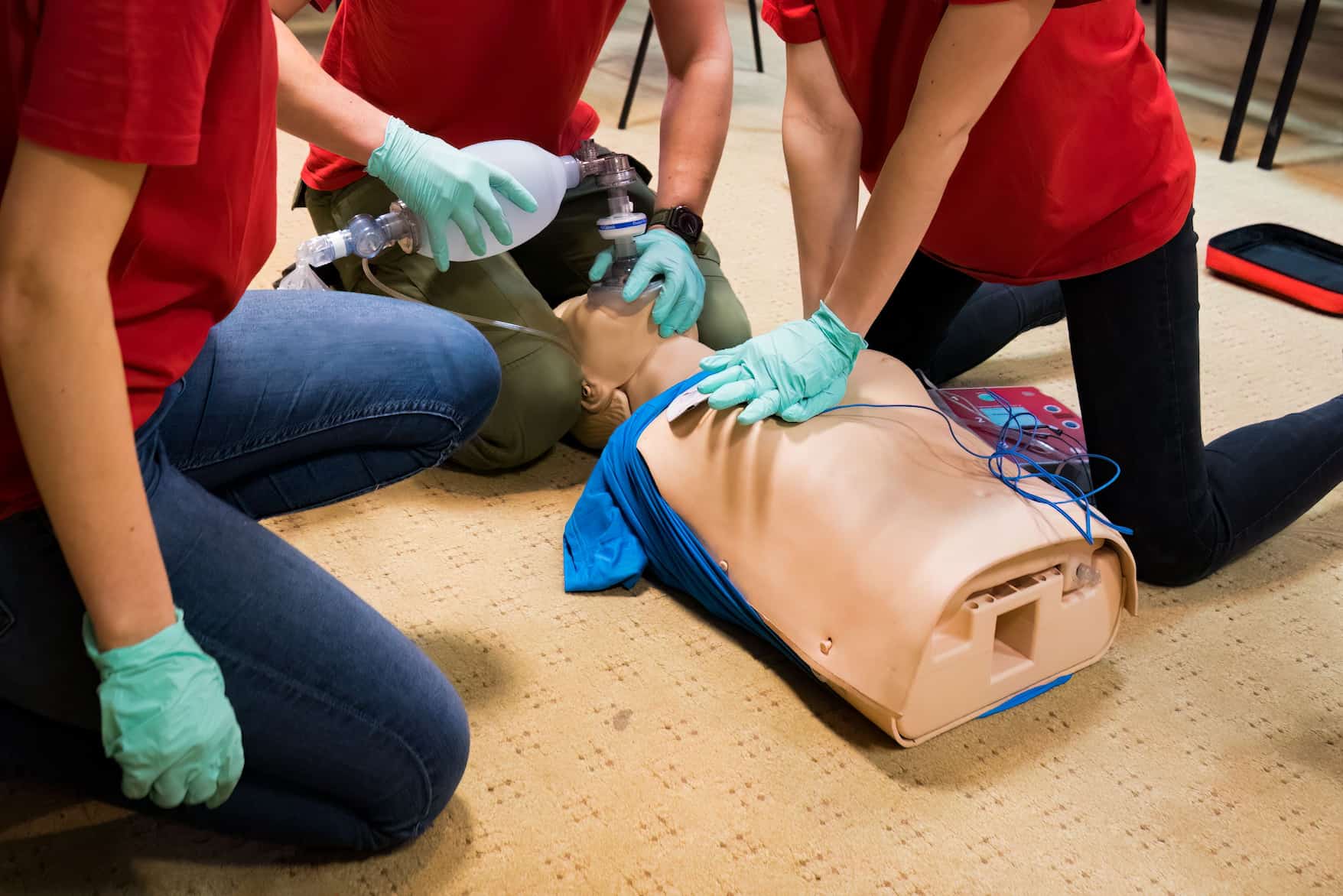
Students performing CPR and ventilation on a training manikin in class

An urgent compliance deadline can catch anyone by surprise. Whether you are an emergency nurse starting a new shift at an Austin hospital network, a childcare worker updating your state licensing, or a local construction foreman trying to keep your job site OSHA-compliant, timing is everything. When your employment hinges on possessing a valid certification card, you cannot afford to wait weeks for a piece of paper to arrive in the mail.

This pressing timeline leads many local professionals to ask a critical question: Can you really get CPR certified the same day in Austin?

The short answer is absolutely yes—provided you select a training center that utilizes modern, digital credentialing. By enrolling in an authorized, in-person course, you can complete your entire instructional curriculum, pass your hands-on skill evaluation, and walk away with a verified credential on the exact same afternoon. Let’s dive deep into how the same-day certification process works, what to look for to ensure your card is universally accepted, and how to spot illegitimate programs.

How Does Same-Day CPR Certification Work Legally?

Securing a credential on the same day as your training does not mean cutting corners or skimming through critical life-saving material. To remain fully compliant with national safety standards, an authorized training facility must present the comprehensive curriculum required by major regulatory bodies. The secret to rapid certification lies entirely in the modern transition from paper certificates to electronic logging systems.

Historically, students had to wait for physical certification cards to be printed, signed by an instructor, and sent via postal mail. Today, authorized training sites utilize direct digital portals tied to national certification networks. The moment your instructor validates that you have successfully executed proper chest compressions and rescue breathing, your profile is updated in the central database.

This real-time reporting triggers the immediate generation of an official eCard. The electronic certificate is delivered straight to your email inbox before you even leave the classroom parking lot. This streamlined, paperless process allows you to immediately forward your new safety credentials to your employer, HR manager, or state licensing board without a single day of delay.

Why Is an In-Person Class Required for Same-Day Credentials?

If you are looking for the fastest possible path to get certified, you might be tempted by websites offering 100% online courses that promise instant printouts. However, there is a massive catch that can jeopardize your employment. Fully online safety courses lack a physical, hands-on skills assessment component monitored by a live instructor. Because of this omission, purely online certificates are almost universally rejected by healthcare networks, school districts, and corporate safety directors.

Major regulatory institutions, including the Occupational Safety and Health Administration (OSHA) and state licensing boards, explicitly require hands-on practice. True emergency response relies heavily on muscle memory. You cannot truly learn the physical depth required for adult chest compressions, the delicate pressure needed for infant rescue breathing, or the tactile coordination required to deploy an Automated External Defibrillator (AED) purely by clicking a mouse.

An authentic same-day certification requires you to sit in a physical classroom with an experienced instructor. During these interactive sessions, you will practice directly on medical manikins and realistic AED trainers. The instructor provides immediate corrective feedback on your technique, ensuring your compression rate, depth, and hand placement are perfectly executed. Once this live evaluation is complete, your instructor can confidently issue a valid, fully accepted safety credential that very same day.

The rapid path from preparation to card delivery is highly straightforward. First, you attend a comprehensive 3.7-hour live instructional session. Second, you undergo a personalized, hands-on skills evaluation with your trainer. Third, your passing grade is logged for immediate database validation. Finally, an official, verifiable digital eCard is instantly transmitted directly to your email inbox.

What Will You Learn During an Accelerated Austin CPR Course?

An accelerated single-day safety class packs comprehensive, life-saving knowledge into a highly focused, interactive environment. All recognized training centers are obligated to display the complete, authorized instructional videos and guide you through matching practical exercises. In Austin, a standard combined course or Basic Life Support (BLS) session runs for approximately 3.7 hours.

During this intensive session, your training covers a wide spectrum of emergency response protocols across multiple age groups. You will learn the foundational principles of high-quality cardiopulmonary resuscitation, including the specific anatomical landmarks for adults, children, and infants. Instructors teach you how to quickly recognize the telltale signs of cardiac arrest, respiratory failure, and severe choking.

Beyond basic chest compressions, the curriculum dives into advanced airway management and ventilation techniques. You will practice using barrier devices and pocket masks, as well as assembling and operating bag-mask ventilation systems. The training also emphasizes the critical role of team dynamics, showing you how to communicate clearly and coordinate efforts smoothly during multi-rescuer resuscitation scenarios.

How Do You Verify If a Same-Day Certificate Is Accepted by Employers?

Not all safety certifications are created equal. When researching rapid options in Central Texas, your primary focus should be looking for the official American Heart Association (AHA) alignment. The AHA is the gold standard for resuscitation science and training nationwide. An AHA BLS certification carries the highest employer acceptance rate across the entire United States, making it the preferred choice for hospitals, dental clinics, schools, and industrial workplaces.

Some unaccredited websites attempt to lure students in with incredibly cheap prices or promises of 15-minute certifications. These programs lack official credentials and use generic materials that do not meet national guidelines. Presenting one of these illegitimate cards to a hospital administrator or safety manager will likely result in a rejected compliance file, forcing you to retake your training elsewhere and waste both time and money.

Before you book any class, verify that the training center is explicitly certified to issue official AHA eCards. True AHA cards feature unique validation numbers and QR codes that employers can instantly look up online to verify authenticity. Checking for these credentials upfront ensures your investment protects your professional standing and guarantees complete compliance from day one.

Who Benefits Most from Same-Day CPR Classes in Central Texas?

The demand for rapid, high-quality emergency training spans dozens of critical industries throughout the vibrant Austin metropolitan area. Healthcare professionals form the core of this demand. Registered Nurses (RNs), Certified Nursing Assistants (CNAs), medical office personnel, and dental hygienists frequently utilize same-day courses to maintain active status for their clinical privileges without interrupting their demanding shift schedules.

Outside of the medical sector, educational and childcare professionals rely heavily on rapid certification. Teachers, daycare providers, and youth sports coaches must keep their safety credentials current to comply with Texas state licensing mandates. Having access to a single-day training option ensures they can renew their certifications over a weekend or evening without missing time in the classroom or on the field.

The booming Central Texas infrastructure sector also drives a major need for immediate safety training. Construction foremen, commercial electricians, hospitality staff, lifeguards, and personal fitness trainers are regularly required to hold active safety credentials to step onto a job site or manage a public facility. A 3.7-hour in-person course provides an ideal solution that minimizes corporate downtime while maximizing workplace safety.

How Do You Register for a Same-Day Class in the Austin Area?

Securing a seat in a local, same-day certification class is a straightforward process designed around busy professional schedules. Leading local training providers offer flexible booking portals online where you can view real-time calendar availability. You can pick the exact calendar date, time slot, and location that matches your schedule, whether you live in downtown Austin, North Austin, or surrounding communities like Pflugerville, Round Rock, or Cedar Park.

In the Austin area, a standard American Heart Association BLS CPR & AED certification course starts at an affordable $64.95. If your specific job description or state board also requires standard first aid compliance, you can opt for a comprehensive, combined CPR, AED, and First Aid class for $84.95. These specialized courses cover additional emergency skills like managing severe bleeding, treating burns, and handling sudden environmental illnesses.

Because seats in these live, hands-on sessions are strictly capped to maintain optimal student-to-instructor ratios, registering in advance is highly recommended. Once you complete your short online registration, all you need to do is show up to the classroom ready to learn. Your expert instructor will guide you step-by-step through the video learning modules, provide direct practice time on the training equipment, grade your skills test, and issue your official electronic certification card before your day concludes.

Secure Your Emergency Credentials Today

Don’t let a sudden employment requirement or an expired credential slow down your career. You can easily complete your required training and earn a fully compliant safety card in a single afternoon. Our professional instructors provide a comfortable, stress-free learning environment focused on giving you genuine confidence when responding to real-world cardiac or breathing emergencies.

Whether you need to register for an individual class or schedule a group training session for your entire local business, we are here to help. Contact CPR Classes Near Me today at 512-887-6017 to lock in your seat, or explore our online scheduling calendar to find the perfect training time slot for your busy week.

Frequently Asked Questions

Can I complete my official CPR training entirely online?

No, purely online certifications are generally not recognized by healthcare employers or corporate safety directors. Valid safety training requires an in-person, hands-on skills evaluation using realistic medical manikins and AED trainers to verify proper technique.

How much does an official AHA certification class cost in Austin?

An official American Heart Association BLS CPR & AED course in Austin costs $64.95. If you need to add comprehensive First Aid training to your safety credentials, the combined course option is available for $84.95.

How long does a standard same-day certification course take?

An authorized, in-person training session with a certified instructor takes approximately 3.7 hours to complete. This time includes watching the required instructional videos, completing hands-on practice, and finishing the final skills assessment.

For how many years does my emergency safety certification remain valid?

Upon successful completion of your live training course, your official American Heart Association certification card will remain valid for exactly two years. To maintain compliance after that period, you will need to attend a standard renewal class.

Is there a minimum age requirement to take a safety class in Texas?

There is no specific minimum age restriction mandated for individuals seeking an official safety certification in Austin. Anyone who can independently understand the course material and physically perform the necessary chest compressions on a training manikin is welcome to enroll.

What is the primary difference between a standard CPR course and a BLS class?

Basic Life Support (BLS) is a specialized certification tailored specifically for healthcare professionals, emergency responders, and medical personnel. It features advanced team dynamics and ventilation techniques that go beyond the basic safety concepts taught in a standard general public course.