CPR Renewal in Austin: When to Renew, What to Expect, and What to Do if Expired
Maintaining your life-saving skills is a regular part of professional compliance and community preparedness. For healthcare providers, teachers, and emergency responders across Central Texas, keeping track of your credentials can sometimes feel like a moving target.

If your certification is nearing its end date, prioritizing your CPR renewal in Austin ensures you remain legally compliant at work and ready to act in an emergency. In this complete guide, we will break down the timeline for refreshing your credentials, what you will experience during a practical classroom session, and the precise steps you must take if your card has already lapsed.

Why Is Keeping Your CPR Certification Current So Critical?

Cardiopulmonary resuscitation is a physical skill that degrades over time if it is not routinely practiced. Medical research continuously reveals that high-quality chest compressions and immediate defibrillation are the most critical factors in surviving an out-of-hospital cardiac arrest.

The American Heart Association updates its guidelines periodically based on the latest scientific data to maximize patient survival outcomes. Taking a regular CPR renewal class ensures you are always operating under the most current, evidence-based emergency protocols available.

Beyond clinical proficiency, employers throughout Travis and Williamson counties mandate active safety credentials. Working with an expired card can result in immediate suspension, administrative leave, or compliance penalties for your workplace.

When Should You Schedule Your CPR Renewal in Austin?

How long does an official certification remain valid?

An official American Heart Association (AHA) Basic Life Support (BLS) or First Aid credential is valid for exactly two years from the last day of the month in which it was issued. For example, if you passed your class on June 15, 2024, your credential remains active through June 30, 2026.

It is highly recommended to schedule your CPR renewal in Austin roughly 30 days before your current card expires. Planning ahead prevents unexpected gaps in employment compliance and gives you flexibility when choosing a convenient class time.

Is there a formal grace period after expiration?

A common misconception among local professionals is that the American Heart Association offers a 30-day or 60-day grace period past the expiration date. In reality, there is no official grace period.

The moment the date on your digital card passes, your certification is officially lapsed. Local healthcare networks, childcare licensing boards, and industrial employers will view an expired card as non-compliant, making immediate re-certification necessary.

What Should You Expect in an Austin Renewal Class?

How long does the classroom session take to complete?

Authorized American Heart Association training sites are strictly required to show the complete, updated educational videos and conduct full practical testing. At our dedicated local facility, your comprehensive training session will take approximately 3.7 hours to complete.

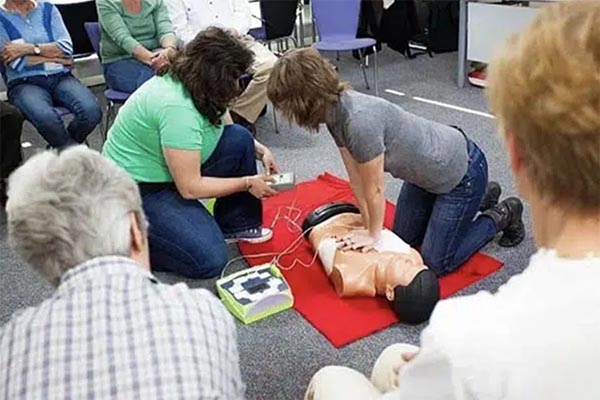
This efficient format respects your busy schedule while ensuring absolutely no shortcuts are taken with your education. You will review core concepts, practice on physical manikins, complete your skills assessment, and walk away fully certified in a single morning or afternoon.

What core life-saving skills will you practice?

A professional CPR renewal in Austin covers life-saving techniques for adults, children, and infants. The curriculum focuses heavily on high-quality physical skills and situational awareness.

  • High-Quality Chest Compressions: Achieving the correct depth and rate while allowing full chest recoil.
  • Ventilation Techniques: Delivering effective rescue breaths using barrier masks and bag-mask ventilation devices.
  • AED Operation: Safely deploying an Automated External Defibrillator during a simulated cardiac event.
  • Choking Relief: Administering age-appropriate airway clearance methods for responsive and unresponsive victims.
  • Team Dynamics: Coordinated communication strategies for environments with multiple rescuers.

+———————————————————————–+

|                       AHA BLS Course Curriculum                       |

+————————————+———————————-+

| Hands-on Chest Compressions        | Airway Clearance & Choking       |

| Rescue Breathing & Ventilation    | Team Resuscitation Dynamics      |

| Automated External Defibrillator   | Adult, Child, & Infant Protocols |

+————————————+———————————-+

Can you complete your renewal entirely online?

While many internet sites promise instant, fully online credentials for a low fee, these courses typically lack proper accreditation. The vast majority of employers in Austin do not recognize or accept certifications obtained solely through a digital screen.

True emergency response requires physical muscle memory that can only be built through hands-on CPR training. Our local courses combine necessary video instruction with interactive, physical practice on specialized feedback manikins under the direct supervision of certified instructors.

What Must You Do If Your CPR Card Has Already Expired?

What are the steps to regain your compliance?

If you discover that your credential has already expired, do not panic. The process to regain your active status is straightforward, but it requires booking an official, in-person training session as soon as possible.

Because the AHA structure requires the same comprehensive skills verification for both new students and renewing professionals, the enrollment path is identical. You simply register for any standard, local BLS or CPR/AED First Aid course to reset your two-year validation window.

Who stands to benefit from completing this training?

Our local training sessions are specifically structured to accommodate individuals across a wide array of professional fields. We regularly certify and renew credentials for:

  • Healthcare Providers: Nurses, RNs, CNAs, medical office personnel, and dental teams.
  • Educators & Caregivers: K-12 teachers, daycare workers, babysitters, and private caretakers.
  • Fitness & Athletics: Personal trainers, physical therapists, sports coaches, and regional referees.
  • Industrial Workers: Construction crews, commercial electricians, and site safety managers.
  • Public Safety Personnel: Lifeguards, swim instructors, flight attendants, and hospitality team leaders.

How Do You Select the Right Local Provider?

Why choose an official American Heart Association site?

When searching for a local class, it is vital to verify that the provider displays the official American Heart Association seal. Many unaccredited businesses use confusing wording to mask the fact that their courses are not employer-approved.

Choosing an authorized provider ensures your training meets national workplace safety criteria. Our Austin-area instructors are fully certified through the AHA, guaranteeing that your new card is compliant with OSHA standards and universally recognized by local employers.

What specific areas in Central Texas are served?

Convenience is an important factor when managing your professional credentials. Our local team proudly provides easily accessible training and renewal opportunities throughout the entire Austin metropolitan footprint, including:

  • Austin Proper & Austin North
  • Round Rock & Pflugerville
  • Cedar Park & Leander
  • Georgetown & Liberty Hill
  • Hutto, Taylor, & Manor
  • Buda, Kyle, & San Marcos
  • Lakeway, West Lake Hills, & Lago Vista

Our certified instructors are also fully equipped to travel directly to your local corporate office, school campus, or medical clinic to certify large groups on-site, providing tailored corporate training solutions.

Summary of Key Takeaways for Austin Professionals

Navigating your CPR renewal in Austin does not have to be stressful or time-consuming. Keep these primary points in mind to ensure you always remain compliant:

  • Track Your Expiration: Your card expires exactly two years from the end of the month it was issued, with no official grace period permitted.
  • Prioritize In-Person Learning: Employers widely reject online-only options; look exclusively for hands-on CPR training to secure a valid credential.
  • Expect Same-Day Results: A standard local renewal session lasts approximately 3.7 hours and includes video learning, physical practice, and formal testing.
  • Recover Easily If Expired: If your card lapses, simply sign up for a local class immediately to receive your new digital eCard on the exact same day.

Don’t let an expired card disrupt your employment or leave you unprepared in a medical emergency. Secure your spot in an official American Heart Association class with the local experts today.

Contact CPR Classes Near Me today to view our upcoming schedule, lock in affordable local pricing starting at $64.95, and secure your official, same-day certification card.

Frequently Asked Questions

How do I get CPR certified in Austin?

To earn your official credential, you must attend an authorized, in-person training class that covers all required practical skills. During the session, you will practice chest compressions, ventilation, and AED use on specialized manikins. Upon successfully completing the live-training components and skills assessment, you will be issued your official certification card on that exact same day.

How much does local CPR training cost?

At our Austin training facility, a standard American Heart Association BLS course is discounted to $64.95, which saves you $20 off the standard rate. If your workplace requires general first aid compliance, our combined CPR + First Aid class is offered at an affordable rate of $84.95. Always look for the official AHA seal to ensure your investment is fully accepted by your employer.

How long does a CPR certification remain valid?

Once you successfully complete your classroom training and skills check, your certification is valid for exactly two years. The American Heart Association credential features the highest nationwide acceptance rate among healthcare systems, corporate entities, and government agencies. You will need to take a fresh renewal class before that 24-month window closes to maintain your active status.

Can I complete my renewal class entirely online?

No, pure online courses are generally not accepted by employers or licensing boards because they lack physical skill verification. To ensure safety standards are met, the American Heart Association requires an instructor to witness your hands-on compression and ventilation techniques. Our local classes are held entirely in person to ensure you fulfill all employer compliance requirements.

How long does the local renewal class take?

All authorized AHA training facilities follow a standardized curriculum that includes mandatory instructional videos and physical testing. Your classroom session at our Austin location will take approximately 3.7 hours to complete. Because we value your time, our instructors issue your digital certification eCard immediately following the successful completion of the course on the same day.

What should I do if my CPR card has already expired?

If your card has already expired, you must register for an in-person certification course as soon as possible to regain your compliance. Because the AHA requires identical practical testing for both initial students and renewing individuals, the class format is exactly the same. Your previous experience will simply help you move through the practical testing with confidence.
What “Healthcare Provider CPR” Usually Means in Job Postings

You are scrolling through employment boards, polishing your resume, and you spot the perfect open position. Then you hit the job requirements section and see a familiar but sometimes confusing phrase: Must possess a valid Healthcare Provider CPR certification. If you are entering the medical field, starting a nursing program, or stepping into a public safety role, this line can stop you in your tracks. Does your old community CPR card count? Can you just take a quick, ten-minute quiz online to satisfy the human resources department?

Landing your dream job requires having the exact credentials employers demand. In this guide, you will learn precisely what hiring managers mean by “Healthcare Provider CPR,” how it differs from standard community training, and how to get the right card in your wallet without delaying your start date.

What is the difference between standard CPR and Healthcare Provider CPR?

Standard CPR courses are built for laypeople—think fitness coaches, teachers, and construction foremen. These general education courses cover single-rescuer techniques, basic chest compressions, and simple Automated External Defibrillator (AED) operations. They are designed to keep someone alive in a grocery store or office until the professionals arrive.

Healthcare Provider CPR is an entirely different level of training. When an employer writes this into a job posting, they are stating that you will be expected to act as a professional responder within a structured clinical environment or emergency response team.

This advanced tier of training shifts the focus from basic survival to highly coordinated, professional resuscitation. You do not just learn how to pump the chest; you learn how to seamlessly integrate your life-saving actions with an entire team of clinicians during a code or acute cardiac event.

Why do job postings specifically require Healthcare Provider CPR?

Hospitals, dental clinics, and emergency medical services operate under strict regulatory standards and institutional liability rules. Employers require this specific level of training to ensure a universal standard of care across their entire clinical staff.

When a medical emergency happens inside a healthcare facility, there is no waiting for the paramedics—you and your colleagues are the emergency response team. Your employer needs absolute proof that you can handle advanced equipment and execute complex protocols under immense pressure.

Furthermore, insurance providers and state licensing boards mandate that direct patient-care staff maintain active, verified credentials. Requiring a specialized healthcare-level certification keeps the organization compliant with national health codes while maximizing safety for vulnerable patients.

What specific skills are taught in Healthcare Provider CPR courses?

A true healthcare-level course goes far beyond the basics. While you will review the foundation of high-quality chest compressions, your curriculum will focus on advanced clinical skills that layperson classes skip entirely.

First, you will master multi-rescuer team dynamics. You will practice how to step into a chaotic code situation, communicate clearly, and switch roles with other providers every two minutes to prevent fatigue.

Second, you will train heavily on advanced airway management. This includes learning how to use a bag-valve-mask (BVM) resuscitator, manage advanced ventilation rates, and handle choking emergencies for adults, children, and infants using medical-grade tools.

Finally, you will learn to use a clinical AED in tandem with team CPR. This ensures you can read emergency situations accurately, administer shocks safely, and maintain continuous perfusion to the patient’s vital organs.

Which official certification satisfies the “Healthcare Provider” requirement?

When an employer types “Healthcare Provider CPR” into a job description, they are almost always looking for a Basic Life Support (BLS) certification. BLS is the official industry nomenclature utilized by major national credentialing bodies.

To protect your career and your wallet, you must ensure your certification comes from a highly recognized, nationally accredited organization. The gold standard for healthcare institutions worldwide is the American Heart Association (AHA).

The American Red Cross also offers an equivalent professional rescuer course. However, because some hospital networks strictly mandate AHA cards, it is always wise to double-check with your specific employer before registering for a class.

Can you get a valid Healthcare Provider CPR certification entirely online?

The short answer is no. If an online program promises you a full “Healthcare Provider” or “BLS” certification card based solely on reading text and passing a digital quiz, that card will almost certainly be rejected by your employer’s compliance department.

Hospitals and clinics require proof of hands-on competency. Resuscitation requires exact physical precision—achieving the correct depth of compressions and establishing a perfect seal on a ventilation mask cannot be evaluated through a computer screen.

However, you can utilize a highly efficient hybrid model known as Blended Learning. This pathway allows you to complete all your cognitive coursework and lectures online at your own pace. Once finished, you simply visit a local testing center for a fast, in-person skills verification check with a certified instructor or automated high-fidelity manikin.

Who is required to hold a Healthcare Provider CPR card?

This requirement spans far beyond just physicians and emergency room nurses. If your daily work responsibilities place you in direct contact with patients, clients, or vulnerable populations within a professional capacity, you likely need a BLS-level card.

The mandate routinely covers:

  • Registered Nurses (RNs), Licensed Practical Nurses (LPNs), and Nurse Practitioners
  • Certified Nursing Assistants (CNAs) and Medical Assistants
  • Dentists, Dental Hygienists, and Dental Assistants
  • Physical Therapists, Occupational Therapists, and Chiropractors
  • Phlebotomists and Radiology Technicians
  • Medical, Nursing, and Allied Health Students entering clinical rotations
  • Paramedics, EMTs, Firefighters, and Law Enforcement Personnel

How long does a Healthcare Provider CPR certification remain valid?

An official Basic Life Support (BLS) certification card is valid for exactly two years from the date of your course completion. The exact expiration date will be clearly stamped on your digital eCard.

Because life-saving skills are subject to rapid decay when not used daily, the medical community enforces this strict biennial recertification cycle. It ensures your muscle memory remains sharp and that you are fully educated on any updated international resuscitation guidelines.

To prevent any lapse in your employment eligibility, plan to book a quick renewal or recertification class roughly 30 to 45 days before your current card expires.

Ready to Secure Your Next Healthcare Role?

Navigating job requirements can be stressful, but getting your medical credentials shouldn’t be. Don’t let an expired or incorrect card delay your onboarding or stall your medical career.

Whether you need to earn your credential for the first time or require a fast, stress-free certification renewal, we are here to help. Our convenient training options fit seamlessly into your busy schedule, ensuring you receive an official, employer-accepted eCard that keeps you fully compliant.

Ensure your resume passes the screening process with flying colors. Contact CPR Classes Near Me today to find a flexible class time that works for you, and take the next confident step toward your professional goals.

Frequently Asked Questions

Is CPR the same as BLS?

No, they are not exactly the same. CPR is a general term for cardiopulmonary resuscitation, which includes basic courses designed for the public. BLS (Basic Life Support) is a specific, higher-level CPR certification tailored for healthcare professionals and first responders that includes advanced team-based protocols and medical equipment training.

What happens if my Healthcare Provider CPR card expires while I am working?

If your certification expires, you are technically out of compliance with state licensing and institutional safety rules. Most healthcare employers run automated tracking audits and will temporarily remove you from the active shift schedule until you complete an in-person skills renewal and present a valid card.

Does a standard “Heartsaver” card count as Healthcare Provider CPR?

No, a standard Heartsaver or community CPR card does not fulfill this requirement. Heartsaver courses are designed by the American Heart Association specifically for laypeople, corporate workers, and educators, whereas job postings for clinical roles require the advanced Basic Life Support (BLS) curriculum.

What is the American Heart Association Blended Learning model?

Blended Learning is a convenient, employer-accepted training method split into two parts. You complete the interactive educational modules and exams online from your home computer, and then you attend a brief, hands-on physical skills check at a local training site to earn your official eCard.

Can nursing or medical students attend a healthcare CPR class?

Yes, entering clinical rotations requires an active healthcare-level credential. Students are highly encouraged to take an official BLS class early in their schooling to ensure they meet all institutional compliance rules before setting foot inside a hospital or clinic environment.

Do dental offices require BLS or standard CPR?

Because dental professionals administer local anesthesia, perform invasive oral procedures, and manage medically complex patients, state dental boards and malpractice insurance carriers almost universally mandate a valid, professional-level BLS certification for all clinical team members.

What to Ask HR Before You Book a CPR Course

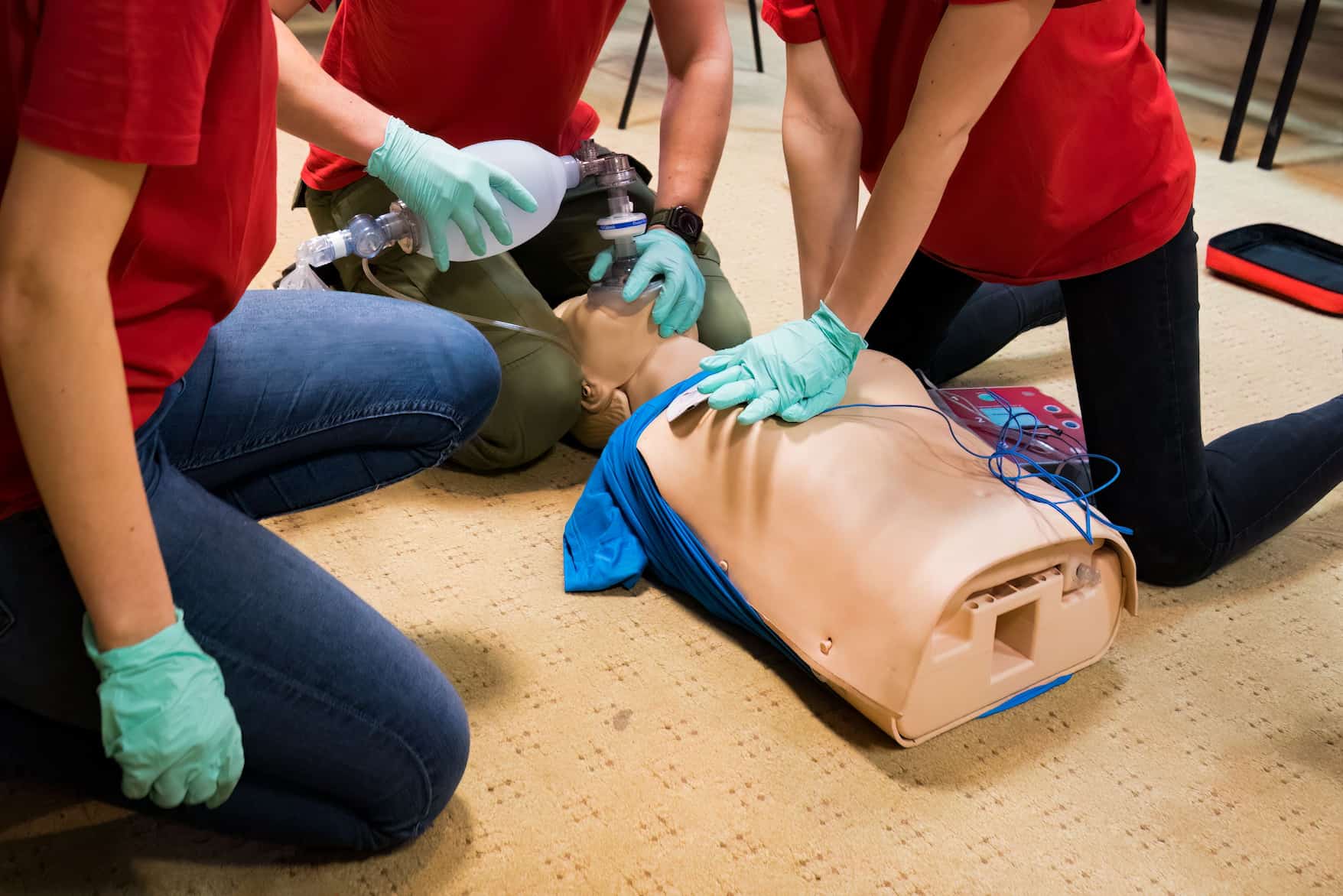
Students performing CPR and ventilation on a training manikin in class

Landing a job that requires life-saving skills is highly rewarding, but keeping your qualifications up to date can feel like a chore. Whether you are a dedicated nurse, a childcare provider, an educator, or a corporate safety warden, keeping your certifications current is non-negotiable. However, before you jump online and book the very first class you find, you need to have a quick chat with your Human Resources department.

Taking a few minutes to ask the right questions can save you from spending money out of pocket or sitting through a class that your company won’t even accept. Not all training programs are created equal, and employers have strict standards for workplace CPR compliance. In this comprehensive guide, we will break down the exact questions you should ask your HR representative before signing up for your next training session.

By alignment-checking your training plans with corporate guidelines, you can ensure your credentials will be accepted instantly. Let’s look at the crucial questions you need to ask to ensure your upcoming educational investment goes smoothly.

Which Certifying Body Does Our Company Accept?

Did you know that some commercial entities issue certificates that hold zero weight in the professional world? This is why your very first question to HR must clarify which certifying organization your company recognizes. For the vast majority of healthcare facilities, corporate offices, and educational institutions, the American Heart Association (AHA) is the gold standard.

Choosing an American Heart Association approved course ensures that your training follows the latest peer-reviewed science and emergency cardiac care guidelines. Many businesses explicitly state in their compliance bylaws that only AHA courses meet their employment mandates. If you accidentally choose an unaccredited provider, you risk having your credentials rejected entirely.

Before confirming any booking, check the provider’s website for the official certifying seal. At CPR Classes Near Me, all of our instructors are fully certified through the American Heart Association. This gives our students total peace of mind knowing their credentials boast the highest employer acceptance rate nationwide.

Does My Role Require Standard CPR or Basic Life Support (BLS)?

It is incredibly common for professionals to confuse a standard CPR course with a Basic Life Support (BLS) training program. While both teach life-saving skills, they are built for entirely different levels of care. Asking HR for your precise course requirements ensures you do not accidentally enroll in the wrong level of instruction.

A standard CPR and First Aid class is typically designed for teachers, fitness coaches, construction workers, and general community members. This training focuses on basic single-rescuer techniques, choking relief, and fundamental first aid for adults, children, and infants. It provides excellent foundational knowledge for everyday emergencies in public settings.

On the flip side, a BLS training course is tailored specifically for healthcare providers, public safety personnel, and medical office staff. This advanced curriculum dives deep into high-quality chest compressions, multi-rescuer team dynamics, bag-mask ventilation techniques, and automated external defibrillator (AED) integration. Confirming the exact level your license or employer demands will keep you from having to take a second class to fix an oversight.

Will the Company Pay for My CPR Training Directly or via Reimbursement?

Understanding the financial side of professional development is a smart move for any employee. Training costs can vary based on the specific curriculum, so you should always verify the company’s payment policy up front. Some organizations have direct corporate accounts with local training centers, allowing you to sign up without spending a dime.

If your company does not use direct corporate billing, ask if they offer a tuition reimbursement program. In many cases, you will pay for the class when booking and then submit your receipt and copy of your certification card to receive your money back. HR can provide you with the correct expense forms and walk you through their specific submission workflow.

Be wary of unauthorized online programs that promise cut-rate prices. While a cheap online module might look attractive to a budget-conscious manager, these courses almost always lack the mandatory hands-on testing components required by workplace safety regulators. Investing in an official, compliant course ensures your reimbursement request will pass through accounting without a hitch.

Is a Purely Online CPR Course Acceptable for Workplace Compliance?

In our digital world, it is tempting to try to complete all of your professional training through a computer screen. However, when it comes to learning life-saving techniques, hands-on practice is absolutely essential. You must ask your HR department if they accept online-only certificates, as the vast majority of industries strictly forbid them.

Regulatory bodies like OSHA and various state licensing boards require practical, in-person evaluation using physical manikins and AED trainers. Without this physical practice, it is impossible to master the correct hand placement, compression depth, and rhythm needed to save a human life. Employers know this, which is why pure online certifications are routinely rejected during compliance audits.

To meet professional standards, look for high-quality, in-person CPR training that provides immediate, face-to-face feedback from expert instructors. This format guarantees that you walk away with the practical muscle memory and confidence required to handle real-world cardiac emergencies safely.

What Is the Deadline for Submitting My Renewed Certification Card?

Timing is everything when it comes to maintaining your professional credentials. A standard certification is valid for exactly two years from your course completion date. Allowing your credentials to expire can cause serious headaches, including being temporarily removed from work schedules or facing professional licensing fines.

Ask HR exactly when they need your updated documentation in their system. Do not wait until the final week of your renewal month to look for an open class. Give yourself a comfortable buffer of a few weeks so you can find a local class time that fits neatly into your busy personal schedule.

If you are facing a tight deadline, you need to find a provider that offers rapid documentation delivery. Many traditional training facilities take weeks to mail out physical cards, leaving your employment status up in the air. Choosing a modern provider that prioritizes same-day eCard delivery ensures you can hand over your proof of compliance to HR the very same afternoon you finish class.

Conclusion: Take the Next Step in Safety Compliance

Navigating workplace compliance requirements does not have to be difficult. By asking your HR department these five essential questions, you protect your wallet, save precious time, and guarantee that your training aligns perfectly with company standards. Armed with the correct details regarding certifying bodies, required course levels, and payment policies, you can move forward with complete confidence.

When you are ready to book an official, employer-accepted CPR course, look no further than our local professional training programs. We offer comprehensive, engaging, and stress-free in-person classes led by certified American Heart Association instructors. We focus on giving you top-quality, practical skills while respecting your time with efficient schedules and immediate credential processing.

Do not leave your workplace compliance or life-saving skills to chance with unverified online courses. Contact CPR Classes Near Me today to check our upcoming availability, explore group training options, and secure your spot in a class that guarantees workplace acceptance!

Frequently Asked Questions

How long does a professional CPR certification remain valid?

An official American Heart Association certification is valid for exactly two years from the date you complete your class. To avoid any gaps in workplace compliance, it is highly recommended to schedule your renewal course a few weeks before your current card officially expires.

Can I complete my required training entirely online?

Generally, no. Most employers, state licensing boards, and OSHA safety regulations do not accept certifications from purely online courses. True competency requires real-world, in-person practice with manikins and AED equipment under the direct supervision of a certified instructor.

What is the main difference between a standard CPR class and a BLS class?

A standard CPR and First Aid class is geared toward the general public, teachers, and fitness coaches, focusing on basic life-saving steps. A Basic Life Support (BLS) course is an advanced program designed specifically for healthcare professionals and first responders, covering multi-rescuer dynamics and medical ventilation tools.

How quickly will I receive my certification card after finishing the course?

When you train with a modern provider like CPR Classes Near Me, your official American Heart Association BLS eCard is issued directly to you on the very same day you finish your class. This ensures you can immediately submit your updated proof of compliance to your employer without any stressful delays.

Are there age requirements to take an American Heart Association class?

There is no formal minimum age requirement to receive an official certification through the American Heart Association. Anyone who is physically capable of performing high-quality chest compressions and independently completing the course requirements is welcome to enroll in a class.