Infant CPR Training for Daycare Staff: The Complete Guide to Workplace Safety and Compliance
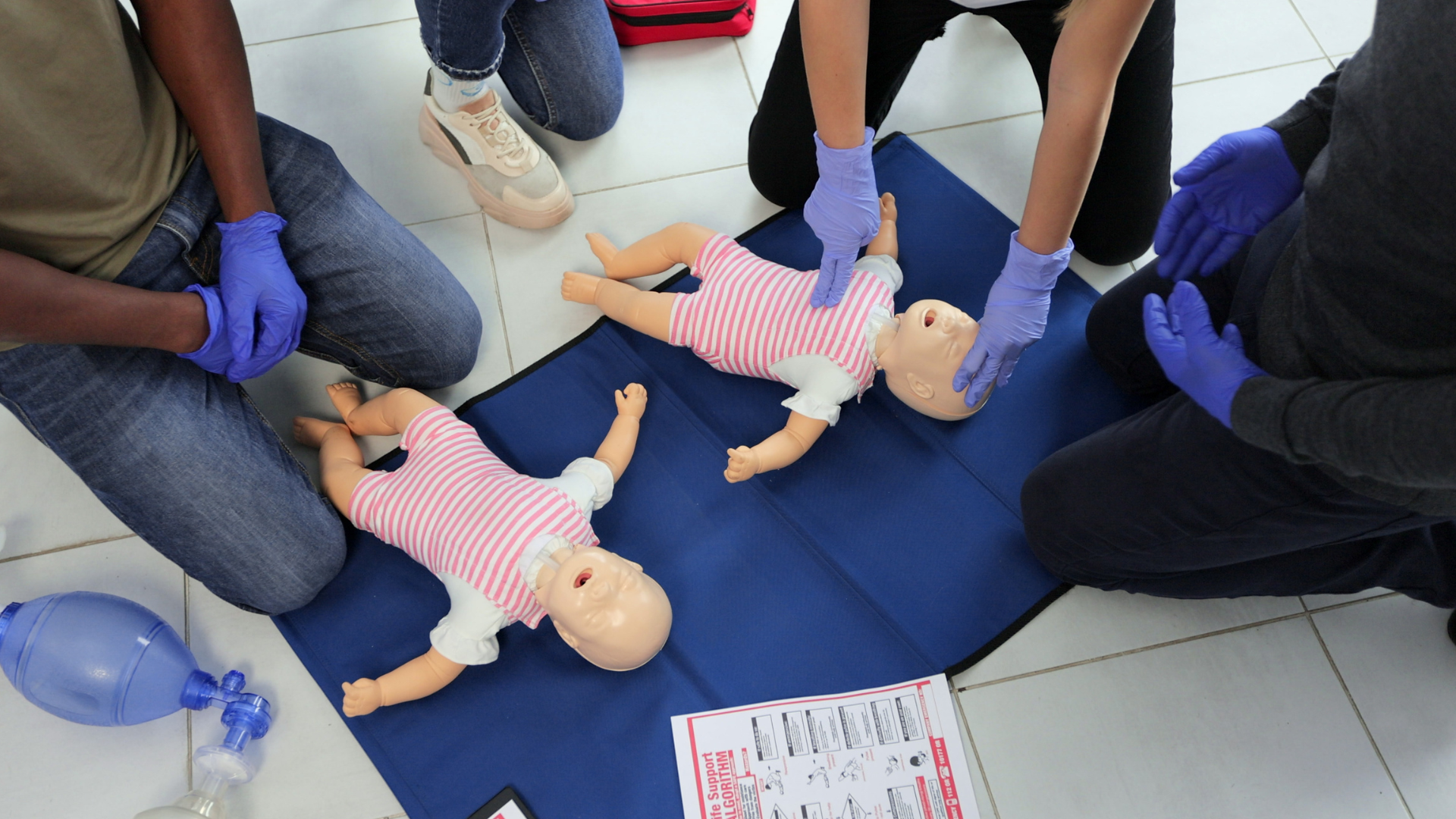
Why is CPR Important for Infants

Every single day, parents hand over their most precious gift—their infants—to the trusted care of daycare staff. In early childhood environments, safety is not merely a policy checkbox; it is an active, moment-by-moment commitment. When a medical emergency occurs, such as an unexpected airway obstruction or sudden respiratory distress, infant CPR training for daycare staff transforms panic into life-saving action.

This comprehensive guide breaks down everything childcare directors, teachers, and staff members must know about infant cardiopulmonary resuscitation (CPR) and pediatric first aid. You will learn key anatomical differences, step-by-step emergency protocols, state licensing mandates, and how to secure official American Heart Association (AHA) credentials for your team.

Why is Infant CPR Training Essential for Daycare Staff?

Infants under 12 months old possess delicate physiological systems that react rapidly to oxygen deprivation. Unlike adults, whose cardiac events usually stem from underlying heart disease, infants typically experience cardiac arrest secondary to respiratory failure or airway obstruction.

Without immediate intervention, irreversible brain damage can occur within 4 to 6 minutes of oxygen loss. Having staff members who are confident in infant CPR creates an immediate safety net that keeps oxygenated blood flowing to vital organs until emergency medical personnel arrive.

State childcare licensing agencies nationwide strictly enforce CPR standards. Maintaining fully certified personnel on-site during all operational hours ensures legal compliance while reassuring parents that their children are protected by trained professionals.

How Does Infant CPR Differ From Adult and Child CPR?

Performing CPR on an infant requires distinct adjustments in hand placement, compression depth, and rescue breathing force. Applying adult-level force to an infant’s small chest can cause severe internal injuries.

When delivering compressions to an infant under one year old, a single rescuer uses just two fingers placed in the center of the chest, just below the nipple line. If two trained rescuers are present, they use the two-thumb encircling hands technique. The depth of chest compressions for an infant is about 1.5 inches (4 cm), whereas child compressions are about 2 inches (5 cm), and adult compressions are at least 2 inches (5 to 6 cm).

The rate of chest compressions remains uniform across all ages at 100 to 120 compressions per minute. However, the compression-to-breath ratio changes based on rescuer numbers for pediatric victims. For infants and children, a single rescuer uses a 30:2 ratio, but two rescuers switch to a 15:2 ratio to maximize oxygenation. For adults, the ratio remains 30:2 regardless of the number of rescuers.

When giving rescue breaths to an infant, open the airway gently without overextending the neck and cover both the baby’s nose and mouth with your mouth to create a tight seal. For children and adults, pinch the nose closed and cover only the mouth.

What Are the Key Steps in the Infant CPR Protocol?

When an infant becomes unresponsive in a daycare setting, executing the American Heart Association Chain of Survival saves crucial seconds. Follow these sequential steps carefully.

1. Check Responsiveness and Call for Help

Tap the bottom of the infant’s foot gently and shout their name. If the infant does not move or make a sound, shout for nearby staff members to call 911 and retrieve an Automated External Defibrillator (AED). If you are alone, perform 2 minutes of CPR (5 cycles) before calling 911 yourself.

2. Check Breathing and Pulse

Look at the infant’s chest for 5 to 10 seconds to detect normal breathing. Check for a brachial pulse along the inner upper arm between the elbow and shoulder. If there is no pulse or if the pulse is below 60 beats per minute with signs of poor perfusion, begin chest compressions immediately.

3. Deliver High-Quality Chest Compressions

Place the infant on a firm, flat surface such as a table or the floor. Position two fingers in the center of the chest, just below the nipple line. Press down approximately 1.5 inches deep at a steady rhythm of 100 to 120 compressions per minute, allowing the chest to recoil fully between pushes.

4. Provide Gentle Rescue Breaths

Open the airway using a gentle head-tilt, chin-lift technique—be careful not to tilt the head back too far, as an infant’s trachea is flexible and can pinch shut. Cover both the baby’s nose and mouth with your mouth, delivering two soft breaths just until you see the chest gently rise.

5. Attach and Use an AED

If an AED is available, turn it on immediately. Apply pediatric attenuator pads (or adult pads if pediatric pads are unavailable, ensuring they do not touch each other by placing one on the center chest and one on the back). Follow the device’s voice prompts to deliver a shock if advised, then resume compressions instantly.

How Should Daycare Workers Handle Infant Choking Emergencies?

Choking is one of the leading causes of accidental injury in infant childcare settings. Small toys, food items, or loose craft supplies can easily block an infant’s tiny airway.

Recognizing the signs of silent choking—where the baby cannot cry, cough, or breathe, and their skin or lips turn blue—is vital. Do NOT perform abdominal thrusts (the Heimlich maneuver) on an infant. Instead, follow the standard infant choking protocol:

  1. Position the Infant Face-Down: Hold the infant face-down along your forearm, resting your arm on your thigh for support. Support the infant’s head and jaw with your hand, keeping the head lower than the chest.
  2. Deliver 5 Back Slaps: Give 5 distinct, firm back slaps between the infant’s shoulder blades using the heel of your hand.
  3. Turn the Infant Face-Up: Flip the infant face-up onto your opposite forearm, keeping the head lower than the trunk.
  4. Deliver 5 Chest Thrusts: Place two fingers on the lower half of the breastbone and deliver 5 quick chest thrusts (about 1.5 inches deep).
  5. Repeat Until Cleared or Unresponsive: Continue alternating 5 back slaps and 5 chest thrusts until the object is expelled. If the infant becomes unresponsive, lower them to a hard surface and begin CPR compressions immediately, looking inside the mouth for the object before giving breaths.

What Licensing Requirements Apply to Daycare CPR Certification?

State departments of family and protective services enforce strict CPR compliance rules for early education facilities. While exact standards vary slightly by state, almost all jurisdictions require the following basic benchmarks:

  • 100% On-Site Coverage: At least one staff member with current infant and child CPR/First Aid certification must be present in the building and on field trips at all times.
  • Hands-On Practice Component: Fully online CPR courses without a live skills evaluation are almost universally rejected by state licensing inspectors and OSHA.
  • Two-Year Renewal Cycle: CPR credentials must be renewed every two years through an approved training curriculum.
  • Combined CPR and First Aid: Daycare employees typically require combined training covering infant/child CPR, AED operation, pediatric asthma response, allergic reaction management (EpiPen use), and basic wound care.

Investing in high-quality infant CPR training for daycare staff prevents costly licensing fines, lowers insurance premiums, and builds unshakeable confidence among your staff members.

Why Choose CPR Classes Near Me for Your Daycare Center?

When managing a busy early childhood facility, scheduling high-quality training should be straightforward and stress-free. CPR Classes Near Me provides elite, employer-accepted American Heart Association (AHA) training tailored specifically to daycare centers and educational staff.

Here is why daycare directors and individual educators trust our training programs:

  • Official AHA Credentials: Receive authentic American Heart Association certification eCards that meet all OSHA, state childcare licensing, and healthcare employer standards.
  • Same-Day eCard Delivery: No waiting weeks for your card in the mail. Your AHA eCard is issued electronically on the very day you complete your class.
  • Flexible On-Site Group Training: Our experienced instructors bring professional infant manikins, AED trainers, and course materials directly to your daycare facility, or your team can attend convenient local classes.
  • Affordable, Transparent Pricing: Individual AHA CPR classes start at just $64.95, while combined CPR and First Aid courses are available for $84.95.
  • Hands-On Learning Environment: We combine expert video instruction with interactive skills practice, ensuring every staff member gains real confidence in chest compressions and choking relief.

Summary of Key Takeaways

  1. Infants require specialized techniques: Always use 2 fingers or 2 thumbs for chest compressions to a depth of 1.5 inches, avoiding excessive force.
  2. Respiratory causes dominate: Most infant cardiac arrests stem from breathing trouble or choking, making rescue breathing and airway clearance essential.
  3. No Heimlich for infants: Use 5 back slaps alternating with 5 chest thrusts for conscious choking infants; never perform abdominal thrusts.
  4. Hands-on certification is required: Online-only cards do not meet state licensing or OSHA guidelines for daycare facilities.
  5. AHA eCards are issued same-day: Training with CPR Classes Near Me ensures your team earns official 2-year certification without delay.

Contact CPR Classes Near Me Today!

Protecting the infants in your care starts with hands-on, expert instruction. Whether you need individual certification or custom group training at your daycare center, CPR Classes Near Me is ready to assist you.

Don’t wait for an emergency to test your facility’s readiness. Contact CPR Classes Near Me today to schedule your American Heart Association Infant CPR and First Aid training!

Frequently Asked Questions

Can daycare staff take CPR training completely online?

No, state childcare licensing boards and OSHA do not accept 100% online CPR certifications. Effective infant CPR requires hands-on evaluation on infant manikins with an instructor. Courses offered by CPR Classes Near Me include all necessary in-person, hands-on practice to guarantee acceptance by regulatory bodies.

How often do daycare staff members need to renew infant CPR certification?

Infant CPR certification must be renewed every two years. Keeping credentials current ensures daycare staff stay updated on the latest American Heart Association guidelines and maintain peak muscle memory for emergency situations.

What is the compression-to-breath ratio for infant CPR in a daycare?

When a single daycare worker performs infant CPR, the compression-to-breath ratio is 30 chest compressions followed by 2 rescue breaths. If two trained rescuers are present, the AHA recommends a 15 compressions to 2 rescue breaths ratio to optimize oxygenation.

Are daycare facilities required to have pediatric AEDs on site?

While AED mandates vary by state, having an AED equipped with pediatric pads or a child key is highly recommended for all childcare centers. Automated External Defibrillators automatically analyze heart rhythms and deliver safe, scaled energy levels appropriate for infants and young children.

How long does an infant CPR and First Aid course take to complete?

A comprehensive American Heart Association CPR, AED, and First Aid class typically takes approximately 3.5 to 4 hours to complete. Upon finishing the hands-on practice and evaluation, participants receive their official AHA eCard on the same day.

What should a daycare staff member do if an infant stops breathing but still has a pulse?

If an infant is not breathing normally but has a clear pulse above 60 beats per minute, perform rescue breathing only. Give 1 gentle rescue breath every 2 to 3 seconds (20 to 30 breaths per minute) and recheck the pulse every 2 minutes.

Do Childcare Workers Need CPR and First Aid in Texas? A Complete Guide to State Standards

When parents drop their children off at a daycare or preschool, they are placing their trust in the caregivers on duty. In Texas, ensuring child safety goes far beyond basic supervision. Every day, childcare workers handle active play, mealtime routines, and outdoor activities where unexpected medical emergencies can happen in seconds.

Whether a toddler chokes on food, an infant experiences sudden respiratory distress, or a child sustains an injury on the playground, immediate intervention is critical. Because of these real-world risks, state regulatory bodies strictly regulate emergency readiness for early childhood educators.

If you work in early childhood education or operate a daycare facility, staying compliant with Texas state regulations is essential for your license and the safety of your students. This comprehensive guide covers everything you need to know about Texas CPR and First Aid requirements for childcare workers, including mandatory deadlines, approved course types, hands-on testing rules, and recertification cycles.

Does Texas Law Require Childcare Workers to Be CPR and First Aid Certified?

Yes, Texas law explicitly requires childcare workers, daycare staff, and child-care center directors to maintain current CPR and First Aid certification. The Texas Health and Human Services Commission (HHSC), through its Child Care Regulation (CCR) department, oversees and enforces these safety mandates across the state. These standards are codified in the Texas Administrative Code under Chapter 746 for Child Care Centers and Chapter 747 for Family Child-Care Homes.

The primary objective of these rules is to ensure that every facility caring for children has qualified personnel capable of responding to life-threatening events. Cardiac arrest, severe choking, severe allergic reactions, and traumatic injuries require immediate response before emergency medical services arrive. By mandating formal training, Texas ensures that caregivers possess practical skills rather than theoretical knowledge alone.

In addition to state-level regulations, national credentialing organizations such as the Council for Professional Recognition require Child Development Associates (CDA) to hold active CPR and First Aid credentials. Insurance providers that underwrite childcare centers also mandate full compliance with state emergency training rules to mitigate liability. Therefore, holding valid certification is both a legal standard and an industry-wide expectation.

Which Specific Texas Daycare Employees Need CPR and First Aid Certification?

Under Texas Minimum Standards, CPR and First Aid training requirements apply to nearly every individual who interacts with children in a licensed facility. State regulations do not limit training requirements to lead teachers alone. Instead, rules cover anyone who assumes caregiving duties or supervisory roles.

Texas CCR regulations specify that the following roles must maintain active certification:

  • Child-Care Center Directors and Site Supervisors: Operational leaders must hold active credentials to model emergency preparedness and maintain facility compliance.
  • Lead Teachers and Primary Caregivers: Anyone managing a classroom or direct group of children must hold current certifications.
  • Assistant Caregivers and Teacher Aides: Support staff who assist in supervision and daily care routines must also be trained.
  • Substitute Caregivers: Even temporary or part-time caregivers must hold active credentials before supervising children independently.
  • Licensed and Registered Family Home Providers: Primary caregivers in home-based daycare settings must maintain certification.

Texas regulations mandate that at least one employee with current CPR and First Aid certification must be physically present on the premises at all times while children are in care. This rule applies to off-site field trips, outdoor playground times, and group transportation. To maintain continuous compliance during lunch breaks, sick days, or staff shift changes, most Texas daycares require 100% of their staff to complete training.

What Types of CPR and First Aid Courses Meet Texas Childcare Licensing Standards?

Not all emergency response courses fulfill Texas daycare licensing requirements. Texas HHSC outlines specific course criteria that training programs must satisfy. Understanding these distinctions helps directors avoid investing time and money in non-compliant training programs.

First, the CPR curriculum must explicitly cover Pediatric CPR, which encompasses both infant CPR (ages 0 to 12 months) and child CPR (ages 1 to 8 years). While adult CPR principles are valuable, pediatric resuscitation requires distinct techniques, such as two-finger or two-thumb chest compressions for infants and gentler rescue breaths.

Second, the curriculum must adhere to scientific guidelines established by recognized emergency care organizations, such as the American Heart Association (AHA). The required training modules must include:

  • Infant and Child CPR: Mastering proper compression depth, ventilation ratios, and hand placement.
  • Automated External Defibrillator (AED) Use: Operating AEDs safely on pediatric patients using specialized pediatric pads or energy attenuators.
  • Choking Relief Interventions: Performing back slaps and chest thrusts for infants, alongside abdominal thrusts for older children.
  • Pediatric First Aid Basics: Managing soft tissue injuries, control of bleeding, allergic reactions, asthma attacks, burns, insect stings, and head trauma.

Courses that combine Pediatric CPR, AED, and First Aid into a unified curriculum are the standard choice for Texas childcare professionals. Choosing a course tailored specifically for educators ensures that training scenarios reflect classroom and playground environments.

Are Purely Online CPR Certifications Recognized by Texas Child Care Regulation?

A common question among Texas daycare owners and staff is whether quick, 100% online CPR courses fulfill state requirements. The clear answer from the Texas Health and Human Services Commission is no—purely online CPR certifications are not accepted for childcare licensing.

Texas Minimum Standards explicitly require that CPR training include practical, hands-on practice and skills evaluation on CPR manikins under instructor oversight. Clicking through online slides or watching video demonstrations without practicing physical compressions does not satisfy state mandates. Physical practice is essential because performing effective chest compressions and establishing a proper mask seal require muscular muscle memory.

However, Texas HHSC allows Blended Learning formats. Blended learning combines online instructional coursework with an in-person, hands-on skills testing session. Caregivers can complete the cognitive portion online at their own pace and then meet with a certified instructor to demonstrate physical chest compressions, rescue breathing, and choking relief techniques on infant and child manikins.

When selecting a class, ensure your certification card reflects hands-on evaluation. Local training facilities like CPR Classes Near Me in Austin offer both full in-person classes and compliant blended learning formats that satisfy all Texas Child Care Regulation guidelines.

What Is the Deadline for New Texas Daycare Hires to Get CPR Certified?

Texas licensing regulations set clear compliance deadlines for newly hired daycare staff. Daycare directors cannot allow untrained employees to supervise children independently without meeting specific criteria.

Under Texas Administrative Code standards:

  1. Prior to Unsupervised Access: A new employee must not have unsupervised access to children until they have completed their pediatric CPR and First Aid certification.
  2. The 90-Day Rule: All newly hired childcare staff must complete official CPR and First Aid training within 90 days of their employment start date.
  3. On-Premises Presence: Even if a new caregiver is working under supervision during their initial 90 days, the facility must ensure that another fully certified staff member is present in the building or on the playground at all times.

For home-based providers and sole caregivers, certification must be completed before opening the facility or taking responsibility for children. Waiting until the end of the 90-day window can create operational risks if unexpected staffing shifts occur. Most experienced directors require new hires to complete CPR certification during orientation or prior to their first working shift.

How Often Must Texas Childcare Staff Recertify in CPR and First Aid?

CPR and First Aid credentials do not remain valid indefinitely. Cardiopulmonary resuscitation standards update regularly based on emergency cardiovascular care research, and physical skills degrade over time without practice.

In Texas, CPR and First Aid certifications are typically valid for two years from the date of course completion. To remain in compliance with state regulations, caregivers must renew their certification prior to the expiration date listed on their card. Allowing a certificate to lapse—even by a single day—renders the staff member non-compliant under Texas licensing standards.

It is important to note that CPR and First Aid training hours do not replace the annual continuing education hours required by Texas HHSC. Texas childcare caregivers must complete 24 clock hours of annual professional development training each year (and directors must complete 30 hours). The hours spent earning or renewing CPR and First Aid certification are considered separate safety prerequisites.

Childcare directors should maintain an active training log with copies of all staff certification cards. Tracking expiration dates three to six months in advance allows centers to schedule refresher courses before certifications expire.

What Are the Penalties for Texas Daycare Facilities Non-Compliant with CPR Rules?

The Texas Health and Human Services Commission conducts unannounced inspections of licensed child-care centers and registered child-care homes. State inspectors review facility records, including employee personnel files and emergency training documents. Failing to meet CPR and First Aid requirements carries significant administrative and financial consequences.

When an inspector discovers an uncertified employee supervising children or finds expired CPR cards, the deficiency is officially documented in the facility’s public inspection report. Because life safety regulations carry high risk weights, CPR violations are classified as serious deficiencies.

Consequences of non-compliance include:

  • Public Citation: Inspection citations are published on the Texas HHSC “Don’t Skyrocket Your Risk” public database, visible to current and prospective parents.
  • Corrective Action Plans: The center will be forced to submit a formal corrective action plan with tight deadlines to rectify the violation.
  • Increased Inspection Frequency: Facilities with recorded deficiencies face heightened scrutiny and more frequent unannounced state visits.
  • Fines and Operational Suspensions: Repeated or severe non-compliance can lead to monetary administrative penalties, license probation, or temporary closure.
  • Increased Legal Liability: If a medical emergency occurs while non-certified staff are on duty, the facility faces immense civil legal liability and potential insurance cancellation.

Proactive compliance protects your business reputation, preserves your license, and ensures your staff is genuinely prepared for emergencies.

How Can Texas Childcare Centers Easily Organize Group CPR Training for Staff?

Coordinating training for an entire daycare team can feel overwhelming, especially when managing classroom ratios and operating hours. However, setting up group CPR and First Aid certification can be straightforward with the right approach.

Here are the best strategies Texas daycare directors use to keep their staff certified:

  1. On-Site Group Training: Schedule an instructor to bring CPR manikins, AED trainers, and First Aid supplies directly to your facility. Training can occur on staff development days, weekends, or after operating hours.
  2. Blended Learning Options: Allow teachers to complete the cognitive portion online during naptime or planning periods. Afterward, schedule a brief on-site skills session where an instructor verifies hands-on performance on manikins.
  3. Staggered Recertification: Group your staff into two rotating cohorts so that half your team recertifies each year. This avoids having your entire staff’s credentials expire at the same time.

Working with an experienced provider simplifies administrative tracking. Professional training services supply immediate digital completion cards and keep records on file for easy presentation during state licensing audits.

Key Takeaways for Texas Childcare Providers

Navigating Texas childcare regulations doesn’t have to be complicated. Keeping your facility compliant boils down to a few core rules:

  • Mandatory Rule: Texas law requires childcare directors, lead teachers, assistants, and substitutes to hold active Pediatric CPR and First Aid certification.
  • Hands-On Required: 100% online CPR courses are not accepted by HHSC. Courses must include physical manikin practice and skills evaluation.
  • Timeline: Training must be completed within 90 days of hire and before any unsupervised contact with children.
  • Renewal: Certification must be renewed every two years.

Ensure Your Daycare Is 100% Compliant Today!

Don’t wait for an unannounced state inspection or a medical emergency to test your team’s readiness. Whether you are an individual caregiver needing your official card or a daycare director setting up group certification for your entire staff, CPR Classes Near Me makes getting certified simple, fast, and fully compliant with Texas HHSC standards.

Contact CPR Classes Near Me today to reserve your spot in an upcoming class!

Frequently Asked Questions

Do Texas daycare workers need CPR and First Aid certification?

Yes, Texas law requires childcare directors, caregivers, substitutes, and home-based providers to maintain current Pediatric CPR and First Aid certification. Texas Health and Human Services Commission (HHSC) regulations mandate that at least one certified employee be present on-site whenever children are in care.

Does Texas allow online CPR certification for daycare workers?

No, Texas HHSC does not accept 100% online CPR certifications. State regulations require hands-on practice and physical skills evaluation using CPR manikins under instructor supervision. However, blended learning courses that combine online instruction with an in-person skills check are fully accepted.

How long does a new daycare worker in Texas have to get CPR certified?

New childcare employees in Texas must complete Pediatric CPR and First Aid certification within 90 days of their employment start date. Additionally, new hires cannot have unsupervised access to children until their certification is completed.

How often must childcare workers renew CPR certification in Texas?

CPR and First Aid certifications for Texas childcare workers must be renewed every two years. Caregivers must complete an approved refresher course before their current card expires to avoid non-compliance citations during licensing audits.

What CPR course is required for Texas childcare licensing?

Texas childcare workers must complete a Pediatric CPR and First Aid course that covers infants, children, and adults, along with AED usage and choking relief. The curriculum must follow established guidelines from recognized organizations such as the American Heart Association and include hands-on manikin practice.

Can CPR training count toward annual Texas childcare training hours?

No, CPR and First Aid training hours are separate safety prerequisites and do not count toward the 24 clock hours of annual professional development required by Texas HHSC for childcare staff.

CPR Certification for Teachers in Austin: The Complete Guide to Local AHA Training and State Compliance

A Guide to CPR Certification for Teachers

As an educator in Central Texas, your classroom is a space for growth, discovery, and mentorship. However, every teacher knows that student safety is the prerequisite for learning. Whether you are leading a kindergarten classroom in Austin ISD, coaching athletics in Eanes ISD, or managing an early childhood daycare center in South Austin, medical emergencies can happen without warning.

When a student or colleague experiences sudden cardiac arrest, severe allergic reactions, or choking, every second counts. Having up-to-date CPR certification for teachers in Austin equips you with the confidence and practical skills required to stabilize a patient until emergency medical personnel arrive.

This comprehensive guide covers everything Texas educators need to know about CPR requirements, classroom emergency preparedness, American Heart Association (AHA) course standards, and how to get your official same-day certification card right here in Austin.

Why Is CPR Certification for Teachers in Austin Mandatory for School Staff?

Texas places a high priority on campus health and emergency preparedness. Under state guidelines and local district policies, educators, coaches, physical education instructors, and school staff members are regularly required to maintain active CPR and AED training.

The primary goal of mandatory training is to build a network of immediate responders across every school campus. Cardiac emergencies are not limited to adults; children and teenagers can also experience sudden cardiac arrest due to underlying congenital heart conditions, respiratory distress, or trauma during school sports.

By completing CPR certification for teachers in Austin, educators ensure that their campus complies with Texas Education Agency standards while protecting the thousands of students who enter Central Texas classrooms each day.

What CPR Requirements Must Texas Educators Meet for School Compliance?

Navigating certification compliance can sometimes feel overwhelming with various course titles and training options available. Fortunately, Texas educational standards dictate clear benchmarks for educator safety training:

  • American Heart Association (AHA) Alignment: School districts throughout Austin require CPR cards certified through nationally recognized organizations, with the AHA being the gold standard across Texas public and private schools.
  • Multi-Age Resuscitation Skills: Educator CPR training must cover adult, child, and infant resuscitation techniques, as well as foreign-body airway obstruction (choking) management.
  • Automated External Defibrillator (AED) Proficiency: Teachers must be trained to locate, turn on, and operate an AED using pads appropriate for both adult and pediatric patients.
  • Hands-On Skills Verification: While theoretical coursework can be completed online, full certification requires in-person demonstration of compression depth, rate, and rescue breathing techniques on training manikins.

Choosing an official AHA training site ensures that your certification card is universally accepted by school district human resources departments without delay.

How Does Pediatric CPR Differ from Adult CPR in a School Setting?

One of the most critical aspects of teacher training is understanding the physiological differences between adult and pediatric cardiac events. Teachers interact with toddlers, young children, and adolescents daily, making age-specific technique mastery essential.

Physiological Differences in Emergency Response

  1. Root Cause of Cardiac Arrest: In adults, cardiac arrest usually stems from a primary cardiac event such as coronary artery disease. In children and infants, cardiac arrest is most frequently secondary to respiratory failure or hypoxia (choking, asthma attacks, severe allergic reactions, or drowning).
  2. Compression Depth & Hand Placement:
    • Adults: Two hands on the lower half of the breastbone, compressing at least 2 inches deep.
    • Children (Age 1 to Puberty): One or two hands on the lower half of the breastbone, compressing approximately 2 inches deep (about one-third the depth of the chest).
    • Infants (Under 1 Year Old): Two fingers or a two-thumb encircling technique in the center of the chest, compressing approximately 1.5 inches deep.
  3. Rescue Breathing Priority: Because pediatric emergencies are primarily respiratory, delivering timely rescue breaths alongside chest compressions is crucial for restoring oxygen levels in young patients.

Hands-on practice during your training session reinforces these motor skills so that you can react instinctively during a high-stress scenario in your classroom or hallway.

What Key Emergency Response Skills Do Teachers Learn in an Austin CPR Class?

A high-quality training session goes beyond basic chest compressions to cover a comprehensive suite of life-saving interventions tailored to school campus safety:

  • High-Quality Chest Compressions: Delivering compressions at a rate of 100 to 120 beats per minute with full chest recoil between compressions.
  • AED Operation: Step-by-step guidance on placing pads, clearing bystanders, analyzing heart rhythms, and administering shocks safely.
  • Relief of Foreign-Body Airway Obstruction: Mastering abdominal thrusts (Heimlich maneuver) for conscious adults and children, as well as back slaps and chest thrusts for infants.
  • Barrier Device Usage: Utilizing pocket masks and bag-mask devices to deliver hygienic, effective rescue breaths.
  • Team Emergency Response: Coordinating roles among multiple teachers or staff members when responding to a student collapse in a cafeteria, gym, or playground.

What Are the Steps to Complete Your Teacher CPR Certification in Austin?

Balancing lesson planning, grading, and extracurricular duties leaves teachers with limited extra time. That is why the path to earning your certification is streamlined for maximum efficiency:

  1. Select an AHA-Aligned Course: Register for a course tailored to educators that covers Basic Life Support (BLS) or Heartsaver CPR/AED and First Aid.
  2. Complete Pre-Course Work (Optional Blended Learning): Review online instructional modules at your own pace to build a solid foundation in resuscitation science and protocols.
  3. Attend Your In-Person Skills Session: Visit the Austin training center to practice on high-fidelity manikins with guidance from certified instructors.
  4. Demonstrate Competency: Show mastery in compressions, AED setup, and choking interventions under direct observation.
  5. Receive Your Same-Day AHA eCard: Get your official digital certification card delivered to your email inbox the very same day for immediate submission to your district HR department.

Why Is In-Person Hands-On Training Necessary for School Staff Safety?

In recent years, several fully online “100% virtual” CPR websites have appeared online offering quick digital certificates without any physical practice. However, Texas school districts and healthcare organizations generally reject these online-only cards.

Resuscitation relies heavily on physical muscle memory. Achieving the proper compression depth (2 inches on an adult or child) requires correct body positioning, shoulder alignment, and physical exertion that cannot be simulated through a keyboard or smartphone screen.

In-person skills checks with certified feedback devices ensure that you are applying the exact pressure and rhythm needed to generate life-saving blood flow to vital organs. When you earn your CPR certification for teachers in Austin with hands-on validation, you gain genuine physical confidence in your ability to perform under real-world pressure.

How Does CPR Certification Prepare Educators for Campus AED Emergencies?

Modern schools across Central Texas are equipped with Automated External Defibrillators in hallways, athletic facilities, and main offices. However, an AED is only as effective as the staff trained to operate it.

During your training, you will work directly with AED training units to practice immediate deployment. You will learn:

  • How to rapidly locate and activate the AED on campus.
  • Where to apply adult pads versus pediatric attenuation pads.
  • How to follow clear voice prompts while continuing chest compressions.
  • Safety precautions when working near water, metal surfaces, or patients with chest hair or medication patches.

Pairing immediate CPR with an AED shock within the first 3 to 5 minutes of collapse increases survival rates significantly, turning a potential tragedy into a saved life.

Summary of Key Takeaways for Austin Teachers

  • District Compliance: Texas educators require AHA-aligned CPR and AED training covering adult, child, and infant techniques.
  • Pediatric Focus: Training emphasizes respiratory response and age-appropriate compression depths crucial for student care.
  • Hands-On Skills Matter: School districts require physical hands-on verification to guarantee practical competence.
  • Fast Same-Day Cards: Complete your session and receive an official AHA eCard the same day to satisfy HR deadline requirements.

Take Action: Contact CPR Classes Near Me Today

Do not wait until a school emergency occurs or your district compliance deadline approaches. Equip yourself with the vital life-saving skills needed to keep your students and colleagues safe.

At CPR Classes Near Me in Austin, our AHA-certified instructors specialize in clear, engaging, and hands-on CPR training tailored specifically for teachers, daycare providers, and school staff. We offer flexible scheduling, convenient local classes, and instant same-day certification cards recognized across all Texas school districts.

Ready to get certified? Contact CPR Classes Near Me today to reserve your seat or schedule group training for your school’s faculty!

Frequently Asked Questions (FAQ)

Do Texas teachers need CPR certification?

Yes, Texas law and individual school district guidelines require educators, athletic staff, and school personnel to maintain active CPR and AED training. Certification ensures staff members can respond immediately to student or workplace emergencies.

Is online CPR training accepted by Texas school districts?

Texas public school districts and childcare licensing boards typically require hands-on skills verification. Fully online courses without an in-person skill assessment on a physical manikin are generally rejected by school HR departments.

How long does a teacher CPR certification last in Texas?

Official American Heart Association (AHA) CPR certification cards remain valid for two years from the issue date. Educators must complete a recertification or renewal class every two years to stay compliant.

What is the difference between Heartsaver CPR and BLS CPR for teachers?

Heartsaver CPR/AED is designed for school staff, daycare workers, and general employees needing basic emergency training. Basic Life Support (BLS) CPR is a broader medical-grade certification required for school nurses, athletic trainers, and healthcare staff.

How fast will I receive my CPR card after completing the class in Austin?

When you train with CPR Classes Near Me in Austin, you receive your official AHA eCard on the exact same day you complete your in-person training session.

Does teacher CPR training cover infant and child CPR?

Yes, teacher CPR training includes comprehensive instruction on adult, child, and infant CPR techniques, as well as pediatric choking response and AED use.