Same-Day CPR Certification in Austin: Fast & Weekend Classes
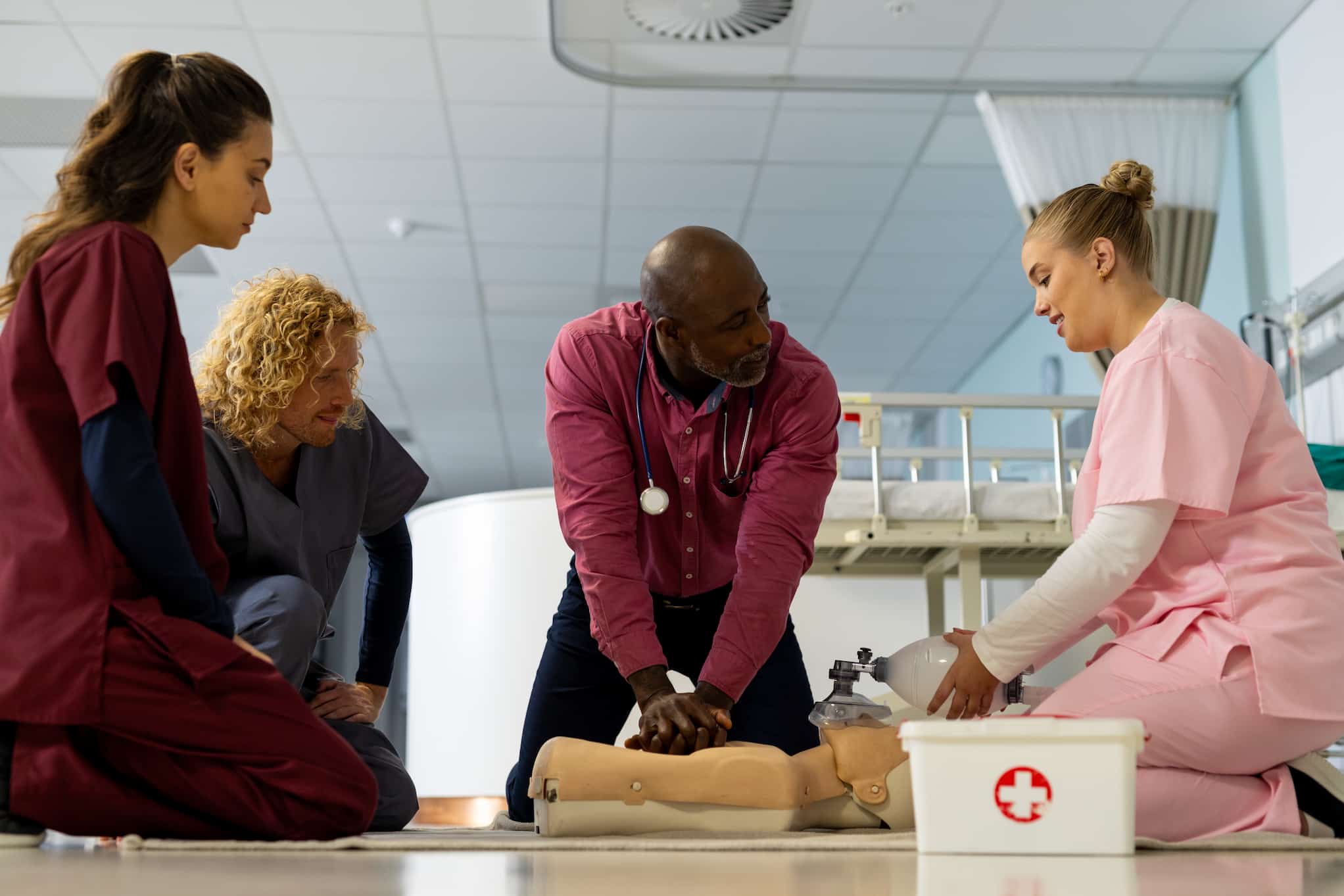
Medical team practicing CPR on a training manikin in a hospital setting

If you are a nurse rushing to renew your credentials before a Monday shift, a childcare worker stepping into a new daycare role, or a local coach prepping for the upcoming season, timing is everything. A sudden realization that your safety card has expired can bring your professional life to an immediate standstill.

When your employment depends on valid safety training, waiting weeks for a scheduled class or waiting days for a certificate to arrive in the mail simply is not an option. Fortunately, getting your official credentials does not have to be a long, drawn-out process that disrupts your entire work week.

Through focused, hands-on CPR training sessions, you can learn critical life-saving skills and walk away with your official credentials in just a single afternoon. Let’s break down how you can find fast, flexible, and last-minute training options right here in the local area.

How Can You Get Same-Day CPR Certification in Austin?

Getting your official digital credentials on the exact same day you finish your training is entirely possible through streamlined, in-person courses. When you enroll in an official American Heart Association (AHA) training session, the certification process is completed entirely on-site. You do not have to wait for a physical card to be printed, processed, and delivered through the mail over several business days.

The system relies on secure, digital eCards that are generated and issued by your certified instructor immediately after you pass your practical skills assessment. Once your instructor logs your successful completion into the database, an email notification lands directly in your inbox with a link to claim your digital card. This means you can download, print, or email your proof of certification to your supervisor before you even drive home from the facility.

This fast-turnaround framework is specifically designed to meet the demands of modern employment environments where paper cards are no longer preferred. Your digital eCard contains a unique identification number and a scannable QR code that allows hospitals, schools, and corporate compliance departments to instantly verify your credentials. It gives you immediate, verifiable proof of your life-saving capabilities without any administrative delays.

What Urgent Class Formats Exist for Last-Minute CPR Training?

When you are facing an unexpected deadline, you need flexible learning schedules that conform to your immediate availability rather than a rigid monthly calendar. Local training facilities offer dedicated weekday, evening, and weekend time slots to accommodate professionals who work non-traditional shifts. These frequent calendar openings mean you can almost always find a seat in a local classroom within 24 to 48 hours of your realization.

For those who find themselves needing a safety credential with less than a day’s notice, open-enrollment emergency seats are regularly maintained. These express options feature high-frequency class rotations across multiple regional training centers, ensuring that a full schedule at one location does not leave you stranded. You can simply hop online, view the real-time calendar, and lock in an open seat for a session starting in just a few hours.

Additionally, if you manage a local workforce, a medical office team, or a school athletic department that needs immediate compliance updates, on-site group options are readily available. Mobile instructor units can travel directly to your business location anywhere in Travis or Williamson County to certify your entire team at once. This group approach eliminates travel logistics for your staff while ensuring everyone achieves full compliance on the exact same afternoon.

Why Do Employers Reject Purely Online CPR Certificates?

It is incredibly tempting to select a cheap, fully online safety course that promises a quick certificate after clicking through a few text slides and short videos. However, the vast majority of healthcare networks, corporate compliance officers, and workplace safety managers will immediately reject these online-only documents. The reason is simple: you cannot learn how to properly perform high-quality chest compressions or rescue breathing without physical, hands-on practice.

Real emergency resuscitation requires precise physical coordination, appropriate hand placement, correct body mechanics, and a deep muscle-memory familiarity with compression depth and rhythm. Purely online programs lack the specialized diagnostic manikins required to measure whether you are actually pushing deep enough or allowing full chest recoil. Without a certified instructor present to observe, correct, and validate your physical technique, there is no way to verify that you can safely perform the procedure on a real human being.

Major safety organizations like OSHA and the American Heart Association strictly dictate that official provider cards must involve an in-person, face-to-face skills evaluation. Investing your time and money into an online program that lacks an interactive classroom component frequently results in wasted funds and a rejected application. Choosing an accredited, physical classroom course guarantees that your final documentation carries the official seal of approval required by your employer.

What Lifesaving Techniques Are Covered in a Fast BLS Class?

A high-speed training program does not mean cutting corners or skipping vital safety education; instead, it means delivering information through a highly organized, efficient curriculum. During a standard 3.7-hour session, you will dive straight into the foundational mechanics of basic life support for adults, children, and infants. The instruction balances core physiological principles with continuous, repeated physical practice on specialized training equipment.

You will master the exact hand positions, compression depths, and temporal rhythms required to maintain artificial blood circulation during sudden cardiac arrest. The training covers proper rescue breathing techniques using barrier devices and advanced bag-mask ventilation systems to ensure oxygen continues reaching vital organs. You will also learn how to seamlessly integrate these individual skills into a coordinated multi-rescuer team dynamic, mimicking a real-world emergency response environment.

Beyond standard compressions, a significant portion of the course is dedicated to the operation of an Automated External Defibrillator (AED). You will practice turning on the device, correctly placing the electrode pads on various age groups, and responding safely to the machine’s verbal diagnostic prompts. Finally, the curriculum details specific, age-appropriate physical maneuvers used to quickly clear airway obstructions and relieve choking in both conscious and unconscious individuals.

Who is Required to Hold an Official AHA BLS Provider Card?

An American Heart Association Basic Life Support (BLS) credential is widely recognized as the gold standard for individuals working across a massive spectrum of industries. In the healthcare sector, having an active BLS card is a non-negotiable prerequisite for registered nurses, certified nursing assistants, dental professionals, and medical office staff. Emergency responders, including firefighters, police officers, and security personnel, also rely on this specific tier of certification to maintain their active employment status.

However, the necessity of this life-saving education extends far beyond formal clinical environments. Teachers, daycare providers, and early childhood educators are strictly required to hold active credentials to satisfy state child care licensing regulations. Similarly, personal trainers, gym managers, athletic coaches, and community swim instructors must maintain their certifications to safeguard the patrons utilizing their athletic facilities.

Even industrial sectors like construction, electrical engineering, and corporate manufacturing require designated safety teams to hold active provider cards to remain compliant with OSHA workplace guidelines. Whether you are entering a corporate office, a school classroom, or a major regional hospital, having this credential proves you possess the verified skills to act decisively during a sudden medical emergency.

Where Can You Attend Emergency CPR Classes in the Austin Metro?

Finding a convenient classroom location is exceptionally straightforward, as dedicated training facilities are strategically scattered throughout the entire metropolitan region. If you reside or work near the urban core, central training sites offer easy highway access and frequent daytime scheduling options. For those located further north, dedicated classrooms operate continuously in areas like Round Rock, Pflugerville, and Cedar Park to serve local suburban professional communities.

The regional training network also regularly extends its educational reach south toward Buda, Kyle, and San Marcos, ensuring that South Texas professionals do not have to endure long commutes to get certified. Instructors also frequently travel to surrounding communities like Lakeway, Leander, Georgetown, Hutto, and Taylor to conduct regional community classes. This extensive geographic coverage ensures that no matter where you are situated in Central Texas, a modern, fully equipped classroom environment is only a short drive away.

Every local facility is continuously stocked with the latest feedback-equipped adult and infant manikins, real AED training devices, and official instructional media. This uniform infrastructure ensures that whether you walk into a North Austin classroom or a rural community center, you receive the exact same high-quality educational experience. You can seamlessly register for whichever location aligns best with your daily commute or your home address.

How Much Does an Official Austin CPR and First Aid Class Cost?

Securing an official credential from an accredited training provider is highly affordable, especially when compared to the potential loss of income resulting from a lapsed certification. A standalone American Heart Association BLS CPR and AED certification class is routinely priced at an affordable $64.95. This competitive pricing includes all your on-site physical materials, direct instruction from a certified professional, and the immediate processing of your digital eCard.

For individuals whose professional roles require comprehensive safety capabilities, a combined CPR, AED, and First Aid course is available starting at $84.95. This dual-certification track efficiently pairs basic life support training with essential first-aid protocols, teaching you how to manage severe bleeding, bone fractures, allergic reactions, and medical shock. Selecting the combined class allows you to fulfill multiple employment requirements simultaneously, saving you both significant money and precious classroom time.

When evaluating your options, it is vital to watch out for deceptive secondary websites that advertise suspiciously low rates. These unaccredited platforms often hide fine-print fees for processing cards, or worse, they issue unofficial documents that employers will not accept. Investing in a legitimate, AHA-aligned program ensures that your payment directly covers a universally recognized, employer-accepted document with zero hidden costs down the road.

Conclusion: Take Action and Secure Your Same-Day Card Today

When you are facing a critical employment deadline or simply want to ensure you are fully prepared to save a life, there is no reason to delay your safety education. A single 3.7-hour commitment is all it takes to gain deep, practical confidence and walk away with a fully compliant, two-year credential in your hands. With multiple local classrooms, highly flexible weekend schedules, and guaranteed same-day digital eCard delivery, fitting this essential training into your busy life has never been easier or more convenient.

Do not let an expired safety card jeopardize your job status, delay an upcoming promotion, or keep you from starting a rewarding new career path. Get certified by the most widely accepted safety organization in the country and protect the individuals around you. Contact CPR Classes Near Me today to find a class time that works perfectly for your schedule and secure your seat instantly!

Frequently Asked Questions

How long does an official CPR certification last?

An official American Heart Association (AHA) CPR certification card is valid for exactly two years from the final day of your successful course completion. To prevent a lapse in your professional compliance, you should schedule a renewal class a few weeks before your current card’s expiration date.

Can I complete my required CPR certification entirely online?

No, purely online certifications are widely rejected by healthcare networks, schools, and corporate employers because they lack an interactive, hands-on skills evaluation. To earn an official, employer-accepted credential, you must complete an in-person session where a certified instructor evaluates your physical compression and ventilation techniques.

What is the exact difference between a standard CPR class and a BLS class?

A standard CPR class focuses on basic resuscitation and choking relief techniques intended for the general public, parents, and non-clinical workers. A Basic Life Support (BLS) class features an advanced curriculum tailored specifically for healthcare providers and public safety professionals, covering multi-rescuer team dynamics, advanced bag-mask ventilation devices, and comprehensive pulse checks.

Is there a minimum age requirement to take a CPR class in Texas?

There is no official minimum age restriction set by the American Heart Association to enroll in an official CPR certification course in Texas. Anyone who can physically perform high-quality chest compressions on a training manikin and independently pass the skills assessment is fully eligible to receive their provider card.

How fast will I receive my digital certification card after the class finishes?

When you complete your training with an authorized local center, your official American Heart Association digital eCard is issued on the exact same day. Your instructor processes your successful completion details immediately on-site, allowing you to access, download, and share your digital credentials within hours of leaving the classroom.
How to Avoid Letting Your CPR Card Expire Again

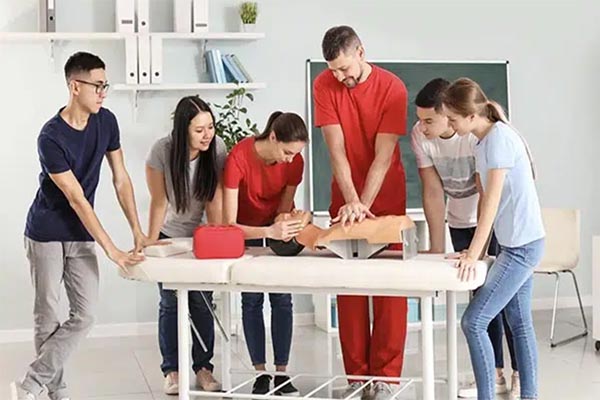
First aid instructor teaching CPR to a group of students using a practice mannequin.

It happens to the best of us. You go to clock in for your shift, submit a routine paperwork update to human resources, or review your professional credentials, only to realize the unthinkable: you let your CPR card expire. Suddenly, you are facing a mountain of scheduling conflicts, potential workplace suspensions, and the urgent scramble to find an accredited training facility nearby. Maintaining your life-saving credentials shouldn’t feel like an administrative emergency every 24 months.

When your certification lapses, you aren’t just missing a piece of paper; you are technically out of compliance with OSHA and workplace safety mandates. This article will teach you how to set up fail-safe tracking systems, understand the timeline windows for American Heart Association classes, and build a stress-free renewal strategy. Let’s look at how to break the cycle of last-minute certification scrambles for good.

Why Do Professional Responders Let Their CPR Card Expire?

Even the most meticulous healthcare providers, educators, and fitness professionals fall victim to credential expiration. The primary culprit is the length of the certification cycle itself. Because an official American Heart Association (AHA) Basic Life Support (BLS) credential remains valid for exactly two years, the deadline sits completely outside of your normal annual review routines. It is just long enough for you to completely forget when you last sat in a classroom.

Additionally, many professionals mistakenly believe that their employers are actively tracking these dates for them. While some corporate human resource departments send automatic alerts, many rely entirely on individual self-reporting. Relying on an external system to manage your personal professional standing is a high-risk approach that frequently leads to an expired CPR card.

Finally, life simply gets in the way. Busy clinical shifts, lesson planning, parenting, and travel can quickly push a non-urgent administrative task off your weekly to-do list. Before you know it, the final day of your expiration month passes, and your structural compliance drops to zero.

How Long Do You Have to Renew an Expired CPR Card?

According to strict American Heart Association protocols, there is no official grace period or extension window after the exact calendar expiration date listed on your digital credential.

Once the 24-month mark passes, your card is officially invalid. If your employer requires an active, unexpired certification to perform your day-to-day work duties, you cannot legally or contractually remain on the clock until you sit for an in-person evaluation.

Fortunately, from a training standpoint, the American Heart Association has streamlined the update process. At our official training sites, the initial certification class and the CPR certification renewal class utilize the exact same structured, comprehensive curriculum. This means even if your card has been lapsed for days or weeks, you do not need to hunt for a separate, specialized “re-entry” course. You simply enroll in any localized, high-quality course to reset your 24-month compliance clock.

What Is the Fastest Way to Keep Your Certification Active?

The absolute fastest way to maintain active status is to treat your renewal as a preemptive, 90-day event rather than a last-minute scramble. Trying to book a class the weekend before your card lapses limits your options, forcing you to adjust your personal life around whatever remaining seats are left open.

To make this seamless, you should exclusively look for local training centers that utilize digital tracking ecosystems and offer same-day CPR card distribution. When you choose a modern, technology-forward provider, your completion data links directly to the AHA database the second your instructor signs off on your physical skills test.

The timeline below illustrates the perfect sequence for planning your renewal so you never experience a single day of lapsed compliance.

Check Your Current eCard Status 90 Days Before Expiration

Log into the American Heart Association digital portal. Verify the exact expiration month printed on your credential and write it down in your primary calendar.

Locate a Local In-Person Training Center 60 Days Before Expiration

Visit the CPR Classes Near Me portal to view real-time class calendars. Select a date that fits your normal day-off routine to avoid work conflicts.

Reserve Your Seat and Pre-Study 30 Days Before Expiration

Book your slot online to secure discounted regional pricing. Spend 15 minutes reviewing basic compression-to-ventilation ratios (30:2 for single rescuers) and AED pad placements.

Attend Class and Receive Same-Day eCard Expiration Week

Complete your 3.7-hour interactive, hands-on training session. Walk out of the classroom with your newly issued, fully compliant AHA BLS certification sent directly to your inbox.

Can You Do Your CPR Renewal Entirely Online?

Many professionals with an imminent expiration date look for quick fixes online. They search for instant, 10-minute digital certifications that promise full credentials without requiring any driving. However, this path is highly problematic and almost always results in rejected paperwork at your workplace.

The American Heart Association and OSHA are completely clear on this requirement: true life-saving competency requires physical, hands-on practice. You cannot learn the proper chest compression depth (at least 2 inches for adults) or feel the dynamic resistance of an AED trainer through a flat computer screen or phone app.

While some hybrid models exist where you complete cognitive modules online, you must still present your physical skills in front of a certified instructor to receive a valid card. To ensure your investment is fully protected, choosing traditional in-person CPR training remains the gold standard for guaranteed employer acceptance nationwide.

How to Set Up an Independent, Unbreakable Reminder System

If you want to ensure your CPR card expire cycle stays broken forever, you must build an independent alert infrastructure that doesn’t rely on your memory or a manager’s spreadsheet.

Here are three practical, tech-forward strategies you can implement right now:

  • The Digital Calendar Trick: The absolute second you receive your new eCard, open Google Calendar or Apple Calendar. Create a recurring event set exactly 22 months into the future. Title the event “CRITICAL: CPR Card Expires in 60 Days — Book Course Today.” Set the alert as an email notification so it lands directly in your primary inbox.
  • The Workplace Credential Binder: If you hold multiple licenses (such as an RN, CNA, or EMT credential), keep a physical or cloud-based binder where all expiration dates are aggregated on a single master sheet. Review this sheet on the first day of every new calendar year.
  • Leverage Automated Training Center Networks: When you register for classes through professional networks like CPR Classes Near Me, your profile enters an automated compliance system. Because we know how vital your credential is to your livelihood, our system systematically emails you automated countdown reminders as your two-year window approaches.

What Should You Look for in a Renewal Training Center?

Not all safety training providers are built equal. If you are taking time out of your busy week to sit for a 3.7-hour course, you deserve an exceptional, efficient experience that respects your schedule.

When choosing your next training location, look for these foundational markers of excellence:

  • Official AHA Alignment: Ensure the site proudly displays its official American Heart Association alignment. Unaccredited look-alike programs frequently use deceptive phrasing but issue cards that fail basic hospital or corporate human resources checks.
  • Same-Day Digital Processing: Never choose a school that relies on physical paper cards sent through the mail. Your instructor should issue an official digital eCard on the exact same day you pass your practical test.
  • High-Quality Training Equipment: Your location should utilize clean, modern manikins equipped with real-time feedback mechanisms. These devices click or light up when you hit the correct compression depth and speed, ensuring you build absolute muscle memory.

Never Worry About an Expired Credential Again

Allowing your CPR card expire introduces needless stress into an already demanding professional career. By taking control of your tracking timeline, ignoring deceptive online-only shortcuts, and scheduling your in-person sessions 30 to 60 days early, you can turn a frantic administrative emergency into a routine check-the-box activity.

Keeping your certification current ensures you stay fully compliant with your employer while holding the practical, life-saving skills needed to protect your community, your patients, and your loved ones during critical cardiac events.

Ready to secure your compliance and refresh your life-saving skills? Don’t wait for human resources to flag your account. Contact CPR Classes Near Me today to view live class schedules, secure discounted regional pricing, and lock in your same-day AHA certification card!

Frequently Asked Questions

Is there a grace period if my CPR card expires?

No. The American Heart Association does not recognize any official grace period or extension window beyond the final day of the expiration month printed on your card. If your card expires on October 31st, you are legally out of compliance on November 1st, and many employers will actively suspend you from clinical or field duties until you complete a renewal class.

Can I just take an online class to renew my lapsed card quickly?

No, pure online courses that do not include an in-person, hands-on skills evaluation are virtually never accepted by healthcare facilities, school districts, or construction OSHA compliance officers. To ensure your card is legally valid and universally recognized, you must perform your compressions and AED work directly on a physical manikin in front of a certified instructor.

How many hours does an official AHA BLS renewal class take?

A comprehensive, high-quality American Heart Association BLS training session takes approximately 3.7 hours to complete. This window covers all required training videos, hands-on technique practice for adults, children, and infants, airway management training, and your final practical skills assessment.

How much do official in-person renewal classes typically cost?

At our dedicated regional training sites, a standalone AHA BLS class is discounted to $64.95, while a combined CPR and First Aid course is available for $84.95. Be cautious of independent sites offering drastically cheaper prices, as they often lack authorized AHA alignment and issue non-compliant credentials.

What should I bring with me to my CPR renewal class?

You do not need to bring any specialized medical equipment or text materials with you to the facility. Just bring a valid form of identification, wear comfortable clothing that allows you to kneel comfortably on the floor next to a training manikin, and ensure you have access to your smartphone or email inbox to receive your same-day digital eCard.

Is CPR Renewal Easier Than First-Time CPR Classes?

If your two-year emergency credential is about to expire, you are likely wondering what your next steps look like. A very common question that healthcare providers, teachers, and fitness professionals ask is whether renewal classes are easier than first-time CPR classes.

Understanding the differences between initial certification and recertification helps you manage your schedule and walk into the classroom with total confidence. Let’s look closely at how these two training paths compare so you can keep your life-saving skills completely up to date.

Are CPR Renewal Classes Shorter Than Initial Training Sessions?

A major point of confusion for many students is how much time they need to dedicate to their recertification. Many people assume that because they have taken the training before, they can fast-track through a shortened version of the class.

When you take an official, in-person American Heart Association (AHA) course, the time commitment remains steady across both paths. All authorized training centers must present the complete, update-compliant instructional video to ensure no critical safety changes are missed. At our training locations, you can expect a comprehensive session lasting approximately 3.7 hours.

This standard timeline ensures that every student gets adequate time to view the source material, practice with the equipment, and complete their skills testing. Whether you are walking in for the very first time or resetting your card for the third time, you will receive the exact same deep-dive instruction. Dedicated time on the clock ensures you leave the facility fully prepared to respond to a real-world cardiac event.

Is the Material in a Recertification Class Less Difficult?

When evaluating the intellectual and physical difficulty of the material, a renewal class features the exact same curriculum as a first-time course. There is no dialed-down or simplified version of cardiopulmonary resuscitation when a human life is on the line.

The core curriculum focuses heavily on high-quality CPR execution across all age brackets. You will practice the exact proper techniques for hands-on chest compressions, including correct hand placement and specific compression depths. The curriculum also strictly covers rescue breathing and the precise operation of an Automated External Defibrillator (AED) for adults, children, and infants.

Because emergency science updates regularly based on new clinical data, the renewal course treats the material with the highest level of rigor. Your instructor will evaluate your real-time performance on physical manikins to confirm you can hit the correct rate of compressions to maximize blood flow. While your personal memory might make the concepts feel more familiar, the actual physical testing and written metrics remain completely identical to a first-time class.

Do Renewal Classes Cost Less Than First-Time Certifications?

For budget-conscious professionals keeping their work credentials active, the pricing structure for quality training is a major factor. Fortunately, keeping your life-saving skills active is highly affordable and structured identically to initial certifications.

At our training facilities, a standard Basic Life Support (BLS) course starts at an accessible rate of $64.95. If your specific career path requires comprehensive emergency preparation, you can select the BLS CPR and First Aid combination class for $84.95. This uniform pricing ensures you get premium, authorized instruction without any hidden tier fees based on your past experience level.

It is highly critical to watch out for alternative online websites that claim to offer cheap, lightning-fast recertifications. These platforms frequently lack the official AHA credentialing seals that human resource departments and regulatory boards require. Investing in an official, in-person class ensures your certification carries total nationwide acceptance by employers across all major industries.

Can I Renew My CPR Certification Online Fully?

With busy professional schedules, the convenience of a fully remote, online class can sound incredibly appealing. However, completely online training options do not satisfy the professional standards mandated by most workplaces.

True emergency response requires spatial awareness, muscle memory, and physical coordination that a computer screen simply cannot evaluate. Employers, healthcare networks, and safety boards almost universally reject certifications that are obtained solely through online modules without a live check-off.

An in-person session allows an experienced instructor to watch your technique, correct your posture, and verify that you can handle real-world equipment. You will practice clearing airway obstructions for choking victims and operating live AED training units safely. This physical practice is the only way to build the muscle memory required to stay calm and effective during an actual cardiac arrest.

What Professions Benefit Most From Keeping a Valid BLS Credential?

Maintaining an active, non-expired emergency certification is a strict prerequisite across a vast array of career paths. Staying continuously certified ensures you remain legally compliant and completely prepared to assist the public when an unexpected accident occurs.

Our specialized training classes are fully OSHA-compliant and universally recognized across numerous sectors:

  • Healthcare Systems: Nurses, Registered Nurses (RNs), Certified Nursing Assistants (CNAs), and medical office personnel.
  • Educational Environments: Schoolteachers, daycare workers, child caretakers, and youth educators.
  • Athletics and Fitness: Personal trainers, physical therapists, sports coaches, and athletic referees.
  • Public Safety and Labor: Construction workers, professional electricians, flight attendants, and hospitality staff.
  • Aquatics: Community swim instructors and professional lifeguards.

Why Should I Book My Renewal With CPR Classes Near Me?

When your current two-year certification card nears its expiration date, choosing the right provider makes all the difference for your schedule. Our training programs are designed from the ground up to be direct, stress-free, and supportive for busy adult professionals.

Our instructors create an engaging, comfortable, and highly interactive learning environment where your previous background is respected. We focus heavily on practical application, allowing you to get ample physical practice on our testing manikins. We break down the absolute latest medical guidelines clearly, ensuring you leave our facility feeling completely sharp and capable.

Best of all, we recognize that you cannot afford delays when your job compliance hangs in the balance. We handle student evaluations efficiently and issue your official AHA BLS eCard on the very same day you successfully finish the class. You walk out of our doors with a fully verified, employer-accepted credential that is active for the next two consecutive years.

How Should I Prepare for My Upcoming Recertification Classroom Session?

Stepping back into a classroom setting is completely straightforward when you know what to expect from an optimized training curriculum. Because you have already encountered the foundational concepts in the past, your main focus should be on refining your physical execution.

To ensure your renewal session goes perfectly smoothly, keep these practical classroom tips in mind:

  1. Wear Comfortable Clothing: You will be spending significant time on the floor practicing compressions on adult and infant manikins. Wear loose, flexible attire and comfortable shoes.
  2. Review the Basics Ahead of Time: Take a quick look over your previous course materials to refresh your memory on basic compression-to-breath ratios.
  3. Come Prepared to Ask Questions: If you have encountered unique scenarios or questions in your professional field over the last two years, our instructors are happy to provide expert guidance.
  4. Arrive Early for Check-In: Giving yourself a few extra minutes allows you to complete your paperwork comfortably before the instructional video begins.

Ready to secure your seat and update your life-saving credentials? Don’t let your compliance lapse and put your professional standing at risk. Contact CPR Classes Near Me today to find an upcoming session in your local area and lock in your same-day certification card!

Frequently Asked Questions

How long does an official CPR certification last before expiring?

An official American Heart Association CPR certification is valid for exactly two years from the date of course completion. To maintain your credentials without a lapse, you must complete a recertification class before the final day of the expiration month listed on your card.

What happens if I let my CPR certification expire completely?

If your certification expires completely, you lose your valid credentialing status and may be temporarily ineligible to perform certain professional duties at work. You will simply need to sign up for an in-person BLS course to re-establish your active status and receive a new card.

Are the testing requirements the same for a renewal class?

Yes, the testing requirements are completely identical to an initial class. You must successfully demonstrate high-quality physical skills on a manikin, including proper chest compressions and AED usage, and pass the standard written evaluation.

Can I get my certification card the same day I finish the class?

Yes, when you train with CPR Classes Near Me, your instructor will issue your official AHA BLS eCard on the very same day you finish your class. This digital credential can be immediately shared with your employer or HR department for compliance tracking.

Is an online-only CPR card accepted by healthcare employers?

No, online-only certifications are almost universally rejected by healthcare employers and state regulatory boards because they lack hands-on evaluation. Valid workplace credentials require an in-person, practical skills assessment with an authorized instructor using physical equipment.