How Long Does CPR Certification Last in Ohio? Your Complete Guide
Have you ever looked at your CPR card and realized the date is a lot older than you remembered? You aren’t alone. Whether you are a nurse in Columbus, a high school coach in Cleveland, or a concerned parent in Cincinnati, keeping your life-saving skills current is vital.

In the state of Ohio, staying compliant with workplace safety and state laws is a top priority. But beyond the legalities, CPR is about being ready when a heart stops. If your skills are rusty, you might hesitate during a crisis—and in a cardiac emergency, every second counts.

In this guide, we will break down exactly how long your CPR certification lasts in Ohio, why the expiration date exists, and the easiest way to get renewed so you never have a gap in your credentials.

What is the standard expiration for CPR in Ohio?

In almost every case, a CPR certification in Ohio is valid for two years from the date it was issued. This standard is set by the major national training organizations, including the American Heart Association (AHA) and the American Red Cross.

While the state of Ohio follows these national guidelines, certain professions have specific rules:

  1. Healthcare Workers: Most hospitals and clinics require Basic Life Support (BLS) or ACLS certification, which also operates on a strict two-year cycle.
  2. School Coaches: Ohio law requires all coaches to maintain a current CPR/AED certification. If your card expires mid-season, you may be ineligible to coach until you renew.
  3. Childcare Providers: ODJFS (Ohio Department of Job and Family Services) requires active certification for staff to stay compliant with licensing.

Your certification typically expires on the last day of the month in which it was issued, exactly two years later. For example, if you passed your class on February 15, 2024, your card is generally valid through February 28, 2026.

Why does CPR certification expire every two years?

You might wonder why you need to retake a class if the basics of “pushing on the chest” haven’t changed much. There are actually three primary reasons why the two-year window is the gold standard:

  • Science Updates: The International Liaison Committee on Resuscitation (ILCOR) constantly reviews cardiac data. Every few years, guidelines for compression depth, rate, or breath ratios might be tweaked to improve survival rates.
  • Skill Degradation: Research shows that CPR skills—specifically the physical ability to perform high-quality compressions—start to decline as early as six months after a class. By the two-year mark, most people need a hands-on refresh to regain their “muscle memory.”
  • Technology Changes: AED (Automated External Defibrillator) technology is always evolving. Renewal courses ensure you are comfortable with the latest devices found in public spaces across Ohio.

Is there a grace period for expired CPR cards in Ohio?

The short answer is no. There is no official “grace period” for an expired CPR certification.

If your card expires on Monday, you are technically uncertified on Tuesday. This can have serious consequences depending on your job:

  • Employment Gaps: Many Ohio employers will not allow you to work a shift if your certification has lapsed.
  • Legal Liability: In some professional settings, performing CPR with an expired license could lead to complications, although Ohio’s Good Samaritan laws generally protect laypeople.
  • Renewal Eligibility: Some “Renewal” or “Review” courses require you to show a current, non-expired card to enroll. If yours is already expired, you might be required to take the full, longer “Provider” course again.

What is the difference between a full course and a renewal?

If your certification is still valid (or only recently expired), you are likely eligible for a CPR Renewal Course. Here is how they compare:

  1. Full Provider Course:
    • Designed for those who have never been certified or whose cards have been expired for a long time.
    • Covers every concept from scratch.
    • Usually takes 4–6 hours depending on the depth of the material.
  2. Renewal/Challenge Course:
    • Designed for experienced individuals who just need to prove their competency.
    • Focuses heavily on hands-on skills and the latest guideline updates.
    • Usually takes 2–3 hours.
    • Requires a valid (or very recently expired) card for entry.

Can you renew your CPR certification online in Ohio?

In Ohio, “blended learning” is the most popular way to renew. This allows you to do the “book work” online and then visit a local training center for a quick, 30-minute skills check.

However, be very careful with “100% Online” certifications. Many Ohio employers, especially in healthcare, nursing, and education, will not accept a certification that did not include a hands-on skills assessment with a live instructor. If you didn’t push on a mannequin, your card might not be valid for your job.

How do you find CPR renewal classes near you?

If you are in the Columbus area or anywhere in Ohio, finding a class is easy. You should look for a provider that offers:

  • Same-day certification: So you can get back to work immediately.
  • AHA or Red Cross accreditation: To ensure your card is accepted by your employer.
  • Flexible scheduling: Weekly classes that fit your busy work-life balance.

For local, hands-on training that meets all Ohio requirements, CPR Classes Near Me provides expert-led sessions designed to get you certified quickly and confidently.

Conclusion

Your CPR certification is more than just a piece of paper; it’s your license to save a life. In Ohio, that license has a two-year shelf life. By staying on top of your expiration date and scheduling a renewal class before your current card lapses, you ensure that you are always ready to respond to an emergency.

Don’t wait until your employer tells you that you can’t work tomorrow. Check your card today, and if you’re approaching that two-year mark, it’s time to refresh your skills.

Contact CPR Classes Near Me today to schedule your renewal and stay certified!

Frequently Asked Questions (FAQ)

How long is my CPR card valid for in Ohio? 

In Ohio, most CPR certifications from the American Heart Association or American Red Cross are valid for exactly two years.

What happens if my CPR certification expires? 

If your card expires, you are no longer considered certified. You may be unable to work if your job requires it, and you may have to take a full initial course instead of a shorter renewal class.

Do I have to take the whole class again to renew? 

No. If your card is still valid, you can usually take an abbreviated “Renewal” or “Recertification” course, which focuses on hands-on skills and takes significantly less time than the original class.

Will my Ohio employer accept an online-only CPR card? 

Most employers in Ohio, especially in the medical, dental, and education fields, require a hands-on skills check. Online-only courses that do not involve a mannequin session are often rejected.

Does BLS certification last longer than standard CPR? 

No. Basic Life Support (BLS) certification, which is common for healthcare providers in Ohio, also follows the two-year expiration cycle.
How Long Does CPR Certification Last in Ohio?

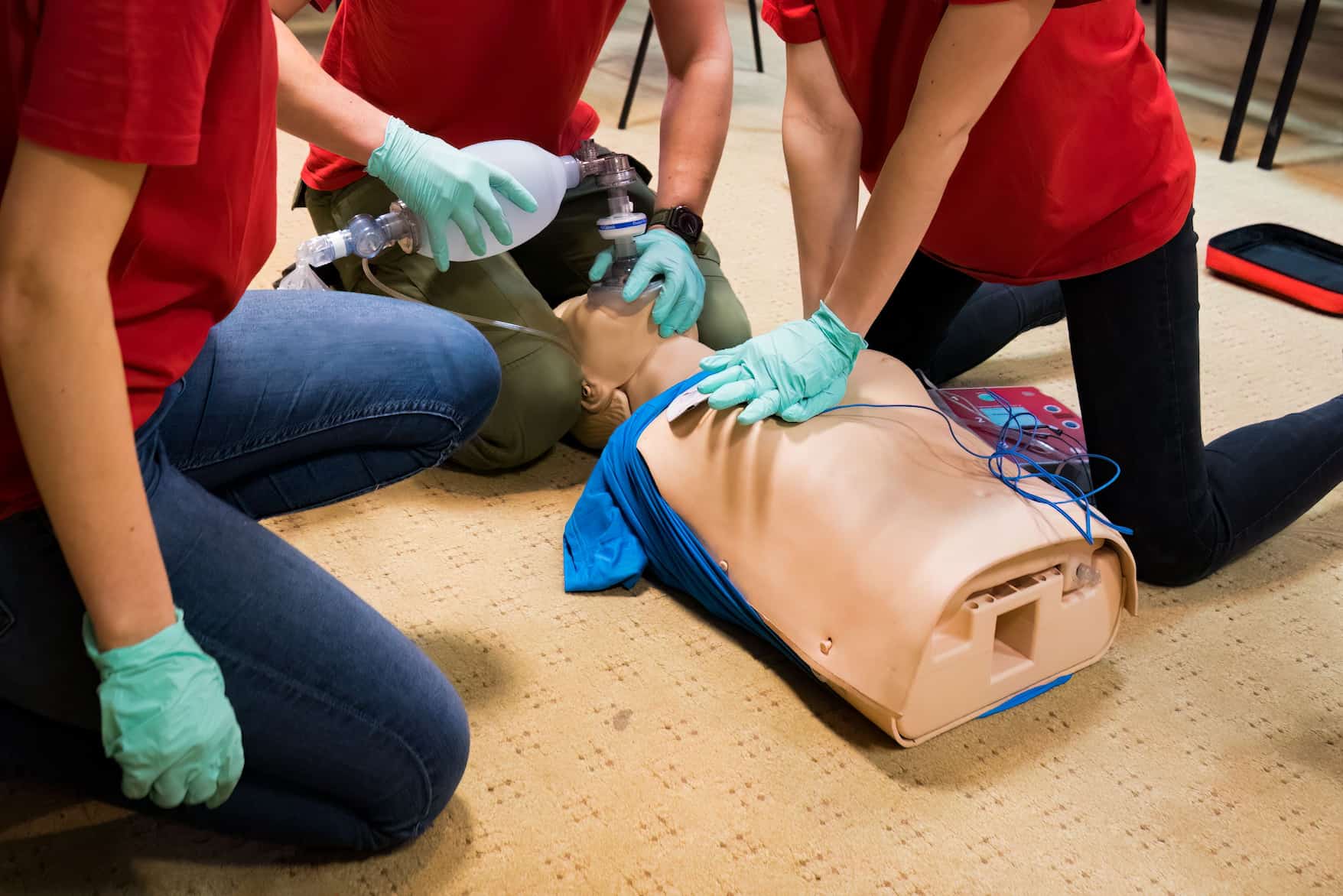
Students performing CPR and ventilation on a training manikin in class

Whether you are a nurse at OhioHealth, a high school coach in Columbus, or a new parent in Cleveland, knowing the “shelf life” of your CPR skills is critical. In the state of Ohio, staying compliant with safety standards isn’t just about having the knowledge—it’s about having a valid, unexpired card to prove it.

So, how long do you have before your card becomes a coaster? In this guide, we will break down the timeline for various certifications, the laws specific to the Buckeye State, and how you can ensure your skills remain sharp enough to save a life.

How long is a CPR card valid for in Ohio?

In almost every instance, a CPR certification in Ohio is valid for two years from the date it was issued. This standard applies to the most recognized organizations, including the American Heart Association (AHA) and the American Red Cross (ARC).

Your certification expires on the last day of the month indicated on your card. For example, if you passed your class on February 15, 2024, your certification will remain valid until February 28, 2026. This two-year window is the industry standard across the United States, but Ohio employers are particularly diligent about checking these dates.

There are a few key things to remember about your two-year window:

  • No Grace Period: Once that date passes, your certification is technically expired. Most employers in Ohio will not allow you to work until you have a new card.
  • Skills Fade: While the card lasts two years, research shows that CPR skills can begin to decline as early as six months after training.
  • Digital vs. Physical: Whether you have a printed wallet card or a digital eCard, the expiration rules remain exactly the same.

Does the expiration date change for BLS certification?

If you are a healthcare professional, you likely hold a Basic Life Support (BLS) certification. You might wonder if the more advanced nature of the course means it lasts for a different amount of time. The answer is no; similar to standard Heartsaver or First Aid courses, BLS certification for healthcare providers in Ohio is also valid for two years.

The Ohio State University College of Nursing and other major medical institutions in the state specifically require AHA-certified BLS or ACLS training. Because healthcare settings involve higher-risk scenarios, maintaining this two-year cycle is a strict requirement for employment. If you are a traveling nurse or a local EMT, your “current” status is often tracked by automated HR systems that will flag your file the moment that 24-month window closes.

Are there Ohio laws regarding CPR certification length?

Ohio has specific statutes that mandate who needs CPR training and how often they must refresh those skills. These laws ensure that the people responsible for our children and our health are always ready to act.

High School Students (ORC 3313.6021)

Ohio law requires all students to receive CPR and AED training before graduation. While these students aren’t always required to maintain an active certification after graduation, the training provides a foundation for life. The goal is to create a generation of “First Responders” in every neighborhood.

Coaches and School Personnel

The Ohio Department of Education requires all coaches to hold a current CPR certification. This must be renewed every two years to keep their coaching permit active. Without a valid card, a coach cannot legally lead a practice or a game on Ohio soil.

Child Care Providers

Under the Ohio Administrative Code, in-home aides and child care staff must maintain “current” certification. This means if their card expires, they are no longer in compliance with state licensing. This is a critical safety measure for the thousands of daycares operating across the state.

Can you renew an expired CPR certification?

This is a common point of confusion for many Ohio residents. In the past, there were “renewal” classes and “initial” classes. Today, the process is more streamlined, but the rules are firm regarding the status of your current card.

If your card is still valid—even if it expires tomorrow—you can often take a shorter “renewal” or “update” course. These classes focus on the latest guideline changes and skill assessments, saving you time. It is a more efficient way to stay certified.

However, if your card has already expired, most instructors and training centers will require you to take the full “initial” provider course again. This ensures you haven’t missed any critical updates that occurred while your certification was inactive. Taking the full course provides a much-needed deep dive into the mechanics of high-quality CPR.

Is the American Heart Association or Red Cross better for Ohio workers?

When looking at how long your certification lasts, both major providers offer a two-year certification. However, there are differences in how they are accepted throughout the state.

The American Heart Association (AHA)

The AHA is widely considered the gold standard. Most Ohio hospitals, dental offices, and emergency services require AHA certification specifically. It is updated most frequently based on the latest cardiac research and is the most widely recognized by medical boards.

The American Red Cross (ARC)

The Red Cross is a fantastic option for teachers, lifeguards, and the general public. While many workplaces accept it, healthcare workers should always double-check with their employer before choosing ARC over AHA. Some clinical sites in Ohio have strict policies that only permit AHA BLS cards.

How does “Blended Learning” affect my certification date?

Many people in Ohio now choose “Blended Learning” to save time and fit training into a busy schedule. This process involves two distinct parts. First, you complete the cognitive or lecture portion online at your own pace. Second, you attend a brief, in-person “Skills Session” to demonstrate chest compressions and AED use.

It is important to note that your two-year certification clock starts the day you complete your in-person skills session, not the day you finish the online module. This ensures that your practical, hands-on skills are verified as being current for the full 24-month period.

Why does CPR certification expire at all?

You might wonder why you need to retake a class every 24 months if the steps of CPR—pushing hard and fast in the center of the chest—don’t change that much. There are three main reasons why the two-year expiration is strictly enforced.

1. Science Updates

The AHA reviews survival data constantly. Every few years, they may adjust the recommended compression depth, the rate of breaths, or the way an AED is integrated into the rescue. Staying certified means you are using the most effective methods proven to save lives.

2. Muscle Memory

CPR is a physical skill, not just a mental one. Without practice, your hands “forget” the rhythm of 100-120 beats per minute. Recertification forces you to get back on the manikin and ensure your technique is effective enough to circulate blood to the brain.

3. Confidence and Readiness

In a real emergency, adrenaline can lead to panic. Regular recertification ensures that your response is an automatic reflex rather than a stressful guessing game. If you haven’t thought about CPR in three years, you are much less likely to step in during a crisis.

How do I check if my Ohio CPR card is still valid?

If you can’t find your card, don’t panic. You can usually verify your status online through the major providers. If you took your class through a local training site, they likely have a digital record of your achievement.

For AHA certifications, you can use the official eCard search portal by entering your name and email address. The Red Cross offers a similar “Find my Certificate” tool. If you went through a local provider like CPR Classes Near Me, you can contact them directly to get a verified copy of your records or to see when you are due for your next session.

Understanding Different Course Durations

While the two-year rule is standard, the audience for each course varies. For example, Heartsaver CPR/AED is primarily for lay rescuers, such as teachers or fitness trainers. Even though the skills are simplified compared to medical-grade courses, the certification still lasts for two years.

BLS (Basic Life Support) is the requirement for nurses, EMTs, and doctors. It includes more complex team-based rescue scenarios. Despite the increased complexity, the two-year expiration remains the same. The same applies to advanced certifications like ACLS (Advanced Cardiovascular Life Support) or PALS (Pediatric Advanced Life Support). Regardless of how high you go in your training, the 24-month refresh is the universal gold standard.

Conclusion

Maintaining your CPR certification is a vital part of being a responsible citizen and a compliant professional in Ohio. With a standard two-year validity period, it is easy to let the date slip by—but the consequences of an expired card can range from workplace headaches to being unprepared in a life-and-death moment.

Staying current means you are always ready to provide the highest quality of care, whether you are on the clock at a hospital or standing in line at a grocery store. Ohio’s regulations for coaches, teachers, and medical professionals exist for a reason: to ensure that when an emergency happens, someone nearby has the skills and the current certification to help.

Whether you are in Columbus, Cleveland, or Cincinnati, staying current has never been easier. Don’t wait until the week before your card expires to find a seat in a class. Plan ahead, keep your skills sharp, and ensure your card stays valid.

Ready to renew your life-saving skills?

Don’t let your certification lapse! Contact CPR Classes Near Me today to find a convenient, hands-on class in your area. Our expert instructors will ensure you leave confident, competent, and fully certified.

Frequently Asked Questions (FAQ)

What happens if my CPR certification expires?

If your certification expires, you are no longer legally “certified.” If your job requires it—as is the case for most healthcare and education roles in Ohio—you may be suspended or unable to work until you pass a new course. You must retake a full certification class to get back into compliance.

Is there a grace period for CPR renewal in Ohio?

No, there is no official grace period. Your card is valid through the last day of the month it expires. For example, if your card expires in June, you have until June 30th. On July 1st, you are considered uncertified.

Can I do my CPR renewal entirely online?

While you can do the “lecture” part online, the state of Ohio and OSHA require an in-person skills check on a manikin for the certification to be valid for the workplace. Entirely online courses with no hands-on component are rarely accepted by professional employers.

How long does a CPR renewal class take?

Renewal classes are typically shorter than initial classes, often lasting between 2 and 3 hours. If you choose a blended learning option, the in-person skills check can be as short as 30 to 45 minutes.

Does Ohio recognize out-of-state CPR certifications?

Yes, as long as the certification is from a nationally recognized body like the AHA or Red Cross, it is generally accepted by Ohio employers regardless of which state you were in when you took the class.

The Ultimate Guide to CPR Classes in Columbus, Ohio

When an emergency strikes, the difference between a tragedy and a life saved often comes down to who is standing nearby. In Columbus, Ohio, being prepared isn’t just a personal choice; for many, it is a professional requirement. Whether you are a nurse at OhioHealth, a teacher in the Columbus City School District, or a local fitness trainer, having the right skills can change everything.

This guide explores everything you need to know about finding and completing the best CPR training in the Arch City. From understanding different certification types to knowing what to expect on the day of your class, we have you covered.

Why is CPR training essential in Columbus, Ohio?

Columbus is a thriving hub of healthcare, education, and industry. Because of this, the demand for high-quality, reliable emergency training is higher than ever. CPR, or Cardiopulmonary Resuscitation, is a lifesaving technique used when someone’s heart stops beating or they stop breathing.

By taking a class locally, you contribute to a safer community. Statistics show that immediate CPR can double or even triple a person’s chance of survival after cardiac arrest. When you choose a local training site like CPR Classes Near Me Columbus, you are getting instruction tailored to the standards that Ohio employers trust most.

What is the American Heart Association (AHA) BLS certification?

The American Heart Association (AHA) is widely considered the gold standard for CPR training. Their Basic Life Support (BLS) course is the specific level of certification required by almost all healthcare professionals and many other high-responsibility industries.

Key features of the AHA BLS certification include:

  • Universal Acceptance: It is the most recognized certification by hospitals and clinics nationwide.
  • Comprehensive Skills: It covers CPR for adults, children, and infants.
  • AED Integration: You learn how to use an Automated External Defibrillator safely.
  • Two-Year Validity: Your certification remains active for 24 months before needing renewal.

What will you learn in a Columbus CPR class?

Walking into a CPR class can feel intimidating if you don’t know what to expect. At CPR Classes Near Me Columbus, the environment is designed to be laid-back and engaging while remaining professional.

During your session, you will master several critical skills:

  1. High-Quality Chest Compressions: Learn the correct depth and rate to keep blood flowing to vital organs.
  2. Rescue Breathing: Techniques to provide oxygen to the lungs when a person cannot breathe on their own.
  3. AED Operation: Step-by-step instructions on using a defibrillator to restore a heart rhythm.
  4. Choking Relief: How to assist adults, children, and infants who have a blocked airway.
  5. Team Dynamics: How to communicate effectively with other rescuers during a high-stress event.

How long does it take to get certified in Columbus?

One of the biggest concerns for busy professionals is the time commitment. Fortunately, modern CPR training is streamlined for efficiency without sacrificing quality.

In Columbus, a standard AHA BLS CPR and AED class typically takes about three hours. Because the course is lead by an instructor in person, there is no “pre-work” or online modules to complete before you arrive. You simply show up, learn the skills, pass the skills check, and you are finished.

The best part? At CPR Classes Near Me Columbus, you receive your official AHA eCard on the same day you complete the class. There is no waiting for mail or processing delays.

Can you combine First Aid with your CPR training?

Yes, many professions require both CPR and First Aid certification. Instead of scheduling two separate appointments, you can choose a combined “CPR + First Aid” course.

This expanded training includes:

  • Managing environmental emergencies (heatstroke, cold exposure).
  • Treating cuts, scrapes, and major bleeding.
  • Responding to medical emergencies like allergic reactions or seizures.
  • Assisting with broken bones and sprains.

Choosing the combined course is more cost-effective and ensures you are a fully rounded first responder.

Who should enroll in these Columbus CPR classes?

While healthcare workers are the most common students, CPR is a skill for everyone. If you work in a field where you interact with the public, certification is a massive asset.

Common professions that seek training in Columbus include:

  • Healthcare Providers: Nurses, Doctors, CNAs, and Medical Assistants.
  • Education: Teachers, Daycare Providers, and Coaches.
  • Safety & Industry: Construction workers, Electricians, and Security Guards.
  • Fitness & Leisure: Personal trainers, Lifeguards, and Flight Attendants.
  • General Public: Parents, grandparents, and community volunteers.

Why is in-person training better than online-only courses?

In a world where everything is moving digital, you might be tempted by “online-only” CPR certifications. However, there are significant risks to this approach:

  • Employer Rejection: Most Columbus employers and healthcare systems do not accept certifications that lack a hands-on skills assessment.
  • Lack of Muscle Memory: You cannot learn the physical pressure required for a chest compression by clicking a mouse.
  • No Real-Time Feedback: In an in-person class, an instructor can correct your posture or technique instantly.

To ensure your certification is valid and that you actually have the skills to save a life, in-person training is the only reliable choice.

What is the cost of CPR certification in Columbus?

Staying prepared shouldn’t break the bank. Local classes are priced competitively to ensure as many people as possible can access training.

Current pricing for Columbus courses:

  • AHA BLS CPR & AED: Starting at $59.95 (discounted from $79.95).
  • AHA BLS CPR, AED & First Aid: Starting at $79.95 (discounted from $99.95).

These prices include your instructor-led training and your official AHA eCard, which is issued the same day.

Where are these classes located in the Columbus area?

CPR Classes Near Me Columbus serves the entire metropolitan area. While the main training site is conveniently located, instructors are also available to travel for group certifications.

Areas served include:

  • Dublin, Westerville, and Upper Arlington
  • Gahanna, New Albany, and Reynoldsburg
  • Grove City, Hilliard, and Pickerington
  • Delaware, Powell, and Sunbury

If you have a business or a large group that needs certification, having an instructor come to your location is a great way to save time and ensure your whole team is prepared.

How do you renew an expiring CPR certification?

Your AHA certification is valid for two years. As your expiration date approaches, you simply need to enroll in a renewal course. In Columbus, the renewal process is identical to the standard BLS course, ensuring you are up to date with the latest 2025 guidelines and techniques. Keeping your credentials active ensures you never have a lapse in employment eligibility.

Summary of the Columbus CPR Training Experience

Choosing the right training provider is the first step toward becoming a confident lifesaver. By selecting an American Heart Association-aligned site, you ensure your certification is recognized nationwide.

Key Takeaways:

  • Classes are fast (approx. 3 hours).
  • Certifications are issued the same day.
  • Training is 100% in-person with no pre-work.
  • Courses are affordable and employer-accepted.

Ready to gain the skills you need to save a life? Don’t wait until an emergency happens. Contact CPR Classes Near Me Columbus today to find a class that fits your schedule and get certified!

Frequently Asked Questions (FAQ)

How do I get CPR Certified in Columbus?

Simply book an in-person class with CPR Classes Near Me Columbus. You will attend a single session, participate in hands-on training, and receive your American Heart Association eCard the same day. No online pre-work is required.

How much does CPR training cost?

Standard BLS CPR and AED classes are currently discounted to $59.95. If you need to add First Aid, the combined course is $79.95.

How long does the certification last?

Your American Heart Association (AHA) certification is valid for two years from the date of issuance.

Can I take my CPR certification online?

While some sites offer online-only courses, they are rarely accepted by employers because they lack the hands-on skills check. In-person training is the industry standard and the only way to ensure your certification is valid for work.

What should I wear to my CPR class?

Since CPR training involves physical activity and practicing on mannequins on the floor or at tables, it is best to wear comfortable, moveable clothing and flat shoes.

Is there a minimum age for CPR certification?

The AHA does not have a formal age requirement. Anyone who can physically perform the movements and pass the skills check is eligible to be certified.