
Finding the right emergency training can feel overwhelming when you are starting from scratch. Whether you are a nursing student, a new parent, or a professional looking to meet workplace requirements, choosing a certification that is both respected and easy to understand is vital. In Austin, the options are plentiful, but not all certifications are created equal.
If you are a first-time student, you want a course that balances comprehensive medical knowledge with an approachable, hands-on learning environment. This guide explores the best pathways to becoming CPR certified in the Live Music Capital of the World, specifically focusing on the high-quality programs offered by CPR Classes Near Me.
Why is AHA BLS the best choice for beginners?
For those entering the world of life-saving skills, the American Heart Association (AHA) Basic Life Support (BLS) course is widely considered the gold standard. While other organizations offer CPR training, the AHA curriculum is the most frequently required by employers in the healthcare, education, and construction industries.
As a first-time student, opting for BLS ensures that you won’t have to retake a different class later because your employer didn’t recognize a “cheaper” online-only certificate. The BLS course focuses on high-quality chest compressions, proper use of an Automated External Defibrillator (AED), and effective team dynamics. It provides a solid foundation that builds confidence, ensuring you know exactly what to do when every second counts.
What should you expect in your first CPR class?
The thought of a medical certification class can be intimidating, but the reality is designed to be supportive and engaging. When you walk into a session at CPR Classes Near Me in Austin, you are entering a “no-judgment zone” where the goal is mastery, not perfection.
The class typically lasts about 3.5 to 4 hours and involves:
- Video-Based Learning: You will watch official AHA modules that demonstrate the correct techniques.
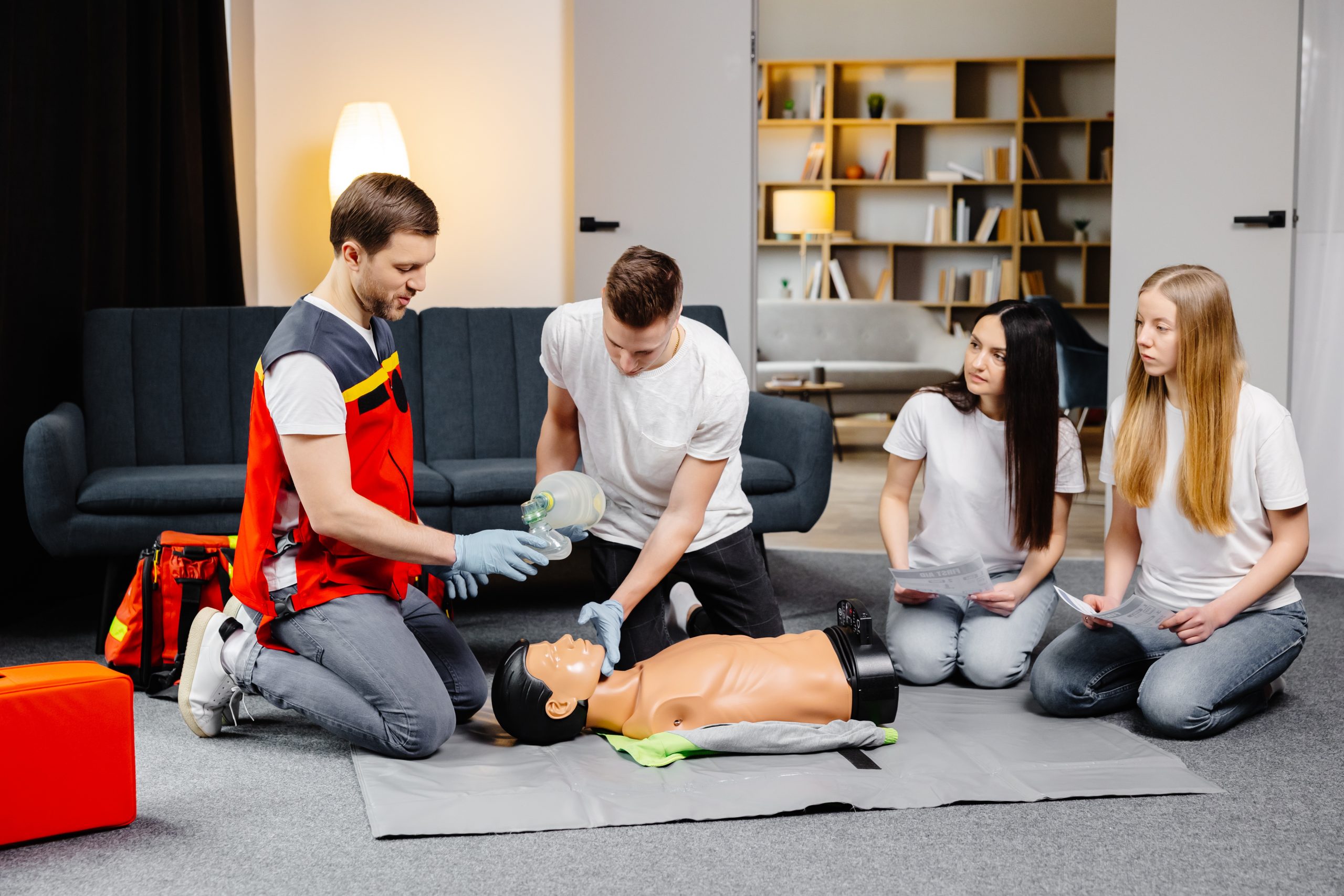
- Hands-On Practice: You will spend a significant portion of the class practicing on high-fidelity manikins.
- Instructor Feedback: Certified instructors will watch your technique and provide real-time corrections on your compression depth and rate.
- Skill Assessment: You will demonstrate your ability to perform CPR and use an AED to ensure you have met the course requirements.
Is it better to take CPR and First Aid together?
If you are already setting aside a morning or afternoon for training, many first-time students find it highly beneficial to combine their CPR/AED training with a First Aid certification.
While CPR focuses on cardiac arrest, First Aid covers a broader range of emergencies including:
- Severe allergic reactions and Epi-Pen use
- Controlling heavy bleeding and wound care
- Managing bone, joint, and muscle injuries
- Dealing with heat-related illnesses or poisoning
Enrolling in the combined CPR AED & First Aid class is not only more cost-effective but also provides a more complete safety toolkit. Many professions in Austin, such as childcare and fitness coaching, require both certifications, making the combined course a smart time-saver.
How quickly can you get your certification card?
One of the biggest pain points for first-time students is waiting weeks for a physical card to arrive in the mail. In today’s fast-paced job market, you often need proof of certification immediately to start a new position or clinical rotation.
CPR Classes Near Me solves this by providing same-day eCard delivery. Once you successfully pass your skills check and written exam, your American Heart Association eCard is issued digitally. This means you can download, print, or email your credentials to your employer before you even leave the parking lot.
Why is in-person training mandatory for first-timers?
You may see advertisements for “100% Online CPR” that claim to be faster and cheaper. However, for a first-time student, these are often a waste of resources. Most reputable employers in Austin—especially in the medical and education fields—will not accept a certification that does not include an in-person skills evaluation.
CPR is a physical skill. You cannot learn the “feel” of a proper chest compression or the timing of rescue breaths through a computer screen alone. In-person training ensures that you are performing life-saving techniques correctly, giving you the peace of mind that you could actually help someone in a real emergency.
Where are the best locations for training in Austin?
Convenience is key when you are trying to fit a certification into a busy schedule. CPR Classes Near Me offers multiple accessible locations throughout the Austin metro area, including:
- Central Austin: Ideal for students and professionals working near the downtown core or UT Austin.
- North Austin/Pflugerville: Convenient for residents in Round Rock, Cedar Park, and Hutto.
Additionally, for Austin-based businesses or large groups, instructors can travel to your location. This mobile training option is perfect for corporate offices, schools, or construction sites that want to certify their entire team at once without the hassle of commuting.
What are the costs involved for new students?
Budget is always a consideration for students. In Austin, CPR Classes Near Me offers competitive pricing that makes high-quality training accessible:
- BLS CPR & AED Classes: Starting at approximately $59.95 (a significant discount from standard rates).
- CPR, AED & First Aid Combo: Starting at approximately $79.95.
Investing in an AHA-certified course ensures you are getting the highest level of training for your money, preventing the need for costly “re-dos” with unrecognized providers.
Summary of Benefits for First-Time Students
- Same-Day Certification: No waiting periods for your credentials.
- AHA-Certified: Guaranteed acceptance by employers and licensing boards.
- Expert Instructors: Learn from professionals who make the material easy to digest.
- Hands-On Practice: Build muscle memory that saves lives.
- Affordable Pricing: Quality training that doesn’t break the bank.
Conclusion
Becoming CPR certified is one of the most impactful things you can do for your community. For first-time students in Austin, the path is clear: choose a course that offers hands-on experience, the prestige of the American Heart Association, and the convenience of same-day results. By choosing CPR Classes Near Me, you aren’t just getting a card; you are gaining the confidence to act in a crisis.
Don’t wait until an emergency happens to wish you knew what to do. Whether you need it for work or just want to be prepared for your family, now is the time to start.
Contact CPR Classes Near Me today to secure your spot in an upcoming Austin class!
Frequently Asked Questions (FAQ)
Do I need any prior medical knowledge to take a CPR class?
No. Our classes are designed for everyone, regardless of their background. We teach you everything you need to know from the ground up, using simple language and hands-on demonstrations.
How long does the certification last?
Your AHA BLS or Heartsaver certification is valid for two years. After two years, you will need to take a renewal course to maintain your credentials.
What should I wear to my CPR class?
Since you will be practicing on manikins on the floor or at tables, we recommend wearing comfortable, casual clothing that allows for movement.
Is there an age limit for CPR certification in Austin?
There is no formal minimum age. As long as the student can physically perform the compressions and pass the written exam, they can be certified. We have successfully trained many teenagers and young adults.
What happens if I don’t pass the skills test on the first try?
Our instructors are committed to your success. If you struggle with a specific skill, they will work with you, provide additional coaching, and allow you to practice until you are confident and competent.
Leave a Reply