Infant CPR Classes in Austin: Parent & Babysitter Safety Guide
When welcoming a new baby into your home, safety is always the top priority. From installing car seats to baby-proofing cabinets, Austin parents go to great lengths to protect their little ones. However, one of the most critical safety measures is often overlooked: taking an infant CPR class.
Medical emergencies, particularly choking and respiratory failure, can happen in a matter of seconds. Knowing exactly how to respond before paramedics arrive can mean the difference between a close call and a devastating tragedy. Whether you are a first-time parent, a seasoned grandparent, or a professional babysitter, mastering infant CPR is a non-negotiable skill.
This comprehensive guide covers everything you need to know about infant CPR classes in Austin. We will explore the specific life-saving techniques you will learn, explain why hands-on training is essential, and show you exactly where to find the best AHA-certified instruction.
Why Are Infant CPR Classes In Austin Crucial For Complete Family Safety?
Austin is a booming city with a rapidly growing population of young families. While we are fortunate to have world-class medical facilities like Dell Children’s Medical Center, local traffic on I-35 or MoPac can easily delay emergency response times. When an infant stops breathing, every single second counts, and caregivers must be ready to act as the first line of defense.
Infants are highly susceptible to respiratory emergencies. Unlike adults, whose cardiac arrests are typically caused by heart disease, an infant’s heart stops most often because of a lack of oxygen. This can be triggered by choking on small objects, drowning, severe asthma, or sudden illnesses.
Because their airways are incredibly small—about the diameter of a drinking straw—even a minor obstruction can be completely life-threatening. By taking infant CPR classes in Austin, you build the muscle memory and confidence required to intervene immediately. Instead of panicking while waiting for an ambulance, you can sustain the baby’s oxygen flow and dramatically increase their chances of survival.
What Specific Life-Saving Skills Will You Learn In An Infant CPR Class?
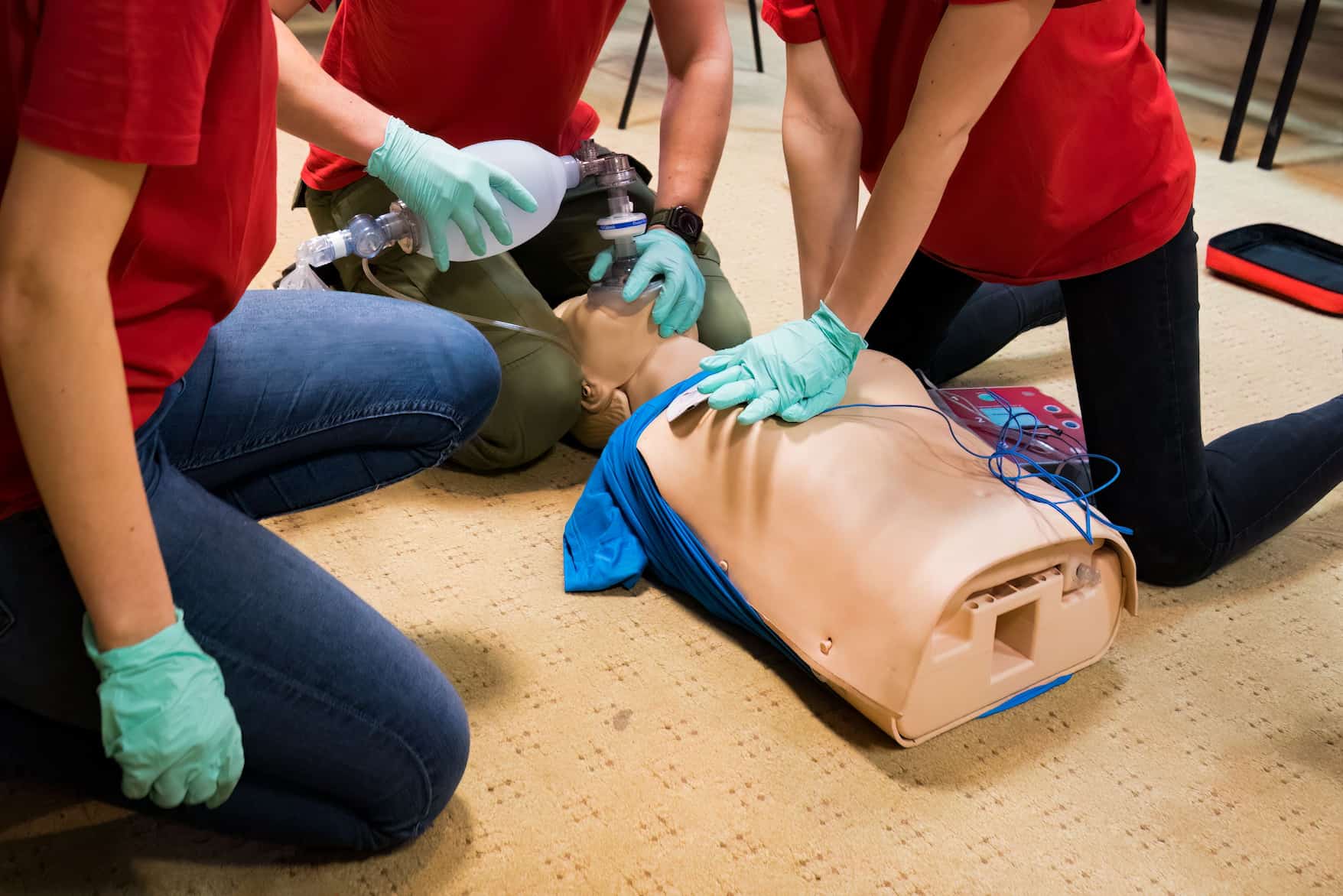
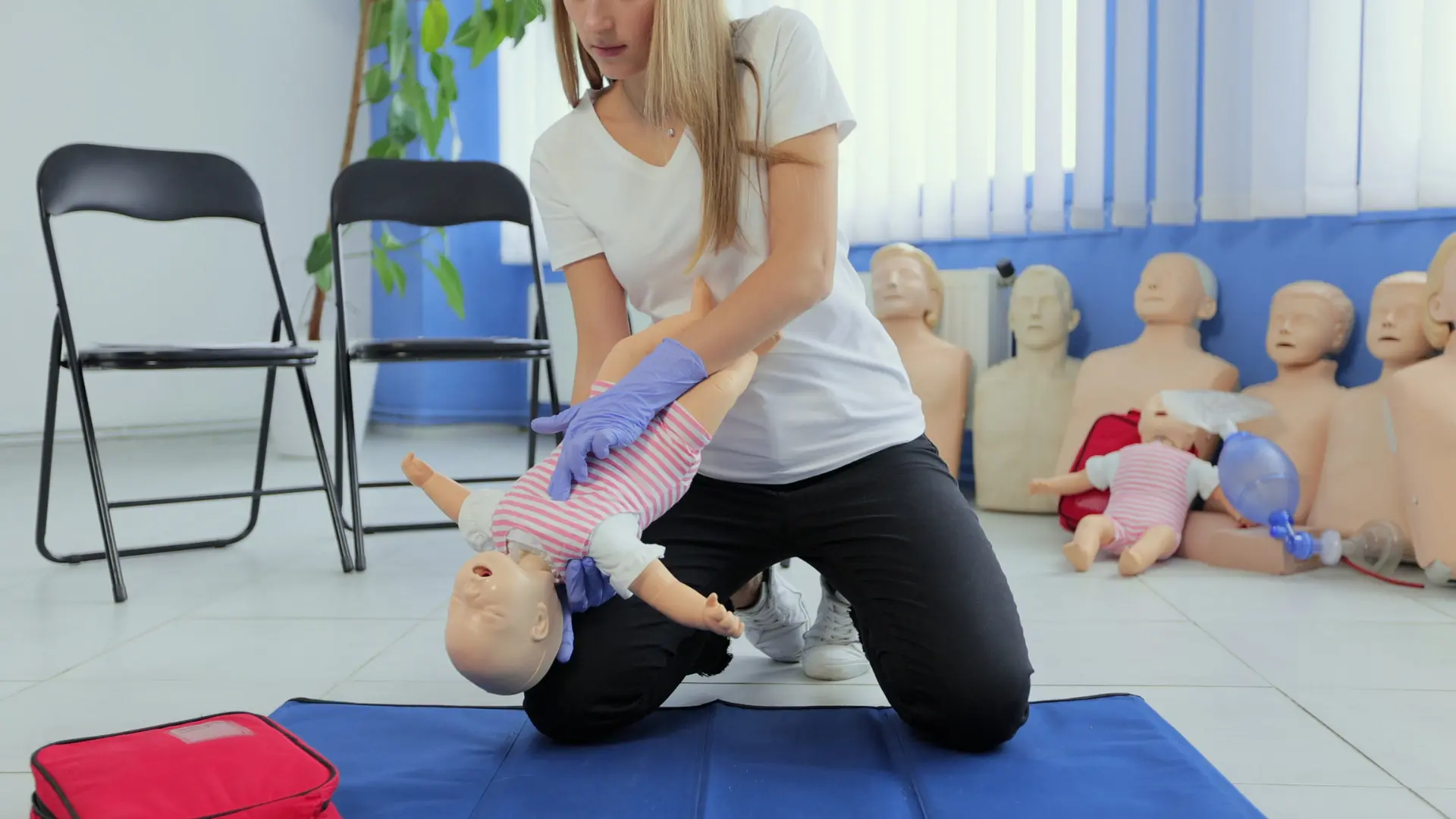
A high-quality infant CPR class provides you with an actionable, step-by-step toolkit for handling terrifying situations. When you train with certified American Heart Association (AHA) instructors, you don’t just watch a video; you practice these critical techniques on specialized infant mannequins.
During your session, instructors will guide you through multiple emergency scenarios. You will learn how to quickly assess an unresponsive baby and determine the best course of action. The curriculum is incredibly thorough, ensuring you leave the classroom feeling fully prepared.
Key skills covered in an AHA-certified class include:
- Infant Chest Compressions: Learning the exact depth, speed, and two-finger placement required to pump an infant’s heart safely.
- Rescue Breathing: Discovering how to deliver gentle, precise breaths that fill an infant’s lungs without causing barotrauma (pressure damage).
- Choking Relief: Mastering the combination of targeted back slaps and chest thrusts to dislodge completely blocked airways in babies.
- AED Operation: Understanding how to safely apply and operate an Automated External Defibrillator (AED) using infant-specific pads and energy levels.
Who Should Enroll In A Baby CPR And First Aid Course Right Now?
There is a common misconception that Basic Life Support (BLS) and CPR certifications are strictly for doctors, nurses, and medical professionals. In reality, the people who spend the most time with infants are the ones who need this training the most. The vast majority of infant emergencies occur at home, meaning a family member or hired caregiver will be the first responder.
Expectant parents should absolutely schedule a class during their third trimester. This ensures the training is fresh in their minds before the baby arrives. However, parents aren’t the only ones who need to know how to save a life.
You should prioritize booking an infant CPR and First Aid class if you are a:
- Parent, foster parent, or legal guardian
- Grandparent or frequent family helper
- Professional nanny, babysitter, or au pair
- Childcare center employee or preschool teacher
- Older sibling who frequently watches the baby
How Exactly Does Infant CPR Differ From Standard Adult CPR Techniques?
You cannot simply use adult CPR techniques on a tiny baby. Infants have entirely different physiological structures, fragile bones, and developing organs. Applying adult force to an infant’s chest can cause severe internal injuries, which is why specialized training is absolutely mandatory.
The most obvious difference is the compression technique. For an adult, you use two interlaced hands and your full upper body weight to compress the chest at least two inches. For an infant, you must use just two fingers (or two thumbs if encircling the chest) to compress the chest about 1.5 inches, or one-third the depth of the chest cavity.
Rescue breathing also requires a major adjustment. When giving breaths to an adult, you pinch the nose and cover their mouth with yours, delivering a deep breath. For an infant, you must cover both their nose and mouth with your mouth, delivering only a gentle “puff” of air from your cheeks—just enough to make their tiny chest rise.
Why Is Hands-On, In-Person Infant CPR Training Superior To Online Courses?
In an era of digital convenience, you might be tempted to take an online-only CPR course to save time. Unfortunately, watching a virtual tutorial simply cannot prepare you for the physical reality of a medical emergency. Proper CPR requires specific physical resistance, rhythm, and hand placement that can only be mastered through hands-on practice.
When you take an in-person class, an experienced instructor monitors your form in real-time. If you are compressing the mannequin’s chest too shallowly or pausing too long between breaths, the instructor will correct you immediately. This physical muscle memory is exactly what takes over when adrenaline spikes during a real-life crisis.
Furthermore, most employers and childcare agencies will not accept online-only certificates. The AHA strictly requires an in-person skills evaluation to issue their widely recognized BLS certification. By choosing local, hands-person training, you ensure your credentials are valid, OSHA-compliant, and fully trusted.
How Does Obtaining A BLS Certification Benefit Professional Babysitters And Nannies?
For childcare professionals in Austin, an AHA BLS CPR certification is more than just a safety precaution; it is a vital career asset. Parents are trusting you with their most precious resource. Proving that you are officially trained to handle choking or cardiac arrest provides them with immense peace of mind.
Many premium childcare agencies, daycares, and elite nanny placement services require a valid CPR and First Aid certification as a basic condition of employment. By proactively completing this training, you instantly stand out in a competitive job market. It demonstrates professionalism, dedication, and a serious commitment to child safety.
Additionally, babysitters and nannies who hold active AHA certifications can often command higher hourly rates. Parents are generally more than willing to pay a premium for a caregiver who is equipped to handle worst-case scenarios.
Where Can Austin Parents Find The Best AHA-Certified Infant CPR Classes Near Me?
Finding high-quality, employer-accepted CPR training in Central Texas is incredibly easy. CPR Classes Near Me provides the premier AHA-certified instruction tailored to the needs of local families and professionals. With classes available throughout the week, scheduling your certification is simple, no matter how busy your routine is.
We offer two highly accessible locations for residents across the region. Our central Austin facility (1300 Morrow St) is perfect for those traveling from Downtown, Hyde Park, or South Congress. For families in the northern suburbs, our Pflugerville location (1006 Old Austin Hutto Rd) easily serves Round Rock, Cedar Park, and Georgetown via I-35 and SH-45.
We pride ourselves on offering affordable, top-tier education. Our standalone BLS CPR & AED class starts at just $64.95. If you want maximum preparation, our comprehensive First Aid + BLS CPR & AED class is available for $84.95. Best of all, because we are an authorized AHA training site, your instructor will issue your official eCard on the exact same day you complete your approximately 3.7-hour class.
Secure Your Family’s Safety Today
Do not wait for a terrifying emergency to realize you need infant CPR training. Empower yourself with the knowledge, skills, and confidence to protect the most vulnerable members of your family. Taking just a few hours out of your weekend could literally save a life.
Whether you need to renew an expired card for work or you are stepping into a CPR classroom for the very first time, we are here to support you. Contact CPR Classes Near Me today to view our upcoming schedule and secure your spot in our next Austin infant CPR class!
(Note: Course pricing, AHA guidelines, and scheduling details reflect current information as of publication and should be verified upon booking.)
Frequently Asked Questions
How much do infant CPR classes in Austin cost?
At CPR Classes Near Me, we offer highly discounted rates for our local Austin students. The standard AHA BLS CPR & AED certification starts at $64.95. If you choose to bundle your training with the First Aid certification, the total cost is $84.95.
How long does infant CPR certification last?
Once you successfully complete your hands-on training and skills test, your certification is valid for exactly two years. To maintain your credentials after this period, you will simply need to enroll in a standard renewal class.
Can I take infant CPR classes online?
No, legitimate infant CPR training must be completed in person to guarantee effectiveness and build proper muscle memory. The American Heart Association, as well as most employers, do not recognize CPR certifications obtained exclusively through online video courses without an in-person skills assessment.
Do babysitters need an AHA BLS certification?
Yes, professional babysitters and nannies should highly prioritize getting their AHA BLS certification. Not only is it frequently required by reputable childcare agencies, but it also provides parents with critical peace of mind and can help caregivers command a higher hourly rate.
What is the main difference between infant and adult CPR?
The main difference lies in the force and technique used due to the infant’s fragile size. For chest compressions, you use only two fingers on an infant rather than two full hands, and you provide a gentle puff of air for rescue breaths instead of a deep adult-sized breath.
How long does the infant CPR training take?
Our comprehensive infant, child, and adult BLS CPR training session takes approximately 3.7 hours to complete. This ensures you have ample time to watch the required AHA videos, practice hands-on techniques, and complete your final skills evaluation.
Will I get my CPR certification card on the same day?
Yes! As soon as you successfully finish your class and pass the skills test, our instructors will issue your official American Heart Association BLS eCard on the very same day.