
CPR Certification for CNAs: What to Take and Why
As a Certified Nursing Assistant (CNA), you are the backbone of patient care. You are the one in the room more than anyone else, providing essential support and keeping a watchful eye on patient health. But what happens when a routine check-up turns into a life-threatening emergency?
That is where CPR certification comes in. For CNAs, having a valid, up-to-date certification isn’t just a “nice to have”—it is often a legal and professional requirement. However, not all CPR classes are created equal. If you take the wrong one, you might find yourself back in a classroom because your employer won’t accept it.
In this guide, we’ll break down exactly which course you need, why it matters for your career, and how you can get certified through CPR Classes Near Me to keep your career moving forward.
Is CPR certification mandatory for CNAs?
Yes, in nearly every scenario, CPR certification is a mandatory requirement for both obtaining and maintaining your CNA license. Most state boards of nursing and the Department of Health require proof of certification before you can even begin your clinical rotations.
Beyond the initial licensing, employers—including hospitals, hospice centers, and skilled nursing facilities—require an active certification as a condition of employment. If your card expires, you may be pulled from the schedule until you recertify.
Which CPR course should a CNA take?
The most common mistake CNAs make is signing up for a “General CPR” or “Heartsaver” course. While these are great for the general public or teachers, they do not meet the standards for healthcare professionals.
As a CNA, you should take the Basic Life Support (BLS) for Healthcare Providers course.
The BLS course is more comprehensive than standard CPR and includes:
- Multi-rescuer coordination: Learning how to work with a team during a code.
- Bag-Valve Mask (BVM) use: Training on professional ventilation equipment.
- Advanced AED training: Using a defibrillator in a clinical setting.
- Critical Thinking: Assessing a patient’s condition rapidly to decide the best course of action.
Most employers specifically look for an American Heart Association (AHA) or Red Cross BLS certification. At CPR Classes Near Me, we focus on providing these high-standard certifications to ensure they are accepted anywhere you choose to work.
Why is BLS preferred over standard CPR?
Standard CPR classes are designed for “lay rescuers”—people like parents, coaches, or office workers. These classes focus on the basics of chest compressions and simple rescue breaths.
As a CNA, you work in a clinical environment where you have access to medical equipment and other trained professionals. BLS training prepares you for this specific environment. It teaches you how to perform high-quality chest compressions while a nurse or doctor handles the airway, and how to switch roles seamlessly to prevent rescuer fatigue.
In short, BLS is the professional version of CPR. It gives you the technical skills required to operate in a fast-paced medical setting.
How does CPR certification benefit a CNA’s career?
While the primary goal is saving lives, being certified offers several professional advantages:
- Increased Employability: Having a current BLS card makes you “work-ready.” Employers prefer candidates who don’t need to be sent for training before they can start their first shift.
- Professional Confidence: Emergencies are stressful. Knowing you have been trained by the best allows you to remain calm and act decisively when every second counts.
- Legal Compliance: Keeping your certification current ensures you stay within the scope of practice defined by your state board, protecting your license.
- Better Patient Outcomes: Statistics show that immediate, high-quality CPR provided by the first person on the scene (usually the CNA) significantly increases the chance of a patient’s survival and recovery.
Can I take my CNA CPR certification online?
This is a tricky area. Many websites offer “instant” online CPR certification for a low price. However, most healthcare employers will not accept 100% online certifications.
The American Heart Association and Red Cross require a hands-on skills assessment. You cannot learn the proper depth of a chest compression or the “feel” of an AED by clicking through slides on a computer.
The best option for busy CNAs is a Blended Learning course. This allows you to:
- Complete the lecture and written exam portion online at your own pace.
- Schedule a brief, in-person skills session to demonstrate your technique on a manikin.
This “Best of Both Worlds” approach is fully accredited and widely accepted by hospitals and nursing boards.
How often do CNAs need to recertify?
Standard BLS certifications are valid for two years.
It is a good idea to start looking for a renewal class about 60 days before your current card expires. Many CNAs wait until the last minute, only to find that classes are full. If your certification lapses, you may be legally unable to perform your duties, which can lead to missed shifts and lost wages.
What should you expect during the BLS training?
If you are nervous about the class, don’t be! BLS training is designed to be supportive and educational. Here is what a typical session at CPR Classes Near Me looks like:
- Instructional Videos: You will watch real-world scenarios to see how professional teams handle emergencies.
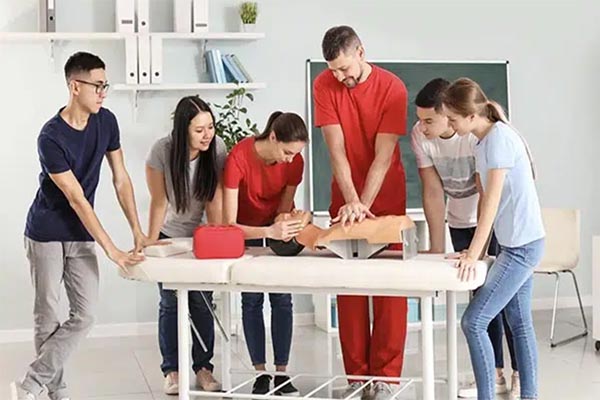
- Hands-on Practice: You will spend a significant amount of time practicing on manikins.
- AED Training: You will learn how to use an automated external defibrillator safely and effectively.
- Choking Relief: Training includes how to help adults, children, and infants who are choking.
- Written Exam: A multiple-choice test to ensure you understand the core concepts.
- Skills Check: An instructor will watch you perform a few rounds of CPR to ensure your form is correct.
Why choose CPR Classes Near Me?
When you are looking for “CPR certification for CNAs,” you want a provider that is local, affordable, and accredited. We specialize in making the certification process as painless as possible for healthcare workers.
- Certified Instructors: Our trainers are experts who understand the healthcare environment.
- Flexible Scheduling: We offer morning, evening, and weekend classes to fit a CNA’s demanding schedule.
- Immediate Cards: In most cases, you receive your digital certification card the same day you finish your skills session.
- AHA Guidelines: We strictly follow the latest evidence-based guidelines, so you know your training is top-tier.
Conclusion
Obtaining your CPR certification is a milestone in your journey as a CNA. It represents your commitment to patient safety and your readiness to act in a crisis. By choosing the BLS for Healthcare Providers course, you ensure that your credentials will be accepted by any employer and that you have the skills necessary to provide the best possible care.
Don’t wait until your license renewal is due or a job opportunity passes you by. Ensure your skills are sharp and your certification is current.
Contact CPR Classes Near Me today to find a class in your area and take the next step in your healthcare career!
Frequently Asked Questions (FAQ)
Q: Do I need First Aid certification as well as CPR?
A: Most CNAs only need BLS (which covers CPR and AED). However, some home health roles or specific state requirements may ask for a Heartsaver First Aid add-on. It is always best to check your specific job description.
Q: Is BLS the same as CPR?
A: BLS (Basic Life Support) is a type of CPR specifically designed for healthcare professionals. It covers everything in a standard CPR class plus advanced techniques like team dynamics and the use of professional ventilation tools.
Q: How long does the BLS class take?
A: A full in-person BLS class typically takes about 3 to 4 hours. If you choose a blended learning option (online + in-person skills), your in-person time is usually less than an hour.
Q: What happens if I fail the written exam?
A: Don’t worry! Instructors at CPR Classes Near Me are there to help you succeed. If you struggle with a portion of the exam, they will review the material with you, and you can usually retake the test the same day.
Q: Can I use my BLS certification in another state?
A: Yes. Because we provide AHA and Red Cross certifications, your card is recognized nationally. If you move, your BLS certification stays valid until its expiration date.