CPR Renewal vs Retake: Which Live Class Do You Actually Need?
When your job, state licensing board, or healthcare program requires a valid life-saving credential, managing expiration timelines can feel like a stressful balancing act. A single question frequently surfaces among working professionals: Should I sign up for a quick renewal course, or am I forced to retake the entire initial training program from scratch? Making the wrong choice can waste valuable time and money, or worse, leave you sitting in a classroom that does not grant the exact credential your employer requires.

This comprehensive guide breaks down the structural differences between a renewal class and a full course retake. You will learn the strict rules established by credentialing bodies, how expiration dates dictate your options, and what to expect during your hands-on training session. By understanding these key factors, you can confidently book the correct session and maintain your compliance without unnecessary delays.

At CPR Classes Near Me, we provide official American Heart Association (AHA) courses featuring same-day eCard delivery. Whether you need a fast update or a fresh start, our professional instructors ensure you leave the classroom fully prepared to respond to emergencies.

Is My Current CPR Certification Still Active?

Before you can choose between an update course and a full initial program, you must determine the precise legal status of your current credential. The American Heart Association standardizes all Basic Life Support (BLS) and life-saving credentials to remain valid for exactly two years. This expiration date is set to the final day of the month in which you completed your last exam. For example, if you passed your previous training on May 12, 2024, your card remains valid through May 31, 2026.

Locating your digital eCard is the fastest way to confirm where you stand on the timeline. You can access the official credential database online to view your unique certification number and expiration window. If you check your records and discover that today’s date falls before that end-of-month deadline, you are fully eligible to enroll in a streamlined update session.

Allowing your card to lapse by even a single day changes your options completely under national training guidelines. There is no traditional “grace period” extended to individuals who miss their deadlines due to busy work schedules or forgotten calendar alerts. If your certificate has officially expired, your legal standing reverts to that of a first-time student, meaning you must enroll in a complete retake.

What Is a CPR Renewal Class?

A renewal class—frequently referred to as an update course—is a fast-track training program tailored specifically for experienced individuals who currently hold an active credential. Because participants have already demonstrated mastery of core concepts in the past, the curriculum skips baseline definitions. Instead, the focus shifts directly toward reviewing recent protocol updates and practicing high-quality physical maneuvers.

These update sessions are highly accelerated compared to initial training paths. Instructors skip long introductory videos and focus directly on core competencies, such as refreshing your physical muscle memory for deep chest compressions and proper rescue breathing techniques. This approach honors your existing baseline knowledge while ensuring your techniques align perfectly with the latest medical standards.

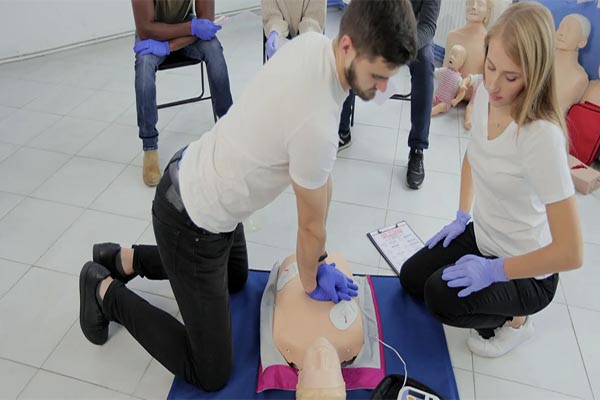
To successfully complete an update session, you must pass the exact same hands-on skills assessments and written examinations required in standard courses. You will demonstrate single-rescuer adult resuscitation, child team dynamics, and infant choking relief methods on specialized medical manikins. Because the classroom pace is rapid, this option is strictly reserved for those who do not require foundational, step-by-step guidance.

When Am I Required to Retake the Full CPR Course?

Retaking the full initial course is the mandatory pathway for any student who does not possess a valid, unexpired certification card. If you are entirely new to life-saving training, or if your previous credential expired last month, you must complete the full-length program. Employers and regulatory boards cannot accept a renewal certificate if it was obtained using an invalid, lapsed baseline credential.

A full retake class covers the entire standardized curriculum across approximately 3.7 to 4 hours of total classroom time. This comprehensive window ensures that every participant learns the precise anatomical landmarks, physical depth requirements, and safety protocols required during an emergency. The expanded timeframe allows beginners to ask detailed questions and practice without feeling rushed.

Enrolling in a full course is also a smart, proactive move for individuals who technically qualify for a renewal but feel out of practice. If you haven’t thought about resuscitation protocols or touched an automated external defibrillator trainer in two years, a rapid-fire update class might feel overwhelming. Choosing a full retake provides the comprehensive environment needed to rebuild your confidence and muscle memory from the ground up.

How Do Renewal and Retake Classes Compare in Classroom Time and Overall Cost?

When deciding which program fits your current situation, it helps to look at how these two pathways diverge across several key operational categories. While both options result in the exact same certification, the journey through each classroom environment looks quite different.

  • Eligibility Requirements: The renewal class is strictly limited to students holding a valid, unexpired AHA credential. The full retake class is open to everyone, making it the mandatory choice for first-time students or anyone whose card has expired by even a single day.
  • Classroom Time and Pacing: A renewal class features a fast-track, compressed schedule designed to move experienced students through verification quickly. Conversely, the full retake class requires approximately 3.7 to 4 hours of classroom time to accommodate thorough, step-by-step video instruction.
  • Curriculum Focus: Renewal sessions dedicate nearly all of their time to protocol updates and immediate physical skills testing. Full courses focus heavily on foundational theory, guided practice loops, and building comfort with emergency concepts from scratch.
  • Overall Course Costs: Because renewal classes require less instructional time, they are generally more economical for working professionals. Full initial courses feature standard pricing, typically ranging between $59.00 and $79.00 depending on the specific location and materials.
  • Testing and Credentials: Interestingly, both classes maintain the exact same high standards for graduation. Every student must pass the identical written exam and hands-on skills evaluation to receive an official, same-day AHA eCard that remains valid for the next two years.

Why Is Hands-On, In-Person Training Essential for Both Class Types?

Whether you choose a fast-track update or a full initial course, completing your training in a physical classroom setting is critical for true preparedness. Online-only programs often promise instant certificates without physical practice, but these documents rarely pass employer verification checks. Major medical systems, school districts, and federal oversight bodies like OSHA routinely reject certifications that lack a verified, in-person physical evaluation.

The primary reason to choose a live classroom environment is the development of genuine physical muscle memory. It is impossible to gauge the true resistance required to compress an adult chest exactly two inches deep by clicking buttons on a digital screen. Working with physical manikins trains your hands, shoulders, and back to deliver the precise force and rhythm required to maintain blood flow to vital organs during cardiac arrest.

Live classes also provide the benefit of immediate feedback from certified instructors. At CPR Classes Near Me, our professional trainers watch your hand placement, compression depth, and ventilation timing in real time. If your rate slows down or your hand placement shifts, we correct your technique instantly on the spot. This immediate guidance ensures you leave the classroom with the confidence to act decisively in real emergencies.

Conclusion: Take the Next Step Toward Your Official Same-Day Certification

Choosing the right path between a renewal class and a full course retake comes down to a single detail: the current expiration date listed on your card. If your credential is alive and active, a fast-track renewal class will respect your busy schedule and get you back to work quickly. If your card has officially lapsed, enrolling in a complete initial retake ensures you build dependable muscle memory, learn the latest life-saving guidelines, and satisfy your employer’s compliance demands.

Regardless of your current certification status, attempting to bypass proper training with an online-only shortcut puts your workplace compliance and your emergency preparedness at serious risk. True emergency readiness requires genuine, hands-on practice under the guidance of an expert instructor who can correct your form in real time. Investing a single morning or afternoon in an authorized in-person training room provides the practical skills needed to save a life when every single second counts.

Don’t wait until your certification window officially runs out or an unexpected emergency catches you off guard. Contact CPR Classes Near Me today to check upcoming schedules, reserve your seat in a local classroom, and secure your official same-day certification eCard.

Frequently Asked Questions

Can I take a renewal course if my CPR card expired last week?

No, you cannot enroll in a renewal course if your credential has expired by even a single day. The American Heart Association guidelines strictly mandate that any individual with a lapsed card must complete the full initial retake course to obtain a valid certificate.

How long does an official American Heart Association certification remain valid?

An official American Heart Association credential remains completely valid for exactly two years from the end of the month in which it was issued. For example, a card earned on May 12, 2026, will officially expire on May 31, 2028.

Will I receive my physical certification card on the exact same day as my class?

Yes, when you complete your hands-on training and testing with CPR Classes Near Me, your official digital eCard is processed and issued on the exact same day. The digital credential arrives directly in your email inbox before you leave the training facility.

What happens if I fail the written exam or the physical skills test during a renewal session?

If you struggle with the written test or physical maneuvers during an update session, our instructors will provide targeted remediation on the spot. If extensive retraining is required to meet passing standards, you may be asked to transition into a full initial course to ensure you master the skills safely.

Are automated external defibrillator (AED) operations included in renewal classes?

Yes, automated external defibrillator operations and safety protocols are fully integrated into both renewal and initial retake sessions. Every student must demonstrate correct pad placement and device interaction for adults, children, and infants during the practical evaluation.

Do local healthcare employers and hospital networks accept online-only certifications?

No, the vast majority of healthcare networks, corporate compliance offices, and state licensing boards completely reject online-only certifications. Employers consistently require a verified in-person, hands-on skills assessment conducted by an authorized instructor to satisfy safety standards.

What Happens if Your CPR Card Expires? Risks & Renewal Steps

Imagine standing in a high-stakes environment where a colleague or customer suddenly collapses due to sudden cardiac arrest. Your instincts kick in, but a sudden wave of doubt washes over you because you realize your official certification lapsed a few months ago. Beyond the psychological barrier of questioning your own readiness, a lapsed credential carries substantial professional, legal, and operational consequences.

Understanding exactly what happens if your CPR card expires is essential for maintaining workplace compliance and ensuring you are prepared to act during an emergency. In this comprehensive guide, we will break down the immediate impacts of an expired credential, explore the strict guidelines set by credentialing bodies, and outline the precise steps you need to take to restore your certified status.

Is There a Grace Period After Your CPR Certification Expires?

There is no official grace period provided by the American Heart Association (AHA) or any major regulatory body once your credential passes its expiration date. Your certification remains valid for exactly two years, expiring on the final day of the month in which it was issued. The moment that date passes, your card is officially considered invalid, and you are no longer recognized as an active provider.

Operating under the assumption that a buffer window exists can jeopardize your employment status. Regulatory agencies like the Occupational Safety and Health Administration (OSHA) view certification as a binary status: you are either fully certified or you are not. Attempting to claim a “grace period” during an internal audit or an emergency investigation will not shield you or your organization from liability.

To prevent an unexpected lapse, it is highly recommended to audit your physical or digital eCard at least 60 days before the 24-month mark. This proactive window allows you to find an available local class and secure a seat without experiencing a single day of uncertified status.

Can You Perform CPR if Your Certification Has Expired?

Yes, you can still legally perform bystander CPR if your certification has expired, as Good Samaritan laws generally protect individuals who act in good faith during an emergency. These laws are designed to encourage bystanders to step forward and provide chest compressions and rescue breathing without the fear of legal retaliation. Your muscle memory and biological knowledge do not instantly vanish when a calendar date passes.

However, the legal landscape changes significantly if you are performing life-saving measures as a requirement of your job duties. If your employment contract mandates an active credential, performing resuscitation with an expired card can expose you to disciplinary action or severe institutional liability. In a professional setting, relying on Good Samaritan protections becomes much more complex and uncertain.

Furthermore, medical guidelines are continuously updated based on modern clinical data. If your card has been expired for an extended period, you might be utilizing outdated compression-to-ventilation ratios or incorrect AED deployment protocols. Keeping your training updated ensures you are delivering the highest quality care based on the most recent medical science.

What Are the Workplace Consequences of a Lapsed CPR Card?

The workplace consequences of a lapsed CPR card can range from immediate administrative suspension to the complete termination of your employment contract. For healthcare providers, educators, childcare workers, and industrial professionals, an active certification is a non-negotiable condition of employment. Human resource departments routinely utilize automated tracking software that flags expired credentials, often locking employees out of scheduling systems automatically.

Beyond the impact on your individual career, carrying an expired card introduces profound operational vulnerabilities for your employer. If an organization is audited by OSHA or a state licensing board and is found to have staff working with expired credentials, the business can face massive financial penalties. In worst-case scenarios, a workplace emergency involving an uncertified employee can lead to devastating corporate lawsuits.

If you discover that your card has expired, you must notify your supervisor or safety officer immediately. Transparency allows the organization to temporarily adjust staffing or reassign you to low-risk duties while you rapidly complete an in-person renewal class to regain compliance.

Who Needs to Maintain an Active CPR Certification?

Maintaining an active CPR certification is legally mandated for a broad spectrum of professionals whose roles involve public safety, caretaking, or high-risk environments. In the healthcare sector, this includes registered nurses (RNs), certified nursing assistants (CNAs), medical office personnel, and physical therapists. For these individuals, holding an active American Heart Association Basic Life Support (BLS) credential is required to step foot on a clinical floor.

Outside of traditional medical environments, a wide array of public-facing professionals must also keep their credentials completely current:

  • Teachers, Daycare Providers, and Childcare Professionals: Responsible for the safety of children who face unique choking and respiratory risks.
  • Coaches, Personal Trainers, and Athletic Referees: Operating in environments where high physical exertion increases the likelihood of sudden cardiac events.
  • Construction Laborers, Electricians, and Industrial Workers: Working around heavy machinery and high-voltage systems where electrical injuries require rapid shock delivery via an AED.
  • Swim Instructors and Lifeguards: Tasked with managing submersion emergencies that necessitate immediate, high-quality rescue breathing.

If your role falls into any of these categories, an expired card is an immediate threat to your career longevity. Regularly refreshing your skills ensures you remain fully compliant with state licensing boards and ready to protect the lives of those under your supervision.

How Do You Renew an Expired CPR Card?

Renewing an expired CPR card requires registering for an authorized, in-person training session that aligns with current American Heart Association guidelines. Many professionals wonder if they need to take a fundamentally different class if their card has already lapsed. Fortunately, the practical course content for an initial certification and a renewal class is identical, as everyone must demonstrate the exact same hands-on proficiency to pass.

During your renewal session, you will spend approximately 3.7 hours engaging in an interactive, dynamic learning environment. The comprehensive training covers several critical life-saving disciplines:

  • High-Quality Chest Compressions: Mastering the precise depth, hand placement, and rate of compressions required to maintain blood flow to vital organs.
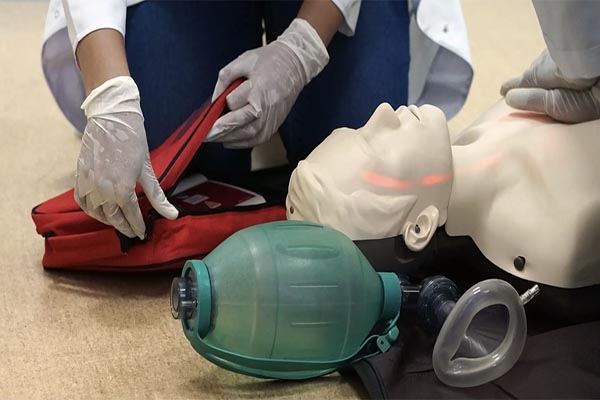
  • Advanced Ventilation Techniques: Utilizing barrier devices and bag-mask ventilators to deliver effective rescue breaths with minimal compression interruptions.
  • Automated External Defibrillator (AED) Operation: Safely deploying an AED on adults, children, and infants during sudden cardiac arrest.
  • Airway Obstruction Relief: Rapidly identifying and clearing choking hazards across all age groups, including small infants.
  • Team Dynamics: Coordinating communication strategies and multi-rescuer roles to maximize survival outcomes during high-stress resuscitation events.

By choosing a dedicated local provider like CPR Classes Near Me, you can sit for your evaluation and walk out with an official, employer-accepted AHA eCard on the very same day. This swift turnaround ensures you can present proof of compliance to your employer immediately, eliminating prolonged gaps in your work schedule.

Why Should You Avoid Entirely Online CPR Renewal Courses?

You should avoid entirely online CPR renewal courses because the vast majority of employers and regulatory bodies explicitly reject them. While the convenience of a purely digital class is tempting, internet-based programs completely lack the hands-on practice required to build genuine muscle memory. You cannot effectively learn the physical resistance of chest compressions or the proper seal of a bag-mask device by simply clicking through slides or watching videos on a screen.

Major regulatory agencies, including OSHA and state licensing boards, heavily scrutinize credentials that do not feature an in-person, instructor-led skills evaluation. Presenting a non-compliant, online-only certificate to your human resources department can result in immediate rejection, forcing you to spend more time and money re-registering for an authorized class.

Investing your time in an authorized, in-person training environment ensures that your hard work will be universally recognized. True proficiency is built through physical interaction with real training equipment under the watchful eye of a certified expert, giving you the unshakeable confidence needed to save a life when seconds count.

Summary of Key Takeaways

  • Zero Grace Period: An expired CPR card is immediately considered invalid by the AHA, OSHA, and employers the day after its expiration date.
  • Workplace Risk: Continuing to work with a lapsed card exposes you to administrative suspension, job termination, and significant legal liability.
  • Comprehensive Review: Recertification takes roughly 3.7 hours and completely covers compression mechanics, AED usage, choking relief, and team dynamics.
  • In-Person Necessity: Purely online certifications are widely rejected by employers due to the complete lack of mandatory hands-on skills testing.
  • Same-Day Solutions: Authorized local classes deliver official AHA eCards on the exact same day you complete your practical evaluation.

Restore Your Compliance Today

Do not wait for an unexpected workplace audit or a medical emergency to reveal that your credentials have lapsed. Keeping your skills sharp and your certifications current is a hallmark of a dedicated professional. Protect your career, stay fully compliant with federal safety standards, and maintain the vital skills necessary to protect those around you.

If your certification is nearing its end or has already passed its expiration date, we are here to help you get back on track. Contact CPR Classes Near Me today to explore upcoming schedules, secure your seat in an authorized local class, and claim your same-day eCard.

Frequently Asked Questions

How long does a CPR certification remain valid before it expires?

An official American Heart Association CPR or BLS certification remains valid for exactly two years from the date of issuance. The credential officially expires on the final day of the calendar month printed on your digital eCard.

What is the exact difference between a CPR renewal class and an initial class?

The core content and practical skills testing are identical, as every student must demonstrate the exact same high-quality resuscitation techniques. However, renewal environments focus heavily on refreshing existing knowledge, allowing experienced providers to complete their hands-on verification efficiently.

Can my employer fine me if I work with an expired CPR card?

While an employer typically faces direct financial penalties from regulatory agencies like OSHA for maintaining uncertified staff, they can pass down disciplinary actions to you. This frequently includes immediate suspension without pay, mandatory leave, or the formal termination of your employment contract.

Will my expired certification card be accepted if I take an online-only course?

No, purely online courses that do not feature an in-person, hands-on skills assessment with an authorized instructor are widely rejected by employers. To guarantee acceptance, your training must include physical evaluation on adult and infant manikins.

How quickly will I receive my new card after completing a renewal class?

When you complete your training through an authorized center like CPR Classes Near Me, your official American Heart Association digital eCard is issued on the very same day. This allows you to immediately forward your updated credentials to your employer or licensing board.

How Early Can You Renew CPR Certification in Texas? A Complete Guide to Staying Compliant

First aid instructor teaching CPR to a group of students using a practice mannequin.

Maintaining active life-saving credentials is an absolute necessity for healthcare providers, educators, and workplace safety personnel throughout the Lone Star State. If you hold an American Heart Association (AHA) Basic Life Support (BLS) or standard CPR/AED credential, you already know that your card carries a strict expiration date.

However, waiting until the final days of your certification window to book a class can put your employment status at risk. Sudden schedule conflicts, filled rosters, or unexpected administrative shifts can easily push you past your expiration date.

This comprehensive guide breaks down exactly how early you can complete your CPR renewal in Texas. We will analyze the regulatory rules established by licensing bodies, explain how early testing impacts your next expiration cycle, and outline the steps required to keep your professional compliance completely uninterrupted.

How Early Can You Renew Your CPR Certification in Texas?

You can legally renew your CPR or BLS certification in Texas at any point during the two-year window that your current card remains active. The American Heart Association does not impose any structural restrictions or mandatory waiting periods that prevent you from taking a renewal course early. Whether your card expires in six months, three months, or three weeks, you are eligible to sit for an authorized training session today.

Choosing to renew early is a highly practical strategy used by Texas medical professionals, emergency responders, and corporate safety officers. Many individuals align their recertification dates with corporate compliance cycles, performance reviews, or slower periods in their academic semesters. By taking control of the timeline, you remove the stress of scrambling for an open seat at the last minute.

When you complete an early renewal, your new AHA eCard is issued immediately upon passing the hands-on skill evaluation. This new card will be valid for exactly two years from the month your new course is completed. While this means you forfeit the remaining months left on your old credential, the absolute certainty of staying continuously compliant is well worth it for busy professionals.

Why Should Texas Professionals Consider Early CPR Recertification?

Proactive career management requires keeping your mandatory workplace credentials secure long before an HR compliance audit flags them. For individuals working within fast-paced industries, waiting until the month of expiration is a dangerous logistical gamble. Taking your class early provides a critical administrative safety net that guarantees your professional standing remains completely intact.

Securing your certification early prevents unexpected scheduling roadblocks from interrupting your ability to work. In major Texas metropolitan hubs, high-quality weekend and evening training sessions fill up exceptionally fast. If your work shifts change suddenly or an illness arises, you could easily slide past your expiration date without an alternative class available.

Furthermore, maintaining an active status is legally required by Texas licensing boards for continuous employment. If your card expires by even a single day, many hospitals, clinics, childcare facilities, and industrial environments are required by law to remove you from active shifts. Renewing early ensures you never face forced unpaid leave or compliance penalties from your employer.

BENEFITS OF EARLY CPR RENEWAL                       

  • ZERO GAP IN COMPLIANCE: Eliminates the risk of workplace suspensions.  
  • FLEXIBLE SCHEDULING: Lets you choose prime weekend or evening slots.  
  • STRESS REDUCTION: Removes the panic of last-minute calendar rushes.   
  • EMPLOYER ALIGNMENT: Easily syncs with annual HR compliance audits.    

Does Early Testing Shift Your Next Two-Year Expiration Date?

Yes, completing your CPR or BLS renewal early will reset your official two-year validity clock based on your new completion date. The American Heart Association validates all official certification cards for exactly 24 months, expiring on the final day of the issuance month. Therefore, your new expiration timeline begins processing immediately when your new course concludes.

For example, if your current credential is set to expire at the end of October, but you choose to complete an early renewal class on July 15th, your brand-new eCard will become active immediately. This new certification will remain fully valid for the next two years, officially expiring on July 31st of the corresponding expiration year. The remaining months from your previous cycle do not roll over or attach to the new card.

While you do technically shorten the absolute lifespan of your original card, the trade-off offers substantial professional advantages. You completely eliminate the legal liabilities associated with a lapsed certification. For Texas professionals who cannot afford a single day of system suspension, resetting the clock early is standard practice.

What Are the Current Texas Employer Rules for Online CPR Renewals?

Texas employers and state licensing boards maintain incredibly strict standards regarding how life-saving certifications must be conducted, specifically prohibiting purely online courses. Regulatory agencies such as the Texas Department of State Health Services (DSHS) and the Texas Health and Human Services Commission (HHSC) require verifiable competency. Because saving a life requires precise physical motor skills, online-only certificates fail to meet these workplace mandates.

To satisfy professional compliance across Texas, your renewal course must feature a live, in-person hands-on skill evaluation overseen by an authorized instructor. True muscle memory—such as achieving the correct chest compression depth, maintaining a proper ventilation seal, and coordinating team dynamics—cannot be learned or evaluated through a computer browser. Attempting to present a cheap online certificate to a Texas employer will almost always result in an immediate rejection.

When booking your renewal, always confirm the course follows official American Heart Association guidelines and includes an in-person testing component. Official courses combine targeted instructional videos with comprehensive, physical practice on specialized feedback manikins. This dual-method approach ensures that your credentials are OSHA-compliant and universally accepted by Texas institutions.

How Long Does an Official In-Person Renewal Class Take to Complete?

An official, authorized American Heart Association renewal or initial training session is highly streamlined, requiring approximately 3.7 hours of focused, interactive classroom time. This precise timing is mandated across all authorized training centers to guarantee that every critical life-saving protocol is reviewed, practiced, and thoroughly evaluated.

During this single-session course, you will actively work alongside a certified instructor to refresh your emergency response capabilities. The curriculum systematically guides you through high-quality adult, child, and infant CPR, precise Automated External Defibrillator (AED) operation, bag-mask ventilation techniques, and responsive foreign-body airway obstruction clearance. Because it is highly engaging, the time passes quickly while building genuine operational confidence.

At CPR Classes Near Me, we value your professional time and emphasize ultimate operational efficiency. Our instructors guide you through the required video components and practical drills without unnecessary delays. Once you successfully demonstrate your hands-on competencies and complete the course, your official AHA eCard is processed and delivered to your inbox on the very same day.

What Materials and Concepts Are Refreshed During a Renewal Course?

A professional recertification session is designed to thoroughly refresh your fundamental life-saving skills while introducing any updated emergency protocols. Over a two-year period, small details regarding compression fractions, chest recoil, and ventilation rates can easily fade from memory. The renewal process polishes these critical actions to ensure flawless real-world execution.

The comprehensive hands-on curriculum focuses heavily on maximizing the survival outcomes of sudden cardiac arrest victims. You will be systematically re-evaluated on the following core clinical skills:

  • High-Quality Chest Compressions: Reviewing proper hand placement, maintaining a rate of 100 to 120 compressions per minute, and ensuring complete chest recoil between compressions.
  • Airway and Ventilation Management: Utilizing barrier devices and mastering bag-mask ventilation techniques to deliver highly effective rescue breaths with minimal compressions interruption.
  • Automated External Defibrillator (AED) Integration: Rapidly deploying and safely operating an AED across adult, pediatric, and infant emergency scenarios.
  • Choking Intervention Protocols: Executing age-appropriate legal and physical methods for clearing severe foreign-body airway obstructions in conscious and unconscious individuals.
  • Multi-Rescuer Team Dynamics: Practicing clear communication strategies and structured role assignments to optimize resuscitation efforts in multi-provider environments.

Conclusion: Take Action and Secure Your Professional Compliance Today

Proactively managing your medical and professional certifications is the most effective way to eliminate workplace stress and safeguard your career longevity. Knowing that you can renew your CPR certification in Texas at any point during its active window gives you the freedom to plan ahead on your own terms. Do not wait for a looming HR deadline or an expired card to force your hand into a compliance emergency.

Booking an early renewal guarantees that you maintain continuous, uninterrupted authority to practice your profession safely and legally. By dedicating less than four hours to an engaging, hands-on, authorized American Heart Association course, you secure absolute peace of mind for the next two full years.

Are you ready to lock in your next two-year certification cycle? The expert instruction team at CPR Classes Near Me is fully prepared to assist you. Our authorized local training sites offer flexible scheduling options, affordable course pricing starting at just $64.95, and guaranteed same-day eCard delivery. Protect your career, sharpen your life-saving capabilities, and stay fully compliant by choosing to contact CPR Classes Near Me today to reserve your seat!

Frequently Asked Questions (People Also Ask)

How early can you renew a CPR certification in Texas?

You can choose to renew your CPR or BLS certification in Texas at any point during its active two-year lifecycle. There are no mandatory waiting periods or operational restrictions enforced by the American Heart Association that prevent you from completing your training early to maintain professional compliance.

Is there a grace period for an expired CPR card in Texas?

No, the American Heart Association does not recognize an official grace period after your card reaches its expiration date. Once the final day of your issuance month passes, your card is legally expired, and Texas employers or licensing boards may suspend your active work duties until you complete a new class.

Will an online-only CPR renewal meet Texas workplace requirements?

No, purely online CPR or BLS certifications that lack a face-to-face evaluation are widely rejected by Texas healthcare networks, corporate employers, and state boards. To meet true professional compliance, your renewal must include an in-person, hands-on skill assessment managed by an authorized instructor.

How much does an official AHA CPR renewal course cost in Texas?

At authorized local training facilities like CPR Classes Near Me Austin, an official American Heart Association BLS certification class is priced at an affordable $64.95. If your professional role also requires a comprehensive First Aid certification alongside CPR, the combined program is available for $84.95.

How long does it take to get your renewal card after completing the course?

When you complete your hands-on training with CPR Classes Near Me, your official American Heart Association digital eCard is issued and delivered directly to your email inbox on the very same day. This ensures you can immediately present proof of continuous compliance to your supervisor or human resources department.