CPR Certification for EMT-Track Students: What You Need First

So, you’ve decided to become an Emergency Medical Technician (EMT). That’s a massive first step toward a rewarding career in public safety and healthcare. You’re probably already looking at EMT programs, checking tuition costs, and maybe even eyeing that high-vis gear. But before you can jump on an ambulance for your first clinical rotation, there is one “gatekeeper” certification you absolutely must have in hand: professional-level CPR.

If you are an EMT-track student, you can’t just walk into any weekend CPR class and call it a day. The requirements for medical professionals are specific, and getting the wrong type of certification can stall your education before it even begins.

In this guide, we’ll break down exactly what type of CPR certification you need, why it’s a non-negotiable prerequisite, and how you can get certified today to stay on track for your EMT career.

Why is CPR certification required before starting EMT school?

You might wonder why you need to be CPR certified before you even start learning how to be an EMT. Isn’t that what the school is for? While EMT programs do teach life-saving skills, they operate on the assumption that you already possess a baseline of professional resuscitation knowledge.

  1. Safety and Liability: EMT students participate in clinical “ride-alongs.” During these shifts, you are part of a working medical team. If a patient goes into cardiac arrest, you must be legally qualified to assist immediately.
  2. Program Prerequisites: Most accredited EMT programs require proof of a valid healthcare-level CPR card as part of the application packet. Without it, your application is often considered incomplete.
  3. National Standards: The National Registry of Emergency Medical Technicians (NREMT) requires all candidates to have a current, professional-level CPR credential to be eligible for the national exam.

What is the difference between standard CPR and BLS for healthcare providers?

This is where many students get tripped up. There are “Heartsaver” or “Layperson” CPR classes, and then there is “Basic Life Support” (BLS). If you are on the EMT track, you must take the BLS version.

Standard CPR (Layperson):

  • Designed for teachers, coaches, and office workers.
  • Focuses on single-rescuer response.
  • Covers basic chest compressions and breaths.

BLS (Basic Life Support):

  • Designed specifically for healthcare professionals and first responders.
  • Includes two-rescuer CPR techniques.
  • Covers the use of a Bag-Valve-Mask (BVM), which is a standard piece of equipment on every ambulance.
  • Includes advanced AED protocols and team dynamics.
  • Covers adult, child, and infant resuscitation.

When you sign up for a class at CPR Classes Near Me, make sure you select the BLS for Healthcare Providers option. This ensures your card will be accepted by your EMT program and the NREMT.

Can I take my CPR certification course entirely online?

In short: No. While the internet is great for learning theory, you cannot learn the physical “muscle memory” of high-quality chest compressions through a computer screen.

  • Hands-on Skills are Mandatory: To earn a certification that is valid for EMT school, you must perform a skills check-off in front of a certified instructor.
  • Hybrid Options: Many students prefer “Blended Learning.” This allows you to complete the lecture and video portions online at your own pace, then visit a local facility for a 1-hour in-person skills session.
  • Employer Acceptance: Almost no ambulance service or hospital will accept an “online-only” CPR card that does not include an in-person skills verification.

What specific topics are covered in an EMT-level CPR class?

A BLS course is more rigorous than a standard class because the stakes are higher for first responders. During your training at CPR Classes Near Me, you will master several critical skills:

  1. High-Quality Chest Compressions: Learning the exact depth (at least 2 inches for adults) and rate (100–120 compressions per minute) required to circulate blood effectively.
  2. Multi-Rescuer Coordination: EMTs never work alone. You’ll learn how to switch roles with a partner seamlessly to prevent fatigue.
  3. Airway Management: You will practice using a Bag-Valve-Mask (BVM) to provide ventilations, a skill you will use frequently as an EMT.
  4. AED Operation: You’ll learn how to integrate an automated external defibrillator into the resuscitation cycle without interrupting compressions.
  5. Choking Relief: Advanced techniques for clearing obstructed airways in conscious and unconscious patients of all ages.

How long does a BLS certification stay valid for students?

For most organizations, including the American Heart Association (AHA) and the Red Cross, a BLS certification is valid for two years.

However, as an EMT student, timing is everything. If your card expires in the middle of your EMT course, you may be barred from attending your clinical rotations. It is highly recommended to get certified shortly before your program begins so that your credential remains active throughout your schooling and into your first few months of employment.

How do I find a class that fits an EMT student’s schedule?

We know that EMT-track students are busy. Many are balancing prerequisites, full-time jobs, or volunteer fire department duties. CPR Classes Near Me offers flexible scheduling to ensure you don’t fall behind.

  • Frequent Classes: We offer sessions throughout the week, including evenings and weekends.
  • Immediate Certification: Most of our students receive their digital provider card the same day they complete their skills session.
  • Convenient Locations: Our goal is to provide training within a short drive of your home or campus.

Is First Aid certification required alongside CPR for EMTs?

While many layperson classes bundle CPR and First Aid together, EMT students usually only need the standalone BLS (CPR) certification.

Why? Because your EMT program is essentially a 150+ hour advanced first aid course. You will spend months learning how to splint limbs, control bleeding, and treat burns in much greater detail than a standard 4-hour First Aid class provides. However, always check your specific program’s “required documents” list to be certain.

What should I bring to my first CPR class?

Preparing for your BLS class is the first step in practicing the professional habits you’ll need as an EMT. Here is what you should have ready:

  • Comfortable Clothing: You will be on your knees on the floor practicing on mannequins. Wear pants and comfortable shoes.
  • Pre-course Work: If you chose a blended learning format, bring a printout or digital copy of your “Part 1” completion certificate.
  • Notebook: While much of the class is hands-on, there are key ratios and numbers (like compression-to-breath ratios) that you’ll want to remember for your EMT entrance exams.

Ready to Start Your EMT Journey?

Becoming an EMT is a commitment to your community and a major career milestone. Don’t let a missing prerequisite hold you back from your goals. At CPR Classes Near Me, we specialize in providing the high-quality, professional-level BLS training that EMT programs demand.

Our instructors are experienced and understand the specific needs of future first responders. We make the process straightforward, fast, and educational, so you can focus on what matters most: passing your EMT course and saving lives.

Contact CPR Classes Near Me today to find a BLS for Healthcare Providers class and take the first step toward your EMT certification!

Frequently Asked Questions

Does a standard CPR card count for EMT school? 

Generally, no. Most EMT programs specifically require “BLS for Healthcare Providers” or “Professional Rescuer” level certification. Standard “Heartsaver” or community CPR cards usually lack the two-rescuer and BVM (Bag-Valve-Mask) training required for medical professionals.

Do I need to be 18 to get CPR certified? 

While you usually need to be 18 to finish an EMT program or work on an ambulance, there is typically no age requirement for CPR certification. Many students get certified at 17 so they are ready to enroll in EMT school the moment they turn 18.

How long does the BLS class take? 

A full in-person BLS class typically takes about 4 to 4.5 hours. If you choose the blended learning option (online lecture + in-person skills), the in-person portion usually takes about 1 to 2 hours.

What happens if I fail the CPR skills test? 

Our instructors at CPR Classes Near Me are dedicated to your success. If you struggle with a specific skill, we will work with you, provide corrections, and allow you to practice until you can perform the skill competently.

Can I use my CPR card in other states? 

Yes. BLS certifications from the American Heart Association or Red Cross are nationally recognized and are valid across the United States.

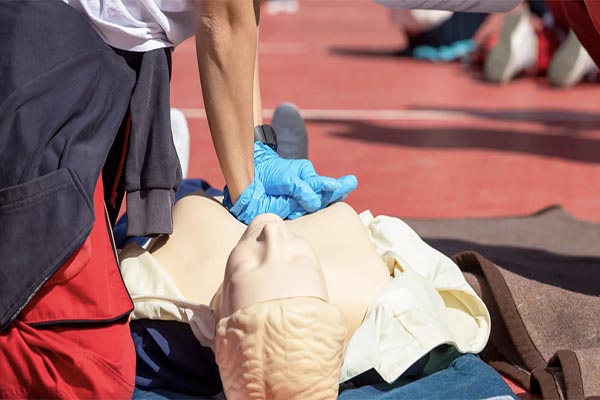
CPR Certification for Medical Assistants: BLS or CPR/AED?

While both courses teach you how to save a life, they are not interchangeable in a professional medical environment. If you are entering the healthcare field, the distinction is critical for your employment eligibility.

A standard CPR/AED course is designed for the general public. It focuses on single-rescuer techniques and how to use a standard AED found in a public space. It assumes the rescuer has no medical background and no access to professional equipment.

Basic Life Support (BLS), however, is often titled “CPR for Healthcare Providers.” It includes everything in a standard course but adds several professional-level skills:

  • Two-Rescuer Coordination: You learn how to work with a partner to minimize breaks in chest compressions.
  • Bag-Valve-Mask (BVM) Ventilation: You are trained to use professional medical masks to provide oxygen.
  • Advanced Patient Assessment: This involves checking for a pulse and breathing simultaneously, a skill expected of medical staff.
  • Team Dynamics: You learn how to lead or support a resuscitation team during a “code” in a clinic.

For a Medical Assistant, BLS is almost always the required standard.

Why do Medical Assistants need BLS specifically?

Medical Assistants aren’t just bystanders; you are a formal member of a medical response team. If a patient collapses in a waiting room or an exam room, you are expected to respond with clinical precision.

Hospitals and private practices prefer BLS for several reasons:

  1. Clinical Competency: It proves you can operate the specific medical equipment found in a doctor’s office.
  2. Standardization: Most healthcare facilities align their internal protocols with the AHA BLS guidelines.
  3. Certification Boards: If you are pursuing your Certified Medical Assistant (CMA) or Registered Medical Assistant (RMA) credentials, these national boards specifically mandate “Healthcare Provider” level CPR.

Which certification body is best for Medical Assistants?

When it comes to healthcare, the American Heart Association (AHA) is the undisputed leader. While other organizations offer excellent training, many hospitals and private clinics specifically state in their hiring requirements that they only accept AHA-issued BLS cards.

Before you sign up for a class, it is wise to check your specific employment contract. However, if you are currently job-hunting or a student, the AHA BLS course is the most universally accepted certification you can hold.

Does a Medical Assistant need First Aid too?

In many clinical environments, the answer is yes. While BLS focuses strictly on cardiac and respiratory arrest, many clinics want their MAs to be proficient in general first aid as well. This broader training covers:

  • Wound care and severe bleeding control.
  • Stabilizing bone and joint injuries.
  • Managing allergic reactions and using Epi-Pens.
  • Responding to seizures and diabetic emergencies.

Many training centers offer a “BLS + First Aid” combination course. However, for the clinical portion of your resume, the BLS card is the primary document employers will look for first.

Can you get BLS certified online?

The short answer is no, not entirely. To meet OSHA and healthcare employer standards, you must complete what is known as “Blended Learning” or an “In-Person” course.

While you can complete the classroom portions, videos, and written exams online, you must perform a hands-on skills check in front of a certified instructor. An “online-only” certificate that does not require you to physically demonstrate compressions on a manikin is almost never accepted in the medical field. Employers need to know you have the physical strength and technique to perform high-quality CPR.

How long does the certification last?

Both BLS and standard CPR/AED certifications are typically valid for two years.

As a Medical Assistant, staying on top of your expiration date is your professional responsibility. Most employers will pull an employee from the clinical schedule if their card expires, as it creates a major legal liability for the practice. It is best practice to schedule your renewal class at least 30 days before your current card expires.

What should you expect during a BLS class?

If you’ve only ever taken a community CPR class, BLS will feel more technical and faster-paced. A typical session involves:

  1. High-Quality Compressions: You will be tested on maintaining a specific depth (2 to 2.4 inches) and a specific rate (100 to 120 beats per minute).
  2. Opioid-Related Emergencies: You’ll learn how to respond to suspected overdoses and the role of Naloxone (Narcan).
  3. Mouth-to-Mask Ventilation: You will practice using a pocket mask to provide breaths safely without direct contact.
  4. Multi-Rescuer Scenarios: You will practice switching roles every two minutes to ensure the “rescuer” performing compressions doesn’t get too tired to be effective.
  5. Written Exam: Unlike many community classes, BLS requires passing a multiple-choice exam to prove you understand the science behind the movements.

How does BLS compare to CPR/AED?

To summarize the differences clearly:

  • Target Audience: CPR/AED is for the general public, while BLS is for medical professionals like MAs and nurses.
  • Rescue Techniques: CPR/AED focuses on single rescuers. BLS focuses on team-based resuscitation involving two or more people.
  • Equipment used: CPR/AED focuses on the AED. BLS adds the Bag-Valve-Mask (BVM), which is a staple in medical offices.
  • Assessment Level: CPR/AED uses basic “look, listen, and feel” methods. BLS requires a simultaneous pulse and breathing check, which is a more advanced diagnostic skill.
  • Career Impact: A standard CPR card might get you a job at a gym, but a BLS card is usually mandatory for a job in a clinic or hospital.

Conclusion

Choosing the right certification is about more than just meeting a job requirement; it’s about being prepared for the reality of your workplace. For Medical Assistants, the BLS (Basic Life Support) certification is the industry standard. It ensures you are ready to act as a vital member of a clinical team in a high-stakes environment.

While standard CPR/AED is a great skill for any citizen to have, it lacks the advanced components required in a medical office. By choosing BLS, you align yourself with the requirements of national certification boards and major healthcare systems.

Ready to boost your credentials? Don’t leave your career to chance or settle for the wrong certification. Contact CPR Classes Near Me today to find an AHA-accredited BLS course in your area and get the professional certification you need to succeed!

Frequently Asked Questions (FAQ)

Q: I already have a CPR/AED card. Do I still need BLS?

A: Yes, in most cases. If you are working as a Medical Assistant, your employer will likely require you to “upgrade” to the BLS for Healthcare Providers level. The standard CPR card does not cover the team-based resuscitation or the professional medical equipment training required in clinics.

Q: Is BLS harder than regular CPR?

A: It is more comprehensive, but not necessarily “hard” if you are prepared. It covers more complex scenarios and requires a short written test, but the physical skills are built upon the same foundation as regular CPR. If you can do regular CPR, you can pass a BLS class.

Q: Can I use my BLS card for non-medical jobs?

A: Absolutely. A BLS card is the highest level of basic CPR training. If a job requires “CPR certification,” a BLS card will always satisfy that requirement because it exceeds the standard training.

Q: Does BLS include infant and child CPR?

A: Yes. All professional-level BLS courses include modules for Adult, Child, and Infant CPR, as well as AED use and choking relief for all age groups.

Q: How do I verify if my instructor is accredited?

A: When you book through a reputable provider like CPR Classes Near Me, your instructor will be certified by a major body like the AHA. Upon completion, you will receive an official digital eCard that can be verified online by any employer or state board.

The Ultimate Guide to CPR Certification for Dental Assistants and Dental Offices

When a patient sits in a dental chair, they aren’t just trusting you with their smile—they are trusting you with their life. While dental procedures are generally safe, the combination of patient anxiety, local anesthesia, and underlying health conditions creates a unique environment where medical emergencies can happen.

For dental assistants and office staff, being prepared isn’t just a “good idea”; it is a professional and legal necessity. In this comprehensive guide, we will explore everything you need to know about CPR and BLS certification specifically tailored for the dental industry.

Why is CPR certification required for dental assistants?

Dental assistants are the backbone of the clinical team. Because they are often the ones closest to the patient during a procedure, they are frequently the first to notice the subtle signs of distress, such as labored breathing or a loss of consciousness.

  1. Licensing and Compliance: Most state dental boards require dental assistants—especially those seeking “Registered” or “Certified” status—to maintain current Basic Life Support (BLS) certification.
  2. Safety During Sedation: If your office provides any level of sedation, from nitrous oxide to IV sedation, the risk of respiratory or cardiac depression increases. Assistants must be trained to intervene immediately.
  3. Professional Liability: Operating without a current certification can lead to heavy fines, license suspension for the dentist, and increased liability in the event of a malpractice suit.

Is there a difference between CPR and BLS for dental professionals?

This is one of the most common questions we hear. While people often use the terms interchangeably, there is a significant difference in the level of training provided.

  • Heartsaver CPR: This is generally designed for the “layperson” (teachers, coaches, or parents). It focuses on high-quality chest compressions and basic AED use.
  • Basic Life Support (BLS): This is the “Healthcare Provider” level of CPR. It is the gold standard for dental offices. BLS covers everything in a standard CPR class but adds:
    • Two-Rescuer Teams: Learning how to coordinate with the dentist or hygienist.
    • Bag-Mask Ventilation: Using professional equipment to provide breaths.
    • Advanced Airway Management: Critical for patients in a dental chair.
    • Pulse Checks: Accurately identifying a cardiac event in a clinical setting.

For dental assistants, BLS is almost always the required certification level.

What are the specific requirements for dental offices?

A dental office is more than just a place for cleanings; it is a mini-surgical suite. Because of this, regulatory bodies like the American Dental Association (ADA) and state boards have specific expectations for the facility:

  • Staff-Wide Training: It is highly recommended (and in many states, required) that every person in the building—including the front desk staff—is trained in at least basic CPR.
  • The AED Requirement: Many states now mandate that any dental office administering sedation must have an Automated External Defibrillator (AED) on-site. Even if not mandated, it is the standard of care.
  • Emergency Action Plans (EAP): Offices should have a written plan detailing who calls 911, who grabs the emergency kit, and who starts compressions.
  • Mock Drills: To remain “rescue ready,” the ADA suggests conducting mock emergency drills at least once a year.

What skills are covered in a dental-focused BLS class?

When you take a BLS class through a provider like CPR Classes Near Me, the curriculum is designed to meet the rigorous standards of the American Heart Association (AHA) or Red Cross. You will learn:

  1. Adult, Child, and Infant CPR: Techniques vary significantly based on the age of the patient.
  2. AED Operation: How to use a defibrillator safely, even in a cramped dental operatory.
  3. Choking Relief: Handling airway obstructions for conscious and unconscious victims.
  4. Rescue Breathing: Using a pocket mask or bag-valve mask (BVM).
  5. Team Dynamics: How to communicate effectively during a high-stress “Code Blue” situation.

How often do dental assistants need to recertify?

Consistency is key to life-saving skills. Most BLS and CPR certifications are valid for two years.

However, many dental professionals find that their skills start to “fade” after about six months. It is important to keep your expiration date on your calendar. If your certification lapses, you are technically out of compliance with your state board, which can jeopardize your ability to work.

Can you get CPR certified online for a dental license?

This is a tricky area. Many “100% online” courses exist, but most State Dental Boards do not accept them.

The reason is simple: You cannot learn how to properly compress a chest or use a BVM by clicking a mouse. Most boards require a hands-on skills assessment.

The Blended Learning Option:

Many dental assistants prefer “Blended Learning.” This allows you to:

  • Complete the cognitive/lecture portion online at your own pace.
  • Schedule a brief, in-person skills check to demonstrate your technique on a manikin.
  • This “Blended” approach is widely accepted by dental boards and the AHA.

What are the benefits of group training for dental offices?

Rather than sending assistants to separate classes, many offices choose to host a group training session.

  • Cohesion: Your team learns to work together in the actual environment where an emergency would occur.
  • Efficiency: You can get the entire staff certified in a single morning or afternoon.
  • Customization: The instructor can help you look at your specific office layout and identify where the AED and emergency kits should be stored.

What should be in a dental office emergency kit?

While CPR is the primary focus, a complete emergency response includes having the right tools. Your office should regularly audit its kit for:

  • Epinephrine: For anaphylactic reactions.
  • Nitroglycerin: For chest pain/angina.
  • Glucose/Sugar: For diabetic emergencies (hypoglycemia).
  • Albuterol: For asthma attacks.
  • Aspirin: For suspected heart attacks.
  • Pocket Masks/BVMs: For safe rescue breathing.

Conclusion

CPR and BLS certification for dental assistants are about more than just checking a box for a license renewal. It is about creating a culture of safety that reassures your patients and empowers your team. By staying current with your training, you ensure that if the unthinkable happens in your chair, you have the skills, the confidence, and the coordination to save a life.

Don’t wait until your certification expires or an emergency occurs. Contact CPR Classes Near Me today to schedule your BLS certification or to set up a group training session for your entire dental office!

Frequently Asked Questions (FAQ)

1. Does a dental assistant need BLS or just CPR?

In almost all cases, dental assistants need BLS (Basic Life Support) for Healthcare Providers. Standard CPR classes are usually intended for the general public and do not cover the team-based rescue techniques or medical equipment (like bag-valve masks) required in a clinical dental setting.

2. How many CE credits do I get for a CPR class?

This varies by state. However, many dental boards grant between 2 to 4 Continuing Education (CE) credits for a completed BLS/CPR course. Always check with your specific state board to see if the provider is “Board Approved.”

3. Is an AED mandatory in a dental office?

While requirements vary by state, an AED is increasingly becoming a legal requirement for any office that performs sedation or general anesthesia. Even in offices that only use local anesthesia, having an AED is considered the standard of care and is highly recommended by the ADA.

4. What happens if my CPR card expires?

If your certification expires, you are no longer in compliance with most state dental board regulations. This means you may not be legally allowed to assist in clinical procedures until you recertify. It can also lead to issues with your office’s malpractice insurance.

5. Do front office staff need to be certified?

While not always legally required for non-clinical staff, it is a best practice. Emergencies can happen in the waiting room just as easily as in the operatory. Having a front-office team that knows how to call 911 and begin basic CPR can be life-saving.