
Grandparents and Caregivers: Is Infant CPR Worth It?
When caring for a brand-new baby, safety is every grandparent’s and caregiver’s top priority. From double-checking car seat installations to baby-proofing cabinet latches, adults take extensive steps to protect little ones from harm. Yet one critical question frequently comes up among family members and babysitters: Is taking an infant CPR class actually worth the time and investment?
If it has been twenty or thirty years since you raised your own children—or if you are taking on professional caregiving responsibilities for the first time—the emergency techniques you remember may be dangerously outdated. Infant anatomy is fragile, and sudden medical crises like foreign-object choking or respiratory distress require immediate, specialized action.
In this guide, you will learn why updated training is vital, how infant resuscitation differs from adult techniques, what to expect during a hands-on class, and how taking a local course provides essential peace of mind.
Why Is Infant CPR Training Essential for Today’s Grandparents and Caregivers?
According to health and safety statistics from the American Heart Association, thousands of infants suffer from cardiac arrest or severe respiratory emergencies every year. The vast majority of these events occur in residential settings while under the care of family members or babysitters. Because infants have narrow airways and rapidly developing systems, they are particularly vulnerable to accidental suffocation, choking on small objects or food, submersion accidents, and sudden infant death syndrome factors.
For modern grandparents, stepping in to provide weekly or daily childcare has become increasingly common. However, infant safety standards and emergency response protocols have changed dramatically over recent decades. Legacy practices—such as placing sleeping infants on their stomachs, using heavy blankets in cribs, or attempting adult-style chest compressions on a baby—have been replaced by modern, evidence-based guidelines.
Enrolling in a structured training course equips caregivers with up-to-date knowledge. Rather than panicking or relying on old instincts during a crisis, trained caregivers can immediately recognize signs of distress and initiate life-saving care within seconds.
How Does Infant CPR Differ From Adult CPR?
A major misconception among caregivers is that infant CPR is simply adult CPR performed on a smaller scale. In reality, infants (children under one year of age) require fundamentally different emergency procedures due to their delicate skeletal structure and unique body proportions.
- Primary Cause of Emergencies: Adult cardiac arrest is usually caused by a primary heart condition or sudden cardiac event. In infants, cardiac arrest is almost always secondary to respiratory failure or an airway obstruction that starves the bloodstream of oxygen.
- Compression Technique: Delivering heavy, two-handed chest compressions on an infant can cause severe internal damage. Infant CPR requires using just two fingers—or two thumbs with hands encircling the infant’s chest—to press down approximately 1.5 inches deep.
- Rescue Breath Delivery: An adult’s full lung capacity can easily overinflate and injure an infant’s fragile lungs. CPR for babies uses gentle, controlled puffs of air delivered over the infant’s mouth and nose simultaneously.
- Choking Relief Procedures: You must never perform abdominal thrusts (the Heimlich maneuver) on an infant. Instead, infant choking protocol calls for a combination of five firm back slaps followed by five gentle chest thrusts while carefully supporting the baby’s head and neck.
What Common Infant Emergencies Will Caregivers Learn to Handle?
A comprehensive CPR and First Aid course prepares caregivers for far more than just cardiac arrest. In an AHA-aligned class, caregivers practice managing the most frequent household emergencies that involve young children:
- Foreign Body Airway Obstruction: Infants explore their surroundings by putting items into their mouths. Small toy parts, coins, and early solid foods pose constant choking risks. Caregivers learn how to distinguish between a partial blockage and a complete blockage that requires immediate physical interventions.
- Near-Drowning and Submersion: Infants can lose consciousness in as little as two inches of water in a bathtub, sink, or shallow pool. CPR classes teach caregivers how to quickly clear airways and restore oxygen flow through rapid rescue breathing.
- Severe Allergic Reactions: As babies transition to solid foods, unexpected food allergies can trigger anaphylaxis. Training covers how to spot facial swelling, hives, and wheezing, as well as how to properly administer an epinephrine auto-injector.
- Unconsciousness and Unresponsiveness: Caregivers practice evaluating an infant’s level of consciousness by tapping the bottom of the foot and checking for normal chest movement without delaying emergency calls.
What Should You Expect During a Hands-On Infant CPR Class?
Many grandparents express hesitation before enrolling, worrying that the physical demands of CPR training might be too difficult or that the environment will be overly high-pressure. Modern CPR classes are structured to be accessible, supportive, and stress-free for adults of all ages and physical capabilities.
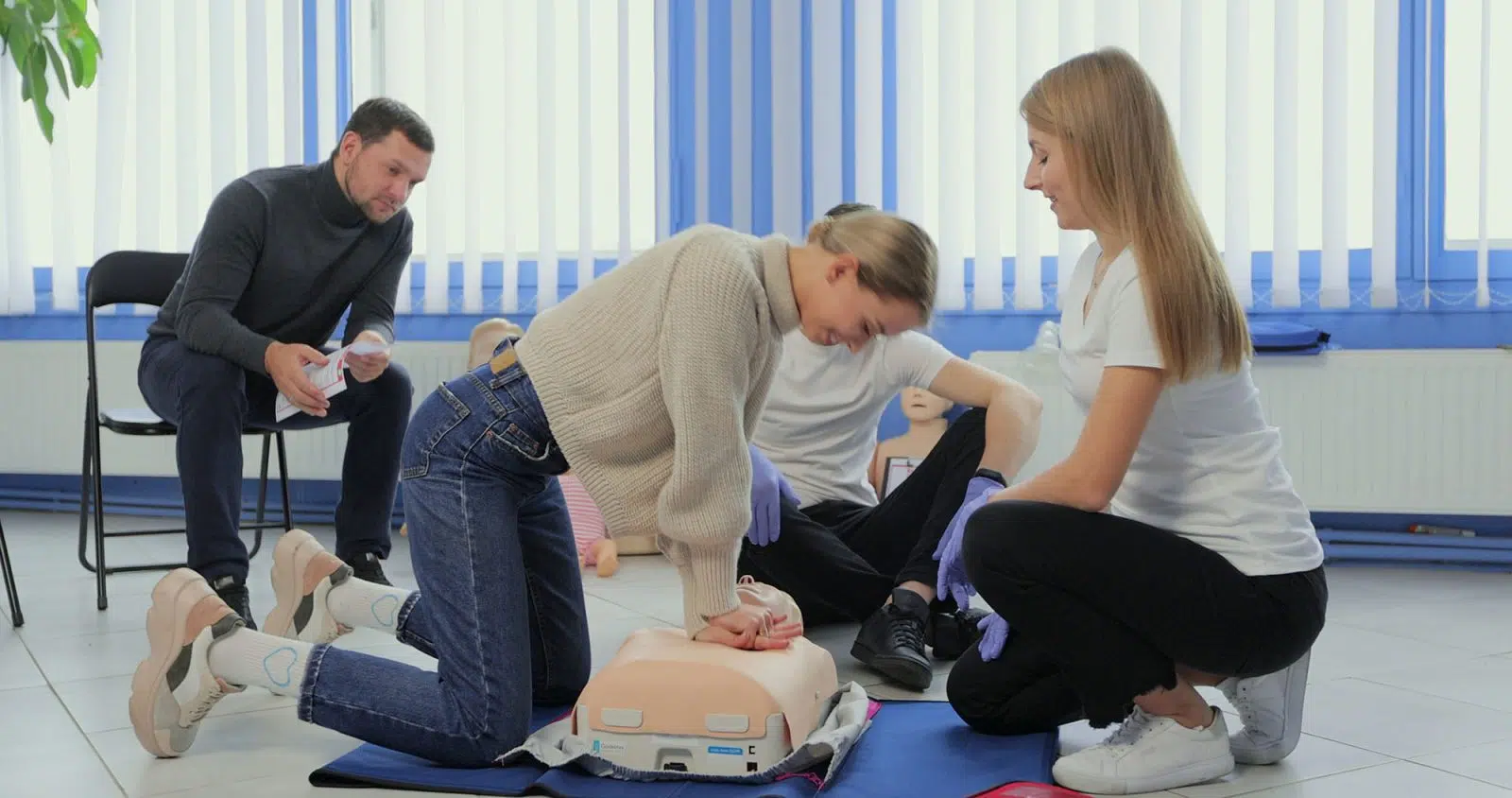
When you attend an in-person session with CPR Classes Near Me, you participate in a welcoming learning environment led by certified American Heart Association instructors. The curriculum emphasizes real-world practice over theoretical testing:
- Feedback Mannequin Practice: You will practice compression and ventilation skills on specialized infant mannequins that provide instant feedback on depth and speed, ensuring you master the correct technique.
- AED Operation: You will learn how to operate an Automated External Defibrillator (AED) safely, including how to apply pediatric pads or use child attenuators.
- Interactive Guidance: Instructors combine clear video demonstrations with direct, step-by-step coaching to answer all of your specific caregiving questions.
- Same-Day eCard Delivery: Upon finishing your practical session, you will receive your official certification eCard on the very same day, valid for two full years.
Is Taking an In-Person Infant CPR Course Better Than Online Videos?
While watching online tutorial videos can provide a basic overview of concepts, online-only viewing cannot replace hands-on, instructor-led training. Major health organizations, including the AHA and workplace safety boards, do not grant official certification for purely online CPR courses.
Proper CPR execution requires physical precision. Without practicing compressions on a calibrated mannequin, it is nearly impossible to feel the exact resistance of 1.5 inches of chest displacement or to master the rhythmic cadence of 100 to 120 compressions per minute. In an in-person class, an instructor corrects your hand placement, body position, and breath volume in real time. This physical practice builds genuine muscle memory, giving you the composure to react effectively during a true emergency.
Summary of Key Takeaways
- Infant Physiology Requires Specific Care: Resuscitation methods for babies differ significantly from adult procedures, relying on two-finger compressions and gentle rescue breaths.
- Safety Standards Change: Enrolling in an updated class ensures grandparents and caregivers drop obsolete habits and apply modern, evidence-based techniques.
- Practice Builds Muscle Memory: Working directly with feedback mannequins under expert guidance creates the physical confidence needed during a crisis.
- Coverage for Daily Hazards: Courses teach essential care for choking, allergic reactions, unresponsiveness, and submersion accidents alongside CPR.
Protect the Ones You Love—Gain Life-Saving Confidence Today
Giving your family the gift of safety and peace of mind is priceless. Whether you are welcoming your first grandchild or caring for infants professionally, mastering infant CPR for grandparents and caregivers ensures you are prepared to act decisively during an emergency.
Don’t wait for an accident to happen to evaluate your emergency readiness. Contact CPR Classes Near Me today at (512) 831-4243 or visit our site to reserve your seat in an upcoming American Heart Association CPR certification class!
Frequently Asked Questions
Can grandparents take an infant CPR class without prior medical experience?
Yes. Infant CPR classes are specifically designed for the general public, parents, grandparents, and non-medical caregivers. No prior medical training or experience is required, and instructors guide you step-by-step through every skill.
How long does an infant CPR certification class take to complete?
A comprehensive, in-person American Heart Association aligned CPR and First Aid course typically takes around 3 to 4 hours to complete. You complete all hands-on practice and receive your official certification eCard on the same day.
How often should caregivers renew their infant CPR certification?
Official American Heart Association CPR certification eCards are valid for two years. Caregivers are encouraged to take a refresher course every two years to maintain their skills and stay up to date with any changes in emergency cardiovascular care guidelines.
What is the primary difference between choking relief for infants and older children?
For infants under one year old, choking relief consists of five firm back slaps delivered between the shoulder blades followed by five chest thrusts using two fingers. Abdominal thrusts (the Heimlich maneuver) should never be used on an infant due to the risk of internal organ damage.
Do I need to bring any specialized equipment to a CPR class?
No. All necessary training equipment—including infant and adult mannequins, AED training units, pocket masks, and practice materials—is provided for you at the training facility.
Will I receive my CPR certification card on the day of the class?
Yes. When you take your training through CPR Classes Near Me, your official American Heart Association eCard is issued electronically on the exact same day you complete your course.